İçeriğe geç
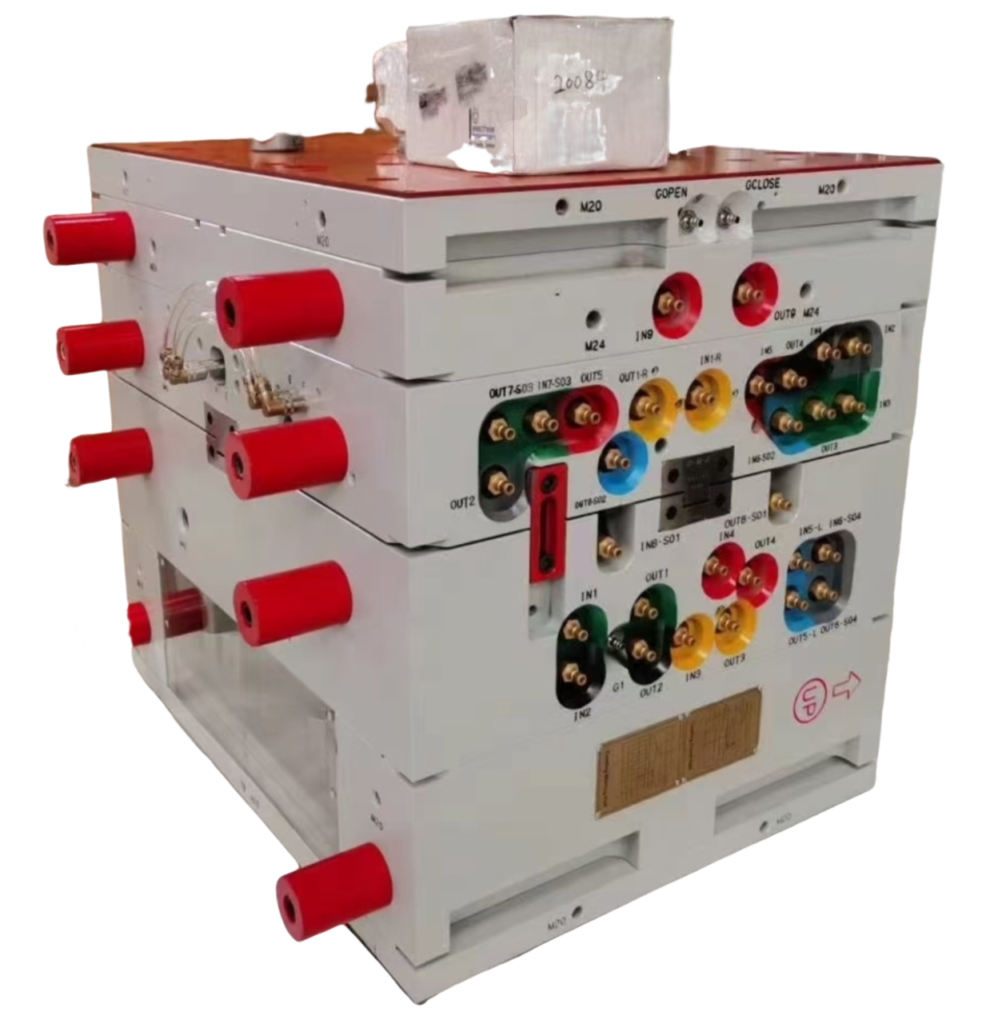
What Is POM Injection Molding and Why Is It So Widely Used?
- POM (polioksimetilen), hassas parçalar için ideal, düşük sürtünmeli, yüksek rijitlikli bir mühendislik termoplastiğidir.
- Homopolimer POM daha yüksek mukavemet sunar; kopolimer POM daha iyi termal stabilite ile daha kolay işlenir.
- Formaldehit gaz salınımını ve parça kusurlarını önlemek için varil sıcaklıklarını 220°C'nin altında tutun.
- POM'un %1,8–2,5 büzülmesini yönetmek için düzgün 1,0–3,5 mm duvar kalınlığı için tasarım yapın.
- POM'un doğal kayganlığı, onu kendinden yağlamalı dişliler ve yataklar için en iyi seçim yapar.
POM enjeksiyon kalıplama, polioksimetilen şekillendirme işlemidir—bir engineering thermoplastic1— hassas parçalara dönüştürür. Daha düşük ağırlıkta metal benzeri sertliği nedeniyle POM'a "metal yerine geçen plastik" diyoruz.
If you are comparing vendors or planning procurement, our injection molding supplier sourcing guide covers RFQ prep, qualification, and commercial risk checks.
POM comes in two main types: homopolymer (such as DuPont’s Delrin) and copolymer (such as Celanese’s Celcon or BASF’s Ultraform). Homopolymer POM offers slightly higher mechanical strength and stiffness, while copolymer POM provides better thermal stability and easier processing with less centerline porosity.
The global demand for POM injection molded parts continues to grow, driven by the automotive industry’s push for lighter components and the electronics sector’s need for dimensionally stable housings. POM’s self-lubricating properties make it ideal for moving parts that would otherwise require metal-to-metal contact with added lubricants.
What Are the Key Properties That Make POM Ideal for Injection Molding?
POM'u enjeksiyon kalıplama için ideal yapan temel özellikler, bu bölümde açıklanan ana kategoriler veya seçeneklerdir. POM şunlar için idealdir enjeksiyon kalıplama çünkü yüksek çekme dayanımı (65–70 MPa), düşük sürtünme (0.20–0.35 katsayısı), mükemmel creep resistance2ve minimum nem emilimi—bunlar onu işlediğimiz en çok yönlü mühendislik plastiklerinden biri yapan özelliklerdir.
| Mülkiyet | POM Homopolymer | POM Copolymer | Birim |
|---|---|---|---|
| Çekme Dayanımı | 65–70 | 58–65 | MPa |
| Eğilme Modülü | 2,800–3,200 | 2,500–2,900 | MPa |
| Kopma Uzaması | 25–45 | 40–75 | % |
| Impact Strength (Izod, notched) | 65–80 | 50–65 | J/m |
| Erime Noktası | 175 | 165 | °C |
| HDT at 1.8 MPa | 110 | 100 | °C |
| Coefficient of Friction | 0.20–0.35 | 0.25–0.38 | - |
| Küf büzülme3 | 1.8–2.5 | 1.8–2.2 | % |
| Water Absorption (24h) | 0.20 | 0.22 | % |
POM'u farklı kılan bir özelliği sürünme direncidir. Sürekli yük altında deforme olan birçok plastiğin aksine, POM yüksek sıcaklıklarda sürekli stres altında bile şeklini korur. POM dişlilerini yük altında 10.000+ saat çalıştırarak test ettik ve boyutsal değişim 0,3 mm'den az oldu.
""POM'un düşük nem emilimi, onu hassas parçalar için boyutsal olarak en stabil plastiklerden biri yapar.""Doğru
With only 0.20% water absorption in 24 hours, POM maintains tight tolerances even in humid environments. This is why it’s the go-to material for precision gears, bearings, and instrument housings.
""POM naylon gibi çok fazla nem emer, bu yüzden kalıplamadan önce her zaman ön kurutma gerektirir.""Yanlış
POM has very low water absorption (0.20–0.22% in 24 hours), far less than nylon’s 1.5–2.8%. While pre-drying at 80°C for 2–4 hours is recommended for optimal surface finish, POM is far less moisture-sensitive than polyamides.
What Are the Optimal Processing Parameters for POM Injection Molding?
Optimal POM kalıplama, 175–210°C namlu sıcaklığı, 80–120°C kalıp sıcaklığı ve 70–120 MPa enjeksiyon basıncı gerektirir. Bu parametreleri doğru ayarlamak mükemmel parçalar ile hurda arasındaki farktır.
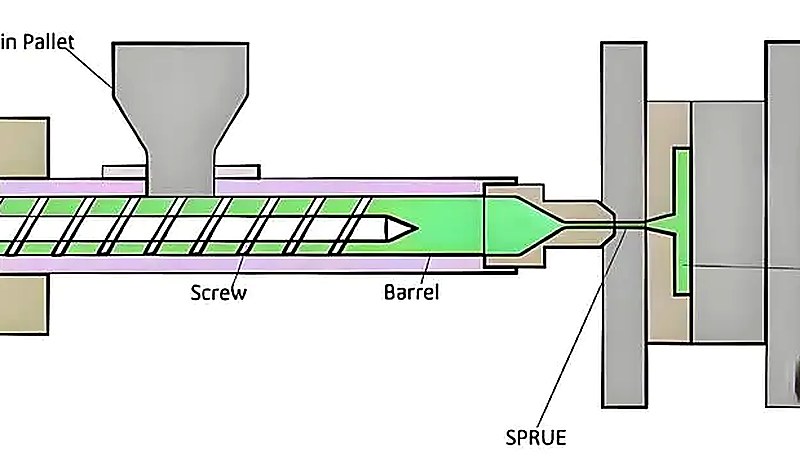
| Parametre | Homopolymer POM | Copolymer POM | Notlar |
|---|---|---|---|
| Barrel Temp (rear) | 180–190°C | 175–185°C | Avoid exceeding 220°C |
| Barrel Temp (middle) | 190–200°C | 185–195°C | Gradual increase |
| Barrel Temp (front) | 200–210°C | 190–205°C | Nozzle 5°C lower |
| Kalıp Sıcaklığı | 80–120°C | 80–110°C | Higher = better crystallinity |
| Enjeksiyon Basıncı | 80–120 MPa | 70–110 MPa | Adjust for wall thickness |
| Tutma Basıncı | 50–80% of injection | 50–75% of injection | Critical for shrinkage |
| Enjeksiyon Hızı | Orta | Medium to medium-high | Too fast causes off-gassing |
| Geri Basınç | 5–15 MPa | 5–10 MPa | Minimize residence time |
| Soğutma Süresi | 15–40s | 15–35s | Depends on wall thickness |
| Drying | 80°C / 2–4h | 80°C / 2–4h | Recommended, not critical |
In our experience, the most common mistake with POM is overheating. When POM degrades thermally, it releases formaldehyde gas, which causes bubbles, splay marks, and a pungent smell. We keep barrel temperatures strictly below 220°C and minimize residence time in the barrel to under 5 minutes.
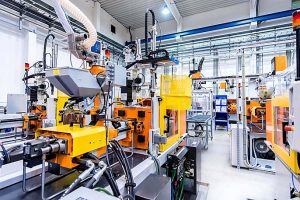
Şangay fabrikamızda 90T ila 1850T arasında değişen 47 enjeksiyon kalıplama makinesi çalıştırıyoruz ve çoklu POM dereceleri dahil 400'den fazla malzeme işliyoruz. Bu ekipman yelpazesi, küçük hassas dişlilerden büyük otomotiv bileşenlerine kadar POM parçalar kalıplamamıza olanak tanır.
Mold temperature plays a crucial role in POM part quality. We typically run molds at 90–100°C for most parts. Higher mold temperatures (up to 120°C) improve crystallinity, surface finish, and dimensional stability, but extend cycle time. For gears and precision components, we always go higher.
What Are Common POM Injection Molding Defects and How to Solve Them?
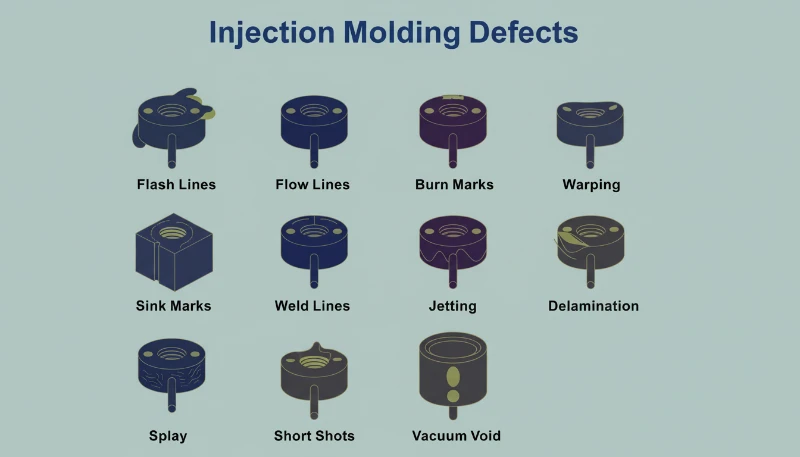
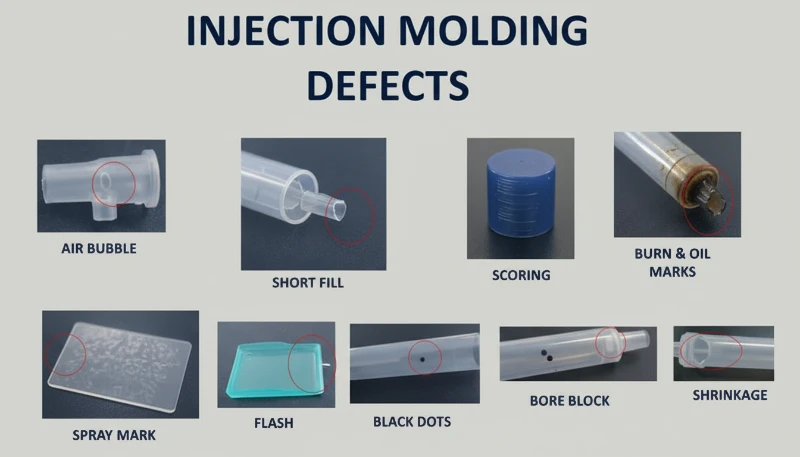
En yaygın POM kusurları çökme izleri, eğrilme, merkez hattı gözenekliliği ve sıçramadır—bunlar sıcaklık ve basıncı kontrol ederek önlenebilir. Aşağıda hedefe yönelik çözümler bulunmaktadır.
| Kusur | Karşı yüzeyde çökme izlerini önler | Çözüm |
|---|---|---|
| Lavabo İşaretleri | Insufficient holding pressure; thick sections | Increase holding pressure/time; reduce wall thickness; add coring |
| Çarpıklık | Uneven cooling; differential shrinkage | Uniform wall thickness; optimize cooling channels; adjust mold temp |
| Centerline Porosity | Thick walls; insufficient packing (homopolymer) | Use copolymer POM; increase holding pressure; reduce wall thickness |
| Splay/Silver Streaks | Moisture; thermal degradation | Pre-dry material; lower barrel temp; reduce residence time |
| Formaldehyde Off-gassing | Overheating above 220°C | Reduce barrel temperature; minimize residence time; purge regularly |
| Brittle Parts | Over-crystallization; contamination | Reduce mold temperature; check material purity |
| Flaş | Excessive injection pressure; worn mold | Reduce pressure; repair mold parting surfaces |
Yakından izlediğimiz POM'a özgü bir kusur merkez hattı gözenekliliğidir. Bu esas olarak kalın kesitli homopolimer POM parçalarda oluşur. Dış kabuk katılaşıp kristalleşirken çekirdek hala erimiş haldedir ve çekirdek büzüldükçe kendinden uzaklaşarak iç boşluklar oluşturur. Çoğu durumda kopolimer POM'a geçmek veya parçaları içi boşaltılmış kesitlerle yeniden tasarlamak bu sorunu ortadan kaldırır.
What Applications Rely on POM Injection Molded Parts?
POM injection molded parts are found in virtually every industry that demands precision, durability, and low friction. The material’s unique combination of properties makes it irreplaceable in many applications.
Automotive (40% of POM consumption): Fuel system components (fuel sender units, fuel caps), seat belt mechanisms, door lock systems, window regulator gears, HVAC actuator gears, and interior trim clips. We’ve produced fuel rail clips for a major German OEM running 500,000+ cycles without a single failure.
Tüketici Elektroniği: Keyboard mechanisms, printer gears, fan bearings, zipper sliders, and pen mechanisms. POM’s snap-fit capability and spring-back properties make it perfect for clips and latches in electronic devices.
Industrial: Conveyor chain links, pump impellers, valve bodies, bearing bushings, and spring elements. POM’s fatigue resistance handles millions of load cycles in industrial automation equipment.
“POM'un doğal kayganlığı, onu harici yağlama olmadan çalışan dişliler ve yataklar için en iyi plastiklerden biri yapar.”Doğru
POM has a coefficient of friction of 0.20–0.35, one of the lowest among engineering plastics. POM-on-POM and POM-on-metal contact surfaces perform well without lubrication, making it the material of choice for self-lubricating gears, bearings, and sliding mechanisms.
""POM, mükemmel UV direncine sahip olduğu için açık hava uygulamalarında harika bir seçimdir.""Yanlış
POM has poor UV resistance and degrades when exposed to prolonged sunlight. Outdoor POM parts require UV stabilizer additives or protective coatings. For purely outdoor applications, materials like ASA or UV-stabilized ABS are better choices.
Tıbbi Cihazlar: Inhaler mechanisms, insulin pen components, and surgical instrument handles. Medical-grade POM (FDA-compliant copolymer) provides the precision and chemical resistance needed in healthcare.
Plumbing and Hardware: Faucet cartridges, valve stems, tap handles, and pipe fittings. POM’s resistance to hot water (up to 80°C continuous) and cleaning chemicals makes it ideal for plumbing applications.
How Should You Design Parts for POM Injection Molding?
POM parçalar için temel tasarım kuralları, 1.8–2.5 büzülmeyi yönetmek için 50–60 kaburga-duvar oranı ile birlikte, her taraf için 0.5°–1.5° draft açısı ve 1.0–3.5 mm düzgün duvar kalınlığıdır. enjeksiyon kalıbı.
| Design Parameter | Önerilen Değer | Why It Matters |
|---|---|---|
| Duvar Kalınlığı | 1.0–3.5 mm (uniform) | Prevents sink marks and centerline porosity |
| Çekim Açısı | 0.5°–1.5° per side | POM shrinks onto cores; needs more draft than ABS |
| Rib Thickness | 50–60% of wall | Prevents sink marks on opposite surface |
| Kaburga Yüksekliği | Mühendislik termoplastiği, mukavemet, ısı direnci ve boyutsal kararlılık gerektiren yapısal ve hassas uygulamalar için uygun olan, ticari plastiklere kıyasla üstün mekanik ve termal özellikler sunan bir plastik malzeme kategorisini ifade eder. | Taller ribs are hard to fill and eject |
| Corner Radius | ≥ 0.5 mm (0.25× wall) | Sharp corners cause stress concentration |
| Boss OD | 2× screw diameter | Prevents cracking during screw insertion |
| Snap-Fit Strain | ≤ 4% (single use), ≤ 2% (repeated) | POM’s fatigue limit for living hinges |
| Shrinkage Allowance | 1.8–2.5% (flow), 1.6–2.0% (cross-flow) | Anisotropic shrinkage requires directional compensation |

Tasarım incelemelerimizde, POM parçalarla ilgili bir numaralı sorun düzensiz duvar kalınlığıdır. Kalın ve ince kesişimler birleştiğinde, kalın kesim daha yavaş soğur ve farklı büzülmeye yol açarak eğrilme ve çökme izlerine neden olur. Kalın kesimlerin içini boşaltmayı ve tüm parça boyunca duvar kalınlığını ±%1 değişim içinde tutmayı her zaman öneririz.
POM is one of the best plastics for snap-fits and living hinges due to its excellent spring-back properties. However, we recommend limiting strain to 4% for single-use snaps and 2% for repeated assembly/disassembly. For gear teeth, we apply 0.02–0.04 mm per tooth profile compensation for shrinkage to hit AGMA quality grades.
How Does Mold Design Affect POM Part Quality?
POM için en kritik kalıp tasarım faktörleri, giriş yeri, soğutma düzgünlüğü ve havalandırmadır. POM'un yüksek büzülmesi ve formaldehit gaz çıkışı, hassas kalıp tasarımını zorunlu kılar.
Kapı Tasarımı: We prefer sub-gate or pin-gate designs for POM parts because they allow automatic degating and leave minimal witness marks. For gears, diaphragm gates provide the most uniform fill and minimize weld lines in the tooth area. Gate size should be 50–70% of wall thickness.
Soğutma Sistemi: Uniform cooling is critical for POM. Temperature variation across the mold surface should stay within ±5°C. We use conformal cooling channels for complex geometries and beryllium copper inserts for areas that need faster heat extraction. For gears, we often use circular cooling channels that follow the gear profile.
Havalandırma: POM işleme sırasında formaldehit gazı üretir, bu nedenle yeterli havalandırma esastır. Havalandırma derinliği 0.01–0.02 mm olmalıdır (POM düşük viskoziteye sahiptir ve daha derin havalandırmalarda taşma yapar). Havalandırmaları her kaynak çizgisi konumuna ve kalıp akış analizi ile belirlenen son dolan alanlara yerleştiririz.
Fırlatma: POM’s high shrinkage means parts grip tightly onto cores. We design generous draft angles (0.5°–1.5°), use multiple ejector pins distributed evenly, and sometimes apply mold release coatings to core surfaces. For deep-draw parts, air-assisted ejection prevents vacuum lock.
Frequently Asked Questions About POM Injection Molding
Can POM be painted or plated?
POM has very low surface energy, making it difficult to paint or plate without surface treatment. Flame treatment, plasma treatment, or chemical etching can improve adhesion. However, for decorative parts, we usually recommend switching to ABS or PC/ABS, which accept paint and plating much more readily.
What is the difference between POM homopolymer and copolymer?
Homopolymer POM (like Delrin) offers 5–10% higher mechanical strength and stiffness but is more prone to centerline porosity in thick sections and has a narrower processing window. Copolymer POM (like Celcon or Ultraform) processes more easily, has better chemical resistance, and is less likely to degrade thermally. For most applications, we recommend copolymer.
Does POM need to be dried before molding?
POM’s low moisture absorption (0.20%) means drying is recommended but not strictly required for most applications. We pre-dry at 80°C for 2–4 hours as standard practice to ensure optimal surface quality. For critical cosmetic parts, drying is essential.
Is POM FDA-approved for food contact?
Yes, certain copolymer POM grades (such as Celcon M90 and Hostaform C9021) are FDA-compliant for food contact applications. Always verify the specific grade’s FDA status with the resin supplier before production.
What causes the white residue on POM mold surfaces?
The white deposit is formaldehyde and trioxane oligomers released during POM processing. Regular mold cleaning (every 4–8 hours of production), adequate venting, and keeping barrel temperatures below 215°C minimize this buildup. Some shops use mold-cleaning compounds designed specifically for POM residue.
How does POM compare to nylon for gear applications?
POM is generally preferred over nylon for gears because it has lower moisture absorption (0.2% vs. 2.5%), better dimensional stability, lower coefficient of friction, and more consistent mechanical properties across humidity ranges. Nylon offers higher impact strength and better high-temperature performance. For gears running in wet or humid environments, POM is the clear winner.
What Are the Key Takeaways for POM Injection Molding?
POM injection molding is a proven manufacturing process for producing high-precision, low-friction, and dimensionally stable plastic parts. Whether you’re designing gears for an automotive transmission or clips for consumer electronics, POM delivers the mechanical performance of metal at a fraction of the cost and weight. The keys to success are controlling processing temperatures below 220°C, designing for uniform wall thickness to manage 1.8–2.5% shrinkage, and ensuring adequate mold venting to handle formaldehyde off-gassing.
ZetarMold'da 20 yılı aşkın süredir otomotiv, endüstriyel ve tüketici uygulamalarında POM işliyoruz. Ekibimiz DFM incelemeleri ve kalıp tasarımından seri üretim ve kalite kontrolüne kadar her şeyi halleder. POM enjeksiyon kalıplı parçalara ihtiyaç duyan bir proje üzerinde çalışıyorsanız, ücretsiz bir DFM incelemesi ve teklif için mühendislik ekibimizle iletişime geçin. Kapsamlı bir genel bakış için Enjeksiyon Kalıplama Tam Kılavuzumuza bakın.
Enjeksiyon Kalıplama Projeniz İçin Teklif Alın
Get competitive pricing, DFM feedback, and production timeline from ZetarMold’s engineering team.
Request a Free Quote →
-
engineering thermoplastic: Mühendislik termoplastiği, ticari plastiklere kıyasla üstün mekanik ve termal özellikler sunan, yapısal ve hassas uygulamalara uygun bir plastik malzeme kategorisini ifade eder. ↩
-
creep resistanceSürünme direnci, bir malzemenin zaman içinde sürekli mekanik stres altında kademeli deformasyona direnme yeteneğidir; yük taşıyan bileşenler için kritiktir. ↩
-
büzülme: POM büzülmesi, erimiş POM'un kalıp boşluğunda soğuyup katılaşırken meydana gelen %1,8 ila %2,5'lık hacimsel küçülmeyi ifade eder. ↩




 EN
EN  ES
ES  FR
FR  DE
DE  PT
PT  AR
AR  RU
RU  JA
JA  KO
KO  IT
IT  NL
NL  TR
TR  PL
PL