Was ist POM-Spritzgießen und warum wird es so häufig eingesetzt?
- POM (Polyoxymethylen) ist ein reibungsarmer, hochsteifer technischer Thermoplast, der sich ideal für Präzisionsteile eignet.
- POM-Homopolymer bietet eine höhere Festigkeit; POM-Copolymer lässt sich leichter verarbeiten und weist eine bessere thermische Stabilität auf.
- Halten Sie die Zylindertemperaturen unter 220°C, um Formaldehydausgasungen und Teilefehler zu vermeiden.
- Legen Sie eine gleichmäßige Wanddicke von 1.0–3.5 mm aus, um die Schwindung von POM von 1.8–2.5% zu beherrschen.
- Aufgrund seiner natürlichen Gleitfähigkeit ist POM die erste Wahl für selbstschmierende Zahnräder und Lager.
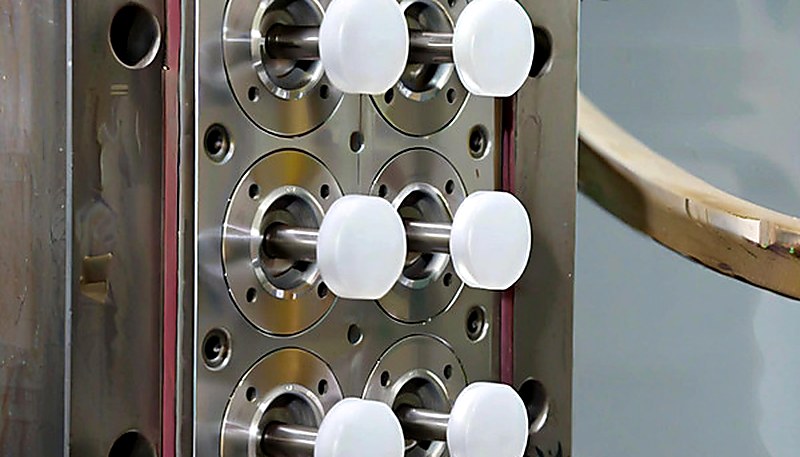
Beim POM-Spritzgießen wird Polyoxymethylen - ein technischer Thermoplast1 - zu Präzisionsteilen geformt. Wegen seiner metallähnlichen Steifigkeit bei geringerem Gewicht bezeichnen wir POM als „Metallersatzkunststoff“.
Wenn Sie Lieferanten vergleichen oder die Beschaffung planen, behandelt unser Leitfaden zur Beschaffung von Spritzgießlieferanten die Vorbereitung von Angebotsanfragen, die Qualifizierung und die Prüfung kommerzieller Risiken.
POM gibt es in zwei Haupttypen: als Homopolymer (wie Delrin von DuPont) und als Copolymer (wie Celcon von Celanese oder Ultraform von BASF). POM-Homopolymer bietet eine etwas höhere mechanische Festigkeit und Steifigkeit, während POM-Copolymer eine bessere thermische Stabilität, eine einfachere Verarbeitung und weniger Kernporosität aufweist.
Die weltweite Nachfrage nach POM-Spritzgussteilen wächst weiter, angetrieben durch das Streben der Automobilindustrie nach leichteren Komponenten und den Bedarf der Elektronikbranche an dimensionsstabilen Gehäusen. Dank seiner selbstschmierenden Eigenschaften eignet sich POM ideal für bewegliche Teile, bei denen andernfalls Metall auf Metall mit zusätzlichen Schmiermitteln in Kontakt käme.
Welche Schlüsseleigenschaften machen POM ideal für das Spritzgießen?
Die Schlüsseleigenschaften, die POM ideal für das Spritzgießen machen, sind die in diesem Abschnitt erläuterten Hauptkategorien oder Optionen. POM eignet sich ideal für das Spritzgießen , weil es eine seltene Kombination aus hoher Zugfestigkeit (65–70 MPa), geringer Reibung (Reibungskoeffizient 0.20–0.35), ausgezeichneter Kriechbeständigkeit2 und minimaler Feuchtigkeitsaufnahme bietet - Eigenschaften, die es zu einem der vielseitigsten technischen Kunststoffe machen, die wir verarbeiten.
| Eigenschaft | POM-Homopolymer | POM-Copolymer | Einheit |
|---|---|---|---|
| Zugfestigkeit | 65–70 | 58–65 | MPa |
| Biegemodul | 2,800–3,200 | 2,500–2,900 | MPa |
| Bruchdehnung | 25–45 | 40–75 | % |
| Schlagzähigkeit (Izod, gekerbt) | 65–80 | 50–65 | J/m |
| Schmelzpunkt | 175 | 165 | °C |
| HDT bei 1.8 MPa | 110 | 100 | °C |
| Reibungskoeffizient | 0.20–0.35 | 0.25–0.38 | — |
| Werkzeugbedingte Schwindung3 | 1.8–2.5 | 1.8–2.2 | % |
| Wasseraufnahme (24h) | 0.20 | 0.22 | % |
Eine Eigenschaft, die POM auszeichnet, ist seine Kriechbeständigkeit. Im Gegensatz zu vielen Kunststoffen, die sich unter dauerhafter Belastung verformen, behält POM selbst bei kontinuierlicher Beanspruchung und erhöhten Temperaturen seine Form. Wir haben POM-Zahnräder getestet, die unter Last 10,000+ Stunden liefen und dabei eine Maßänderung von weniger als 0.3 mm aufwiesen.
„„Die geringe Feuchtigkeitsaufnahme von POM macht es zu einem der dimensionsstabilsten Kunststoffe für Präzisionsteile.““Wahr
Bei einer Wasseraufnahme von nur 0.20% in 24 Stunden hält POM selbst in feuchten Umgebungen enge Toleranzen ein. Deshalb ist es das bevorzugte Material für Präzisionszahnräder, Lager und Instrumentengehäuse.
„„POM nimmt wie Nylon viel Feuchtigkeit auf und muss daher vor dem Spritzgießen immer vorgetrocknet werden.““Falsch
POM weist eine sehr geringe Wasseraufnahme auf (0.20–0.22% in 24 Stunden), deutlich weniger als die 1.5–2.8% von Nylon. Obwohl für eine optimale Oberflächengüte eine Vortrocknung bei 80°C für 2–4 Stunden empfohlen wird, ist POM weit weniger feuchtigkeitsempfindlich als Polyamide.
Welche Verarbeitungsparameter sind für das POM-Spritzgießen optimal?
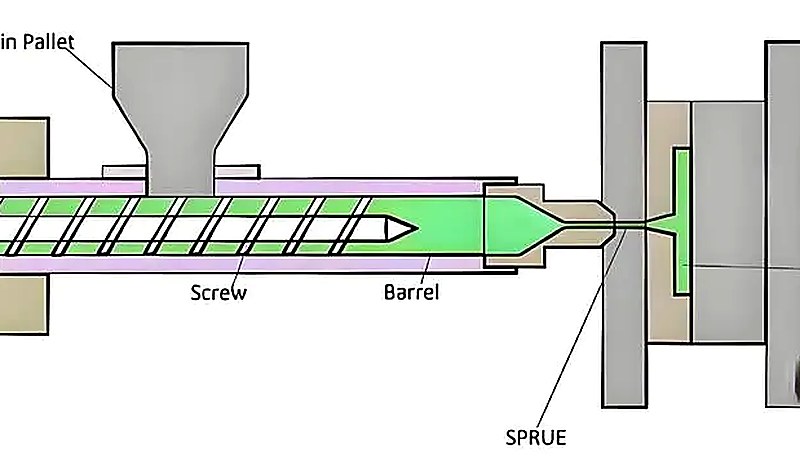
Für eine optimale Verarbeitung von POM sind Zylindertemperaturen von 175–210°C, Werkzeugtemperaturen von 80–120°C und Einspritzdrücke von 70–120 MPa erforderlich. Die richtige Einstellung dieser Parameter entscheidet über einwandfreie Teile oder Ausschuss.
| Parameter | POM-Homopolymer | POM-Copolymer | Hinweise |
|---|---|---|---|
| Zylindertemperatur (hinten) | 180–190°C | 175–185°C | Nicht über 220°C |
| Zylindertemperatur (Mitte) | 190–200°C | 185–195°C | Schrittweise Erhöhung |
| Zylindertemperatur (vorn) | 200–210°C | 190–205°C | Düse 5°C niedriger |
| Werkzeugtemperatur | 80–120°C | 80–110°C | Höher = bessere Kristallinität |
| Einspritzdruck | 80–120 MPa | 70–110 MPa | An Wanddicke anpassen |
| Nachdruck | 50–80% des Einspritzdrucks | 50–75% des Einspritzdrucks | Entscheidend für die Schwindung |
| Einspritzgeschwindigkeit | Mittel | Mittel bis mittelhoch | Zu schnell verursacht Ausgasungen |
| Staudruck | 5–15 MPa | 5–10 MPa | Verweilzeit minimieren |
| Kühlzeit | 15–40s | 15–35s | Abhängig von der Wanddicke |
| Trocknung | 80°C / 2–4h | 80°C / 2–4h | Empfohlen, nicht kritisch |
Unserer Erfahrung nach ist Überhitzung der häufigste Fehler bei POM. Wenn POM thermisch zersetzt wird, setzt es Formaldehydgas frei, das Blasen, Silberschlieren und einen stechenden Geruch verursacht. Wir halten die Zylindertemperaturen strikt unter 220°C und begrenzen die Verweilzeit im Zylinder auf weniger als 5 Minuten.
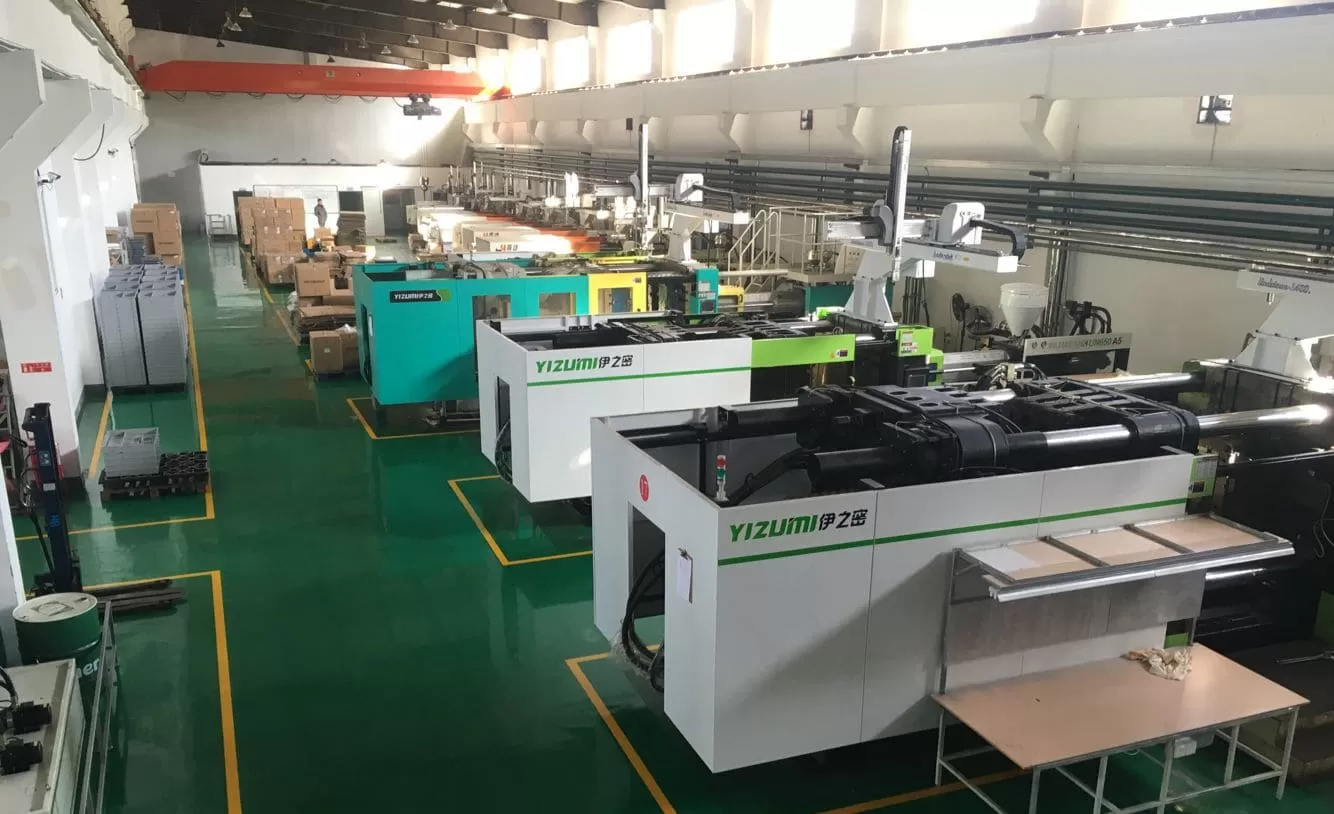
In unserem Werk in Shanghai betreiben wir 47 Spritzgießmaschinen von 90T bis 1850T und verarbeiten über 400 Materialien, darunter mehrere POM-Typen. Mit dieser Maschinenausstattung können wir POM-Teile von winzigen Präzisionszahnrädern bis hin zu großen Automobilkomponenten spritzgießen.
Die Werkzeugtemperatur spielt eine entscheidende Rolle für die Qualität von POM-Teilen. Für die meisten Teile betreiben wir die Werkzeuge üblicherweise bei 90–100°C. Höhere Werkzeugtemperaturen (bis zu 120°C) verbessern Kristallinität, Oberflächengüte und Dimensionsstabilität, verlängern jedoch die Zykluszeit. Bei Zahnrädern und Präzisionskomponenten wählen wir stets höhere Temperaturen.
Welche Fehler treten beim POM-Spritzgießen häufig auf und wie lassen sie sich beheben?
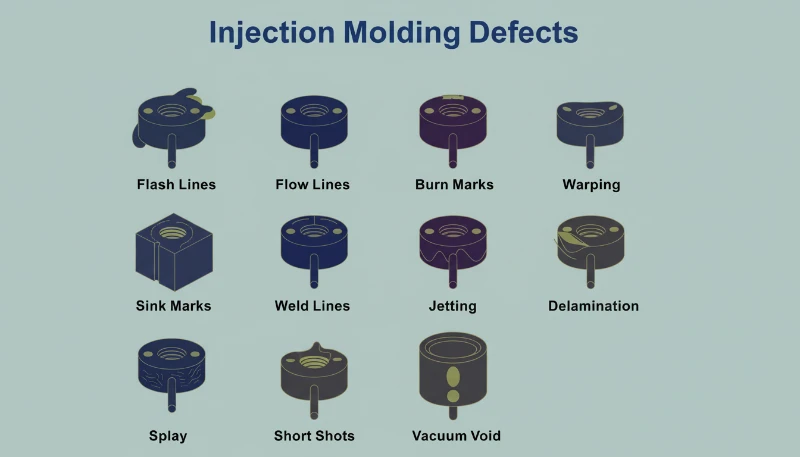
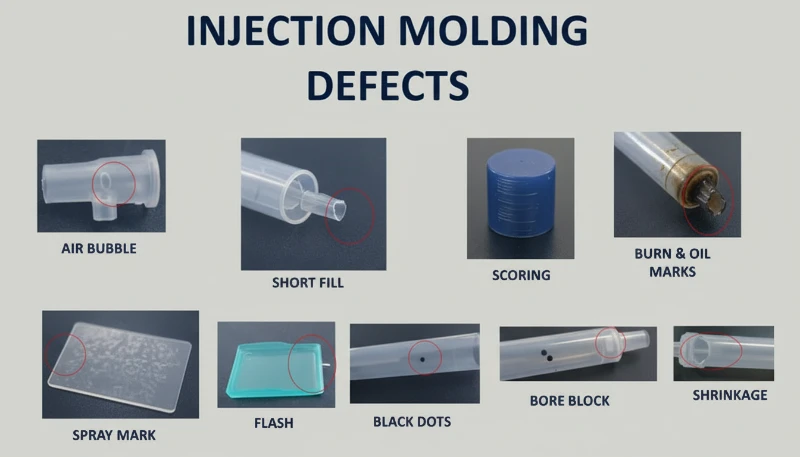
Die häufigsten POM-Fehler sind Einfallstellen, Verzug, Kernporosität und Silberschlieren; durch die Regelung von Temperatur und Druck lassen sie sich vermeiden. Nachfolgend finden Sie gezielte Lösungen.
| Fehler | Grundursache | Lösung |
|---|---|---|
| Einfallstellen | Unzureichender Nachdruck; dickwandige Bereiche | Nachdruck und Nachdruckzeit erhöhen; Wanddicke verringern; Bereiche aushöhlen |
| Verzug | Ungleichmäßige Kühlung; unterschiedliche Schwindung | Gleichmäßige Wanddicke; Kühlkanäle optimieren; Werkzeugtemperatur anpassen |
| Kernporosität | Dicke Wände; unzureichende Verdichtung (Homopolymer) | POM-Copolymer verwenden; Nachdruck erhöhen; Wanddicke verringern |
| Silberschlieren | Feuchtigkeit; thermische Zersetzung | Material vortrocknen; Zylindertemperatur senken; Verweilzeit verkürzen |
| Formaldehydausgasung | Überhitzung über 220°C | Zylindertemperatur senken; Verweilzeit minimieren; regelmäßig spülen |
| Spröde Teile | Überkristallisation; Verunreinigung | Werkzeugtemperatur senken; Materialreinheit prüfen |
| Gratbildung | Zu hoher Einspritzdruck; verschlissenes Werkzeug | Druck reduzieren; Trennflächen des Werkzeugs reparieren |
Ein POM-spezifischer Fehler, den wir genau überwachen, ist die Kernporosität. Sie tritt hauptsächlich bei dickwandigen Teilen aus POM-Homopolymer auf. Die Außenschicht erstarrt und kristallisiert, während der Kern noch geschmolzen ist; wenn der Kern schwindet, zieht er sich von sich selbst weg und es entstehen innere Hohlräume. Der Wechsel zu POM-Copolymer oder die Neukonstruktion der Teile mit ausgehöhlten Bereichen beseitigt dieses Problem in den meisten Fällen.
Für welche Anwendungen werden POM-Spritzgussteile eingesetzt?
POM-Spritzgussteile finden sich in nahezu jeder Branche, die Präzision, Haltbarkeit und geringe Reibung verlangt. Die einzigartige Eigenschaftskombination des Materials macht es in vielen Anwendungen unersetzlich.
Automobilindustrie (40% des POM-Verbrauchs): Komponenten des Kraftstoffsystems (Tankgeber, Tankdeckel), Sicherheitsgurtmechanismen, Türschlosssysteme, Zahnräder für Fensterheber, Zahnräder für HVAC-Stellantriebe und Clips für Innenverkleidungen. Wir haben Kraftstoffverteiler-Clips für einen großen deutschen OEM hergestellt, die 500,000+ Zyklen ohne einen einzigen Ausfall absolvierten.
Unterhaltungselektronik: Tastaturmechanismen, Druckerzahnräder, Lüfterlager, Reißverschlussschieber und Stiftmechanismen. Dank seiner Eignung für Schnappverbindungen und seiner Rückstelleigenschaften ist POM ideal für Clips und Riegel in elektronischen Geräten.
Industrie: Förderkettenlaschen, Pumpenlaufräder, Ventilkörper, Lagerbuchsen und Federelemente. Die Ermüdungsbeständigkeit von POM bewältigt Millionen von Lastzyklen in industriellen Automatisierungsanlagen.
„„Die natürliche Gleitfähigkeit von POM macht es zu einem der besten Kunststoffe für Zahnräder und Lager, die ohne externe Schmierung laufen.““Wahr
POM hat einen Reibungskoeffizienten von 0.20–0.35, einen der niedrigsten unter den technischen Kunststoffen. Kontaktflächen von POM auf POM und POM auf Metall funktionieren ohne Schmierung gut, sodass POM das Material der Wahl für selbstschmierende Zahnräder, Lager und Gleitmechanismen ist.
„„POM ist eine ausgezeichnete Wahl für Außenanwendungen, weil es eine hervorragende UV-Beständigkeit besitzt.““Falsch
POM weist eine geringe UV-Beständigkeit auf und wird bei längerer Sonneneinstrahlung abgebaut. POM-Teile für den Außenbereich benötigen UV-Stabilisatoren oder Schutzbeschichtungen. Für reine Außenanwendungen sind Materialien wie ASA oder UV-stabilisiertes ABS besser geeignet.
Medizinprodukte: Mechanismen für Inhalatoren, Komponenten für Insulinpens und Griffe chirurgischer Instrumente. POM in Medizinqualität (FDA-konformes Copolymer) bietet die im Gesundheitswesen erforderliche Präzision und Chemikalienbeständigkeit.
Sanitärtechnik und Beschläge: Kartuschen für Armaturen, Ventilspindeln, Wasserhahngriffe und Rohrverschraubungen. Die Beständigkeit von POM gegen heißes Wasser (dauerhaft bis zu 80°C) und Reinigungschemikalien macht es ideal für Sanitäranwendungen.
Wie sollten Sie Teile für das POM-Spritzgießen konstruieren?
Die wichtigsten Konstruktionsregeln für POM-Teile sind gleichmäßige Wanddicken von 1.0–3.5 mm, Entformungsschrägen von 0.5°–1.5° je Seite und ein Verhältnis von Rippen- zu Wanddicke von 50–60%, um die Schwindung von 1.8–2.5% im Spritzgießwerkzeug.
| Konstruktionsparameter | Empfohlener Wert | Warum dies wichtig ist |
|---|---|---|
| Wanddicke | 1.0–3.5 mm (gleichmäßig) | Verhindert Einfallstellen und Kernporosität |
| Entformungsschräge | 0.5°–1.5° je Seite | POM schwindet auf Kerne auf; es benötigt mehr Entformungsschräge als ABS |
| Rippendicke | 50–60% der Wanddicke | Verhindert Einfallstellen auf der gegenüberliegenden Oberfläche |
| Rippenhöhe | ≤ 3× Wanddicke | Höhere Rippen lassen sich schwer füllen und auswerfen |
| Eckenradius | ≥ 0.5 mm (0.25× Wanddicke) | Scharfe Ecken verursachen Spannungskonzentrationen |
| Außendurchmesser des Doms | 2× Schraubendurchmesser | Verhindert Risse beim Einsetzen der Schraube |
| Dehnung der Schnappverbindung | ≤ 4% (einmalige Verwendung), ≤ 2% (wiederholt) | Ermüdungsgrenze von POM für Filmscharniere |
| Schwindungszuschlag | 1.8–2.5% (Fließrichtung), 1.6–2.0% (quer zur Fließrichtung) | Anisotrope Schwindung erfordert eine richtungsabhängige Kompensation |
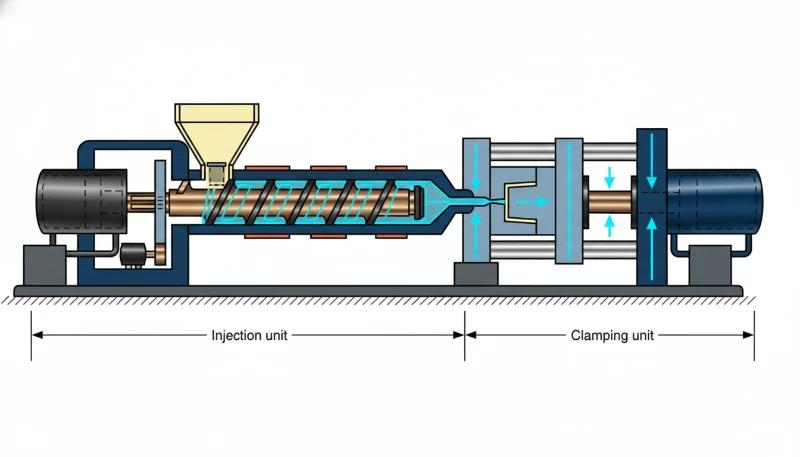
Bei unseren Konstruktionsprüfungen ist eine ungleichmäßige Wanddicke das häufigste Problem bei POM-Teilen. Wenn dicke und dünne Bereiche aufeinandertreffen, kühlt der dicke Bereich langsamer ab, wodurch eine unterschiedliche Schwindung entsteht, die zu Verzug und Einfallstellen führt. Wir empfehlen stets, dicke Bereiche auszuhöhlen und die Abweichung der Wanddicke über das gesamte Teil innerhalb von ±10% zu halten.
Aufgrund seiner ausgezeichneten Rückstelleigenschaften ist POM einer der besten Kunststoffe für Schnappverbindungen und Filmscharniere. Wir empfehlen jedoch, die Dehnung bei Schnappverbindungen für den einmaligen Gebrauch auf 4% und bei wiederholter Montage und Demontage auf 2% zu begrenzen. Bei Zahnradzähnen rechnen wir mit einer Schwindungskompensation von 0.02–0.04 mm je Zahnprofil, um die AGMA-Qualitätsklassen zu erreichen.
Wie beeinflusst die Werkzeugkonstruktion die Qualität von POM-Teilen?
Die wichtigsten Faktoren der Werkzeugkonstruktion für POM sind Anschnittposition, gleichmäßige Kühlung und Entlüftung. Die hohe Schwindung und Formaldehydausgasung von POM machen eine präzise Werkzeugkonstruktion unverzichtbar.
Anschnittgestaltung: Wir bevorzugen Tunnel- oder Punktanschnitte für POM-Teile, weil sie ein automatisches Abtrennen ermöglichen und nur minimale Anschnittmarkierungen hinterlassen. Bei Zahnrädern sorgen Membrananschnitte für die gleichmäßigste Füllung und minimieren Bindenähte im Zahnbereich. Die Anschnittgröße sollte 50–70% der Wanddicke betragen.
Kühlsystem: Eine gleichmäßige Kühlung ist für POM entscheidend. Die Temperaturschwankung über die Werkzeugoberfläche sollte innerhalb von ±5°C bleiben. Für komplexe Geometrien verwenden wir konturnahe Kühlkanäle und für Bereiche, die eine schnellere Wärmeabfuhr erfordern, Einsätze aus Berylliumkupfer. Bei Zahnrädern verwenden wir häufig ringförmige Kühlkanäle, die dem Zahnradprofil folgen.
Entlüftung: POM erzeugt während der Verarbeitung Formaldehydgas, weshalb eine ausreichende Entlüftung unerlässlich ist. Die Entlüftungstiefe sollte 0.01–0.02 mm betragen (POM hat eine niedrige Viskosität und bildet bei tieferen Entlüftungen Grat). Wir platzieren Entlüftungen an jeder Bindenaht und in den zuletzt gefüllten Bereichen, die durch eine Formfüllanalyse ermittelt wurden.
Auswerfung: Aufgrund der hohen Schwindung von POM sitzen die Teile fest auf den Kernen. Wir konstruieren großzügige Entformungsschrägen (0.5°–1.5°), verwenden mehrere gleichmäßig verteilte Auswerferstifte und tragen gelegentlich Entformungsbeschichtungen auf die Kernoberflächen auf. Bei tiefgezogenen Teilen verhindert eine luftunterstützte Auswerfung eine Vakuumverriegelung.
Häufig gestellte Fragen zum POM-Spritzgießen
Kann POM lackiert oder galvanisiert werden?
POM hat eine sehr niedrige Oberflächenenergie, wodurch es sich ohne Oberflächenbehandlung nur schwer lackieren oder galvanisieren lässt. Eine Flammbehandlung, Plasmabehandlung oder chemische Ätzung kann die Haftung verbessern. Für dekorative Teile empfehlen wir jedoch in der Regel den Wechsel zu ABS oder PC/ABS, da diese Materialien Lacke und galvanische Beschichtungen wesentlich besser annehmen.
Worin unterscheiden sich POM-Homopolymer und POM-Copolymer?
POM-Homopolymer (wie Delrin) bietet eine um 5–10% höhere mechanische Festigkeit und Steifigkeit, neigt jedoch in dickwandigen Bereichen stärker zu Kernporosität und hat ein engeres Verarbeitungsfenster. POM-Copolymer (wie Celcon oder Ultraform) lässt sich leichter verarbeiten, weist eine bessere Chemikalienbeständigkeit auf und neigt weniger zur thermischen Zersetzung. Für die meisten Anwendungen empfehlen wir Copolymer.
Muss POM vor dem Spritzgießen getrocknet werden?
Aufgrund der geringen Feuchtigkeitsaufnahme von POM (0.20%) wird eine Trocknung empfohlen, ist für die meisten Anwendungen jedoch nicht zwingend erforderlich. Standardmäßig trocknen wir POM 2–4 Stunden lang bei 80°C vor, um eine optimale Oberflächenqualität sicherzustellen. Bei optisch besonders anspruchsvollen Teilen ist die Trocknung unerlässlich.
Ist POM für den Lebensmittelkontakt von der FDA zugelassen?
Ja, bestimmte POM-Copolymer-Typen (wie Celcon M90 und Hostaform C9021) sind für Anwendungen mit Lebensmittelkontakt FDA-konform. Prüfen Sie vor der Produktion stets den FDA-Status des jeweiligen Typs beim Kunststofflieferanten.
Was verursacht die weißen Ablagerungen auf Oberflächen von POM-Werkzeugen?
Die weiße Ablagerung besteht aus Formaldehyd- und Trioxan-Oligomeren, die bei der Verarbeitung von POM freigesetzt werden. Eine regelmäßige Werkzeugreinigung (alle 4–8 Produktionsstunden), eine ausreichende Entlüftung und Zylindertemperaturen unter 215°C minimieren diese Ablagerungen. Einige Betriebe verwenden speziell für POM-Rückstände entwickelte Werkzeugreinigungsmittel.
Wie schneidet POM im Vergleich zu Nylon bei Zahnradanwendungen ab?
POM wird für Zahnräder im Allgemeinen Nylon vorgezogen, da es eine geringere Feuchtigkeitsaufnahme (0.2% gegenüber 2.5%), eine bessere Dimensionsstabilität, einen niedrigeren Reibungskoeffizienten und über verschiedene Luftfeuchtigkeitsbereiche hinweg gleichmäßigere mechanische Eigenschaften aufweist. Nylon bietet eine höhere Schlagzähigkeit und ein besseres Hochtemperaturverhalten. Für Zahnräder, die in nassen oder feuchten Umgebungen laufen, ist POM eindeutig die bessere Wahl.
Was sind die wichtigsten Erkenntnisse zum POM-Spritzgießen?
POM-Spritzgießen ist ein bewährtes Fertigungsverfahren zur Herstellung hochpräziser, reibungsarmer und dimensionsstabiler Kunststoffteile. Ob Sie Zahnräder für ein Automobilgetriebe oder Clips für Unterhaltungselektronik konstruieren: POM bietet die mechanische Leistung von Metall zu einem Bruchteil der Kosten und des Gewichts. Entscheidend für den Erfolg sind Verarbeitungstemperaturen unter 220°C, eine gleichmäßige Wanddicke zur Beherrschung der Schwindung von 1.8–2.5% und eine ausreichende Werkzeugentlüftung für Formaldehydausgasungen.
Bei ZetarMold verarbeiten wir POM seit über 20 Jahren für Anwendungen in der Automobilindustrie, Industrie und Unterhaltungselektronik. Unser Team übernimmt alles von DFM-Prüfungen und Werkzeugkonstruktion bis hin zu Serienproduktion und Qualitätsprüfung. Wenn Sie an einem Projekt arbeiten, das POM-Spritzgussteile benötigt, wenden Sie sich für eine kostenlose DFM-Prüfung und ein Angebot an unser Engineering-Team. Einen umfassenden Überblick finden Sie in unserem vollständigen Leitfaden zum Spritzgießen.
Fordern Sie ein Angebot für Ihr Spritzgießprojekt an
Erhalten Sie wettbewerbsfähige Preise, DFM-Feedback und einen Produktionszeitplan vom Engineering-Team von ZetarMold.
Kostenloses Angebot anfordern →
-
technischer Thermoplast: Ein technischer Thermoplast bezeichnet eine Kategorie von Kunststoffen, die gegenüber Standardkunststoffen überlegene mechanische und thermische Eigenschaften bieten und sich für strukturelle Anwendungen und Präzisionsanwendungen eignen. ↩
-
Kriechbeständigkeit: Die Kriechbeständigkeit ist die Fähigkeit eines Materials, einer allmählichen Verformung unter anhaltender mechanischer Beanspruchung über längere Zeit zu widerstehen, und ist für lasttragende Komponenten entscheidend. ↩
-
Schwindung: Die Schwindung von POM bezeichnet die Volumenabnahme um 1.8 bis 2.5 Prozent, die auftritt, wenn geschmolzenes POM in der Werkzeugkavität abkühlt und erstarrt. ↩