Wat is POM-spuitgieten en waarom wordt het zo veel gebruikt?
- POM (polyoxymethyleen) is een technische thermoplast met lage wrijving en hoge stijfheid, ideaal voor precisieonderdelen.
- Homopolymeer POM biedt hogere sterkte; copolymer POM verwerkt gemakkelijker met betere thermische stabiliteit.
- Houd de cilindertemperaturen onder 220°C om formaldehyde-uitstoot en onderdeeldefecten te voorkomen.
- Ontwerp voor een uniforme wanddikte van 1.0–3.5 mm om de krimp van POM van 1.8–2.5% te beheersen.
- De natuurlijke smerende eigenschappen van POM maken het de beste keuze voor zelfsmerende tandwielen en lagers.
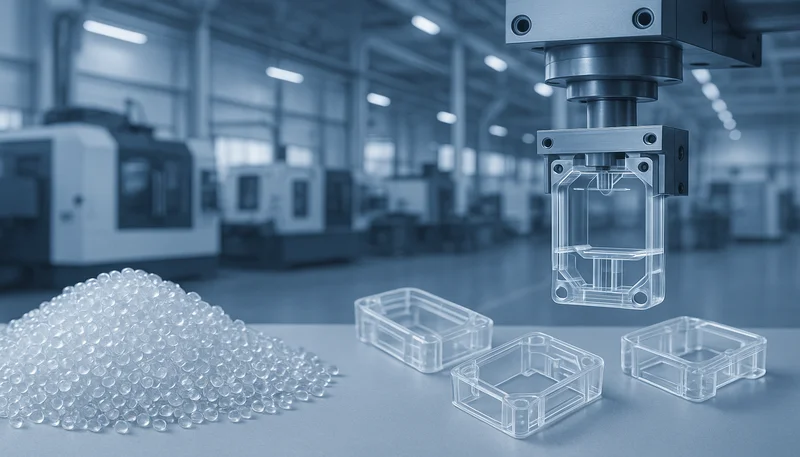
POM-spuitgieten is het proces waarbij polyoxymethyleen — een technische thermoplast1 — tot precisieonderdelen wordt gevormd. We noemen POM de ‘kunststof die metaal vervangt’ vanwege zijn metaalachtige stijfheid bij een lager gewicht.
Als u leveranciers vergelijkt of inkoop plant, behandelt onze gids voor het selecteren van een spuitgietleverancier de voorbereiding van offerteaanvragen, kwalificatie en controles van commerciële risico’s.
POM bestaat in twee hoofdtypen: homopolymeer (zoals Delrin van DuPont) en copolymeer (zoals Celcon van Celanese of Ultraform van BASF). Homopolymeer POM biedt een iets hogere mechanische sterkte en stijfheid, terwijl copolymeer POM een betere thermische stabiliteit en eenvoudigere verwerking met minder porositeit in de middellijn biedt.
De wereldwijde vraag naar POM-spuitgietonderdelen blijft groeien, gedreven door het streven van de auto-industrie naar lichtere componenten en de behoefte van de elektronicasector aan maatvaste behuizingen. De zelfsmerende eigenschappen van POM maken het ideaal voor bewegende onderdelen die anders met toegevoegde smeermiddelen metaal-op-metaalcontact zouden vereisen.
Wat zijn de belangrijkste eigenschappen die POM ideaal maken voor spuitgieten?
De belangrijkste eigenschappen die POM ideaal maken voor spuitgieten vormen de hoofdcategorieën of opties die in dit gedeelte worden toegelicht. POM is ideaal voor spuitgieten omdat het een zeldzame combinatie biedt van hoge treksterkte (65–70 MPa), lage wrijving (coëfficiënt 0,20–0,35), uitstekende kruipweerstand2 en minimale vochtopname — eigenschappen die het tot een van de veelzijdigste technische kunststoffen maken die we verwerken.
| Eigendom | POM-homopolymeer | POM-copolymeer | Eenheid |
|---|---|---|---|
| Treksterkte | 65–70 | 58–65 | megapascal |
| Buigmodulus | 2,800–3,200 | 2,500–2,900 | megapascal |
| Rek bij breuk | 25–45 | 40–75 | % |
| Slagvastheid (Izod, gekerfd) | 65–80 | 50–65 | J/m |
| Smeltpunt | 175 | 165 | °C |
| HDT bij 1.8 MPa | 110 | 100 | °C |
| Wrijvingscoëfficiënt | 0.20–0.35 | 0.25–0.38 | — |
| Matrijskrimp3 | 1.8–2.5 | 1.8–2.2 | % |
| Wateropname (24 uur) | 0.20 | 0.22 | % |
Een eigenschap die POM onderscheidt, is zijn kruipweerstand. In tegenstelling tot veel kunststoffen die vervormen onder aanhoudende belasting, behoudt POM zijn vorm zelfs onder continue spanning bij verhoogde temperaturen. We hebben POM-tandwielen getest die meer dan 10.000 uur onder belasting draaien met minder dan 0,3 mm dimensionale verandering.
"“Door de lage vochtopname is POM een van de maatvastste kunststoffen voor precisiedelen.”"True
Met slechts 0,20% wateropname in 24 uur behoudt POM ook in vochtige omgevingen nauwe toleranties. Daarom is het het voorkeursmateriaal voor precisietandwielen, lagers en instrumentbehuizingen.
"‘POM neemt net als nylon veel vocht op en moet daarom vóór het vormen altijd worden voorgedroogd.’"False
POM heeft een zeer lage waterabsorptie (0.20–0.22% in 24 uur), veel lager dan de 1.5–2.8% van nylon. Hoewel voordrogen bij 80°C gedurende 2–4 uur wordt aanbevolen voor een optimale oppervlakteafwerking, is POM veel minder vochtgevoelig dan polyamiden.
Wat zijn de optimale verwerkingsparameters voor POM-spuitgieten?
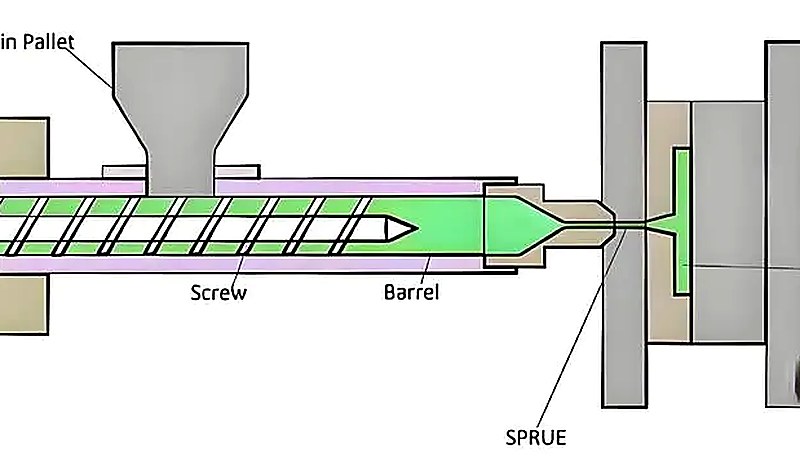
Optimale POM-verwerking vereist cilindertemperaturen van 175–210°C, matrijstemperaturen van 80–120°C en injectiedrukken van 70–120 MPa. Het correct instellen van deze parameters maakt het verschil tussen perfecte onderdelen en afval.
| Parameterwaarde | Homopolymeer-POM | POM-copolymeer | Opmerkingen |
|---|---|---|---|
| Cilindertemperatuur (achterzijde) | 180–190°C | 175–185°C | Vermijd temperaturen boven 220 °C |
| Cilindertemp. (midden) | 190–200°C | 185–195°C | Geleidelijke toename |
| Cilindertemperatuur (voorzijde) | 200–210°C | 190–205°C | Spuitmond 5 °C lager |
| Schimmel Temperatuur | 80–120°C | 80–110°C | Hoger = betere kristalliniteit |
| Injectiedruk | 80–120 MPa | 70–110 MPa | Pas aan voor de wanddikte |
| Houddruk | 50–80% van de injectiedruk | 50–75% van de injectiedruk | Cruciaal voor krimp |
| Injectiesnelheid | Gemiddeld | Middelmatig tot middelmatig-hoog | Te snel veroorzaakt ontgassing |
| Tegendruk | 5–15 MPa | 5–10 MPa | Verblijftijd minimaliseren |
| Koeltijd | 15–40s | 15–35s | Hangt af van de wanddikte |
| Drogen | 80°C / 2–4h | 80°C / 2–4h | Aanbevolen, niet kritisch |
Onze ervaring leert dat oververhitting de meest voorkomende fout bij POM is. Wanneer POM thermisch degradeert, komt formaldehydegas vrij, wat bellen, zilverstrepen en een scherpe geur veroorzaakt. We houden de cilindertemperatuur strikt onder 220°C en beperken de verblijftijd in de cilinder tot minder dan 5 minuten.
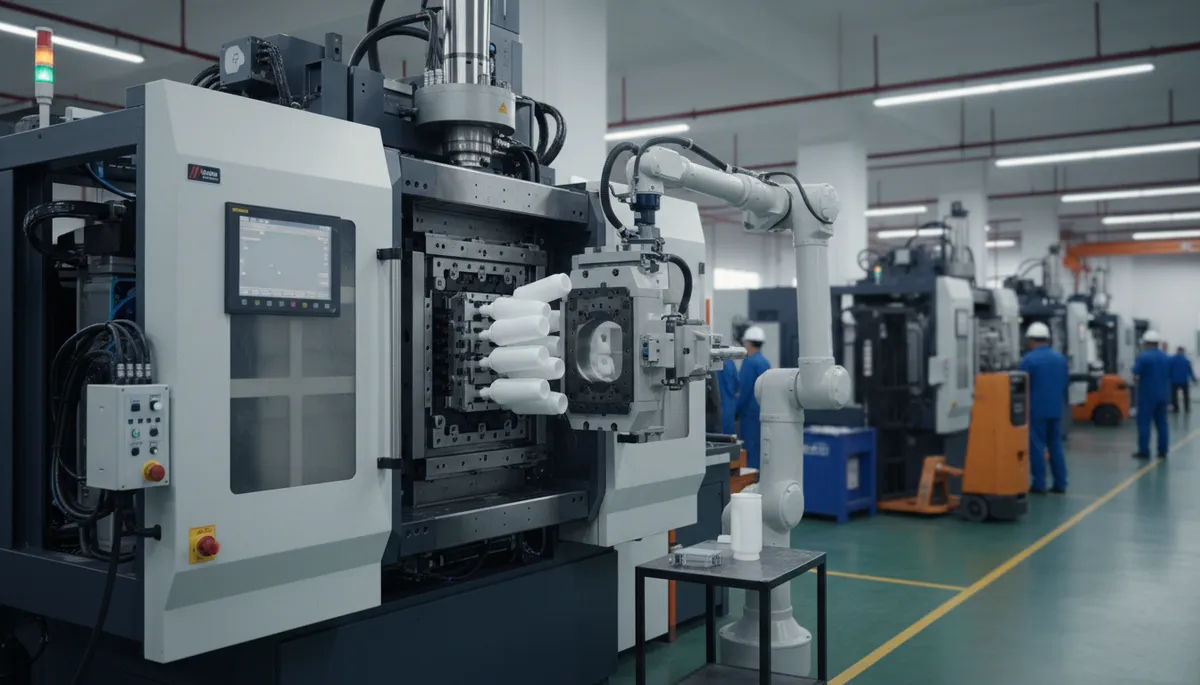
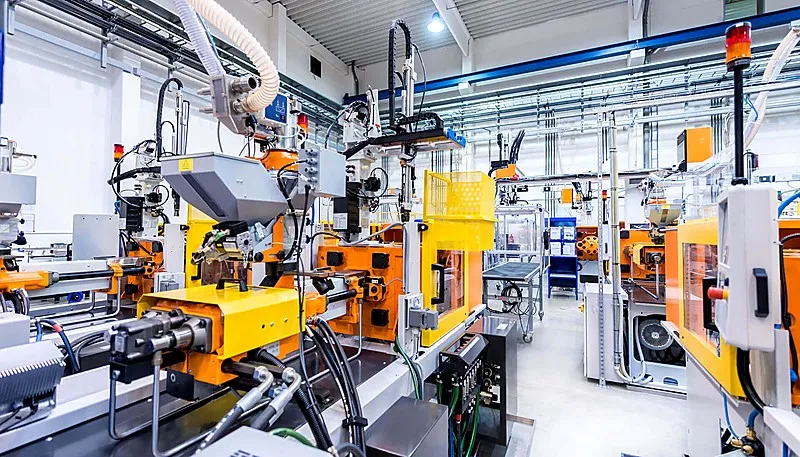
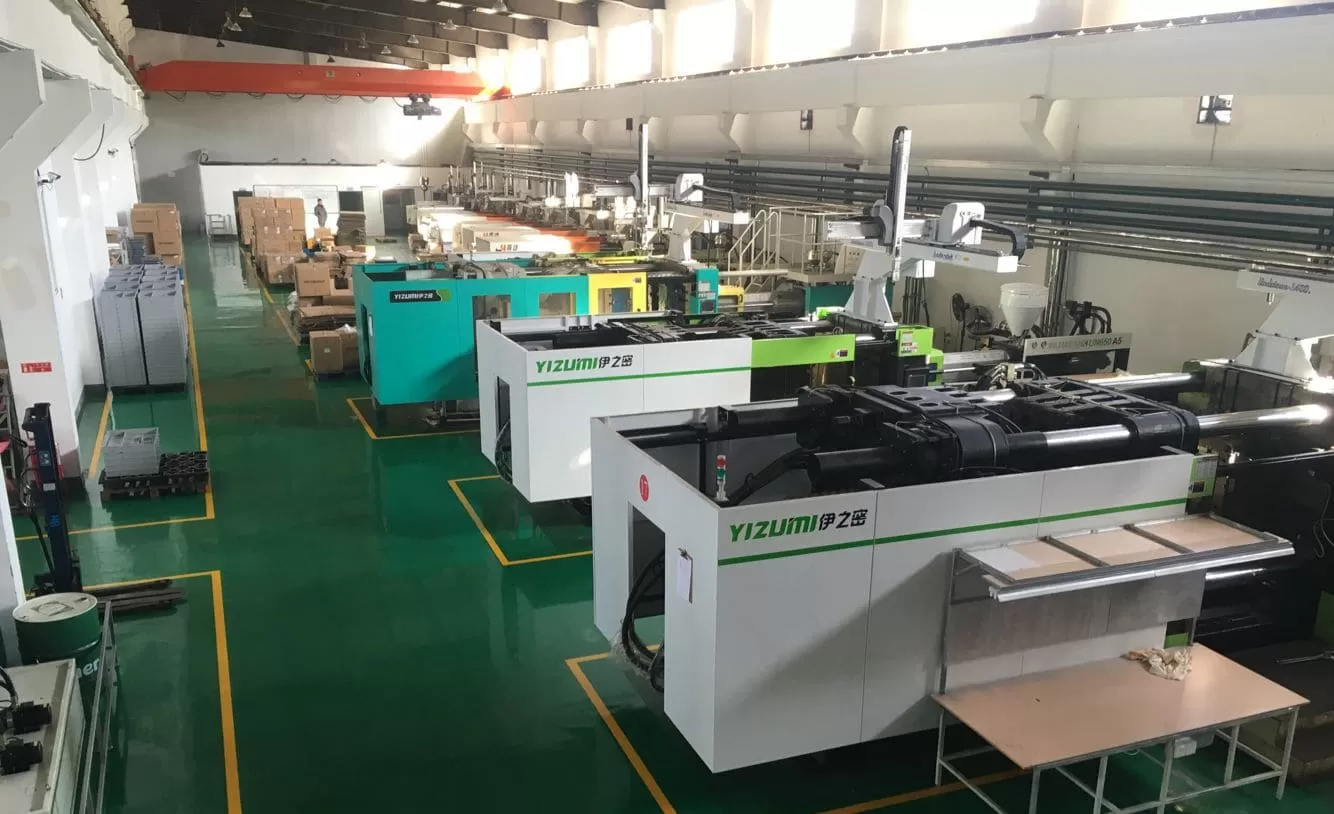
In onze fabriek in Shanghai hebben we 47 spuitgietmachines van 90T tot 1850T, die meer dan 400 materialen verwerken, waaronder meerdere POM-kwaliteiten. Dit machinepark stelt ons in staat om POM-onderdelen te vormen, van kleine precisietandwielen tot grote automobielcomponenten.
De matrijstemperatuur speelt een cruciale rol in de kwaliteit van POM-onderdelen. Voor de meeste onderdelen gebruiken we doorgaans een matrijstemperatuur van 90–100 °C. Hogere matrijstemperaturen (tot 120 °C) verbeteren de kristalliniteit, oppervlakteafwerking en maatvastheid, maar verlengen de cyclustijd. Voor tandwielen en precisieonderdelen kiezen we altijd een hogere temperatuur.
Wat zijn veelvoorkomende fouten bij POM-spuitgieten en hoe lost u ze op?
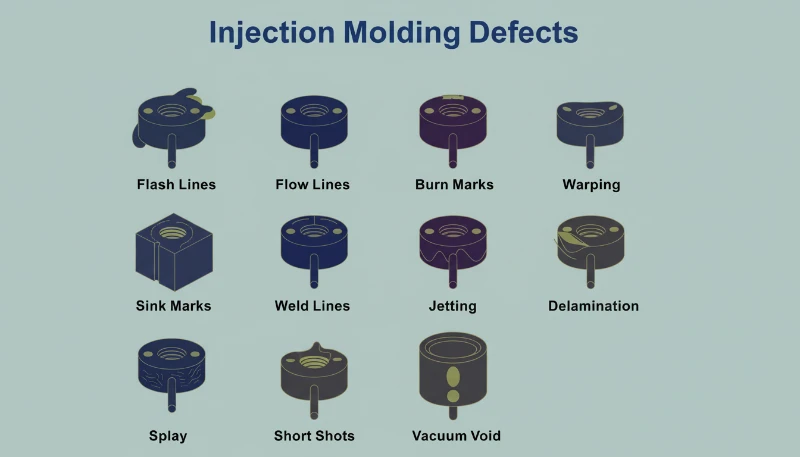
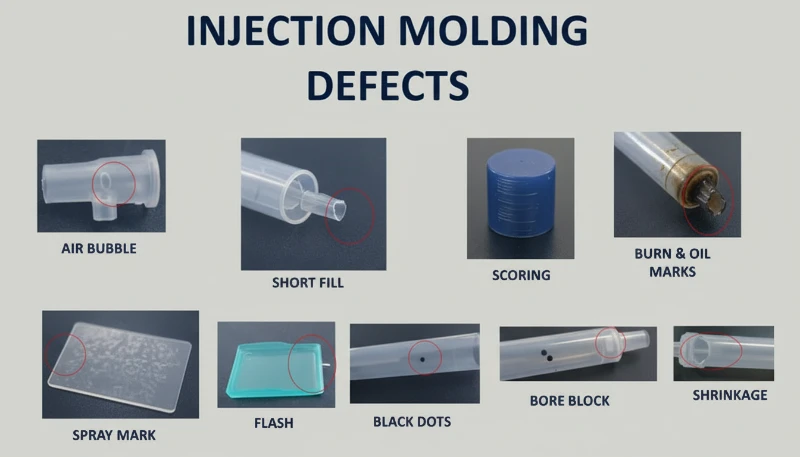
De meest voorkomende POM-defecten zijn zinkplekken, vervorming, porositeit in de kern en sproeivlekken—te voorkomen door temperatuur en druk te regelen. Hieronder staan gerichte oplossingen.
| Defect | Hoofdoorzaak | Oplossing |
|---|---|---|
| Gootsteentekens | Onvoldoende nadruk; dikke zones | Verhoog nadrukdruk of nadruktijd; verminder de wanddikte; voeg uithollingen toe |
| Vervorming | Ongelijkmatige koeling; differentiële krimp | Gelijkmatige wanddikte; optimaliseer koelkanalen; pas de matrijstemperatuur aan |
| Porositeit in de hartlijn | Dikke wanden; onvoldoende nadruk (homopolymeer) | Gebruik POM-copolymeer; verhoog de nadruk; verminder de wanddikte |
| Splay-/zilverstrepen | Vocht; thermische degradatie | 1.8–2.5% (stroming), 1.6–2.0% (kruisstroom) |
| Uitgassing van formaldehyde | Oververhitting boven 220°C | Verlaag de cilindertemperatuur; minimaliseer de verblijftijd; spoel regelmatig |
| Brosse onderdelen | Overkristallisatie; verontreiniging | Verlaag de matrijstemperatuur; controleer de materiaalzuiverheid |
| Braamvorming | Te hoge injectiedruk; versleten matrijs | Verlaag de druk; herstel de deelvlakken van de matrijs |
Een POM-specifiek defect waar we goed op letten is porositeit in de middellijn. Dit komt vooral voor in homopolymeer POM-onderdelen met dikke doorsneden. De buitenste schil stolt en kristalliseert terwijl de kern nog gesmolten is, en wanneer de kern krimpt, trekt deze van zichzelf weg, waardoor interne holtes ontstaan. Omschakelen naar copolymeer POM of het herontwerpen van onderdelen met uitgeholde secties lost dit probleem in de meeste gevallen op.
Welke toepassingen gebruiken POM-spuitgietonderdelen?
Spuitgegoten POM-onderdelen komen voor in vrijwel elke sector waarin precisie, duurzaamheid en lage wrijving vereist zijn. De unieke combinatie van materiaaleigenschappen maakt POM in veel toepassingen onvervangbaar.
Automobielsector (40% van het POM-verbruik): Onderdelen van brandstofsystemen (brandstofniveausensoren en tankdoppen), veiligheidsgordelmechanismen, deurslotsystemen, tandwielen voor raammechanismen, tandwielen voor HVAC-actuatoren en clips voor interieurbekleding. We hebben brandstofrailclips geproduceerd voor een grote Duitse OEM die meer dan 500.000 cycli zonder één defect doorliepen.
Consumentenelektronica: Toetsenbordmechanismen, printertandwielen, ventilatorlagers, ritsschuivers en penmechanismen. Door de geschiktheid voor klikverbindingen en de terugveereigenschappen is POM perfect voor clips en sluitingen in elektronische apparaten.
Industrie: Schakels van transportkettingen, pompwaaiers, klephuizen, lagerbussen en veerelementen. Dankzij de vermoeiingsweerstand is POM bestand tegen miljoenen belastingscycli in industriële automatiseringsapparatuur.
"“De natuurlijke smerende werking van POM maakt het een van de beste kunststoffen voor tandwielen en lagers die zonder externe smering werken.”"True
POM heeft een wrijvingscoëfficiënt van 0.20–0.35, een van de laagste onder technische kunststoffen. Contactoppervlakken van POM op POM en POM op metaal presteren goed zonder smering, waardoor het het voorkeursmateriaal is voor zelfsmerende tandwielen, lagers en schuifmechanismen.
"‘POM is een uitstekende keuze voor buitentoepassingen vanwege zijn uitstekende UV-bestendigheid.’"False
POM heeft een slechte UV-bestendigheid en degradeert bij langdurige blootstelling aan zonlicht. POM-onderdelen voor buitengebruik vereisen UV-stabiliserende additieven of beschermende coatings. Voor uitsluitend buitentoepassingen zijn materialen zoals ASA of UV-gestabiliseerd ABS betere keuzes.
Medische hulpmiddelen: Mechanismen voor inhalatoren, onderdelen van insulinepennen en handgrepen van chirurgische instrumenten. POM van medische kwaliteit (FDA-conform copolymeer) biedt de precisie en chemische bestendigheid die in de gezondheidszorg nodig zijn.
Sanitair en hang- en sluitwerk: Kraanpatronen, klepstelen, kraangrepen en buisfittingen. De bestendigheid van POM tegen heet water (continu tot 80°C) en reinigingsmiddelen maakt het ideaal voor sanitaire toepassingen.
Hoe moet u onderdelen ontwerpen voor het spuitgieten van POM?
De belangrijkste ontwerpregels voor POM-onderdelen zijn uniforme wanden van 1,0–3,5 mm, een lossingshoek van 0,5°–1,5° per zijde en een rib-wandverhouding van 50–60% om de krimp van 1,8–2,5% in de spuitgietmatrijs te beheersen.
| Ontwerpparameter | Aanbevolen waarde | Waarom dit belangrijk is |
|---|---|---|
| Wanddikte | 1.0–3.5 mm (gelijkmatig) | Voorkomt inval en porositeit in de hartlijn |
| Trekhoek | 0,5°–1,5° per zijde | POM krimpt om kernen; vereist meer lossingshoek dan ABS |
| Ribdikte | 50–60% van de wand | Voorkomt invalplekken op het tegenoverliggende oppervlak |
| Rib hoogte | ≤ 3× wanddikte | Hogere ribben zijn moeilijk te vullen en uit te werpen |
| Afrondingsstraal | ≥0,5 mm (0,25× de wanddikte) | Scherpe hoeken veroorzaken spanningsconcentraties |
| Buitendiameter boss | 2× schroefdiameter | Voorkomt barsten bij het indraaien van de schroef |
| Rek in de klikverbinding | ≤ 4% (eenmalig gebruik), ≤ 2% (herhaald) | Vermoeiingsgrens van POM voor levende scharnieren |
| Krimptoeslag | 1.8–2.5% (vloeirichting), 1.6–2.0% (dwars op de vloeirichting) | POM Spuitgieten: Complete Gids voor Acetaal Spuitgieten |
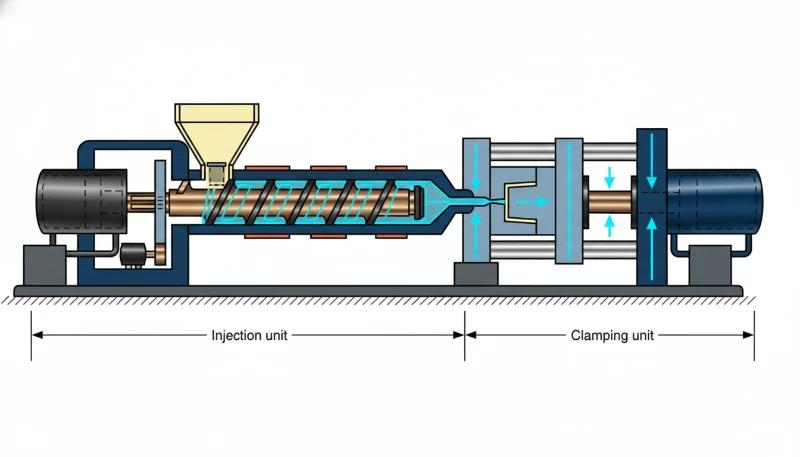
In onze ontwerpbeoordelingen is het belangrijkste probleem bij POM-onderdelen een niet-uniforme wanddikte. Waar dikke en dunne secties samenkomen, koelt de dikke sectie langzamer af, wat verschillend krimpgedrag veroorzaakt dat leidt tot vervorming en zinkplekken. Wij adviseren altijd om dikke secties uit te hollen en de wanddikte binnen een variatie van ±10% over het gehele onderdeel te houden.
POM is door zijn uitstekende terugveereigenschappen een van de beste kunststoffen voor klikverbindingen en filmscharnieren. We adviseren echter de rek te beperken tot 4% voor eenmalig gebruikte klikverbindingen en 2% voor herhaalde montage/demontage. Voor tandwieltanden passen we per tandprofiel een krimpcompensatie van 0.02–0.04 mm toe om AGMA-kwaliteitsklassen te halen.
Hoe beïnvloedt het matrijsontwerp de kwaliteit van POM-onderdelen?
De meest kritieke matrijsontwerpfactoren voor POM zijn plaatsing van de ingang, uniformiteit van koeling en ontluchting. De hoge krimp en formaldehyde-uitgassing van POM maken een precies matrijsontwerp essentieel.
Aanspuitontwerp: We geven bij POM-onderdelen de voorkeur aan onderzeese of penaanspuitingen, omdat deze automatisch afbreken en minimale afdrukken achterlaten. Bij tandwielen zorgen membraanaanspuitingen voor de gelijkmatigste vulling en de minste laslijnen bij de tanden. De afmeting van het aanspuitpunt moet 50–70% van de wanddikte bedragen.
Koelsysteem: Gelijkmatige koeling is cruciaal voor POM. De temperatuurvariatie over het matrijsoppervlak moet binnen ±5°C blijven. Voor complexe geometrieën gebruiken we conforme koelkanalen en voor zones waar snellere warmteafvoer nodig is inzetstukken van berylliumkoper. Bij tandwielen gebruiken we vaak ringvormige koelkanalen die het tandwielprofiel volgen.
Ontluchting: POM produceert tijdens de verwerking formaldehydegas, dus voldoende ontluchting is essentieel. De ontluchtingsdiepte moet 0,01–0,02 mm bedragen (POM heeft een lage viscositeit en vormt bij diepere ontluchtingen bramen). We plaatsen ontluchtingen bij elke laslijn en in de zones die volgens de matrijsvulkanalyse het laatst worden gevuld.
Uitwerpen: Door de hoge krimp van POM klemmen onderdelen stevig om kernen. We ontwerpen royale lossingshoeken (0,5°–1,5°), gebruiken meerdere gelijkmatig verdeelde uitwerppennen en brengen soms lossingscoatings op kernoppervlakken aan. Bij diepgetrokken onderdelen voorkomt luchtondersteund uitwerpen vacuümvergrendeling.
Veelgestelde vragen over POM-spuitgieten
Kan POM worden gelakt of gegalvaniseerd?
POM heeft een zeer lage oppervlakte-energie, waardoor het zonder oppervlaktebehandeling moeilijk te lakken of te galvaniseren is. Vlambehandeling, plasmabehandeling of chemisch etsen kan de hechting verbeteren. Voor decoratieve onderdelen adviseren we doorgaans echter over te stappen op ABS of PC/ABS, waarop lak en galvanische lagen veel gemakkelijker hechten.
Wat is het verschil tussen POM-homopolymeer en -copolymeer?
Homopolymeer POM (zoals Delrin) biedt 5–10% meer mechanische sterkte en stijfheid, maar is gevoeliger voor porositeit op de hartlijn in dikke secties en heeft een smaller procesvenster. Copolymeer POM (zoals Celcon of Ultraform) verwerkt eenvoudiger, heeft een betere chemische bestendigheid en degradeert minder snel thermisch. Voor de meeste toepassingen adviseren we copolymeer.
Moet POM vóór het spuitgieten worden gedroogd?
Door de lage vochtopname van POM (0.20%) wordt drogen aanbevolen, maar is het voor de meeste toepassingen niet strikt vereist. Standaard drogen we 2–4 uur voor bij 80°C om een optimale oppervlaktekwaliteit te garanderen. Voor kritieke cosmetische onderdelen is drogen essentieel.
Is POM door de FDA goedgekeurd voor contact met voedingsmiddelen?
Ja, bepaalde copolymeerkwaliteiten van POM (zoals Celcon M90 en Hostaform C9021) voldoen aan de FDA-eisen voor toepassingen die met levensmiddelen in contact komen. Controleer vóór productie altijd bij de harsleverancier of de specifieke kwaliteit de FDA-status heeft.
Waardoor ontstaat het witte residu op POM-matrijsoppervlakken?
De witte afzetting bestaat uit formaldehyde- en trioxaanoligomeren die vrijkomen tijdens de verwerking van POM. Regelmatige matrijsreiniging (elke 4–8 productie-uren), voldoende ontluchting en cilindertemperaturen onder 215°C beperken deze ophoping. Sommige bedrijven gebruiken matrijsreinigingsmiddelen die specifiek voor POM-residu zijn ontwikkeld.
Hoe verhoudt POM zich tot nylon voor tandwieltoepassingen?
Voor tandwielen heeft POM doorgaans de voorkeur boven nylon vanwege de lagere vochtopname (0,2% tegenover 2,5%), betere maatvastheid, lagere wrijvingscoëfficiënt en consistentere mechanische eigenschappen bij verschillende luchtvochtigheden. Nylon biedt een hogere slagvastheid en betere prestaties bij hoge temperaturen. Voor tandwielen die in natte of vochtige omgevingen draaien, is POM duidelijk de beste keuze.
Wat zijn de belangrijkste conclusies voor POM-spuitgieten?
POM-spuitgieten is een beproefd productieproces voor zeer nauwkeurige, wrijvingsarme en maatvaste kunststofonderdelen. Of u nu tandwielen voor een autotransmissie of clips voor consumentenelektronica ontwerpt, POM levert de mechanische prestaties van metaal tegen een fractie van de kosten en het gewicht. De sleutels tot succes zijn het beheersen van verwerkingstemperaturen onder 220°C, ontwerpen met een uniforme wanddikte om 1.8–2.5% krimp te beheersen en zorgen voor voldoende matrijsontluchting om het vrijkomen van formaldehyde af te voeren.
Bij ZetarMold verwerken wij al meer dan 20 jaar POM voor automotive, industriële en consumententoepassingen. Ons team behandelt alles van DFM-beoordelingen en matrijsontwerp tot massaproductie en kwaliteitsinspectie. Als u aan een project werkt dat POM-spuitgietonderdelen nodig heeft, neem dan contact op met ons technische team voor een gratis DFM-beoordeling en offerte. Zie onze Complete Gids voor Spuitgieten voor een uitgebreid overzicht.
Vraag een offerte aan voor uw spuitgietproject
Ontvang concurrerende prijzen, DFM-feedback en een productieplanning van het engineeringteam van ZetarMold.
Vraag een gratis offerte aan →
technische thermoplast: Een technische thermoplast is een categorie kunststoffen met betere mechanische en thermische eigenschappen dan standaardkunststoffen, geschikt voor constructieve en precisietoepassingen. ↩
kruipweerstand: Kruipweerstand is het vermogen van een materiaal om geleidelijke vervorming onder langdurige mechanische belasting te weerstaan, wat cruciaal is voor dragende onderdelen. ↩
krimp: POM-krimp is de volumevermindering van 1,8 tot 2,5 procent die optreedt wanneer gesmolten POM in de matrijscaviteit afkoelt en stolt. ↩