 Перейти к содержанию

Холодный сгусток — это один из тех литьё под давлением1 дефекты, которые подкрадываются незаметно. Вы устанавливаете температуры, делаете несколько удачных выстрелов, а затем в вашей детали, прямо у литника или в литниковой системе, появляется затвердевший кусок пластика. Это портит внешнюю поверхность, ослабляет структурную целостность и может забраковать всю партию, прежде чем вы это заметите.
Я видел, как холодные сгустки возникают со всем: от корпусов из АБС до шестерен из стеклонаполненного нейлона. В большинстве случаев коренная причина сводится к одному из трех факторов: недостаточная температура сопла, плохо спроектированный карман для холодного сгустка или чрезмерная декомпрессия цилиндра. Разочаровывает то, что холодные сгустки появляются не всегда последовательно — они могут возникать только при холодных запусках или только в определенных гнездах многогнездной формы.
Это руководство охватывает все аспекты образования холодных сгустков — от физики затвердевания расплава в сопле и литниковой втулке до проектирование пресс-форм2 конструктивных особенностей, которые улавливают или не улавливают эти замерзшие пробки. Независимо от того, устраняете ли вы существующий дефект или проектируете новую форму с нуля, вы найдете практические шаги, основанные на реальном производственном опыте наших литьё под давлением операции.
- Cold slug = solidified plastic trapped in the melt stream, usually at the nozzle, gate, or runner
- The number one cause is nozzle tip temperature dropping below the melt freezing point between shots
- Proper cold slug well design in the mold catches slugs before they reach the cavity
- Hot runner systems nearly eliminate cold slug but add cost and maintenance complexity
- Detection ranges from simple visual checks to X-ray and thermal analysis for critical parts
What Is a Cold Slug in Injection Molding?
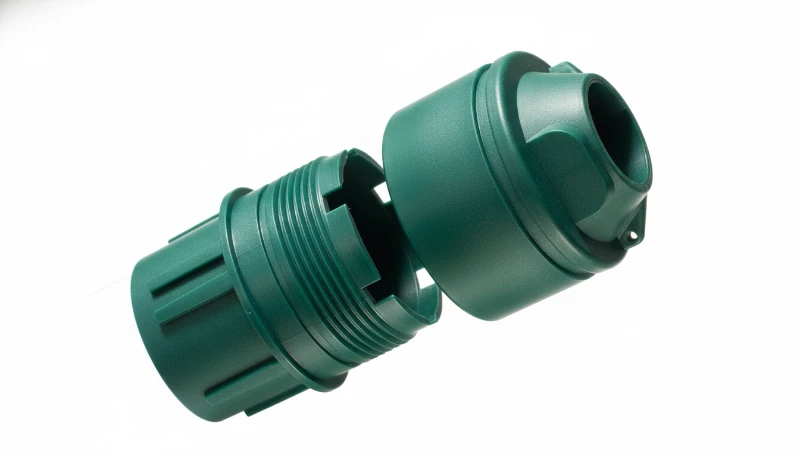
Холодный сгусток — это затвердевший кусок пластика, который образуется, когда температура расплава падает ниже точки замерзания до заполнения полости. Это не недолив или утяжина — холодные сгустки — это преждевременно застывший материал, занесенный в деталь последующими циклами впрыска. Обычно они выглядят как выпуклости, обесцвеченные пятна или небольшие впадины в области литника.
For a broader look at проектирование пресс-форм для литья под давлением, our pillar guide covers tooling structure, thermal control, and manufacturability tradeoffs.
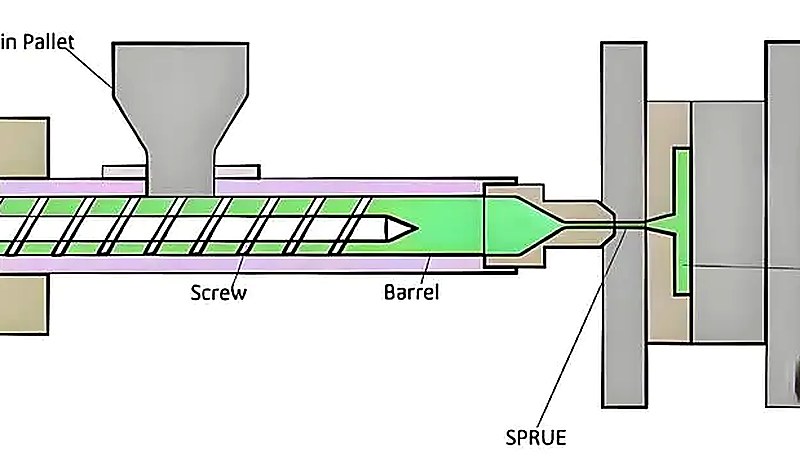
In technical terms, cold slugs typically form at three locations: (1) at the литьё под давлением machine nozzle tip, where heat loss is fastest between shots; (2) in the sprue and runner system, where the melt travels through cold steel channels; and (3) at the gate, where the cross-section narrows and the flow velocity changes dramatically. Each location has different root causes and different fixes.
On our shop floor, we see cold slug most often during cold starts, when the mold has not reached thermal equilibrium yet, or when production switches from a high-melt-temperature material (like PEEK at 370 °C) to something cooler (like PP at 220 °C) and the operator does not purge the barrel completely. The residual high-temp material solidifies in the nozzle and gets injected as a cold slug into the first few shots of the new run.
What Causes Cold Slug During Injection Molding?
The root cause is always the same: the melt loses too much heat before it reaches the cavity. But the reasons behind that heat loss vary. Here are the four most common culprits we encounter in production.
Nozzle Temperature Too Low or Unstable
The nozzle is the last point where you can control melt temperature before it enters the mold. If the nozzle heater band is undersized, poorly controlled, or simply set too low, the melt at the tip cools between shots. When the next injection cycle starts, that cooled plug of plastic gets pushed into the sprue as a cold slug. This is especially common with materials that have a narrow processing window, such as polycarbonate or POM.
We once traced a recurring cold slug problem on a medical device housing back to a worn thermocouple on the nozzle — the controller showed 260 °C, but the actual tip temperature was cycling between 230 °C and 270 °C. Replacing the thermocouple and adding an insulation jacket solved it immediately.
«Холодные пробки образуются только в литьевых системах с холодным литником.»Правда
False. Cold slugs can form in any injection molding system, including горячий бегун3 форм, если температура наконечника сопла падает ниже точки замерзания расплава. Горячие литники снижают риск, но не устраняют его полностью.
«Повышение температуры сопла всегда устраняет холодные пробки.»Ложь
False. While low nozzle temperature is a common cause, cold slugs can also originate from cold mold surfaces, long runners, or excessive decompression. Simply cranking up the nozzle temperature can introduce other defects like stringing or material degradation.
Mold Temperature Below Optimal Range
When the mold steel is too cold, the melt solidifies on contact with the cavity walls. If the frozen layer builds up faster than the cavity fills, cold slugs appear in the part. This is particularly problematic for thin-wall molding, where the flow channel is already narrow.
The fix is not always to increase mold temperature — that can increase cycle time and cause warpage. Instead, you need to optimize the cooling circuit layout so that the temperature is uniform across the mold face, and ensure that the areas near the gate are warm enough to prevent premature freeze-off.
Excessive Barrel Decompression (Suck-Back)
Decompression — also called suck-back — pulls the melt away from the nozzle tip after holding pressure ends. If you overdo it, you pull air into the nozzle, and the melt at the tip oxidizes and cools rapidly. On the next shot, that degraded, cooled material enters the cavity as a cold slug. This is one of the most overlooked causes, because operators often add decompression to prevent drooling without realizing the side effect.
Long or Narrow Runner Systems
Every millimeter of runner length is an opportunity for the melt to lose heat. Long, thin runners with high surface-area-to-volume ratios cause rapid cooling. By the time the melt reaches the gate, its temperature may have dropped below the flow threshold, and the leading edge solidifies into a cold slug. This is why multi-cavity molds with balanced runner layouts are so important — they minimize the runner length to each cavity.
How Does Mold Design Contribute to Cold Slug?
Конструкция пресс-формы is probably the single biggest factor in whether cold slug becomes a chronic problem or a non-issue. A well-designed mold accounts for heat loss at every stage and includes features specifically meant to catch or prevent cold slugs.
The Cold Slug Well
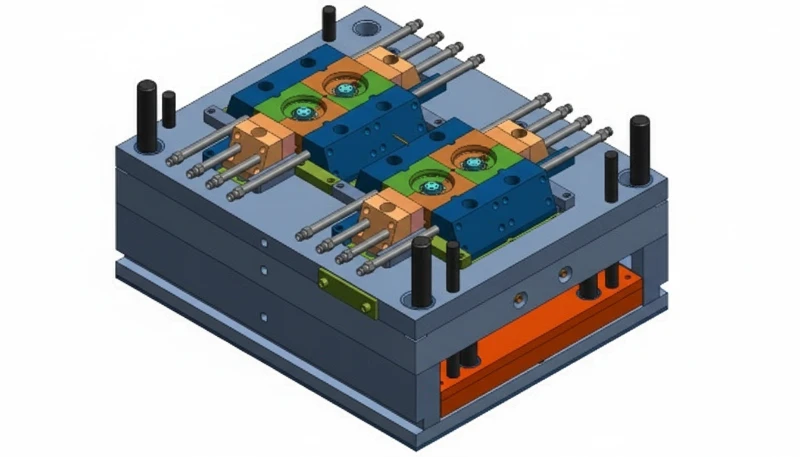
The cold slug well (also called a cold slug pocket or catch pad) is a small cavity placed directly opposite the sprue entrance in the runner system. Its job is to catch the cold slug that naturally forms at the nozzle tip between shots. When the injection cycle starts, the first material to enter the mold is the coldest — that plug gets pushed straight into the cold slug well instead of into the runner and cavity. If your mold does not have cold slug wells, or if they are too small, cold slugs will travel downstream.
A properly sized cold slug well should have a volume at least 1.5 times the volume of the nozzle tip channel. It should be easy to eject and clean during maintenance. In multi-cavity molds, every runner branch should have its own cold slug well.
Gate Design and Location
The gate is the narrowest point in the flow path, and it is where the melt undergoes the highest shear and the fastest cooling. Small gate diameters (especially sub-gates or pinpoint gates) create high shear heating but also restrict flow, which can cause the melt to freeze off prematurely. Edge gates and fan gates provide a larger cross-section and are less prone to cold slug formation.
Gate location also matters. If the gate is far from the sprue, the melt has to travel a longer runner, losing more heat along the way. Placing gates closer to the sprue — or using a hot runner drop directly into the cavity — eliminates most of the runner heat loss.
Runner Cross-Section Shape
Round runners have the lowest surface-area-to-volume ratio, meaning the least heat loss per unit of melt flow. Full-round runners are the gold standard for cold slug prevention. Trapezoidal runners are a common compromise because they are easier to machine, but they have about 20% more surface area than equivalent round runners, which translates to faster heat loss. Half-round runners should be avoided entirely for any material prone to cold slug.
«Холодную ловушку следует размещать напротив входа литника в литниковой системе.»Правда
True. The cold slug well is intentionally positioned opposite the sprue to catch the first, coldest material that enters the mold — the slug that formed at the nozzle tip between shots.
«Круглые литники вызывают больше холодных пробок, чем трапециевидные.»Ложь
False. Round runners have the lowest surface-area-to-volume ratio, meaning less heat loss and fewer cold slugs. Trapezoidal runners are easier to machine but lose heat faster.
What Process Parameters Lead to Cold Slug Formation?
Четыре технологических параметра, которые с наибольшей вероятностью вызывают холодные сгустки, — это скорость впрыска, давление подпрессовки, время охлаждения и декомпрессия цилиндра. Даже идеальная форма будет производить холодные сгустки при неправильных настройках. Вот как настроить каждый параметр.
Скорость впрыска
Slow injection speed gives the melt more time to cool as it flows through the runner. For materials with fast crystallization rates (like POM or PA66), a slow fill speed is almost guaranteed to produce cold slugs at the gate. Increasing injection speed pushes the melt through the runner faster, reducing residence time and heat loss. However, excessive speed can cause flash and jetting, so you need to find the sweet spot.
Holding Pressure and Time
Insufficient holding pressure means the cavity is not fully packed. The frozen layer at the walls grows inward, and the remaining melt in the center can solidify into a cold slug before the gate freezes off. If you see sink marks combined with cold slugs, increasing holding pressure and extending holding time often solves both problems simultaneously.
Время охлаждения
Counterintuitively, excessive cooling time between shots can make cold slug worse on the next cycle. When the mold sits idle with cooling water flowing, the sprue bushing and gate area continue to cool down. By the time the next shot fires, those surfaces are colder than they were during steady-state production, and the leading edge of the new melt freezes on contact. Optimizing cooling time for the thickest section of the part — not the sprue — helps avoid this.
Материалы среднего риска:
How Can You Detect and Identify Cold Slugs?
Холодные сгустки обнаруживаются с помощью визуального осмотра, рентгеновского или КТ-сканирования, либо термического анализа (ДСК/ТГА). Раннее обнаружение предотвращает попадание бракованных деталей к заказчикам. На нашем заводе отдел контроля качества соотносит дефект со стадией заполнения, подпрессовки, охлаждения или извлечения, а затем отслеживает происхождение холодного материала. Наши инженеры также регистрируют температуру сопла, расстояние декомпрессии и процент брака при первом выстреле, чтобы корректирующие действия были привязаны к технологическим доказательствам, а не к догадкам.
Визуальный осмотр
Cold slugs show up as visible blemishes on the part surface — typically a raised bump, a discolored spot, or a small pit near the gate. On transparent parts (like PMMA lenses), cold slugs appear as cloudy or opaque inclusions. This is the fastest detection method and works for most cosmetic parts, but it will not catch internal cold slugs.
X-Ray and CT Scanning
Для критически важных применений — медицинских устройств, автомобильных компонентов безопасности, аэрокосмических деталей — нельзя полагаться только на визуальный контроль. Рентгеновское исследование и компьютерная томография (КТ) могут обнаружить внутренние холодные пробки, совершенно невидимые снаружи. КТ-сканирование особенно ценно, поскольку даёт трёхмерную карту точного местоположения, размера и формы дефекта.
Thermal Analysis (DSC/TGA)
When cold slugs are caused by material degradation or contamination (not just temperature issues), thermal analysis tools like Differential Scanning Calorimetry (DSC) help identify the problem. DSC can detect whether the cold slug material has a different melting point than the base resin, which indicates contamination or degraded material.
«Рентгеновский контроль может выявить внутренние холодные пробки, невидимые на поверхности.»Правда
True. X-ray and CT scanning are non-destructive methods that reveal internal defects, including cold slugs trapped inside the part wall or at the gate interface.
«Холодные пробки влияют только на внешний вид детали, а не на её механическую прочность.»Ложь
False. Cold slugs create stress concentrators and weak points inside the part. In structural applications, a cold slug can reduce impact strength and fatigue life significantly.
How Do You Prevent and Eliminate Cold Slugs?
Prevention is always cheaper than detection. Here is a systematic approach to eliminating cold slugs, organized from the easiest changes to the most involved modifications.
Quick Fixes (No Tooling Changes Required)
These changes can be made at the machine without modifying the mold:
Raise nozzle temperature by 5–10 °C — often enough to keep the melt at the tip above the freezing point between shots. Monitor for stringing or drooling as side effects.|||Reduce decompression distance — minimize suck-back to prevent drawing air into the nozzle. If drooling occurs, use a shut-off nozzle instead of decompression.|||Increase injection speed — faster fill reduces the time the melt spends in the cold runner. Ramp up speed gradually while watching for flash.|||Optimize mold temperature — raise the coolant temperature near the gate area by 5 °C increments. Use zoned cooling if your mold supports it.
Mold Modifications
If process changes do not solve the problem, the mold needs attention:
Add or enlarge cold slug wells — every runner branch should have a cold slug well sized to at least 1.5× the nozzle tip volume. This is a low-cost modification that can be done during a regular mold maintenance window.|||Switch from trapezoidal to full-round runners — reduces heat loss by approximately 20%. Requires recutting the runner channels on both A and B halves of the mold.|||Install a heated sprue bushing — keeps the sprue at melt temperature, preventing the most common cold slug formation point. This is a mid-cost modification that pays for itself quickly on high-volume runs.
Equipment Upgrades
For persistent cold slug problems on high-value production:
Система горячего прогона — the gold standard for cold slug elimination. The melt stays at temperature inside the manifold, so there is no cold runner heat loss. Hot runners add $5,000–$20,000+ to the mold cost depending on the number of drops, but they eliminate runner waste and virtually eliminate cold slugs.|||Shut-off nozzle — a spring-loaded or hydraulically actuated valve at the nozzle tip that seals the melt between shots. Prevents both drooling and the formation of a cold slug at the tip.|||Insulated hot sprue — a compromise between a full hot runner and a cold runner. The sprue is heated while the rest of the runner stays cold.
Lower cost than a full hot runner but still addresses the primary cold slug formation point.
«Системы с горячим литником практически исключают холодные пробки, поддерживая расплав при температуре внутри коллектора.»Правда
True. In a hot runner system, the melt travels through heated channels from the nozzle to the gate, so there is no opportunity for premature cooling. Cold slugs become extremely rare.
«Холодные пробки всегда видны на поверхности литой детали.»Ложь
False. Cold slugs can be fully embedded inside the part wall, invisible to the naked eye. Internal cold slugs require X-ray or CT scanning to detect and are particularly dangerous in structural applications.
What Materials Are Most Susceptible to Cold Slug?
Not all materials are equally prone to cold slug. The risk depends on three factors: melting temperature, crystallization speed, and melt viscosity. Materials that have high melting points, fast crystallization rates, or high viscosity are the most susceptible.
High-risk materials: PEEK (343–399 °C melt), LCP (280–350 °C), PPS (280–330 °C), and glass-filled nylons. These materials need very high barrel and nozzle temperatures, and even a small temperature drop can cause premature solidification.|||Medium-risk materials: Яркие пластиковые литые деталиLow-risk materials: PP, PE, PS, and ABS. These amorphous or slow-crystallizing materials have wide processing windows and tolerate temperature variations better.
If you are molding a high-risk material and cold slug is a recurring issue, consider whether a material with better flow characteristics (higher Melt Flow Index) could work for your application. Sometimes switching from a standard-grade PA66 to a high-flow grade with an MFI of 60+ g/10 min eliminates the problem entirely without any tooling changes.
Заключение
Холодный сгусток при литье под давлением — это, в конечном счете, проблема управления теплом. Расплав теряет слишком много тепла, прежде чем достигнет полости, и результатом становится затвердевший кусок пластика, встроенный в вашу деталь. Решение может быть таким простым, как повышение температуры сопла на 5 градусов, или таким сложным, как модернизация системы с горячеканальным литником. Когда симптом связан с восстановлением расплава или износом цилиндра, наши инженеры-технологи также проверяют настройку машины для литья под давлением с червячным впрыском, прежде чем менять оснастку. Ключ — диагностировать, где происходит потеря тепла — в сопле, в литниковой системе или у литника — и целенаправленно применять решение.
From two decades of running injection molding production at ZetarMold, a leading поставщик литья под давлением based in Shanghai, we have found that the most effective cold slug prevention strategy is a combination of proper mold design (cold slug wells, round runners, heated sprue bushings) and disciplined process control (nozzle temperature, injection speed, minimal decompression). Get these fundamentals right, and cold slug becomes a rare exception rather than a chronic headache.

Часто задаваемые вопросы
Часто задаваемые вопросы
What is the difference between a cold slug and a short shot?
A cold slug is a solidified piece of plastic that forms when the melt cools prematurely and gets trapped in the part or runner. A short shot occurs when the mold cavity is not completely filled with plastic — the part is missing material. They have different root causes: cold slugs stem from premature solidification at the nozzle, runner, or gate, while short shots usually result from insufficient injection pressure, inadequate venting, or an incorrect shot size setting on the machine.
Can cold slugs cause structural failure in molded parts?
Yes, cold slugs can absolutely cause structural failure in molded parts. A cold slug embedded inside a part wall creates a stress concentrator, acting as a microscopic notch that significantly reduces both impact strength and long-term fatigue resistance. In load-bearing applications such as automotive brackets, medical device housings, and consumer electronics enclosures, an internal cold slug can lead to premature crack initiation and catastrophic failure under repeated stress cycles. This is precisely why X-ray or CT inspection is considered essential for all structural and safety-critical plastic components.
How do I know if my cold slug well is large enough?
A properly sized cold slug well should have a volume at least 1.5 times the volume of the nozzle tip channel itself. You can verify this in production by inspecting the sprue puller after each cycle: if cold slug material overflows the well and enters the main runner, the well is clearly undersized for your application. Another reliable indicator is if you still observe cold slug defects in the finished part despite having a well installed — in that case, enlarge the well by approximately 50 percent and re-test during your next production run.
Does a hot runner system completely eliminate cold slugs?
Hot runners eliminate cold slugs caused by runner heat loss, which is the most common source in cold runner molds. The melt stays at temperature inside the heated manifold, so there is no opportunity for premature cooling in the runner. However, cold slugs can still form at the nozzle-to-manifold transition or at the gate tip if the thermal balance is incorrect. Proper hot runner design, consistent temperature control, and regular maintenance of heater zones are essential for achieving near-complete elimination.
What injection speed is best to prevent cold slugs?
Faster injection speeds reduce the melt residence time in the cold runner system, minimizing heat loss and the chance of premature solidification during the filling phase. The ideal speed depends on the specific material and part geometry — generally, you should use the fastest speed that does not cause flash, jetting, or burn marks on the part. For cold-slug-prone materials like POM or PA66, fill speeds of 80 to 120 mm per second are typical starting points. Always validate any speed changes with a small trial run before committing to full-scale production.
Why do cold slugs appear more often at the start of a production run?
During startup, the mold steel has not yet reached its thermal equilibrium — the cavity surfaces and runner channels are significantly cooler than their steady-state operating temperature. The first few shots lose heat rapidly to these cold steel surfaces, causing the leading melt front to solidify into cold slugs before the cavity fills completely. Running five to ten purge shots before starting production, and gradually ramping up to full cycle speed over the first twenty shots, helps the mold reach steady-state temperature and effectively minimizes startup cold slug defects.
-
литьё под давлением: Литье под давлением — это производственный процесс, при котором расплавленный пластик впрыскивается в полость формы для получения деталей с точной геометрией и повторяемым качеством. ↩
-
проектирование пресс-форм: Проектирование пресс-форм — это структурированный инженерный процесс для определения компоновки литников, геометрии литниковой системы, охлаждения, извлечения, вентиляции, выбора стали и допусков, чтобы деталь, изготовленная литьем под давлением, могла стабильно производиться. ↩
-
горячий бегун: горячеканальная литниковая система использует нагреваемые каналы внутри формы, чтобы поддерживать пластик в расплавленном состоянии от сопла до литника, устраняя отходы литниковой системы и снижая риск холодных сгустков. ↩







 EN
EN  ES
ES  FR
FR  DE
DE  PT
PT  AR
AR  RU
RU  JA
JA  KO
KO  IT
IT  NL
NL  TR
TR  PL
PL 