Ir al contenido
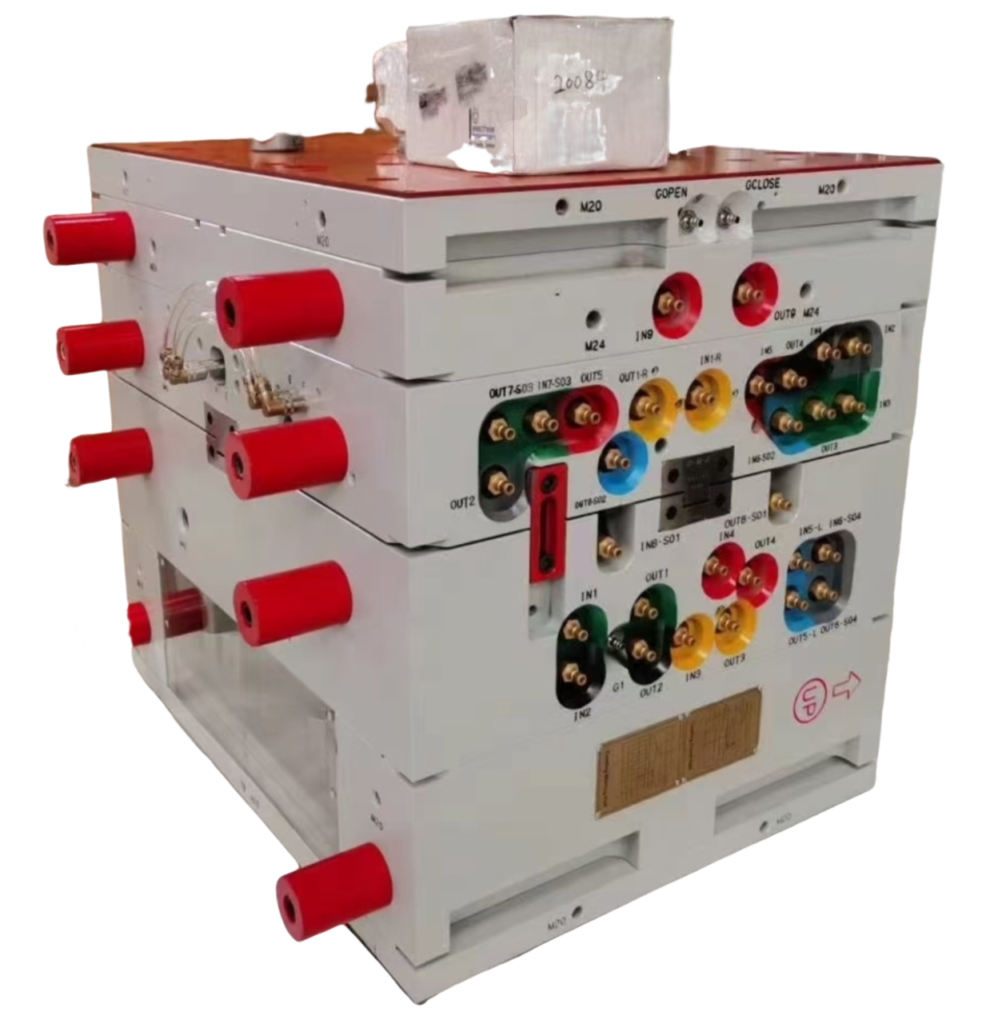
Cold slug is one of those moldeo por inyección1 defects that sneaks up on you. You set the temperatures, you run a few good shots, and then a solidified chunk of plastic appears in your part, right at the gate or in the runner. It ruins the cosmetic surface, weakens structural integrity, and can scrap an entire batch before you notice.
I have seen cold slug happen with everything from ABS housings to glass-filled nylon gears. In most cases, the root cause traces back to one of three things: inadequate nozzle temperature, a poorly designed cold slug well, or excessive barrel decompression. The frustrating part is that cold slug does not always show up consistently — it can appear only during cold starts, or only on certain cavities in a multi-cavity mold.
This guide covers every angle of cold slug formation — from the physics of melt solidification in the nozzle and sprue, to the diseño de moldes2 features that catch or fail to catch these frozen plugs. Whether you are troubleshooting an existing defect or designing a new mold from scratch, you will find actionable steps grounded in real production experience from our moldeo por inyección operaciones.
- Cold slug = solidified plastic trapped in the melt stream, usually at the nozzle, gate, or runner
- The number one cause is nozzle tip temperature dropping below the melt freezing point between shots
- Proper cold slug well design in the mold catches slugs before they reach the cavity
- Hot runner systems nearly eliminate cold slug but add cost and maintenance complexity
- Detection ranges from simple visual checks to X-ray and thermal analysis for critical parts
What Is a Cold Slug in Injection Molding?
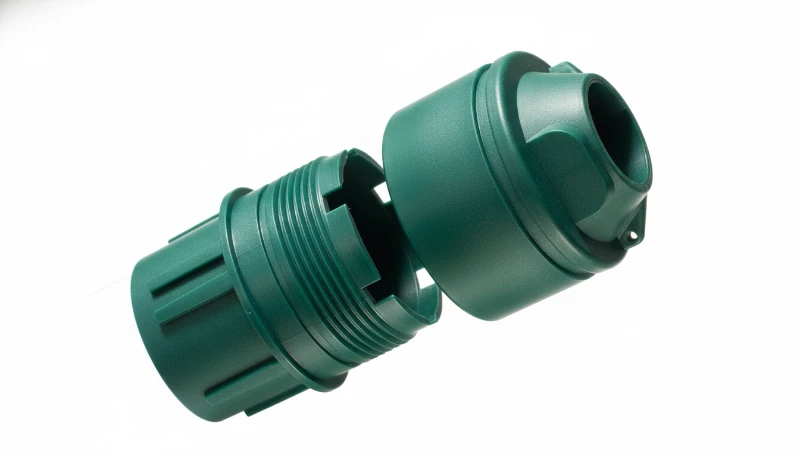
A cold slug is a solidified chunk of plastic that forms when melt temperature drops below the freezing point before the cavity fills. It is not a short shot or sink mark — cold slugs are prematurely frozen material carried into the part by subsequent injection cycles. They typically appear as raised bumps, discolored spots, or small pits near the gate area.
For a broader look at diseño de moldes de inyección, our pillar guide covers tooling structure, thermal control, and manufacturability tradeoffs.
In technical terms, cold slugs typically form at three locations: (1) at the moldeo por inyección machine nozzle tip, where heat loss is fastest between shots; (2) in the sprue and runner system, where the melt travels through cold steel channels; and (3) at the gate, where the cross-section narrows and the flow velocity changes dramatically. Each location has different root causes and different fixes.
On our shop floor, we see cold slug most often during cold starts, when the mold has not reached thermal equilibrium yet, or when production switches from a high-melt-temperature material (like PEEK at 370 °C) to something cooler (like PP at 220 °C) and the operator does not purge the barrel completely. The residual high-temp material solidifies in the nozzle and gets injected as a cold slug into the first few shots of the new run.
What Causes Cold Slug During Injection Molding?
The root cause is always the same: the melt loses too much heat before it reaches the cavity. But the reasons behind that heat loss vary. Here are the four most common culprits we encounter in production.
Nozzle Temperature Too Low or Unstable
The nozzle is the last point where you can control melt temperature before it enters the mold. If the nozzle heater band is undersized, poorly controlled, or simply set too low, the melt at the tip cools between shots. When the next injection cycle starts, that cooled plug of plastic gets pushed into the sprue as a cold slug. This is especially common with materials that have a narrow processing window, such as polycarbonate or POM.
We once traced a recurring cold slug problem on a medical device housing back to a worn thermocouple on the nozzle — the controller showed 260 °C, but the actual tip temperature was cycling between 230 °C and 270 °C. Replacing the thermocouple and adding an insulation jacket solved it immediately.
“Cold slugs only form in cold runner mold systems.”Verdadero
False. Cold slugs can form in any injection molding system, including canal caliente3 molds, if the nozzle tip temperature drops below the melt’s freezing point. Hot runners reduce the risk but do not eliminate it entirely.
“Increasing nozzle temperature always eliminates cold slug.”Falso
False. While low nozzle temperature is a common cause, cold slugs can also originate from cold mold surfaces, long runners, or excessive decompression. Simply cranking up the nozzle temperature can introduce other defects like stringing or material degradation.
Mold Temperature Below Optimal Range
When the mold steel is too cold, the melt solidifies on contact with the cavity walls. If the frozen layer builds up faster than the cavity fills, cold slugs appear in the part. This is particularly problematic for thin-wall molding, where the flow channel is already narrow.
The fix is not always to increase mold temperature — that can increase cycle time and cause warpage. Instead, you need to optimize the cooling circuit layout so that the temperature is uniform across the mold face, and ensure that the areas near the gate are warm enough to prevent premature freeze-off.
Excessive Barrel Decompression (Suck-Back)
Decompression — also called suck-back — pulls the melt away from the nozzle tip after holding pressure ends. If you overdo it, you pull air into the nozzle, and the melt at the tip oxidizes and cools rapidly. On the next shot, that degraded, cooled material enters the cavity as a cold slug. This is one of the most overlooked causes, because operators often add decompression to prevent drooling without realizing the side effect.
Long or Narrow Runner Systems
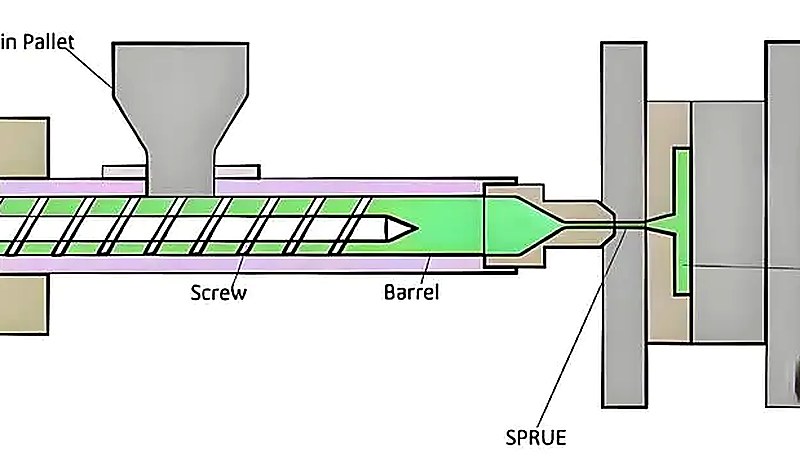
Every millimeter of runner length is an opportunity for the melt to lose heat. Long, thin runners with high surface-area-to-volume ratios cause rapid cooling. By the time the melt reaches the gate, its temperature may have dropped below the flow threshold, and the leading edge solidifies into a cold slug. This is why multi-cavity molds with balanced runner layouts are so important — they minimize the runner length to each cavity.
How Does Mold Design Contribute to Cold Slug?
Diseño de moldes is probably the single biggest factor in whether cold slug becomes a chronic problem or a non-issue. A well-designed mold accounts for heat loss at every stage and includes features specifically meant to catch or prevent cold slugs.
The Cold Slug Well
The cold slug well (also called a cold slug pocket or catch pad) is a small cavity placed directly opposite the sprue entrance in the runner system. Its job is to catch the cold slug that naturally forms at the nozzle tip between shots. When the injection cycle starts, the first material to enter the mold is the coldest — that plug gets pushed straight into the cold slug well instead of into the runner and cavity. If your mold does not have cold slug wells, or if they are too small, cold slugs will travel downstream.
A properly sized cold slug well should have a volume at least 1.5 times the volume of the nozzle tip channel. It should be easy to eject and clean during maintenance. In multi-cavity molds, every runner branch should have its own cold slug well.
Gate Design and Location
The gate is the narrowest point in the flow path, and it is where the melt undergoes the highest shear and the fastest cooling. Small gate diameters (especially sub-gates or pinpoint gates) create high shear heating but also restrict flow, which can cause the melt to freeze off prematurely. Edge gates and fan gates provide a larger cross-section and are less prone to cold slug formation.
Gate location also matters. If the gate is far from the sprue, the melt has to travel a longer runner, losing more heat along the way. Placing gates closer to the sprue — or using a hot runner drop directly into the cavity — eliminates most of the runner heat loss.
Runner Cross-Section Shape
Round runners have the lowest surface-area-to-volume ratio, meaning the least heat loss per unit of melt flow. Full-round runners are the gold standard for cold slug prevention. Trapezoidal runners are a common compromise because they are easier to machine, but they have about 20% more surface area than equivalent round runners, which translates to faster heat loss. Half-round runners should be avoided entirely for any material prone to cold slug.
“A cold slug well should be placed opposite the sprue entrance in the runner.”Verdadero
True. The cold slug well is intentionally positioned opposite the sprue to catch the first, coldest material that enters the mold — the slug that formed at the nozzle tip between shots.
“Los distribuidores redondos causan más babas frías que los distribuidores trapezoidales.”Falso
Falso. Los canales redondos tienen la menor relación superficie-volumen, lo que significa menos pérdida de calor y menos babas. Los canales trapezoidales son más fácil de mecanizar pero pierden calor más rápido.
What Process Parameters Lead to Cold Slug Formation?
Los cuatro parámetros del proceso que más probablemente causan babas frías son la velocidad de inyección, la presión de compactación, el tiempo de refrigeración y la decompresión del cilindro. Incluso un molde perfecto producirá babas frías con configuraciones incorrectas. Aquí se explica cómo ajustar cada parámetro.
Velocidad de inyección
Una velocidad de inyección baja da al fundido más tiempo para enfriarse mientras fluye por el canal. Para materiales con velocidades de cristalización rápidas (como POM o PA66), una velocidad de llenado baja casi garantiza la producción de babas frías en la entrada. Incrementar la velocidad de inyección impulsa el fundido más rápido por el canal, reduciendo el tiempo de residencia y la pérdida de calor. Sin embargo, una velocidad excesiva puede causar rebabas y chorreo, por lo que necesita encontrar el punto óptimo.
Holding Pressure and Time
Una presión de mantenimiento insuficiente significa que la cavidad no está completamente compactada. La capa congelada en las paredes crece hacia el interior, y el material fundido restante en el centro puede solidificarse en una baba fría antes que la entrada se congele. Si observa marcas de hundimiento combinadas con babas frías, aumentar la presión de mantenimiento y extender el tiempo de mantenimiento generalmente soluciona ambos problemas simultáneamente.
Tiempo de enfriamiento
Contraintuitivamente, un tiempo de refrigeración excesivo entre disparos puede hacer que la baba fría sea peor en el siguiente ciclo. Cuando el molde está inactivo con agua de refrigeración circulando, la boquilla de entrada y la área de la entrada continúan enfriándose. Cuando se dispara el siguiente ciclo, esas superficies están más frías que durante la producción en estado estable, y la parte frontal del nuevo material fundido se solidifica al contacto. Optimizar el tiempo de refrigeración para la sección más gruesa de la pieza — no para la entrada — ayuda a evitar esto.
En nuestra fábrica de Shanghai, operamos 47 máquinas de moldeo por inyección de 90T a 1850T. Los problemas de babas aparecen más frecuentemente en nuestras máquinas más grandes (800T y superiores), donde la distancia entre boquilla y molde es más larga y la gestión del calor se vuelve más crítica. Hemos aprendido a añadir calentadores externos de boquilla y chaquetas de aislamiento térmico en estas máquinas para mantener el material fundido a una temperatura consistente desde el cilindro hasta la entrada.
How Can You Detect and Identify Cold Slugs?
Las babas frías se detectan mediante inspección visual, radiografía o TC, o análisis térmico (DSC/TGA). La detección temprana evita que las piezas defectuosas lleguen a los clientes. En nuestra planta, el equipo de QC relaciona el defecto con la etapa de llenado, compactación, refrigeración o expulsión, luego rastrea el material frío hasta su origen. Los ingenieros también registran la temperatura del boquilla, la distancia de decompresión y la tasa de desperdicio del primer disparo para que la acción correctiva esté vinculada a evidencia del proceso, no a suposiciones.
Inspección visual
Las babas frías aparecen como defectos visibles en la superficie de la pieza — normalmente una protuberancia elevada, una zona decolorada o un pequeño hoyo cerca de la entrada. En piezas transparentes (como lentes de PMMA), las babas frías aparecen como inclusiones turbias o opacas. Este es el método de detección más rápido y funciona para la mayoría de piezas cosmética, pero no detectará babas frías internas.
Rayos X y Tomografía Computarizada
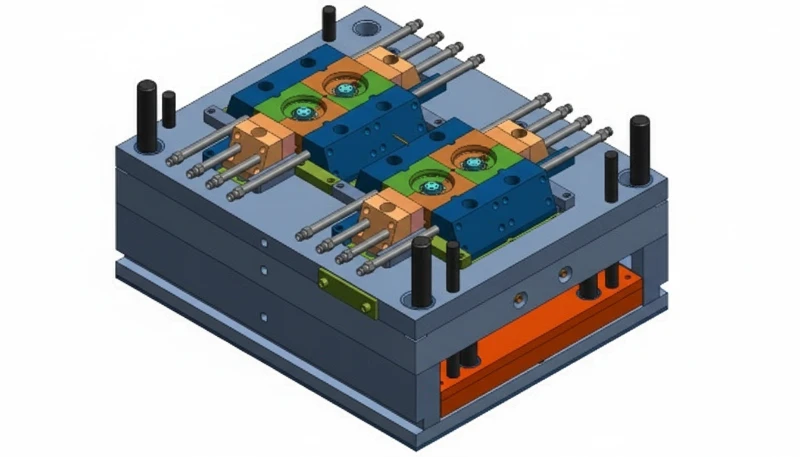
Para aplicaciones críticas — dispositivos médicos, componentes de seguridad automotriz, piezas aeroespaciales — no se puede depender únicamente de la inspección visual. La radiografía y la tomografía computarizada (TC) pueden detectar babas internas que son completamente invisibles desde el exterior. La TC es especialmente valiosa porque proporciona un mapa 3D de la ubicación exacta, tamaño y forma del defecto.
Análisis térmico (DSC/TGA)
Cuando las babas frías son causadas por degradación del material o contaminación (no solo por problemas de temperatura), herramientas de análisis térmico como la Calorimetría de Barrido Diferencial (DSC) ayudan a identificar el problema. La DSC puede detectar si el material de la baba fría tiene un punto de fusión diferente al de la resina base, lo cual indica contaminación o material degradado.
“La inspección por rayos X puede detectar babas internas que son invisibles en la superficie.”Verdadero
Verdadero. La radiografía y la TC son métodos no destructivos que revelan defectos internos, incluyendo babas frías atrapadas dentro de la pared de la pieza o en la interfaz de la entrada.
“Las babas frías solo afectan la apariencia de la pieza, no su resistencia mecánica.”Falso
Falso. Las babas frías crean concentradores de tensión y puntos débiles dentro de la pieza. En aplicaciones estructurales, una baba fría puede reducir significativamente la resistencia al impacto y la vida útil a fatiga.
¿Cómo se previenen y eliminan las babazas frías?
La prevención siempre es más económica que la detección. Aquí presentamos un enfoque sistemático para eliminar las babas frías, organizado desde los cambios más sencillos hasta las modificaciones más complejas.
Soluciones rápidas (No se requieren cambios en las herramientas)
Estos cambios pueden realizarse en la máquina sin modificar el molde:
Aumentar la temperatura de la boquilla por 5–10 °C — suele ser suficiente para mantener el material fundido en la punta por encima del punto de solidificación entre disparos. Monitorear la formación de fibras o baboseo como efectos secundarios.|||Reducir la distancia de decompresión — minimizar la retracción para evitar que el aire entre en la boquilla. Si ocurre baboseo, use una boquilla de cierre en lugar de decompresión.|||Increase injection speed — un llenado más rápido reduce el tiempo que el material fundido permanece en el distribuidor frío. Incrementar la velocidad gradualmente mientras se observa la formación de rebabas.|||Optimizar la temperatura del molde — aumentar la temperatura del refrigerante cerca del área de la entrada en incrementos de 5 °C. Utilizar refrigeración zonificada si el molde lo permite.
Modificaciones del molde
Si los cambios en el proceso no solucionan el problema, el molde necesita atención:
Agregar o ampliar pozos de babas frías — cada rama del canal debe tener un pozo de babas frías dimensionado al menos a 1.5× el volumen de la punta de la boquilla. Esta es una modificación de bajo costo que puede realizarse durante una ventana de mantenimiento regular del molde.Cambiar de canales trapezoidales a canales completamente redondos — reduce la pérdida de calor aproximadamente 20%. Requiere recortar los canales del distribuidor en ambas mitades A y B del molde.|||Instalar una boquilla de entrada caliente — mantiene la entrada a temperatura de fusión, previniendo el punto más común de formación de babas frías. Esta es una modificación de costo medio que se amortiza rápidamente en producciones de alto volumen.
Actualizaciones de equipos
Para problemas persistentes de babas en producción de alto valor:
Sistema de canal caliente — el estándar de oro para la eliminación de babas frías. El material fundido permanece a temperatura dentro del distribuidor, por lo que no hay pérdida de calor en el distribuidor frío. Los distribuidores calientes añaden $5,000–$20,000+ al costo del molde dependiendo del número de salidas, pero eliminan el desperdicio del distribuidor y prácticamente eliminan las babas frías.|||Boquilla de cierre — una válvula con resorte o accionada hidráulicamente en la punta del boquilla que sella el material fundido entre disparos. Previene tanto el baboseo como la formación de una baba fría en la punta.|||Buje caliente aislado — un compromiso entre un canal completamente caliente y un canal frío. La entrada se calienta mientras el resto del canal permanece frío.
Menor costo que un sistema caliente completo pero aún aborda el punto principal de formación de babas.
“Los sistemas de canal caliente prácticamente eliminan las babas frías manteniendo el material fundido a temperatura dentro del distribuidor.”Verdadero
Verdadero. En un sistema de canal caliente, el fundido viaja por canales calentados desde la boquilla hasta la entrada, por lo que no hay oportunidad de un enfriamiento prematuro. Las babas frías se vuelven extremadamente raras.
“Las babas frías siempre son visibles en la superficie de la pieza moldeada.”Falso
Falso. Las babas frías pueden estar completamente embebidas dentro de la pared de la pieza, invisibles al ojo humano. Las babas frías internas requieren radiografía o TC para detectarlas y son particularmente peligrosas en aplicaciones estructurales.
¿Qué materiales son más susceptibles a la babaza fría?
No todos los materiales son igualmente propensos a formar babas frías. El riesgo depende de tres factores: temperatura de fusión, velocidad de cristalización y viscosidad del fundido. Los materiales con puntos de fusión altos, velocidades de cristalización rápidas o viscosidad alta son los más susceptibles.
Materiales de alto riesgo: PEEK (343–399 °C de fusión), LCP (280–350 °C), PPS (280–330 °C) y nailones con carga de vidrio. Estos materiales necesitan temperaturas muy altas en el cilindro y la boquilla, e incluso una pequeña caída de temperatura puede provocar una solidificación prematura.|||Materiales de riesgo medio: PC (260–310 °C), POM (175–225 °C), y PA66 (260–290 °C). POM (acetal) es particularmente complicado porque cristaliza muy rápido — la ventana entre fundido y sólido es estrecha.|||Materiales de bajo riesgo: PP, PE, PS, y ABS. Estos materiales amorfos o de cristalización lenta tienen amplias ventanas de procesamiento y toleran variaciones de temperatura mejor.
Si está moldeando un material de alto riesgo y el tapón frío es un problema recurrente, considere si un material con mejores características de flujo (Índice de Fluidez más alto) podría funcionar para su aplicación. A veces, cambiar de un PA66 de grado estándar a un grado de alto flujo con un MFI de 60+ g/10 min elimina el problema por completo sin ningún cambio en la herramienta.
Conclusión
El tapón frío en el moldeo por inyección es, en última instancia, un problema de gestión del calor. El material fundido pierde demasiado calor antes de llegar a la cavidad, y el resultado es un trozo solidificado de plástico incrustado en su pieza. La solución puede ser tan simple como aumentar la temperatura de la boquilla 5 grados, o tan compleja como adaptar un sistema de canal caliente. Cuando el síntoma se relaciona con la recuperación del fundido o el desgaste del cilindro, nuestros ingenieros de proceso también inspeccionan la configuración de la máquina de moldeo por inyección de tornillo antes de cambiar la herramienta. La clave es diagnosticar dónde está ocurriendo la pérdida de calor —en la boquilla, en el canal o en la compuerta— y dirigir su solución en consecuencia.
De dos décadas de operar producción de moldeo por inyección en ZetarMold, líder proveedor de moldeo por inyección con sede en Shanghai, hemos encontrado que la estrategia de prevención de tapón frío más efectiva es una combinación de diseño de molde adecuado (pozos de tapón frío, canales redondos, bujes de colada calentados) y control de proceso disciplinado (temperatura de boquilla, velocidad de inyección, descompresión mínima). Logre estos fundamentos correctamente, y el tapón frío se convierte en una excepción rara más que un dolor de cabeza crónico.

Preguntas frecuentes
Preguntas frecuentes
¿Cuál es la diferencia entre un tapón frío y un llenado incompleto?
Un tapón frío es una pieza solidificada de plástico que se forma cuando el material fundido se enfría prematuramente y queda atrapado en la pieza o canal. Un llenado incompleto ocurre cuando la cavidad del molde no se llena completamente con plástico — la pieza falta material. Tienen causas diferentes: los tapones fríos provienen de solidificación prematura en la boquilla, canal, o entrada, mientras los llenados incompletos usualmente resultan de presión de inyección insuficiente, ventilación inadecuada, o un ajuste incorrecto de tamaño de inyección en la máquina.
¿Los tapones fríos pueden causar falla estructural en piezas moldeadas?
Sí, los tapones fríos pueden absolutamente causar falla estructural en piezas moldeadas. Un tapón frío incrustado dentro de una pared de la pieza crea un concentrador de esfuerzos, actuando como una micro-muesca que reduce significativamente tanto la resistencia al impacto como la resistencia a fatiga a largo plazo. En aplicaciones de carga como soportes automotrices, carcazas de dispositivos médicos y envolventes de electrónica de consumo, un tapón frío interno puede llevar a iniciación prematura de grietas y falla catastrófica bajo ciclos de esfuerzo repetidos. Esto es precisamente por qué la inspección por rayos X o CT se considera esencial para todos los componentes plásticos estructurales y críticos para la seguridad.
¿Cómo sé si mi pozo de tapón frío es suficientemente grande?
Un pozo de tapón frío de tamaño adecuado debe tener un volumen al menos 1.5 veces el volumen del canal de la punta de la boquilla. Puede verificar esto en producción inspeccionando el extractor de colada después de cada ciclo: si el material del tapón frío se desborda del pozo y entra al canal principal, el pozo claramente es demasiado pequeño para su aplicación. Otro indicador confiable es si aún observa defectos de tapón frío en la pieza terminada a pesar de tener un pozo instalado — en ese caso, aumente el pozo aproximadamente 50 por ciento y vuelva a probar durante su próxima corrida de producción.
¿Un sistema de canal caliente elimina completamente los tapones fríos?
Los canales calientes eliminan los tapones fríos causados por la pérdida de calor en el canal, que es la fuente más común en moldes de canal frío. El material fundido se mantiene a temperatura dentro del colector calentado, por lo que no hay oportunidad de enfriamiento prematuro en el canal. Sin embargo, aún pueden formarse tapones fríos en la transición boquilla-colector o en la punta de la compuerta si el equilibrio térmico es incorrecto. Un diseño adecuado del canal caliente, un control de temperatura constante y un mantenimiento regular de las zonas calefactoras son esenciales para lograr una eliminación casi completa.
¿Qué velocidad de inyección es mejor para prevenir tapones fríos?
Las velocidades de inyección más rápidas reducen el tiempo de residencia del material fundido en el sistema de canal frío, minimizando la pérdida de calor y la posibilidad de solidificación prematura durante la fase de llenado. La velocidad ideal depende del material específico y la geometría de la pieza — generalmente, debe usar la velocidad más rápida que no cause rebabas, chorreados o marcas de quemado en la pieza. Para materiales propensos a tapones fríos como POM o PA66, velocidades de llenado de 80 a 120 mm por segundo son puntos de inicio típicos. Siempre valide cualquier cambio de velocidad con una prueba pequeña antes de comprometerse a una producción a gran escala.
¿Por qué los tapones fríos aparecen más frecuentemente al inicio de una corrida de producción?
Durante el arranque, el acero del molde aún no ha alcanzado su equilibrio térmico: las superficies de la cavidad y los canales del canal están significativamente más fríos que su temperatura de operación en estado estable. Las primeras inyecciones pierden calor rápidamente hacia estas superficies de acero frías, haciendo que el frente de material fundido líder se solidifique en tapones fríos antes de que la cavidad se llene por completo. Ejecutar de cinco a diez disparos de purga antes de iniciar la producción, y aumentar gradualmente hasta la velocidad de ciclo completa durante los primeros veinte disparos, ayuda a que el molde alcance la temperatura de estado estable y minimiza efectivamente los defectos de tapón frío en el arranque.
-
moldeo por inyección: Moldeo por inyección es un proceso de manufactura que inyecta plástico fundido en una cavidad de molde para producir piezas con geometría precisa y calidad repetible. ↩
-
diseño de moldes: Diseño de molde es un proceso de ingeniería estructurado para definir layout de entradas, geometría de canal, enfriamiento, expulsión, ventilación, elección de acero, y tolerancias para que una pieza moldeada por inyección pueda funcionar confiablemente. ↩
-
canal caliente: canal caliente se refiere a un sistema de canal caliente que usa canales calentados dentro del molde para mantener el plástico fundido desde la boquilla hasta la entrada, eliminando desperdicio de canal y reduciendo riesgo de tapón frío. ↩







 EN
EN  ES
ES  FR
FR  DE
DE  PT
PT  AR
AR  RU
RU  JA
JA  KO
KO  IT
IT  NL
NL  TR
TR  PL
PL