Skip to content
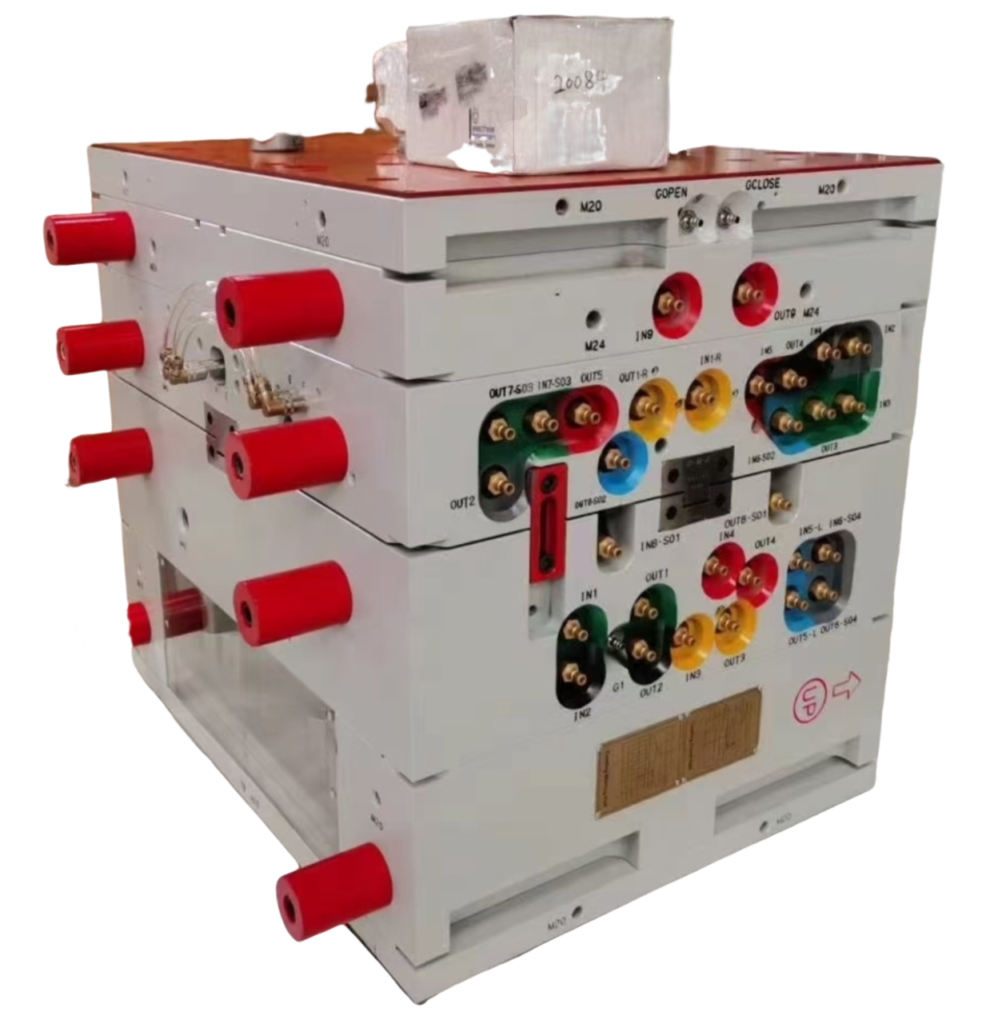
Cold slug is one of those moulage par injection1 defects that sneaks up on you. You set the temperatures, you run a few good shots, and then a solidified chunk of plastic appears in your part, right at the gate or in the runner. It ruins the cosmetic surface, weakens structural integrity, and can scrap an entire batch before you notice.
I have seen cold slug happen with everything from ABS housings to glass-filled nylon gears. In most cases, the root cause traces back to one of three things: inadequate nozzle temperature, a poorly designed cold slug well, or excessive barrel decompression. The frustrating part is that cold slug does not always show up consistently — it can appear only during cold starts, or only on certain cavities in a multi-cavity mold.
This guide covers every angle of cold slug formation — from the physics of melt solidification in the nozzle and sprue, to the conception de moules2 features that catch or fail to catch these frozen plugs. Whether you are troubleshooting an existing defect or designing a new mold from scratch, you will find actionable steps grounded in real production experience from our moulage par injection des opérations.
- Cold slug = solidified plastic trapped in the melt stream, usually at the nozzle, gate, or runner
- The number one cause is nozzle tip temperature dropping below the melt freezing point between shots
- Proper cold slug well design in the mold catches slugs before they reach the cavity
- Hot runner systems nearly eliminate cold slug but add cost and maintenance complexity
- Detection ranges from simple visual checks to X-ray and thermal analysis for critical parts
What Is a Cold Slug in Injection Molding?
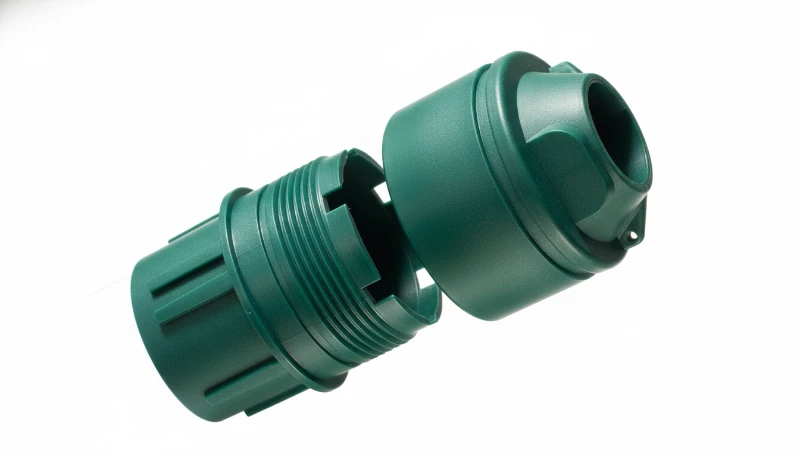
A cold slug is a solidified chunk of plastic that forms when melt temperature drops below the freezing point before the cavity fills. It is not a short shot or sink mark — cold slugs are prematurely frozen material carried into the part by subsequent injection cycles. They typically appear as raised bumps, discolored spots, or small pits near the gate area.
For a broader look at conception de moules d'injection, our pillar guide covers tooling structure, thermal control, and manufacturability tradeoffs.
In technical terms, cold slugs typically form at three locations: (1) at the moulage par injection machine nozzle tip, where heat loss is fastest between shots; (2) in the sprue and runner system, where the melt travels through cold steel channels; and (3) at the gate, where the cross-section narrows and the flow velocity changes dramatically. Each location has different root causes and different fixes.
On our shop floor, we see cold slug most often during cold starts, when the mold has not reached thermal equilibrium yet, or when production switches from a high-melt-temperature material (like PEEK at 370 °C) to something cooler (like PP at 220 °C) and the operator does not purge the barrel completely. The residual high-temp material solidifies in the nozzle and gets injected as a cold slug into the first few shots of the new run.
What Causes Cold Slug During Injection Molding?
The root cause is always the same: the melt loses too much heat before it reaches the cavity. But the reasons behind that heat loss vary. Here are the four most common culprits we encounter in production.
Nozzle Temperature Too Low or Unstable
The nozzle is the last point where you can control melt temperature before it enters the mold. If the nozzle heater band is undersized, poorly controlled, or simply set too low, the melt at the tip cools between shots. When the next injection cycle starts, that cooled plug of plastic gets pushed into the sprue as a cold slug. This is especially common with materials that have a narrow processing window, such as polycarbonate or POM.
We once traced a recurring cold slug problem on a medical device housing back to a worn thermocouple on the nozzle — the controller showed 260 °C, but the actual tip temperature was cycling between 230 °C and 270 °C. Replacing the thermocouple and adding an insulation jacket solved it immediately.
“Cold slugs only form in cold runner mold systems.”Vrai
False. Cold slugs can form in any injection molding system, including coureur à chaud3 molds, if the nozzle tip temperature drops below the melt’s freezing point. Hot runners reduce the risk but do not eliminate it entirely.
“Increasing nozzle temperature always eliminates cold slug.”Faux
False. While low nozzle temperature is a common cause, cold slugs can also originate from cold mold surfaces, long runners, or excessive decompression. Simply cranking up the nozzle temperature can introduce other defects like stringing or material degradation.
Mold Temperature Below Optimal Range
When the mold steel is too cold, the melt solidifies on contact with the cavity walls. If the frozen layer builds up faster than the cavity fills, cold slugs appear in the part. This is particularly problematic for thin-wall molding, where the flow channel is already narrow.
The fix is not always to increase mold temperature — that can increase cycle time and cause warpage. Instead, you need to optimize the cooling circuit layout so that the temperature is uniform across the mold face, and ensure that the areas near the gate are warm enough to prevent premature freeze-off.
Excessive Barrel Decompression (Suck-Back)
Decompression — also called suck-back — pulls the melt away from the nozzle tip after holding pressure ends. If you overdo it, you pull air into the nozzle, and the melt at the tip oxidizes and cools rapidly. On the next shot, that degraded, cooled material enters the cavity as a cold slug. This is one of the most overlooked causes, because operators often add decompression to prevent drooling without realizing the side effect.
Long or Narrow Runner Systems
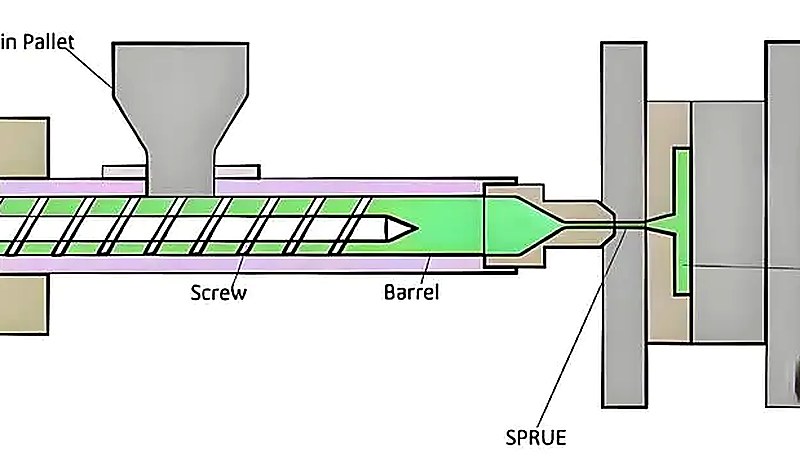
Every millimeter of runner length is an opportunity for the melt to lose heat. Long, thin runners with high surface-area-to-volume ratios cause rapid cooling. By the time the melt reaches the gate, its temperature may have dropped below the flow threshold, and the leading edge solidifies into a cold slug. This is why multi-cavity molds with balanced runner layouts are so important — they minimize the runner length to each cavity.
How Does Mold Design Contribute to Cold Slug?
Conception du moule is probably the single biggest factor in whether cold slug becomes a chronic problem or a non-issue. A well-designed mold accounts for heat loss at every stage and includes features specifically meant to catch or prevent cold slugs.
The Cold Slug Well
The cold slug well (also called a cold slug pocket or catch pad) is a small cavity placed directly opposite the sprue entrance in the runner system. Its job is to catch the cold slug that naturally forms at the nozzle tip between shots. When the injection cycle starts, the first material to enter the mold is the coldest — that plug gets pushed straight into the cold slug well instead of into the runner and cavity. If your mold does not have cold slug wells, or if they are too small, cold slugs will travel downstream.
A properly sized cold slug well should have a volume at least 1.5 times the volume of the nozzle tip channel. It should be easy to eject and clean during maintenance. In multi-cavity molds, every runner branch should have its own cold slug well.
Gate Design and Location
The gate is the narrowest point in the flow path, and it is where the melt undergoes the highest shear and the fastest cooling. Small gate diameters (especially sub-gates or pinpoint gates) create high shear heating but also restrict flow, which can cause the melt to freeze off prematurely. Edge gates and fan gates provide a larger cross-section and are less prone to cold slug formation.
Gate location also matters. If the gate is far from the sprue, the melt has to travel a longer runner, losing more heat along the way. Placing gates closer to the sprue — or using a hot runner drop directly into the cavity — eliminates most of the runner heat loss.
Runner Cross-Section Shape
Round runners have the lowest surface-area-to-volume ratio, meaning the least heat loss per unit of melt flow. Full-round runners are the gold standard for cold slug prevention. Trapezoidal runners are a common compromise because they are easier to machine, but they have about 20% more surface area than equivalent round runners, which translates to faster heat loss. Half-round runners should be avoided entirely for any material prone to cold slug.
“A cold slug well should be placed opposite the sprue entrance in the runner.”Vrai
True. The cold slug well is intentionally positioned opposite the sprue to catch the first, coldest material that enters the mold — the slug that formed at the nozzle tip between shots.
“Les canaux ronds causent plus de froidures que les canaux trapézoïdaux.”Faux
Faux. Les canaux ronds ont le rapport surface/volume le plus faible, ce qui signifie moins de perte de chaleur et moins de froidures. Les canaux trapézoïdaux sont plus faciles à usiner mais perdent la chaleur plus rapidement.
What Process Parameters Lead to Cold Slug Formation?
Les quatre paramètres de processus les plus susceptibles de causer des froidures sont la vitesse d'injection, la pression de maintien, le temps de refroidissement et la décompression de la chambre. Même un moule parfait produira des froidures avec des réglages incorrects. Voici comment régler chaque paramètre.
Vitesse d'injection
Une vitesse d'injection lente donne à la matière fondue plus de temps pour refroidir lors de son écoulement dans le canal. Pour les matériaux à vitesse de cristallisation rapide (comme le POM ou le PA66), une vitesse de remplissage lente garantit presque la production de scories froides à l'attaque. Augmenter la vitesse d'injection pousse la matière fondue plus rapidement à travers le canal, réduisant le temps de séjour et la perte de chaleur. Cependant, une vitesse excessive peut causer des bavures et du jaillissement, il faut donc trouver le bon équilibre.
Holding Pressure and Time
Une pression de maintien insuffisante signifie que la cavité n'est pas entièrement remplie. La couche gelée sur les parois s'épaissit vers l'intérieur, et la matière fondue restante au centre peut se solidifier en une froidure avant que l'attaque ne gèle. Si vous observez des retassures combinées à des froidures, augmenter la pression de maintien et prolonger le temps de maintien résout souvent les deux problèmes simultanément.
Temps de refroidissement
Contre-intuitivement, un temps de refroidissement excessif entre les injections peut aggraver le froid de la prochaine injection. Lorsque le moule reste inactif avec l'eau de refroidissement qui circule, la bague de coulée et la zone de l'attaque continuent de refroidir. Au moment de la prochaine injection, ces surfaces sont plus froides qu'elles ne l'étaient pendant la production en régime permanent, et le bord avant de la nouvelle matière fondue gèle au contact. Optimiser le temps de refroidissement pour la section la plus épaisse de la pièce — et non pour la coulée — aide à éviter cela.
Dans notre usine de Shanghai, nous exploitons 47 machines de moulage par injection de 90T à 1850T. Les problèmes de scories froides apparaissent le plus souvent sur nos plus grandes presses (800T et plus), où la distance buse-moule est plus longue et la gestion de la chaleur devient plus critique. Nous avons appris à ajouter des chauffages de buse externes et des manchons d'isolation thermique sur ces machines pour maintenir la matière à une température constante du cylindre à l'attaque.
How Can You Detect and Identify Cold Slugs?
Les froidures sont détectées par inspection visuelle, radiographie ou scanographie (CT), ou par analyse thermique (DSC/TGA). Une détection précoce empêche les pièces défectueuses d'atteindre les clients. Dans notre usine, l'équipe QC cartographie le défaut à l'étape de remplissage, de maintien, de refroidissement ou d'éjection, puis retrace le matériau froid à son origine. Nos ingénieurs enregistrent également la température de la buse, la distance de décompression et le taux de rebut du premier coup, afin que l'action corrective soit liée à des preuves de processus, et non à des suppositions.
Inspection visuelle
Les froidures apparaissent comme des défauts visibles sur la surface de la pièce — généralement une bosse surélevée, une tache décolorée ou un petit creux près de l'attaque. Sur les pièces transparentes (comme les lentilles en PMMA), les froidures apparaissent comme des inclusions troubles ou opaques. C'est la méthode de détection la plus rapide et elle fonctionne pour la plupart des pièces esthétiques, mais elle ne détectera pas les froidures internes.
Radiographie et Scan CT
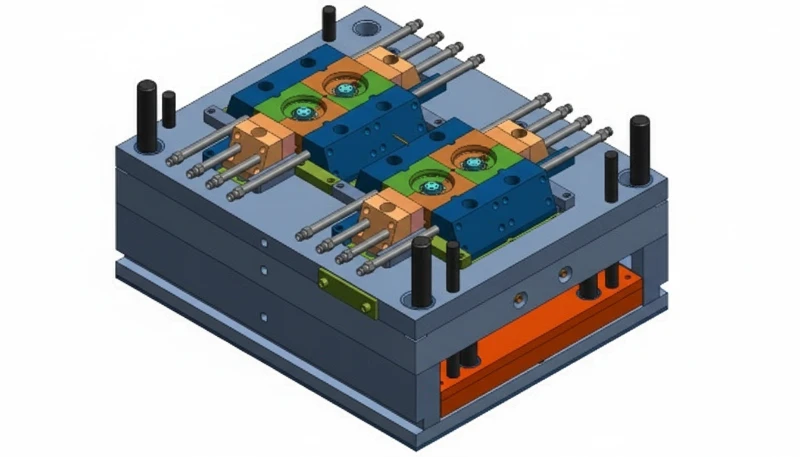
Pour les applications critiques — dispositifs médicaux, composants de sécurité automobile, pièces aérospatiales — on ne peut pas se fier uniquement à l'inspection visuelle. La radiographie et la tomographie (CT) peuvent détecter les froidures internes qui sont totalement invisibles de l'extérieur. Le scan CT est particulièrement précieux car il donne une carte 3D de l'emplacement exact, de la taille et de la forme du défaut.
Analyse thermique (DSC/TGA)
Lorsque les froidures sont causées par une dégradation ou une contamination de la matière (pas seulement par des problèmes de température), les outils d'analyse thermique comme la calorimétrie différentielle à balayage (DSC) aident à identifier le problème. La DSC peut détecter si la matière de la froidure a un point de fusion différent de celui de la résine de base, ce qui indique une contamination ou une matière dégradée.
"L'inspection par rayons X peut détecter les scories froides internes invisibles en surface."Vrai
Vrai. La radiographie et le scan CT sont des méthodes non destructives qui révèlent les défauts internes, y compris les scories froides piégées à l'intérieur de la paroi de la pièce ou à l'interface de l'attaque.
“Les froidures n'affectent que l'apparence de la pièce, pas sa résistance mécanique.”Faux
Faux. Les froidures créent des concentrateurs de contrainte et des points faibles à l'intérieur de la pièce. Dans les applications structurelles, une froidure peut réduire considérablement la résistance aux chocs et la durée de vie en fatigue.
How Do You Prevent and Eliminate Cold Slugs?
La prévention est toujours moins coûteuse que la détection. Voici une approche systématique pour éliminer les froidures, organisée des changements les plus simples aux modifications les plus complexes.
Correctifs rapides (Aucune Modification d'Outillage Requise)
Ces changements peuvent être effectués sur la machine sans modifier le moule :
Augmenter la température de la buse de 5–10 °C — souvent suffisant pour maintenir la matière à l'embout au-dessus du point de congélation entre les cycles. Surveillez les effets secondaires comme les fils ou le suintement.|||Réduire la distance de décompression — minimiser le reflux pour éviter d'aspirer de l'air dans la buse. Si un suintement se produit, utilisez une buse à fermeture plutôt que la décompression.|||Increase injection speed — un remplissage plus rapide réduit le temps que la matière passe dans le canal froid. Augmentez progressivement la vitesse tout en surveillant les bavures.|||Optimiser la température du moule — augmenter la température du liquide de refroidissement près de la zone de l'attaque par paliers de 5 °C. Utilisez un refroidissement zoné si votre moule le permet.
Modifications du moule
Si les changements de processus ne résolvent pas le problème, le moule nécessite une attention :
Ajouter ou agrandir les pièges à scories froides — chaque branche de canal doit avoir un piège à scories froides dimensionné à au moins 1,5 fois le volume de l'embout de la buse. Il s'agit d'une modification peu coûteuse qui peut être réalisée lors d'une maintenance régulière du moule.|||Passer des canaux trapézoïdaux aux canaux entièrement ronds — réduit la perte de chaleur d'environ 20 %. Nécessite de retailler les canaux de coulée sur les deux demi-moules A et B.|||Installer une bague de coulée chauffée — maintient la coulée à la température de fusion, empêchant le point de formation de froidure le plus courant. Il s'agit d'une modification à coût moyen qui s'amortit rapidement sur les séries à grand volume.
Améliorations de l'équipement
Pour les problèmes persistants de froidure sur une production à haute valeur :
Système de canaux chauds — la référence pour l'élimination des scories froides. La matière fondue reste à température dans le collecteur, il n'y a donc aucune perte de chaleur par le canal froid. Les canaux chauds ajoutent $5 000–$20 000+ au coût du moule selon le nombre de points d'injection, mais ils éliminent les déchets de canal et suppriment virtuellement les scories froides.|||Buse à fermeture — une vanne à ressort ou actionnée hydrauliquement à l'extrémité de la buse qui scelle le fondu entre les coups. Empêche à la fois le bavurage et la formation d'une froidure à l'extrémité.|||Coulée chaude isolée — un compromis entre un canal chaud complet et un canal froid. La masselotte est chauffée tandis que le reste du canal reste froid.
Coût inférieur à celui d'un canal chaud complet, tout en traitant le point principal de formation des scories froides.
“Les systèmes à canaux chauds éliminent pratiquement les froidures en maintenant la matière fondue à température dans le collecteur.”Vrai
Vrai. Dans un système à canaux chauds, la matière fondue circule dans des canaux chauffés depuis la buse jusqu'à l'attaque, il n'y a donc aucune possibilité de refroidissement prématuré. Les scories froides deviennent extrêmement rares.
"Les scories froides sont toujours visibles à la surface de la pièce moulée."Faux
Faux. Les scories froides peuvent être entièrement intégrées dans la paroi de la pièce, invisibles à l'œil nu. Les scories froides internes nécessitent une radiographie ou un scan CT pour être détectées et sont particulièrement dangereuses dans les applications structurelles.
What Materials Are Most Susceptible to Cold Slug?
Tous les matériaux ne sont pas également sujets aux froidures. Le risque dépend de trois facteurs : la température de fusion, la vitesse de cristallisation et la viscosité du fondu. Les matériaux ayant des points de fusion élevés, des taux de cristallisation rapides ou une viscosité élevée sont les plus susceptibles.
Matériaux à haut risque : PEEK (343–399 °C de fusion), LCP (280–350 °C), PPS (280–330 °C) et les nylons chargés de verre. Ces matériaux nécessitent des températures de chambre et de buse très élevées, et même une petite baisse de température peut provoquer une solidification prématurée.|||Matériaux à risque moyen : PC (260–310 °C), POM (175–225 °C) et PA66 (260–290 °C). Le POM (acétal) est particulièrement délicat car il cristallise très rapidement — la fenêtre entre l'état fondu et solide est étroite.|||Matériaux à faible risque : PP, PE, PS et ABS. Ces matériaux amorphes ou à cristallisation lente ont de larges fenêtres de traitement et tolèrent mieux les variations de température.
Si vous moulez un matériau à haut risque et que le bouchon froid est un problème récurrent, évaluez si un matériau avec de meilleures caractéristiques d'écoulement (indice de fluidité à l'état fondu plus élevé) pourrait convenir à votre application. Parfois, le passage d'un PA66 de qualité standard à une qualité à haut écoulement avec un IFM de 60+ g/10 min élimine complètement le problème sans aucun changement d'outillage.
Conclusion
Le bouchon froid en moulage par injection est finalement un problème de gestion de la chaleur. La matière fondue perd trop de chaleur avant d'atteindre la cavité, et le résultat est un morceau de plastique solidifié intégré dans votre pièce. La solution peut être aussi simple qu'augmenter la température de la buse de 5 degrés, ou aussi complexe que de moderniser avec un système de canaux chauds. Lorsque le symptôme suit la récupération de la matière fondue ou l'usure de la chambre, nos ingénieurs de procédé inspectent également la configuration de la machine de moulage par injection à vis avant de modifier l'outillage. La clé est de diagnostiquer où se produit la perte de chaleur — à la buse, dans le canal, ou à la porte — et de cibler votre solution en conséquence.
Fort de deux décennies de gestion de la production de moulage par injection chez ZetarMold, un leader fournisseur de moulage par injection basé à Shanghai, nous avons constaté que la stratégie de prévention des bavures froides la plus efficace est une combinaison de conception de moule adéquate (puits à bavures froides, canaux ronds, buses de carotte chauffées) et d'un contrôle rigoureux du procédé (température de la buse, vitesse d'injection, décompression minimale). Maîtrisez ces fondamentaux, et la bavure froide devient une exception rare plutôt qu'un problème chronique.
Questions fréquemment posées
Questions fréquemment posées
Quelle est la différence entre un bouchon froid et un manque de matière ?
Un bouchon froid est un morceau de plastique solidifié qui se forme lorsque la matière fondue refroidit prématurément et reste piégée dans la pièce ou le canal. Un manque de matière se produit lorsque la cavité du moule n'est pas complètement remplie de plastique — la pièce manque de matériau. Ils ont des causes profondes différentes : les bouchons froids proviennent d'une solidification prématurée à la buse, dans le canal ou à la porte, tandis que les manques de matière résultent généralement d'une pression d'injection insuffisante, d'une ventilation inadéquate ou d'un réglage incorrect de la taille de l'unité de dosage sur la machine.
Les bouchons froids peuvent-ils provoquer une défaillance structurelle dans les pièces moulées ?
Oui, les bouchons froids peuvent absolument provoquer une défaillance structurelle dans les pièces moulées. Un bouchon froid intégré dans la paroi d'une pièce crée un concentrateur de contraintes, agissant comme une entaille microscopique qui réduit considérablement à la fois la résistance aux chocs et la résistance à la fatigue à long terme. Dans les applications de support de charge telles que les supports automobiles, les boîtiers de dispositifs médicaux et les enceintes d'électronique grand public, un bouchon froid interne peut entraîner une amorce prématurée de fissures et une défaillance catastrophique sous des cycles de contraintes répétés. C'est précisément pourquoi l'inspection par rayons X ou par tomodensitométrie est considérée comme essentielle pour tous les composants plastiques structurels et critiques pour la sécurité.
Comment savoir si mon puits à bouchon froid est suffisamment grand ?
Un puits à bouchon froid correctement dimensionné doit avoir un volume au moins 1,5 fois supérieur au volume du canal de l'embout de buse lui-même. Vous pouvez vérifier cela en production en inspectant l'extracteur de carotte après chaque cycle : si le matériau du bouchon froid déborde du puits et pénètre dans le canal principal, le puits est clairement sous-dimensionné pour votre application. Un autre indicateur fiable est si vous observez toujours des défauts de bouchon froid dans la pièce finie malgré l'installation d'un puits — dans ce cas, agrandissez le puits d'environ 50 pour cent et réessayez lors de votre prochaine série de production.
Un système de canaux chauds élimine-t-il complètement les bouchons froids ?
Les canaux chauds éliminent les bavures froides causées par la perte de chaleur du canal, source la plus courante dans les moules à canaux froids. La matière fondue reste à température dans le collecteur chauffé, ce qui empêche tout refroidissement prématuré dans le canal. Cependant, des bavures froides peuvent encore se former à la transition buse-collecteur ou à la pointe de l'entrée si l'équilibre thermique est incorrect. Une conception appropriée du canal chaud, un contrôle constant de la température et un entretien régulier des zones chauffantes sont essentiels pour parvenir à une élimination quasi complète.
Quelle vitesse d'injection est la meilleure pour éviter les bavures froides ?
Des vitesses d'injection plus rapides réduisent le temps de séjour de la matière fondue dans le système de canaux froids, minimisant la perte de chaleur et le risque de solidification prématurée pendant la phase de remplissage. La vitesse idéale dépend du matériau spécifique et de la géométrie de la pièce — généralement, vous devez utiliser la vitesse la plus rapide qui ne provoque pas de bavures, de filetage ou de marques de brûlure sur la pièce. Pour les matériaux sujets aux bouchons froids comme le POM ou le PA66, des vitesses de remplissage de 80 à 120 mm par seconde sont des points de départ typiques. Validez toujours tout changement de vitesse avec un essai à petite échelle avant de vous engager dans une production à grande échelle.
Pourquoi les bouchons froids apparaissent-ils plus souvent au début d'une série de production ?
Au démarrage, l'acier du moule n'a pas encore atteint son équilibre thermique — les surfaces de la cavité et les canaux des canaux sont nettement plus froids que leur température de fonctionnement en régime permanent. Les premières unités de dosage perdent rapidement de la chaleur au contact de ces surfaces d'acier froides, provoquant la solidification du front de matière fondue en bouchons froids avant que la cavité ne soit complètement remplie. L'exécution de cinq à dix unités de dosage de purge avant le début de la production, et l'augmentation progressive de la vitesse de cycle jusqu'à la pleine vitesse sur les vingt premières unités, aide le moule à atteindre la température de régime permanent et minimise efficacement les défauts de bouchon froid au démarrage.
-
moulage par injection: Le moulage par injection est un procédé de fabrication qui injecte du plastique fondu dans une cavité de moule pour produire des pièces avec une géométrie précise et une qualité reproductible. ↩
-
conception de moules: La conception de moule est un processus d'ingénierie structuré pour définir la disposition des portes, la géométrie des canaux, le refroidissement, l'éjection, la ventilation, le choix de l'acier et les tolérances afin qu'une pièce moulée par injection puisse fonctionner de manière fiable. ↩
-
coureur à chaud: le système de canal chaud utilise des canaux chauffés à l'intérieur du moule pour maintenir le plastique à l'état fondu de la buse jusqu'à l'entrée, éliminant ainsi le gaspillage de canal et réduisant le risque de bavure froide. ↩







 EN
EN  ES
ES  FR
FR  DE
DE  PT
PT  AR
AR  RU
RU  JA
JA  KO
KO  IT
IT  NL
NL  TR
TR  PL
PL