Prawidłowe parametry procesu formowania wtryskowego1 decydują o tym, czy produkcja będzie opłacalna, czy wygeneruje kosztowne braki. Po 20 latach rozwiązywania problemów — od wypaczonych części samochodowych po zapadnięcia w elektronice użytkowej — wiem, że skuteczne formowanie zależy od opanowania pięciu podstawowych parametrów: temperatury, ciśnienia, prędkości, czasu i chłodzenia. To nie są jedynie liczby na wyświetlaczu maszyny, lecz dźwignie sterujące jakością części, czasem cyklu i wynikiem finansowym. Jeśli oceniasz dostawców, zapoznaj się z naszym poradnikiem zaopatrzeniowym3 zawierającym praktyczne wskazówki kwalifikacyjne.
- Kontrola temperatury wpływa na przepływ materiału, krystalizację i wykończenie powierzchni — typowy zakres wynosi od 180°C dla PP do 280°C dla PC
- Ciśnienie wtrysku decyduje o wypełnieniu gniazda i gęstości części; dla większości tworzyw termoplastycznych wynosi zwykle 800-1500 bar
- Parametry prędkości sterują nagrzewaniem wskutek ścinania i orientacją cząsteczek — typowe prędkości wtrysku wynoszą 50–200 mm/s
- Ciśnienie i czas docisku zapobiegają skurczowi i zapadnięciom — zwykle jest to 60–80% ciśnienia wtrysku przez 3–15 sekund
- Czas chłodzenia bezpośrednio wpływa na czas cyklu i jakość części — oblicza się go jako kwadrat grubości ścianki pomnożony przez dyfuzyjność cieplną materiału
Jakie są kluczowe parametry procesu formowania wtryskowego?
Kluczowe parametry procesu formowania wtryskowego to główne kategorie lub warianty omówione w tej sekcji. Pięć krytycznych parametrów procesu formowania wtryskowego to temperatura, ciśnienie, prędkość, czas i chłodzenie — każdy z nich kontroluje określone aspekty jakości części i wydajności produkcji. Temperatura wpływa na lepkość materiału i jego zachowanie podczas przepływu. Ciśnienie decyduje o wypełnieniu gniazda i gęstości części. Prędkość steruje nagrzewaniem wskutek ścinania i orientacją cząsteczek. Czas reguluje zestalanie materiału. Chłodzenie wpływa na czas cyklu i stabilność wymiarową.
Parametry temperatury obejmują strefy cylindra (zwykle 4–5), temperaturę dyszy i temperaturę formy wtryskowej. W przypadku ABS ustawiam zwykle temperaturę cylindra od 220°C w strefie zasilania do 240°C przy dyszy, a temperaturę formy na około 60–80°C. Zapewnia to prawidłowe płynięcie stopionego materiału bez jego degradacji.
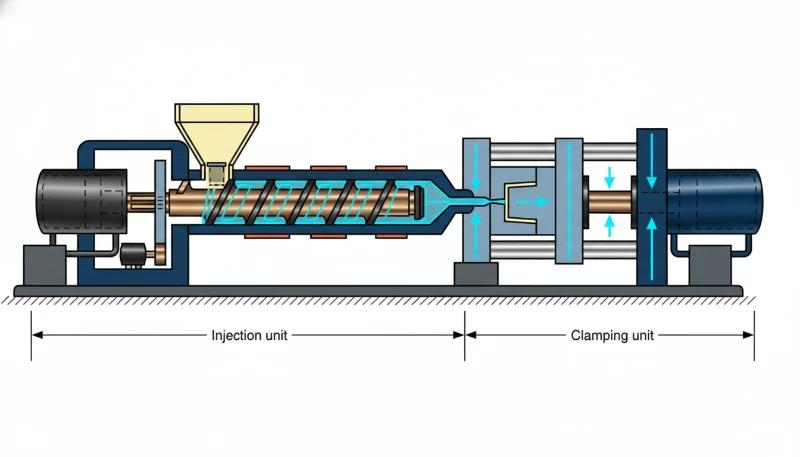
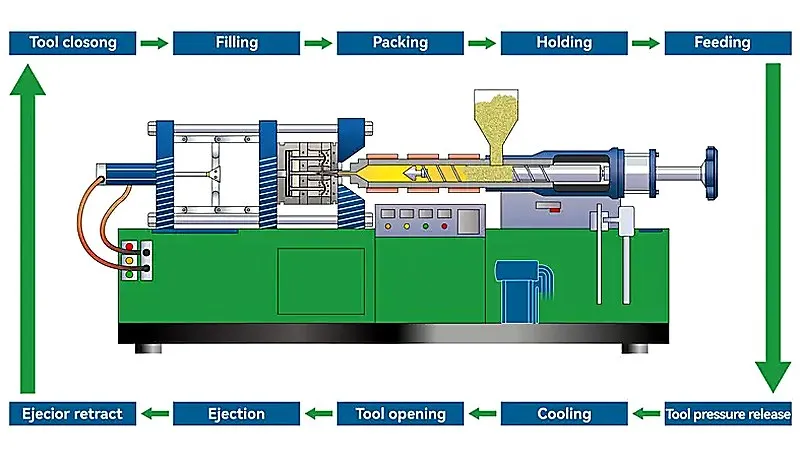
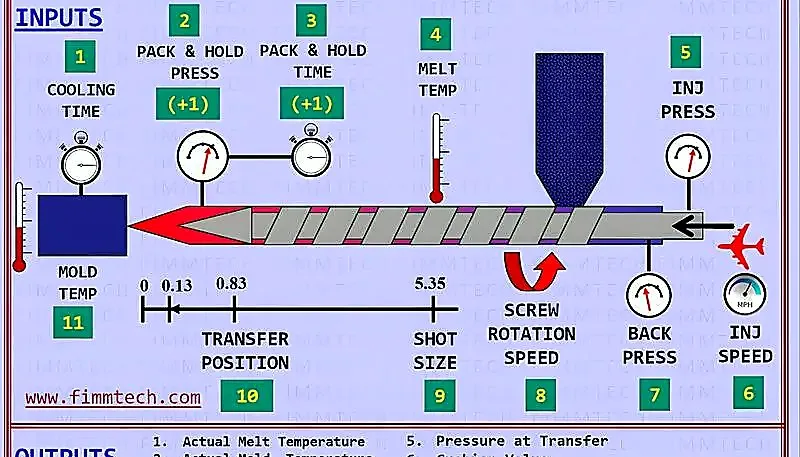
Parametry ciśnienia działają sekwencyjnie: ciśnienie wtrysku wypełnia gniazdo (800-1500 bar), ciśnienie docisku utrzymuje gęstość detalu (60-80% ciśnienia wtrysku), a przeciwciśnienie zapewnia jednorodność stopionego tworzywa (3-15 bar). Parametry prędkości obejmują prędkość wtrysku (50-200 mm/s), prędkość obrotową ślimaka (50-150 RPM) oraz prędkość wypychania. Parametry czasowe obejmują czas wtrysku, czas docisku, czas chłodzenia i całkowity czas cyklu.
Jak temperatura wpływa na jakość formowania wtryskowego?
Temperatura bezpośrednio steruje lepkością, długością płynięcia, wykończeniem powierzchni i strukturą molekularną części wtryskowych. Wyższa zmniejsza lepkość, wydłuża przepływ i poprawia wypełnienie, lecz nadmierne ciepło powoduje degradację, wypływki i złą powierzchnię. Niższa zwiększa lepkość i może powodować niedolewy oraz wysokie ciśnienie wtrysku.
Profil temperatury cylindra zwykle wzrasta od strefy tylnej ku przedniej. W przypadku polipropylenu ustawiam 180°C w strefie zasilania, 200°C w strefie sprężania, 210°C w strefie dozowania i 220°C na dyszy. Takie stopniowe podgrzewanie zapewnia prawidłowe uplastycznienie bez przegrzewania materiału. Aby zapobiec degradacji tworzywa, różnica temperatur między strefami powinna wynosić 10-20°C.
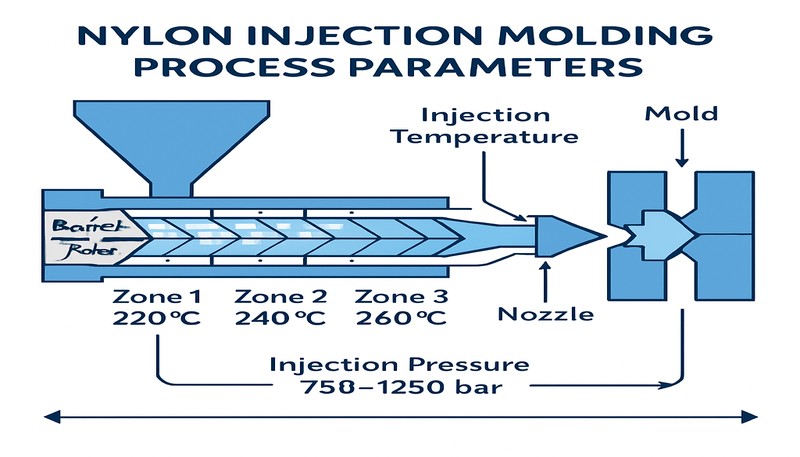
Temperatura formy wpływa na krystalizację tworzyw półkrystalicznych, takich jak nylon i polipropylen. Wyższa temperatura formy (80-120°C dla nylonu) sprzyja krystaliczności, poprawiając odporność chemiczną i stabilność wymiarową, lecz wydłużając czas cyklu. Niższa temperatura formy (40-60°C) skraca czas cyklu, ale może powodować paczenie i niską jakość powierzchni. W praktyce obserwowałem wzrost czasu cyklu o 20%, gdy temperatura formy dla detali nylonowych wzrosła z 60°C do 100°C.
"Zwiększenie temperatury cylindra o 10°C zazwyczaj zmniejsza wymagane ciśnienie wtrysku o 50-100 bar w przypadku większości tworzyw termoplastycznych."True
Zależność ta wynika z tego, że wyższe temperatury zmniejszają lepkość stopionego tworzywa, ułatwiając przepływ materiału przez układ wlewowy do gniazda formy. Podczas optymalizacji parametrów procesu dla materiałów takich jak ABS, PC i nylon wielokrotnie obserwowałem spadek ciśnienia o 50-100 bar.
„Większa prędkość wtrysku zawsze poprawia jakość części, ograniczając ślady płynięcia i linie wynikające z zahamowania przepływu”.False
Chociaż szybszy wtrysk może w wielu przypadkach poprawić jakość powierzchni, nadmierna prędkość powoduje problemy, takie jak silne nagrzewanie wskutek ścinania, orientacja cząsteczek prowadząca do odkształceń oraz wzrost ciśnienia wtrysku. Optymalna prędkość wtrysku zależy od geometrii wypraski, grubości ścianek i właściwości materiału. Widziałem wzrost odkształcenia o 30%, gdy prędkość wtrysku cienkościennych części z PC przekraczała 250 mm/s.
Jaką rolę odgrywa ciśnienie wtrysku w jakości części?
Ciśnienie wtrysku decyduje o pełnym wypełnieniu gniazda, gęstości części i dokładności wymiarowej, przepychając stopione tworzywo przez kanały i przewężki do każdego detalu gniazda. Zbyt niskie powoduje niedolewy, zapadnięcia i małą gęstość. Zbyt wysokie powoduje wypływki, duże naprężenia szczątkowe i trudne wypychanie.
Typowe ciśnienia wtrysku dla większości tworzyw termoplastycznych mieszczą się w zakresie 800-1500 bar, lecz zastosowania cienkościenne mogą wymagać 1800+ bar. Wymagane ciśnienie obliczam na podstawie długości drogi płynięcia, grubości ścianki i lepkości materiału. W przypadku drogi płynięcia 200mm przez ściankę o grubości 2mm w ABS należy oczekiwać ciśnienia wtrysku 1000-1200 bar przy standardowych temperaturach przetwórstwa.
Ciśnienie docisku utrzymuje jakość części po wypełnieniu gniazda, kompensując skurcz materiału podczas chłodzenia. Ustaw ciśnienie docisku na 60-80% ciśnienia wtrysku — zbyt niskie powoduje zapadnięcia i odchyłki wymiarowe, a zbyt wysokie marnuje energię i może powodować wypływki. Czas docisku powinien wynosić 3-15 sekund, zależnie od grubości ścianki i właściwości cieplnych materiału. Dla grubych przekrojów (>5mm) wydłuż go do 10-15 sekund.
Jak parametry prędkości i czasu wpływają na produkt końcowy?
Parametry prędkości i czasu sterują przepływem materiału, orientacją cząsteczek i zestalaniem części, bezpośrednio wpływając na jakość powierzchni, właściwości mechaniczne i stabilność wymiarową. Prędkość wtrysku determinuje nagrzewanie ścinające i przemieszczanie się czoła przepływu przez gniazdo. Prędkość obrotowa ślimaka wpływa na jednorodność stopionego tworzywa i rozprowadzenie barwnika. Parametry czasowe sterują przejściami fazowymi materiału ze stanu ciekłego w stały, określając czas trwania poszczególnych etapów i moment ich przejścia. Prawidłowe ustawienie tych parametrów wymaga zrozumienia wzajemnego oddziaływania reologii materiału, geometrii części i wydajności chłodzenia formy.
Prędkość wtrysku wynosi zazwyczaj 50-200 mm/s, lecz wartość optymalna zależy od geometrii części i wrażliwości materiału. Szybki wtrysk (150-200 mm/s) poprawia wykończenie powierzchni i ogranicza ślady płynięcia, ale zwiększa nagrzewanie ścinające i orientację cząsteczek. Wolny wtrysk (50-100 mm/s) zmniejsza naprężenia, lecz może powodować ślady płynięcia i wahania temperatury. Stosuję wielostopniowe profile wtrysku: szybkie napełnianie do 90% objętości gniazda, a następnie małą prędkość dla ostatnich 10%, aby zminimalizować naprężenia.
Prędkość obrotowa ślimaka wpływa na jakość stopionego tworzywa i czas cyklu. Standardowy zakres 50-150 RPM zapewnia dobre mieszanie bez nadmiernego nagrzewania ścinającego. Prędkości powyżej 200 RPM powodują degradację materiałów wrażliwych na temperaturę, takich jak PVC i POM, prowadząc do przebarwień i pogorszenia właściwości mechanicznych. Prędkości poniżej 50 RPM mogą skutkować niewystarczającą jednorodnością stopionego tworzywa, a w konsekwencji smugami koloru lub niestabilną jakością detali. Przeciwciśnienie 3-15 bar poprawia mieszanie — wyższe wartości (10-15 bar) należy stosować w przypadku recyklatów lub zastosowań o krytycznym znaczeniu koloru, w których niezbędny jest jednolity wygląd. Zwykle zaczynam od przeciwciśnienia 8-10 bar i koryguję je na podstawie monitorowania temperatury stopionego tworzywa oraz kontroli wzrokowej wtrysków próbnych.
Dlaczego temperatura formy ma kluczowe znaczenie dla tworzyw krystalicznych?
Temperatura formy kontroluje kinetykę krystalizacji tworzyw półkrystalicznych, takich jak nylon, polipropylen i POM, bezpośrednio wpływając na właściwości mechaniczne, odporność chemiczną i stabilność wymiarową. Wyższa temperatura formy sprzyja tworzeniu kryształów, poprawiając wytrzymałość i odporność chemiczną, ale wydłuża cykl. Niższa temperatura ogranicza krystalizację i właściwości, lecz umożliwia szybszą produkcję.
W przypadku nylonu 66 zwykle stosuję temperaturę formy 80-120°C, zależnie od wymagań części. Zastosowania o wysokich wymaganiach, w których konieczne są maksymalna wytrzymałość i odporność chemiczna, wymagają temperatury formy 100-120°C, co pozwala uzyskać krystaliczność na poziomie 40-50%. W przypadku produktów konsumenckich, w których koszt ma pierwszeństwo przed parametrami użytkowymi, można stosować 60-80°C, akceptując niższą krystaliczność (20-30%) w zamian za krótszy cykl.
Polipropylen wykazuje wyraźne zmiany właściwości wraz z temperaturą formy. Przy temperaturze formy 40°C należy oczekiwać krystaliczności 30-40% i dobrej udarności. Przy 80°C krystaliczność wzrasta do 50-60%, zwiększając sztywność, lecz zmniejszając udarność. Kluczowe jest dopasowanie temperatury formy do wymagań zastosowania — części samochodowe pod maską wymagają wysokiej krystaliczności, natomiast opakowania elastyczne preferują niższą. W testach obudowy przekładni z PP podniesienie temperatury formy z 50°C do 85°C zwiększyło wytrzymałość na rozciąganie o 18%, lecz niemal podwoiło czas cyklu. Każdy inżynier procesu musi starannie ocenić ten kompromis między właściwościami mechanicznymi a wydajnością. POM zachowuje się podobnie — temperatury formy 80-100°C zapewniają lepszą odporność na pełzanie kół zębatych i elementów mechanicznych.
Jak diagnozować typowe wady związane z parametrami procesu?
Wady związane z parametrami procesu układają się w przewidywalne wzorce, które doświadczeni przetwórcy rozpoznają natychmiast. Niedolewy wskazują na zbyt niskie ciśnienie lub temperaturę, uniemożliwiające całkowite wypełnienie gniazda. Wypływki sugerują nadmierne ciśnienie albo zużycie oprzyrządowania, przez które tworzywo wydostaje się na linii podziału formy. Zapadnięcia wynikają z niedostatecznego ciśnienia docisku lub zbyt krótkiego czasu docisku podczas chłodzenia. Wypaczenia są skutkiem nierównomiernego chłodzenia, nadmiernej orientacji cząsteczkowej albo niewłaściwego położenia przewężki powodującego zróżnicowany skurcz. Zrozumienie, który parametr odpowiada za dany rodzaj wady, jest pierwszym krokiem do systematycznego rozwiązywania problemów. Zawsze zaczynam od sprawdzenia parametru najłatwiejszego do skorygowania, zanim przejdę do bardziej złożonych przyczyn — takie podejście diagnostyczne oszczędza wiele godzin prób i błędów na hali produkcyjnej.
W przypadku niedolewów najpierw zwiększaj ciśnienie wtrysku co 50-100 bar, aż gniazdo zostanie całkowicie wypełnione. Jeśli ciśnienie przekroczy graniczne możliwości maszyny powyżej 1500 bar bez poprawy, zwiększaj temperaturę cylindra co 10°C, aby zmniejszyć lepkość stopionego tworzywa. Sprawdź, czy przewężka nie zamarza przedwcześnie, wydłużając czas docisku — czasami przewężka zamyka się przed wypełnieniem gniazda. Sprawdź również, czy odpowietrzanie jest wystarczające, ponieważ uwięzione powietrze uniemożliwia pełne wypełnienie nawet przy wysokim ciśnieniu. W jednym projekcie złącza samochodowego ustaliliśmy, że przyczyną uporczywych niedolewów był zablokowany kanał odpowietrzający, który ograniczał odprowadzanie powietrza podczas szybkiego napełniania.
Usuwanie wypływek wymaga systematycznego obniżania ciśnienia i kontroli formy. Zmniejszaj ciśnienie wtrysku krokami po 50 bar, aż wypływki znikną, a następnie zoptymalizuj ciśnienie docisku. Sprawdź stan linii podziału — zużyte lub uszkodzone powierzchnie formy powodują wypływki przy niskim ciśnieniu. Potwierdź, że siła zwarcia spełnia wymagania obliczone na podstawie rzutowanej powierzchni części i ciśnienia w gnieździe.
Korekta zapadnięć polega na optymalizacji ciśnienia i czasu docisku. Zwiększ ciśnienie docisku do 70-80% ciśnienia wtrysku. Wydłużaj czas docisku aż do zamarznięcia punktu wtrysku — zwykle wynosi on 3-15 sekund, zależnie od wielkości punktu wtrysku i materiału. W przypadku grubych przekrojów rozważ sekwencyjny układ zaworowych punktów wtrysku lub formowanie ze wspomaganiem gazowym, aby utrzymać ciśnienie przez cały etap chłodzenia.
"Wypaczenie części formowanych wtryskowo wynika przede wszystkim z różnic skurczu między grubymi i cienkimi przekrojami, a nie z właściwości materiału."True
Zróżnicowany skurcz wywołuje naprężenia wewnętrzne, które powodują wypaczenie podczas chłodzenia i krzepnięcia części. Grube przekroje chłodzą się wolniej i kurczą bardziej niż cienkie, co prowadzi do koncentracji naprężeń. Dlatego projektowanie równomiernej grubości ścianek ma kluczowe znaczenie — w przypadku złożonych obudów udało mi się ograniczyć wypaczenie o 60% wyłącznie dzięki utrzymaniu stałej grubości ścianek 2-3mm.
„Ustawienie przeciwciśnienia powyżej 20 bar jest zawsze niezbędne do uzyskania dobrego wymieszania koloru podczas formowania wtryskowego.”False
Choć przeciwciśnienie poprawia mieszanie, jego nadmierne wartości (>20 bar) powodują niepotrzebne nagrzewanie wskutek ścinania, wydłużenie czasu cyklu i ryzyko degradacji materiału. W większości zastosowań doskonałe wymieszanie koloru uzyskuje się przy przeciwciśnieniu 5-15 bar. Z mojego doświadczenia wynika, że 8-12 bar zapewnia optymalne mieszanie większości materiałów bez negatywnych skutków nadmiernego ścinania.
Ponad 20 lat doświadczenia ZetarMold w formowaniu wtryskowym na 47 maszynach od 90T do 1850T nauczyło nas, że optymalizacja parametrów procesu jest nauką i sztuką. Pracując z ponad 400 materiałami, opracowaliśmy bazy parametrów skracające przezbrojenie o 70% i zapewniające ponad 85% udanych pierwszych wtrysków. Nasi inżynierowie stosują statystyczne sterowanie procesem, utrzymując stabilność parametrów w granicach ±2% między seriami.
Chcesz zoptymalizować parametry procesu formowania wtryskowego? Przewodnik zakupowy ZetarMold zawiera szczegółowe zalecenia dotyczące parametrów dla ponad 400 materiałów. Nasi inżynierowie procesu pomogą wyznaczyć stabilne okna procesowe, które zapewnią powtarzalną jakość przy minimalnym czasie cyklu. Skontaktuj się z nami, aby uzyskać bezpłatny audyt parametrów stosowanych obecnie w Twoich procesach formowania wtryskowego.
Często zadawane pytania
Jaki jest optymalny zakres temperatury formowania wtryskowego ABS?
Temperatura formowania wtryskowego ABS wynosi zwykle 220-250°C w cylindrze, a temperatura formy 60-80°C. W większości zastosowań ogólnych zalecam rozpoczęcie od temperatury cylindra 230°C i temperatury formy 70°C. Wyższe temperatury, około 240-250°C, poprawiają płynięcie i wykończenie powierzchni, lecz zwiększają ryzyko degradacji termicznej. Niższe temperatury, około 220-230°C, skracają czas cyklu, ale mogą powodować niedolewy w częściach cienkościennych. Temperaturę dyszy należy ustawić o 5-10°C powyżej temperatury przedniej strefy cylindra, aby zapobiec przedwczesnemu zestaleniu tworzywa. Zawsze monitoruj rzeczywistą temperaturę stopionego tworzywa pirometrem — dla optymalnego przetwórstwa ABS należy dążyć do 235-245°C.
Jak obliczyć właściwe ciśnienie docisku w formowaniu wtryskowym?
Ciśnienie docisku należy ustawić na 60–80% ciśnienia wtrysku wymaganego do całkowitego wypełnienia gniazda. Zacznij od wartości bazowej 70%, a następnie skoryguj ją na podstawie jakości części. W przypadku grubych przekrojów (>4mm) zastosuj 75–80%, aby zapobiec zapadnięciom. Przy cienkich ściankach (<2mm) zakres 60–65% zapobiega powstawaniu wypływki, a zarazem utrzymuje odpowiednią gęstość. Monitoruj masę części — jej powtarzalność świadczy o prawidłowym ciśnieniu docisku. Jeśli są dostępne czujniki ciśnienia w gnieździe, stosuję je, przyjmując docelowe ciśnienie w fazie docisku na poziomie 400–600 bar. Zbyt niskie ciśnienie docisku powoduje zapadnięcia i odchyłki wymiarowe. Zbyt wysokie niepotrzebnie zwiększa zużycie energii i może powodować wypływkę lub utrudniać wypychanie.
Co powoduje wypływki w wtryskiwaniu i jak je naprawić?
Wypływki występują, gdy ciśnienie wtrysku przekracza siłę docisku formy lub gdy powierzchnie rozdzielające formy są zużyte lub uszkodzone. Oblicz wymaganą siłę docisku, używając rzutowanego pola powierzchni części razy ciśnienie w wnęce — zazwyczaj 3-5 ton na cal kwadratowy rzutowanego pola. Zmniejszaj ciśnienie wtrysku w przyrostach 50-100 bar, aż wypływki znikną. Sprawdź stan formy — zużyte linie rozdzielające, uszkodzone odpowietrzniki lub niewystarczająca konserwacja formy powodują wypływki przy normalnych ciśnieniach. Sprawdź prawidłowe ustawienie formy i odpowiednie rozciągnięcie słupów. Czasami wypływki wskazują na niewystarczające odpowietrzanie, wymagające redukcji ciśnienia lub dodatkowych kanałów odpowietrzających. Lepkość materiału wpływa na skłonność do wypływek — materiały o wyższym wskaźniku płynięcia łatwiej tworzą wypływki.
Jaka jest różnica między ciśnieniem wtrysku a ciśnieniem docisku?
Ciśnienie wtrysku całkowicie wypełnia wnękę formy, zazwyczaj 800-1500 bar w zależności od geometrii części i materiału. Ciśnienie docisku utrzymuje gęstość części podczas chłodzenia, zwykle 60-80% ciśnienia wtrysku. Ciśnienie wtrysku działa podczas fazy napełniania (1-3 sekundy), podczas gdy ciśnienie docisku działa podczas krzepnięcia (3-15 sekund). Wysokie ciśnienie wtrysku zapewnia całkowite wypełnienie i dobrą jakość powierzchni. Właściwe ciśnienie docisku zapobiega wklęsłościom i skurczowi wymiarowemu. Przejście z ciśnienia wtrysku na ciśnienie docisku następuje przy 95-98% wypełnienia wnęki. Nowoczesne maszyny wykorzystują sprzężenie zwrotne ciśnienia w wnęce, aby automatycznie optymalizować ten punkt przełączenia.
Jak prędkość ślimaka wpływa na jakość stopu tworzywa sztucznego?
Prędkość obrotowa ślimaka steruje intensywnością mieszania i czasem przebywania materiału, bezpośrednio wpływając na jednorodność oraz temperaturę stopionego tworzywa. Standardowy zakres 50–150 obr./min zapewnia dobre mieszanie bez nadmiernego nagrzewania wskutek ścinania. Wyższe prędkości (>200 obr./min) powodują degradację materiałów wrażliwych na ciepło, takich jak PVC lub POM. Niższe prędkości (<50 obr./min) mogą prowadzić do słabego wymieszania koloru lub wahań temperatury. Prędkość ślimaka dobieram do wrażliwości materiału i wymagań dotyczących mieszania. Materiały wrażliwe na ciepło wymagają mniejszych prędkości (50–100 obr./min). Materiały z recyklatu lub koncentraty barwiące korzystają z większych prędkości (100–150 obr./min). Należy monitorować temperaturę stopionego tworzywa — nadmierna prędkość ślimaka może podnieść ją o 10–20°C wskutek nagrzewania ścinającego.
Jaki jest idealny czas chłodzenia dla części formowanych wtryskowo?
Czas chłodzenia zależy od kwadratu grubości ścianki i dyfuzyjności cieplnej materiału. Użyj wzoru: czas chłodzenia = (grubość ścianki)² × współczynnik materiałowy. Dla ABS o grubości ścianki 3mm oczekuj czasu chłodzenia 15-25 sekund. Polipropylen chłodzi się szybciej (współczynnik materiałowy 0,8), podczas gdy PC chłodzi się wolniej (współczynnik materiałowy 1,3). Temperatura formy wpływa na czas chłodzenia — każdy wzrost o 10°C dodaje 15-20% do czasu cyklu. Wydajny projekt kanałów chłodzących redukuje czas o 30-40%. Sprawdzam odpowiednie chłodzenie, mierząc temperaturę wypychania części — dla większości termoplastów powinna być poniżej 60°C, aby zapobiec odkształceniom. Optymalizuj czas chłodzenia poprzez systematyczne skracanie, aż do pogorszenia jakości części.
Jak ustawić ciśnienie wsteczne dla wtryskiwania tworzyw sztucznych?
Ustaw ciśnienie wsteczne między 3-15 bar w zależności od wymagań mieszania materiału i potrzeb jakościowych. Zacznij od 5-8 bar dla większości zastosowań, a następnie dostosuj w oparciu o jakość stopu. Wyższe ciśnienie wsteczne (10-15 bar) poprawia mieszanie kolorów i jednorodność stopu, ale zwiększa czas cyklu i nagrzewanie ścinaniem. Niższe ciśnienie wsteczne (3-5 bar) skraca czas cyklu, ale może powodować smugowanie kolorów lub słabe mieszanie. Materiały wrażliwe na ciepło, takie jak PVC, potrzebują minimalnego ciśnienia wstecznego (3-5 bar). Materiały z recyklingu lub aplikacje z masterbatchem korzystają z wyższych wartości (10-12 bar). Monitoruj temperaturę stopu — nadmierne ciśnienie wsteczne podnosi temperaturę poprzez nagrzewanie ścinaniem. Dostosowuj stopniowo w przyrostach 2-3 bar.
Co się dzieje, gdy temperatura formy jest zbyt niska?
Niska temperatura formy powoduje słabą jakość powierzchni, niepełne wypełnienie gniazda, wysokie naprężenia szczątkowe i niestabilność wymiarową. Wady powierzchni obejmują ślady płynięcia, linie łączenia i matowe wykończenie. Podczas użytkowania części mogą się odkształcać wskutek uwalniania naprężeń. Tworzywa półkrystaliczne, takie jak nylon, wykazują gorsze właściwości mechaniczne z powodu ograniczonej krystalizacji. Zaobserwowałem spadek wytrzymałości części nylonowych o 20-30% przy formowaniu w temperaturze formy 40°C zamiast 80°C. Niska temperatura formy zwiększa również wymagane ciśnienie wtrysku o 100-200 bar. Skraca jednak czas chłodzenia, a tym samym czas cyklu. Kluczowa jest równowaga — należy stosować najniższą temperaturę zapewniającą akceptowalną jakość części. Typowe wartości minimalne: ABS 50°C, nylon 60°C, polipropylen 40°C.
formowanie wtryskowe: Formowanie wtryskowe to proces produkcyjny, w którym tworzywo jest topione, wtryskiwane do gniazda formy i chłodzone, po czym cykl powtarza się, zapewniając stabilną produkcję seryjną. ↩
forma wtryskowa: Forma wtryskowa jest precyzyjnym narzędziem, które określa geometrię części, przebieg chłodzenia, wypychanie, układ wlewowy, wykończenie powierzchni i powtarzalność. ↩
poradnik zaopatrzeniowy: Poradnik zaopatrzeniowy pomaga oceniać partnerów produkcyjnych pod względem możliwości narzędziowych, kontroli procesu, znajomości materiałów, dyscypliny kontroli jakości i niezawodności. ↩