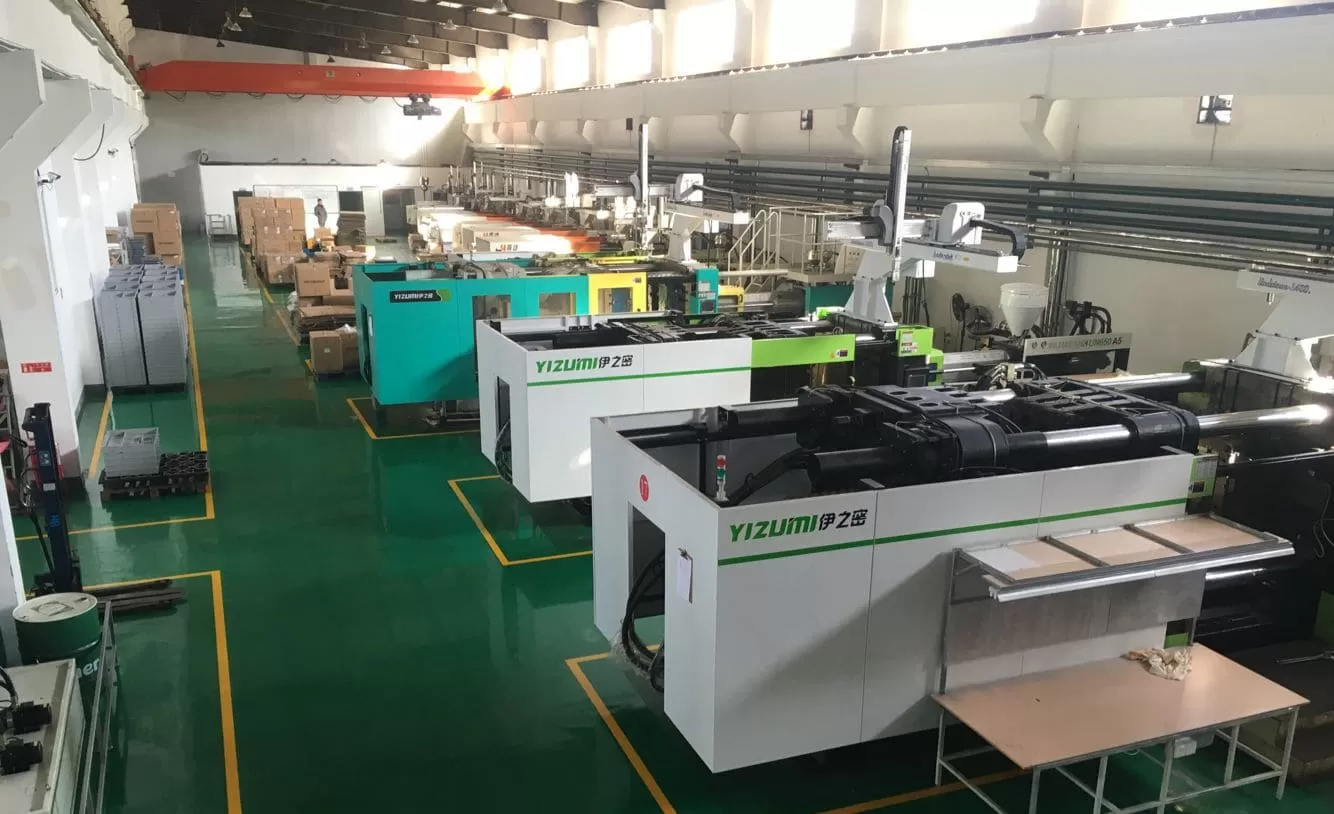
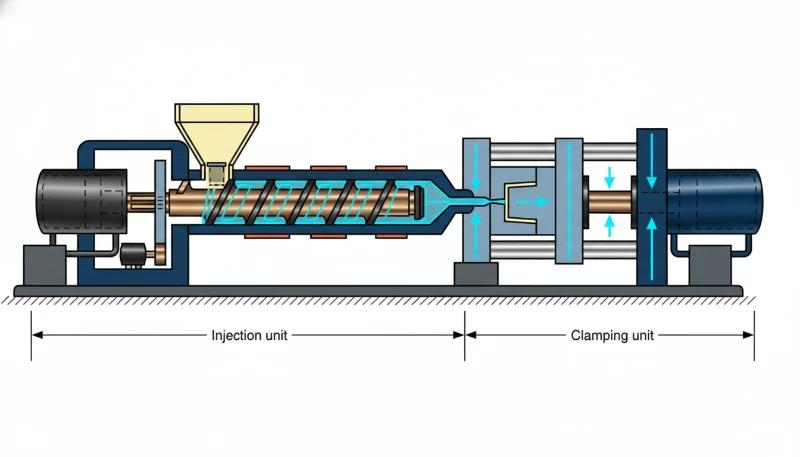
Doğru ayarlanmış enjeksiyon kalıplama1 proses parametreleri, kârlı üretim ile pahalı hurda arasındaki farkı belirler. Çarpılmış otomotiv parçalarından tüketici elektroniğindeki çökme izlerine kadar pek çok sorunu 20 yıl boyunca giderdikten sonra, başarılı kalıplamanın beş temel parametreye hâkim olmaya bağlı olduğunu öğrendim: sıcaklık, basınç, hız, zamanlama ve soğutma. Bunlar yalnızca makine ekranındaki sayılar değil; parça kalitesini, çevrim süresini ve kârlılığı yöneten araçlardır. Tedarikçileri değerlendiriyorsanız pratik yeterlilik ipuçları için tedarikçi seçme kılavuzumuza3 bakın.
- Sıcaklık kontrolü malzeme akışını, kristalleşmeyi ve yüzey kalitesini etkiler; tipik aralık PP için 180°C'den PC için 280°C'ye kadardır
- Enjeksiyon basıncı kavite dolumunu ve parça yoğunluğunu belirler; çoğu termoplastik için genellikle 800-1500 bar'dır
- Hız parametreleri kesme ısısını ve moleküler yönlenmeyi kontrol eder; 50-200 mm/s enjeksiyon hızları yaygındır
- Tutma basıncı ve süresi çekmeyi ve çökme izlerini önler—genellikle 3-15 saniye boyunca enjeksiyon basıncının 60-80%’i
- Soğutma süresi çevrim süresini ve parça kalitesini doğrudan etkiler—duvar kalınlığının karesi ile malzemenin ısıl yayınım katsayısının çarpımı kullanılarak hesaplanır
Temel Enjeksiyon Kalıplama Proses Parametreleri Nelerdir?
Temel enjeksiyon kalıplama proses parametreleri, bu bölümde açıklanan ana kategorileri veya seçenekleri kapsar. Beş kritik enjeksiyon kalıplama proses parametresi sıcaklık, basınç, hız, zamanlama ve soğutmadır; her biri parça kalitesinin ve üretim verimliliğinin belirli yönlerini kontrol eder. Sıcaklık, malzeme viskozitesini ve akış davranışını etkiler. Basınç, kavite dolumunu ve parça yoğunluğunu belirler. Hız, kayma ısınmasını ve moleküler yönlenmeyi kontrol eder. Zamanlama, malzemenin katılaşmasını yönetir. Soğutma ise çevrim süresini ve ölçüsel kararlılığı belirler.
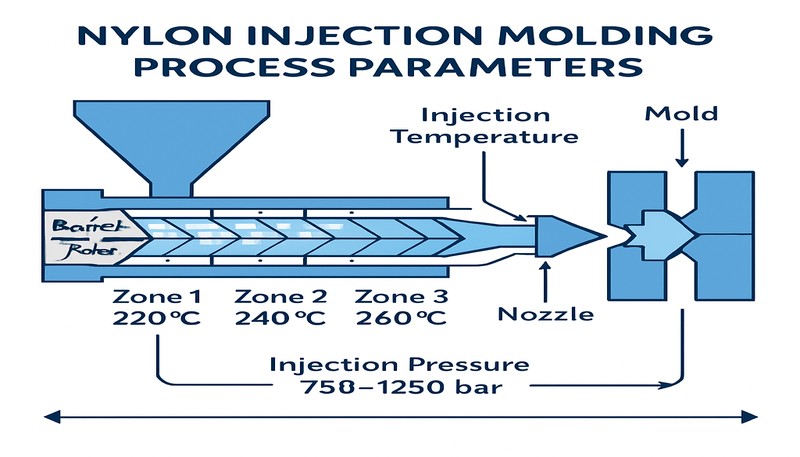
Sıcaklık parametreleri; kovan bölgelerini (genellikle 4-5 bölge), meme sıcaklığını ve enjeksiyon kalıbı sıcaklığını kapsar. ABS işlerken kovan sıcaklığını genellikle besleme bölgesinde 220°C’den memede 240°C’ye kadar, kalıp sıcaklığını ise yaklaşık 60-80°C aralığında ayarlarım. Bu sıcaklıklar bozunmayı önlerken eriyiğin doğru akmasını sağlar.
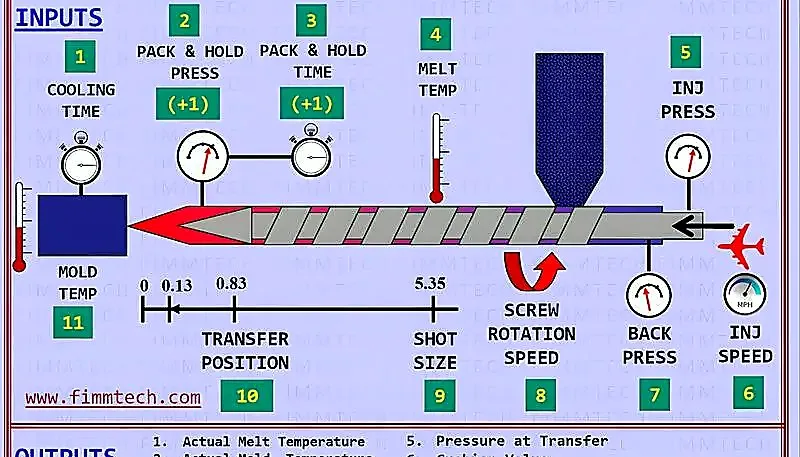
Basınç parametreleri sıralı olarak çalışır: enjeksiyon basıncı boşluğu doldurur (800-1500 bar), tutma basıncı parça yoğunluğunu korur (enjeksiyon basıncının %60-80’i) ve geri basınç eriyik homojenliğini kontrol eder (3-15 bar). Hız parametreleri; enjeksiyon hızını (50-200 mm/s), vida dönüş hızını (50-150 RPM) ve itici hızını içerir. Zamanlama parametreleri ise enjeksiyon süresini, tutma süresini, soğutma süresini ve toplam çevrim süresini kapsar.
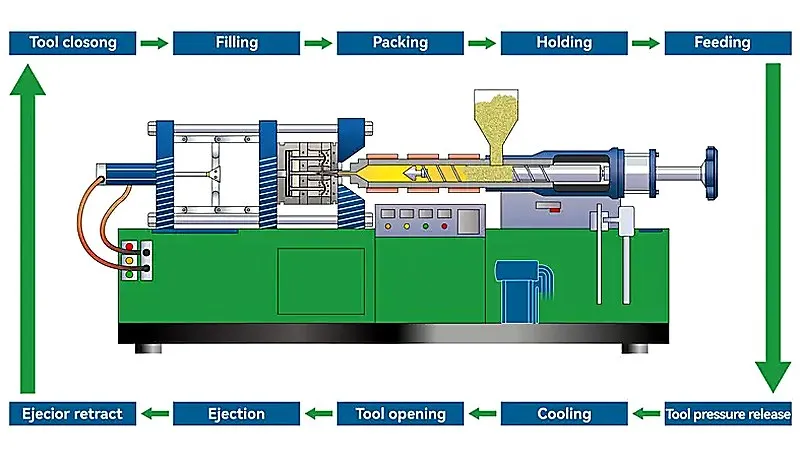
Sıcaklık Enjeksiyon Kalıplama Kalitesini Nasıl Etkiler?
Sıcaklık, enjeksiyonla kalıplanmış parçalarda malzeme viskozitesini, akış uzunluğunu, yüzey kalitesini ve moleküler yapıyı doğrudan kontrol eder. Daha yüksek sıcaklıklar viskoziteyi azaltarak daha uzun akış mesafesi ve daha iyi boşluk dolumu sağlar; ancak aşırı ısı bozunmaya, çapağa ve düşük yüzey kalitesine yol açar. Daha düşük sıcaklıklar viskoziteyi artırarak eksik doluma ve yüksek enjeksiyon basınçlarına neden olabilir.
Namlu sıcaklığı profilleri genellikle arka bölgeden ön bölgelere doğru yükselir. Polipropilen için besleme bölgesini 180°C, sıkıştırma bölgesini 200°C, ölçüm bölgesini 210°C ve memeyi 220°C’de çalıştırıyorum. Bu kademeli ısıtma, aşırı ısınma olmadan doğru plastikleşmeyi sağlar. Malzeme bozunmasını önlemek için bölgeler arasındaki sıcaklık farkı 10-20°C olmalıdır.
Kalıp sıcaklığı, naylon ve polipropilen gibi yarı kristal plastiklerde kristalleşmeyi etkiler. Daha yüksek kalıp sıcaklıkları (naylon için 80-120°C) kristalliği artırarak kimyasal direnci ve boyutsal kararlılığı iyileştirir, ancak çevrim süresini uzatır. Daha düşük kalıp sıcaklıkları (40-60°C) çevrim süresini kısaltır, ancak çarpılmaya ve kötü yüzey kalitesine neden olabilir. Naylon parçalarda kalıp sıcaklığı 60°C’den 100°C’ye çıktığında çevrim süresinin 20% arttığını gördüm.
"Silindir sıcaklığını 10°C artırmak, çoğu termoplastik için gereken enjeksiyon basıncını genellikle 50-100 bar azaltır."True
Bu ilişki geçerlidir; çünkü yüksek sıcaklıklar eriyik viskozitesini azaltarak malzemenin yolluk sisteminden ve kalıp boşluğuna daha kolay akmasını sağlar. ABS, PC ve naylon gibi malzemeler için proses parametrelerini optimize ederken 50-100 bar düzeyindeki bu basınç düşüşünü sürekli olarak gözlemledim.
"Daha yüksek enjeksiyon hızları, akış izlerini ve duraksama çizgilerini azaltarak parça kalitesini her zaman iyileştirir."False
Daha hızlı enjeksiyon birçok durumda yüzey kalitesini iyileştirebilse de aşırı hız; yüksek kesme ısınması, çarpılmaya yol açan moleküler yönlenme ve artan enjeksiyon basınçları gibi sorunlar oluşturur. En uygun enjeksiyon hızı parça geometrisine, et kalınlığına ve malzeme özelliklerine bağlıdır. İnce cidarlı PC parçalarda enjeksiyon hızı 250 mm/s'yi aştığında çarpılmanın 30% arttığını gördüm.
Enjeksiyon Basıncı Parça Kalitesinde Nasıl Bir Rol Oynar?
Enjeksiyon basıncı, erimiş plastiği yolluklardan ve girişlerden kalıp boşluğunun her ayrıntısına zorlayarak boşluğun tam dolmasını, parça yoğunluğunu ve boyutsal doğruluğu belirler. Yetersiz basınç eksik baskılara, çökme izlerine ve düşük parça yoğunluğuna yol açar. Aşırı basınç ise çapak, yüksek artık gerilim ve zor parça itmeye neden olur.
Tipik enjeksiyon basınçları çoğu termoplastik için 800-1500 bar aralığındadır; ancak ince cidarlı uygulamalar 1800+ bar gerektirebilir. Gerekli basıncı akış uzunluğu, cidar kalınlığı ve malzeme viskozitesini kullanarak hesaplarım. ABS’de 2mm cidar kalınlığından geçen 200mm akış uzunluğu için standart işleme sıcaklıklarında 1000-1200 bar enjeksiyon basıncı beklenir.
Tutma basıncı, soğuma sırasında malzeme büzülmesini telafi ederek kavite dolduktan sonra parça kalitesini korur. Tutma basıncını enjeksiyon basıncının 60-80% değerine ayarlayın; çok düşük değer çökme izlerine ve boyutsal değişimlere, çok yüksek değer enerji israfına ve çapağa yol açabilir. Tutma süresi, et kalınlığına ve malzemenin ısıl özelliklerine bağlı olarak 3-15 saniye olmalıdır. Kalın kesitlerde (>5mm) tutma süresini 10-15 saniyeye uzatın.
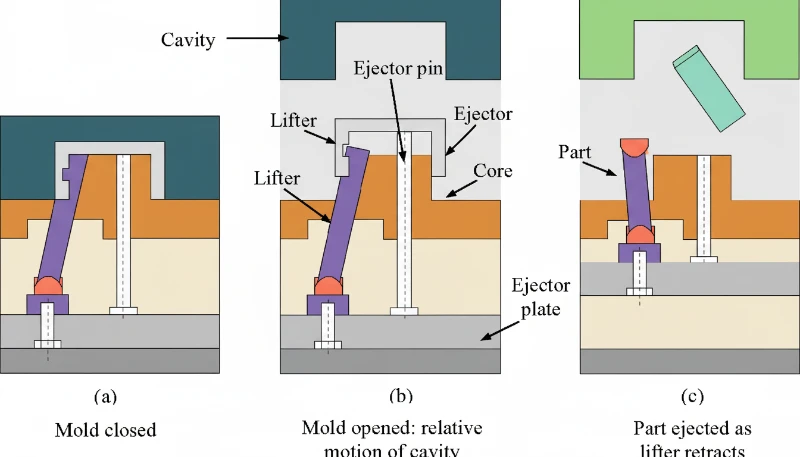
Hız ve Zamanlama Parametreleri Nihai Ürünü Nasıl Şekillendirir?
Hız ve zamanlama parametreleri malzemenin akış davranışını, moleküler yönelimini ve parçanın katılaşmasını kontrol ederek yüzey finisajını, mekanik özellikleri ve boyutsal kararlılığı doğrudan etkiler. Enjeksiyon hızı, kesme ısınmasını ve akış cephesinin kavitedeki ilerlemesini belirler. Vida hızı eriyik homojenliğini ve renk dağılımını etkiler. Zamanlama parametreleri, malzemenin sıvıdan katıya faz geçişlerini yöneterek her aşamanın süresini ve geçiş zamanını belirler. Bu parametrelerin doğru ayarlanması; malzeme reolojisi, parça geometrisi ve kalıbın soğutma kapasitesi arasındaki etkileşimin anlaşılmasını gerektirir.
Enjeksiyon hızı genellikle 50-200 mm/s aralığındadır ancak optimum hız parça geometrisine ve malzeme hassasiyetine bağlıdır. Hızlı enjeksiyon (150-200 mm/s) yüzey kalitesini iyileştirir ve akış izlerini azaltır; ancak kayma ısınmasını ve moleküler yönlenmeyi artırır. Yavaş enjeksiyon (50-100 mm/s) gerilimi azaltır ancak akış izlerine ve sıcaklık değişimlerine neden olabilir. Çok kademeli enjeksiyon profilleri kullanırım: kavite hacminin %90’ı için hızlı dolum, ardından gerilimi en aza indirmek için son %10’da düşük hız.
Vida dönüş hızı eriyik kalitesini ve çevrim süresini etkiler. 50-150 RPM standart hızlar, aşırı kesme ısısı oluşturmadan iyi karışım sağlar. 200 RPM üzerindeki yüksek hızlar PVC ve POM gibi ısıya duyarlı malzemelerde bozunmaya yol açarak renk değişimine ve mekanik özelliklerin azalmasına neden olur. 50 RPM altındaki düşük hızlar yetersiz eriyik homojenliği oluşturarak renk çizgilerine veya tutarsız parça kalitesine yol açabilir. 3-15 bar geri basınç karışımı iyileştirir; geri dönüştürülmüş malzemeler veya eşit görünümün kritik olduğu renk hassasiyetli uygulamalar için daha yüksek değerler (10-15 bar) kullanın. Genellikle 8-10 bar geri basınçla başlar, eriyik sıcaklığı izlemesine ve deneme baskılarının görsel kontrolüne göre ayarlarım.
Kristal Plastikler İçin Kalıp Sıcaklığı Neden Kritiktir?
Kalıp sıcaklığı; naylon, polipropilen ve POM gibi yarı kristalin plastiklerde kristalleşme kinetiğini kontrol ederek mekanik özellikleri, kimyasal direnci ve boyutsal kararlılığı doğrudan etkiler. Daha yüksek kalıp sıcaklıkları kristal oluşumunu destekleyerek dayanımı ve kimyasal direnci artırır, ancak çevrim süresini uzatır. Daha düşük sıcaklıklar kristalleşmeyi sınırlayarak özellikleri düşürürken daha hızlı üretim sağlar.
nylon 66 için parça gereksinimlerine bağlı olarak kalıp sıcaklığını genellikle 80-120°C aralığında kullanırım. Maksimum mukavemet ve kimyasal direnç gerektiren yüksek performanslı uygulamalar, 40-50% kristallik sağlayan 100-120°C kalıp sıcaklığına ihtiyaç duyar. Performans yerine maliyete öncelik veren tüketici ürünlerinde, daha hızlı çevrimler için daha düşük kristallik (20-30%) kabul edilerek 60-80°C kullanılabilir.
Polipropilen, kalıp sıcaklığına bağlı olarak özelliklerinde büyük değişiklikler gösterir. 40°C kalıp sıcaklığında, iyi darbe direnciyle 30-40% kristallik beklenir. 80°C’de kristallik 50-60% düzeyine çıkar; rijitlik artarken darbe dayanımı azalır. Temel nokta, kalıp sıcaklığını uygulama gereklilikleriyle eşleştirmektir: otomotiv motor bölmesi parçaları yüksek kristallik gerektirirken esnek ambalajlarda daha düşük kristallik tercih edilir. Bir PP dişli muhafazasında yaptığım testlerde kalıp sıcaklığını 50°C’den 85°C’ye çıkarmak çekme dayanımını 18% artırdı, ancak çevrim süresini neredeyse iki katına çıkardı. Mekanik performans ile üretim kapasitesi arasındaki bu ödünleşme, her proses mühendisinin dikkatle değerlendirmesi gereken bir konudur. POM da benzer bir düzen izler; 80-100°C kalıp sıcaklıkları dişliler ve mekanik bileşenlerde daha iyi sürünme direnci sağlar.
Parametre Kaynaklı Yaygın Kusurlar Nasıl Giderilir?
Parametre kaynaklı kusurlar, deneyimli kalıpçıların hemen tanıdığı öngörülebilir örüntüler izler. Eksik dolum, yetersiz basınç veya sıcaklığın kalıp boşluğunun tamamen dolmasını engellediğini gösterir. Çapak, aşırı basınca veya aşınmış takımın malzemenin kalıp ayırma hattından kaçmasına izin verdiğine işaret eder. Çökme izleri, soğutma sırasında yetersiz tutma basıncından veya süresinden kaynaklanır. Çarpılma ise düzensiz soğutma, aşırı moleküler yönelim ya da farklı çekme oluşturan hatalı yolluk giriş konumundan doğar. Her kusur türüne hangi parametrenin neden olduğunu anlamak, sistematik sorun gidermenin ilk adımıdır. Daha karmaşık nedenlere geçmeden önce daima ayarlanması en kolay parametreyi kontrol ederim; bu tanılama yaklaşımı üretim sahasındaki deneme yanılma çalışmalarında saatler kazandırır.
Eksik dolumlarda önce kalıp boşluğu tamamen dolana kadar enjeksiyon basıncını 50-100 barlık artışlarla yükseltin. Basınç iyileşme olmadan 1500 barın üzerindeki makine sınırlarına ulaşırsa eriyik viskozitesini azaltmak için kovan sıcaklığını 10°C’lik adımlarla artırın. Tutma süresini uzatarak yolluk girişinin donup donmadığını kontrol edin—bazen giriş, kalıp boşluğu dolmadan kapanır. Sıkışan hava yüksek basınçlarda bile tam dolumu önlediğinden yeterli havalandırmayı da doğrulayın. Bir otomotiv konnektörü projesinde sürekli eksik dolumların nedenini, yüksek hızlı dolum sırasında hava çıkışını sınırlayan tıkalı bir havalandırma kanalına kadar izledik.
Çapakların giderilmesi, basıncın sistematik olarak düşürülmesini ve kalıbın incelenmesini gerektirir. Çapak kaybolana kadar enjeksiyon basıncını 50 bar’lık adımlarla azaltın, ardından tutma basıncını optimize edin. Ayırma hattının durumunu kontrol edin; aşınmış veya hasarlı kalıp yüzeyleri düşük basınçta çapak oluşturur. Kalıp kapama kuvvetinin, izdüşüm parça alanı ve kavite basıncına göre hesaplanan gereksinimleri karşıladığını doğrulayın.
Çökme izi düzeltmesi, tutma basıncı ve süresinin optimizasyonuna odaklanır. Tutma basıncını enjeksiyon basıncının 70-80% değerine yükseltin. Tutma süresini yolluk girişi donana kadar uzatın — giriş boyutuna ve malzemeye bağlı olarak genellikle 3-15 saniye. Kalın kesitlerde, soğutma boyunca basıncı korumak için sıralı valf yollukları veya gaz destekli kalıplamayı değerlendirin.
"Enjeksiyonla kalıplanmış parçalardaki çarpılma, esas olarak malzeme özelliklerinden değil, kalın ve ince kesitler arasındaki farklı çekmeden kaynaklanır."True
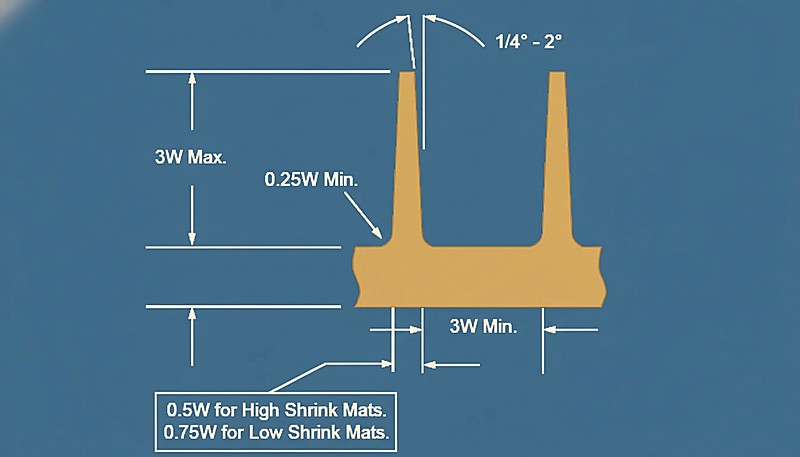
Farklı çekme oranları, parçalar soğuyup katılaşırken çarpılmaya yol açan iç gerilimler oluşturur. Kalın kesitler ince kesitlerden daha yavaş soğur ve daha fazla çeker; bu da gerilim yığılmaları oluşturur. Bu nedenle tekdüze cidar kalınlığı tasarımı kritik önemdedir—karmaşık muhafazalarda yalnızca 2-3mm'lik tutarlı cidar kalınlığını koruyarak çarpılmayı 60% azalttım.
"Enjeksiyon kalıplamada iyi renk karışımı elde etmek için 20 bar üzerindeki geri basınç ayarları her zaman gereklidir."False
Geri basınç karışımı iyileştirse de aşırı değerler (>20 bar) gereksiz kesme ısısına, daha uzun çevrim sürelerine ve olası malzeme bozunmasına yol açar. Çoğu uygulamada 5-15 bar geri basınçla mükemmel renk karışımı elde edilir. Deneyimlerime göre 8-12 bar, aşırı kesmenin olumsuz etkileri olmadan çoğu malzeme için en iyi karışımı sağlar.
ZetarMold'da 90T ile 1850T arasında 47 makinede edindiğimiz 20+ yıllık enjeksiyon kalıplama deneyimi, proses parametresi optimizasyonunun hem bilim hem sanat olduğunu öğretti. 400+ farklı malzemeyle çalışarak kurulum süresini 70% azaltan ve ilk baskı başarı oranını 85% üzerine çıkaran parametre veri tabanları geliştirdik. Proses mühendislerimiz üretim çalışmaları boyunca parametre kararlılığını ±2% içinde tutmak için istatistiksel proses kontrolü kullanır.
Enjeksiyon kalıplama proses parametrelerinizi optimize etmeye hazır mısınız? ZetarMold’un tedarik rehberi, 400’den fazla malzeme için ayrıntılı parametre önerileri sunar. Proses mühendislerimiz, çevrim süresini en aza indirirken tutarlı kalite sağlayan sağlam parametre aralıkları oluşturmanıza yardımcı olabilir. Mevcut kalıplama operasyonlarınız için ücretsiz proses parametresi denetimi almak üzere bizimle iletişime geçin.
Sıkça Sorulan Sorular
ABS için optimum enjeksiyon kalıplama sıcaklık aralığı nedir?
ABS enjeksiyon kalıplama sıcaklıkları tipik olarak kovanda 220-250°C, kalıpta ise 60-80°C aralığındadır. Genel amaçlı uygulamaların çoğu için 230°C kovan ve 70°C kalıp sıcaklığıyla başlamanızı öneririm. 240-250°C civarındaki daha yüksek sıcaklıklar akışı ve yüzey kalitesini iyileştirir ancak termal bozunma riskini artırır. 220-230°C civarındaki daha düşük sıcaklıklar çevrim süresini azaltır fakat ince cidarlı parçalarda eksik doluma yol açabilir. Erken donmayı önlemek için meme sıcaklığı ön kovan bölgesinden 5-10°C daha yüksek ayarlanmalıdır. Gerçek eriyik sıcaklığını daima pirometreyle izleyin; en uygun ABS işleme sonuçları için hedef 235-245°C’dir.
Enjeksiyon kalıplama için doğru tutma basıncını nasıl hesaplarsınız?
Tutma basıncını, gözün tamamen dolması için gereken enjeksiyon basıncının 60-80%‘i olarak hesaplayın. Temel değer olarak 70% ile başlayın, ardından parça kalitesine göre ayarlayın. Kalın kesitlerde (>4mm) çökme izlerini önlemek için 75-80% kullanın. İnce duvarlarda (<2mm) 60-65%, yoğunluğu korurken çapak oluşmasını önler. Parça ağırlığını izleyin—tutarlı ağırlık, doğru tutma basıncını gösterir. Mevcut olduğunda göz basıncı sensörleri kullanır ve tutma aşamasında 400-600 bar göz basıncını hedeflerim. Çok düşük tutma basıncı çökme izlerine ve boyutsal değişime yol açar. Çok yüksek basınç enerji israf eder ve çapak ya da zor kalıptan çıkarma sorununa neden olabilir.
Enjeksiyon kalıplamada flash ne sebep olur ve nasıl düzeltilir?
Flash, enjeksiyon basıncı kalıp kapatma kuvvetini aştığında veya kalıp ayrım yüzeyleri yıpranmış/bozulmuş olduğunda olur. Gerekli kapatma kuvvetini proje parça alanı × boşluk basıncı ile hesaplayın—tipik olarak proje alanın her inç karesi için 3-5 ton. Flash kaybolana kadar enjeksiyon basıncını 50-100 bar artışlar ile azaltın. Kalıp durumunu kontrol edin—yıpranmış ayrım hatları, bozulmuş hava kanalları veya yetersiz kalıp bakımı normal basınçlarda flash yapar. Kalıp ayarını ve yeterli bağlantı çubuğu uzamasını kontrol edin. Bazen flash yetersiz havalandırma belirtir, basınç azaltma veya ek hava kanalları gerektirir. Malzeme viskozitesi flash eğilimini etkiler—yüksek eriyik akış indeksi malzemeler daha kolay flash yapar.
Enjeksiyon basıncı ve tutma basıncı arasındaki fark nedir?
Enjeksiyon basıncı kalıp boşluğunu tamamen doldurur, tipik olarak parça geometrisi ve malzemeye bağlı 800-1500 bar. Tutma basıncı soğuma sırasında parça yoğunluğunu korur, genelde enjeksiyon basıncının 60-80%. Enjeksiyon basıncı dolum fazında (1-3 saniye) çalışır, tutma basıncı katılaşma sırasında (3-15 saniye) çalışır. Yüksek enjeksiyon basıncı tam dolum ve iyi yüzey kalitesi sağlar. Doğru tutma basıncı çökme izleri ve boyutsal daralmayı engeller. Enjeksiyondan tutma basıncı geçişi 95-98% boşluk dolumunda olur. Modern makineler boşluk basıncı geri beslemesi ile bu geçiş noktasını otomatik optimize eder.
Vida hızı plastik eriyik kalitesini nasıl etkiler?
Vida hızı karıştırma yoğunluğunu ve bekleme süresini kontrol ederek eriyik homojenliğini ve sıcaklığını doğrudan etkiler. 50-150 RPM standart hızları aşırı kesme ısısı oluşturmadan iyi karışım sağlar. Daha yüksek hızlar (>200 RPM), PVC veya POM gibi ısıya duyarlı malzemelerde bozulmaya neden olur. Daha düşük hızlar (<50 RPM), zayıf renk karışımına veya sıcaklık değişimlerine yol açabilir. Vida hızını malzeme hassasiyetine ve karıştırma gerekliliklerine göre ayarlarım. Isıya duyarlı malzemeler daha düşük hızlar (50-100 RPM) gerektirir. Geri dönüştürülmüş malzemeler veya renk konsantreleri daha yüksek hızlardan (100-150 RPM) yararlanır. Eriyik sıcaklığını izleyin — aşırı vida hızı, kesme ısısı yoluyla sıcaklığı 10-20°C artırır.
Enjeksiyon kalıplanmış parçalar için ideal soğuma zamanı nedir?
Soğuma zamanı, kalınlığın karesine ve malzeme termal difüzyonuna bağlıdır. Formül: soğuma zamanı = (kalınlık)² × malzeme faktörü. ABS için 3mm kalınlıkta, 15-25 saniye beklenir. Polipropilen daha hızlı soğur (malzeme faktörü 0.8), PC daha yavaş (malzeme faktörü 1.3). Kalıp sıcaklığı soğuma zamanını etkiler—her 10°C artış, döngü zamanını 15-20% artırır. Etkili soğuma kanal tasarımı zamanı 30-40% azaltır. Parça çıkarma sıcaklığını ölçerek soğumanın yeterli olduğunu kontrol ederim—çoğu termoplast için 60°C altında olmalıdır. Parça kalitesi bozulmaya başlayana kadar sistematik azaltma ile soğuma zamanını optimize edin.
Enjeksiyon kalıplama için ters basınç nasıl ayarlanır?
Malzeme karışım gereksinimleri ve kalite ihtiyaçlarına bağlı olarak ters basıncı 3-15 bar arasında ayarlayın. Çoğu uygulamada 5-8 bar ile başlayın, sonra eriyik kalitesine göre ayarlayın. Yüksek ters basınç (10-15 bar) renk karışımı ve eriyik homojenliğini iyileştirir ama döngü zamanını ve kesme ısısını artırır. Düşük ters basınç (3-5 bar) döngü zamanını azaltır ama renk çizgileri veya kötü karışım yapabilir. PVC gibi ısıya hassas malzemeler minimal ters basınç (3-5 bar) gerektirir. Geri dönüştürülmiş malzemeler veya masterbatch uygulamaları yüksek değerler (10-12 bar) ile avantaj sağlar. Eriyik sıcaklığını izleyin—fazla ters basınç kesme ısısı ile sıcaklığı artırır. 2-3 bar artışlar ile kademeli ayarlayın.
Kalıp sıcaklığı çok düşük olursa ne olur?
Düşük kalıp sıcaklığı; zayıf yüzey kalitesine, kalıp gözünün eksik dolmasına, yüksek artık gerilmeye ve boyutsal kararsızlığa neden olur. Yüzey kusurları arasında akış izleri, kaynak çizgileri ve mat yüzey bulunur. Parçalar, gerilimin gevşemesi nedeniyle kullanım sırasında çarpılabilir. Naylon gibi yarı kristalin plastikler, sınırlı kristalleşme nedeniyle daha düşük mekanik özellikler gösterir. 40°C kalıp sıcaklığında kalıplanan naylon parçalarda, 80°C’ye kıyasla %20-30 dayanım azalması gördüm. Düşük kalıp sıcaklığı ayrıca enjeksiyon basıncı gereksinimini 100-200 bar artırır. Bununla birlikte soğutma süresi azalır ve çevrim süresi iyileşir. Denge kritik önemdedir; kabul edilebilir parça kalitesini sağlayan en düşük sıcaklığı kullanın. Tipik minimum değerler: ABS 50°C, naylon 60°C, polipropilen 40°C.
enjeksiyon kalıplama: Enjeksiyon kalıplama; plastiğin eritildiği, kalıp boşluğuna enjekte edildiği, parçanın soğutulduğu ve kararlı seri üretim için çevrimin tekrarlandığı üretim sürecidir. ↩
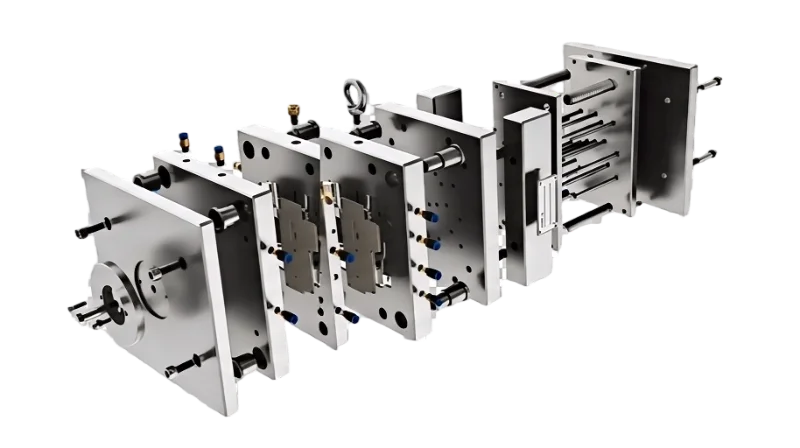
enjeksiyon kalıbı: Enjeksiyon kalıbı; parça geometrisini, soğutma davranışını, çıkarma düzenini, giriş sistemini, yüzey kalitesini ve tekrarlanabilirliği belirleyen hassas takımdır. ↩
tedarikçi seçme kılavuzu: Tedarikçi seçme kılavuzu; üretim ortaklarının kalıp yetkinliği, proses kontrolü, malzeme bilgisi, denetim disiplini ve güvenilirlik açısından değerlendirilmesine yardımcı olur. ↩