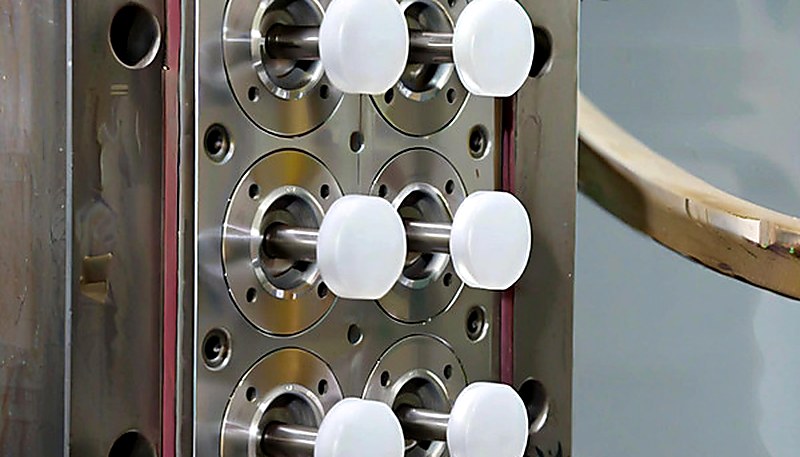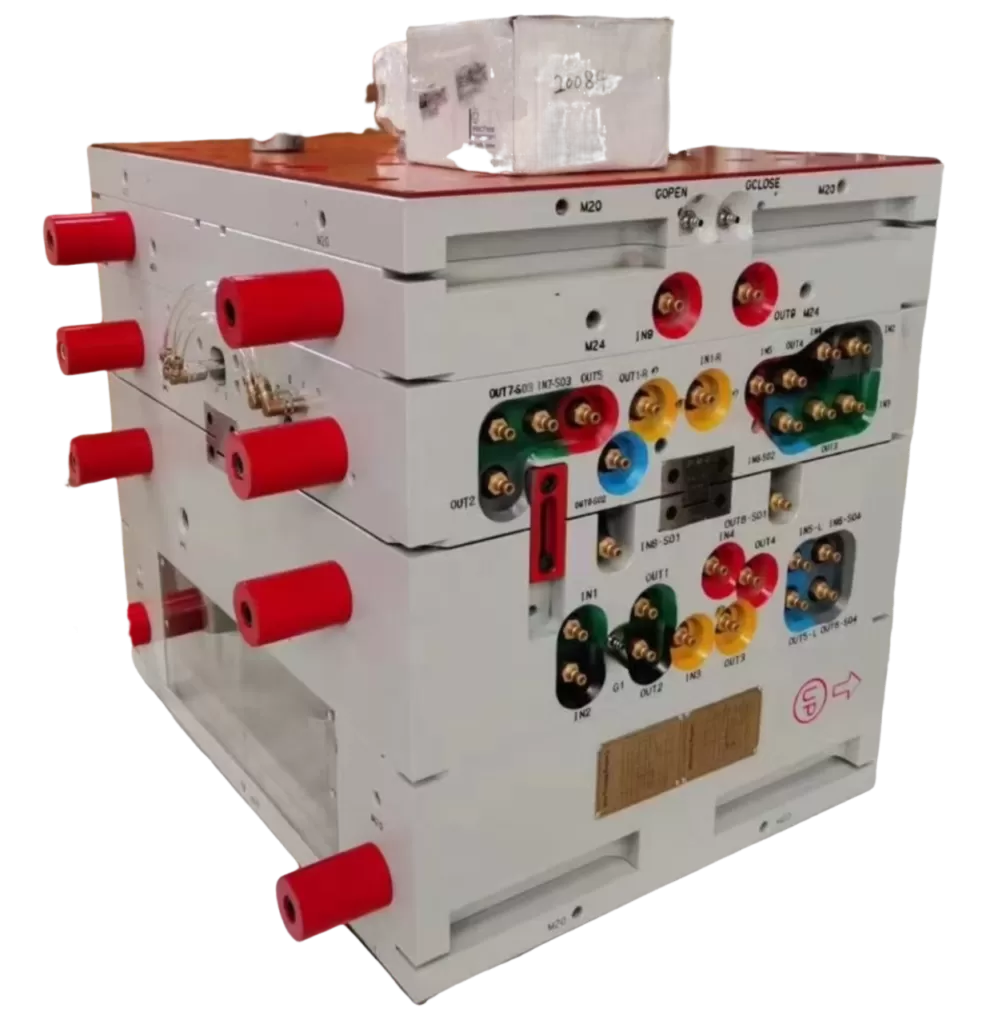
- Prędkość zamykania formy przebiega według dwustopniowego profilu. Etap podejścia: szybkie zamykanie od 200-300 mm/s, aż powierzchnie formy znajdą się w odległości 5-10 mm od kontaktu. Etap pozycjonowania: wolne zamykanie od 5-10 mm/s do ostatecznego zamknięcia, aby chronić powierzchnie formy i elementy centrujące. Niektóre nowoczesne maszyny dodają trzeci etap niskociśnieniowej ochrony przy 1-2 mm/s z naciskiem docisku 5-10 bar przed pełnym zwarciem. Zapobiega to uszkodzeniom, jeśli w gnieździe formy pozostanie obcy materiał lub zakleszczona część.
- Suszenie materiału jest obowiązkowe w przypadku higroskopijnych tworzyw, takich jak PA6 i PEEK
- Struktura czasu cyklu: wtrysk 10%, chłodzenie 60-80%, wyrzut 5-15%
- Siła zwarcia musi przekraczać ciśnienie wtrysku o 20-30%, aby uniknąć wypływki
- Prawidłowy projekt chłodzenia skraca czas cyklu o 20-35% w porównaniu z konwencjonalnymi kanałami
- Siła wypychania powinna być 1.5-2 razy większa od rzutu powierzchni części
- Po każdym wtrysku następuje kontrola jakości: oględziny oraz kontrole wymiarowe i funkcjonalne
Krok 1: Czym jest przegląd DFM i dlaczego ma znaczenie?
Geometria detalu jest już ustalona. Na biurku leży wycena oprzyrządowania. Zanim rozpocznie się obróbka stali, trzeba podjąć jedną decyzję przesądzającą o powodzeniu pierwszej próby: przeprowadzić analizę projektowania pod kątem wytwarzalności (DFM). Od 2005 roku wykonaliśmy kontrole DFM dla ponad 5000 projektów i około 40% niepowodzeń pierwszej próby wynika ze ścianek grubszych niż 4 mm przy niewystarczającym chłodzeniu. Usuwanie tych problemów po wykonaniu oprzyrządowania kosztuje dziesięć razy więcej. Więcej informacji o podstawach projektowania form znajdziesz w naszym przewodniku po projektowaniu form.
W ZetarMold nasz proces DFM został udoskonalony przez 20 lat budowy form. Przetwarzamy ponad 400 materiałów i budujemy ponad 100 form miesięcznie, dlatego często spotykamy się z tym kompromisem. Nasz zespół obejmuje 8 starszych inżynierów form, którzy przed zatwierdzeniem oprzyrządowania sprawdzają każdą nową część pod kątem równomierności grubości ścianek, optymalizacji położenia przewężek i wydajności kanałów chłodzących.
"Analiza DFM eliminuje 80% potencjalnych wad formowania wtryskowego."True
Wykrycie różnic grubości ścianek, niedostatecznych kątów pochylenia i problemów z położeniem przewężek przed rozpoczęciem obróbki stali pozwala producentom uniknąć zapadnięć, paczenia i niedolewów, które zwykle wymagają zmian w formie kosztujących 5000–50 000 USD za każdą modyfikację.
"Każda zmiana grubości ścianki wymaga modyfikacji formy."False
Niewielkie różnice w obrębie stosunku 2:1 można czasem skompensować korektami procesu, takimi jak zmiana ciśnienia docisku i czasu chłodzenia. Duże różnice przekraczające 3:1 lub powodujące przewlekłe wady wymagają przeprojektowania formy.
Lista kontrolna DFM przedstawiona przez inżyniera powinna obejmować pięć bezwzględnie wymaganych punktów. Szerszy opis całego procesu formowania wtryskowego znajdziesz w naszym kompletnym przewodniku po formowaniu wtryskowym. Są to: równomierność grubości ścianek (docelowa zmienność ±10%), odpowiedni kąt pochylenia (minimum 1–3°), uzasadnienie typu i położenia przewężki, kompensacja skurczu właściwa dla materiału oraz układ kanałów chłodzących.
Zatwierdzenie DFM powinno obejmować konkretne pomiary: nominalną grubość ścianki z tolerancjami (±0.1mm dla elementów poniżej 3mm), oczekiwane skurcze dla poszczególnych materiałów (0.5% dla tworzyw amorficznych, 1.5-2.5% dla półkrystalicznych), uzasadnienie rozmiaru i położenia przewężki oraz weryfikację układu kanałów chłodzących. Jeśli któregoś z tych elementów brakuje w raporcie DFM, poproś o jego uzupełnienie przed zatwierdzeniem budowy formy.
Jeśli porównujesz dostawców lub planujesz zakupy, nasz przewodnik po pozyskiwaniu dostawcy usług formowania wtryskowego omawia przygotowanie zapytania ofertowego, kwalifikację oraz kontrolę ryzyka handlowego.
Krok 2: Jak suszyć i przygotowywać materiały do formowania wtryskowego?
Susz granulat tworzywa w osuszaczu zasypowym z powietrzem osuszonym, w temperaturze właściwej dla materiału (80–160 °C), przez 2–6 godzin, aż wilgotność spadnie poniżej 0.02%, a następnie podawaj go bezpośrednio do leja maszyny szczelnym przewodem transportowym z suchym powietrzem. Zamknięte worki pozostają w magazynach, a higroskopijne tworzywa po otwarciu szybko pochłaniają wilgoć — PA6 przy wilgotności względnej 50% osiąga w ciągu kilku godzin wilgotność 0.3%, znacznie przekraczającą próg 0.02%. Suszenie nie jest opcjonalne w przypadku tworzyw konstrukcyjnych; stanowi pierwszą bramkę jakości.
Parametry suszenia zależą od rodzaju materiału. PA6 wymaga 4–6 godzin w temperaturze 80–100°C. PC potrzebuje 3–4 godzin w 120°C. PEEK wymaga 4–6 godzin w 150–160°C. Należy monitorować punkt rosy powietrza suszącego — wartość poniżej -30°C wskazuje, że urządzenie działa prawidłowo. Wartość powyżej -10°C oznacza, że osuszacz wymaga serwisu.
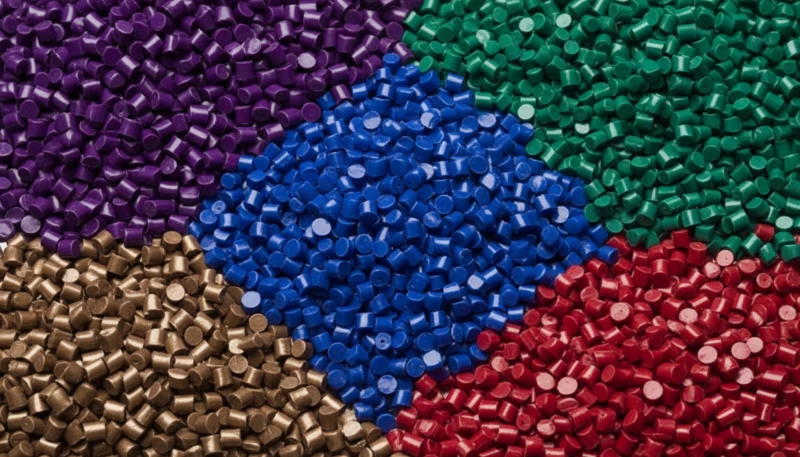
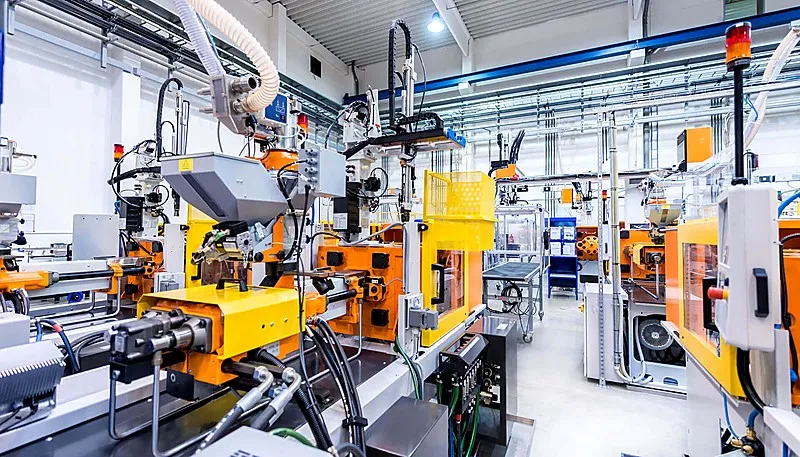
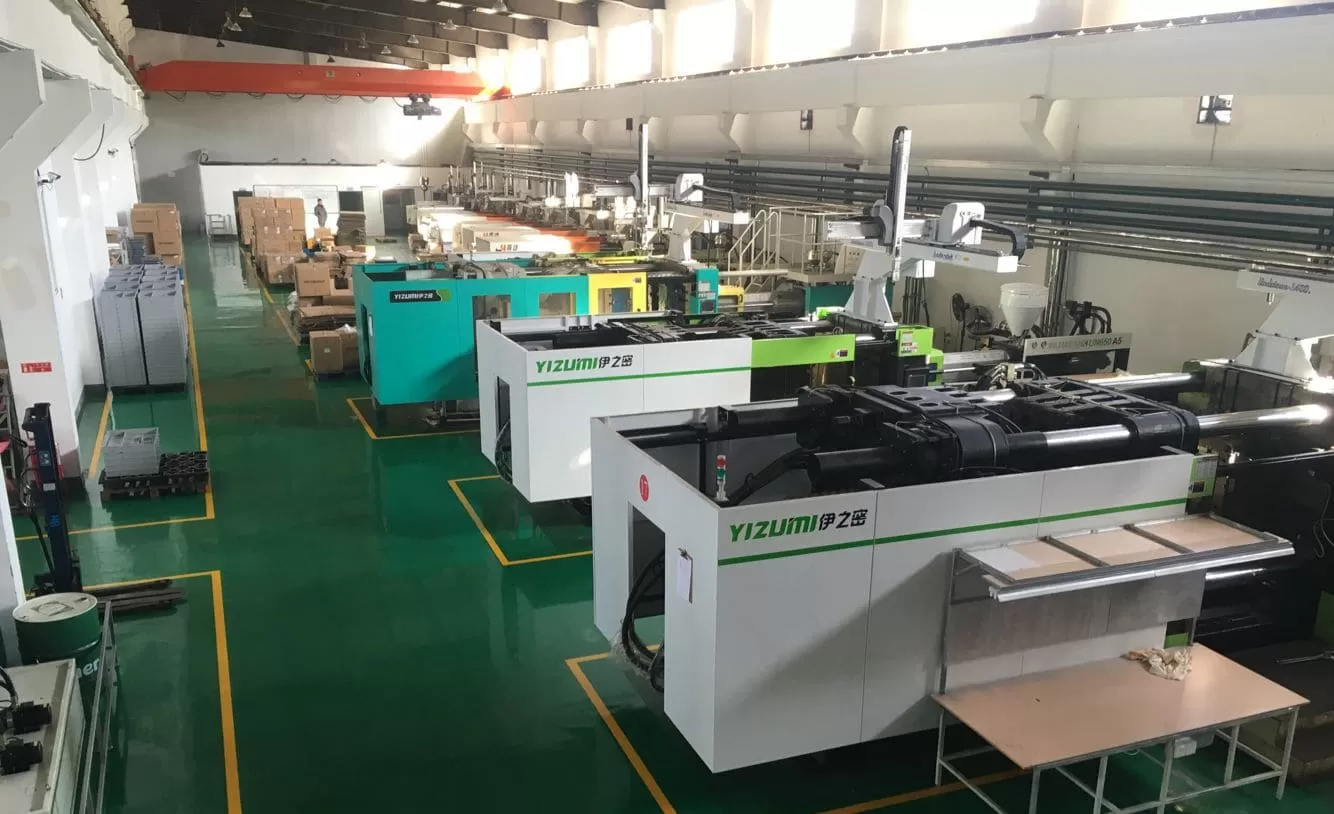
Nasza fabryka w Szanghaju obsługuje 47 maszyn do wtrysku tworzyw sztucznych o sile od 90T do 1850T i posiada 6 dedykowanych stacji suszących. Dzięki ponad 120 pracownikom produkcyjnym i 8 inżynierom od form, widzieliśmy, co się dzieje, gdy suszenie materiału jest pośpieszne. Utrzymujemy suszarki z punktem rosy -40°C dla materiałów higroskopijnych i dokumentujemy parametry suszenia dla każdego z ponad 400 materiałów, które przetwarzamy.
| Materiał | Temperatura suszenia (°C) | Czas suszenia (godz.) | Docelowa wilgotność (%) |
|---|---|---|---|
| PA6 | 80-100 | 4-6 | <0.02 |
| PC | 120 | 3-4 | <0.02 |
| PEEK | 150-160 | 4-6 | <0.01 |
| ABS | 80-85 | 2-3 | <0.02 |
| POM | 80 | 2-3 | <0.02 |
Materiały niehigroskopijne, takie jak polipropylen i PE, nie wymagają intensywnego suszenia, ale wilgoć powierzchniową po kondensacji należy usunąć krótkim cyklem 1–2 godzin w temperaturze 60–80°C. Suszenie można całkowicie pominąć tylko wtedy, gdy materiał przechowywano w kontrolowanych warunkach klimatycznych.
Weryfikacja zawartości wilgoci zapobiega wadom powierzchniowym i osłabieniu strukturalnemu w odlewanych częściach. Użyj halogenowego analizatora wilgoci lub miareczkowania Karla Fischera, aby potwierdzić, że zawartość wilgoci w żywicy pozostaje poniżej progu specyficznego dla materiału przed załadowaniem zasobnika. Typowe cele obejmują PA6 i PA66 poniżej 0,2% wilgoci, poliwęglan i PET przy 0,02% lub mniej, oraz PBT poniżej 0,05%. W naszej fabryce w Szanghaju weryfikujemy poziom wilgoci w każdej partii produkcyjnej przed rozpoczęciem przetwarzania. Materiał z recyklingu — nawet gdy właściwie przechowywany w szczelnych pojemnikach — absorbuje wilgoć z otoczenia szybciej niż żywica pierwotna, co czyni weryfikację szczególnie krytyczną przy stosowaniu mieszanek z recyklingu. Pominięcie tej kontroli prowadzi do smug, zmniejszonej wytrzymałości na uderzenie i niestabilności wymiarowej, której żadna korekta parametrów po odlewaniu nie może odwrócić.
Krok 3: Jak działa zwarcie i zamykanie formy?
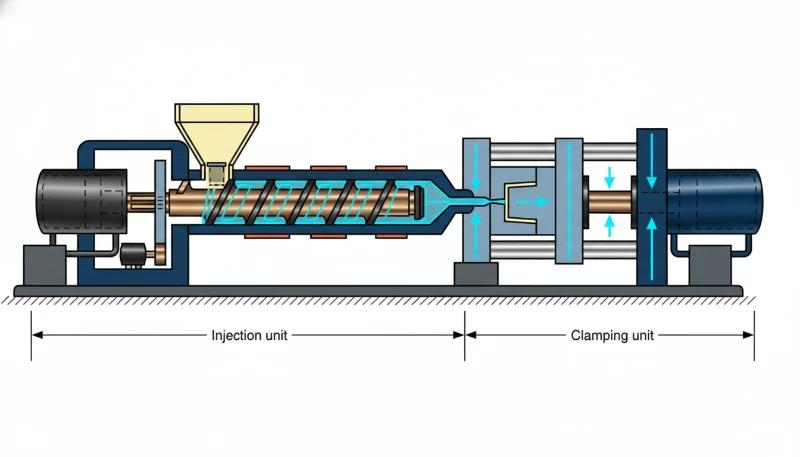
Układ zamykania przykłada siłę hydrauliczną lub mechaniczną, wyrażaną w tonach, aby utrzymać szczelność płaszczyzny podziału formy przy ciśnieniu wtrysku1 wynoszącym 18 000–50 000 psi. Praktyczna zasada jest prosta: oblicz rzutowaną powierzchnię gniazda, pomnóż ją przez szczytowe ciśnienie wtrysku, a następnie dodaj 10–20% marginesu bezpieczeństwa. Prawidłowa siła zamykania zapobiega wypływkom, chroni geometrię płaszczyzny podziału i zapewnia powtarzalność wymiarów w kolejnych seriach produkcyjnych.
Nominalny tonaż maszyny określa maksymalną dostępną siłę zamykania2. Eksploatacja formy przy 60–80% tonażu znamionowego zapewnia optymalną efektywność energetyczną, zachowując odpowiedni margines bezpieczeństwa na skoki ciśnienia podczas faz wtrysku i docisku.
"Obliczenia siły zwarcia wymagają uwzględnienia 20–30% marginesu bezpieczeństwa."True
Wzór (pole rzutu × ciśnienie wtrysku) daje teoretyczne minimum. Dodanie 20–30% kompensuje skoki ciśnienia podczas napełniania, rozszerzalność cieplną formy oraz zmiany lepkości materiału.
"Większa siła zwarcia zawsze poprawia jakość wypraski."False
Nadmierna siła zwarcia może zgniatać kanały odpowietrzające, zatrzymywać powietrze powodujące przypalenia oraz przyspieszać zużycie formy. Celem jest zastosowanie siły wystarczającej do utrzymania formy w stanie zamkniętym bez tworzenia koncentracji naprężeń.
Prędkość zamykania formy ma profil dwustopniowy. Etap zbliżania: szybkie zamykanie z prędkością 200–300 mm/s do chwili, gdy powierzchnie formy znajdą się 5–10 mm od styku. Etap pozycjonowania: powolne zamykanie z prędkością 5–10 mm/s do pełnego styku, chroniące powierzchnie formy i elementy ustalające. Niektóre nowoczesne maszyny dodają trzeci etap ochronny przy niskim ciśnieniu, z prędkością 1–2 mm/s i ciśnieniem zwarcia 5–10 bar przed pełnym zaciśnięciem. Zapobiega to uszkodzeniu, jeśli w gnieździe pozostanie ciało obce lub zakleszczony detal.
Każdy początek zmiany
Krok 4: Jak przebiega topienie i wtryskiwanie tworzywa?
Podczas wtrysku granulat żywicy jest topiony w ogrzewanym cylindrze przez obracający się ślimak, a następnie ujednorodnione tworzywo jest wtłaczane do gniazda formy z prędkością 50–200 mm/s. Granulat trafia do leja, przemieszcza się przez ogrzewany cylinder i jest ścinany przez obracający się ślimak. Strefy zasilania, sprężania i dozowania transportują, topią, ujednorodniają i odmierzają materiał, dzięki czemu lepkość pozostaje stabilna podczas wypełniania.
Prędkość obrotowa ślimaka wpływa na jakość stopu i wydajność. Zbyt mała: niewystarczające nagrzewanie wskutek ścinania powoduje pozostawanie niestopionego granulatu. Zbyt duża: nadmierne ścinanie degraduje polimer i powoduje przebarwienia. Większość żywic konstrukcyjnych najlepiej przetwarza się przy 50-120 RPM, dostosowując prędkość do średnicy ślimaka i lepkości materiału.
W ciągu ponad 20 lat doświadczenia w formowaniu, począwszy od 2005 roku, zgromadziliśmy rozległą wiedzę dotyczącą przetwórstwa ponad 400 materiałów. Nasza fabryka w Szanghaju stosuje standardowe profile ślimaków dla każdej klasy materiałów i dostosowuje je do gatunków specjalistycznych. Czas uplastyczniania — czas potrzebny na zgromadzenie ilości stopionego tworzywa wystarczającej do jednego wtrysku — wynosi na naszych maszynach zazwyczaj 2-4 sekundy i stanowi 10-15% całkowitego czasu cyklu3.
Wtrysk rozpoczyna się, gdy ślimak przestaje się obracać i przesuwa się do przodu jak tłok, przepychając zgromadzone tworzywo przez dyszę, wlew główny i układ kanałów do gniazda. Prędkość wtrysku wpływa na wykończenie powierzchni i wytrzymałość linii łączenia. Szybkie napełnianie ogranicza spadek temperatury, ale może zamykać powietrze. Wolne napełnianie ułatwia odpowietrzanie, lecz może powodować przedwczesne zamarzanie tworzywa.
Krok 5: Czym jest ciśnienie dopakowania i docisku?
Forma jest wypełniona w 95-98%. Gniazdo jest niemal pełne, ale materiał nie został jeszcze dociśnięty. Ciśnienie docisku kompensuje skurcz objętościowy podczas chłodzenia tworzywa od temperatury stopu do temperatury wypychania — w przypadku materiałów częściowo krystalicznych skurcz objętościowy wynosi zwykle 10-15%. Bez odpowiedniego docisku na częściach pojawiają się zapadnięcia, pustki i odchylenia wymiarowe powodujące przekroczenie tolerancji.
"Ciśnienie docisku kompensuje skurcz cieplny."True
Gdy tworzywo stygnie od temperatury wtrysku (200-300°C) do temperatury pokojowej, jego gęstość rośnie, a objętość maleje o 1-3% zależnie od materiału. W tej fazie ciśnienie docisku wtłacza materiał do gniazda, aby utrzymać dokładność wymiarową.
"Wyższe ciśnienie docisku zawsze eliminuje zapadnięcia."False
Nadmierny docisk powoduje wypływki na linii podziału i problemy z wypychaniem. Zapadnięcia spowodowane grubymi przekrojami ścianek wymagają zmian konstrukcyjnych, takich jak odciążenie rdzeniem lub przeprojektowanie żeber, a nie tylko korekty ciśnienia.
Krytycznym punktem decyzyjnym jest czas zamarzania przewężki. Przewężka musi zestalić się przed zwolnieniem ciśnienia docisku, inaczej materiał wypłynie z powrotem z gniazda. Typowy czas zamarzania wynosi 1–3 sekundy dla przewężek krawędziowych i 0,3–0,8 sekundy dla przewężek tunelowych. Należy monitorować krzywe ciśnienia w gnieździe — gwałtowny spadek ciśnienia po docisku wskazuje na przedwczesne odmarznięcie przewężki.
Profil ciśnienia docisku może być stopniowany zamiast stały. Etap 1: Wysokie ciśnienie (80-100% ciśnienia wtrysku) przez 20-30% czasu docisku, aby wtłoczyć materiał do grubych przekrojów i narożników. Etap 2: Obniżone ciśnienie (50-70% ciśnienia wtrysku) przez pozostały czas, aby utrzymać gęstość bez nadmiernego dopakowania. Taki profil ogranicza zapadnięcia, jednocześnie minimalizując ryzyko wypływki. Punkt przejścia określa się na podstawie obserwacji krzywej masy części i kontroli wzrokowej grubych przekrojów pod kątem zapadnięć przy różnych poziomach ciśnienia.
Krok 6: Jak przebiegają chłodzenie i krzepnięcie?
Wlew zastygł. Materiał został dociśnięty. Część jest wystarczająco stabilna wymiarowo, aby przetrwać wypychanie, lecz musi całkowicie zestalić się przed otwarciem formy. Chłodzenie dominuje w czasie cyklu, stanowiąc 60-80% całości. Skrócenie chłodzenia o 10 sekund w cyklu 25-sekundowym oznacza wzrost wydajności o 40%. Właśnie tutaj inżynieria się opłaca.
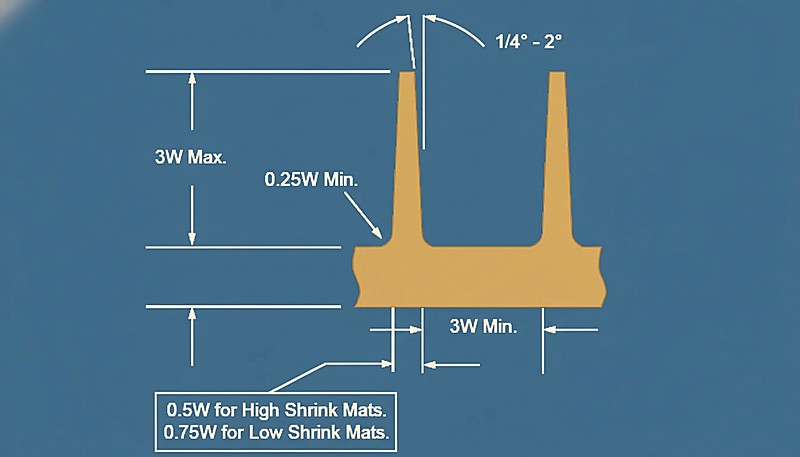
Konwencjonalne chłodzenie używa prostych wierconych kanałów o średnicy 8–12 mm, rozstawionych co 3–5 średnic, i odległości od powierzchni części do osi kanału równej 2–3 średnicom. To działa dla części o jednolitej grubości ścianki i prostej geometrii. Gdy masz wypustki, żebra lub zmienną grubość ścianki, jednolite chłodzenie staje się wyzwaniem — grube przekroje chłodzą się wolniej, powodując różnicową kurczliwość, odkształcenia i naprężenia szczątkowe.
ZetarMold stosuje konformalne kanały chłodzące w formach wielkoseryjnych od 2013 roku. Prowadząc je wzdłuż konturu gniazda zamiast prostego wiercenia, skróciliśmy czas chłodzenia złożonych detali o 20–35%. Ta zdolność, połączona z własną narzędziownią, pozwala nam dostarczać ponad 100 form miesięcznie ze zoptymalizowanymi układami chłodzenia.
| Materiał | Ścianka 2 mm (s) | Ścianka 3 mm (s) | Ścianka 4 mm (s) |
|---|---|---|---|
| PP | 8-10 | 12-15 | 16-20 |
| ABS | 10-12 | 15-18 | 20-24 |
| PC | 12-15 | 18-22 | 25-30 |
| PA6 | 10-12 | 15-18 | 20-25 |
| PEEK | 15-18 | 22-27 | 30-36 |
Temperatura chłodziwa powinna być o 10-20°C niższa od temperatury ugięcia cieplnego materiału. Dla PC ustaw temperaturę formy na 80-100°C. Dla PP sprawdza się 20-40°C. Wyższa temperatura formy poprawia wykończenie powierzchni i krystaliczność, lecz wydłuża czas cyklu. Zawsze jest to kompromis między jakością estetyczną a wydajnością.
Optymalizacja chłodzenia może skrócić czas cyklu o 20-35% na istniejących formach bez zmian sprzętowych. Dostosowania procesowe: skróć czas docisku do minimum, które utrzymuje wagę części, zwiększ przepływ chłodziwa w granicach pompy i obniż temperaturę formy do minimum, które unika deformacji. Modyfikacje formy: dodaj przegrody do chłodzenia głębokich rdzeni, przemieść kanały bliżej grubych przekrojów i zainstaluj konforemne chłodzenie dla złożonych geometrii. Zwrot z inwestycji jest typowo realizowany w ciągu 1000-5000 części.
Krok 7: Jak przebiega otwieranie formy i wypychanie części?
Część zestaliła się. Czas chłodzenia minął. Forma się otwiera. Wydaje się to proste, ale właśnie podczas wypychania powstaje 20–30% wad formowania wtryskowego. Wypychanie wymaga pokonania dwóch sił: przyczepności schłodzonego tworzywa do stali formy oraz mechanicznego zakleszczenia wynikającego z podcięć lub zbyt małego kąta pochylenia. Układ wypychania musi przyłożyć dostateczną siłę, nie odkształcając części, nie pozostawiając śladów wypychaczy i nie powodując ponownego przywarcia do strony rdzenia.
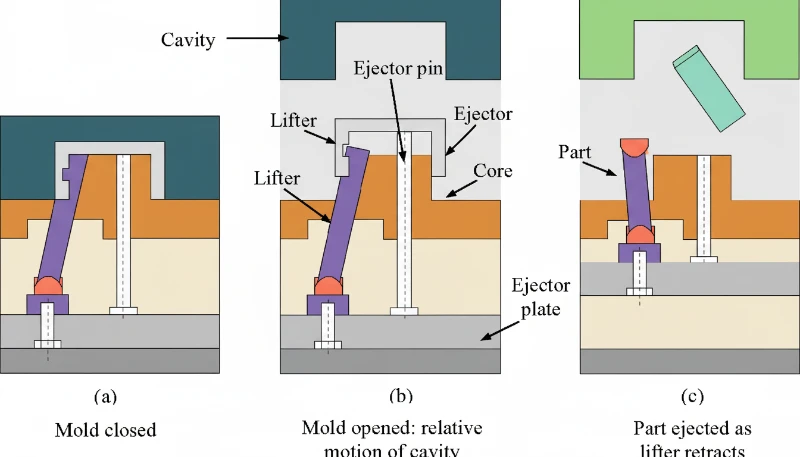
"Siła wypychania powinna wynosić 1.5-2 razy więcej niż rzutowana powierzchnia części."True
Dla detalu o powierzchni rzutu na płaszczyznę formy wynoszącej 50 cm2 siła wypychania 75-100 N zapewnia niezawodny wyrzut przy jednoczesnym ograniczeniu śladów po wypychaczach. Nadmierna siła wypychania powoduje ślady po wypychaczach i uszkodzenia powierzchni.
"Większa liczba wypychaczy zawsze poprawia niezawodność wypychania."False
Nadmierna liczba wypychaczy powoduje ślady na powierzchni, zwiększa koszt formy i tworzy więcej potencjalnych punktów awarii. Strategiczne rozmieszczenie wypychaczy na skrzyżowaniach żeber i w narożach jest skuteczniejsze niż sama ich liczba.
Dobór układu wypychania zależy od geometrii części. Wypychanie proste wykorzystuje wypychacze trzpieniowe do prostych geometrii. Wypychacze tulejowe obsługują bossy i elementy cylindryczne. Wypychanie płytą spychającą sprawdza się najlepiej w przypadku cienkościennych kubków i nakrętek. Podcięcia wymagają wypychaczy skośnych lub trzpieni kątowych. Wybór niewłaściwego układu powoduje odkształcenie części, zakleszczanie lub uszkodzenie oprzyrządowania, które narasta przez tysiące cykli.
Rozmieszczenie wypychaczy podlega określonym zasadom. Wypychacze należy umieszczać w grubych przekrojach i na przecięciach żeber, gdzie opór przy wypychaniu jest największy. Należy je rozmieścić równomiernie wzdłuż obwodu detalu, aby rozłożyć siłę. Średnica wypychacza powinna wynosić co najmniej 1.5x jego długości, aby zapobiec wygięciu. W przypadku powierzchni polerowanych lub fakturowanych należy unikać umieszczania wypychaczy w widocznych obszarach dekoracyjnych.
Prędkość otwierania formy wpływa na jakość wypychania. Profil otwierania: wolne otwieranie początkowe (5-10 mm/s) na pierwszych 10-20mm, aby detal oddzielił się od rdzenia bez naprężeń. Szybkie otwieranie (100-200 mm/s) przez większość skoku w celu skrócenia czasu cyklu. Hamowanie (20-50 mm/s) na ostatnich 50-100mm, aby uniknąć gwałtownego otwarcia formy oraz ograniczyć zużycie kołków prowadzących i tulei. Hamowanie jest szczególnie ważne w formach z płytami zdzierającymi lub złożonymi wypychaczami skośnymi, które wymagają kontrolowanej sekwencji otwierania.
Krok 8: Jak kontrolować jakość i monitorować proces?
Detal zostaje wypchnięty. Spada do zsypu lub odbiera go robot. Co dalej? Jeśli uznasz, że proces jest już ustawiony, i pozostawisz go bez kontroli, wady odkryjesz po kilku godzinach lub dniach, gdy klient odrzuci dostawę. Kontrola jakości musi odbywać się na początku każdej zmiany, po każdej zmianie materiału oraz w określonych odstępach podczas produkcji. Hierarchia kontroli obejmuje kontrolę pierwszej sztuki (FAI) przy uruchomieniu, kontrolę międzyoperacyjną co 50–100 detali oraz kontrolę końcową każdej partii wysyłkowej.
W ZetarMold nasz proces jakości obejmuje IQC (kontrolę jakości materiałów wejściowych), kontrole międzyoperacyjne z pobieraniem próbek, kontrolę procesu, kontrolę pakowania, FQC (końcową kontrolę jakości) oraz OQC (kontrolę jakości wyrobów wychodzących). Ponad 10 specjalistów QC sprawdza wymiary, jakość powierzchni i wymagania funkcjonalne w każdej serii produkcyjnej. Ten 6-etapowy proces, w połączeniu z certyfikatami ISO 9001/13485/14001/45001, zapewnia stałą jakość działalności naszego zakładu w Szanghaju.
Kontrola wzrokowa wykrywa 60-70% wad. Przypalenia, wypływki, niedolewy, zapadnięcia i skazy powierzchniowe są natychmiast widoczne. Należy szkolić operatorów, aby najpierw kontrolowali krytyczne strefy estetyczne, a następnie cechy konstrukcyjne. Do części przezroczystych należy używać podświetlanych stanowisk kontrolnych, a do wykrywania dwójłomności w elementach optycznych — światła spolaryzowanego.
| Sprawdź | Metoda | Częstotliwość | Kryteria odbioru |
|---|---|---|---|
| Wady wizualne | Kontrola na podświetlaczu | Co 50 detali | Brak wciągnięcia >0,2mm na powierzchni A |
| Wymiary | CMM / suwmiarka | Co 100 części | ±0.1mm dla tolerancji ±0.05mm |
| Waga | Skala | Co 25 części | ±2% masy docelowej |
| Dopasowanie/funkcja | Test montażu | Na początku każdej zmiany | Brak kolizji i zakleszczania |
| Estetyczne | Próbka wzorcowa | Każdy detal | Dopasuj do wzorca wyglądu |
Kontrola wymiarowa potwierdza zgodność części z wymaganiami rysunku. Wymiary krytyczne mierzy się za pomocą CMM (współrzędnościowej maszyny pomiarowej) z dokładnością ±0.01mm. Wymiary standardowe kontroluje się suwmiarką lub sprawdzianem przechodnim/nieprzechodnim. Do statystycznego sterowania procesem pobiera się próbkę 5 części na każdy cykl 100 wtrysków, śledząc wartości Cp i Cpk.
Nowoczesne maszyny śledzą w czasie rzeczywistym ciśnienie wtrysku, ciśnienie docisku, temperaturę stopu, temperaturę formy, czas cyklu i czas regeneracji ślimacznicy. Alarmy przy ±10–20% wartości docelowych uruchamiają automatyczne pauzy, segregują dotknięte części i alarmują operatorów — wychwytując dryft procesu zanim nagromadzą się części niespełniające specyfikacji.
Jakie problemy często występują w formowaniu wtryskowym i jak je usuwać?
Typowe wady wtryskiwania — wklęśnięcia, wypływy i niedolewy — pojawiają się nawet w dobrze dostrojonych procesach. Oto przyczyny źródłowe i naprawy.
Zapadnięcia powstają, gdy grube przekroje chłodzą się wolniej niż sąsiednie cienkie przekroje, tworząc wgłębienia powierzchni. Główną przyczyną jest nierównomierny skurcz. Procedura rozwiązywania problemu: najpierw sprawdź stosunek grubości ścianek — jeśli przekracza 3:1, konieczne jest przeprojektowanie. Jeśli grubość ścianek jest prawidłowa, zwiększaj ciśnienie docisku co 10%, obserwując, czy nie pojawiają się wypływki. Dodaj przegrody lub rurki fontannowe, aby szybciej chłodzić grube przekroje. Obniż temperaturę stopionego tworzywa o 5-10°C, aby ograniczyć skurcz początkowy. W ciężkich przypadkach zastosuj zewnętrzne odciążenia rdzenia lub formowanie wspomagane gazem, aby całkowicie wyeliminować grube przekroje.
Wypływka pojawia się na linii podziału, wokół wypychaczy lub w szczelinach odpowietrzających, gdy materiał wydostaje się z gniazda pod wpływem nadmiernego ciśnienia wtrysku lub docisku. Przyczyniają się do tego zużyte powierzchnie formy, niewystarczająca siła zamykania oraz wysoka temperatura tworzywa obniżająca lepkość. Aby usunąć wypływkę, najpierw zwiększ siłę zamykania, następnie zmniejsz ciśnienie docisku, a jeśli problem nadal występuje w wielu gniazdach, sprawdź ustawienie powierzchni formy.
Niedolewy powstają, gdy gniazdo nie zostaje całkowicie wypełnione, przez co części są niekompletne. Typowe przyczyny to niewystarczające ciśnienie wtrysku, zablokowane odpowietrzenia uniemożliwiające ujście powietrza, niska temperatura stopionego tworzywa zwiększająca lepkość lub niewystarczająca objętość wtrysku. Diagnostykę rozpocznij od sprawdzenia krzywych ciśnienia wtrysku — większość niedolewów można usunąć, zwiększając prędkość lub ciśnienie wtrysku o 10-15%. Jeśli problemem jest odpowietrzanie, wyczyść lub pogłęb kanały odpowietrzające do głębokości 0.01-0.02mm.
Kiedy należy skorygować, a kiedy przeprojektować proces formowania wtryskowego?
Przejdź do przeprojektowania, gdy co najmniej trzy zmiany parametrów o ±20% nie przyniosą rezultatu lub gdy przyczyny źródłowe obejmują stosunek grubości ścianek powyżej 3:1 bądź niewystarczające kąty pochylenia. Praktyczna zasada: jeżeli zmieniono trzy parametry o ±20%, a wada nadal występuje, problem prawdopodobnie wynika z konstrukcji. Dalsze regulacje powodują jedynie straty materiału i czasu cyklu, nie rozwiązując problemu.
"Stosunek grubości ścianek >3:1 wymaga zmiany konstrukcji."True
Gdy stosunek grubości ścianek przekracza 3:1, regulacja procesu nie może wyeliminować zapadnięć i wypaczeń. Konieczne są rozwiązania konstrukcyjne: wydrążenia, przeprojektowanie żeber lub formowanie wspomagane gazem.
"Każdy niedolew wymaga przeprojektowania formy."False
Niedolewy spowodowane problemami z odpowietrzaniem, zanieczyszczeniem materiału lub nieprawidłowym suszeniem można usunąć przez zmiany procesu. Modyfikacji formy wymagają tylko niedolewy wynikające z ograniczeń długości przepływu lub powietrza uwięzionego w geometrii.
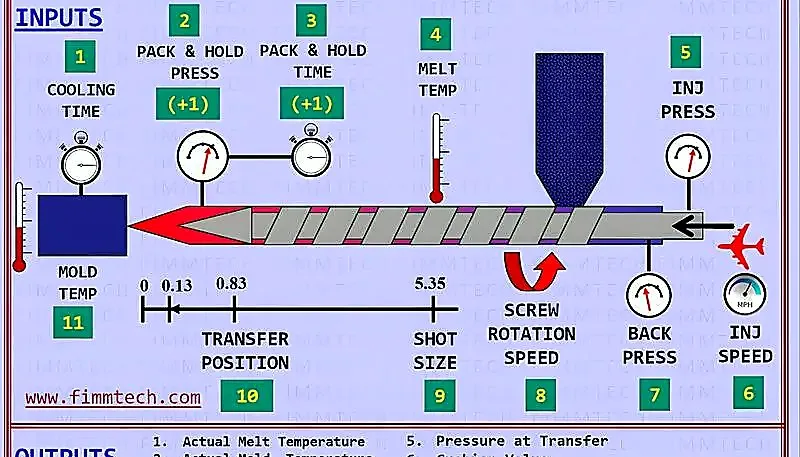
Problemy konstrukcyjne, których nie da się usunąć regulacją procesu, dzielą się na pięć kategorii: niejednorodna grubość ścianek (powoduje zapadnięcia i paczenie), niedostateczne kąty pochylenia (powodują zakleszczanie), nieprawidłowy typ lub położenie wlewu (powoduje linie płynięcia i linie łączenia), niewystarczające wydrążenie (marnuje materiał i czas cyklu) oraz ostre naroża bez zaokrągleń (tworzą koncentratory naprężeń). Każdy z tych problemów wymaga modyfikacji formy, a nie korekty parametrów.
Przeprojektowanie kosztuje 5,000–15,000 USD za prace inżynieryjne, modyfikację i ponowną walidację, lecz wytwarzanie wadliwych części przy wskaźniku braków 5–15% w serii 100,000 sztuk kosztuje znacznie więcej.
Jak zoptymalizować formowanie wtryskowe pod kątem wydajności produkcji?
Najpierw zoptymalizuj chłodzenie — odpowiada ono za 60–80% każdego cyklu — za pomocą kanałów konformalnych i przepływu turbulentnego, a następnie skróć czas docisku i wypychania. Czas cyklu jest sumą czasu wtrysku (5–10%), docisku i podtrzymania (10–20%), chłodzenia (60–80%), otwierania i zamykania formy (5–10%) oraz wypychania (2–5%). Chłodzenie jest czynnikiem dominującym, dlatego optymalizację należy rozpocząć właśnie od niego, a następnie przejść do pozostałych składowych.
ZetarMold obsługuje 47 maszyn do wtrysku tworzyw sztucznych o sile od 90T do 1850T, a w samym ubiegłym roku zoptymalizowaliśmy chłodzenie ponad 100 form. Wprowadzając chłodzenie konforemne, optymalizując przepływ chłodziwa i przeprojektowując bramkowanie, skróciliśmy czasy cyklu o 15-30% na wielu liniach produkcyjnych. Te ulepszenia, w połączeniu z naszym ponad 20-letnim doświadczeniem od 2005 roku, pozwalają nam oferować konkurencyjne ceny przy zachowaniu jakości.
Optymalizacja chłodzenia obejmuje trzy obszary: rozmieszczenie kanałów, parametry czynnika chłodzącego i dobór materiału formy. Konformalne kanały chłodzące podążają za konturem części, zmniejszając odległość od powierzchni gniazda z 15-25mm (kanały wiercone) do 3-8mm (kanały konformalne). Natężenie przepływu czynnika chłodzącego musi utrzymywać przepływ turbulentny (liczba Reynoldsa powyżej 5,000), aby zapewnić skuteczną wymianę ciepła. Materiały form o większej przewodności cieplnej, takie jak wkładki z miedzi berylowej w gorących punktach, mogą skrócić miejscowy czas chłodzenia o 30-40%.
Optymalizacja wtrysku koncentruje się na czasie wypełniania i jakości stopu. Optymalizacja czasu wypełniania: skracaj czas wtrysku, aż pojawią się przypalenia (zbyt szybko) lub niedolewy (zbyt wolno), a następnie wydłuż go o 10%. Punkt przełączenia z prędkości na ciśnienie powinien zadziałać przy 95-98% wypełnienia, aby uniknąć przekroczenia wartości docelowej. Profilowanie temperatury stopu w strefach cylindra zapobiega degradacji, zapewniając jednocześnie pełne stopienie.
| Komponent | Typowy udział w cyklu (%) | Potencjał optymalizacji | Harmonogram zwrotu z inwestycji |
|---|---|---|---|
| Chłodzenie | 60-80% | 15-30% | 500–2000 części |
| Docisk/utrzymanie ciśnienia | 10-20% | 10-20% | Natychmiastowy |
| Otwieranie/zamykanie formy | 5-10% | 5-15% | Natychmiastowy |
| Wstrzyknięcie | 5-10% | 5-10% | 100–500 części |
| Wyrzut | 2-5% | 5-10% | 1000-5000 detali |
Zwrot z inwestycji zależy od wartości i wolumenu części. Zwrot poniżej 1000 sztuk należy wdrożyć natychmiast; 1000–5000 sztuk wymaga oceny; powyżej 5000 sztuk wymaga strategicznego uzasadnienia.
Najczęściej zadawane pytania dotyczące procesu formowania wtryskowego
Często zadawane pytania
Jakie jest 7 etapów formowania wtryskowego?
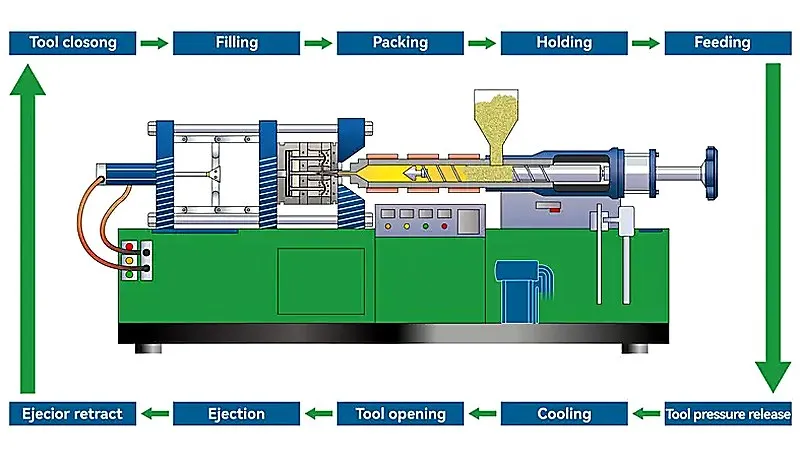
Siedem etapów formowania wtryskowego to: (1) zwieranie i zamykanie formy, podczas którego maszyna łączy obie połówki formy pod wysokim ciśnieniem; (2) topienie i wtrysk tworzywa, podczas którego podgrzany granulat przechodzi w stan stopiony i jest wtłaczany do gniazda; (3) docisk i podtrzymanie, podczas których dodatkowy materiał kompensuje skurcz; (4) chłodzenie i krzepnięcie, podczas których część utwardza się w formie; (5) otwieranie formy i wypychanie części, podczas których gotowa część jest usuwana; (6) kontrola jakości obejmująca sprawdzenie wizualne, wymiarowe i funkcjonalne; oraz (7) monitorowanie i korygowanie procesu, zapewniające powtarzalną produkcję w całej serii.
Jak długo trwa cykl formowania wtryskowego?
Czas cyklu wynosi od zaledwie 5 sekund dla małych części cienkościennych do ponad 120 sekund dla dużych komponentów grubościennych. Dla typowej części z tworzywa konstrukcyjnego o grubości ścianki 3 mm należy oczekiwać 15–25 sekund na cykl. Najwięcej czasu zajmuje chłodzenie — 60–80% całego cyklu — podczas gdy samo napełnienie gniazda trwa zaledwie 0,5–2 sekundy. Skrócenie czasu chłodzenia dzięki kanałom konformalnym lub zoptymalizowanemu przepływowi chłodziwa jest najskuteczniejszym sposobem zwiększenia wydajności i często skraca cykl istniejących form o 20–35%.
Jaka jest różnica między wtryskiem a dociskiem?
Wtrysk to faza napełniania pod wysokim ciśnieniem, w której stopione tworzywo jest wtłaczane do gniazda formy z prędkością pozwalającą wypełnić 95-98% objętości, zwykle w ciągu 0.5-2 sekund. Bezpośrednio po nim następuje docisk przy niższym ciśnieniu, podczas którego do gniazda wtłaczany jest dodatkowy materiał kompensujący skurcz cieplny w miarę chłodzenia i kurczenia się tworzywa. Docisk trwa do zestalenia przewężki, zwykle 2-6 sekund. Wtrysk służy wprowadzeniu materiału do formy, natomiast docisk zachowaniu dokładności wymiarowej podczas zestalania.
Dlaczego tworzywo trzeba wysuszyć przed formowaniem wtryskowym?
Materiały higroskopijne, takie jak PA6, PC, PET i PEEK, z czasem pochłaniają wilgoć z otaczającego powietrza. Podczas formowania wtryskowego uwięziona wilgoć natychmiast odparowuje w temperaturze stopionego tworzywa (często powyżej 250°C), powodując widoczne pęcherze (smugi srebrne), smugi powierzchniowe, obniżenie wytrzymałości mechanicznej i niestabilność wymiarową gotowej części. Prawidłowe suszenie w temperaturze właściwej dla materiału (80-160°C) przez 3-6 godzin obniża zawartość wilgoci poniżej krytycznego progu 0.02% wymaganego do formowania bez wad. Pomijanie suszenia pozostaje jedną z najczęstszych i najkosztowniejszych przyczyn odrzucania części w produkcji.
Jaką temperaturę stosuje się w formowaniu wtryskowym?
Temperatury formowania wtryskowego znacznie różnią się zależnie od materiału. Polipropylen przetwarza się w 180-220°C, ABS w 210-250°C, poliwęglan w 280-320°C, a wysokowydajny PEEK wymaga 380-420°C. Cylinder utrzymuje gradient temperatury od strefy zasilania (najchłodniejszej), przez sprężanie, do strefy dozowania (najgorętszej), zwykle ze wzrostem o 20-40°C. Temperatura formy również odgrywa krytyczną rolę: chłodniejsze formy skracają czas cyklu, ale mogą zwiększać naprężenia szczątkowe, natomiast podgrzewane formy (60-150°C zależnie od żywicy) poprawiają wykończenie powierzchni, krystaliczność i stabilność wymiarową materiałów konstrukcyjnych.
Jakie ciśnienie jest potrzebne do formowania wtryskowego?
Ciśnienie wtrysku standardowych konstrukcyjnych tworzyw termoplastycznych zwykle wynosi od 18 000 do 25 000 psi. Materiały o dużej lepkości lub wzmacniane włóknem szklanym, takie jak PEEK czy PA66-GF30, mogą wymagać nawet 35 000–50 000 psi. Ciśnienie docisku wynosi 50–80% ciśnienia wtrysku. Aby określić wymaganą siłę zwarcia, pomnóż rzutowaną powierzchnię części w calach kwadratowych przez ciśnienie wtrysku, a następnie dodaj margines bezpieczeństwa 20–30%. Na przykład część o powierzchni 10 cali kwadratowych przy 18 000 psi wymaga około 90 ton siły zwarcia, więc maszyna 110–115-tonowa zapewnia odpowiedni zapas.
Co powoduje zapadnięcia w formowaniu wtryskowym?
Zapadnięcia powstają, gdy grube przekroje ścianek chłodzą się wolniej niż sąsiednie cienkie przekroje, powodując różnicowy skurcz, który fizycznie wciąga materiał powierzchni do środka. Główne przyczyny to stosunek grubości ścianek przekraczający 3:1, niewystarczające ciśnienie lub czas docisku oraz nieodpowiednie rozmieszczenie kanałów chłodzących w pobliżu masywnych przekrojów. Praktyczne rozwiązania obejmują wydrążenie grubych przekrojów na etapie DFM, zwiększenie ciśnienia docisku i wydłużenie jego czasu do zamarznięcia przewężki oraz przeprojektowanie kanałów chłodzących z ukierunkowaniem na grube obszary. Korekty procesu mogą rozwiązać łagodne przypadki, ale poważne, powtarzające się zapadnięcia zwykle wymagają modyfikacji formy.
Jak oblicza się siłę zwarcia w formowaniu wtryskowym?
Aby obliczyć siłę zwarcia, należy najpierw określić powierzchnię rzutu detalu na płaszczyznę podziału formy. W przypadku detalu prostokątnego jest to iloczyn długości i szerokości w calach kwadratowych. Powierzchnię tę należy pomnożyć przez ciśnienie wtrysku w psi, aby uzyskać siłę rozpierającą w funtach, a następnie przeliczyć ją na tony (dzieląc przez 2,000). Na końcu należy dodać współczynnik bezpieczeństwa 20-30%. Przykład: detal o powierzchni rzutu 10 cali kwadratowych, formowany przy ciśnieniu 18,000 psi, wytwarza siłę rozpierającą 180,000 funtów, czyli 90 ton. Przy marginesie bezpieczeństwa 25% należy wybrać maszynę o sile zwarcia co najmniej 112-115 ton.
ciśnienie wtrysku: Ciśnienie wtrysku to ciśnienie hydrauliczne przykładane do ślimaka w celu wtłoczenia stopionego tworzywa do gniazda formy; typowo wynosi od 35 000 do 50 000 psi. ↩
siła zamykania: Siła zamykania to siła hydrauliczna lub mechaniczna utrzymująca formę w stanie zamkniętym podczas wtrysku, mierzona w tonach; typowy zakres wynosi od 90T do 1850T. ↩
czas cyklu: Czas cyklu to całkowity czas potrzebny na wykonanie jednego cyklu formowania wtryskowego, mierzony w sekundach od zamknięcia formy do rozpoczęcia następnego cyklu. ↩