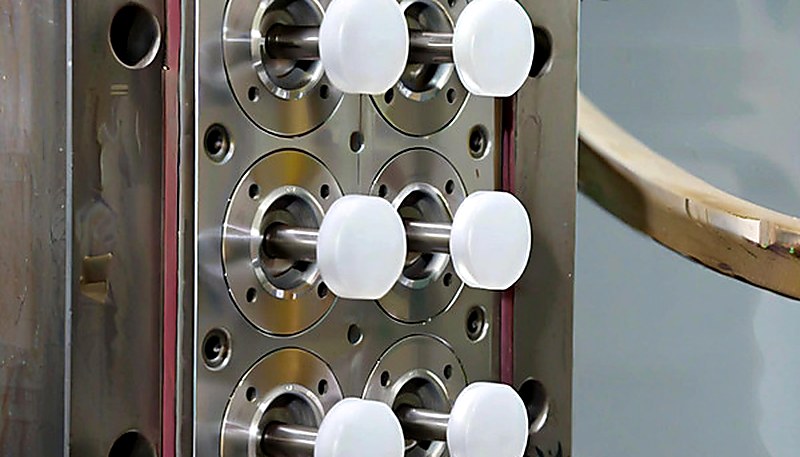
- La velocità di chiusura dello stampo segue un profilo a due fasi. Fase di avvicinamento: chiusura rapida da 200-300 mm/s fino a quando le facce dello stampo sono a 5-10 mm dal contatto. Fase di posizionamento: chiusura lenta da 5-10 mm/s per la chiusura finale per proteggere le superfici dello stampo e le caratteristiche di allineamento. Alcune macchine moderne aggiungono una terza fase di protezione a bassa pressione a 1-2 mm/s con una pressione di serraggio di 5-10 bar prima del pieno impegno della chiusura. Questo previene danni se materiale estraneo o una parte incastrata rimane nella cavità dello stampo.
- L'essiccazione del materiale è obbligatoria per le plastiche igroscopiche come PA6 e PEEK
- Ripartizione del tempo ciclo: iniezione 10%, raffreddamento 60-80%, espulsione 5-15%
- La forza di chiusura deve superare la pressione di iniezione del 20-30% per evitare bave
- Una corretta progettazione del raffreddamento riduce il tempo di ciclo del 20-35% rispetto ai canali convenzionali
- La forza di espulsione deve essere pari a 1.5-2 volte l'area proiettata del pezzo
- Ogni stampata è seguita da un controllo qualità: verifiche visive, dimensionali e funzionali
Passaggio 1: che cos’è la revisione DFM e perché è importante?
La geometria del pezzo è definitiva. Il preventivo dello stampo è sulla tua scrivania. Prima di iniziare a lavorare l’acciaio, una decisione determina il successo al primo campione: la revisione Design for Manufacturability (DFM). Dal 2005 abbiamo eseguito controlli DFM su oltre 5,000 progetti e circa il 40% degli insuccessi al primo campione è riconducibile a pareti oltre 4mm con raffreddamento inadeguato. Correggerle dopo la costruzione dello stampo costa dieci volte di più. Per approfondire i fondamenti della progettazione degli stampi, consulta la nostra guida agli stampi.
In ZetarMold, il nostro flusso di lavoro DFM è stato perfezionato in oltre 20 anni di costruzione di stampi. Lavoriamo più di 400 materiali e realizziamo oltre 100 stampi al mese, quindi affrontiamo spesso questo compromesso. Il nostro team comprende 8 progettisti senior di stampi che esaminano ogni nuovo pezzo in termini di uniformità dello spessore delle pareti, ottimizzazione del posizionamento dei punti di iniezione ed efficienza dei canali di raffreddamento prima dell'approvazione dell'attrezzatura.
"La revisione DFM elimina l'80% dei potenziali difetti di stampaggio a iniezione."True
Individuando variazioni dello spessore delle pareti, angoli di sformo insufficienti e problemi di posizione del punto di iniezione prima della lavorazione dell'acciaio, i produttori evitano risucchi, deformazioni e stampate incomplete che generalmente richiedono modifiche dello stampo da $5,000-$50,000 ciascuna.
"Tutte le variazioni dello spessore di parete richiedono la modifica dello stampo."False
Piccole variazioni entro un rapporto di 2:1 possono talvolta essere compensate mediante regolazioni del processo, come modifiche alla pressione di mantenimento e al tempo di raffreddamento. Variazioni importanti superiori a 3:1 o che causano difetti cronici richiedono invece la riprogettazione dello stampo.
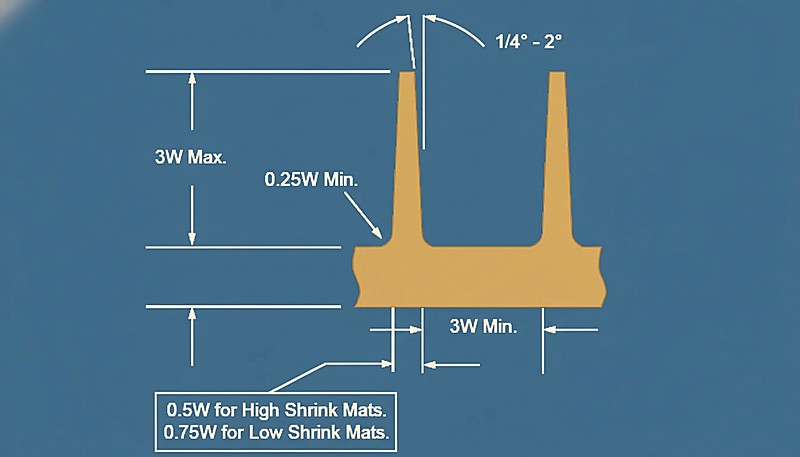
La checklist DFM presentata dal tuo ingegnere deve includere cinque elementi non negoziabili. Per una panoramica più ampia dell’intero flusso di stampaggio a iniezione, consulta la nostra guida completa. Uniformità dello spessore delle pareti (variazione obiettivo ±10%), adeguatezza dell’angolo di sformo (minimo 1-3°), motivazione del tipo e della posizione del punto di iniezione, compensazione del ritiro specifica per il materiale e disposizione dei canali di raffreddamento.
L’approvazione DFM deve includere misure specifiche: spessore nominale della parete con tolleranze, ±0,1 mm per elementi inferiori a 3 mm; tassi di ritiro previsti per materiale, 0,5% per gli amorfi e 1,5–2,5% per i semicristallini; motivazione di dimensioni e posizione del punto d’iniezione; verifica della disposizione dei canali di raffreddamento. Se il rapporto DFM non contiene uno di questi elementi, richiederlo prima di approvare la costruzione dello stampo.
Se stai confrontando fornitori o pianificando gli acquisti, la nostra guida alla selezione dei fornitori di stampaggio a iniezione tratta la preparazione delle RFQ, la qualifica e i controlli dei rischi commerciali.
Fase 2: come essiccare e preparare i materiali per lo stampaggio a iniezione?
Essiccare i granuli di resina in un essiccatore tramoggia deumidificante a temperature specifiche del materiale (80–160 °C) per 2–6 ore finché l’umidità scende sotto lo 0,02%, quindi alimentarli direttamente nella tramoggia della macchina tramite una linea di trasferimento ermetica ad aria secca. I sacchi sigillati stanno nei magazzini e le resine igroscopiche assorbono umidità rapidamente una volta aperti—il PA6 al 50% di umidità relativa raggiunge lo 0,3% di umidità in ore, ben oltre la soglia dello 0,02%. L’essiccazione non è opzionale per le materie plastiche tecniche; è il primo controllo qualità.
Le specifiche di essiccazione dipendono dal tipo di materiale. Il PA6 richiede 80-100°C per 4-6 ore. Il PC necessita di 120°C per 3-4 ore. Il PEEK richiede 150-160°C per 4-6 ore. Monitorare il punto di rugiada dell’aria di essiccazione: un valore inferiore a -30°C indica che l’apparecchiatura funziona correttamente. Un valore superiore a -10°C segnala che l’essiccatore necessita di manutenzione.
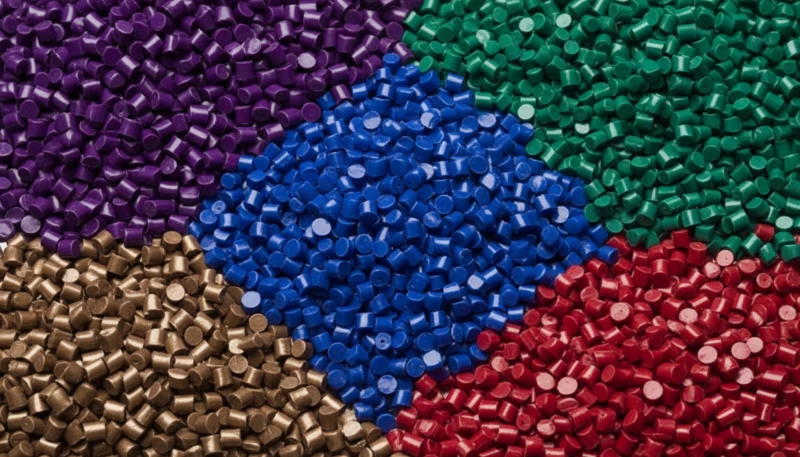
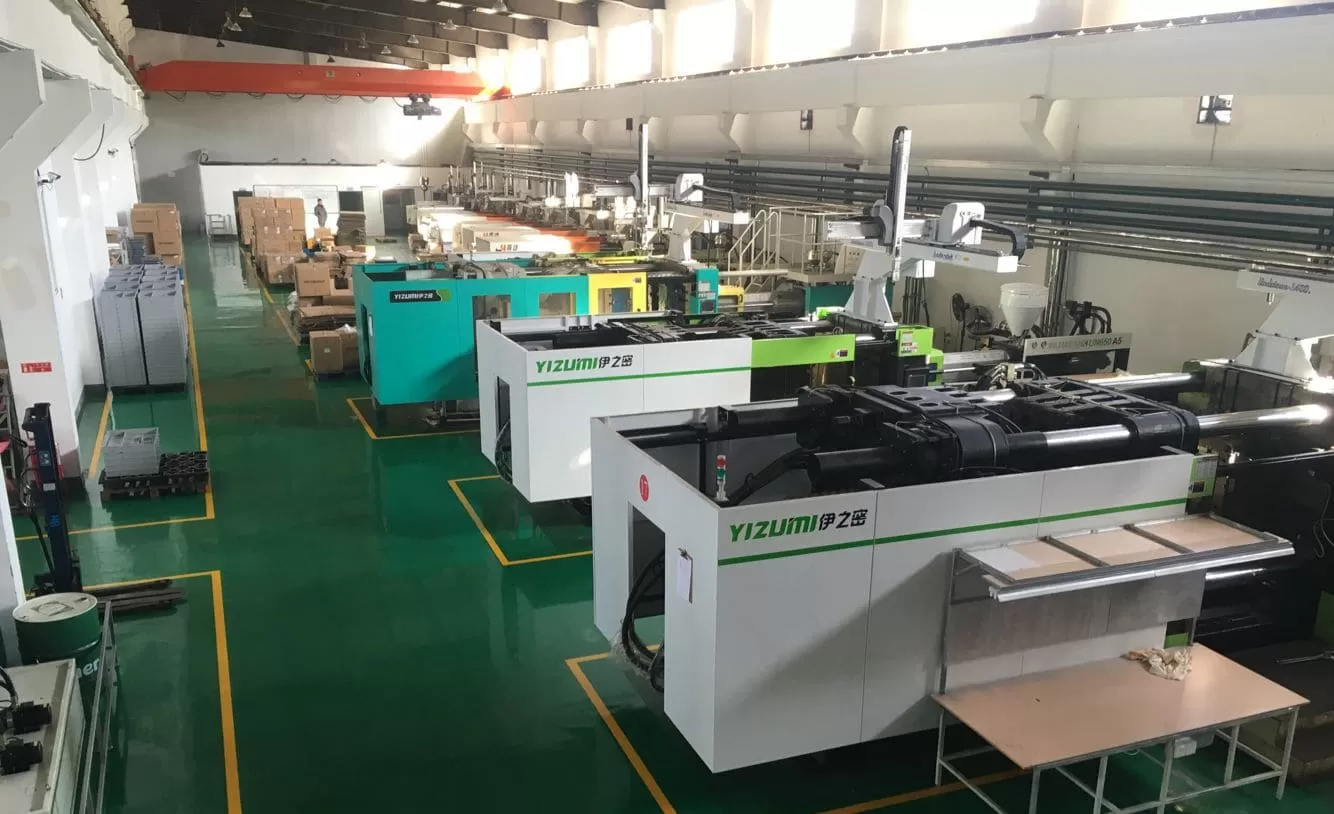
Il nostro stabilimento di Shanghai gestisce 47 macchine per stampaggio a iniezione da 90T a 1850T e abbiamo 6 stazioni di essiccazione dedicate. Con oltre 120 operatori di produzione e 8 ingegneri stampi, abbiamo visto cosa succede quando l'essiccazione del materiale viene affrettata. Manteniamo essiccatori con punto di rugiada di -40°C per materiali igroscopici e documentiamo i parametri di essiccazione per ognuno dei 400+ materiali che lavoriamo.
| Materiale | Temperatura di essiccazione (°C) | Tempo di essiccazione (ore) | Umidità obiettivo (%) |
|---|---|---|---|
| PA6 | 80-100 | 4-6 | <0.02 |
| PC | 120 | 3-4 | <0.02 |
| SETTIMANA | 150-160 | 4-6 | <0.01 |
| ABS | 80-85 | 2-3 | <0.02 |
| POM | 80 | 2-3 | <0.02 |
I materiali non igroscopici come il polipropilene e il PE non richiedono un’essiccazione aggressiva, ma l’umidità superficiale dovuta alla condensa deve comunque essere rimossa con un breve ciclo di essiccazione di 1-2 ore a 60-80°C. Omettere completamente l’essiccazione solo se il materiale è stato conservato in un ambiente climatizzato.
La verifica del contenuto di umidità previene difetti superficiali e indebolimenti strutturali nei pezzi stampati. Utilizzare un analizzatore di umidità alogeno o la titolazione di Karl Fischer per confermare che il contenuto di umidità della resina rimanga al di sotto della soglia specifica del materiale prima del caricamento nella tramoggia. Obiettivi comuni includono PA6 e PA66 sotto lo 0,2% di umidità, policarbonato e PET allo 0,02% o inferiore e PBT sotto lo 0,05%. Nella nostra fabbrica di Shanghai, verifichiamo i livelli di umidità su ogni lotto di produzione prima dell’inizio della lavorazione. Il materiale di riciclo — anche se conservato correttamente in contenitori sigillati — assorbe l’umidità ambientale più velocemente della resina vergine, rendendo la verifica particolarmente critica quando si utilizzano miscele di riciclo. Saltare questo controllo porta a striature, ridotta resistenza all’impatto e instabilità dimensionale che nessuna regolazione dei parametri post-stampaggio può invertire.
Passaggio 3: come funzionano chiusura e serraggio dello stampo?
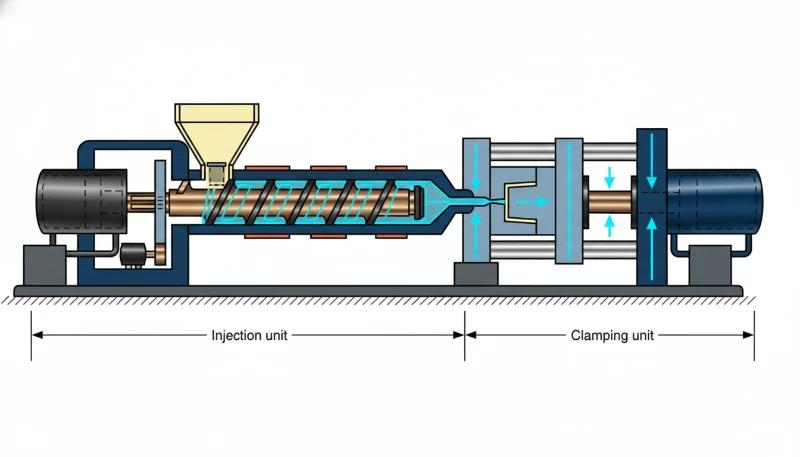
La chiusura applica una forza idraulica o meccanica, espressa in tonnellate, per sigillare la linea di divisione contro pressioni di iniezione di 18,000–50,000 psi. La regola pratica è semplice: calcola l’area proiettata della cavità, moltiplicala per la pressione di iniezione1 massima, quindi aggiungi un margine di sicurezza del 10–20%. Una chiusura corretta previene le bave, protegge la geometria della linea di divisione e mantiene ripetibili le dimensioni nei cicli produttivi.
Il tonnellaggio nominale della macchina definisce la massima forza di chiusura2 disponibile. Far funzionare uno stampo al 60-80% del tonnellaggio nominale offre l’efficienza energetica ottimale, mantenendo un margine di sicurezza adeguato per i picchi di pressione durante le fasi di iniezione e compattazione.
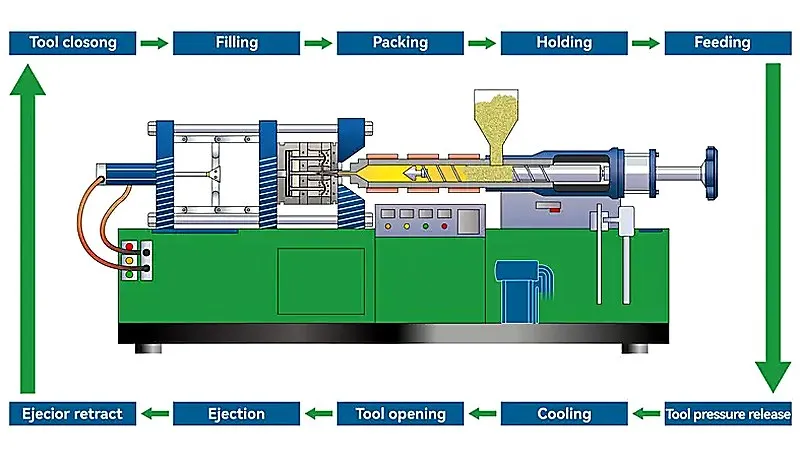
"Il calcolo della forza di chiusura richiede un margine di sicurezza del 20-30%."True
La formula (area proiettata × pressione di iniezione) fornisce il minimo teorico. L’aggiunta del 20-30% compensa i picchi di pressione durante il riempimento, la dilatazione termica dello stampo e le variazioni della viscosità del materiale.
"Una forza di chiusura maggiore migliora sempre la qualità del pezzo."False
Una forza di chiusura eccessiva può schiacciare i canali di sfiato, intrappolare aria causando bruciature e accelerare l'usura dello stampo. L'obiettivo è applicare una forza sufficiente a mantenere chiuso lo stampo senza creare concentrazioni di tensione.
La velocità di chiusura dello stampo segue un profilo a due stadi. Fase di avvicinamento: chiusura rapida a 200-300 mm/s finché le facce dello stampo si trovano a 5-10mm dal contatto. Fase di posizionamento: chiusura lenta a 5-10 mm/s fino alla chiusura finale, per proteggere le superfici dello stampo e gli elementi di allineamento. Alcune macchine moderne aggiungono una terza fase di protezione a bassa pressione, a 1-2 mm/s con pressione di chiusura di 5-10 bar, prima del serraggio completo. Ciò evita danni qualora nella cavità dello stampo rimangano materiale estraneo o un pezzo bloccato.
Test di assemblaggio
Fase 4: come funzionano la fusione e l’iniezione della plastica?
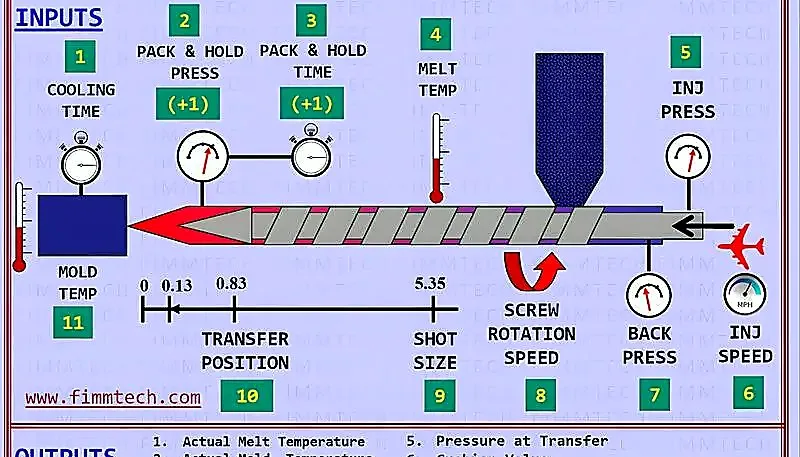
L’iniezione fonde i granuli di resina in una canna riscaldata tramite una vite rotante, quindi forza il fuso omogeneizzato nella cavità dello stampo a 50–200 mm/s. I granuli entrano nella tramoggia, si muovono attraverso la canna riscaldata e vengono tagliati dalla vite rotante. Le zone di alimentazione, compressione e dosaggio trasportano, fondono, omogeneizzano e dosano il materiale in modo che la viscosità rimanga stabile durante il riempimento.
La velocità di rotazione della vite influisce su qualità del fuso e produttività. Troppo bassa: il riscaldamento per taglio insufficiente lascia granuli non fusi. Troppo alta: il taglio eccessivo degrada il polimero e causa scolorimento. La maggior parte delle resine tecniche offre le prestazioni migliori a 50–120 giri/min, regolati in base a diametro della vite e viscosità.
Nei nostri 20+ anni di esperienza nello stampaggio dal 2005, abbiamo accumulato un'ampia conoscenza della lavorazione di 400+ materiali. Il nostro stabilimento di Shanghai mantiene profili vite standard per ogni classe di materiale e li personalizza per i gradi speciali. Il tempo di recupero della vite, ossia il tempo necessario per accumulare materiale fuso sufficiente per un'iniezione, sulle nostre macchine è generalmente di 2-4 secondi e incide per il 10-15% sul tempo di ciclo totale3.
L’iniezione inizia quando la vite smette di ruotare e avanza come un pistone, spingendo il fuso accumulato attraverso ugello, materozza, sistema di canali e cavità. La velocità di iniezione controlla la finitura superficiale e la resistenza delle linee di saldatura. Un riempimento rapido riduce la perdita di temperatura, ma può intrappolare aria. Un riempimento lento migliora lo sfiato, ma può causare un congelamento prematuro.
Fase 5: che cosa sono la compattazione e la pressione di mantenimento?
Lo stampo è pieno al 95-98%. La cavità è quasi completamente riempita, ma non ancora compattata. La pressione di mantenimento compensa il ritiro volumetrico mentre la plastica si raffredda dalla temperatura di fusione a quella di espulsione, in genere un ritiro volumetrico del 10-15% per i materiali semicristallini. Senza un mantenimento adeguato, i pezzi presentano risucchi, vuoti e variazioni dimensionali che li portano fuori tolleranza.
"La pressione di mantenimento compensa il ritiro termico."True
Quando la plastica si raffredda dalla temperatura di iniezione (200-300°C) alla temperatura ambiente, la densità aumenta e il volume diminuisce dell'1-3% a seconda del materiale. Durante questa transizione, la pressione di mantenimento spinge il materiale nella cavità per preservare la precisione dimensionale.
"Una pressione di compattazione maggiore elimina sempre le risucchiature."False
Un impaccamento eccessivo causa bava sulla linea di divisione e problemi di espulsione. I risucchi dovuti a sezioni di parete spesse richiedono modifiche progettuali, come svuotamenti o la riprogettazione delle nervature, non semplici regolazioni della pressione.
Il punto decisionale critico è il tempo di congelamento del punto d’iniezione. Questo deve solidificarsi prima del rilascio della pressione di mantenimento, altrimenti il materiale rifluisce fuori dalla cavità. I tempi tipici variano da 1–3 secondi per i punti laterali a 0,3–0,8 secondi per quelli sottomarini. Occorre monitorare le curve della pressione in cavità: un brusco calo dopo il mantenimento indica un congelamento prematuro del punto d’iniezione.
Il profilo della pressione di compattamento può essere suddiviso in fasi anziché rimanere costante. Fase 1: pressione elevata (80-100% della pressione di iniezione) per il 20-30% del tempo di compattamento, per spingere il materiale nelle sezioni spesse e negli angoli. Fase 2: pressione ridotta (50-70% della pressione di iniezione) per il tempo restante, così da mantenere la densità senza sovracompattare. Questo profilo riduce i ritiri superficiali minimizzando il rischio di bava. Il punto di transizione viene determinato osservando la curva del peso del pezzo e ispezionando visivamente le sezioni spesse per rilevare ritiri a diversi livelli di pressione.
Fase 6: come funzionano il raffreddamento e la solidificazione?
Il punto di iniezione è solidificato. Il materiale è compattato. Il pezzo è dimensionalmente abbastanza stabile da sopportare l’espulsione, ma deve solidificarsi completamente prima dell’apertura dello stampo. Il raffreddamento domina il tempo ciclo, rappresentandone il 60-80%. Ridurre di 10 secondi il raffreddamento in un ciclo di 25 secondi aumenta la produttività del 40%. È qui che la progettazione ripaga il proprio costo.
Il raffreddamento convenzionale utilizza canali forati diritti con diametro di 8–12 mm, spaziatura di 3–5 volte il diametro e distanza dalla superficie del pezzo alla linea centrale del canale di 2–3 diametri. Questo funziona per pezzi con spessore uniforme e geometria semplice. Quando si hanno bossoli, nervature o spessori variabili, il raffreddamento uniforme diventa impegnativo: le sezioni spesse si raffreddano più lentamente, causando ritiro differenziale, deformazione e stress residuo.
Dal 2013 ZetarMold implementa canali di raffreddamento conformali sugli stampi per grandi volumi. Seguendo il profilo della cavità anziché eseguire forature rettilinee, abbiamo ridotto il tempo di raffreddamento del 20-35% per i pezzi complessi. Questa capacità, insieme al nostro stabilimento interno di fabbricazione stampi, ci consente di consegnare oltre 100 stampi al mese con sistemi di raffreddamento ottimizzati.
| Materiale | Parete da 2mm (s) | Parete da 3 mm (s) | Parete da 4mm (s) |
|---|---|---|---|
| PP | 8-10 | 12-15 | 16-20 |
| ABS | 10-12 | 15-18 | 20-24 |
| PC | 12-15 | 18-22 | 25-30 |
| PA6 | 10-12 | 15-18 | 20-25 |
| SETTIMANA | 15-18 | 22-27 | 30-36 |
La temperatura del refrigerante deve essere 10-20°C inferiore alla temperatura di deflessione termica del materiale. Per il PC, impostare la temperatura dello stampo a 80-100°C. Per il PP, sono adatti 20-40°C. Temperature dello stampo più elevate migliorano finitura superficiale e cristallinità, ma prolungano il tempo ciclo. Il compromesso è sempre tra qualità estetica e produttività.
L’ottimizzazione del raffreddamento può ridurre il tempo di ciclo del 20-35% su stampi esistenti senza modifiche hardware. Regolazioni del processo: ridurre il tempo di pressurizzazione al minimo che mantiene il peso del pezzo, aumentare la portata del refrigerante entro i limiti della pompa e abbassare la temperatura dello stampo al minimo che evita deformazioni. Modifiche dello stampo: aggiungere deflettori per raffreddare anime profonde, riposizionare i canali più vicino alle sezioni spesse e installare raffreddamento conforme per geometrie complesse. Il ROI viene tipicamente realizzato entro 1000-5000 pezzi.
Fase 7: come funzionano l’apertura dello stampo e l’espulsione del pezzo?
Il pezzo si è solidificato. Il tempo di raffreddamento è trascorso. Lo stampo si apre. Sembra semplice, ma durante l’espulsione si verifica il 20-30% dei difetti dello stampaggio a iniezione. L’espulsione deve vincere due forze: l’adesione della plastica raffreddata all’acciaio dello stampo e l’incastro meccanico dovuto a sottosquadri o sformo insufficiente. Il sistema di espulsione deve applicare una forza sufficiente a superare questi fattori senza deformare il pezzo, creare segni dei perni espulsori o far aderire nuovamente il pezzo al lato anima.
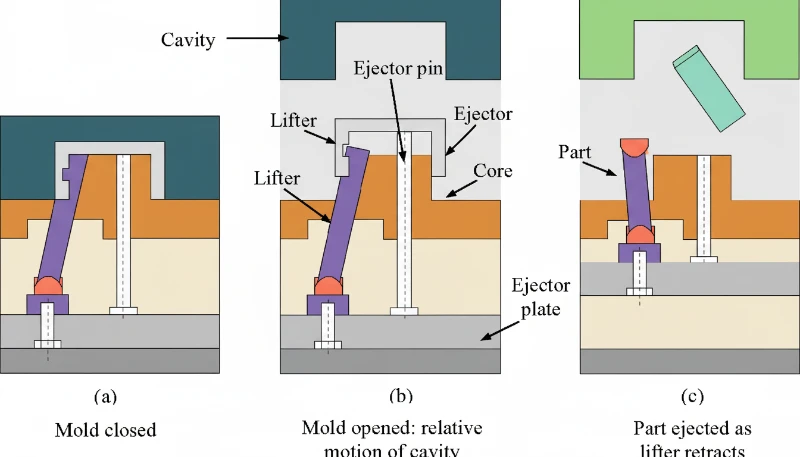
"La forza di espulsione deve essere pari a 1.5-2 volte l'area proiettata del pezzo."True
Per un'area proiettata del pezzo di 50 cm2 sulla superficie dello stampo, una forza di espulsione di 75-100 N garantisce un'espulsione affidabile minimizzando i segni degli spilli. L'over-espulsione causa segni degli spilli e danni superficiali.
"Un maggior numero di perni espulsori migliora sempre l'affidabilità dell'espulsione."False
Un numero eccessivo di perni crea segni superficiali, aumenta il costo dello stampo e introduce più punti di guasto. Il posizionamento strategico dei perni in corrispondenza delle intersezioni delle nervature e degli angoli è più efficace del semplice aumento del loro numero.
La scelta del sistema di espulsione dipende dalla geometria del pezzo. L’espulsione diritta utilizza spine per geometrie semplici. L’espulsione a bussola gestisce risalti e dettagli cilindrici. L’espulsione con piastra estrattrice è ideale per bicchieri e tappi a parete sottile. I sottosquadri richiedono sollevatori o spine inclinate. La scelta del sistema errato causa deformazione, incollaggio o danni allo stampo che si aggravano nel corso di migliaia di cicli.
Il posizionamento dei perni espulsori segue linee guida specifiche. Colloca i perni nelle sezioni spesse e nelle intersezioni delle nervature, dove la resistenza all’espulsione è maggiore. Distribuiscili uniformemente lungo il perimetro del pezzo per ripartire la forza. Il diametro del perno deve essere almeno 1.5x la sua lunghezza per evitare la flessione. Per le superfici lucidate o testurizzate, evita di posizionare i perni nelle aree estetiche visibili.
La velocità di apertura dello stampo influisce sulla qualità dell’espulsione. Il profilo prevede un’apertura iniziale lenta, 5–10 mm/s per i primi 10–20 mm, affinché il componente si separi dal maschio senza tensioni; un’apertura rapida, 100–200 mm/s, per gran parte della corsa, così da ridurre il ciclo; e una decelerazione a 20–50 mm/s negli ultimi 50–100 mm, per evitare urti a fine apertura e limitare l’usura di perni e boccole di guida. La decelerazione è particolarmente importante negli stampi con piastre estrattrici o estrattori inclinati complessi che richiedono sequenze controllate.
Fase 8: come si ispeziona la qualità e si monitora il processo?
La parte viene espulsa. Cade nello scivolo o viene rimossa da un robot. E ora? Se si presume che il processo sia impostato e lo si lascia funzionare, i difetti verranno scoperti ore o giorni dopo, quando il cliente respingerà la spedizione. L’ispezione della qualità deve avvenire all’inizio di ogni turno, dopo ogni cambio di materiale e a intervalli definiti durante la produzione. La gerarchia delle ispezioni è: ispezione del primo articolo (FAI) all’avvio, ispezione in-process ogni 50-100 parti, ispezione finale su ogni lotto di spedizione.
In ZetarMold, il nostro flusso di lavoro per la qualità comprende IQC (controllo qualità in ingresso), controlli durante il processo con campioni, ispezione del processo, ispezione dell'imballaggio, FQC (controllo qualità finale) e OQC (controllo qualità in uscita). Disponiamo di oltre 10 specialisti QC che verificano dimensioni, qualità superficiale e requisiti funzionali in ogni ciclo produttivo. Questo flusso in 6 fasi, unito alle certificazioni ISO 9001/13485/14001/45001, garantisce una qualità costante in tutte le attività della nostra fabbrica di Shanghai.
L’ispezione visiva rileva il 60-70% dei difetti. Bruciature, bave, riempimenti incompleti, risucchi e imperfezioni superficiali sono immediatamente visibili. Formare gli operatori affinché ispezionino prima le zone estetiche critiche e poi le caratteristiche strutturali. Utilizzare postazioni di ispezione retroilluminate per i pezzi trasparenti e luce polarizzata per rilevare la birifrangenza nei componenti ottici.
| Verifica | Metodo | Frequenza | Criteri di accettazione |
|---|---|---|---|
| Difetti visivi | Ispezione su tavolo luminoso | Ogni 50 pezzi | No sink >0.2mm in A-surface |
| Dimensioni | CMM/calibro | Ogni 100 pezzi | ±0,1 mm per una tolleranza di ±0,05 mm |
| Peso | Scala | Ogni 25 pezzi | ±2% del peso target |
| Accoppiamento/funzione | Prova di assemblaggio | All'inizio di ogni turno | Nessuna interferenza o grippaggio |
| Estetico | Campione master | Ogni pezzo | Far corrispondere il riferimento estetico |
L’ispezione dimensionale verifica che i pezzi soddisfino i requisiti del disegno. Per le dimensioni critiche si utilizza la misurazione CMM (macchina di misura a coordinate) con una precisione di ±0.01mm. Le dimensioni standard vengono controllate con calibro o calibro passa/non passa. Per il controllo statistico del processo, campionare 5 pezzi per ogni ciclo di 100 stampate, monitorando i valori Cp e Cpk.
Le macchine moderne monitorano in tempo reale pressione di iniezione, pressione di compattazione, temperatura del fuso, temperatura dello stampo, tempo ciclo e tempo di recupero della vite. Allarmi a ±10–20% dei valori target attivano pause automatiche, separano i pezzi interessati e avvisano gli operatori—intercettando la deriva del processo prima che si accumulino pezzi fuori specifica.
Quali sono i problemi comuni dello stampaggio a iniezione e come si risolvono?
Difetti comuni dello stampaggio a iniezione—affossamenti, sbavature e mancati riempimenti—appaiono anche in processi ben regolati. Ecco le cause radice e le soluzioni.
I segni di risucchio si verificano quando le sezioni spesse si raffreddano più lentamente di quelle sottili adiacenti, creando depressioni superficiali. La causa principale è il ritiro differenziale. Procedura di risoluzione: verificare innanzitutto il rapporto tra gli spessori delle pareti; se supera 3:1, è necessario riprogettare. Se lo spessore è accettabile, aumentare la pressione di mantenimento con incrementi del 10%, controllando la formazione di bava. Aggiungere deflettori o gorgogliatori per raffreddare più rapidamente le sezioni spesse. Ridurre la temperatura del fuso di 5-10°C per minimizzare il ritiro iniziale. Nei casi gravi, aggiungere scarichi esterni nell’anima o ricorrere allo stampaggio assistito da gas per eliminare completamente le sezioni spesse.
Le bave compaiono lungo la linea di divisione, attorno ai perni estrattori o nelle fessure di sfiato quando il materiale fuoriesce dalla cavità a causa di una pressione di iniezione o mantenimento eccessiva. Tra i fattori che contribuiscono vi sono superfici dello stampo usurate, forza di chiusura insufficiente ed elevate temperature del fuso che ne riducono la viscosità. Per correggere le bave, aumentate innanzitutto la forza di chiusura, poi riducete la pressione di mantenimento e infine controllate l’allineamento delle superfici dello stampo se il problema persiste in più cavità.
I riempimenti incompleti si verificano quando la cavità non viene riempita del tutto. Le cause comuni includono pressione di iniezione insufficiente, sfiati ostruiti che impediscono l’uscita dell’aria, bassa temperatura del fuso che aumenta la viscosità o volume di iniezione inadeguato. Iniziare la diagnosi controllando le curve di pressione: la maggior parte dei casi si risolve aumentando velocità o pressione del 10-15%. Se il problema è lo sfiato, pulire o approfondire i canali fino a 0.01-0.02mm.
Quando è opportuno regolare o riprogettare il processo di stampaggio a iniezione?
Passare alla riprogettazione quando tre o più modifiche dei parametri di ±20% falliscono, o quando le cause radice includono rapporti di spessore superiori a 3:1 o angoli di sformo inadeguati. La regola empirica: se hai regolato tre parametri di ±20% e il difetto persiste, il problema è probabilmente legato al design. Continuare a regolare oltre questo punto spreca materiale e tempo ciclo senza risolvere il problema.
"Un rapporto tra spessori di parete >3:1 richiede una modifica progettuale."True
Quando il rapporto tra gli spessori delle pareti supera 3:1, le regolazioni di processo non possono eliminare avvallamenti e deformazioni. Sono necessarie soluzioni progettuali quali svuotamenti delle anime, riprogettazione delle nervature o stampaggio assistito da gas.
"Tutti gli stampaggi incompleti richiedono la riprogettazione dello stampo."False
I riempimenti incompleti causati da problemi di sfiato, contaminazione del materiale o essiccazione inadeguata possono essere corretti modificando il processo. Soltanto quelli dovuti ai limiti della lunghezza di flusso o all'aria intrappolata nella geometria richiedono modifiche allo stampo.
I problemi di progettazione che non possono essere corretti regolando il processo rientrano in cinque categorie: spessore delle pareti non uniforme (causa segni di ritiro e deformazioni), angoli di sformo insufficienti (causano incollaggio), tipo o posizione del punto di iniezione errati (causano linee di flusso e linee di saldatura), svuotamento insufficiente (spreca materiale e tempo di ciclo) e spigoli vivi privi di raccordi (creano concentrazioni di tensione). Ciascuno richiede una modifica dello stampo, non una regolazione dei parametri.
Riprogettare costa 5.000–15.000 USD per ingegnerizzazione, modifica e rivalidazione, ma produrre pezzi difettosi con tassi di scarto del 5–15% su una produzione di 100.000 pezzi costa molto di più.
Come si ottimizza lo stampaggio a iniezione per migliorare l’efficienza produttiva?
Puntare prima al raffreddamento—che domina il 60–80% di ogni ciclo—tramite canali conformi e flusso turbolento, quindi minimizzare i tempi di compattazione ed espulsione. Il tempo di ciclo è la somma del tempo di iniezione (5–10%), tempo di compattazione e mantenimento (10–20%), tempo di raffreddamento (60–80%), tempo di apertura e chiusura dello stampo (5–10%) e tempo di espulsione (2–5%). Il raffreddamento è il fattore dominante, quindi l’ottimizzazione dovrebbe concentrarsi prima lì, poi passare agli altri componenti.
ZetarMold gestisce 47 macchine per stampaggio a iniezione da 90T a 1850T e abbiamo ottimizzato il raffreddamento su oltre 100 stampi solo nell'ultimo anno. Implementando raffreddamento conforme, ottimizzando il flusso del refrigerante e riprogettando i punti di iniezione, abbiamo ridotto i tempi ciclo del 15-30% su più linee di produzione. Questi miglioramenti, combinati con la nostra esperienza ventennale dal 2005, ci permettono di offrire prezzi competitivi mantenendo la qualità.
L’ottimizzazione del raffreddamento riguarda tre aree: disposizione dei canali, parametri del refrigerante e selezione del materiale dello stampo. I canali di raffreddamento conformali seguono il profilo del pezzo, riducendo la distanza dalla superficie della cavità da 15-25mm (forati) a 3-8mm (conformali). La portata del refrigerante deve mantenere un flusso turbolento (numero di Reynolds superiore a 5,000) per un trasferimento di calore efficace. I materiali per stampi a maggiore conducibilità termica, come gli inserti in rame-berillio nei punti caldi, possono ridurre il tempo di raffreddamento locale del 30-40%.
L’ottimizzazione dell’iniezione si concentra sul tempo di riempimento e sulla qualità del fuso. Ottimizzazione del tempo di riempimento: ridurre il tempo di iniezione finché non compaiono bruciature (troppo rapido) o riempimenti incompleti (troppo lento), quindi arretrare del 10%. Il punto di commutazione velocità-pressione deve attivarsi al 95-98% del riempimento per evitare il superamento. Il profilo della temperatura del fuso nelle zone del cilindro previene la degradazione garantendo al contempo la fusione completa.
| Componente | Percentuale tipica del ciclo | Potenziale di ottimizzazione | Cronologia del ROI |
|---|---|---|---|
| Raffreddamento | 60-80% | 15-30% | 500–2.000 pezzi |
| Compattazione/mantenimento | 10-20% | 10-20% | Immediato |
| Apertura/chiusura dello stampo | 5-10% | 5-15% | Immediato |
| Iniezione | 5-10% | 5-10% | 100-500 parti |
| Espulsione | 2-5% | 5-10% | 1000-5000 pezzi |
Il ROI dipende dal valore del pezzo e dal volume. Il recupero dell’investimento sotto 1.000 pezzi dovrebbe essere implementato immediatamente; 1.000–5.000 pezzi richiede valutazione; oltre 5.000 pezzi richiede giustificazione strategica.
Domande Frequenti sul Processo di Stampa a Iniezione
Domande frequenti
Quali sono le 7 fasi dello stampaggio a iniezione?
Le sette fasi dello stampaggio a iniezione sono: (1) serraggio e chiusura dello stampo, in cui la macchina unisce le due metà dello stampo ad alta pressione; (2) fusione e iniezione della plastica, in cui i granuli riscaldati fondono e vengono spinti nella cavità; (3) compattazione e mantenimento, in cui materiale aggiuntivo compensa il ritiro; (4) raffreddamento e solidificazione, in cui il pezzo indurisce nello stampo; (5) apertura dello stampo ed espulsione del pezzo, in cui il pezzo finito viene rimosso; (6) controllo qualità, che comprende verifiche visive, dimensionali e funzionali; e (7) monitoraggio e regolazione del processo, per garantire una produzione uniforme durante tutti i lotti.
Quanto dura un ciclo di stampaggio a iniezione?
Il tempo di ciclo varia da appena 5 secondi per componenti piccoli a parete sottile a oltre 120 secondi per componenti grandi con pareti spesse. Per un tipico componente in tecnopolimero con pareti da 3 mm, prevedete 15-25 secondi per ciclo. Il raffreddamento domina la tempistica e rappresenta il 60-80% del tempo di ciclo totale, mentre l’iniezione riempie la cavità in soli 0,5-2 secondi. Ridurre il tempo di raffreddamento mediante canali conformali o un flusso ottimizzato del refrigerante è il modo più efficace per aumentare la produttività e spesso accorcia il ciclo del 20-35% sugli stampi esistenti.
Qual è la differenza tra iniezione e compattazione?
L’iniezione è la fase di riempimento ad alta pressione in cui la plastica fusa viene spinta nella cavità dello stampo a velocità progettate per riempire il 95-98% del volume, in genere in 0.5-2 secondi. Il compattamento (o mantenimento) segue immediatamente a pressione inferiore, spingendo altro materiale nella cavità per compensare il ritiro termico durante il raffreddamento e la contrazione della plastica. Il compattamento continua fino al congelamento del punto di iniezione, normalmente per 2-6 secondi. L’iniezione porta il materiale nello stampo; il compattamento ne mantiene la precisione dimensionale durante la solidificazione.
Perché devo essiccare la plastica prima dello stampaggio a iniezione?
I materiali igroscopici come PA6, PC, PET e PEEK assorbono nel tempo l’umidità dell’aria. Durante lo stampaggio a iniezione, l’umidità intrappolata vaporizza istantaneamente alle temperature di fusione (spesso superiori a 250°C), causando bolle visibili (striature), righe superficiali, minore resistenza meccanica e instabilità dimensionale del pezzo finito. Una corretta essiccazione alle temperature specifiche del materiale (80-160°C) per 3-6 ore riduce l’umidità al di sotto della soglia critica dello 0.02% necessaria per uno stampaggio privo di difetti. Saltare l’essiccazione resta una delle cause più comuni e costose di scarti in produzione.
Quale temperatura si usa per lo stampaggio a iniezione?
Le temperature di stampaggio variano notevolmente in base al materiale. Il polipropilene viene lavorato a 180–220 °C, l’ABS a 210–250 °C, il policarbonato a 280–320 °C e il PEEK ad alte prestazioni richiede 380–420 °C. Il cilindro mantiene un gradiente termico dalla zona di alimentazione, la più fredda, attraverso la compressione fino alla zona di dosaggio, la più calda, generalmente con un aumento di 20–40 °C. Anche la temperatura dello stampo è fondamentale: stampi più freddi riducono il tempo di ciclo ma possono aumentare le tensioni residue, mentre stampi riscaldati, da 60 a 150 °C a seconda della resina, migliorano finitura, cristallinità e stabilità dimensionale dei materiali tecnici.
Quanta pressione è necessaria per lo stampaggio a iniezione?
Per i termoplastici tecnici standard, la pressione di iniezione varia generalmente da 18.000 a 25.000 psi. I materiali ad alta viscosità o rinforzati con fibra di vetro, come PEEK o PA66-GF30, possono richiedere fino a 35.000–50.000 psi. La pressione di mantenimento è pari al 50–80% della pressione di iniezione. Per determinare la forza di chiusura necessaria, moltiplicare l’area proiettata del pezzo, in pollici quadrati, per la pressione di iniezione e aggiungere un margine di sicurezza del 20–30%. Per esempio, un pezzo da 10 pollici quadrati a 18.000 psi richiede circa 90 tonnellate di forza di chiusura, quindi una macchina da 110–115 tonnellate offre un margine adeguato.
Cosa causa i risucchi nello stampaggio a iniezione?
I risucchi si formano quando le sezioni con pareti spesse si raffreddano più lentamente rispetto alle sezioni sottili adiacenti, creando un ritiro differenziale che trascina fisicamente il materiale superficiale verso l’interno. Le cause principali includono rapporti di spessore delle pareti superiori a 3:1, pressione di mantenimento o tempo di mantenimento insufficienti e un posizionamento inadeguato dei canali di raffreddamento vicino alle sezioni massicce. Le soluzioni pratiche comprendono lo svuotamento delle sezioni spesse durante la fase DFM, l’aumento della pressione di mantenimento e il prolungamento del relativo tempo fino al congelamento del punto di iniezione, nonché la riprogettazione dei canali di raffreddamento per agire sulle zone spesse. Le regolazioni del processo possono risolvere i casi lievi, ma i risucchi gravi e ricorrenti richiedono generalmente una modifica dello stampo.
Come si calcola la forza di chiusura per lo stampaggio a iniezione?
Per calcolare la forza di chiusura, determinate innanzitutto l’area proiettata del pezzo sulla linea di divisione dello stampo. Per un pezzo rettangolare corrisponde a lunghezza per larghezza in pollici quadrati. Moltiplicate l’area per la pressione di iniezione in psi per ottenere la forza di separazione in libbre, quindi convertitela in tonnellate dividendo per 2,000. Aggiungete infine un fattore di sicurezza del 20-30%. Esempio: un pezzo con area proiettata di 10 pollici quadrati, stampato a 18,000 psi, genera 180,000 libbre di forza di separazione, pari a 90 tonnellate. Con un margine di sicurezza del 25%, occorre scegliere una macchina con una capacità di chiusura di almeno 112-115 tonnellate.
pressione di iniezione: pressione idraulica applicata alla vite per spingere la plastica fusa nella cavità, in genere compresa tra 35,000 e 50,000 psi. ↩
forza di chiusura: forza idraulica o meccanica che mantiene chiuso lo stampo durante l'iniezione, misurata in tonnellate; gli intervalli comuni vanno da 90T a 1850T. ↩
tempo di ciclo: durata totale, misurata in secondi, necessaria a completare un ciclo di stampaggio a iniezione, dalla chiusura dello stampo all'inizio del ciclo successivo. ↩