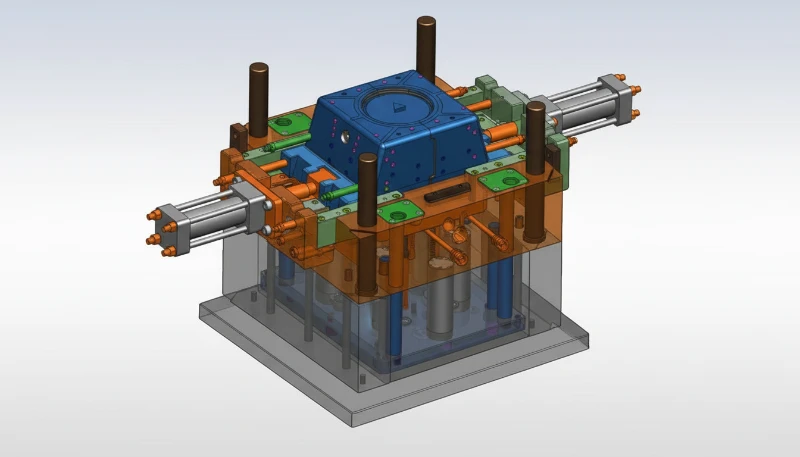
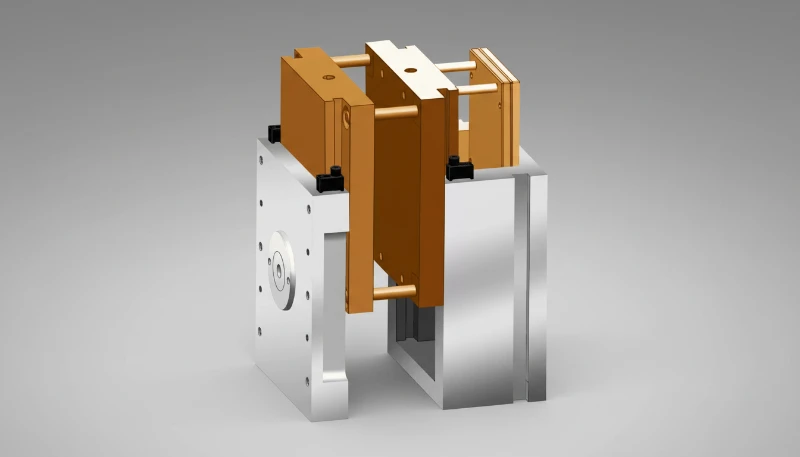
Als u enige tijd met spuitgieten hebt gewerkt, hebt u de termen aanspuitkanaal1, verdeelkanaal2 en aanspuitpunt3 vast voorbij horen komen alsof ze hetzelfde betekenen. Dat is niet zo. Verwarring tussen deze termen kan leiden tot een slecht matrijsontwerp, materiaalverspilling en onderdelen die nooit goed worden gevuld.
Na ruim twintig jaar matrijzen bouwen en productie draaien in onze fabriek in Shanghai hebben we elke denkbare fout met verdeelkanalensystemen gezien. Dit artikel legt precies uit wat elke component doet, hoe ze verschillen en welke ontwerpkeuzes op de werkvloer werkelijk van belang zijn.
- De aanspuitbus is het eerste verticale kanaal vanaf de machinespuitmond naar de matrijs.
- Verdeelkanalen voeren de smelt horizontaal van het aanspuitkanaal naar de afzonderlijke aanspuitpunten van de matrijsholten.
- Aanspuitpunten vormen de nauwste doorgang — ze regelen stroming, stolling en het loskomen van het onderdeel.
- Koudkanaalsystemen produceren afval; warmkanaalsystemen elimineren dit, maar kosten aanvankelijk meer.
- De keuze van het gatetype heeft rechtstreeks invloed op de onderdeelkwaliteit, cyclustijd en arbeid voor nabewerking.
Wat is een aanspuitbus bij spuitgieten?
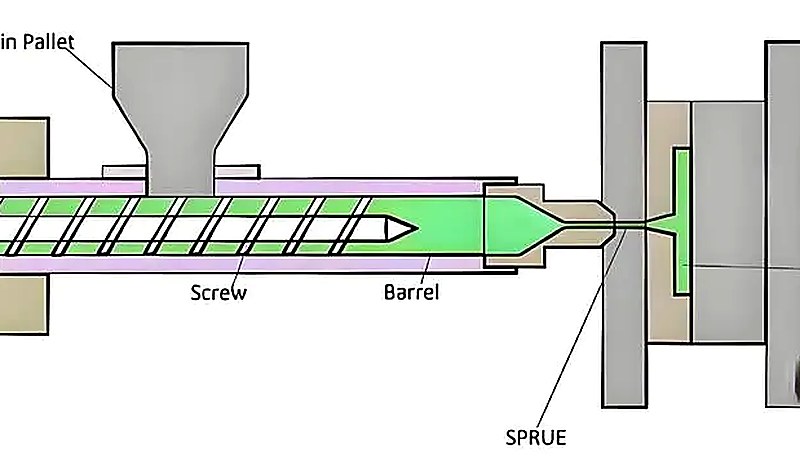
De spuitbus is het eerste en grootste kanaal in het toevoersysteem. Het begint bij de machinespuitmond, loopt door de bovenplaat van de matrijs en sluit aan op het verdeelkanalennetwerk. Zie het als de hoofdtoevoerleiding: alles stroomt hier eerst doorheen.
In een typische tweeplatenmatrijs is de aanspuitkegel een taps, conisch gat dat door de aanspuitbus is geboord. De tapsheid — doorgaans 1 tot 3 graden per zijde — zorgt ervoor dat de gestolde aanspuitkegel schoon kan worden uitgeworpen. Een aanspuitkegel met rechte wanden zou blijven vastzitten en de matrijs bij elke cyclus blokkeren.
Belangrijke afmetingen doen ertoe. De diameter van het grote uiteinde van de spuitkegel bij de aansluiting op de spuitmond is doorgaans gelijk aan of iets groter dan de spuitmondopening van de machine (3–6 mm voor de meeste algemene spuitgiettoepassingen). Het kleine uiteinde mondt uit in het aanspuitsysteem. Als de spuitkegel te smal is, ontstaat direct aan het begin van de vulfase een te groot drukverlies. Is deze te breed, dan wordt materiaal verspild en neemt de koeltijd toe.
In onze fabriek in Shanghai heeft ZetarMold ruim 20 jaar ervaring met spuitgieten en matrijzenbouw, beschikt het over 47 spuitgietmachines van 90T tot 1850T en ondersteunt het projecten met matrijzenbouw in eigen huis. Voor het ontwerp van aanspuitkanalen en runners is dit relevant, omdat dezelfde matrijs zich anders kan gedragen wanneer deze van de proefpers naar de productiepers wordt verplaatst.
Wat is een runner bij spuitgieten?
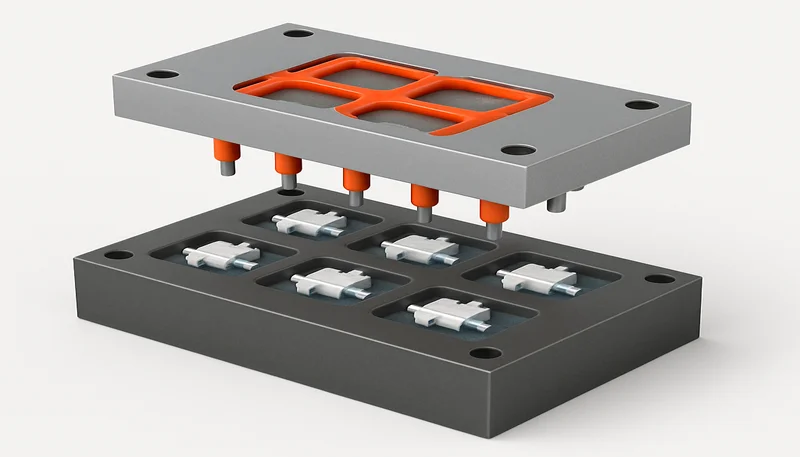
Een verdeelkanaal is het horizontale kanalenstelsel dat gesmolten kunststof vanaf de onderzijde van het aanspuitkanaal naar elk aanspuitpunt van de vormholte voert. In een matrijs voor spuitgieten met meerdere vormholten vormt het verdeelkanalensysteem de ruggengraat van de distributie: het bepaalt of elke vormholte gelijktijdig en onder dezelfde druk wordt gevuld, of dat sommige vormholten onvolledig worden gevuld en andere door overvulling braamvorming vertonen.
Runners bestaan in diverse dwarsdoorsnedeprofielen. De meest voorkomende zijn:
Volrond — Cirkelvormige doorsnede. Beste verhouding tussen oppervlak en volume, wat het minste warmteverlies en de laagste drukval betekent. Vereist bewerking van beide matrijshelften, waardoor de gereedschapskosten hoger zijn.
Trapeziumvormig—alleen in één matrijshelft bewerkt. Gemakkelijker en goedkoper te frezen. Het compromis is iets meer warmteverlies en drukweerstand.
Gemodificeerd trapeziumvormig (U-vorm) — Een hybride vorm die het standaardtrapezium verbetert met afgeronde hoeken, waardoor betere vloei-eigenschappen ontstaan terwijl de vorm vanaf één zijde bewerkbaar blijft.
De diameter van het aanspuitkanaal ligt doorgaans tussen 3 en 10 mm, afhankelijk van de onderdeelgrootte, materiaalviscositeit en stromingslengte. In onze werkplaats gaan we voor alles behalve zeer klein microspuitgietwerk zelden onder 4 mm; daaronder lopen de drukverliezen snel op, vooral bij zeer viskeuze engineeringkunststoffen.
"De runnerdiameter in de meeste productiematrijzen ligt tussen 3 mm en 10 mm."True
Juist. Dit is het standaardbereik. Kleinere runners veroorzaken buitensporig drukverlies, terwijl grotere runners materiaal verspillen en de cyclustijd verlengen.
"Verdelers worden altijd in beide matrijshelften bewerkt."False
Onjuist. Trapeziumvormige en U-vormige verdeelkanalen worden slechts in één matrijshelft bewerkt. Alleen volledig ronde verdeelkanalen moeten aan beide zijden worden bewerkt.
Wat is een aanspuitpunt en hoe verschilt het van een aanspuitkegel en kanaal?
Een aanspuiting is de nauwste vernauwing tussen de runner en de matrijscaviteit. Het is de laatste doorgang die de kunststof passeert voordat deze de caviteit binnengaat. Aanspuitingen vervullen vier kritieke functies die de onderdeelkwaliteit en productie-efficiëntie direct bepalen.
1. Stromingsregeling. Het aanspuitpunt begrenst en stuurt de smelt. Een kleiner aanspuitpunt verhoogt de afschuifsnelheid, waardoor het materiaal door viskeuze wrijving opwarmt en de viscositeit tijdelijk daalt—dit helpt dunne secties te vullen.
2. Dichtvriesafdichting. Zodra de caviteit is nagevuld, stolt de aanspuiting als eerste. Dit sluit de caviteit af, zodat nagevuld materiaal niet terug in het kanaal kan stromen wanneer de injectiedruk daalt.
3. Scheidingspunt. Na het uitwerpen is de aanspuiting de plaats waar het onderdeel van het verdeelkanaalsysteem wordt gescheiden. Een goed ontworpen aanspuiting breekt schoon af of vereist minimale nabewerking.
4. Nadrukregeling. De aanspuitmaat en stoltijd bepalen rechtstreeks hoeveel nadrukmateriaal de matrijsholte binnenkomt.
Een te groot aanspuitpunt betekent een lange nadruktijd—en mogelijk overvullen, braamvorming of hoge restspanning. Bij een te klein aanspuitpunt stolt dit voordat de caviteit volledig is nagevuld, waardoor invalplekken of holtes ontstaan.
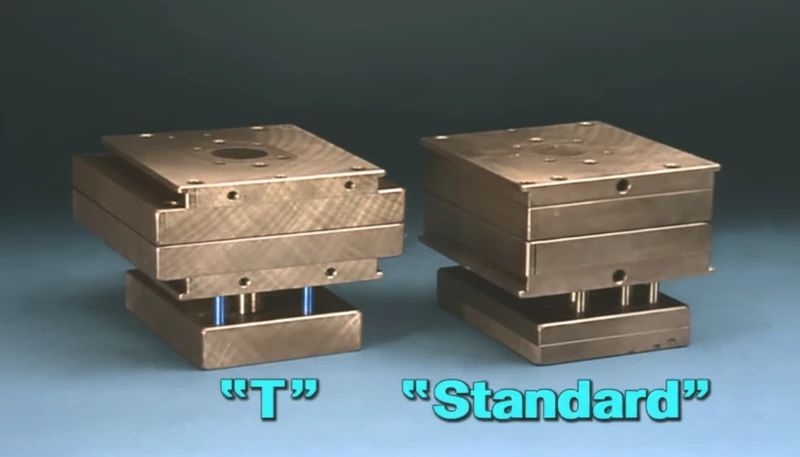
Wat is het volledige toevoertraject van spuitmond tot caviteit?
Het volledige toevoertraject van spuitmond tot vormholte wordt bepaald door de functie, beperkingen en afwegingen die in dit gedeelte worden uitgelegd. De volledige route van gesmolten kunststof door een spuitgietmatrijs verloopt als volgt: machinecilinder → spuitmondpunt → aanspuitkanaal (verticaal, door de bovenste klemplaat) → verdeelkanaal (horizontaal, door het deelvlak) → aanspuitpunt (smalle vernauwing) → vormholte.
Elke fase vormt een stap omlaag in doorsnede. De aanspuitbus is het grootste kanaal, de runner is kleiner en vertakt en de aanspuitopening is de kleinste vernauwing. Deze vernauwing is bewust aangebracht—ze houdt de stroomsnelheid en druk in stand tot aan de ingang van de caviteit.
Aan de voet van de aanspuitbus, tegenover de aanspuittrekker, bevindt zich ook een koudpropopvang. Deze vangt de koude, langzaam bewegende prop kunststof op die tussen cycli aan de spuitmondtip blijft zitten. Zonder deze opvang zou die koude prop door het kanaal stromen en mogelijk een aanspuitpunt blokkeren of een zichtbare onvolkomenheid op het onderdeel veroorzaken.
"De koudpropvanger vangt tussen cycli gestolde kunststof van de spuitmondpunt op."True
Juist. Zonder koudpropvangput zou het gestolde materiaal van de spuitmondpunt in het kanaalsysteem komen en een aanspuitpunt kunnen blokkeren of oppervlaktedefecten op het gevormde onderdeel veroorzaken.
"De aanspuiting is het grootste kanaal in het toevoersysteem."False
Onjuist. De aanspuiting is de kleinste vernauwing. De aanspuitbus is het grootste kanaal, het aanspuitkanaal is middelgroot en de aanspuiting is het smalste punt tussen het aanspuitkanaal en de caviteit.
Welk systeem moet u gebruiken: een koudkanaal- of heetkanaalsysteem?
Dit is een van de meest bepalende ontwerpbeslissingen bij elke matrijsbouw. Het type runnersysteem beïnvloedt materiaalafval, cyclustijd, onderdeelkwaliteit en matrijskosten. Inzicht in de afwegingen helpt u de juiste keuze voor uw productievolume en budget te maken.
Een koudrunnersysteem is de traditionele, goedkopere aanpak. De runnerkanalen zijn onverwarmd en worden eenvoudig in het matrijsstaal verspaand. Na elke cyclus stolt de kunststof in de runner samen met de onderdelen en wordt deze uitgeworpen. Deze gestolde runner is afval of maalgoed en vormt, afhankelijk van de onderdeelgeometrie, doorgaans 5–30% van het totale spuitgewicht.
Een heetkanaalsysteem gebruikt patroonverwarmers, thermokoppels en verdeelblokken om de kunststof in de runnerkanalen voortdurend gesmolten te houden. Er wordt geen runnerafval uitgeworpen — alleen de onderdelen. Dit bespaart materiaal, verkort de cyclustijd (er hoeft geen runner af te koelen en te worden uitgeworpen) en maakt vaak snellere kleur- of materiaalwissels mogelijk. Daartegenover staan aanzienlijk hogere gereedschapskosten en een complexer onderhoud.
Hier volgt een praktische vergelijking:
| “Runnerbalancering is alleen nodig voor mallen met meer dan 16 holtes.” | Koud aanspuitkanaal | Hete hardloper |
|---|---|---|
| Kosten gereedschap | Lager ($3K–$15K minder) | Hoger (verwarmd verdeelblok en regelaars) |
| Materiaal Afval | 5–30% per shot (runnerafval) | Vrijwel nul (geen gestold aanspuitkanaal) |
| Cyclustijd | Langer (runner moet afkoelen) | Korter (geen loperkoeling nodig) |
| Onderhoud | Eenvoudig, robuust | Complex (verwarmers, thermokoppels, lekkage) |
| Kleurwisseling | Eenvoudig (spoel het volledige systeem) | Langzamer (restsmelt in het verdeelstuk) |
| Onderdeelkwaliteit | Aanspuitmarkeringen, mogelijke aanspuitrest | Nettere aanspuitingen, thermische aanspuiting of naaldafsluiter |
| Beste voor | Klein tot middelgroot volume, frequente kleurwissels | Groot volume, nauwe toleranties, dure harsen |
{“type”:“factory_insight”,“fact_ids”:[“equipment.injection_machines_47”,“equipment.tonnage_90_1850”],“text”:“In onze vestiging in Shanghai gebruiken we 47 spuitgietmachines van 90T tot 1850T en produceren we onderdelen met zowel coldrunner- als hotrunnermatrijzen. Voor medische toepassingen en consumentenelektronica in grote volumes bieden hotrunners vrijwel altijd de laagste totale eigendomskosten zodra u ongeveer 100,000 cycli overschrijdt.”}
Wat zijn de meest voorkomende typen aanspuitingen?
De meest voorkomende aanspuittypen zijn de hoofdcategorieën of opties die in dit gedeelte worden uitgelegd. De keuze van de aanspuiting is geen theoretische oefening — ze bepaalt rechtstreeks of uw onderdeel schoon wordt gevuld, hoeveel nabewerking nodig is en of geautomatiseerde productie überhaupt mogelijk is. Dit zijn de zes aanspuittypen die u het vaakst in productiegereedschap tegenkomt:
1. Directe (sprue-)aanspuiting. De eenvoudigste aanspuiting — de aanspuitkegel voedt rechtstreeks in de caviteit zonder verdeelkanaal. Wordt gebruikt voor matrijzen met één caviteit die grote, dikwandige onderdelen zoals emmers of behuizingen maken. Lage drukval, maar laat een groot, zichtbaar aanspuitspoor achter en kan niet voor configuraties met meerdere caviteiten worden gebruikt.
2. Rand- (zij-)aanspuiting. Het meest veelzijdige aanspuittype, geplaatst op het deelvlak aan de rand van de matrijsholte. Eenvoudig te bewerken, eenvoudig in afmetingen aan te passen en geschikt voor de meeste materialen. Nadelen zijn een zichtbaar aanspuitrestant en de noodzaak om handmatig af te snijden.
3. Duik- of tunnelaanspuiting. Het aanspuitkanaal loopt schuin onder het deelvlak en komt vanaf de onderzijde of een binnenvlak de caviteit binnen. Wanneer de matrijs opent, snijdt het schuine kanaal het aanspuitpunt automatisch van het onderdeel af — dit maakt volledig geautomatiseerde productie mogelijk zonder zichtbare aanspuitmarkering op het cosmetische oppervlak. Niet aanbevolen voor brosse materialen zoals PC of PMMA.
"Duikbootaanspuitingen kunnen volledig geautomatiseerde productie mogelijk maken, omdat de aanspuiting tijdens het openen van de matrijs wordt afgesneden."True
Waar. Door het schuine tunnelontwerp wordt de aanspuiting bij het openen van de matrijs automatisch van het onderdeel afgesneden, zodat handmatig verwijderen van de aanspuiting niet nodig is.
"Puntaanspuitingen werken met standaard tweeplatenmatrijzen."False
Onjuist. Puntaanspuitingen vereisen een drieplatenmatrijs (dubbel deelvlak), omdat de aanspuiting bij het openen van de matrijs van de vaste zijde moet worden losgetrokken. Standaard tweeplatenmatrijzen zijn niet geschikt voor dit type aanspuiting.
4. Puntaanspuiting. Een aanspuiting met een zeer kleine diameter (doorgaans 0,5–1,5 mm) die nauwelijks een afdruk achterlaat en tijdens het uitwerpen vanzelf afbreekt. Vereist een drieplatenmatrijs. Geeft veel injectiedrukverlies, maar is uitstekend geschikt voor zichtdelen en matrijzen met meerdere vormholten.
5. Waaieraanspuiting. Een brede, vlakke aanspuiting die de smelt over een breed front verspreidt. Ideaal voor dunwandige onderdelen waarbij straalvorming of defecten door hoge afschuiving moeten worden voorkomen. Veelgebruikt bij vlakke panelen en lensafdekkingen.
6. Naaldafsluiter (alleen hotrunner). Een mechanisch bediende pen opent en sluit de aanspuitopening. Deze levert het schoonste aanspuitmerkteken, nauwkeurige regeling van het openingsmoment en wordt gebruikt in hoogwaardige toepassingen met meerdere holten en sequentiële vulling. Dit is de duurste optie.
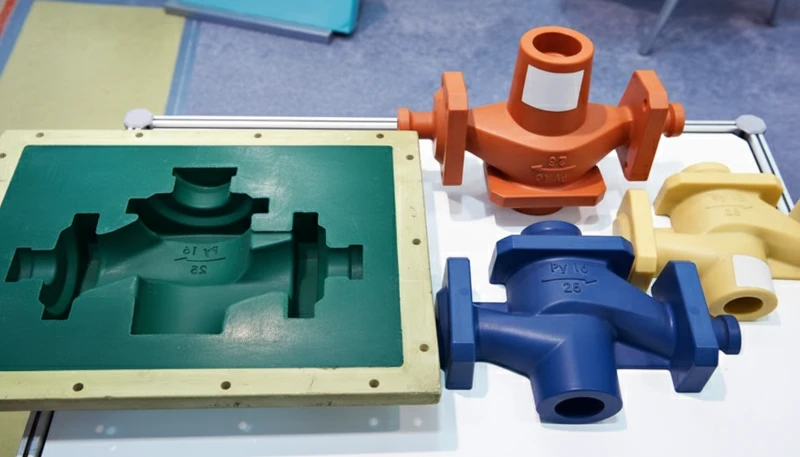
Welke invloed heeft de aanspuitafmeting op de onderdeelkwaliteit?
De grootte van het aanspuitpunt bepaalt de vulsnelheid, nadruktijd en afscheidingskwaliteit. Als die niet klopt, verschijnen defecten snel.
Te klein aanspuitpunt: de hoge afschuifsnelheid door het aanspuitpunt veroorzaakt overmatige wrijvingswarmte, waardoor temperatuurgevoelige harsen kunnen degraderen. Het aanspuitpunt bevriest ook te vroeg, waardoor de nadrukdruk wegvalt voordat de krimp in de caviteit volledig is gecompenseerd. Resultaat: inval, holtes en onvoldoende nagevulde onderdelen. Er ontstaan ook grote drukverliezen, die in matrijzen met meerdere caviteiten onvolledige vulling kunnen veroorzaken.
Poort te groot: langere nadruktijd, overvulling nabij de poort en hoge restspanning. De poortrest is groter en moeilijker netjes te verwijderen. De cyclustijd neemt toe omdat het dikke poortgedeelte langer nodig heeft om te stollen.
In de praktijk beginnen we met een aanspuitdoorsnede van ongeveer 50–70% van het dunste wandgedeelte van het onderdeel en passen die vervolgens aan op basis van de resultaten van de matrijsstroomsimulatie. De landlengte van de aanspuiting (het rechte gedeelte) wordt kort gehouden — doorgaans 0,5–1,5 mm — om drukverlies te minimaliseren. Alles wat langer is, verspilt meestal druk.
Welke problemen ontstaan bij een slecht ontworpen aanspuitkanaalsysteem?
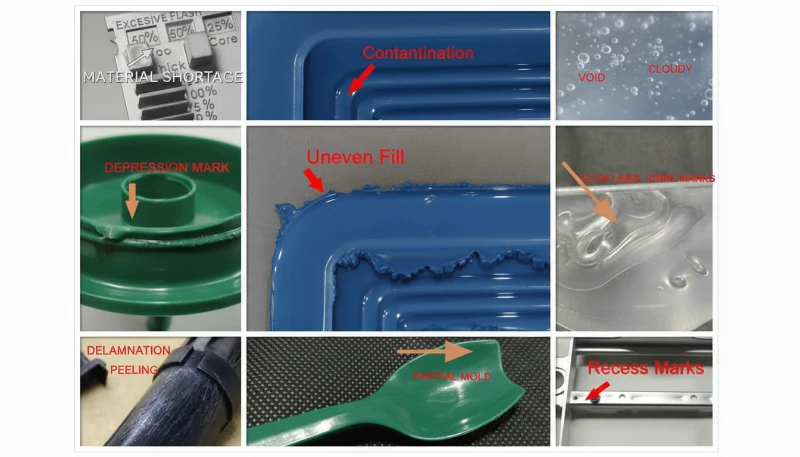
Een slecht ontworpen verdeelkanaalsysteem is een directe oorzaak van ongebalanceerd vullen, drukverlies, koude proppen en verspilde hars. In onze fabriek diagnosticeren we deze problemen door het smelttraject van spuitmond tot holte te volgen voordat we machine-instellingen wijzigen.
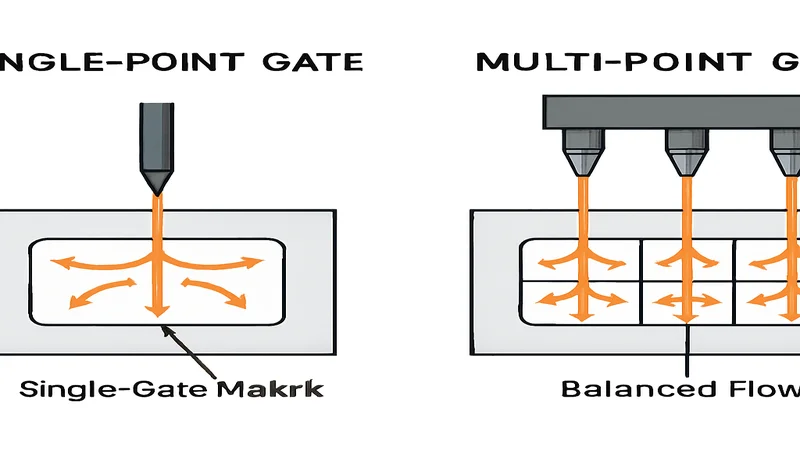
Onevenwichtige vulling in matrijzen met meerdere vormholten. Wanneer de lengte of diameter van runners varieert, worden sommige vormholten als eerste gevuld en lopen andere achter. De vroeg gevulde vormholten worden overmatig nageperst, terwijl de laat gevulde vormholten onvolledig blijven. De oplossing is een uitgebalanceerd runnerontwerp — een gelijke stroomlengte en doorsnede naar elke vormholte, of compensatie van de stroomlengte door verschillende runnerdiameters te gebruiken.
Te groot drukverlies. Lange, nauwe kanalen met te veel bochten verliezen injectiedruk voordat de smelt de caviteit bereikt. Als u 120 MPa bij de caviteit nodig hebt maar 80 MPa in het kanaalsysteem verliest, hebt u een grotere machine nodig—of een betere kanaalindeling.
Koude proppen die de matrijsholte binnendringen. Als de koudepropvanger ontbreekt of te klein is, beweegt de gestolde prop vanaf de spuitneuspunt door het aanspuitsysteem en blokkeert deze een aanspuiting. Dit uit zich in sporadisch onvolledig gevulde producten of oppervlaktedefecten die willekeurig optreden.
Overmatig runnerafval. In matrijzen met koude runners verspillen te grote runners (een gebruikelijke veiligheidsmarge) materiaal. Bij productie in grote volumes met dure engineeringharsen (PEEK, PPS, LCP) lopen zelfs enkele grammen per shot op tot duizenden dollars per jaar.
Hoe optimaliseert u het aanspuitsysteem voor matrijzen met meerdere caviteiten?
Bij de optimalisatie van matrijzen met meerdere holten verdienen ervaren gereedschapsontwerpers hun geld. Het doel is eenvoudig: elke holte vult met dezelfde snelheid en dezelfde druk en produceert identieke onderdelen. Daarvoor moet aandacht worden besteed aan drie factoren.
Geometrische balans (natuurlijk gebalanceerd aanspuitkanaal). Leg het aanspuitkanaal zo aan dat het stromingspad van het hoofdtoevoerkanaal naar elke vormholte dezelfde lengte, hetzelfde aantal bochten en dezelfde doorsnede heeft. Een H-patroon of radiale indeling zorgt hier vanzelf voor. Dit is de gouden standaard, maar past niet altijd binnen de beperkingen van de matrijsbasis of de vereisten van de onderdeelindeling.
Compensatie voor stroomlengte (kunstmatig uitgebalanceerd verdeelkanaal). Als geometrische balans onmogelijk is, past u de diameters van de verdeelkanalen aan om de drukval naar elke holte gelijk te maken. Een holte die verder van het aanspuitkanaal ligt, krijgt een breder verdeelkanaal om het extra wrijvingsverlies te compenseren. Dit vereist een nauwkeurige matrijsstroomsimulatie.
Dimensionering van het aanspuitpunt als laatste afstelling. Zelfs met uitgebalanceerde verdeelkanalen kunnen kleine variaties in de caviteitsgeometrie (verschillende onderdeelgewichten, wanddiktes) onbalans veroorzaken. Het licht aanpassen van afzonderlijke aanspuitpuntafmetingen is de laatste afstellingsstap. Dit gebeurt tijdens de matrijsbemonstering — we spuitgieten testshots, meten caviteitsgewichten en passen de aanspuitpunten aan in stappen van 0.1 mm.
{“type”:“factory_insight”,“fact_ids”:[“facility.in_house_mold_manufacturing”,“company.experience_20_years”],“text”:“Met onze interne matrijzenmakerij en ruim 20 jaar gereedschapservaring ontwerpen en optimaliseren we routinematig meervoudige matrijzen met maximaal 64 holtes voor connectoren en medische componenten in grote volumes.”}
"In een natuurlijk gebalanceerd runnersysteem heeft elke holte vanaf de aanspuitbus een identiek stromingstraject."True
Waar. Geometrisch gebalanceerde aanspuitkanalen gebruiken H-patronen of radiale lay-outs om voor elke matrijsholte dezelfde stromingslengte, bochten en doorsnede te waarborgen, waardoor consistente onderdelen ontstaan.
"Balancering van aanspuitkanalen is alleen nodig voor matrijzen met meer dan 16 caviteiten."False
hardloper:
Wat zijn de belangrijkste verschillen tussen aanspuiting, runner en gate?
Voor een snelle vergelijking vat deze tabel de belangrijkste verschillen tussen het aanspuitkanaal, het verdeelkanaal en het aanspuitpunt: samen.
| Functie | Aanspuitkegel | Loper | Poort |
|---|---|---|---|
| Locatie | Verticaal, door de bovenplaat | Horizontaal, op het scheidingsvlak | Tussen runner en caviteit |
| Functie | Verbindt de spuitmond met het runnersysteem | Verdeelt de smelt over alle holten | Regelt de instroom in de matrijsholte |
| Maat | Grootste kanaal (diameter 3–10 mm) | Middelgroot (diameter 3–8 mm) | Kleinst (diam. 0.3–3 mm) |
| Dwarsdoorsnede | Conisch taps | Rond, trapeziumvormig of U-vormig | Smal rechthoekig of rond |
| Stolt | Ontvangt de smelt als eerste, stolt langzaam | Stolt samen met het onderdeel | Eerste gedeelte dat stolt |
| Uitwerping | Getrokken door aanspuitnippeltrekker / ondersnijding | Met het onderdeel op de deelnaad uitgeworpen | Wordt bij het uitwerpen van het onderdeel afgescheiden |
| Ontwerptip | Conus van 1–3° per zijde voor schone lossing | Volledig rond is het efficiëntst | Kleinste aanspuiting waarmee het onderdeel wordt gevuld |
Veelgestelde vragen
Wat is het verschil tussen een aanspuitbus en een verdeelkanaal?
Een aanspuitkegel is het verticale kanaal dat de nozzle van de spuitgietmachine verbindt met het verdelersysteem van de matrijs, terwijl een verdeler het horizontale kanaal is dat de smelt vanuit de aanspuitkegel over de afzonderlijke caviteitsaanspuitpunten verdeelt. De aanspuitkegel is het eerste kanaal dat de kunststof na de nozzletip binnengaat en loopt door de bovenste sluitplaat van de matrijs. Verdelers volgen na de aanspuitkegel en vertakken zich naar elke caviteit. Qua afmetingen is de aanspuitkegel doorgaans het grootste afzonderlijke kanaal in het toevoersysteem, terwijl verdelers vertakt zijn en een iets kleinere doorsnede hebben.
Kan een matrijs zonder aangiettap werken?
Alleen bij hotrunnermatrijzen met een directe nozzle-naar-verdeelblokverbinding, waarbij de verwarmde nozzle zonder conventionele spuitbus in het verdeelblok voedt. In standaard tweeplaatmatrijzen met koude runner is de aanspuitkegel essentieel als verbinding tussen de stationaire machinenozzle en het runnersysteem van de bewegende matrijshelft. Zonder deze is er geen afgesloten kanaal voor de smelt naar de caviteiten. Hotrunners kunnen de aanspuitkegel elimineren met een verwarmde spuitbus of directe aanspuiting.
Waarom is de aanspuitbus conisch in spuitgietmatrijzen?
De tapsheid (1–3 graden per zijde) vormt een lossingshoek waardoor het gestolde aanspuitkanaal bij het openen van de matrijs netjes uit de aanspuitbus komt. Een cilindrisch kanaal met rechte wanden zou door wrijving en thermische krimp aan het stalen oppervlak vastgrijpen, waardoor het uitwerpsysteem blokkeert en het matrijsoppervlak na herhaalde cycli mogelijk beschadigt. Dankzij de tapsheid komt het aanspuitkanaal elke cyclus soepel uit de bus, wat cruciaal is voor betrouwbare geautomatiseerde productie, consistente cyclustijden en een lange levensduur van de matrijs.
Wat gebeurt er als het aanspuitkanaal te klein is?
Een te kleine runner veroorzaakt een te grote drukval tussen de machinespuitmond en de caviteit. Dit kan leiden tot onvolledig gevulde producten, een hoge benodigde vuldruk en meer afschuifverwarming in de smelt. De machine moet mogelijk op de maximale drukgrens werken, waardoor er tijdens de productie geen marge overblijft voor procesaanpassingen of variaties in de materiaalviscositeit. Bij matrijzen met meerdere caviteiten maken te kleine runners het bovendien veel moeilijker om de caviteitsvulling te balanceren. Dit leidt tot een inconsistente onderdeelkwaliteit, maatvariatie tussen caviteiten en een hoger totaal uitvalpercentage.
Heeft elke matrijs een koudpropvanger nodig?
Bij coldrunnermatrijzen wel — de koudpropvanger vangt de gestolde spuitmondprop op die tussen injectiecycli ontstaat. Zonder deze voorziening komt de koude prop in het runnersysteem terecht en kan deze een aanspuiting blokkeren of een zichtbare oppervlaktedefect op het afgewerkte onderdeel veroorzaken. Bij hotrunnermatrijzen blijft de smelt altijd vloeibaar in het verwarmde verdeelstuk, zodat koudpropvangers niet nodig zijn omdat er geen gestold materiaal hoeft te worden opgevangen. De meeste coldrunnermatrijzen moeten echter altijd een koudpropvanger met de juiste afmetingen aan de voet van het aanspuitkanaal hebben.
Hoe kiest u tussen coldrunner- en hotrunnersystemen?
Gebruik koudlopers voor lage tot middelgrote volumes, toepassingen met frequente kleurwissels of een beperkt gereedschapsbudget. Kies heetkanalen voor hoge volumes, doorgaans boven 100,000 cycli, dure technische harsen waarbij runnerafval kostbaar is, of wanneer kortere cyclustijd essentieel is voor rendement. De meeste productiematrijzen boven 500,000 onderdelen per jaar gebruiken heetkanalen, omdat materiaalbesparing en snellere cycli de hogere initiële investering al in de eerste productierun compenseren. Reken vóór de keuze met jaarvolume, runnergewicht, harsprijs, kleurwisselfrequentie, automatisering, gereedschapsbudget en onderhoudskennis. Een heetkanaal is alleen een sterke investering wanneer de productiebesparing groter is dan de extra complexiteit.
Wat is balancering van het aanspuitsysteem en waarom is dit belangrijk?
Het balanceren van het aanspuitsysteem zorgt ervoor dat alle holten in een meervoudige matrijs gelijktijdig en onder gelijke druk worden gevuld, zodat in elke cyclus consistente onderdelen uit alle holten komen. Dit wordt bereikt met een geometrische lay-out (gelijke stromingswegen via H-patronen of radiale aanspuitsystemen) of door afzonderlijke aanspuitdiameters aan te passen om verschillende stromingslengten naar elke holte te compenseren. Ongebalanceerde aanspuitsystemen leiden ertoe dat sommige holten te sterk worden nagevuld (met braamvorming, hoge restspanning en maatproblemen als gevolg), terwijl andere onvoldoende worden gevuld (onvolledige vulling, inval en holten), wat resulteert in inconsistente onderdeelkwaliteit en hogere afkeurpercentages.
Welk type aanspuiting laat de kleinste markering op het onderdeel achter?
Punt- en onderzeese (tunnel-)aanspuitpunten laten het kleinste zichtbare restant achter op het onderdeeloppervlak, doorgaans een stip of klein kuiltje met een diameter van minder dan 1 mm. Klepaanspuitpunten in heetlopersystemen laten de schoonste afdruk achter — een klein rond merkteken zonder verhoogd restant, omdat de kleppennaald het aanspuitpunt tijdens het sluiten vlak met het onderdeeloppervlak afschuift. Directe aanspuitpunten en grote randaanspuitpunten laten de zichtbaarste sporen op het gegoten onderdeel achter. Deze moeten vaak secundair worden bijgesneden, geschuurd of cosmetisch afgewerkt voordat het onderdeel kan worden verzonden.
Hoe kan ZetarMold helpen met uw matrijsontwerp?
De juiste configuratie van aanspuitkanaal, verdeelkanaal en aanspuitpunt kiezen is geen theoretische oefening: deze hangt af van de geometrie van uw onderdeel, het materiaal, het productievolume en de kwaliteitseisen. Bij ZetarMold ontwerpen en bouwen we matrijzen in eigen huis, met 47 spuitgietmachines (90T–1850T) en ervaring met meer dan 400 kunststofmaterialen. Zoekt u een leverancier van spuitgietwerk, dan kan ons engineeringteam u begeleiden van DFM tot productie.
Of u nu een eenvoudige koudkanaalmatrijs voor een korte serie nodig hebt of een nauwkeurig hotrunnersysteem voor een productie van miljoenen stuks, ons team helpt u het in één keer goed te doen.
Vraag een gratis offerte aan → Stuur uw 3D-model en wij sturen binnen 48 uur DFM-feedback, aanbevelingen voor het matrijsontwerp en een productietijdlijn terug.
aanspuitkanaal: een aanspuitkanaal is het primaire verticale kanaal dat gesmolten kunststof vanaf de spuitmond van de spuitgietmachine naar het verdeelkanalensysteem van een matrijs voert. ↩
verdeelkanaal: een verdeelkanaal is het horizontale kanalenstelsel dat gesmolten kunststof vanaf het aanspuitkanaal naar de afzonderlijke aanspuitpunten van de vormholten verdeelt in een matrijs met meerdere vormholten of aanspuitpunten. ↩
aanspuitpunt: het aanspuitpunt is de smalle opening tussen het verdeelkanaal en de vormholte waardoor gesmolten kunststof de geometrie van het onderdeel instroomt. ↩