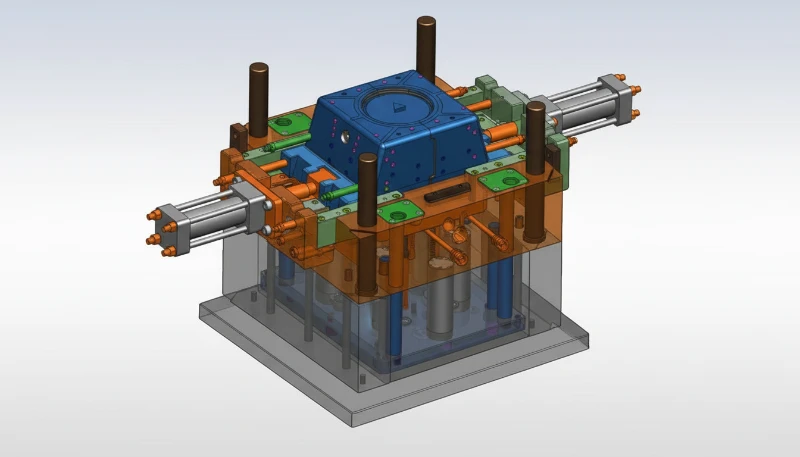
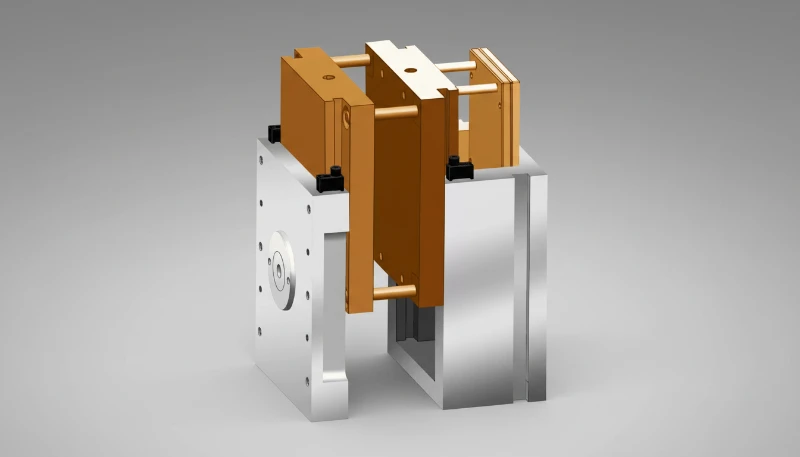
Si ha trabajado alguna vez con moldeo por inyección, habrá oído los términos bebedero1, canal de alimentación2 y compuerta3 como si significaran lo mismo. No es así. Confundirlos puede provocar un diseño deficiente del molde, desperdicio de material y piezas que nunca se llenan correctamente.
Después de más de 20 años fabricando moldes y gestionando la producción en nuestra fábrica de Shanghai, hemos visto todos los errores imaginables en los sistemas de canales. Este artículo explica exactamente qué hace cada componente, en qué se diferencian y qué decisiones de diseño importan realmente en el taller.
- El bebedero es el primer canal vertical que va desde la boquilla de la máquina hasta el interior del molde.
- Los canales distribuyen el fundido horizontalmente desde el bebedero hasta las compuertas de cada cavidad.
- Las compuertas son el punto más estrecho: controlan el flujo, la solidificación y la separación de la pieza.
- Los sistemas de canal frío generan residuos; los sistemas de canal caliente los eliminan, pero tienen un coste inicial mayor.
- La selección del tipo de punto de inyección influye directamente en la calidad de la pieza, el tiempo de ciclo y la mano de obra de posprocesamiento.
¿Qué es un bebedero en el moldeo por inyección?
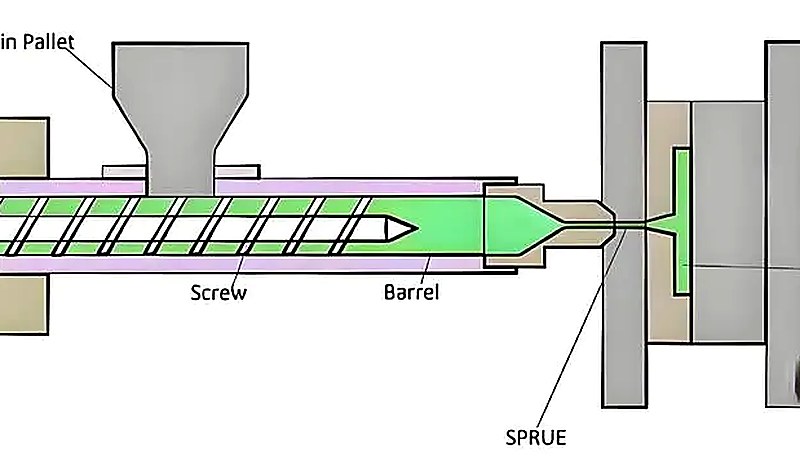
El bebedero es el primer canal y el de mayor tamaño del sistema de alimentación. Comienza en la boquilla de la máquina, atraviesa la placa superior del molde y se conecta con la red de canales. Puede considerarse la línea principal de suministro: todo fluye primero por él.
En un molde típico de dos placas, el bebedero es un orificio ahusado —cónico— perforado a través del casquillo del bebedero. El ahusamiento, normalmente de 1 a 3 grados por lado, permite expulsar limpiamente el bebedero solidificado. Un bebedero de paredes rectas se atascaría y bloquearía el molde en cada ciclo.
Las dimensiones clave son importantes. El diámetro del extremo grande del bebedero en la interfaz con la boquilla suele ser igual o ligeramente superior al orificio de la boquilla de la máquina (3–6 mm para la mayoría de los moldes de uso general). El extremo pequeño alimenta el canal. Si el bebedero es demasiado estrecho, se produce una caída de presión excesiva al inicio del llenado. Si es demasiado ancho, se desperdicia material y se prolonga el tiempo de enfriamiento.
En nuestra fábrica de Shanghái, ZetarMold cuenta con más de 20 años de experiencia en moldeo por inyección y utillaje, opera 47 máquinas de moldeo por inyección de 90T a 1850T y respalda los proyectos con fabricación interna de moldes. Esto es importante para el diseño del bebedero y los canales, porque un mismo molde puede comportarse de forma distinta al pasar de la prensa de pruebas a la de producción.
¿Qué es un canal en el moldeo por inyección?
El canal de alimentación es la red horizontal que conduce el plástico fundido desde la base del bebedero hasta la compuerta de cada cavidad. En un molde de moldeo por inyección multicavidad, el sistema de canales constituye la red principal de distribución: determina si todas las cavidades se llenan al mismo tiempo y a la misma presión, o si algunas quedan incompletas mientras otras presentan rebabas por sobrepresión.
Los canales presentan varios perfiles transversales. Los más habituales son:
Sección circular completa: sección transversal circular. Ofrece la mejor relación superficie-volumen, es decir, la menor pérdida de calor y la menor caída de presión. Requiere mecanizar ambas mitades del molde, por lo que el coste del utillaje es mayor.
Trapezoidal: mecanizado únicamente en una mitad del molde. Más fácil y barato de cortar. La contrapartida es una pérdida de calor y una resistencia a la presión ligeramente mayores.
Trapezoidal modificado (forma de U): un diseño híbrido que mejora el trapecio estándar mediante esquinas redondeadas, lo que proporciona mejores características de flujo y permite mecanizarlo desde un solo lado.
El diámetro del canal suele oscilar entre 3 mm y 10 mm según el tamaño de la pieza, la viscosidad del material y la longitud de flujo. En nuestro taller, rara vez bajamos de 4 mm para piezas que no sean de micromoldeo diminutas; por debajo de ese valor, las pérdidas de presión se acumulan rápidamente, especialmente con plásticos de ingeniería de alta viscosidad.
"El diámetro del canal en la mayoría de los moldes de producción oscila entre 3 mm y 10 mm."True
Verdadero. Este es el intervalo estándar. Los canales más pequeños generan una pérdida de presión excesiva, mientras que los más grandes desperdician material y prolongan el tiempo de ciclo.
"Los canales siempre se mecanizan en ambas mitades del molde."False
Falso. Los canales trapezoidales y en U se mecanizan en una sola mitad del molde. Solo los canales completamente redondos requieren mecanizado en ambos lados.
¿Qué es una compuerta y en qué se diferencia del bebedero y el canal?
Una entrada es el estrechamiento más angosto entre el canal y la cavidad del molde. Es la última puerta por la que pasa el plástico antes de entrar en la cavidad. Las entradas desempeñan cuatro funciones críticas que determinan directamente la calidad de las piezas y la eficiencia de la producción.
1. Control del flujo. La entrada restringe y dirige la masa fundida. Una entrada más pequeña aumenta la velocidad de cizallamiento, lo que calienta el material por fricción viscosa y reduce temporalmente la viscosidad, ayudando a llenar secciones delgadas.
2. Sellado por solidificación. Una vez compactada la cavidad, el punto de inyección es lo primero que se solidifica. Así sella la cavidad e impide que el material compactado retroceda hacia el canal cuando disminuye la presión de inyección.
3. Punto de separación. Tras la expulsión, la pieza se separa del sistema de canales en la compuerta. Una compuerta bien diseñada se desprende limpiamente o requiere un recorte mínimo.
4. Control de compactación. El tamaño de la compuerta y el tiempo de solidificación controlan directamente la cantidad de material de compactación que entra en la cavidad.
Una compuerta demasiado grande implica una compactación prolongada y puede causar sobrecompactación, rebabas o una elevada tensión residual. Si es demasiado pequeña, la compuerta se solidifica antes de que la cavidad quede completamente compactada, lo que provoca marcas de hundimiento o vacíos.
¿Cuál es la trayectoria completa de alimentación desde la boquilla hasta la cavidad?
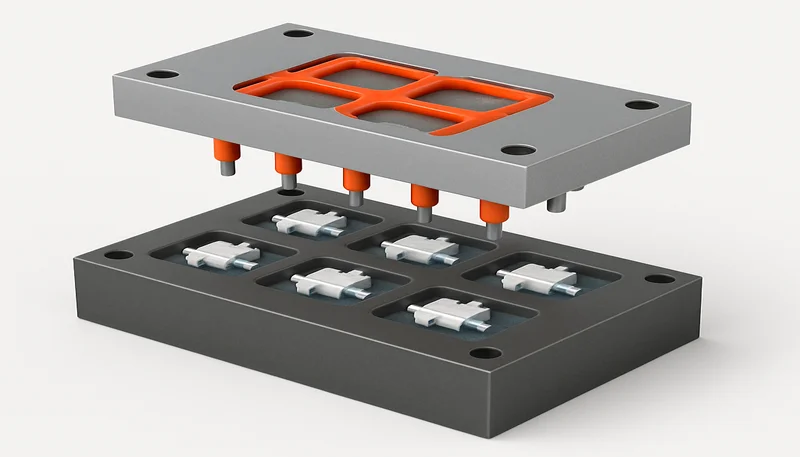
La trayectoria completa de alimentación, desde la boquilla hasta la cavidad, viene definida por la función, las restricciones y las compensaciones explicadas en esta sección. El recorrido completo del plástico fundido a través de un molde de inyección sigue esta secuencia: cilindro de la máquina → punta de la boquilla → bebedero (vertical, a través de la placa de sujeción superior) → canal de alimentación (horizontal, por la superficie de partición) → compuerta (estrechamiento) → cavidad.
En cada etapa se reduce la sección transversal. El bebedero es el canal más grande, el canal de distribución es más pequeño y ramificado, y el punto de inyección es el estrechamiento menor. Esta reducción gradual es intencionada: mantiene la velocidad y la presión del flujo hasta la entrada de la cavidad.
También hay un pozo de colada fría en la base del bebedero, frente al extractor del bebedero. Su función es capturar el tapón de plástico frío y de movimiento lento que permanece en la punta de la boquilla entre ciclos. Sin él, ese tapón frío avanzaría por el canal y podría bloquear un punto de inyección o causar una imperfección visible en la pieza.
"El pozo de colada fría captura el plástico solidificado de la punta de la boquilla entre ciclos."True
Verdadero. Sin un pozo de mazarota fría, el material solidificado de la punta de la boquilla entraría en el sistema de canales y podría bloquear un punto de inyección o crear defectos superficiales en la pieza moldeada.
"La entrada es el canal más grande del sistema de alimentación."False
Falso. La compuerta es la constricción más pequeña. El bebedero es el canal más grande, el canal de distribución es intermedio y la compuerta es el punto más estrecho entre el canal y la cavidad.
¿Qué sistema debe utilizar: canal frío o canal caliente?
Esta es una de las decisiones de diseño más importantes al fabricar un molde. El tipo de sistema de colada afecta a los residuos de material, el tiempo de ciclo, la calidad de la pieza y el coste del utillaje. Comprender las ventajas y desventajas permite elegir correctamente según el volumen de producción y el presupuesto.
Un sistema de canal frío es el enfoque tradicional y de menor coste. Los canales no se calientan: simplemente se mecanizan en el acero del molde. Después de cada ciclo, el plástico del canal se solidifica junto con las piezas y se expulsa. Ese canal solidificado es un residuo (o material triturado), normalmente el 5–30% del peso total de la inyección según la geometría de la pieza.
Un sistema de canal caliente utiliza calentadores de cartucho, termopares y bloques distribuidores para mantener fundido en todo momento el plástico dentro de los canales. No se expulsa ningún residuo de canal, solo las piezas. Esto ahorra material, reduce el tiempo de ciclo (no hay canal que enfriar y expulsar) y a menudo permite cambios más rápidos de color o material. La contrapartida es un coste de utillaje considerablemente mayor y una mayor complejidad de mantenimiento.
Esta es una comparación práctica:
| Criterios | Canal frío | Corredor caliente |
|---|---|---|
| Coste de utillaje | Inferior ($3K–$15K menos) | Superior (colector calentado + controladores) |
| Residuos materiales | 5–30% por inyección (residuos del canal) | Casi cero (sin canal solidificado) |
| Duración del ciclo | Más largo (el canal debe enfriarse) | Más corto (no es necesario enfriar el canal) |
| Mantenimiento | Simple y robusto | Complejo (calentadores, termopares, fugas) |
| Cambio de color | Fácil (purgar todo el sistema) | Más lento (material fundido residual en el colector) |
| Calidad de la pieza | Marcas de compuerta, posible vestigio | Puntos de inyección más limpios, térmicos o de válvula |
| Lo mejor para | Volumen bajo-medio, cambios de color frecuentes | Gran volumen, tolerancias estrictas, resinas costosas |
{“type”:“factory_insight”,“fact_ids”:[“equipment.injection_machines_47”,“equipment.tonnage_90_1850”],“text”:“En nuestras instalaciones de Shanghái operamos 47 máquinas de moldeo por inyección de 90T a 1850T y producimos piezas con moldes de canal frío y caliente. Para trabajos médicos y de electrónica de consumo de gran volumen, los canales calientes casi siempre ofrecen el menor coste total de propiedad una vez que se superan aproximadamente 100,000 ciclos.”}
¿Cuáles son los tipos de compuerta más comunes?
Los tipos de entrada más habituales son las categorías u opciones principales explicadas en esta sección. Seleccionar la entrada no es un ejercicio teórico: determina directamente si la pieza se llena limpiamente, cuánto posprocesamiento necesita y si la producción automatizada es siquiera posible. Estos son los seis tipos de entrada que encontrará con mayor frecuencia en los moldes de producción:
1. Entrada directa (de bebedero). La entrada más sencilla: el bebedero alimenta directamente la cavidad sin canal. Se utiliza en moldes monocavidad que fabrican piezas grandes y de paredes gruesas, como cubos o carcasas. Presenta poca pérdida de presión, pero deja una marca de entrada grande y visible y no puede utilizarse en disposiciones multicavidad.
2. Compuerta de borde (lateral). Es el tipo de compuerta más versátil y está situada en la superficie de partición, en el borde de la cavidad. Es fácil de mecanizar, permite ajustar fácilmente las dimensiones y funciona con la mayoría de los materiales. Sus desventajas son la marca visible de la compuerta y la necesidad de retirarla manualmente.
3. Compuerta submarina (de túnel). El canal se inclina por debajo de la línea de partición y entra en la cavidad por la parte inferior o por una superficie interior. Al abrirse el molde, el canal inclinado corta automáticamente la compuerta de la pieza, lo que permite una producción totalmente automatizada sin marcas visibles de compuerta en la superficie estética. No se recomienda para materiales frágiles como PC o PMMA.
"Los puntos de inyección submarinos permiten una producción totalmente automatizada porque el punto se cizalla al abrir el molde."True
Verdadero. El diseño inclinado del túnel hace que el punto de inyección se separe automáticamente de la pieza al abrirse el molde, lo que elimina el descolado manual.
"Las compuertas puntuales funcionan con moldes estándar de dos placas."False
Falso. Las compuertas de punto requieren un molde de tres placas (doble superficie de partición), porque la compuerta debe separarse del lado fijo durante la apertura del molde. Los moldes estándar de dos placas no admiten este tipo de compuerta.
4. Compuerta de punto. Una compuerta de diámetro muy pequeño (normalmente 0.5–1.5 mm) que deja una marca mínima y se separa por sí sola durante la expulsión. Requiere un molde de tres placas. Produce una gran pérdida de presión de inyección, pero es excelente para piezas estéticas y herramientas de múltiples cavidades.
5. Compuerta en abanico. Una compuerta ancha y plana que distribuye la masa fundida sobre un frente amplio. Es ideal para piezas de pared delgada en las que se deben evitar los chorros o los defectos por alto cizallamiento. Es habitual en paneles planos y cubiertas de lentes.
6. Compuerta de válvula (solo canal caliente). Un pasador accionado mecánicamente abre y cierra el orificio de la compuerta. Proporciona la marca de compuerta más limpia y un control preciso del momento de apertura, y se utiliza en aplicaciones multicavidad de alta gama y de llenado secuencial. Es la opción más cara.
¿Cómo afecta el tamaño de la compuerta a la calidad de la pieza?
El tamaño de la compuerta es el punto de control de la velocidad de llenado, el tiempo de compactación y la calidad de separación. Si es incorrecto, los defectos aparecen rápidamente.
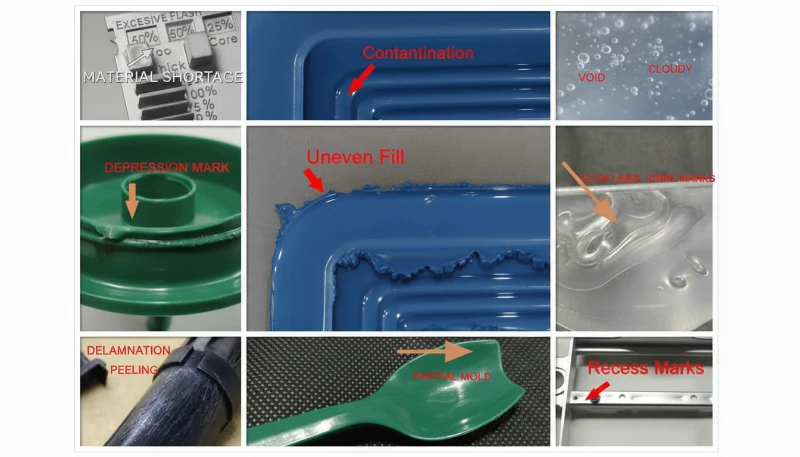
Punto de inyección demasiado pequeño: la alta velocidad de cizallamiento al atravesarlo genera un calentamiento excesivo por fricción, que puede degradar las resinas sensibles a la temperatura. El punto de inyección también se solidifica demasiado pronto e interrumpe la presión de compactación antes de compensar por completo la contracción de la cavidad. Resultado: rechupes, huecos y piezas insuficientemente compactadas. También se producen grandes caídas de presión que pueden causar llenados incompletos en moldes multicavidad.
Compuerta demasiado grande: tiempo de compactación prolongado, sobrecompactación cerca de la compuerta y alta tensión residual. El vestigio de la compuerta es mayor y más difícil de eliminar limpiamente. El tiempo de ciclo aumenta porque la sección gruesa de la compuerta tarda más en solidificarse.
En la práctica, empezamos con un área transversal de la compuerta de aproximadamente el 50–70% de la sección de pared más delgada de la pieza y después la ajustamos según los resultados de la simulación de flujo del molde. La longitud de la zona recta de la compuerta se mantiene corta —normalmente 0.5–1.5 mm— para reducir al mínimo la pérdida de presión. Cualquier longitud mayor suele ser presión desperdiciada.
¿Qué problemas se producen cuando el sistema de canales está mal diseñado?
Un sistema de canales mal diseñado causa directamente llenado desequilibrado, pérdida de presión, tapones fríos y desperdicio de resina. En nuestra fábrica diagnosticamos estos problemas siguiendo la trayectoria del fundido desde la boquilla hasta la cavidad antes de cambiar los ajustes de máquina.
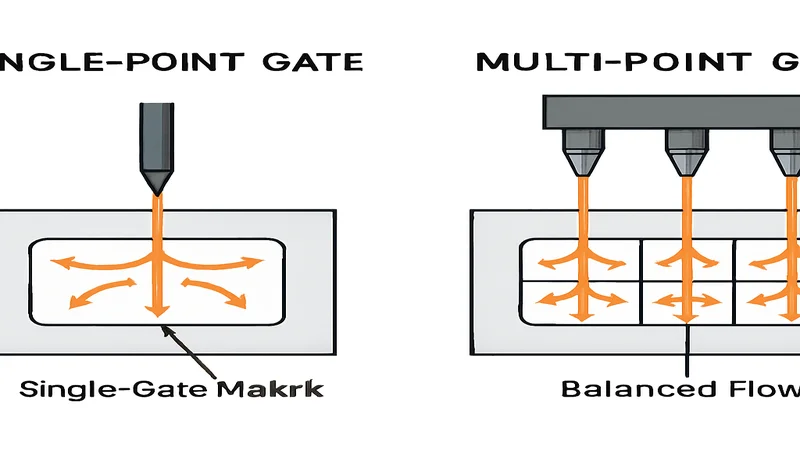
Llenado desequilibrado en moldes multicavidad. Cuando varían las longitudes o los diámetros de los canales, algunas cavidades se llenan primero y otras se retrasan. Las cavidades que se llenan antes quedan sobrecompactadas, mientras que las tardías quedan incompletas. La solución es un diseño equilibrado de los canales: igual longitud de flujo y sección transversal para cada cavidad, o compensación de la longitud de flujo mediante distintos diámetros de canal.
Caída de presión excesiva. Los canales largos y estrechos con demasiados giros pierden presión de inyección antes de que la masa fundida llegue a la cavidad. Si necesita 120 MPa en la cavidad pero pierde 80 MPa en el sistema de canales, necesita una máquina mayor o una mejor disposición de los canales.
Tapones fríos que entran en la cavidad. Si el pozo de retención de material frío falta o es demasiado pequeño, el tapón solidificado de la punta de la boquilla avanza por el canal y bloquea una compuerta. Esto se manifiesta como llenados incompletos intermitentes o defectos superficiales que aparecen de forma aleatoria.
Desperdicio excesivo en los canales. En los moldes de canal frío, los canales sobredimensionados (un margen de seguridad habitual) desperdician material. En la producción de gran volumen con resinas de ingeniería caras (PEEK, PPS, LCP), incluso unos pocos gramos por inyección suman miles de dólares al año.
¿Cómo se optimiza el diseño de los canales de alimentación para moldes multicavidad?
La optimización de moldes multicavidad es donde los diseñadores de utillaje experimentados demuestran su valor. El objetivo es sencillo: que todas las cavidades se llenen al mismo ritmo y a la misma presión para producir piezas idénticas. Lograrlo exige atender a tres factores.
Equilibrio geométrico (canal equilibrado naturalmente). Disponga el canal de modo que el recorrido del flujo desde el bebedero hasta cada cavidad tenga idéntica longitud, número de giros y sección transversal. Una disposición en H o radial lo consigue de forma natural. Es la referencia ideal, aunque no siempre cabe dentro de las limitaciones de la base del molde o los requisitos de disposición de las piezas.
Compensación por longitud de flujo (canal equilibrado artificialmente). Cuando el equilibrio geométrico es imposible, ajuste los diámetros para igualar la caída de presión hacia cada cavidad. La cavidad más alejada del bebedero recibe un canal más ancho para compensar la fricción adicional. Requiere una simulación de flujo precisa.
Dimensionado de los puntos de inyección como ajuste final. Incluso con canales equilibrados, las pequeñas variaciones en la geometría de las cavidades —diferencias de peso o espesor de pared de las piezas— pueden causar desequilibrios. El último paso de ajuste consiste en modificar ligeramente el tamaño de cada punto de inyección. Esto se realiza durante el muestreo del molde: moldeamos muestras de prueba, medimos el peso de cada cavidad y ajustamos los puntos de inyección en incrementos de 0.1 mm.
{“type”:“factory_insight”,“fact_ids”:[“facility.in_house_mold_manufacturing”,“company.experience_20_years”],“text”:“Con nuestra planta interna de fabricación de moldes y más de 20+ años de experiencia en utillaje, diseñamos y ajustamos habitualmente moldes multicavidad de hasta 64 cavidades para conectores y componentes médicos de gran volumen.”}
"En un sistema de canales equilibrado de forma natural, todas las cavidades tienen un recorrido de flujo idéntico desde el bebedero."True
Verdadero. Los canales equilibrados geométricamente emplean configuraciones en H o radiales para garantizar la misma longitud de flujo, los mismos giros y la misma sección transversal hasta cada cavidad, lo que permite obtener piezas uniformes.
"El equilibrado de los canales solo es necesario para moldes con más de 16 cavidades."False
Falso. Incluso un molde de 2 cavidades puede sufrir desequilibrio de llenado si las longitudes de los canales de distribución difieren. El equilibrio de los canales es importante para cualquier molde de múltiples cavidades, independientemente del número de cavidades.
¿Cuáles son las principales diferencias entre el bebedero, el canal y el punto de inyección?
Si necesita una comparación rápida, esta tabla resume las diferencias principales entre el bebedero, el canal de alimentación y la compuerta:
| Característica | Colada | Corredor | Puerta |
|---|---|---|---|
| Ubicación | Vertical, a través de la placa superior | Horizontal, en la superficie de partición | Entre el canal de distribución y la cavidad |
| Función | Conecta la boquilla al sistema de canales | Distribuye la masa fundida a todas las cavidades | Controla la entrada a la cavidad |
| Talla | Canal más grande (3–10 mm de diámetro) | Mediano (3–8 mm de diámetro) | El más pequeño (0.3–3 mm de diámetro) |
| Sección transversal | Cónico con conicidad | Redondo, trapezoidal o en forma de U | Rectangular estrecho o redondo |
| Se solidifica | Primero en recibir material fundido, lento en solidificar | Se solidifica con la pieza | Primera sección en solidificarse |
| Expulsión | Extraído por extractor de colada / subcorte | Expulsado con la pieza en la línea de partición | Se separa de la pieza en la expulsión |
| Consejo de diseño | Conicidad de 1–3° por lado para un desmoldeo limpio | La sección circular completa es la más eficiente | La entrada más pequeña que llena la pieza |
Preguntas frecuentes
¿Cuál es la Diferencia Entre un Bebedero y un Canal de Alimentación?
El bebedero es el canal vertical que conecta la boquilla de la máquina de inyección con el sistema de canales del molde, mientras que un canal es el conducto horizontal que distribuye la masa fundida desde el bebedero hasta las entradas de las cavidades individuales. El bebedero es el primer canal al que entra el plástico después de la punta de la boquilla y atraviesa la placa de cierre superior del molde. Los canales vienen después del bebedero y se ramifican para alcanzar cada cavidad. En cuanto al tamaño, el bebedero suele ser el mayor canal individual del sistema de alimentación, mientras que los canales están ramificados y tienen una sección transversal ligeramente menor.
¿Puede un Molde Funcionar Sin un Bebedero?
Solo en moldes de canal caliente con conexión directa de la boquilla al colector, donde la boquilla calentada alimenta directamente el colector sin un casquillo de bebedero convencional. En la mayoría de los moldes estándar de dos placas con canal frío, el bebedero es esencial porque conecta la boquilla fija de la máquina, situada en la mitad fija, con el sistema de canales de la mitad móvil del molde. Sin él no existe un conducto sellado que transporte la masa fundida desde el cilindro de la máquina hasta las cavidades. Los sistemas de canal caliente pueden eliminar por completo el bebedero mediante un casquillo calentado o inyección directa.
¿Por Qué el Bebedero es Cónico en los Moldes de Inyección?
La conicidad (1–3 grados por lado) crea un ángulo de desmoldeo que permite que la colada solidificada se libere limpiamente del buje de colada durante la apertura del molde. Un canal cilíndrico de paredes rectas se adheriría a la superficie de acero por fricción y contracción térmica, atascando el sistema de expulsión y pudiendo dañar la superficie del molde tras ciclos repetidos. La conicidad garantiza que la colada se extraiga del buje suavemente en cada ciclo, lo cual es crítico para una producción automatizada confiable, tiempos de ciclo consistentes y una larga vida útil del molde.
¿Qué Sucede Si el Corredor Es Demasiado Pequeño?
Un canal de distribución de tamaño insuficiente crea una caída de presión excesiva entre la boquilla de la máquina y la cavidad, lo que puede causar inyecciones incompletas, altos requisitos de presión de llenado y un mayor calentamiento por cizallamiento en la masa fundida. La máquina puede necesitar operar en su límite máximo de presión, sin dejar margen para ajustes del proceso o variaciones en la viscosidad del material durante la producción. En moldes de múltiples cavidades, los canales de distribución de tamaño insuficiente también dificultan mucho el equilibrio del llenado de las cavidades, lo que conduce a una calidad de pieza inconsistente, variación dimensional entre cavidades y mayores tasas de rechazo generales.
¿Cada Molde Necesita un Pozo de Bala Fría?
En moldes de canal frío, sí — atrapa la porción solidificada de la punta de la boquilla que se forma entre ciclos de inyección. Sin ella, ese tapón frío viaja al sistema de distribuidores y puede bloquear una entrada o crear una imperfección visible en la superficie de la pieza terminada. En moldes de canal caliente, el material fundido permanece siempre en estado líquido en el múltiple calentado, por lo que no se necesitan pozos de tapón frío porque no hay material solidificado que atrapar. Sin embargo, la mayoría de los moldes de canal frío siempre deben incluir un pozo de tapón frío de tamaño adecuado en la base de la colada.
¿Cómo Elegir Entre Sistemas de Corredores Fríos y Calientes?
Utilice sistemas de canal frío para producciones de volumen bajo o medio, aplicaciones que requieran cambios frecuentes de color o cuando el presupuesto de utillaje sea limitado. Cambie a canal caliente para grandes volúmenes —normalmente superiores a 100,000 ciclos—, resinas de ingeniería costosas donde el desperdicio del canal sea caro o cuando reducir el ciclo sea crítico para la rentabilidad. La mayoría de los moldes que producen más de 500,000 piezas al año utilizan canal caliente porque el ahorro de material y los ciclos más rápidos compensan la mayor inversión inicial de utillaje durante la primera producción. Haga los cálculos antes de elegir. Compare volumen anual, peso del canal, precio de la resina, frecuencia de cambios de color, automatización necesaria, presupuesto del molde y capacidad de mantenimiento. Un canal caliente puede ser una inversión sólida, pero solo cuando el ahorro de producción supera la complejidad añadida.
¿Qué es el Equilibrio de Corredores y Por Qué es Importante?
El equilibrio de los canales de distribución asegura que todas las cavidades de un molde de múltiples cavidades se llenen simultáneamente y a igual presión, produciendo piezas consistentes en todas las cavidades en cada ciclo. Se logra mediante el diseño geométrico (trayectorias de flujo iguales usando diseños de canal en patrón H o radial) o ajustando los diámetros individuales de los canales para compensar las diferentes longitudes de flujo hacia cada cavidad. Los canales desequilibrados causan que algunas cavidades se sobre-llenen (resultando en rebabas, alta tensión residual y problemas dimensionales) mientras que otras se llenan insuficientemente (inyecciones incompletas, marcas de hundimiento y vacíos), lo que lleva a una calidad de pieza inconsistente y mayores tasas de rechazo.
¿Qué Tipo de Puerta Deja la Menor Marca en la Pieza?
Las entradas de punto y las entradas submarinas (túnel) dejan el vestigio visible más pequeño en la superficie de la pieza, típicamente un punto o pequeña hendidura de menos de 1 mm de diámetro. Las entradas de válvula en sistemas de canal caliente dejan la marca más limpia de todas — un pequeño testimonio circular sin vestigio elevado, porque el vástago de la válvula corta la entrada al ras de la superficie de la pieza durante el cierre. Las entradas directas y las grandes entradas de borde dejan las marcas más visibles en la pieza moldeada, que a menudo requieren operaciones secundarias de recorte, lijado o acabado cosmético para eliminar antes de que la pieza pueda enviarse.
¿Cómo puede ZetarMold ayudar con su diseño de moldes?
Elegir la configuración correcta de bebedero, canales y compuertas no es un ejercicio teórico: depende de la geometría de la pieza, el material, el volumen de producción y los requisitos de calidad. En ZetarMold diseñamos y construimos moldes internamente, con 47 máquinas de moldeo por inyección (90–1850 T) y experiencia con más de 400 materiales plásticos. Si busca un proveedor de moldeo por inyección, nuestro equipo de ingeniería puede acompañarle desde el DFM hasta la producción.
Ya sea que necesite un molde de canal frío simple para una producción corta o un sistema de canal caliente de precisión para producción de millones de piezas, nuestro equipo puede ayudarle a hacerlo bien desde la primera vez.
Solicita un Presupuesto Gratuito → Envía tu modelo 3D y te devolveremos comentarios de DFM, recomendaciones de diseño de molde y un cronograma de producción en 48 horas.
bebedero: el bebedero es el canal vertical principal que conduce el plástico fundido desde la boquilla de la máquina de moldeo por inyección hasta el sistema de canales de un molde. ↩
canal de alimentación: el canal de alimentación es el sistema horizontal que distribuye el plástico fundido desde el bebedero hasta las compuertas de cada cavidad en un molde multicavidad o con varias compuertas. ↩
compuerta: la compuerta es la abertura estrecha entre el canal de alimentación y la cavidad del molde por la que el plástico fundido entra en la geometría de la pieza. ↩