Wat is Polymethylmethacrylaat (PMMA) of Acryl?
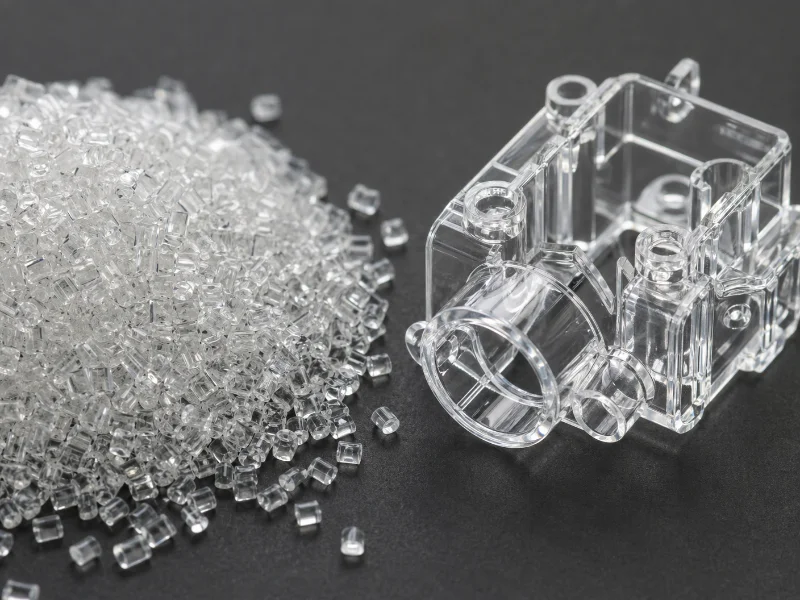
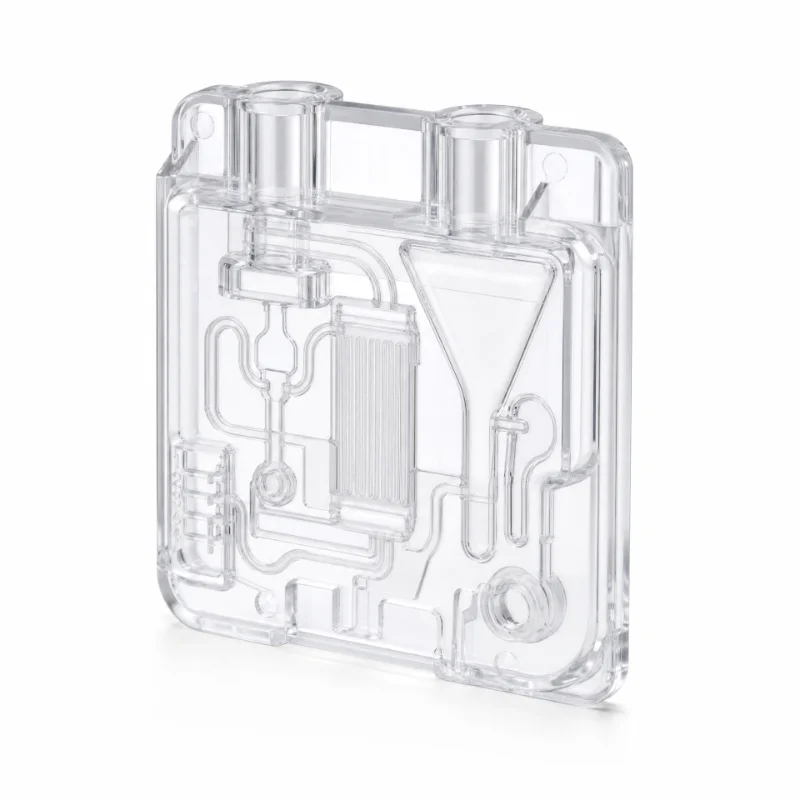
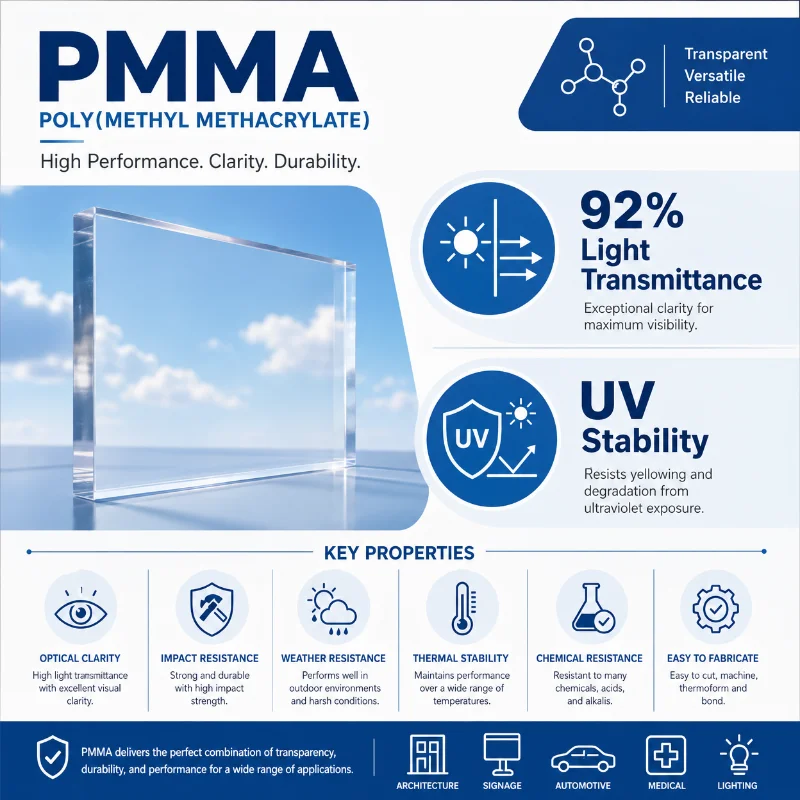
Polymethylmethacrylaat (PMMA), algemeen bekend als acryl of Optical Grade Acrylic, is een transparant thermoplast dat is ontworpen voor toepassingen waar helderheid, weerbestendigheid en oppervlakteafwerking kritiek zijn. Voor uw project biedt PMMA een unieke combinatie van glasachtige transparantie en polymeerverwerkbaarheid. Met een lichtdoorlaatbaarheid tot 92% en een brekingsindex van 1,49 is het een van de helderste beschikbare kunststoffen—waardoor het ideaal is voor optische lenzen, lichtgeleiders en displaydeksels.
In tegenstelling tot amorfe polymeren die brede verwerkingsvensters tolereren, is PMMA zeer gevoelig voor thermische geschiedenis en vocht. De moleculaire structuur mist interne flexibiliteit, wat de reden is waarom het stijfheid en krasbestendigheid biedt—maar ook waarom het gevoelig is voor interne spanningen en broosheid.
Wat zijn de verschillende soorten en kwaliteiten van PMMA-materialen?
Alle PMMA-materialen presteren niet hetzelfde, en het selecteren van de juiste kwaliteit is cruciaal om je optische, mechanische en omgevingsvereisten te behalen. PMMA wordt breedweg onderverdeeld in algemene, optische, impact-gemodificeerde en UV-gestabiliseerde varianten.
Voor uw op maat gemaakte PMMA-componenten hangt de keuze vaak af van een balans tussen helderheid en duurzaamheid. Als uw product bijvoorbeeld mechanische belasting moet weerstaan, kunnen slagvaste kwaliteiten worden overwogen – maar als optische precisie cruciaal is, is zuiver PMMA met strikte procescontrole de betere keuze.
Daarnaast kan PMMA worden geleverd in extrusie- of spuitgietkwaliteit. Spuitgiet-PMMA is geoptimaliseerd voor gecontroleerde smeltstroom en minimale degradatie, wat zorgt voor consistente reproductie van hoogglanzende matrijs-oppervlakken.
1. Algemeen toepasbaar PMMA:
Geschikt voor niet-kritieke visuele componenten waar kostenefficiëntie een prioriteit is.
2. Optische kwaliteit PMMA:
Ontworpen voor hoog transparantie en minimale interne vervorming. Dit is essentieel voor je lenzen, lichtdiffusers of precisie displaycomponenten.
3. Impact-gemodificeerd PMMA:
Bevat elastomeer modificatoren om de taaiheid te verbeteren, hoewel ten koste van optische helderheid.
4. UV-bestendig PMMA:
Ontworpen voor buitenapplicaties, met behoud van transparantie en kleurstabiliteit over lange blootstellingsperioden.
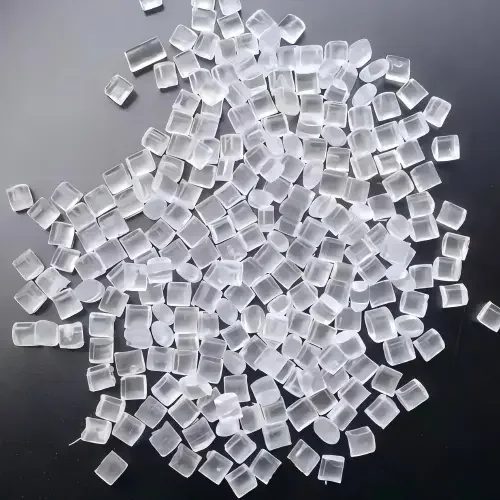
Wat zijn de Kernkarakteristieken en Fysieke Eigenschappen van Acryl?
De kernkenmerken van PMMA bepalen zowel de voordelen als de verwerkingsuitdagingen. Voor uw toepassing beïnvloeden deze eigenschappen direct ontwerpbeslissingen, gereedschapseisen en spuitgietstrategieën.
- Specifieke Dichtheid: ~1.18 g/cm³ (lichter dan glas, waardoor het totale productgewicht vermindert)
- Lichtdoorlaatbaarheid: Tot 92%, hoger dan de meeste transparante kunststoffen
- Brekingsindex: 1.49, waardoor efficiënte lichttransmissie en controle mogelijk zijn
- Waterabsorptie: ~0.3–0.4%, wat een matige hygroscopische eigenschap aangeeft
Deze hygroscopische aard is bijzonder belangrijk. Als uw materiaal niet goed gedroogd is (meestal 80–90°C gedurende 3–4 uur), zal vocht tijdens het spuitgieten verdampen, wat leidt tot zilverstrepen, luchtbellen en afbraak van moleculaire ketens. Deze defecten zijn vooral zichtbaar in transparante onderdelen en kunnen zowel de esthetiek als de structurele integriteit aantasten.
PMMA vertoont ook excellente UV-stabiliteit en weerbestendigheid. In tegenstelling tot veel plastics, verkleurt het niet gemakkelijk, waardoor het ideaal is voor buitenoptische applicaties. Echter, de relatief lage warmtevervormings-temperatuur betekent dat je ontwerp rekening moet houden met thermische blootstelling tijdens gebruik.
Belangrijke Technische Eigenschappen van PMMA
Bij het ontwerpen van uw component is het begrijpen van de technische prestaties van PMMA essentieel om het gedrag onder belasting, temperatuur en omgevingsomstandigheden te voorspellen.
| Fysische eigenschappen | Metrisch | Engels |
|---|---|---|
| Dichtheid | 0,700 - 1,30 g/cc | 0.0253 - 0.0470 lb/in³ |
| Waterabsorptie | 0.300 - 2.00 % | 0.300 - 2.00 % |
| Vochtabsorptie bij evenwicht | 0.300 - 0.600 % | 0.300 - 0.600 % |
| Waterabsorptie bij verzadiging | 0.300 - 2.20 % | 0.300 - 2.20 % |
| Lineaire vormkrimp | 0.00200 - 0.00800 cm/cm | 0,00200 - 0,00800 in/in |
| Smeltstroom | 0,112 - 40,0 g/10 min | 0,112 - 40,0 g/10 min |
| Elektrische weerstand | 1.00e+10 - 1.00e+17 ohm-cm | 1.00e+10 - 1.00e+17 ohm-cm |
| Oppervlakteweerstand | 2,60e+9 - 1,00e+16 ohm | 2,60e+9 - 1,00e+16 ohm |
| Diëlektrische constante | 2.44 - 4.00 | 2.44 - 4.00 |
| Diëlektrische sterkte | 15,0 - 60,0 kV/mm | 380 - 1520 kV/in |
| Dissipatiefactor | 0.0200 - 0.190 | 0.0200 - 0.190 |
| Vergelijkende index | 600 V | 600 V |
| Specifieke Warmtecapaciteit | 1.46 - 1.50 J/g-°C | 0,349 - 0,359 BTU/lb-°F |
| Thermische geleidbaarheid | 0,187 - 0,216 W/m-K | 1,30 - 1,50 BTU-in/u-ft²-°F |
| Maximale bedrijfstemperatuur, lucht | 50,0 - 100 °C | 122 - 212 °F |
| Afbuigtemperatuur bij 0,46 MPa (66 psi) | 73,0 - 109 °C | 163 - 228 °F |
| Doorbuigingstemperatuur bij 1,8 MPa (264 psi) | 51,7 - 106 °C | 125 - 223 °F |
| Vicat Verzachtingspunt | 58,3 - 119 °C | 137 - 246 °F |
| Temperatuur warmtevervorming | 85,0 - 105 °C | 185 - 221 °F |
| Glastransitietemperatuur, Tg | 102 - 122 °C | 216 - 252 °F |
| Brandbaarheid, UL94 | HB | HB |
| Zuurstofindex | 18.0 % | 18.0 % |
| Gloeidraadtest | 650 - 700 °C | 1200 - 1290 °F |
| Verwerkingstemperatuur | 177 - 265 °C | 350 - 509 °F |
| Temperatuur sproeier | 193 - 260 °C | 380 - 500 °F |
| Temperatuur adapter | 230 - 240 °C | 446 - 464 °F |
| Matrijstemperatuur | 220 - 260 °C | 428 - 500 °F |
| Smelttemperatuur | 150 - 260 °C | 302 - 500 °F |
| Schimmel Temperatuur | 30,0 - 107 °C | 86,0 - 225 °F |
| Temperatuur van de rol | 80,0 - 100 °C | 176 - 212 °F |
| Droogtemperatuur | 60,0 - 109 °C | 140 - 228 °F |
| Injectiedruk | 58,8 - 147 MPa | 8530 - 21300 psi |
| Uitgloeitemperatuur | 60,0 - 90,0 °C | 140 - 194 °F |
De stijfheid van PMMA zorgt voor uitstekende dimensionale stabiliteit, wat gunstig is voor precisiecomponenten. Dit betekent echter ook dat het een lage slagvastheid heeft, waardoor het gevoeliger is voor scheuren onder plotselinge belasting.
Voor uw optische toepassingen is het beheersen van interne spanning cruciaal. Onjuiste spuitgietparameters—zoals overmatige inspuitsnelheid of lage matrijstemperatuur—kunnen restspanning veroorzaken, wat later tot craquelé of microscheurtjes leidt.
Voor optimale resultaten dient tijdens de ontwerpfase geavanceerde Mold Flow-analyse te worden gebruikt. Hiermee kunt u het vloeigedrag voorspellen, de tapplaatsen optimaliseren en laslijnen of luchtinsluitingen minimaliseren.
Wat zijn de belangrijkste voordelen en beperkingen van acryl spuitgieten?
Voor uw productiestrategie biedt PMMA-spuitgieten duidelijke voordelen, maar vereist ook zorgvuldige behandeling.
Voordelen
Uitzonderlijke optische helderheid
Lichtdoorlaatbaarheid tot 92%, ideaal voor lenzen en hoogwaardige displaytoepassingen.
Uitstekende oppervlakte-replicatie
Maakt spiegelgladde afwerkingen rechtstreeks uit de matrijs mogelijk, wat de nabewerkingskosten vermindert.
Sterke UV- en weersbestendigheid
Superieure buitenstabiliteit in vergelijking met PC, bestand tegen vergeling in de loop der tijd.
Goede dimensionale stabiliteit
Lage krimpsnelheid zorgt voor precisie-onderdelen met strakke toleranties.
Beperkingen
Broosheid & lage slagvastheid
Gevoeliger voor breuk dan PC; niet aanbevolen voor toepassingen met hoge slagvastheid.
Vochtgevoeligheid
Vereist grondige voorafdroging; vocht kan zilverachtige strepen en bubbels veroorzaken.
Hoog risico op interne spanning
Onjuiste verwerking kan leiden tot spanningsscheuren, wat zorgvuldige parametercontrole vereist.
Strikte verwerkingsvereisten
Vereist hoogwaardige gereedschappen en nauwkeurige procescontrole om optimale resultaten te bereiken.
PMMA vs. Polycarbonaat (PC): Welk Materiaal Moet Je Kiezen?
De keuze tussen PMMA en polycarbonaat (PC) hangt af van uw prestatieprioriteiten. Beide zijn transparante kunststoffen, maar ze dienen verschillende technische behoeften.
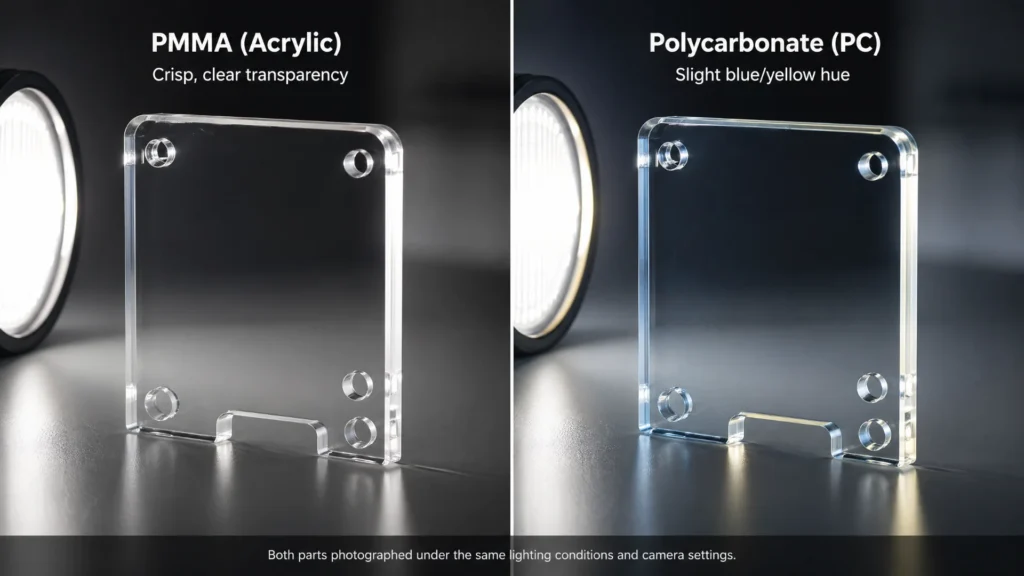
| Eigendom | PMMA (Acryl) | PC (polycarbonaat) |
|---|---|---|
| Lichtdoorlatendheid | ~92% | ~88–90% |
| Schokbestendigheid | Laag | Zeer hoog |
| Krasvastheid | Uitstekend | Matig |
| Kosten | Lager | Hoger |
| UV-bestendigheid | Uitstekend | Vereist coating |
Als uw project prioriteit geeft aan optische helderheid, oppervlakteafwerking en UV-stabiliteit, is PMMA de betere keuze.
Als uw toepassing mechanische belasting of impact met zich meebrengt (bijv. veiligheidsschermen), kan PC geschikter zijn.
Op maat gemaakte PMMA acryl spuitgieten
Leer hoe u op maat gemaakte PMMA acryl spuitgieten kunt optimaliseren. Verken belangrijke parameters, ontwerprichtlijnen, matrijzenstaalkeuzes en oplossingen voor vlekkeloze optische onderdelen.
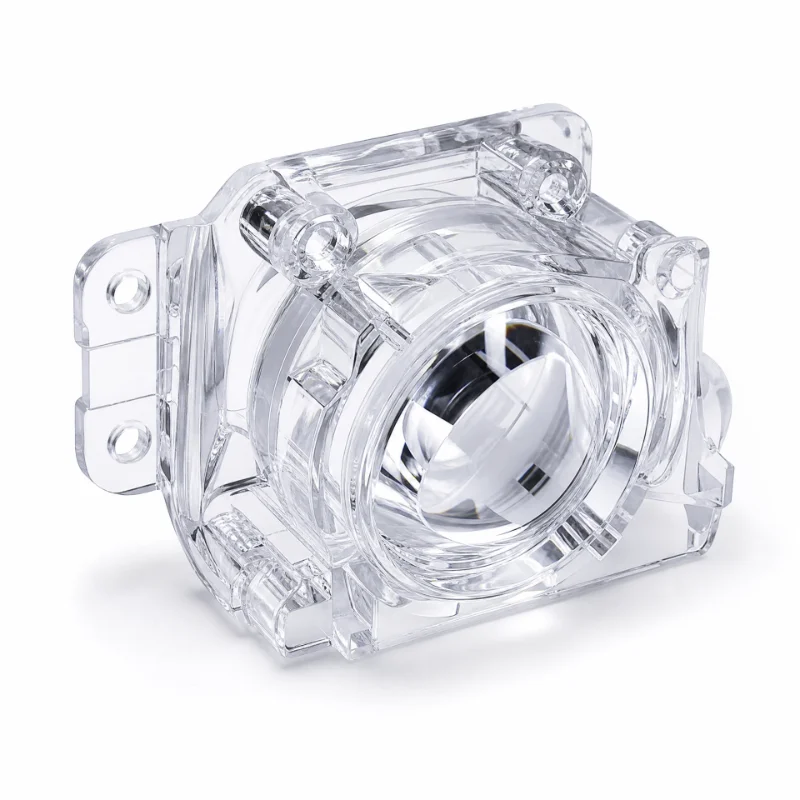
Kunnen PMMA (acryl) materialen worden gespoten?
Ja, PMMA kan worden geïnjecteerd—maar niet op dezelfde manier als bulkplastics. Voor uw project hangt succes af van nauwkeurige controle in elke fase.
Belangrijke procesoverwegingen zijn:
PMMA moet 3–4 uur bij 80–90°C worden gedroogd om vochtgerelateerde defecten te voorkomen.
Doorgaans gehandhaafd tussen 200–250°C. Oververhitting leidt tot degradatie en vergeling.
Meertraps-injectie is cruciaal: • Lage aanvangssnelheid om jetting te voorkomen • Middelmatige snelheid voor het vullen van de holte • Verlaagde snelheid aan het einde om overpakken te voorkomen
Hogere matrijstemperaturen verbeteren de oppervlaktekwaliteit en verminderen interne spanning.
Wat zijn de veelvoorkomende toepassingen van op maat gemaakte acryl spuitgieten?
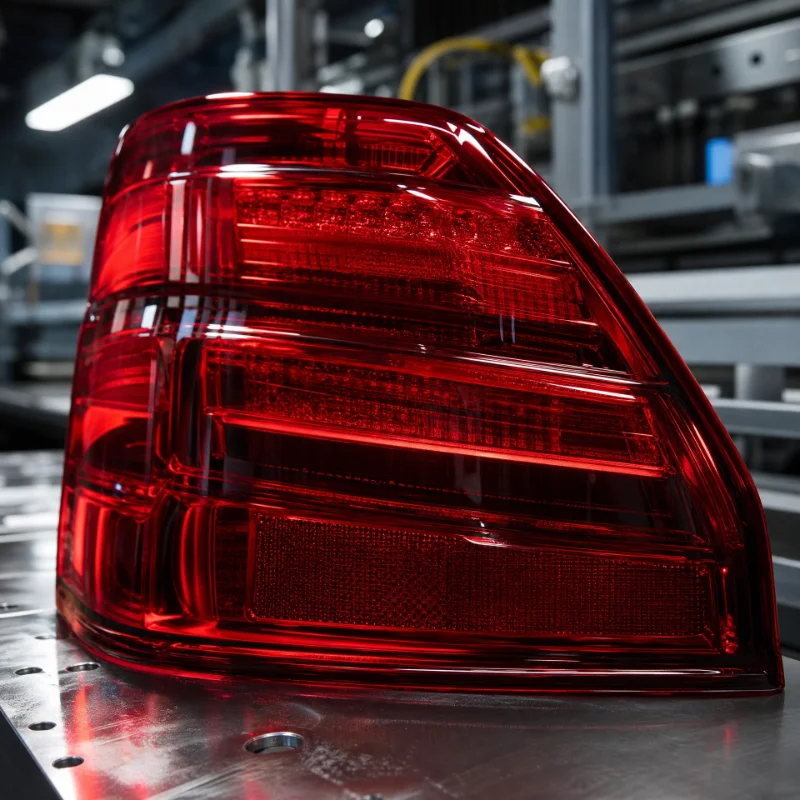
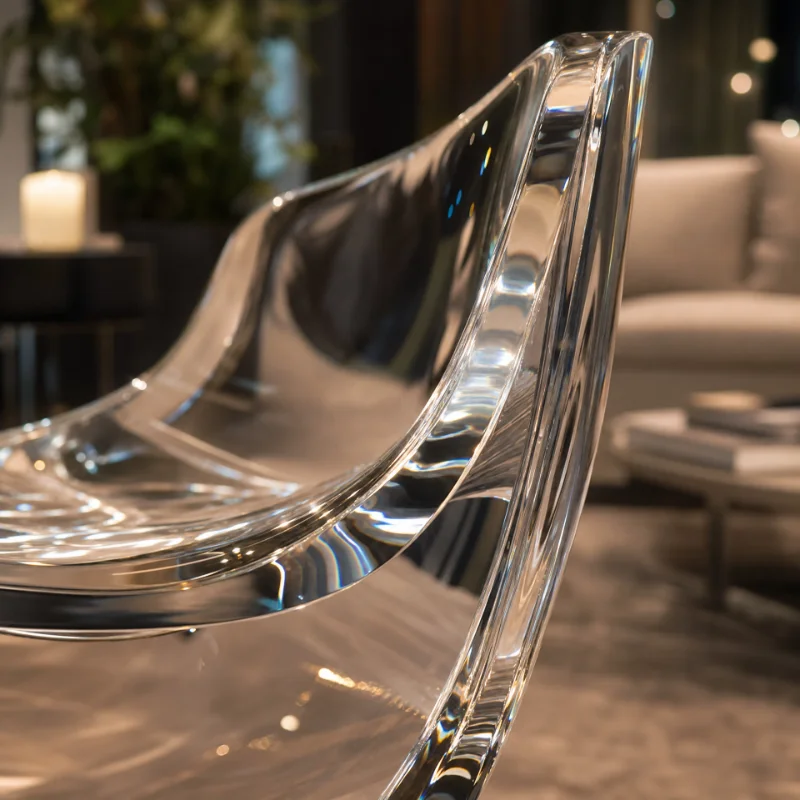
Custom PMMA-componenten worden vertrouwd in diverse industrieën waar optische helderheid, precisie en esthetiek niet onderhandelbaar zijn. Van complexe optische systemen tot strakke consumentenproducten, acryl levert prestaties waar het het meest nodig is.
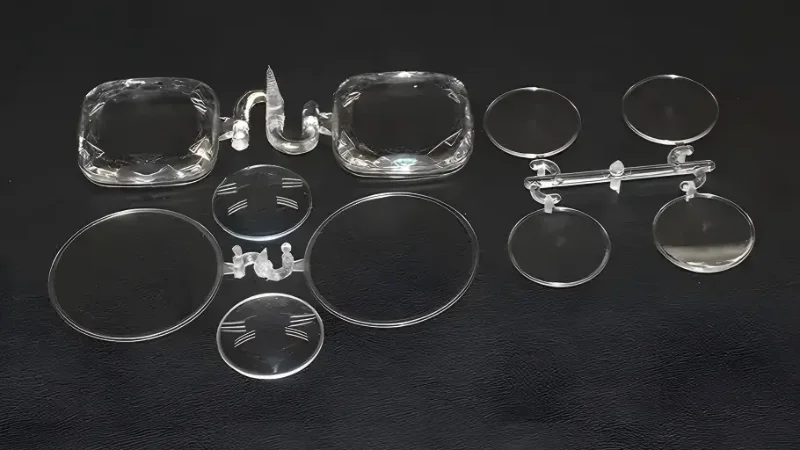
Optische Lenzen & Lichtgeleiders
Precisiecomponenten ontworpen voor efficiënte lichttransmissie en vlekkeloze beeldvorming in veeleisende optische systemen.
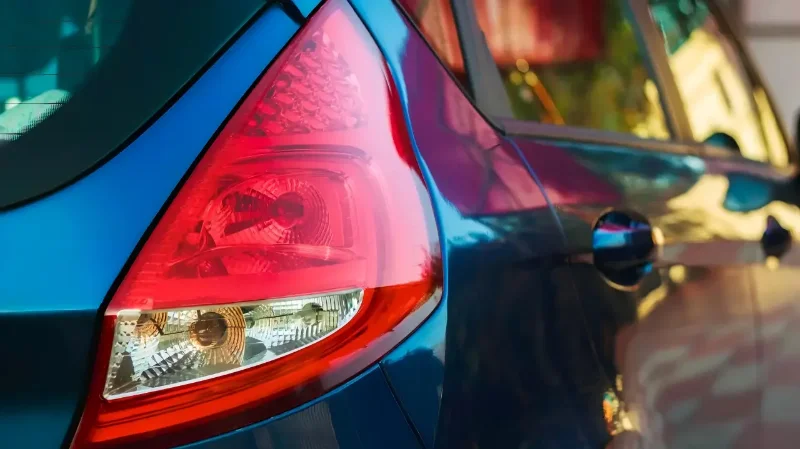
Automotiveverlichting
Duurzame, zeer heldere onderdelen voor achterlichten, koplamplenzen en interieurverlichting die bestand zijn tegen wegtrillingen en verwering.
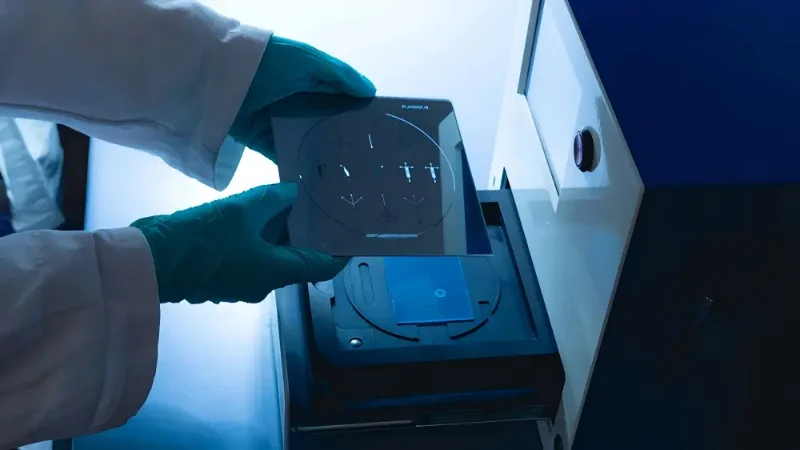
Behuizingen voor medische apparatuur
Steriliseerbare, transparante behuizingen die visuele bewaking van interne mechanismen en vloeistofniveaus mogelijk maken.
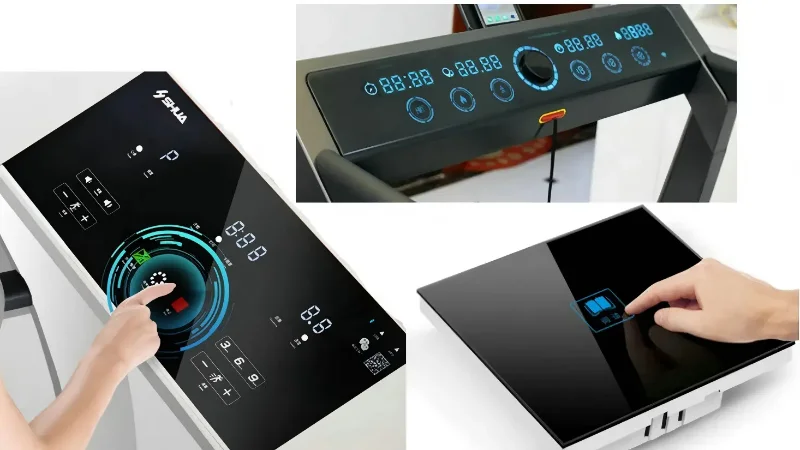
Consumentenelektronica-displays
Krasbestendige schermen, aanraakpanelen en indicatoren met hoogglansafwerkingen voor premium productesthetiek.
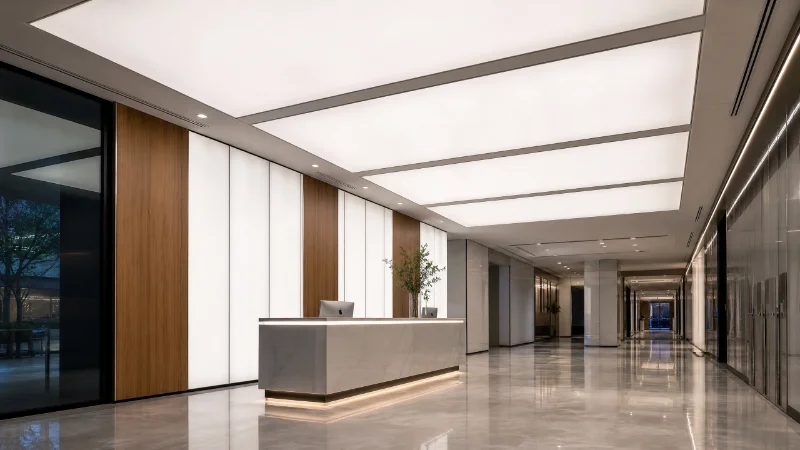
Architecturale Verlichting & Panelen
Weerbestendige, diffuse verlichtingskappen en decoratieve beglazing die zorgen voor een uniforme lichtverdeling en structurele stabiliteit.
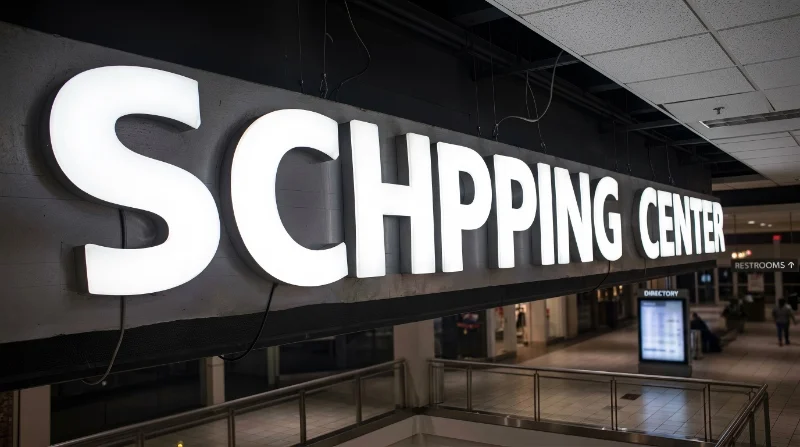
Retaildisplays & Signage
Opvallende point-of-purchase-displays en verlichte bewegwijzering die profiteren van de superieure lichtdiffusie en levendige kleurmogelijkheden van PMMA.
Essentiële ontwerprichtlijnen voor PMMA spuitgietonderdelen
Ontwerpen voor PMMA (acryl) vereist zorgvuldige aandacht vanwege de stijve en brosse aard in vergelijking met standaard technische kunststoffen. Een goed ontwerp minimaliseert niet alleen het risico op scheuren en optische defecten, maar verbetert ook aanzienlijk de vervaardigbaarheid van uw maatwerkcomponenten.
Het handhaven van een consistente dikte voorkomt interne spanning, vervorming en krimpvlekken, wat vooral kritisch is voor transparante PMMA-onderdelen.
Scherpe binnenhoeken zijn primaire faalpunten in PMMA. Het gebruik van royale afrondingen en stralen elimineert spanningsconcentratie en verbetert de structurele integriteit.
Een minimale trekhoek van 1–2° is essentieel. De lage elasticiteit van PMMA maakt het gevoelig voor krassen of barsten tijdens het uitwerpen als de trekhoek onvoldoende is.
Fan-, tab- of randinlaatkanalen worden aanbevolen om schuifspanning en stromingsmarkeringen te verminderen, zodat het gesmolten acryl de holte gelijkmatig vult zonder spuitdefecten.
Overmatige dikte leidt tot ongelijke koeling, waardoor het risico op interne holtes, bubbels en zinkmarkeringen toeneemt, wat de optische kwaliteit van het onderdeel ernstig aantast.
Hoe het juiste matrijsstaal te selecteren (S136 vs. NAK80) voor spiegelglad PMMA?
Voor uw optische componenten heeft de selectie van matrijsstaal een directe invloed op de oppervlaktekwaliteit en de levensduur van het gereedschap.
S136 (Gehard tot 48–52 HRC)
NAK80 (Voorgehard ~40 HRC)
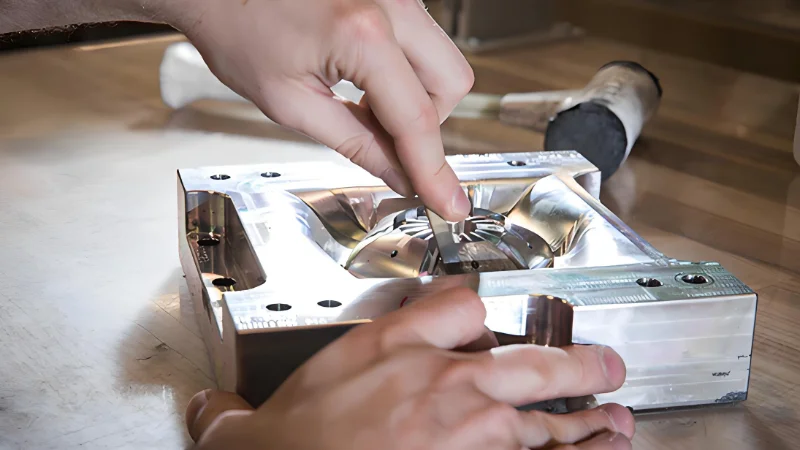
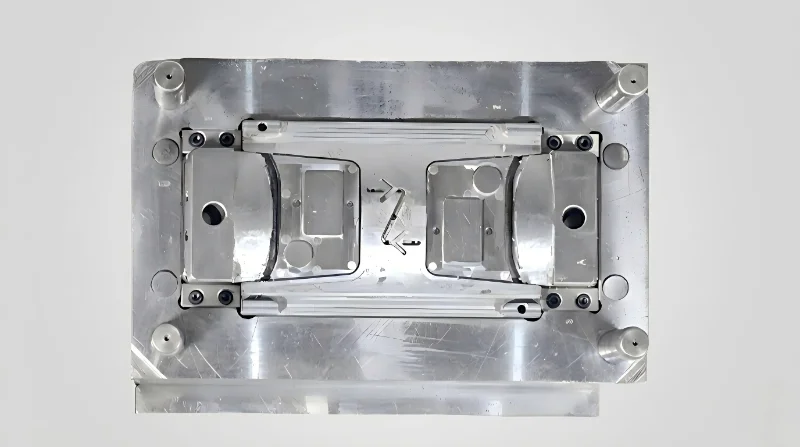
Als uw project spiegelglanzende optische onderdelen vereist, is S136 meestal de voorkeurskeuze. De hardheid en stabiliteit zorgen voor een consistente oppervlakteafwerking tijdens lange productieperiodes.
Veelvoorkomende problemen bij acryl spuitgietvorming en oplossingen
De uitzonderlijke transparantie van PMMA betekent dat zelfs het kleinste verwerkingsdefect onmiddellijk zichtbaar wordt. Het identificeren van de onderliggende oorzaken van deze problemen is cruciaal voor het behoud van de optische integriteit van uw op maat gemaakte componenten.
Oorzaak: Vochtverontreiniging in de hars.
Oplossing: Implementeer strenge materiaaldroogprotocollen en zorg voor afgesloten materiaalverwerking gedurende het hele proces.
Oorzaak: Ingesloten lucht of overmatige wanddikte die ongelijkmatige afkoeling veroorzaakt.
Oplossing: Optimaliseer de malontluchting en herontwerp een uniforme wanddikte om gasinsluitingen te voorkomen.
Oorzaak: Hoge inwendige spanning gecombineerd met blootstelling aan omgevingsinvloeden.
Oplossing: Optimaliseer het ingangsontwerp, verminder de injectiespanning en pas nagloeien na het spuitgieten (80–90°C) toe om restspanning te ontlasten.
Oorzaak: Hoge aanvankelijke injectiesnelheid waardoor gesmolten plastic door de holte schiet.
Oplossing: Gebruik meertraps injectiesnelheidsregeling—begin langzaam om jetting te voorkomen en verhoog vervolgens voor het vullen van de holte.
Nabewerkingsopties voor op maat gemaakte acryl onderdelen
Om aan uw eindproducteisen te voldoen, speelt nabewerking een cruciale rol bij het verbeteren van zowel het optische uiterlijk als de structurele prestaties van PMMA-componenten.
Maakt de randen van gesneden acryl glad en helder, herstelt de optische transparantie en creëert een naadloze, glasachtige afwerking voor transparante onderdelen.
Een zorgvuldig gecontroleerde verwarmings- en koelcyclus die de interne spanning aanzienlijk vermindert, waardoor vertraagd craquelé of barsten in veeleisende omgevingen wordt voorkomen.
Gespecialiseerde toepassingen zoals harde coatings voor krasbestendigheid, of anti-reflecterende coatings om de lichttransmissie in optische systemen te optimaliseren.
Maakt hoogwaardige detailafwerking, complexe geometrieën en aangepaste markeringen mogelijk zonder mechanische spanning op het gegoten onderdeel te veroorzaken.
Voor high-end optische toepassingen zorgt het combineren van precisiespuitgieten met geavanceerde oppervlakteafwerkingstechnieken ervoor dat uw PMMA-onderdelen voldoen aan de strengste functionele en esthetische verwachtingen.
Veelgestelde vragen (FAQ's)
Waarom is vooraf drogen zo cruciaal voor PMMA (acryl) spuitgieten?
PMMA is zeer hygroscopisch. Indien niet gedroogd bij 80–90°C gedurende 3–4 uur voor het gieten, veroorzaakt ingesloten vocht zilverstrepen, bubbels en troebelheid, wat de optische helderheid van uw onderdelen ruïneert.
Welk matrijsstaal wordt aanbevolen voor PMMA-lenzen met hoge helderheid?
S136 roestvrij staal is de voorkeurskeuze voor optische PMMA-onderdelen. Wanneer het gehard is tot 48–52 HRC, kan het gepolijst worden tot een SPI A-1 diamantafwerking en biedt het uitstekende corrosieweerstand voor lange productieruns.
Wat zijn de belangrijkste ontwerpregels voor spuitgieten van acryl?
Om spanningsscheuren en vervorming te voorkomen, handhaaf een uniforme wanddikte, gebruik royale afrondingen en radii (vermijd scherpe hoeken), en voeg een minimale ontluikhoek van 1–2° toe om een soepele uitwerping zonder krassen te garanderen.
Hoe kan ik bubbels en holtes in mijn PMMA-onderdelen voorkomen?
Bubbels worden meestal veroorzaakt door opgesloten lucht of overmatige wanddikte. Oplossingen zijn onder meer het optimaliseren van matrijsontluchting, zorgen voor een uniform wandontwerp om krimp te voorkomen, en het gebruik van een meerfasige inspuitsnelheid om lucht goed te laten ontsnappen.
Wat veroorzaakt craquelé (spanningsscheuren) in PMMA en hoe wordt dit opgelost?
Craquelé wordt veroorzaakt door resterende interne spanning in combinatie met blootstelling aan de omgeving (zoals chemicaliën of temperatuurveranderingen). Het kan worden opgelost door de poortontwerp te optimaliseren, de inspuitdruk te verlagen en na het gieten een uitgloeiproces bij 80–90°C toe te passen om spanning te verminderen.
Wat is de aanbevolen smelttemperatuur voor het gieten van PMMA?
PMMA moet doorgaans worden verwerkt tussen 200–250°C. Het overschrijden van dit bereik kan leiden tot materiaalafbraak en vergeling, terwijl temperaturen die te laag zijn slechte vloeibaarheid en onvolledige vulling veroorzaken.
Welke nabewerkingsopties zijn beschikbaar voor acrylonderdelen?
Veelvoorkomende nabewerkingen omvatten vlampolijsten voor helderheid van de randen, uitgloeien om spanning te verlichten, aanbrengen van anti-kras- of anti-reflecterende coatings, en lasersnijden/graveren voor precisiedetailing.
Is PMMA geschikt voor buiten- of UV-blootgestelde toepassingen?
Ja. In tegenstelling tot veel andere transparante kunststoffen biedt PMMA uitstekende UV-stabiliteit en weersbestendigheid. Het behoudt zijn optische helderheid en verkleurt niet gemakkelijk in de loop van de tijd, waardoor het ideaal is voor autoverlichting en architectonische panelen.