Was ist Polymethylmethacrylat (PMMA) oder Acryl?
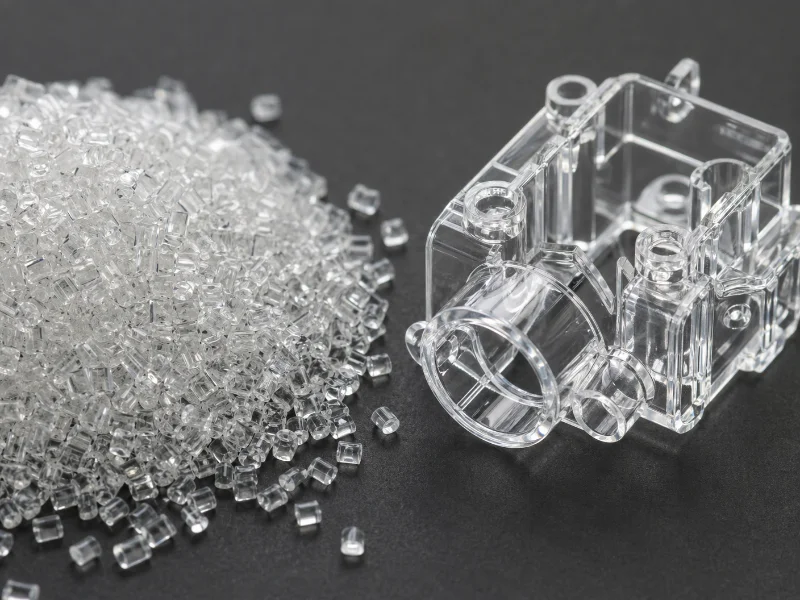
Polymethylmethacrylat (PMMA), allgemein als Acryl oder optisches Acryl bekannt, ist ein transparenter Thermoplast, der für Anwendungen entwickelt wurde, bei denen Klarheit, Witterungsbeständigkeit und Oberflächengüte entscheidend sind. Für Ihr Projekt bietet PMMA eine einzigartige Kombination aus glasähnlicher Transparenz und Polymerverarbeitbarkeit. Mit einer Lichtdurchlässigkeit von bis zu 92 % und einem Brechungsindex von 1,49 ist es einer der klarsten verfügbaren Kunststoffe – ideal für optische Linsen, Lichtleiter und Displayabdeckungen.
Im Gegensatz zu amorphen Polymeren, die breite Verarbeitungsfenster tolerieren, ist PMMA hochempfindlich gegenüber thermischer Vorgeschichte und Feuchtigkeit. Seine Molekularstruktur weist keine innere Flexibilität auf, weshalb es Steifigkeit und Kratzfestigkeit bietet – aber auch warum es anfällig für innere Spannungen und Sprödigkeit ist.
Was sind die verschiedenen Arten und Qualitäten von PMMA-Materialien?
Nicht alle PMMA-Materialien verhalten sich gleich, und die Auswahl des richtigen Typs ist entscheidend, um Ihre optischen, mechanischen und umweltbezogenen Anforderungen zu erfüllen. PMMA wird grob in Standard-, Optik-, schlagzähmodifizierte und UV-stabilisierte Varianten unterteilt.
Für Ihre maßgeschneiderten PMMA-Komponenten hängt die Auswahl oft von einem Gleichgewicht zwischen Klarheit und Haltbarkeit ab. Wenn Ihr Produkt beispielsweise mechanischen Belastungen standhalten muss, könnten schlagzähmodifizierte Typen in Betracht gezogen werden – ist jedoch optische Präzision entscheidend, ist reines PMMA mit strenger Prozesskontrolle die bessere Wahl.
Zusätzlich kann PMMA in Extrusions- oder Spritzgussqualität geliefert werden. Spritzguss-PMMA ist für kontrollierten Schmelzfluss und minimale Abbauprozesse optimiert, um eine gleichmäßige Reproduktion hochglanzpolierter Formoberflächen zu gewährleisten.
1. Standard-PMMA:
Geeignet für nicht-kritische visuelle Komponenten, bei denen Kosteneffizienz Priorität hat.
2. Optisches PMMA:
Entwickelt für hohe Klarheit und minimale interne Verzerrung. Dies ist entscheidend für Ihre Linsen, Lichtdiffusoren oder Präzisions-Displaykomponenten.
3. Schlagzähmodifiziertes PMMA:
Enthält elastomere Modifikatoren zur Verbesserung der Zähigkeit, allerdings auf Kosten der optischen Klarheit.
4. UV-beständiges PMMA:
Entwickelt für Außenanwendungen, bewahrt Transparenz und Farbstabilität über lange Expositionszeiten.
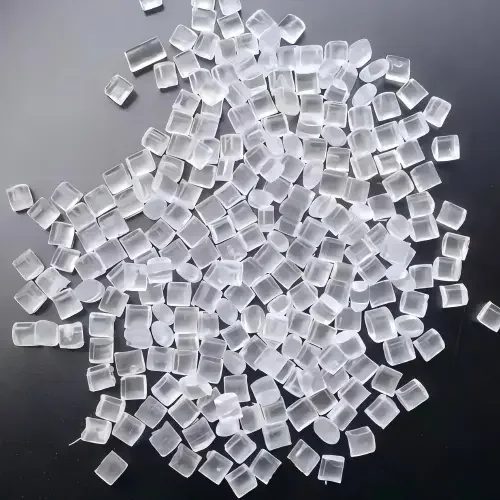
Was sind die Kernmerkmale und physikalischen Eigenschaften von Acryl?
Die Kerneigenschaften von PMMA definieren sowohl seine Vorteile als auch seine Verarbeitungsherausforderungen. Für Ihre Anwendung beeinflussen diese Eigenschaften direkt Designentscheidungen, Werkzeuggestaltung und Spritzgussstrategien.
- Spezifisches Gewicht: ~1,18 g/cm³ (leichter als Glas, reduziert das Gesamtproduktgewicht)
- Lichtdurchlässigkeit: Bis zu 92%, höher als bei den meisten transparenten Kunststoffen
- Brechungsindex: 1,49, ermöglicht effiziente Lichtübertragung und -steuerung
- Wasseraufnahme: ~0,3–0,4%, was auf ein moderates hygroskopisches Verhalten hinweist
Diese hygroskopische Eigenschaft ist besonders wichtig. Wenn das Material nicht ausreichend getrocknet wird (typischerweise 80–90°C für 3–4 Stunden), verdampft die Feuchtigkeit während des Spritzgussvorgangs, was zu Silberstreifen, Blasen und dem Abbau von Molekülketten führt. Diese Fehler sind besonders bei transparenten Teilen sichtbar und können sowohl die Ästhetik als auch die strukturelle Integrität beeinträchtigen.
PMMA weist zudem eine hervorragende UV-Beständigkeit und Witterungsbeständigkeit auf. Im Gegensatz zu vielen Kunststoffen vergilbt es nicht leicht, was es ideal für optische Außenanwendungen macht. Seine relativ niedrige Wärmeformbeständigkeitstemperatur bedeutet jedoch, dass Ihr Design thermische Belastungen während des Gebrauchs berücksichtigen muss.
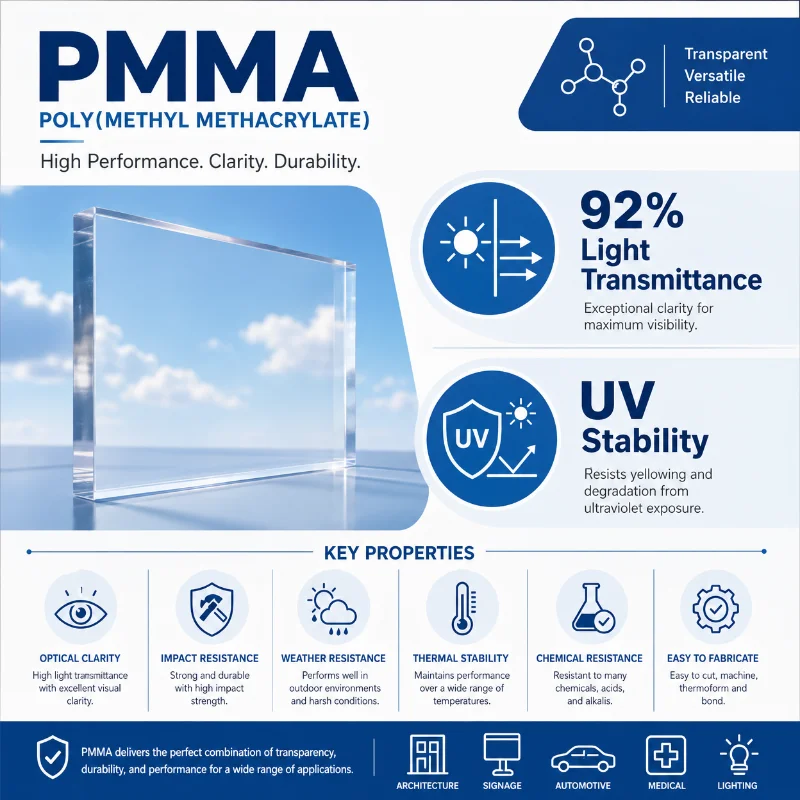
Wesentliche technische Eigenschaften von PMMA
Bei der Konstruktion Ihrer Komponente ist das Verständnis der technischen Leistungsfähigkeit von PMMA entscheidend, um das Verhalten unter Belastung, Temperatur und Umgebungsbedingungen vorherzusagen.
| Physikalische Eigenschaften | Metrisch | Englisch |
|---|---|---|
| Dichte | 0,700 - 1,30 g/cm³ | 0,0253 - 0,0470 lb/in³ |
| Wasserabsorption | 0.300 - 2.00 % | 0.300 - 2.00 % |
| Feuchtigkeitsabsorption im Gleichgewichtszustand | 0.300 - 0.600 % | 0.300 - 0.600 % |
| Wasserabsorption bei Sättigung | 0.300 - 2.20 % | 0.300 - 2.20 % |
| Lineare Schrumpfung | 0,00200 - 0,00800 cm/cm | 0,00200 - 0,00800 in/in |
| Schmelzfluss | 0,112 - 40,0 g/10 min | 0,112 - 40,0 g/10 min |
| Elektrischer spezifischer Widerstand | 1,00e+10 - 1,00e+17 Ohm-cm | 1,00e+10 - 1,00e+17 Ohm-cm |
| Oberflächenwiderstand | 2,60e+9 - 1,00e+16 Ohm | 2,60e+9 - 1,00e+16 Ohm |
| Dielektrizitätskonstante | 2.44 - 4.00 | 2.44 - 4.00 |
| Dielektrische Festigkeit | 15,0 - 60,0 kV/mm | 380 - 1520 kV/in |
| Dissipationsfaktor | 0.0200 - 0.190 | 0.0200 - 0.190 |
| Vergleichender Tracking-Index | 600 V | 600 V |
| Spezifische Wärmekapazität | 1,46 - 1,50 J/g-°C | 0,349 - 0,359 BTU/lb-°F |
| Wärmeleitfähigkeit | 0,187 - 0,216 W/m-K | 1,30 - 1,50 BTU-in/h-ft²-°F |
| Maximale Betriebstemperatur, Luft | 50,0 - 100 °C | 122 - 212 °F |
| Wärmeverformungstemperatur bei 0,46 MPa (66 psi) | 73,0 - 109 °C | 163 - 228 °F |
| Durchbiegungstemperatur bei 1,8 MPa (264 psi) | 51,7 - 106 °C | 125 - 223 °F |
| Vicat-Erweichungspunkt | 58,3 - 119 °C | 137 - 246 °F |
| Wärmeverformung Temperatur | 85,0 - 105 °C | 185 - 221 °F |
| Glasübergangstemperatur, Tg | 102 - 122 °C | 216 - 252 °F |
| Entflammbarkeit, UL94 | HB | HB |
| Sauerstoffindex | 18.0 % | 18.0 % |
| Glühdrahttest | 650 - 700 °C | 1200 - 1290 °F |
| Verarbeitungstemperatur | 177 - 265 °C | 350 - 509 °F |
| Düsentemperatur | 193 - 260 °C | 380 - 500 °F |
| Adapter Temperatur | 230 - 240 °C | 446 - 464 °F |
| Die Temperatur | 220 - 260 °C | 428 - 500 °F |
| Schmelztemperatur | 150 - 260 °C | 302 - 500 °F |
| Temperatur der Form | 30,0 - 107 °C | 86,0 - 225 °F |
| Temperatur der Rolle | 80,0 - 100 °C | 176 - 212 °F |
| Trocknungstemperatur | 60,0 - 109 °C | 140 - 228 °F |
| Einspritzdruck | 58,8 - 147 MPa | 8530 - 21300 psi |
| Temperatur für das Tempern | 60,0 - 90,0 °C | 140 - 194 °F |
Die Steifigkeit von PMMA bietet hervorragende Maßhaltigkeit, was für Präzisionsbauteile vorteilhaft ist. Allerdings bedeutet dies auch eine geringe Schlagzähigkeit, wodurch es bei plötzlicher Belastung eher zum Bruch neigt.
Für Ihre optischen Anwendungen ist die Kontrolle der inneren Spannung entscheidend. Ungeeignete Spritzguss-Parameter – wie übermäßige Einspritzgeschwindigkeit oder niedrige Werkzeugtemperatur – können Eigenspannungen erzeugen, die später als Craquelé oder Mikrorisse auftreten.
Um optimale Ergebnisse zu gewährleisten, sollte während der Designphase eine fortgeschrittene Mold-Flow-Analyse eingesetzt werden. Dies ermöglicht es, das Fließverhalten vorherzusagen, Angussstellen zu optimieren und Schweißnähte oder Lufteinschlüsse zu minimieren.
Was sind die Hauptvorteile und -einschränkungen der Acryl-Spritzgussverarbeitung?
Für Ihre Fertigungsstrategie bietet der PMMA-Spritzguss deutliche Vorteile – erfordert jedoch auch sorgfältige Handhabung.
Vorteile
Außergewöhnliche optische Klarheit
Lichtdurchlässigkeit bis zu 92%, ideal für Linsen und hochwertige Displayanwendungen.
Hervorragende Oberflächenreplikation
Ermöglicht spiegelglatte Oberflächen direkt aus der Form und reduziert Nachbearbeitungskosten.
Hohe UV- und Witterungsbeständigkeit
Überlegene Außenstabilität im Vergleich zu PC, resistent gegen Vergilbung über die Zeit.
Gute Formbeständigkeit
Geringe Schrumpfungsrate gewährleistet Präzisionsteile mit engen Toleranzen.
Einschränkungen
Sprödigkeit & geringe Schlagfestigkeit
Anfälliger für Risse als PC; nicht für Hochschlaganwendungen empfohlen.
Feuchtigkeitsempfindlichkeit
Erfordert gründliche Vortrocknung; Feuchtigkeit kann zu Silberstreifen und Blasen führen.
Hohe Risiko für interne Spannungen
Unsachgemäße Verarbeitung kann zu Spannungsrissen führen und erfordert eine sorgfältige Parameterkontrolle.
Strenge Prozessanforderungen
Erfordert hochwertige Werkzeuge und präzise Prozesskontrolle für optimale Ergebnisse.
PMMA vs. Polycarbonat (PC): Welches Material sollten Sie wählen?
Die Wahl zwischen PMMA und Polycarbonat (PC) hängt von Ihren Leistungsprioritäten ab. Beide sind transparente Kunststoffe, erfüllen jedoch unterschiedliche technische Anforderungen.
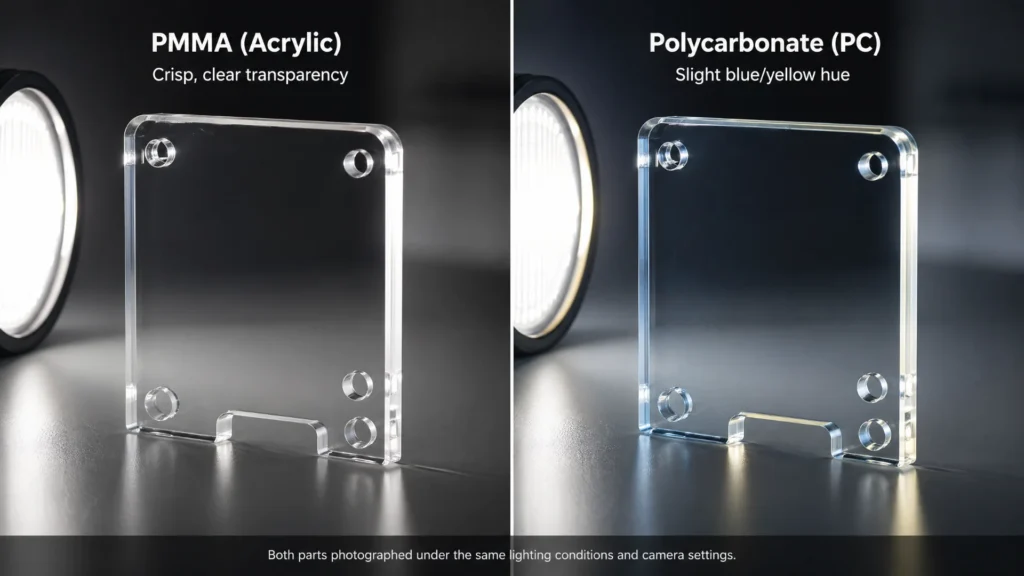
| Eigentum | PMMA (Acryl) | PC (Polycarbonat) |
|---|---|---|
| Lichtdurchlässigkeit | ~92% | ~88–90% |
| Schlagzähigkeit | Niedrig | Sehr hoch |
| Kratzfestigkeit | Ausgezeichnet | Mäßig |
| Kosten | Niedriger | Höher |
| UV-Beständigkeit | Ausgezeichnet | Erfordert Beschichtung |
Wenn Ihr Projekt optische Klarheit, Oberflächengüte und UV-Stabilität priorisiert, ist PMMA die bessere Wahl.
Wenn Ihre Anwendung mechanische Belastung oder Stöße beinhaltet (z. B. Schutzschilde), ist PC möglicherweise besser geeignet.
Maßgeschneidertes PMMA-Acryl-Spritzgießen
Erfahren Sie, wie Sie maßgeschneidertes PMMA-Acryl-Spritzgießen optimieren. Entdecken Sie Schlüsselparameter, Designrichtlinien, Werkzeugstahlauswahl und Lösungen für einwandfreie optische Teile.
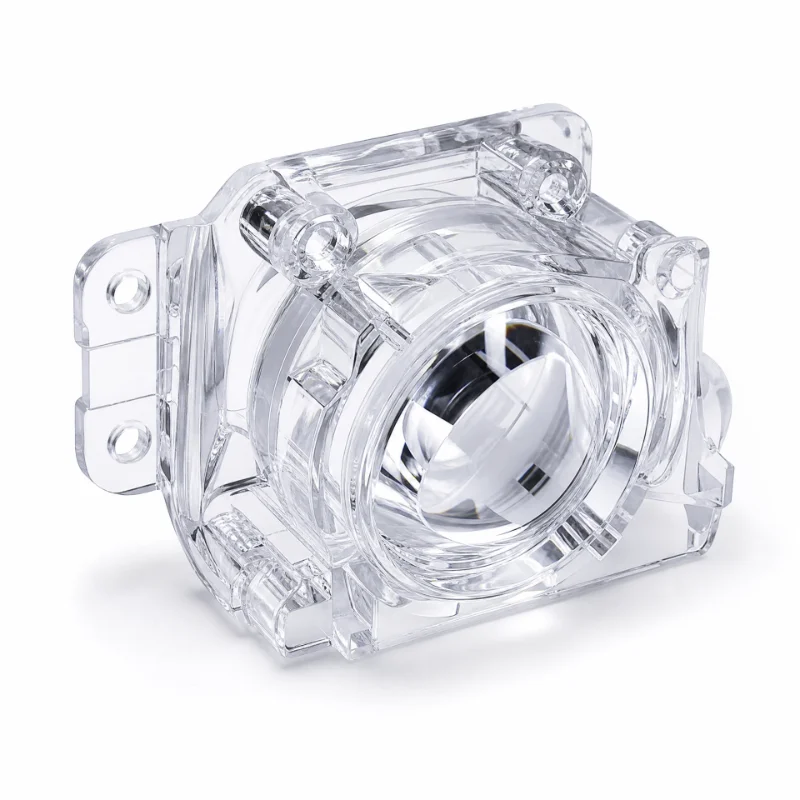
Können PMMA (Acryl) Materialien spritzgegossen werden?
Ja, PMMA kann spritzgegossen werden – aber nicht auf die gleiche Weise wie Standardkunststoffe. Für Ihr Projekt hängt der Erfolg von der Präzisionskontrolle in jeder Phase ab.
Wichtige Prozessüberlegungen umfassen:
PMMA muss 3–4 Stunden lang bei 80–90 °C getrocknet werden, um feuchtigkeitsbedingte Defekte zu vermeiden.
Wird in der Regel zwischen 200–250 °C gehalten. Überhitzung führt zu Abbau und Vergilbung.
Mehrstufiges Einspritzen ist entscheidend: • Langsame Anfangsgeschwindigkeit zur Vermeidung von Freistrahlbildung • Mittlere Geschwindigkeit für die Kavitätsfüllung • Reduzierte Geschwindigkeit am Ende zur Vermeidung von Überpackung
Höhere Formtemperaturen verbessern die Oberflächenqualität und reduzieren innere Spannungen.
Was sind die häufigen Anwendungen von individueller Acryl-Spritzgusstechnik?
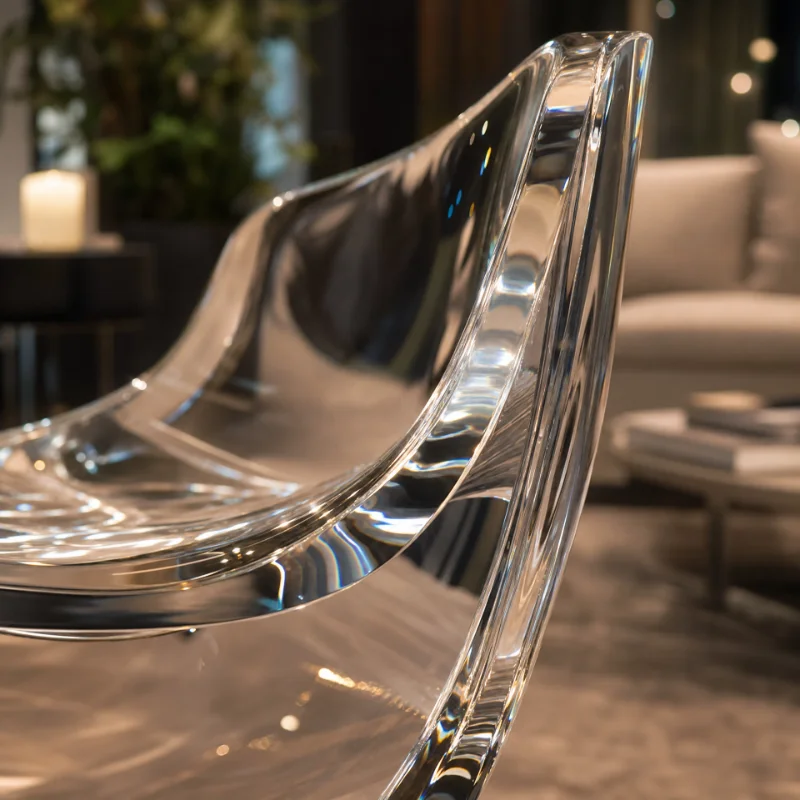
Maßgeschneiderte PMMA-Komponenten werden in verschiedenen Branchen eingesetzt, wo optische Klarheit, Präzision und Ästhetik unverzichtbar sind. Von komplexen optischen Systemen bis zu eleganten Konsumgütern liefert Acrylleistung, wo es am wichtigsten ist.
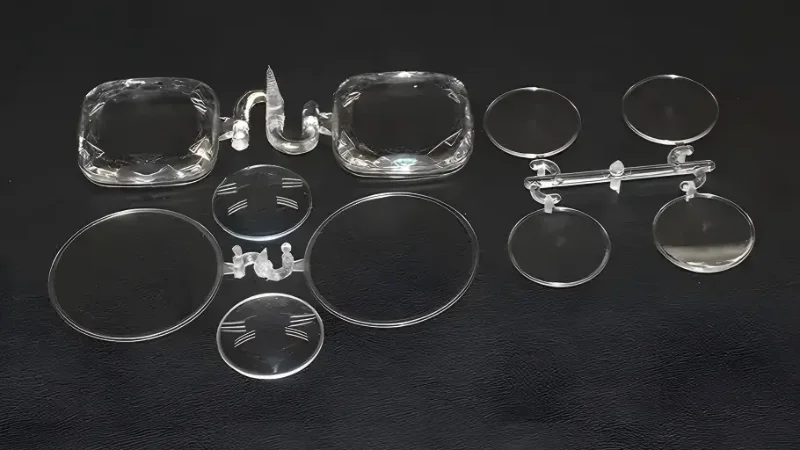
Optische Linsen & Lichtleiter
Präzisionskomponenten, konstruiert für eine effiziente Lichtübertragung und fehlerfreie Abbildung in anspruchsvollen optischen Systemen.

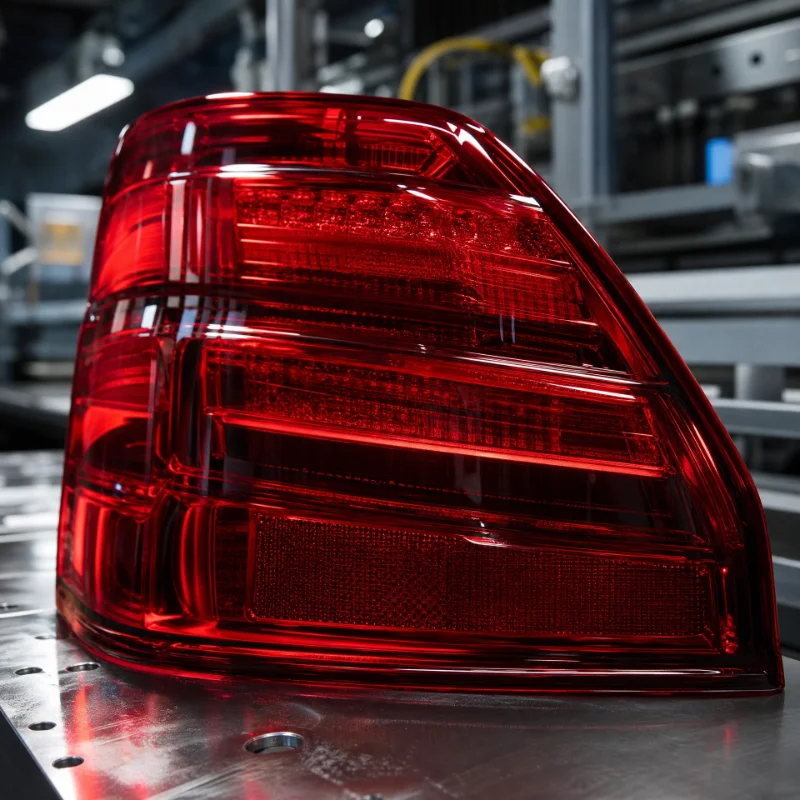
Automobilbeleuchtung
Langlebige, hochtransparente Teile für Rücklichter, Scheinwerferlinsen und Innenraumbeleuchtung, die Straßenvibrationen und Witterungseinflüssen standhalten.
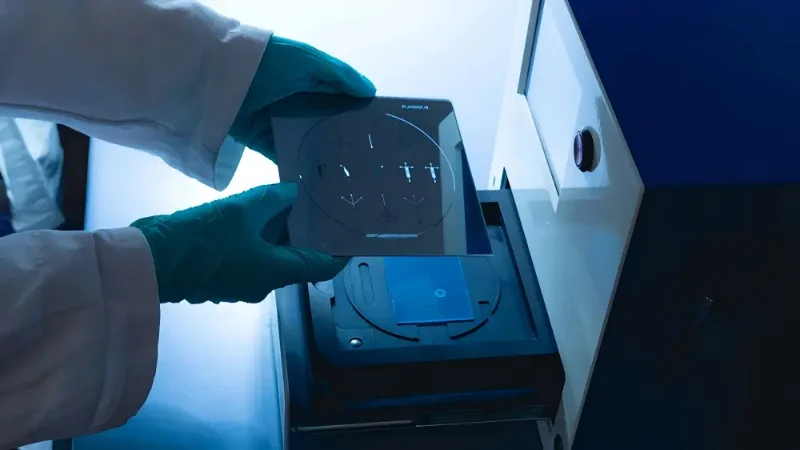
Gehäuse für medizinische Geräte
Sterilisierbare, transparente Gehäuse, die eine visuelle Überwachung interner Mechanismen und Flüssigkeitsstände ermöglichen.
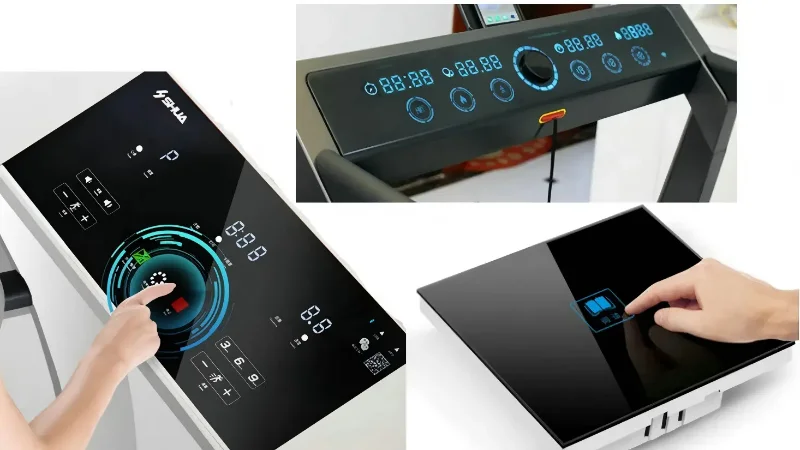
Displays für Unterhaltungselektronik
Kratzfeste Bildschirme, Touch-Panels und Anzeigen mit Hochglanzoberflächen für eine hochwertige Produktästhetik.
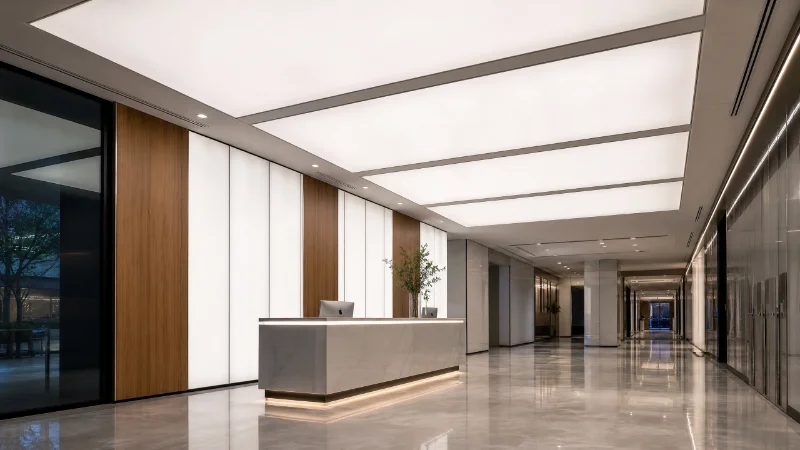
Architekturbeleuchtung & Paneele
Wetterbeständige, diffuse Beleuchtungsabdeckungen und dekorative Verglasungen, die eine gleichmäßige Lichtverteilung und strukturelle Stabilität bieten.
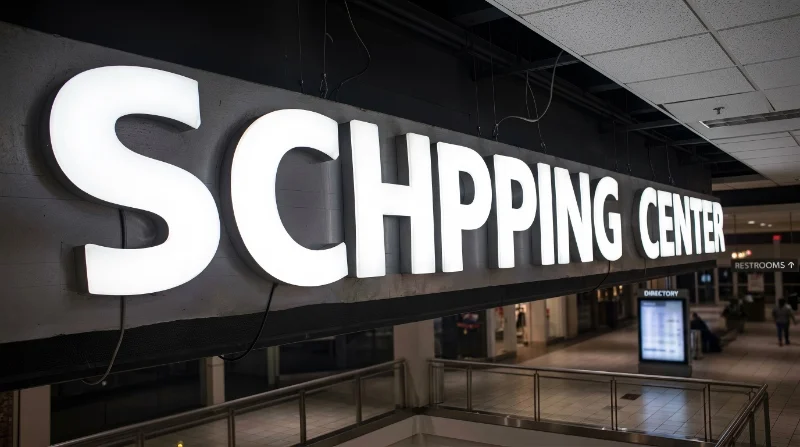
Einzelhandelsdisplays & Beschilderung
Auffällige Point-of-Purchase-Displays und beleuchtete Beschilderungen, die die überlegene Lichtstreuung und die lebendigen Farbmöglichkeiten von PMMA nutzen.
Essenzielle Designrichtlinien für PMMA-Spritzgussteile
Die Konstruktion für PMMA (Acryl) erfordert aufgrund seiner starren und spröden Natur im Vergleich zu Standardtechnikkunststoffen besondere Sorgfalt. Ein ordnungsgemäßes Design minimiert nicht nur das Risiko von Rissen und optischen Defekten, sondern verbessert auch erheblich die Herstellbarkeit Ihrer kundenspezifischen Komponenten.
Eine gleichmäßige Dicke verhindert innere Spannungen, Verzug und Schrumpfmarken, was besonders bei transparenten PMMA-Teilen entscheidend ist.
Scharfe innere Ecken sind primäre Schwachstellen bei PMMA. Großzügige Verrundungen und Radien beseitigen Spannungskonzentrationen und verbessern die strukturelle Integrität.
Ein Mindest-Entformungsschräge von 1–2° ist unerlässlich. Die geringe Elastizität von PMMA macht es beim Auswerfen anfällig für Kratzer oder Risse, wenn die Entformungsschräge unzureichend ist.
Fächer-, Steg- oder Kantenangüsse werden empfohlen, um Scherspannungen und Fließmarken zu reduzieren und sicherzustellen, dass das geschmolzene Acryl die Kavität gleichmäßig füllt, ohne Strahlungsfehler.
Eine übermäßige Materialstärke führt zu ungleichmäßiger Abkühlung und erhöht das Risiko von inneren Hohlräumen, Blasen und Einfallstellen, was die optische Qualität des Bauteils erheblich beeinträchtigt.
Wie wählt man den richtigen Formenstahl (S136 vs. NAK80) für spiegelglattes PMMA?
Für Ihre optischen Komponenten beeinflusst die Wahl des Stahlwerkzeugs direkt die Oberflächenqualität und die Lebensdauer des Werkzeugs.
S136 (auf 48–52 HRC gehärtet)
NAK80 (Vorhärtet ~40 HRC)
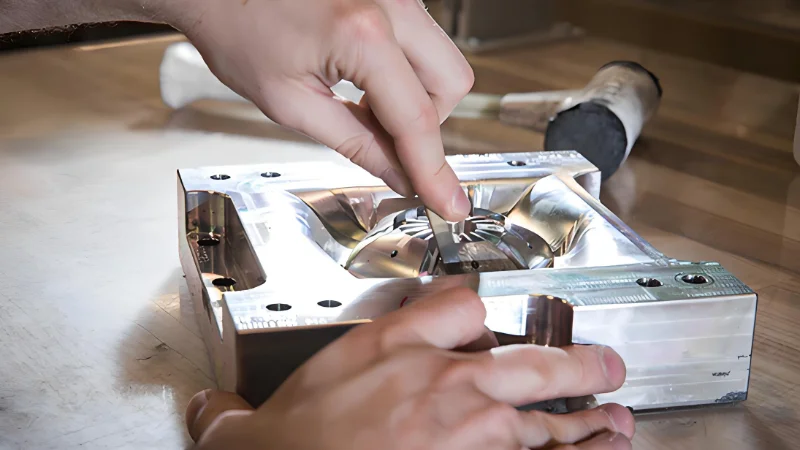
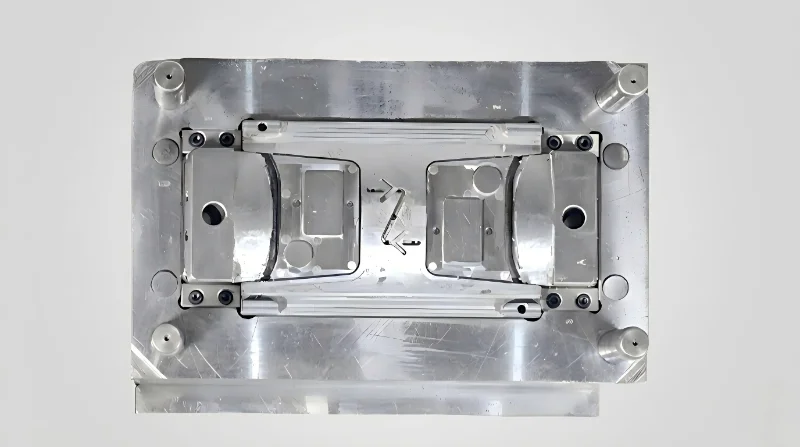
Wenn Ihr Projekt spiegelglatte optische Teile erfordert, ist S136 in der Regel die bevorzugte Wahl. Seine Härte und Stabilität gewährleisten eine konsistente Oberflächengüte über lange Produktionsläufe.
Häufige Probleme in Acryl-Spritzgusstechnik und Lösungen
Die außergewöhnliche Transparenz von PMMA bedeutet, dass selbst der geringste Verarbeitungsfehler sofort sichtbar wird. Die Ermittlung der Grundursachen dieser Probleme ist entscheidend für die Aufrechterhaltung der optischen Integrität Ihrer kundenspezifischen Bauteile.
Ursache: Feuchtigkeitskontamination im Harz.
Lösung: Implementieren Sie strenge Materialtrocknungsprotokolle und stellen Sie eine versiegelte Materialhandhabung während des gesamten Prozesses sicher.
Ursache: Eingeschlossene Luft oder übermäßige Wandstärke, die eine ungleichmäßige Abkühlung verursacht.
Lösung: Optimieren Sie die Formentlüftung und gestalten Sie die gleichmäßige Wandstärke neu, um Gaseinschlüsse zu vermeiden.
Ursache: Hohe innere Spannungen in Kombination mit Umwelteinwirkungen.
Lösung: Optimieren Sie das Anschnittdesign, reduzieren Sie den Einspritzstress und wenden Sie ein Tempern nach dem Formen (80–90 °C) an, um Eigenspannungen abzubauen.
Ursache: Hohe anfängliche Einspritzgeschwindigkeit, wodurch geschmolzener Kunststoff durch die Kavität schießt.
Lösung: Nutzen Sie eine mehrstufige Einspritzgeschwindigkeitssteuerung – beginnen Sie langsam, um Freistrahlbildung zu verhindern, und erhöhen Sie dann für die Kavitätsfüllung.
Nachbearbeitungsoptionen für kundenspezifische Acrylteile
Um Ihren Endproduktanforderungen zu entsprechen, spielt die Nachbearbeitung eine entscheidende Rolle bei der Verbesserung sowohl des optischen Erscheinungsbilds als auch der strukturellen Leistung von PMMA-Komponenten.
Glättet und klärt die Kanten von geschnittenem Acrylglas, stellt die optische Transparenz wieder her und erzeugt eine nahtlose, glasähnliche Oberfläche für transparente Teile.
Ein sorgfältig kontrollierter Heiz- und Kühlzyklus, der die innere Spannung erheblich reduziert und verzögertes Craze oder Rissbildung in anspruchsvollen Umgebungen verhindert.
Spezialanwendungen wie Hartbeschichtungen für Kratzfestigkeit oder Antireflexbeschichtungen zur Optimierung der Lichtdurchlässigkeit in optischen Systemen.
Ermöglicht hochpräzise Details, komplexe Geometrien und individuelle Markierungen, ohne mechanische Spannung im geformten Bauteil zu erzeugen.
Für hochwertige optische Anwendungen stellt die Kombination von Präzisionsspritzguss mit fortschrittlichen Oberflächenveredelungstechniken sicher, dass Ihre PMMA-Teile den strengsten funktionalen und ästhetischen Erwartungen entsprechen.
Häufig gestellte Fragen (FAQs)
Warum ist das Vortrocknen für die PMMA (Acrylglas)-Spritzgussverarbeitung so entscheidend?
PMMA ist stark hygroskopisch. Wenn es nicht vor dem Formen bei 80–90°C für 3–4 Stunden getrocknet wird, verursacht eingeschlossene Feuchtigkeit Silberstreifen, Blasen und Trübungen, wodurch die optische Klarheit Ihrer Teile zerstört wird.
Welcher Formenstahl wird für hochklare PMMA-Linsen empfohlen?
S136 Edelstahl ist die bevorzugte Wahl für optische PMMA-Teile. Auf 48–52 HRC gehärtet, kann er auf einen SPI A-1 Diamantglanz poliert werden und bietet hervorragende Korrosionsbeständigkeit für lange Produktionsläufe.
Was sind die wichtigsten Designregeln für den Acrylglas-Spritzguss?
Um Spannungsrisse und Verzug zu vermeiden, halten Sie eine gleichmäßige Wandstärke ein, verwenden Sie großzügige Ausrundungen und Radien (vermeiden Sie scharfe Ecken) und integrieren Sie einen Mindestschrägungswinkel von 1–2°, um ein sanftes Auswerfen ohne Kratzer zu gewährleisten.
Wie kann ich Blasen und Lunker in meinen PMMA-Teilen verhindern?
Blasen werden typischerweise durch eingeschlossene Luft oder übermäßige Wandstärke verursacht. Lösungen umfassen die Optimierung der Formentlüftung, die Sicherstellung eines gleichmäßigen Wanddesigns zur Vermeidung von Einfallstellen und die Verwendung einer mehrstufigen Einspritzgeschwindigkeit, um ein ordnungsgemäßes Entweichen der Luft zu ermöglichen.
Was verursacht Craze (Spannungsrisse) in PMMA und wie wird es behoben?
Craze-Bildung wird durch innere Eigenspannungen in Kombination mit Umwelteinflüssen (wie Chemikalien oder Temperaturschwankungen) verursacht. Sie kann durch Optimierung des Angussdesigns, Reduzierung des Einspritzdrucks und Anwendung einer nachträglichen Wärmebehandlung bei 80–90°C zur Spannungsabbau gelöst werden.
Was ist die empfohlene Schmelztemperatur für die Verarbeitung von PMMA?
PMMA sollte typischerweise zwischen 200–250°C verarbeitet werden. Das Überschreiten dieses Bereichs kann zu Materialabbau und Vergilbung führen, während zu niedrige Temperaturen schlechte Fließfähigkeit und Kurzschüsse verursachen.
Welche Nachbearbeitungsoptionen stehen für Acrylteile zur Verfügung?
Häufige Nachbearbeitung umfasst Flammpolieren für Kantenklarheit, Tempern zur Spannungsentlastung, Auftragen von kratzfesten oder entspiegelnden Beschichtungen sowie Laserschneiden/Gravieren für präzise Details.
Ist PMMA für den Außenbereich oder UV-exponierte Anwendungen geeignet?
Ja. Im Gegensatz zu vielen anderen transparenten Kunststoffen bietet PMMA außergewöhnliche UV-Beständigkeit und Witterungsbeständigkeit. Es behält seine optische Klarheit und vergilbt nicht leicht im Laufe der Zeit, was es ideal für Automobilbeleuchtung und Architekturplatten macht.