콘텐츠로 건너뛰기
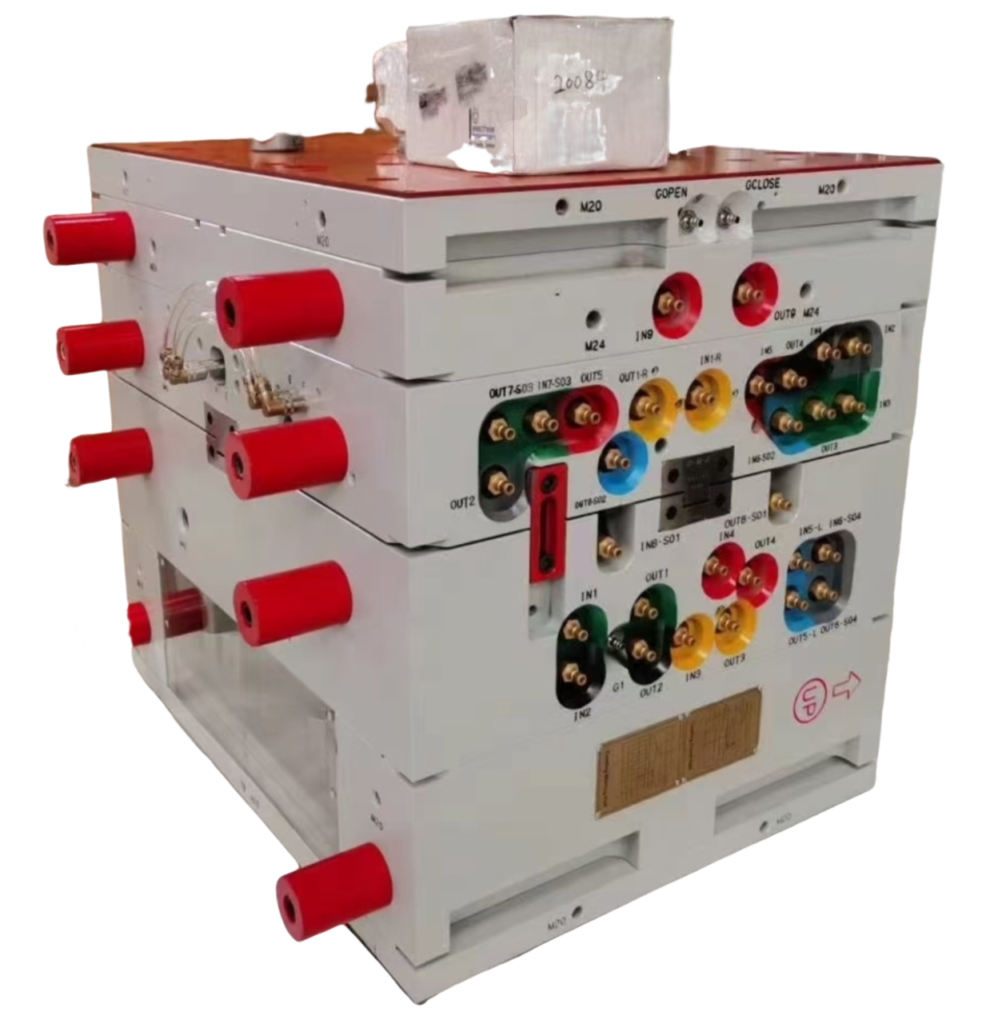
- The main types of plastic molding are injection molding, blow molding, compression molding, extrusion molding, rotational molding, thermoforming, vacuum forming, and pultrusion.
- Injection molding is usually the best choice for tight-tolerance 3D plastic parts, clips, housings, ribs, bosses, and repeat production.
- Blow molding fits hollow parts, extrusion fits continuous profiles, thermoforming fits shallow shells, and compression molding fits larger thermoset or rubber-like parts.
- The right process depends on part geometry, annual volume, tolerance, resin behavior, surface finish, tooling budget, and quality risk.
- Buyers should compare molding types before RFQ so the supplier can quote the right tool, machine, material, and inspection plan.
What are the main types of plastic molding?
Plastic molding types are process families for shaping softened plastic. They use a tool, die, mold cavity, pressure, vacuum, rotation, or pulling force. The most common options are injection molding, blow molding, compression molding, extrusion molding, rotational molding, thermoforming, vacuum forming, and pultrusion.
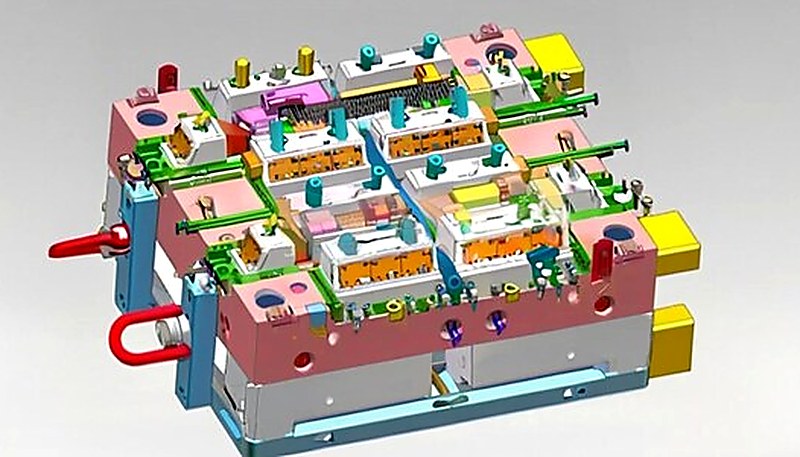
사출 성형1 is often the most important process for engineered plastic parts because it can repeat complex geometry at scale. For a deeper process baseline, start with our injection molding complete guide and then compare the mold requirements in our 사출 금형 완벽 가이드.
The processes look similar from a distance because all of them shape plastic. In factory planning, they are very different. A bottle, an electronic housing, a pipe, a tray, and a fiberglass rod should not be forced into the same quotation logic. The geometry decides the process first, and the resin, tolerance, cosmetics, and volume decide the details.
“Plastic molding process choice should start with part geometry.”True
Geometry determines whether the part is hollow, continuous, sheet-like, or a detailed 3D component, so it should guide the first process decision.
“All plastic molding types can hold the same tolerances.”False
Tolerance capability changes with the process, tool design, material shrinkage, cooling method, trimming, and secondary operations.
Which plastic molding type is best for precision parts?
Injection molding is best for precision 3D plastic parts. It is selected when the design needs controlled dimensions, repeatable features, strong resin choice, and medium-to-high production volume.
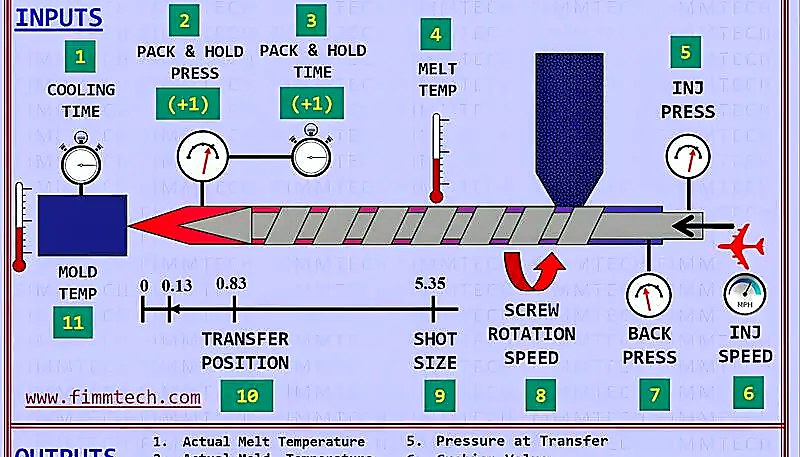
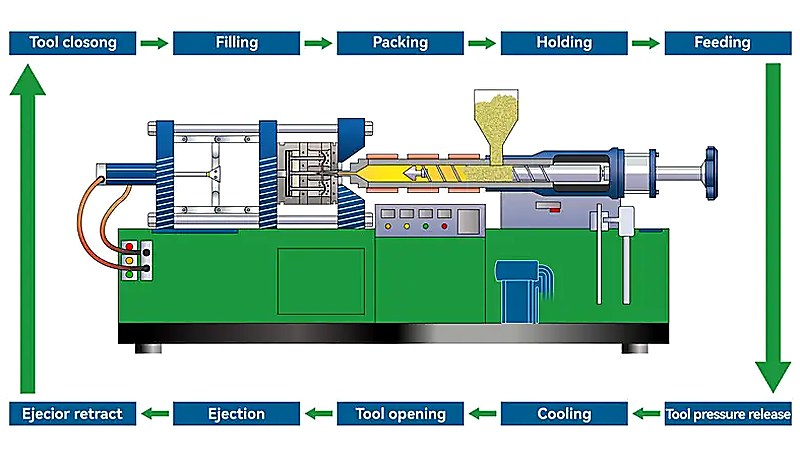
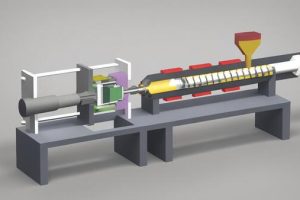
Injection molding uses a clamped mold, a plasticizing screw, injection pressure, packing pressure, cooling, and ejection. This makes it suitable for housings, gears, clips, connectors, medical components, appliance parts, and automotive plastic parts. The process is not only about a machine. The mold steel, cooling layout, gate position, venting, shrinkage allowance, and ejection design control whether the part repeats well.
A buyer should choose injection molding when the part has ribs, bosses, snap fits, cosmetic surfaces, internal details, or assemblies that must fit other parts. If the part has thick walls or a very low annual volume, prototype machining, 3D printing, casting, or a lower-cost tooling route may be better during early validation.
What is blow molding used for?
Blow molding is used for hollow plastic products. Typical examples include bottles, containers, tanks, ducts, and other parts where the internal air volume is part of the product function.
블로우 성형2 inflates hot plastic against the inside of a mold. The main advantage is efficient hollow-shape production. The main limitation is that wall thickness, neck finish, handle design, and pinch-off areas need different controls than injection molded parts.
Blow molding should not be selected only because the part looks large. If the part needs precise ribs, bosses, threaded inserts, tight flatness, or strong local details, injection molding or a secondary assembly may be more reliable. If the product is mainly a hollow shell, blow molding can reduce material waste and tooling complexity.
What is compression molding used for?
Compression molding is used for pressed material charges in heated cavities. It often fits thermosets, rubber-like materials, and larger parts with simpler flow paths.
Compression molding3 can be useful when the material behavior, fiber loading, part size, or tooling economics do not fit standard injection molding. It can also support parts where pressure, heat, and cure time are more important than high-speed injection cycles.
Its weakness is cycle speed and detail control. Compression molding can struggle with fine ribs, thin walls, complex undercuts, or very tight dimensional repeatability. Buyers should compare part tolerance and annual volume carefully before assuming compression tooling is cheaper overall.
What is extrusion molding used for?
Extrusion molding is used for continuous plastic shapes. It fits tubes, sheets, seals, channels, profiles, rods, and films where the cross-section stays mostly constant.
Extrusion pushes molten plastic through a die. The die sets the cross-section, and downstream cooling or calibration controls size. This process is efficient when the product is long, continuous, and uniform. It is less suitable when the part needs closed 3D geometry, internal bosses, clip features, or multiple surfaces that must be formed at the same time.
Some products combine extrusion with other processes. A profile may be extruded first and then cut, punched, bent, welded, or assembled. For injection molded assemblies, extruded seals or tubes can be adjacent components, but they should not be quoted as if they were molded cavities.
When does thermoforming make sense?
Thermoforming is useful for heated plastic sheet parts. It forms trays, covers, packaging, panels, liners, and shallow shell parts over or into a mold.
열성형4 can reduce tooling cost for large thin parts because the process starts from sheet instead of injecting a full 3D cavity. Vacuum forming is a related route that uses vacuum to pull the heated sheet onto the mold surface.
The tradeoff is detail depth and dimensional control. Thermoformed parts often need trimming, may have wall thinning in deep draw areas, and may not hold the same tight features as injection molding. It is useful for covers and trays, but it is usually not the best route for a precision clip, threaded boss, or load-bearing housing.
How should buyers compare plastic molding types?
Buyers should compare plastic molding types before final pricing. The comparison should include geometry, tolerance, resin, annual volume, tool budget, surface finish, secondary operations, and inspection risk.
Start with the shape. Hollow products point toward blow molding or rotational molding. Continuous cross-sections point toward extrusion. Thin shells and trays point toward thermoforming or vacuum forming. Precision 3D parts usually point toward injection molding. Then check the commercial reality: production quantity, material cost, mold cost, quality cost, and lead time.
Cycle time also matters. In injection molding, every second repeats across the production run, so gate design, cooling, ejection, and machine fit should be reviewed early. Our article on 사출 성형 생산 시간 explains why process speed and cooling control affect unit cost. For dimensional planning, mold shrinkage should be discussed before steel cutting.
In our Shanghai factory, we run 47 injection molding machines from 90T to 1850T and support 100+ mold sets per month in our in-house mold manufacturing facility. Our engineers use this range to separate injection molded parts from blow molded, thermoformed, and extruded parts before tooling money is committed.
For sourcing teams, this comparison should happen before the formal RFQ is locked. A drawing can look simple but still hide process risk: a deep shell may thin during thermoforming, a hollow body may need a blow-mold pinch-off line, and a precision housing may need injection molding because clips and bosses must repeat. When our factory reviews early drawings, we separate these questions before quoting steel so the customer does not pay for a process that cannot hold the part requirement.
For engineers, the practical test is to mark each critical feature on the drawing. Flat cosmetic panels, snap hooks, sealing surfaces, screw bosses, ribs, hinge areas, and assembly datums should be matched to the process that can control them. If the feature list is mostly shallow surface area, sheet forming may be enough. If the list includes many 3D details, injection molding usually deserves the first serious review.
| 프로세스 | Best fit | Main caution |
|---|---|---|
| 사출 성형 | Precision 3D parts | 공구는 수축률, 게이트, 냉각, 이젝션과 일치해야 합니다. |
| 블로우 성형 | 중공 제품 | 벽 두께와 목 부분 세부사항은 제어가 필요합니다. |
| 압출 | 연속 프로파일 | 복잡한 3D 형상은 제한적입니다. |
| 열성형 | 얇은 쉘과 트레이 | 깊은 드로우 영역은 얇아질 수 있으며 트리밍이 필요합니다. |
“툴링 비용은 전체 생산 비용과 비교해야 합니다.”True
저렴한 공구라도 사이클 지연, 스크랩 발생, 수동 트리밍, 불안정한 치수, 반복적인 금형 수리를 유발한다면 결국 비용이 높아질 수 있습니다.
“공급업체는 재료와 생산량을 확인하기 전에 견적을 제출해야 합니다.”False
재료, 연간 생산량, 공차, 표면 마감, 검사 요구사항은 공정 경로와 실제 제조 비용을 변경합니다.
사출 성형과 다른 플라스틱 성형 방식을 선택 중이라면, 3D 파일, 목표 재료, 연간 생산량, 표면 요구 사항, 및 허용 오차 정보를 보내주십시오. ZetarMold는 부품을 검토하고 사출 성형, 디자인 변경, 또는 다른 공법이 더 나은 RFQ 경로인지 설명할 수 있습니다.
실용적인 구매자 체크리스트를 위해 견적 비교 전 목표 수지, 예상 연간 생산량, 가시적 표면, 조립 인터페이스, 공차 적층, 예상 수명을 문서화하세요. 이렇게 하면 낮은 공구 가격이 후속 트리밍, 고정구, 재작업 또는 검사 비용을 숨기는 것을 방지할 수 있습니다.
이 초기 공정 스크리닝은 모든 견적이 동일한 기능 요구사항 세트에 대해 평가되므로 구매 부서가 공급업체를 더 깔끔하게 비교할 수 있게 해줍니다.

플라스틱 성형 유형에 관한 자주 묻는 질문
가장 흔한 플라스틱 성형 방식은 무엇인가요?
사출 성형은 엔지니어링 부품에 가장 일반적인 플라스틱 성형 유형 중 하나입니다. 복잡한 형상을 제어된 치수와 안정적인 생산량으로 반복적으로 만들 수 있기 때문입니다.
중공 플라스틱 부품에 가장 적합한 성형 유형은 무엇인가요?
블로우 몰딩은 일반적으로 병, 탱크 및 컨테이너 같은 중공 부품에 가장 적합합니다. 이는 공기 압력이 뜨거운 플라스틱을 몰드 벽에 맞게 형성하기 때문입니다.
열성형이 사출 성형보다 더 저렴한가요?
열성형은 크고 얇은 쉘의 경우 공구 비용이 낮을 수 있지만, 트리밍이 필요할 수 있으며 정밀한 3D 형상에서는 사출 성형과 맞지 않을 수 있습니다.
언제 압출 대신 성형을 선택해야 하나요?
제품이 튜브, 시트, 씰, 채널 또는 길이에 맞게 절단할 수 있는 프로파일과 같이 연속적인 단면을 가질 때 압출을 선택하세요.
새 부품에 적합한 성형 방식을 어떻게 선택하나요?
기하학적 요소부터 시작한 후, 공차, 재료, 부피, 공구 예산, 표면 마무리, 품질 위험을 확인합니다. 그런 다음 공급업체가 현실적인 공정 옵션을 비교할 수 있습니다.
한 프로젝트에서 여러 종류의 플라스틱 성형 방식을 사용할 수 있습니까?
예. 각 구성 요소가 다른 기능을 할 때, 어셈블리는 사출 성형된 하우징, 압출 성형된 실, 열성형된 트레이, 또는 블로우 성형된 컨테이너를 결합할 수 있습니다.




 EN
EN  ES
ES  FR
FR  DE
DE  PT
PT  AR
AR  RU
RU  JA
JA  KO
KO  IT
IT  NL
NL  TR
TR  PL
PL