コンテンツへスキップ
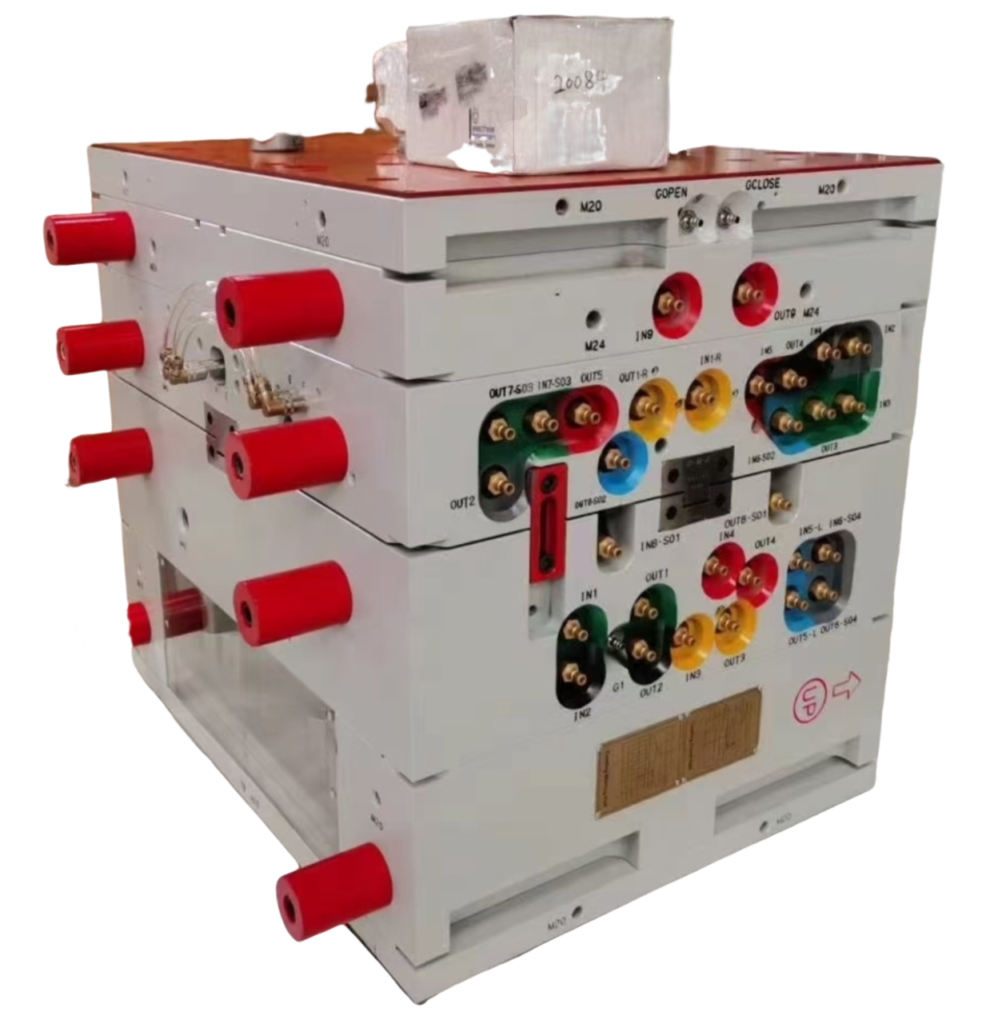
- The main types of plastic molding are injection molding, blow molding, compression molding, extrusion molding, rotational molding, thermoforming, vacuum forming, and pultrusion.
- Injection molding is usually the best choice for tight-tolerance 3D plastic parts, clips, housings, ribs, bosses, and repeat production.
- Blow molding fits hollow parts, extrusion fits continuous profiles, thermoforming fits shallow shells, and compression molding fits larger thermoset or rubber-like parts.
- The right process depends on part geometry, annual volume, tolerance, resin behavior, surface finish, tooling budget, and quality risk.
- Buyers should compare molding types before RFQ so the supplier can quote the right tool, machine, material, and inspection plan.
What are the main types of plastic molding?
Plastic molding types are process families for shaping softened plastic. They use a tool, die, mold cavity, pressure, vacuum, rotation, or pulling force. The most common options are injection molding, blow molding, compression molding, extrusion molding, rotational molding, thermoforming, vacuum forming, and pultrusion.
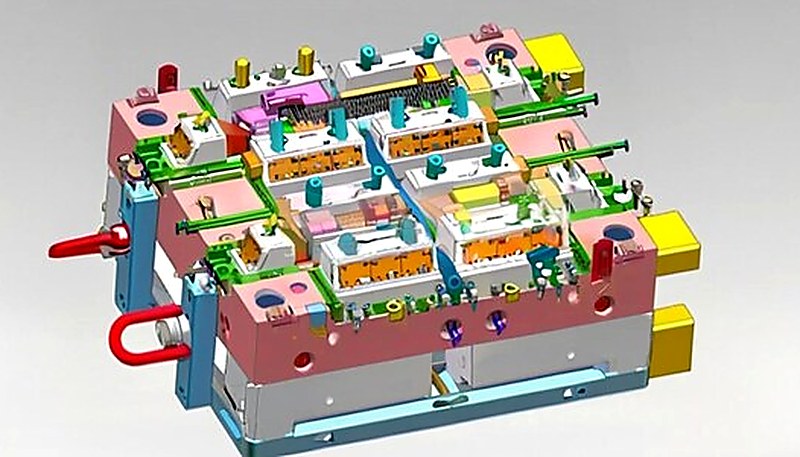
射出成形1 is often the most important process for engineered plastic parts because it can repeat complex geometry at scale. For a deeper process baseline, start with our injection molding complete guide and then compare the mold requirements in our injection mold complete guide.
The processes look similar from a distance because all of them shape plastic. In factory planning, they are very different. A bottle, an electronic housing, a pipe, a tray, and a fiberglass rod should not be forced into the same quotation logic. The geometry decides the process first, and the resin, tolerance, cosmetics, and volume decide the details.
“Plastic molding process choice should start with part geometry.”真
Geometry determines whether the part is hollow, continuous, sheet-like, or a detailed 3D component, so it should guide the first process decision.
“All plastic molding types can hold the same tolerances.”偽
Tolerance capability changes with the process, tool design, material shrinkage, cooling method, trimming, and secondary operations.
Which plastic molding type is best for precision parts?
Injection molding is best for precision 3D plastic parts. It is selected when the design needs controlled dimensions, repeatable features, strong resin choice, and medium-to-high production volume.
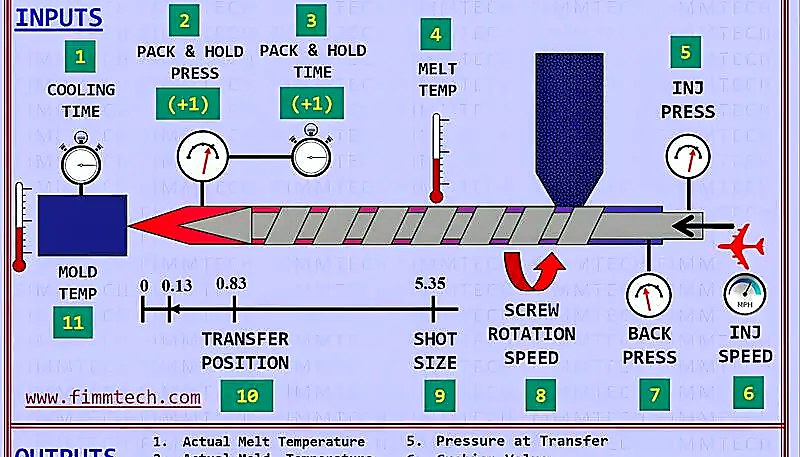
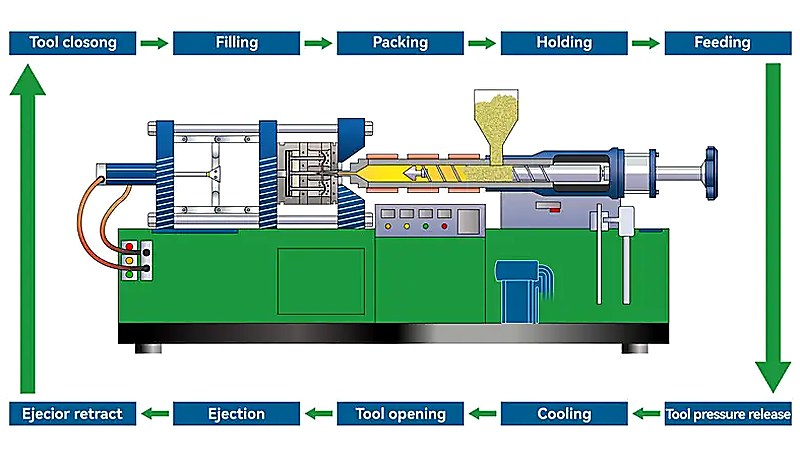
Injection molding uses a clamped mold, a plasticizing screw, injection pressure, packing pressure, cooling, and ejection. This makes it suitable for housings, gears, clips, connectors, medical components, appliance parts, and automotive plastic parts. The process is not only about a machine. The mold steel, cooling layout, gate position, venting, shrinkage allowance, and ejection design control whether the part repeats well.
A buyer should choose injection molding when the part has ribs, bosses, snap fits, cosmetic surfaces, internal details, or assemblies that must fit other parts. If the part has thick walls or a very low annual volume, prototype machining, 3D printing, casting, or a lower-cost tooling route may be better during early validation.
What is blow molding used for?
Blow molding is used for hollow plastic products. Typical examples include bottles, containers, tanks, ducts, and other parts where the internal air volume is part of the product function.
ブロー成形2 inflates hot plastic against the inside of a mold. The main advantage is efficient hollow-shape production. The main limitation is that wall thickness, neck finish, handle design, and pinch-off areas need different controls than injection molded parts.
Blow molding should not be selected only because the part looks large. If the part needs precise ribs, bosses, threaded inserts, tight flatness, or strong local details, injection molding or a secondary assembly may be more reliable. If the product is mainly a hollow shell, blow molding can reduce material waste and tooling complexity.
What is compression molding used for?
Compression molding is used for pressed material charges in heated cavities. It often fits thermosets, rubber-like materials, and larger parts with simpler flow paths.
Compression molding3 can be useful when the material behavior, fiber loading, part size, or tooling economics do not fit standard injection molding. It can also support parts where pressure, heat, and cure time are more important than high-speed injection cycles.
Its weakness is cycle speed and detail control. Compression molding can struggle with fine ribs, thin walls, complex undercuts, or very tight dimensional repeatability. Buyers should compare part tolerance and annual volume carefully before assuming compression tooling is cheaper overall.
What is extrusion molding used for?
Extrusion molding is used for continuous plastic shapes. It fits tubes, sheets, seals, channels, profiles, rods, and films where the cross-section stays mostly constant.
Extrusion pushes molten plastic through a die. The die sets the cross-section, and downstream cooling or calibration controls size. This process is efficient when the product is long, continuous, and uniform. It is less suitable when the part needs closed 3D geometry, internal bosses, clip features, or multiple surfaces that must be formed at the same time.
Some products combine extrusion with other processes. A profile may be extruded first and then cut, punched, bent, welded, or assembled. For injection molded assemblies, extruded seals or tubes can be adjacent components, but they should not be quoted as if they were molded cavities.
When does thermoforming make sense?
Thermoforming is useful for heated plastic sheet parts. It forms trays, covers, packaging, panels, liners, and shallow shell parts over or into a mold.
熱成形4 can reduce tooling cost for large thin parts because the process starts from sheet instead of injecting a full 3D cavity. Vacuum forming is a related route that uses vacuum to pull the heated sheet onto the mold surface.
The tradeoff is detail depth and dimensional control. Thermoformed parts often need trimming, may have wall thinning in deep draw areas, and may not hold the same tight features as injection molding. It is useful for covers and trays, but it is usually not the best route for a precision clip, threaded boss, or load-bearing housing.
How should buyers compare plastic molding types?
Buyers should compare plastic molding types before final pricing. The comparison should include geometry, tolerance, resin, annual volume, tool budget, surface finish, secondary operations, and inspection risk.
Start with the shape. Hollow products point toward blow molding or rotational molding. Continuous cross-sections point toward extrusion. Thin shells and trays point toward thermoforming or vacuum forming. Precision 3D parts usually point toward injection molding. Then check the commercial reality: production quantity, material cost, mold cost, quality cost, and lead time.
Cycle time also matters. In injection molding, every second repeats across the production run, so gate design, cooling, ejection, and machine fit should be reviewed early. Our article on 射出成形の生産時間 explains why process speed and cooling control affect unit cost. For dimensional planning, mold shrinkage should be discussed before steel cutting.
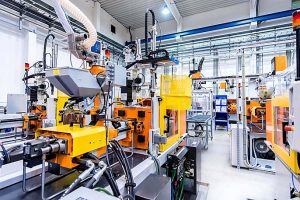
In our Shanghai factory, we run 47 injection molding machines from 90T to 1850T and support 100+ mold sets per month in our in-house mold manufacturing facility. Our engineers use this range to separate injection molded parts from blow molded, thermoformed, and extruded parts before tooling money is committed.
For sourcing teams, this comparison should happen before the formal RFQ is locked. A drawing can look simple but still hide process risk: a deep shell may thin during thermoforming, a hollow body may need a blow-mold pinch-off line, and a precision housing may need injection molding because clips and bosses must repeat. When our factory reviews early drawings, we separate these questions before quoting steel so the customer does not pay for a process that cannot hold the part requirement.
For engineers, the practical test is to mark each critical feature on the drawing. Flat cosmetic panels, snap hooks, sealing surfaces, screw bosses, ribs, hinge areas, and assembly datums should be matched to the process that can control them. If the feature list is mostly shallow surface area, sheet forming may be enough. If the list includes many 3D details, injection molding usually deserves the first serious review.
| プロセス | Best fit | Main caution |
|---|---|---|
| 射出成形 | Precision 3D parts | 金型は収縮率、ゲート、冷却、およびエジェクションに適合しなければなりません。 |
| ブロー成形 | 中空製品 | 肉厚とネックの詳細は制御が必要です。 |
| 押出 | 連続プロファイル | 複雑な3D形状の表現は限られています。 |
| 熱成形 | 薄肉シェルとトレイ | 深絞り部分は薄くなり、トリミングが必要になる場合があります。 |
「金型コストは総生産コストと比較されるべきです。」真
安価な金型でも、サイクルタイムの遅延、不良品発生、手仕上げ、寸法不安定、金型修理の繰り返しを引き起こせば、結果的に高コストになる可能性があります。
「サプライヤーは、材料と生産量を確認する前に見積もりを出すべきです。」偽
材料、年間生産量、公差、表面仕上げ、検査要件は、プロセスルートと実際の製造コストを変更します。
射出成形と他のプラスチック成形ルートの間で選択する場合、3Dファイル、目標材料、年間生産量、表面要件、公差ノートを送信してください。ZetarMoldは部品をレビューし、射出金型、設計変更、または異なるプロセスルートのどれがより良いRFQパスであるかを説明できます。
実用的な購入者チェックリストとして、見積もりを比較する前に、目標樹脂、期待年間生産量、可視面、組立インターフェース、公差累積、期待寿命を文書化してください。これにより、低い金型価格が後のトリミング、治具、手直し、または検査コストを隠すことを防ぎます。
この早期工程スクリーニングにより、購買部門はより明確なサプライヤー比較が可能となります。すべての見積もりが同一の機能要件セットに対して評価されるためです。

プラスチック成形タイプに関するFAQ
最も一般的なプラスチック成形方法は何ですか?
射出成形は、複雑な形状を寸法を制御しながら繰り返し成形でき、安定した生産量を確保できるため、工業部品における最も一般的なプラスチック成形方法の一つです。
中空プラスチック部品にはどの成形タイプが最適ですか?
ブロー成形は、通常、ボトル、タンク、容器などの空洞部品に最適です。なぜなら、空気圧によって熱いプラスチックが金型壁に押し付けられるからです。
熱成形は射出成形よりも安価ですか?
熱成形は、大型で薄いシェルの場合、金型コストが低くなる可能性がありますが、トリミングが必要になる場合があり、精密な3D形状に対しては射出成形に及ばないことがあります。
押出成形ではなく射出成形を選択するのはいつですか?
製品がチューブ、シート、シール、チャンネル、または長さに切断可能なプロファイルなど、連続した断面形状を持つ場合は、押出成形を選択してください。
新しい部品に適した成形タイプをどのように選びますか?
まず幾何形状から始め、次に公差、材料、体積、工具予算、表面仕上げ、品質リスクを確認します。その後、サプライヤーは現実的なプロセスオプションを比較できます。
1つのプロジェクトで複数のプラスチック成形タイプを使用できますか?
はい。アセンブリは、射出成形されたハウジング、押出成形されたシール、熱成形されたトレイ、またはブロー成形された容器を、各コンポーネントが異なる機能を持つ場合に組み合わせることができます。



 EN
EN  ES
ES  FR
FR  DE
DE  PT
PT  AR
AR  RU
RU  JA
JA  KO
KO  IT
IT  NL
NL  TR
TR  PL
PL