...

インドにおけるトップの射出成形企業はどこか?

• ZetarMold Engineering Guide
• Plastic Injection Mold Manufacturing Since 2005
• Built by ZetarMold engineers for buyers comparing mold and molding solutions.

Injection Mold Manufacturing in India: A Complete Sourcing Guide

You are evaluating plastic part suppliers, and someone on your team asked about India. Fair question — India’s injection molded plastic market was valued at USD 27.84 billion in 2024 and is projected to reach USD 38.13 billion by 2030, growing at a CAGR of 5.5%. The country has over 5,000 plastic processing units, a young workforce, and government incentives pushing local manufacturing. But does a growing market mean a good supplier for your specific project? Not always. This guide gives you the honest picture — who the key players are, what they do well, where they fall short, and how India compares to China for plastic part sourcing.

より広い視点では、当社の injection molding complete guide プロセスの基礎、材料挙動、生産判断について説明します。

要点
  • India’s injection molding market is projected to reach USD 38.13 billion by 2030, driven by automotive, packaging, and medical sectors.
  • Top Indian companies include Samvardhana Motherson, Tata AutoComp, Supreme Industries, and NSK — each with distinct strengths.
  • India offers 15-30% labor cost savings over China, but mold quality, lead times, and infrastructure vary significantly between suppliers.
  • Key selection criteria: ISO/IATF certifications, cleanroom capability, English communication, and mold trial willingness.
  • For complex or high-volume programs, Chinese manufacturers still hold advantages in mold precision, tonnage range, and production scale.

What Is the Current State of India’s Injection Molding Industry?

India’s 射出成形1 industry is large, fragmented, and growing fast — it processes over 20 million tonnes of polymers annually. The sector feeds automotive (the biggest consumer), consumer electronics, packaging, healthcare, and construction. Government programs like the Make in India initiative and the Production Linked Incentive scheme have accelerated investment in manufacturing infrastructure.

However, the industry remains fragmented. A handful of large, publicly listed companies coexist with thousands of small job shops running 50-200T machines with limited quality systems. The automotive sector alone consumes roughly 30% of India’s injection-molded plastic output. Companies like Maruti Suzuki, Tata Motors, and Mahindra rely on domestic Tier-1 and Tier-2 suppliers for interior trim, under-hood components, and electrical housings.

The medical device segment is the fastest-growing, driven by India’s push for domestic healthcare manufacturing and rising exports to regulated markets like the US and EU. Cleanroom molding capability — once rare in India — is now available at a growing number of facilities, though still concentrated among the top tier of suppliers.

India’s polymer consumption is projected to double by 2030, with polypropylene (PP) and polyethylene (PE) together accounting for over 60% of total demand. The country’s dependence on imported engineering resins — materials like polycarbonate, PEEK, and LCP — remains a structural weakness that affects both material cost and lead time for buyers specifying these grades.

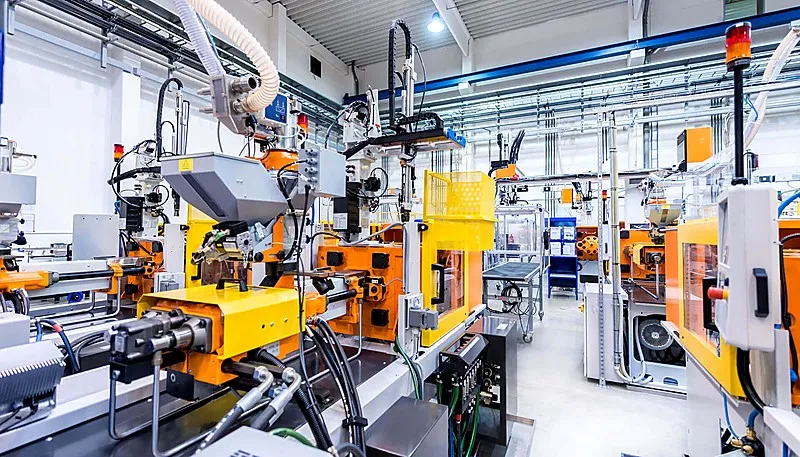
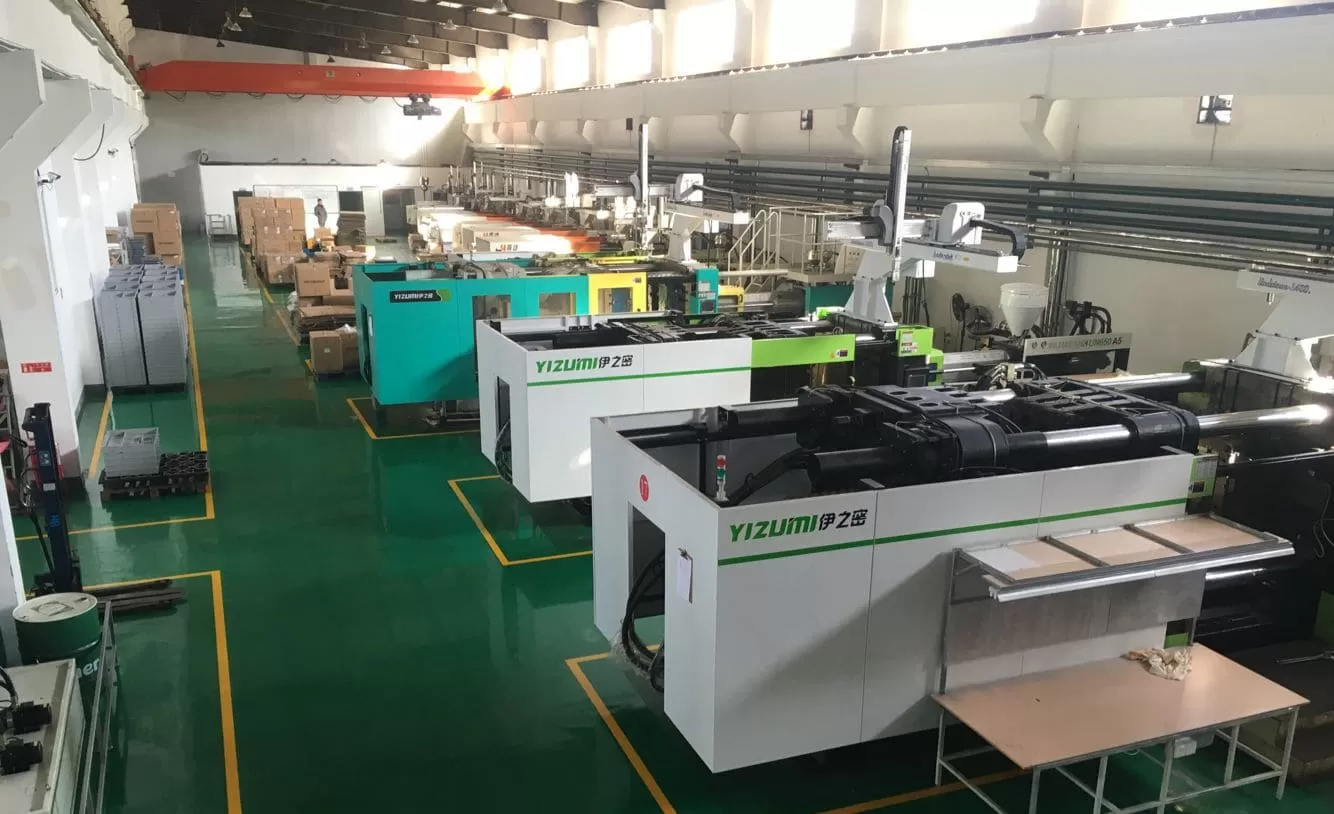
Injection molding production facility
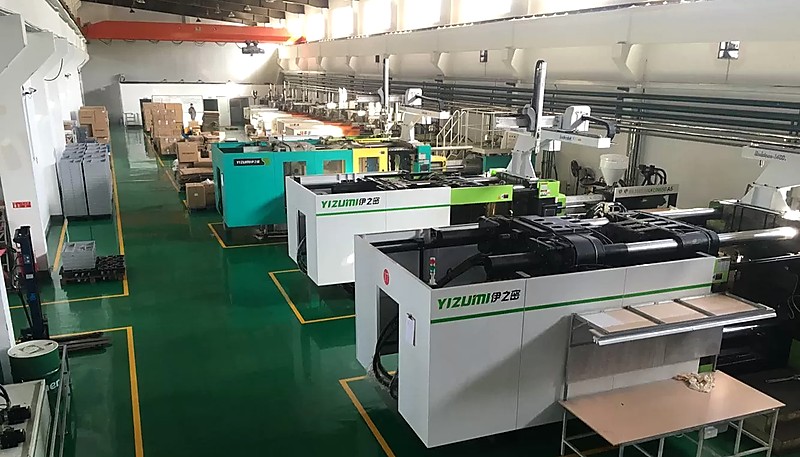
Injection molding production line

Which Trends Are Shaping India’s Injection Molding Sector?

Several macro trends are reshaping India’s injection molding landscape. First, the electric vehicle transition is creating entirely new demand categories — battery enclosures, thermal management housings, lightweight structural brackets — that did not exist five years ago. Indian molders who invested in large-tonnage machines (1000T+) are capturing this growth.

Second, the medical device sector is expanding at 15-20% annually. Injection molding in cleanroom environments is shifting from a niche capability to a baseline requirement for any supplier targeting healthcare OEMs.

Third, sustainability pressures are increasing. Extended Producer Responsibility regulations now require plastic manufacturers to account for end-of-life recycling. Leading Indian molders are experimenting with post-consumer recycled (PCR) resins and bio-based polymers, though adoption remains early.

Fourth, automation is accelerating. Labor arbitrage alone no longer wins orders. Companies are investing in robotic part removal, in-mold sensors, and real-time SPC monitoring to match the quality consistency that buyers expect from Chinese or Southeast Asian suppliers.

A fifth trend worth watching: several Indian Tier-1 suppliers are establishing or acquiring manufacturing plants in Southeast Asia and Eastern Europe. Motherson and Tata AutoComp now have production footprints in over 40 countries. This expansion means that partnering with an Indian company can sometimes provide access to near-shore production in Europe or ASEAN — not just India-based manufacturing.

“India’s injection molded plastic market is projected to grow at 5.5% CAGR through 2030.”

According to Grand View Research, the market was valued at USD 27.84 billion in 2024 and is expected to reach USD 38.13 billion by 2030, driven by automotive, medical, and packaging demand.

“Indian injection molding companies can match Chinese mold precision and production scale for all part types.”

While top Indian firms like Motherson and NSK achieve excellent precision in their specialty areas, the broader industry struggles with complex multi-cavity molds and consistent tight tolerances across volume production. China’s tooling ecosystem still holds significant advantages in mold complexity, lead time, and cost for most commercial applications.

How Do You Choose an Injection Molding Supplier in India?

Selecting an Indian molding partner is not about finding the biggest company — it is about matching capabilities to your specific requirements. Here is a practical framework after working with suppliers across Asia for 20+ years.

Define Your Technical Requirements First

Before you contact a supplier, document your part specifications clearly: material, tolerance range, annual volume, surface finish, color consistency, and any regulatory requirements (UL94, FDA, USP Class VI). The more precise your specification, the faster you can separate qualified suppliers from wishful thinkers.

Verify Certifications, Not Just Claims

Ask for current certificate copies — not screenshots from a website. IATF 16949 is essential for automotive. ISO 13485 for medical. ISO 9001 is table stakes; if a company does not have it, move on. Check whether the certificate scope covers the specific facility that will produce your parts, not just a corporate headquarters.

Request Mold Trials Before Committing

Any credible 射出成形金型2 maker should be willing to run sample parts before you sign a volume agreement. Pay for the trial — it is the cheapest insurance you will ever buy. Inspect the samples yourself or use a third-party inspection service. Look for flash, sink marks, weld lines, and dimensional consistency across the sample lot.

A mold trial also reveals how the supplier handles problems. If T1 samples come back with flash or short shots, does the supplier proactively propose fixes, or do they wait for your instruction? The response to first-run problems tells you more about a supplier’s engineering depth than any sales presentation.

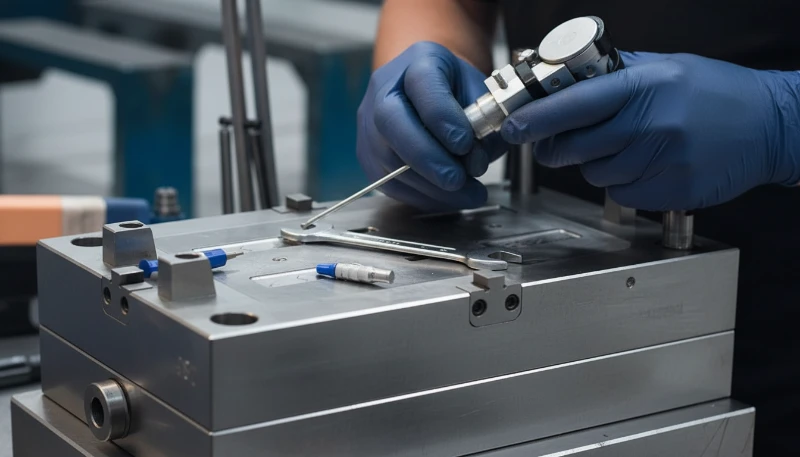
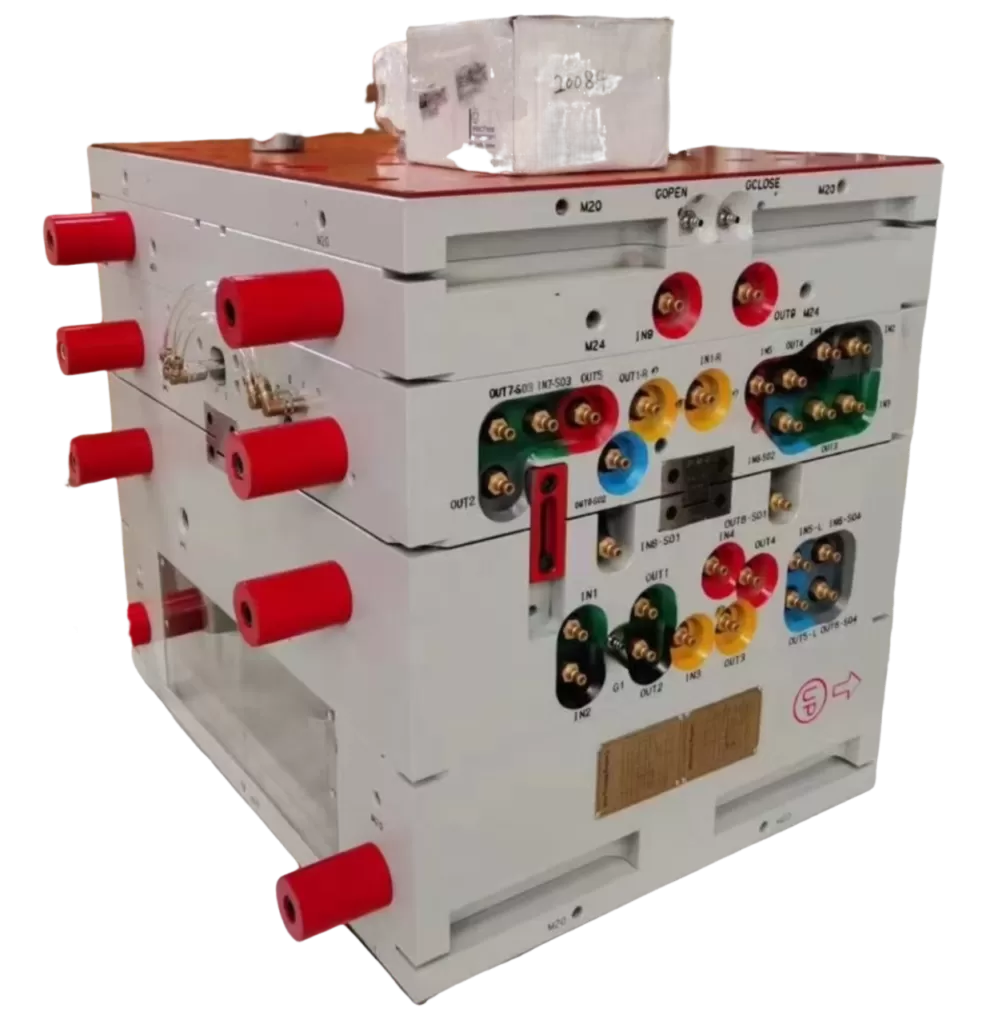
射出成形金型の品質を検査するエンジニア
Quality inspection of molded parts

Evaluate Communication and Project Management

Indian companies generally have strong English communication skills — a genuine advantage for North American and European buyers. But communication quality varies enormously between a Motherson-level organization and a 20-machine job shop. Ask: Who will be your direct contact? What is their response time SLA? Do they provide weekly production reports?

Also evaluate their willingness to share production data: real-time machine monitoring, SPC charts, yield reports. Suppliers who proactively share data tend to be more reliable long-term partners than those who only communicate when there is a problem.

“India offers genuine English-language communication advantages for Western buyers compared to most Chinese suppliers.”

English is an official language in India and widely used in business. Most mid-to-large Indian molding companies employ English-speaking project managers, making RFQ discussions, technical reviews, and issue resolution more straightforward for Western buyers.

“All Indian injection molders automatically provide weekly production reports.”

While top-tier Indian companies like Motherson and Tata AutoComp have sophisticated project management systems with regular reporting, mid-size suppliers often provide basic communication only. Weekly production reports, real-time SPC monitoring, and proactive issue updates are typically available only from premium suppliers, not as a standard practice across the industry.

Top 10 Injection Molding Companies in India

Below is a practical rundown of India’s most capable injection molding companies. This is not a ranking — it is a field guide based on industry reputation, certifications, and production capabilities.

1. Samvardhana Motherson Group (Motherson Sumi)

Motherson is India’s largest automotive component manufacturer and one of the world’s biggest wiring harness and plastic module suppliers. They operate over 400 facilities across 40+ countries, including dozens of injection molding plants in India. Their molding capacity spans from small electrical connectors to large bumper and dashboard modules, using machines up to 2,000T. They hold IATF 16949, ISO 9001, and multiple OEM-specific certifications. If you need automotive-grade volume, Motherson is the first call. Founded in 1986, headquartered in Noida, with over 150,000 employees globally.

2. Tata AutoComp Systems

Part of the Tata Group ecosystem, Tata AutoComp supplies plastic parts to Tata Motors, Jaguar Land Rover, and other global OEMs. Their injection molding operations cover automotive interiors, exteriors, and under-hood applications. They run multi-cavity precision molds and have invested heavily in electric vehicle (EV) battery housing programs. Some of their newer programs involve オーバーモールディング3 for soft-touch interior surfaces. Tata AutoComp holds IATF 16949 and ISO 14001 certifications. Founded in 1995, headquartered in Pune, with approximately 6,000 employees.

3. Supreme Industries Ltd

Supreme Industries is India’s largest plastics processor by volume. Injection molding is their core process. They serve construction (pipes, fittings), consumer goods, furniture, and industrial packaging. With over 25 manufacturing plants and hundreds of molding machines, Supreme handles everything from commodity PP buckets to engineered plastic components. Their strength is scale and cost efficiency. Founded in 1942, headquartered in Mumbai, with over 5,000 employees and revenue exceeding USD 700 million.

4. NSK Bearings India (Nippon Seiko)

NSKは日本の製造規律をインド市場に導入しています。同社のインド事業は、自動車および産業用途向けの精密成形ベアリングケージ、センサー筐体、その他の厳密公差部品を製造しています。±0.02mm範囲の寸法精度を要求されるプロジェクトの場合、NSKはその水準を一貫して達成できる数少ないインド成形業者の一つです。1916年創業(日本)、1990年代よりインド事業開始、チェンナイに本社を置き、インドで2,000人以上の従業員を擁する。

5. Arihant Dies and Moulds

Arihant is one of India’s fastest-growing injection molding companies, with a strong focus on automotive and electrical appliance components. They provide end-to-end services from 金型設計 および量産を通じた加工。自社内の金型製造能力が差別化要因です。多くのインド成形業者は金型製作を外部委託しており、リードタイムと品質リスクを増加させます。1998年創業、本社はプネ、約500名の従業員、IATF 16949認証を取得。

6. ヒーロー・オートパーツ(ヒーロー・グループ)

Hero AutoParts is the plastic component arm of the Hero Group, India’s largest two-wheeler manufacturer. Their injection molding division produces fuel tanks, fairings, instrument panels, and structural components for motorcycles and scooters. They run over 47 injection molding machines ranging from 80T to 1200T across multiple plants in North India. Founded in 1985, headquartered in Gurgaon, with approximately 3,000 employees. ISO 9001 and IATF 16949 certified.

7. UNO Minda (Minda Industries)

UNO Minda is a major Tier-1 automotive supplier producing injection-molded interior and exterior components, switch assemblies, and lighting housings. They serve Maruti Suzuki, Hyundai India, Honda, and Toyota’s Indian operations. Their molding plants run machines up to 1600T and include in-house paint and chrome plating lines. Founded in 1958, headquartered in Gurgaon, with over 7,000 employees and IATF 16949 and ISO 14001 certifications.

8. Primex Plastics India

プライメックス・プラスチックスは、消費者向け家電製品、工業部品、包装向けのカスタム射出成形に焦点を当てています。彼らは50トンから650トンまでの30台以上の機械を備えた中規模施設を運営し、中量・多キャビティ生産の最適な領域をターゲットにしています。プライメックスは、柔軟な最小発注数量を必要とし、最大規模をより丁寧なプロジェクト管理と交換する意思があるバイヤーにとって良い選択肢です。2001年設立、本社はグジャラート州バローダ、従業員数約200名、ISO 9001認証取得。
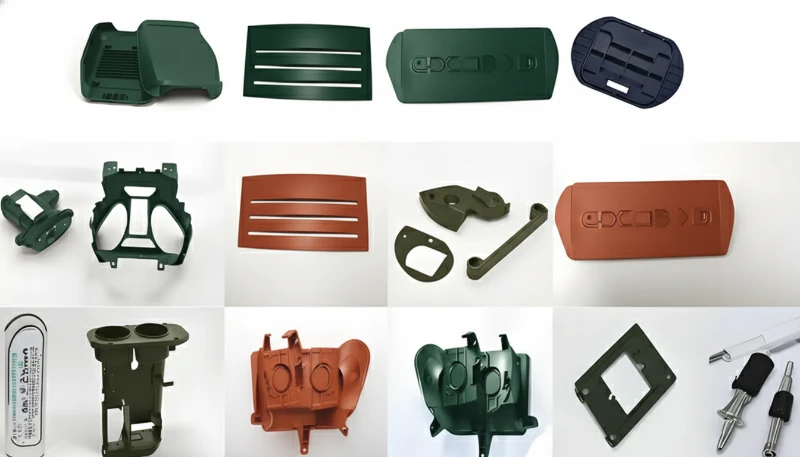
Diverse injection molded plastic components
射出成形部品

9. Mefron Technologies

Mefronは電子機器および医療機器向けの精密射出成形を専門としています。ISOクラス7およびクラス8のクリーンルーム成形設備を備えており、FDA規制対象部品を製造できる数少ないインド企業の一つです。PEEK、LCP、PPSUを含むエンジニアリング樹脂を扱います。2005年設立、本社はバンガロール、従業員数は約150名。認証にはISO 9001、ISO 13485、ISO 14001が含まれます。

10. アイコン・モールダーズ

Ikon Mouldersは航空宇宙・防衛用途の精密部品分野でニッチを占めています。成形事業は高性能材料を用いた高精度・中低量産に焦点を当てており、多材料用途のオーバーモールドを含む技術を有します。ISO 9001に加えてAS9100(航空宇宙品質規格)を取得しており、これはインドの射出成形業者では珍しい特徴です。2003年設立、本社はハイデラバード、従業員数は約120名。

プラスチック調達におけるインドと中国の比較

This is the question we hear most often, so let us be direct. China remains the world’s dominant injection molding supplier for good reasons: a mature tooling ecosystem, massive production scale, and supply chain density that compresses lead times. India is competitive and improving rapidly, but the gap is real.

インド対中国 射出成形比較
ファクター インド China
金型品質(複雑工具) 中程度 — 高キャビティ化能力は限定的 強力 — 深い金型クラスターのエコシステム
人件費 15-30% 中国より低い 高いが効率性で相殺
English Communication 強力な優位性 仲介業者が必要な場合が多い
生産規模 成長中だが、断片化されている 大規模かつ統合
リードタイム(金型+T1サンプル) 典型的な8-14週間 典型的な4-8週間
材料の入手可能性 汎用樹脂には適しているが、特殊樹脂には限定的 すべての樹脂タイプに優れている
物流インフラ 改善中だが、港湾遅延が頻発 成熟した港湾間輸送、迅速

インド国内市場をターゲットとする企業 — マルチ・スズキ、タタ、またはインドの消費者向けブランドにサービスを提供するために現地生産を設立する企業 — にとって、決定は明らかです。インドに拠点を置く成形は経済的および物流的に理にかなっています。グローバルに調達し、純粋にコストと能力でインド対中国を比較する企業にとって、中国は依然としてほとんどの技術的および運営的指標で優位に立っています。

“China remains the dominant injection molding supplier globally by total manufacturing capacity.”

中国は世界のプラスチック射出成形生産量の約30%を占めており、広東省、江蘇省、浙江省に集中する15,000以上の大規模成形施設があります。この集中により、成熟した金型エコシステムが形成され、複雑な金型のリードタイムが短縮され、インドや東南アジアと比較してエンジニアリング樹脂の材料入手性が向上しています。

“Lower labor costs in India automatically mean lower total part cost compared to China.”

India’s labor rates are indeed 15-30% lower than China’s for production workers. However, total landed cost depends on material prices (often higher in India due to import dependence for engineering resins), logistics infrastructure, mold cost, and yield rates. For complex engineered parts, China’s total cost is often still lower when you factor in tool quality, cycle time efficiency, and scrap rates.

インド調達の最適な領域は、汎用または半エンジニアリング樹脂の中量部品であり、労働コストの削減がインフラの摩擦を上回る場合です。それ以外すべて — 複雑な多キャビティ金型、エンジニアリング樹脂、厳しい公差、または厳しいタイムライン — については、中国は能力と総コストの両方で測定可能な優位性を保持しています。

バイヤーが過小評価しがちな要因の一つは材料コストです。インドではリライアンスやインド石油化学を通じてPPとPEを国内生産しているため、汎用樹脂の価格は競争力があります。しかし、エンジニアリング樹脂(PC、POM、PBT、PPS、PEEK)は大部分が輸入品であり、インドでの着地コストは国内樹脂生産が多様化している中国よりも10〜25%高くなる可能性があります。材料費が総コストの40〜60%を占める部品の場合、この差額だけで人件費の節約分が帳消しになることがあります。

Logistics is another variable. Major Indian ports like Nhava Sheva (Mumbai) and Chennai handle container traffic efficiently, but inland transportation from manufacturing clusters in Pune, Gurgaon, or Bangalore to the port adds 2-5 days and meaningful freight cost. China’s port infrastructure and proximity of manufacturing zones to Shanghai, Shenzhen, and Ningbo ports means faster turnaround and lower inland freight costs for export shipments.

射出成形コスト分析比較
調達のためのコスト分析

インドが適切な調達先となるのはいつか?

インドが適切な選択となるのは、国内市場へのアクセス、低コストでの大量生産、または中国以外のサプライチェーン多様化が必要な場合です。以下に、真にインドを推奨する状況を示します。

あなたはインド国内市場に販売しています。 最終顧客がマルチ・スズキ、タタモーターズ、リライアンス、ゴドレジなどのインドOEMである場合、現地生産により20〜30%の輸入関税を回避し、物流の複雑さを軽減できます。Make in India(メイド・イン・インディア)の枠組みでは、多くの政府調達契約において現地調達比率が要求されます。

You need mid-volume parts in commodity or semi-engineered resins. For PP, PE, ABS, and basic nylon parts in the 10,000 to 500,000 units/year range, Indian suppliers can be cost-competitive, especially when English communication and time zone alignment with Europe are factors.

Your project requires cleanroom molding for medical devices targeting the Indian market. Companies like Mefron and NSK have invested in ISO Class 7/8 cleanrooms. For medical devices sold into India’s rapidly growing healthcare sector, local production is increasingly required by regulation.

“India’s medical device market is growing at 15-20% annually, driving investment in cleanroom molding.”

India’s medical device market is one of the fastest-growing in Asia, with the government actively promoting domestic manufacturing through the PLI scheme and regulatory reforms. This growth is pushing Indian injection molders to invest in cleanroom infrastructure to capture medical OEM business that was previously sourced from China or Southeast Asia.

“All major Indian injection molding companies now have in-house mold building capabilities.”

In reality, most Indian injection molders still outsource mold construction to dedicated tooling shops. Only a minority of companies — such as Motherson, Arihant, and a few others — maintain in-house mold design and fabrication. This outsourcing adds lead time and can create quality control gaps, since the molder cannot directly iterate on tool modifications during production ramp-up.

You want supply chain diversification beyond China. This is a strategic, not purely economic, decision. Some companies are deliberately splitting production between China and India to reduce geopolitical risk. The cost premium for India is real — typically 10-20% higher total landed cost for the same part — but the risk reduction may justify it for your organization.

In all other scenarios — complex multi-cavity molds, tight-tolerance engineering resins, high-volume programs above 1M units/year, or aggressive lead times — China’s tooling and production ecosystem remains the stronger choice.

🏭 ZetarMold Factory Insight
In our Shanghai factory, we run 47 injection molding machines with clamping force from 90T to 1850T, backed by an in-house mold manufacturing facility and experience with 400+ plastic materials — capabilities that allow us to handle everything from micro-precision connectors to large automotive housings under one roof.

At ZetarMold, we see India as a complementary — not competing — sourcing market. Our Shanghai facility runs 47 injection molding machines from 90T to 1850T with an in-house mold shop delivering 100+ mold sets per month. We have 8 senior engineers with 10+ years of experience, 30+ English-speaking project managers, and process 400+ materials. For buyers who need complex molds and high-volume consistency, we remain the stronger option. But for the scenarios listed above, a qualified Indian partner can be the right call.

上海にあるZetarMold射出成形工場
ZetarMold Shanghai factory

FAQ: India Injection Molding Sourcing

よくある質問

What is the size of India’s injection molding market?

India’s injection molded plastic market was valued at approximately USD 27.84 billion in 2024, according to Grand View Research. The market is projected to reach USD 38.13 billion by 2030, growing at a compound annual growth rate of 5.5%. The automotive sector is the largest consumer, followed by packaging, consumer electronics, and healthcare. Government initiatives like Make in India and the PLI scheme continue to drive investment in domestic manufacturing capacity, particularly in medical and electric vehicle applications. Growth is also supported by India’s expanding middle class and increasing domestic consumption of plastic goods across all major end-use sectors.

Which Indian company is the largest injection molder?

Samvardhana Motherson Group (often called Motherson Sumi) is widely regarded as India’s largest injection molding company by revenue and production scale. They operate over 400 facilities across 40+ countries, with dozens of injection molding plants in India serving global automotive OEMs. Their molding capacity ranges from small electrical connectors to large bumper and dashboard modules using machines up to 2,000T. For non-automotive volume, Supreme Industries is the largest plastics processor in India by total polymer throughput, operating over 25 plants nationwide and handling everything from construction fittings to consumer goods.

How do Indian injection molding costs compare to China?

Indian labor costs are generally 15-30% lower than Chinese labor costs for production workers. However, total landed cost depends on multiple factors beyond labor: material prices for engineering resins are often higher in India due to import dependence, logistics infrastructure can add delays and costs, and complex mold tooling may actually cost more from Indian tooling shops due to fewer specialized providers. For simple parts in commodity resins like PP or PE, India can be cost-competitive. For complex engineered parts requiring tight tolerances, China’s total cost including tool quality, cycle time efficiency, and scrap rates is often still lower.

What certifications should I look for in an Indian injection molder?

At minimum, any credible Indian injection molder should hold ISO 9001 certification for quality management. For automotive parts, IATF 16949 is essential. For medical devices, ISO 13485 is required. Environmental management certification (ISO 14001) and occupational health and safety (ISO 45001) are indicators of a more mature operation. Always verify that the certification scope covers the specific facility producing your parts, not just the corporate headquarters. Request current certificate copies directly from the supplier rather than relying on website claims or marketing materials.

What is the typical lead time for injection molds from India?

Typical lead time for a new injection mold from an Indian supplier ranges from 8 to 14 weeks, depending on mold complexity, cavitation, and the supplier’s current workload. This includes mold design review, steel cutting, T1 sample submission, and revisions. By comparison, Chinese mold makers typically deliver in 4 to 8 weeks for similar complexity. The longer lead time in India is partly due to a less concentrated tooling supply chain — fewer specialized mold steel suppliers and heat treatment facilities means more sequential rather than parallel processing.

Can Indian molders handle engineering resins like PEEK, LCP, or PPSU?

Yes, but only a small number of Indian companies have the equipment and process expertise for high-temperature engineering resins. Companies like Mefron Technologies and NSK India can process materials like PEEK, LCP, and PPSU reliably. The majority of Indian molders focus on commodity (PP, PE, ABS) and standard engineering resins (PA6, PA66, PC, POM). If your project requires specialty high-temperature materials, verify the supplier’s experience with that specific resin and request sample data from previous production runs before committing to a volume order.

Ready to Source Injection Molded Parts?

India’s injection molding industry is real and growing. Companies like Motherson, Tata AutoComp, and Supreme Industries deliver quality parts at scale for automotive and consumer applications. But for complex molds, tight tolerances, engineering resins, and aggressive lead times, China’s manufacturing ecosystem still holds structural advantages.

Our suggestion: start with a small trial order. Test mold quality, communication responsiveness, and delivery reliability before committing to volume. Whether that trial goes to India or China, the data from a real production run tells you more than any marketing brochure.

If you need a partner for complex, high-volume 射出成形 — multi-cavity molds, tight-tolerance parts in engineering resins, or programs requiring 100K+ units with consistent quality — talk to our engineering team. ZetarMold has been exporting globally from Shanghai since 2013, with 47 machines, 400+ material options, and a six-step quality workflow from IQC through OQC.


  1. 射出成形: Injection molding is a manufacturing process in which molten material is injected into a mold cavity under high pressure, where it cools and solidifies into the desired shape, widely used for mass-producing plastic parts.

  2. 射出成形金型: An injection mold is a precision-machined tool made from steel or aluminum that defines the cavity geometry into which molten plastic is injected to form a part during the injection molding process.

  3. オーバーモールディング: Overmolding is a two-step injection molding process where a second material is molded over a previously molded substrate, used to add soft-touch surfaces, seals, or multi-color features to a part.

最新の投稿
フェイスブック
ツイッター
LinkedIn
ピンタレスト
Mike Tangの写真
マイク・タン

Hi, I'm the author of this post, and I have been in this field for more than 20 years. and I have been responsible for handling on-site production issues, product design optimization, mold design and project preliminary price evaluation. If you want to custom plastic mold and plastic molding related products, feel free to ask me any questions.

私とつながる

クイック見積もり

図面および詳細要件を下記までお送りください。 

Emial:[email protected]

または下記のお問い合わせフォームにご記入ください:

クイック見積もり

図面および詳細要件を下記までお送りください。 

Emial:[email protected]

または下記のお問い合わせフォームにご記入ください:

クイック見積もり

図面および詳細要件を下記までお送りください。 

Emial:[email protected]

または下記のお問い合わせフォームにご記入ください:

クイック見積もり

図面および詳細要件を下記までお送りください。 

Emial:[email protected]

または下記のお問い合わせフォームにご記入ください:

クイック見積もり

図面および詳細要件を下記までお送りください。 

Emial:[email protected]

または下記のお問い合わせフォームにご記入ください:

ブランドのクイック見積もり

図面および詳細要件を下記までお送りください。 

Emial:[email protected]

または下記のお問い合わせフォームにご記入ください:

Спроситебыструюцитату。

Мы свяжемся с вами в течение одного рабочего дня, обратите внимание на письмо с суффиксом "[email protected]".

クイック見積もり

図面および詳細要件を下記までお送りください。 

Emial:[email protected]

または下記のお問い合わせフォームにご記入ください:

クイック見積もり

図面および詳細要件を下記までお送りください。 

Emial:[email protected]

または下記のお問い合わせフォームにご記入ください: