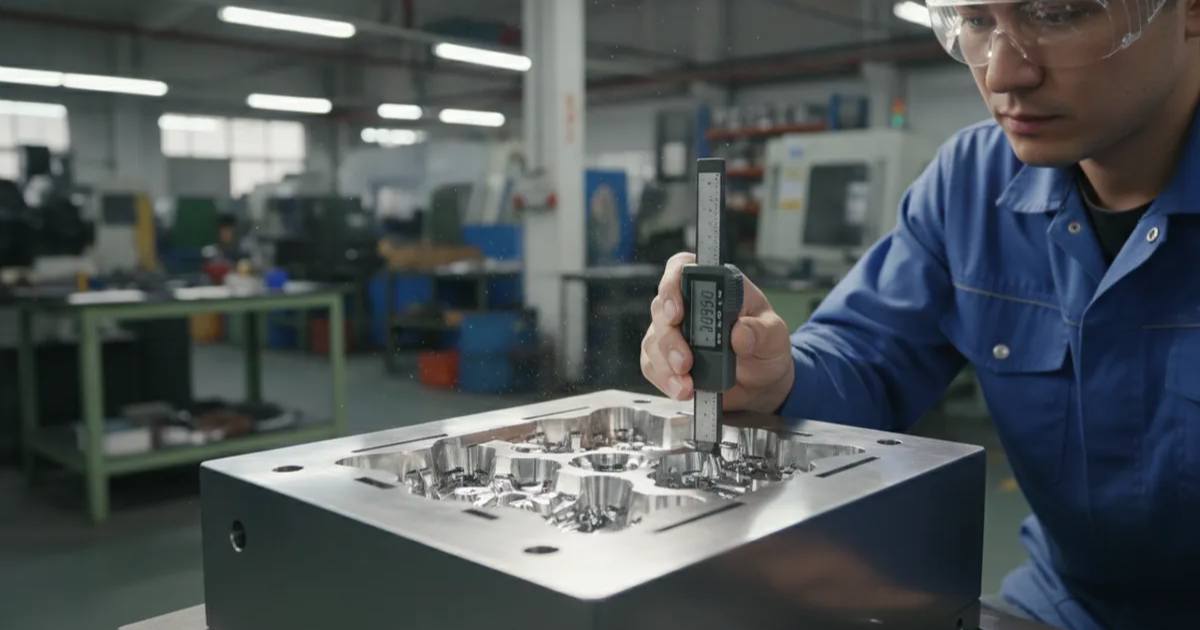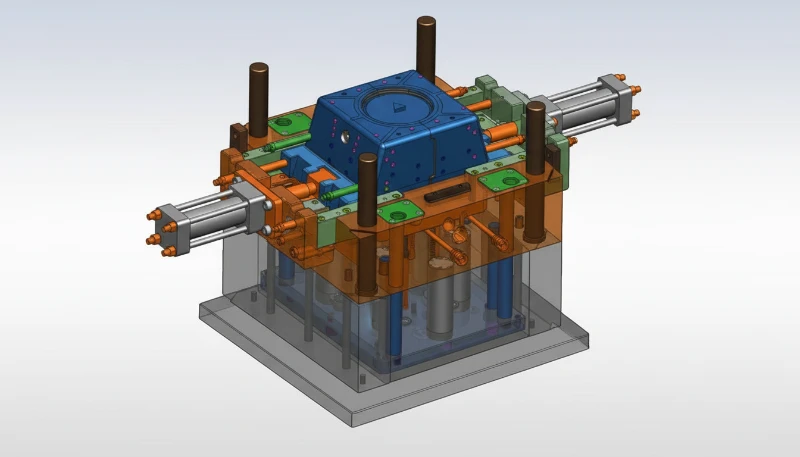
Todas las piezas moldeadas por inyección tienen una: esa fina línea que recorre la superficie donde se unen las dos mitades del molde. La línea de partición1 no es un defecto, sino una característica inevitable del proceso de moldeo por inyección. Sin embargo, su ubicación y el diseño que la rodea pueden marcar la diferencia entre una pieza lista para producción y un costoso rediseño.
En nuestro taller de moldes hemos visto a ingenieros equivocarse con la línea de partición más veces de las que podemos contar. Parece sencillo —basta con dividir el molde por la mitad— hasta que se comprende que la línea de partición determina exactamente dónde aparece la rebaba2, qué dimensiones se mantienen dentro de tolerancias estrictas, si la pieza puede expulsarse correctamente del molde y cuánto costará el utillaje. Esta guía abarca todo lo que los ingenieros deben saber sobre superficies y líneas de partición para acertar a la primera.
- La línea de partición es la huella física que queda donde se unen las dos mitades del molde durante la inyección.
- El diseño de la superficie de partición influye directamente en la calidad de la pieza, el coste del molde y la eficiencia de producción.
- Cinco tipos principales: superficies de partición planas, escalonadas, inclinadas, curvas y compuestas.
- El análisis DFM antes del utillaje puede evitar el 80 % de los problemas de producción relacionados con la línea de partición.
- La rebaba en la línea de partición se controla mediante la precisión del molde, la fuerza de cierre y la selección del material.
¿Qué es una superficie de partición en el moldeo por inyección?
Una superficie de partición es la interfaz plana o contorneada donde las dos mitades del molde se unen y sellan durante la inyección. Si está comparando proveedores o planificando compras, nuestra guía para seleccionar proveedores de moldeo por inyección explica la preparación de RFQ, la cualificación y las comprobaciones de riesgos comerciales.
Una superficie de partición es la interfaz de contacto entre las dos mitades del molde: el lado de cavidad (lado A) y el lado de núcleo (lado B). Cuando el molde se cierra, ambas superficies se presionan con toneladas de fuerza de cierre. La línea de partición es la fina huella que esta interfaz deja en la pieza de plástico terminada.
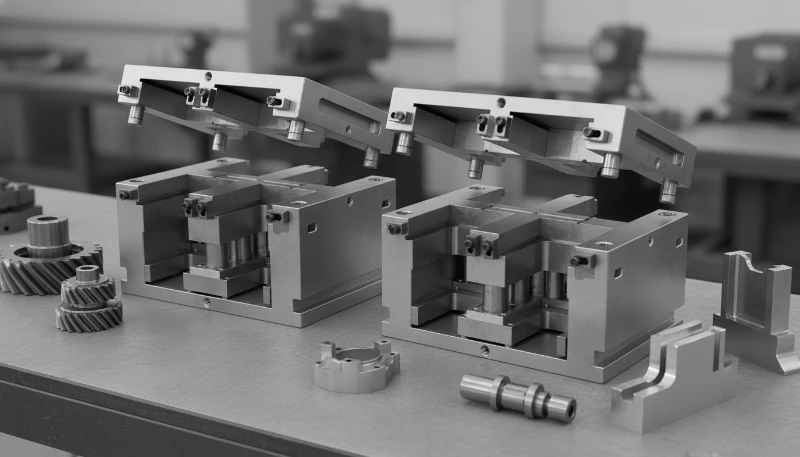
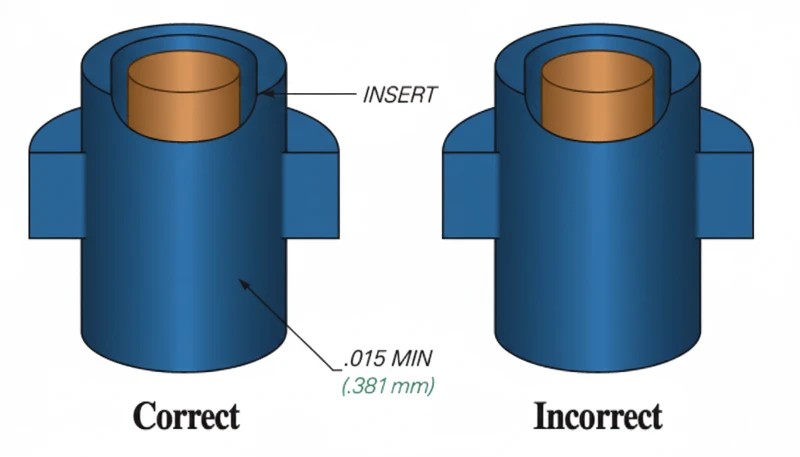
En sentido estricto, la superficie de partición es el plano principal de separación en el contorno mayor de la pieza, que divide cavidad y núcleo. En sentido amplio incluye todas las superficies de contacto entre módulos: caras de correderas, interfaces de elevadores, juntas de insertos y asientos de pasadores expulsores. Cada interfaz puede dejar una línea visible.
Los profesionales del sector suelen llamarla “PL surface” o “PL line” de forma abreviada. El grosor y la visibilidad de esta línea dependen de la precisión del molde, la fuerza de cierre, la viscosidad del material y las condiciones de proceso. Una superficie de partición bien diseñada y con tolerancias de molde estrictas produce una línea tan fina que apenas resulta visible, normalmente de 0.01 a 0.05 mm de ancho. Una superficie mal diseñada genera rebaba visible, desalineación o marcas de escalón que requieren operaciones secundarias de recorte.
¿Cómo se forma la línea de partición durante el moldeo?
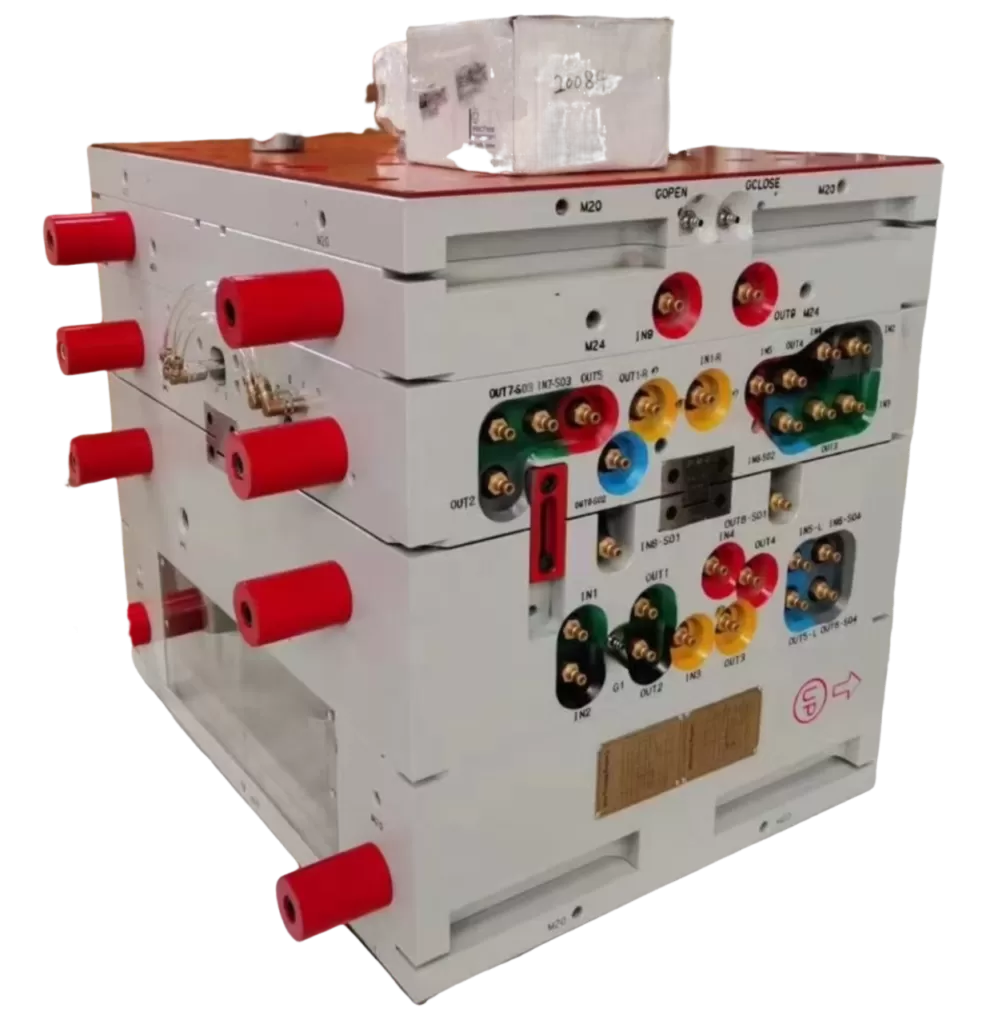
La línea de partición se forma cuando las dos mitades del molde se cierran bajo la fuerza de cierre, creando una unión física en la pieza terminada. Un molde de inyección consta de al menos dos mitades: una fija montada en la platina estacionaria y otra móvil montada en la platina móvil. Cuando la máquina de moldeo cierra el molde, ambas mitades se encuentran en la superficie de partición.
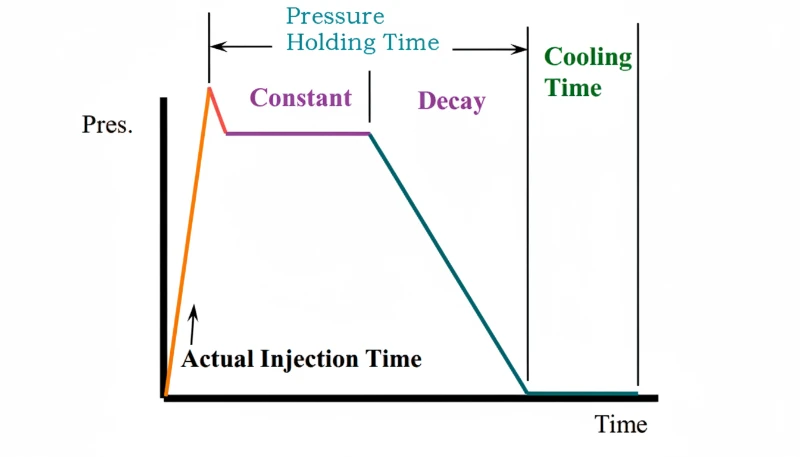
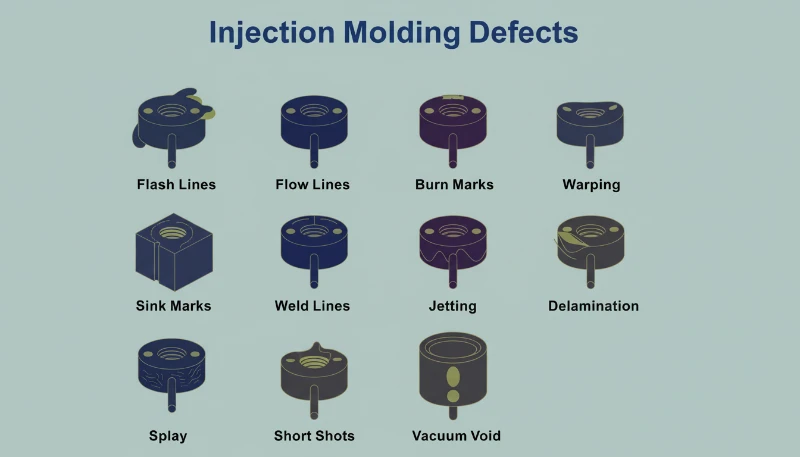
Durante la inyección, el plástico fundido llena la cavidad a alta presión (normalmente 500–2,000 bar). Parte de esta presión actúa directamente sobre la superficie de partición. Incluso con las caras del molde rectificadas con precisión, existe una separación microscópica entre las mitades. Si la presión de inyección supera la que puede contener la fuerza de cierre, el material se introduce en esta separación: así se forman las rebabas.
Después del enfriamiento y la solidificación, el molde se abre por el plano de partición. La pieza permanece en el lado del núcleo, porque la contracción la sujeta, y el sistema expulsor la libera. La unión donde se encontraron las dos mitades del molde queda registrada permanentemente en la superficie de la pieza como línea de partición.
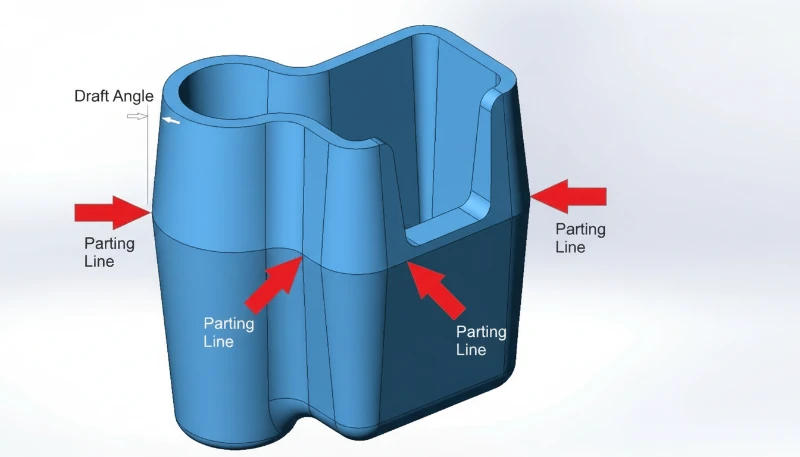
En la mayoría de los casos, la línea de partición es perpendicular a la dirección de apertura del molde. Sin embargo, en geometrías complejas —piezas con socavados, características laterales o perfiles asimétricos—, la superficie de partición puede incluir secciones escalonadas, inclinadas o curvas. Estas superficies de partición multidireccionales requieren mecanismos adicionales en el molde, como correderas, elevadores o pasadores inclinados, para funcionar correctamente.
"Una línea de partición de 0.01 mm de ancho se considera aceptable para la mayoría de las piezas estéticas."True
Para superficies visibles o estéticas, suelen aceptarse líneas de partición inferiores a 0.05 mm. Los moldes de alta precisión pueden alcanzar 0.01 mm o menos, lo que resulta casi invisible a simple vista.
"La línea de partición es un defecto causado por una fabricación deficiente del molde."False
La línea de partición es una característica inevitable de cualquier molde de dos partes. Está presente en todas las piezas moldeadas por inyección, independientemente de la calidad del molde. Lo que varía es su visibilidad: un molde de precisión produce una línea apenas perceptible, mientras que un molde desgastado o mal diseñado produce rebabas visibles.
¿Cuáles son los tipos de superficies de partición?
Los cinco tipos de superficies de partición son plana, escalonada, inclinada, curva y compuesta. Elegir el tipo correcto es una de las primeras decisiones del diseño del molde y una de las más importantes. Estas son las cinco categorías principales:
Superficie de partición plana (recta)
El tipo más sencillo y común. La superficie de partición es un único plano perpendicular a la apertura. Funciona bien para piezas en forma de vaso, paneles planos y geometrías cuya mayor sección sea un plano horizontal limpio. Es la más fácil de mecanizar, sellar y mantener, lo que reduce costes y mejora la uniformidad.
Superficie de partición escalonada
Cuando una pieza presenta características a diferentes alturas que no pueden alojarse en un único plano, la superficie de partición sube o baja escalonadamente para seguir el contorno de la pieza. Las superficies de partición escalonadas generan fuerzas laterales durante la inyección que el molde debe resistir — normalmente mediante elementos de enclavamiento o insertos en forma de cuña. Si la altura del escalón es excesiva, los diseñadores añaden placas de apoyo para aplanar parcialmente la superficie manteniendo la holgura necesaria.
Superficie de partición inclinada
Para piezas con características anguladas o perfiles asimétricos, la superficie de partición sigue un plano inclinado. La superficie angulada incluye una sección de sellado a lo largo de la pendiente (para contener el plástico) y una sección plana de referencia (para mecanizado, alineación y medición). Este tipo exige especial atención a la gestión de fuerzas laterales: la presión de inyección crea un empuje lateral que debe equilibrarse.
Superficie de partición curva (contorneada)
Los productos de consumo complejos —como carcasas de herramientas eléctricas, revestimientos interiores de automóviles o envolventes de dispositivos médicos— suelen necesitar superficies de partición que sigan los contornos curvos de la pieza. La cara del molde se mecaniza por CNC para ajustarse al perfil 3D. Las superficies de partición curvas exigen una alta precisión de mecanizado y un diseño cuidadoso de la superficie de sellado para evitar rebabas a lo largo de todo el contorno.
Superficie de partición compuesta (combinada)
Muchas piezas reales combinan dos o más de los tipos anteriores. Un mismo molde puede tener una sección plana en una zona, un escalón en otra y una sección curva en otro lugar. Las superficies de partición compuestas requieren atención adicional en las zonas de transición: las esquinas afiladas de la unión entre distintos tipos de superficie deben suavizarse para evitar puntos débiles en el acero y prevenir rebabas.
¿Cuáles son los principios fundamentales de diseño de la superficie de partición?
Un buen diseño de la superficie de partición se rige por un conjunto de principios prácticos que equilibran la calidad de las piezas, el coste del molde y la fiabilidad de la producción. En nuestros 20+ años de fabricación de moldes, estas son las reglas que separan una tirada de producción fluida de semanas de modificaciones del molde.
Principio 1: Garantice un desmoldeo correcto
La superficie de partición principal debe situarse en la sección transversal más grande de la pieza en la dirección de apertura del molde. Esta es la regla fundamental. Colocar la línea de partición en cualquier otro lugar obliga a utilizar acciones laterales (correderas, elevadores) para liberar la pieza, lo que añade coste, complejidad y puntos de mantenimiento al molde. Cada acción lateral adicional constituye otra posible fuente de rebaba, desgaste y tiempo de inactividad.
Principio 2: Mantenga la pieza en el lado correcto
Como el sistema de expulsión está en la mitad móvil del molde (lado B), la superficie de partición debe diseñarse para que la pieza permanezca en el macho después de abrir el molde. Si la pieza queda adherida a la cavidad (lado A), necesitará un mecanismo de expulsión específico en la mitad fija, lo que añade coste y complejidad. Los ángulos de desmoldeo en el lado del macho y las características con contrasalida ayudan a garantizar una retención fiable de la pieza.
Principio 3: Conservar la precisión dimensional
Cualquier dimensión que cruce la línea de partición está sujeta a variaciones por la alineación del molde, la deflexión de cierre y la formación de rebaba. Para dimensiones críticas —especialmente las que exigen una coaxialidad o tolerancia posicional estrecha—, sitúe todas las características relacionadas en el mismo lado del molde. Un orificio escalonado que requiera una coaxialidad de ±0.02 mm debe formarse con un único núcleo en una mitad del molde, no dividido entre ambas.
Principio 4: Optimizar la ventilación
Con un molde rectificado con precisión utilizando acero para herramientas endurecido (HRC 48–52), las líneas de separación pueden reducirse a un ancho de 0.005–0.01 mm — prácticamente invisibles para el ojo humano e indetectables al tacto. Los moldes de producción estándar normalmente producen líneas de 0.02–0.05 mm, que son visibles pero aceptables para la mayoría de las aplicaciones no cosméticas. La finura alcanzable depende de varios factores: precisión del mecanizado del molde (rectificado superficial vs. fresado), dureza y resistencia al desgaste del acero, adecuación de la fuerza de sujeción, perfil de presión de inyección y la viscosidad del material de moldeo en estado fundido. Los moldes de mayor precisión cuestan más pero proporcionan líneas de separación consistentemente más finas durante ciclos de producción más largos.
Principio 5: simplificar la construcción del molde
Cada complejidad adicional en la superficie de partición aumenta el tiempo de mecanizado, el coste de inspección y el riesgo de mantenimiento. Si la geometría de la pieza lo permite, siempre es preferible una superficie de partición plana. Cuando la complejidad es inevitable, como en superficies escalonadas o curvas, intente combinar varios elementos en superficies compartidas para reducir el número total de transiciones de partición.
"Las dimensiones que atraviesan la línea de partición presentan más variación que las dimensiones situadas en una mitad del molde."True
Cualquier dimensión que abarque ambas mitades del molde se ve afectada por la precisión de alineación del molde, la uniformidad de la fuerza de cierre, las diferencias de expansión térmica y el espesor de la rebaba. Mantener tolerancias estrechas (±0.05 mm o mejores) a través de la línea de partición es considerablemente más difícil que en una sola mitad del molde.
"Una superficie de partición escalonada siempre requiere mecanismos de extracción lateral del núcleo."False
Las superficies de partición escalonadas siguen los cambios de altura de la geometría de la pieza, pero se abren en la dirección principal del molde. La extracción lateral del núcleo —correderas— es necesaria para las contrasalidas, elementos perpendiculares a la dirección de apertura. Puede existir un escalón sin ninguna contrasalida.
¿Cómo afecta la ubicación de la línea de partición a la calidad de la pieza?
La ubicación de la línea de partición es posiblemente la decisión con mayor impacto en el diseño del molde. Afecta directamente a cuatro dimensiones de la calidad: apariencia, precisión dimensional, acabado superficial y vida útil del utillaje.
Aspecto: En las superficies estéticas, la línea de partición es una unión visible. En productos de consumo debe ocultarse en una zona no visible, disimularse a lo largo del borde de una característica o acabarse hasta resultar casi imperceptible. Si la pieza tiene una superficie visible de Clase A, la línea de partición debe situarse en la parte posterior o a lo largo de una línea de discontinuidad natural. Hemos trabajado con clientes del sector automotriz que rechazaron lotes de producción completos porque la línea se desplazó 0.2 mm respecto a la posición acordada.
Precisión dimensional: Como se explicó antes, las dimensiones que atraviesan la línea de partición heredan la tolerancia de alineación del molde. En piezas con tolerancias generales de ±0.1 mm, esto suele ser manejable. En componentes de precisión con requisitos de ±0.02 mm, debe evitarse por completo dividir características críticas a través de la línea de partición.
Acabado superficial: La zona de la línea de partición suele tener una textura distinta a la del resto de la pieza. Incluso con moldes pulidos, la unión de las dos mitades crea un pequeño escalón o marca. Si la pieza exige un acabado SPI específico (como SPI A-2 para superficies con calidad óptica), la zona de partición nunca coincidirá perfectamente con el acabado circundante.
Vida útil del utillaje: Las superficies de partición soportan toda la fuerza de cierre ciclo tras ciclo. Una superficie bien diseñada, con apoyo adecuado y suficiente área portante, durará cientos de miles de inyecciones. Una mal diseñada —con bordes afilados, área de sellado insuficiente o voladizo excesivo— se desgastará, sufrirá abolladuras y generará rebabas en decenas de miles de ciclos.
¿Cuándo deben utilizarse superficies de partición escalonadas o curvas?
Las superficies de partición escalonadas se utilizan cuando una pieza tiene características a distintas alturas, mientras que las superficies curvas son necesarias para geometrías no planas. A continuación se explica cuándo utilizar cada tipo y qué contrapartidas se aceptan.
Utilice una superficie de partición escalonada cuando: La pieza tenga características a alturas muy diferentes que no puedan desmoldearse con un solo plano. Son candidatos típicos las carcasas electrónicas con recortes para conectores a distintas alturas, las mitades de envolventes con resaltes de montaje escalonados y los componentes de bombas con varios niveles de sellado. La principal consideración técnica es controlar las fuerzas laterales de inyección: la presión del fundido empuja lateralmente el escalón y, sin enclavamientos o soportes en cuña adecuados, las mitades pueden desplazarse y causar deriva dimensional y rebabas.
Utilice una superficie de partición curva cuando: La pieza tenga una geometría orgánica y no plana, como carcasas de productos de consumo, molduras automotrices o empuñaduras ergonómicas. La superficie sigue el contorno 3D para ocultar la línea en un borde natural o en el límite de una característica. Este enfoque ofrece los mejores resultados estéticos, pero exige mecanizado CNC de alta precisión y un texturizado cuidadoso del molde para mantener uniforme el acabado en toda la interfaz curva.
Análisis de compromisos: Al pasar de superficies planas a escalonadas y luego curvas, cada etapa añade aproximadamente un 15–30% al coste de construcción del molde. Las escalonadas requieren mecanizado adicional de enclavamientos y posiblemente bases de molde mayores. Las curvas exigen CNC de 5 ejes y más tiempo de ajuste. También existe una penalización productiva: las superficies complejas se desgastan antes, requieren mantenimiento más frecuente y son más sensibles a las variaciones de los parámetros del proceso.
"Las superficies de partición curvas siempre son más caras de fabricar que las planas."True
Las superficies de partición curvas requieren mecanizado CNC de 5 ejes, más tiempo de ajuste y comprobación por contacto, y una inspección más compleja. Una superficie de partición plana puede rectificarse rápidamente hasta la tolerancia, mientras que una curva debe mecanizarse y ajustarse a mano a lo largo de todo el contorno. El sobrecoste suele ser del 20–40% respecto a un diseño plano comparable.
"Puede eliminar por completo la línea de partición mediante el moldeo con insertos."False
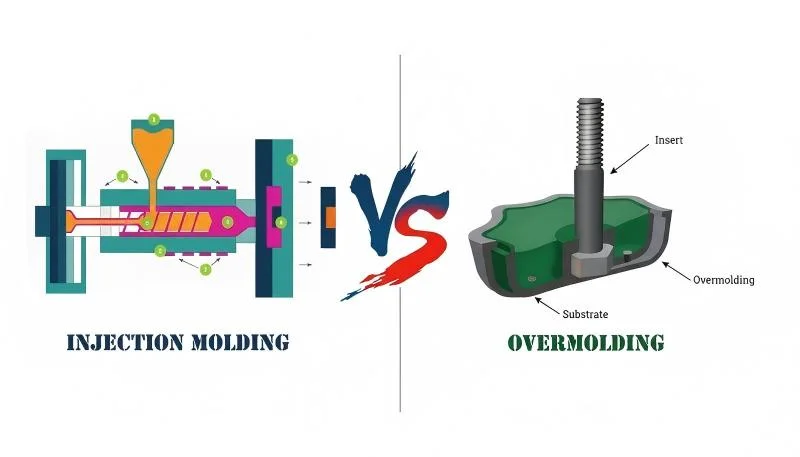
El moldeo con insertos sigue utilizando un molde de dos partes y, por tanto, también produce una línea de partición. El inserto se coloca en el molde antes de la inyección, pero el molde sigue abriéndose y cerrándose a lo largo de una superficie de partición. La única manera de evitar una línea de partición es utilizar un proceso sin molde dividido, como el mecanizado a partir de material macizo.
¿Cómo puede el análisis DFM optimizar la línea de partición?
El análisis de diseño para fabricación (DFM3) es la mejor herramienta para definir correctamente la línea de partición antes de cortar el acero. En nuestro flujo DFM de fábrica, contrastamos esa decisión con las etapas del moldeo por inyección para que la línea favorezca el llenado, la compactación, el enfriamiento, la expulsión y la inspección. Una revisión DFM exhaustiva evalúa la geometría, identifica la ubicación óptima, señala posibles problemas de desmoldeo y estima la complejidad necesaria del molde.
En ZetarMold, nuestros 8 ingenieros sénior aportan cada uno más de 10 años de experiencia en diseño de moldes a cada revisión DFM. En nuestras pruebas de utillaje, los ingenieros de procesos también comparan la rebaba de la línea de partición con la uniformidad de la masa procedente del husillo de la máquina de moldeo por inyección, porque un frente de masa inestable puede hacer que una superficie de partición límite parezca peor de lo que realmente es. Esto es lo que abarca un análisis DFM adecuado de la línea de partición:
1. Identificación de contrasalidas: Se catalogan todas las características con contrasalida. Para cada una se determina si necesita una corredera, un elevador, un núcleo colapsable o si puede resolverse simplemente reubicando la línea de partición. En muchos casos, un ligero rediseño elimina por completo la necesidad de una acción lateral, con un ahorro considerable en utillaje.
2. Verificación del ángulo de desmoldeo: Todas las superficies perpendiculares a la línea de partición necesitan un ángulo adecuado, normalmente de 1–3° según el material y el acabado. Las paredes sin ángulo o con ángulo negativo cerca de la línea provocarán adherencia, rayaduras o fallos de expulsión.
3. Evaluación del riesgo de rebabas: Evaluamos qué zonas de la superficie de partición recibirán la mayor presión del fundido y si el molde dispone de suficiente área portante para contenerla. Las secciones de pared fina cercanas a la línea son zonas de alto riesgo.
En nuestra fábrica de Shanghái, operamos 47 máquinas de moldeo por inyección que van desde 90T hasta 1850T, respaldadas por una instalación interna de fabricación de moldes. Cada herramienta que construimos pasa por una verificación rigurosa de la línea de partición, porque incluso un desajuste de 0.05 mm puede causar rebaba visible en la pieza final.
"El nailon (PA) requiere tolerancias más estrictas en la línea de partición que el policarbonato (PC) debido a su menor viscosidad de fusión."True
El nailon tiene una viscosidad de fusión mucho menor que el policarbonato, lo que significa que fluye con más facilidad por los huecos microscópicos de la superficie de partición. Esto hace que las piezas de nailon sean más propensas a las rebabas y exige ajustes del molde más estrechos (normalmente 0,02 mm o menos) que el policarbonato (0,05 mm o menos).
"Un análisis DFM solo es necesario para piezas complejas o de gran volumen."False
El análisis DFM es valioso para todas las piezas moldeadas por inyección, independientemente de su complejidad o volumen. Incluso las piezas sencillas pueden presentar problemas con la línea de partición que son baratos de corregir en la etapa de diseño, pero caros de solucionar después de fabricar el molde. Una revisión DFM de 30 minutos puede ahorrar miles en modificaciones del molde.
Preguntas frecuentes
¿Qué causa la rebaba visible a lo largo de la línea de partición?
Las rebabas se forman cuando el plástico fundido escapa por la separación entre las dos mitades del molde en la superficie de partición durante la fase de inyección. Entre las causas habituales se incluyen una fuerza de cierre insuficiente respecto a la presión de inyección, caras del molde desgastadas o dañadas que ya no sellan herméticamente, una mala alineación del molde que provoca una presión de apoyo desigual, una presión de compactación excesiva mantenida demasiado tiempo y materiales de baja viscosidad, como el nailon, que fluyen fácilmente por pequeñas holguras. El mantenimiento periódico del molde —incluido el reajuste de las superficies de partición cada 50,000–100,000 ciclos—, junto con un control adecuado de los parámetros del proceso y un tonelaje suficiente de la máquina, constituyen las principales defensas contra las rebabas en la línea de partición.
¿Puede eliminarse por completo la línea de partición de una pieza moldeada por inyección?
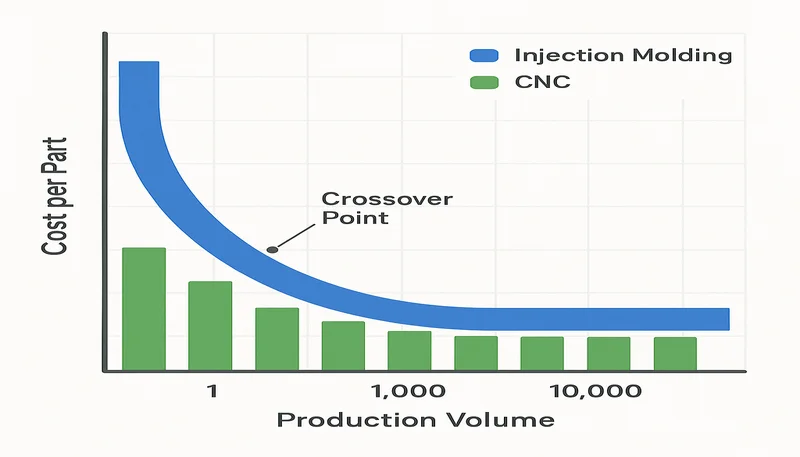
No, no puede. Toda pieza producida con un molde convencional de dos partes siempre tendrá una línea de partición donde se unen las mitades de cavidad y núcleo. El objetivo no es eliminarla, sino minimizarla mediante una construcción precisa con superficies rectificadas, ubicación estratégica en zonas no decorativas y parámetros optimizados. Cuando cualquier unión visible es inaceptable, procesos alternativos como el mecanizado CNC a partir de material macizo o la fabricación aditiva pueden producir piezas sin juntas, aunque con un coste por pieza mucho mayor y menor rendimiento.
¿Qué grosor mínimo puede tener una línea de partición?
Con un molde rectificado con precisión y fabricado en acero para herramientas endurecido (HRC 48–52), las líneas de partición pueden reducirse a una anchura de 0,005–0,01 mm: prácticamente invisibles a simple vista e imperceptibles al tacto. Los moldes de producción estándar suelen generar líneas de 0,02–0,05 mm, visibles pero aceptables para la mayoría de las aplicaciones no estéticas. El espesor alcanzable depende de varios factores: precisión del mecanizado del molde (rectificado de superficies frente a fresado), dureza y resistencia al desgaste del acero, suficiencia de la fuerza de cierre, perfil de presión de inyección y viscosidad de la masa fundida del material. Los moldes de mayor precisión cuestan más, pero mantienen líneas de partición más finas durante series de producción más largas.
Guía de Superficies y Líneas de Partición en Moldeo por Inyección | ZetarMold
La superficie de partición es toda la interfaz de contacto entre las dos mitades del molde: una superficie 2D o 3D dentro del propio molde. La línea de partición es la estrecha traza 1D que esta interfaz deja en la superficie de la pieza de plástico moldeada tras la expulsión. En otras palabras, la superficie de partición es una característica de diseño que existe en el acero del molde, mientras que la línea de partición es la evidencia visible de esa superficie transferida a la pieza terminada. Una sola superficie de partición puede producir una línea compleja y sinuosa si la geometría del molde incluye secciones escalonadas, inclinadas o curvas.
¿La ubicación de la línea de partición afecta al coste del moldeo por inyección?
Sí, considerablemente. Una superficie de partición plana es la más económica de fabricar, mecanizar y mantener. Cada aumento de complejidad —escalones, curvas o interfaces adicionales— añade mecanizado, ajuste, inspección y mantenimiento. Pasar de una superficie plana a una compuesta suele aumentar el coste un 30–50%. Las líneas que requieren correderas, elevadores o pasadores inclinados añaden aún más, pues cada acción necesita guía, placa de desgaste, retorno, ajuste y pruebas.
¿Qué ángulo de desmoldeo se necesita cerca de la línea de partición?
Se recomienda un ángulo de desmoldeo mínimo de 1° por lado para todas las superficies perpendiculares a la línea de partición en el moldeo de producción estándar. En piezas con superficies texturizadas (como acabados MT, VDI o erosionados por electroerosión), se requieren entre 1,5 y 3° por lado; las texturas más profundas necesitan un ángulo mayor para evitar rozaduras durante la expulsión. En superficies pulidas o con acabado espejo puede bastar un ángulo de 0,5°. Las paredes con ángulo cero o negativo cerca de la línea de partición corren el riesgo de que la pieza se adhiera, sufra arañazos superficiales durante la expulsión, presente más marcas de expulsores y tenga variaciones dimensionales entre ciclos. El ángulo de desmoldeo debe especificarse durante el diseño de la pieza, no descubrirse como problema durante la prueba del molde.
¿Cómo se relaciona la fuerza de cierre con la calidad de la línea de partición?
La fuerza de cierre de la máquina de moldeo debe superar la fuerza total de separación generada por la presión de inyección que actúa sobre el área proyectada de la superficie de partición. Si la fuerza de cierre es insuficiente, el molde se abre ligeramente durante las fases de inyección y compactación, creando un hueco que permite que el plástico escape en forma de rebaba a lo largo de la línea de partición. La fuerza de cierre necesaria se calcula así: presión de inyección × área proyectada de la cavidad × factor de seguridad (normalmente 1.1–1.2). Utilizar un molde en una máquina demasiado pequeña es la causa más habitual de rebabas en la línea de partición en entornos de producción. Seleccionar el tonelaje correcto de la máquina durante la planificación de la producción es esencial para mantener una calidad uniforme en la línea de partición.
Nuestro equipo de ingeniería en ZetarMold aporta más de 20 años de experiencia en diseño de moldes, 8 ingenieros senior y una instalación de fabricación de moldes interna a cada proyecto. Desde el análisis DFM hasta la producción, optimizamos su línea de partición para calidad, costo y rendimiento. Con 47 máquinas de moldeo por inyección (90T-1850T) y más de 400 materiales plásticos, manejamos todo, desde componentes ópticos de precisión hasta piezas estructurales grandes.
Solicite un presupuesto gratuito →
línea de partición: se refiere a la línea visible en una pieza moldeada donde las dos mitades del molde se encuentran durante el proceso de moldeo por inyección. ↩
rebaba: se refiere al material sobrante que escapa de la cavidad por la línea de partición durante la inyección y forma bordes finos no deseados. ↩
DFM: significa diseño para fabricación, la práctica de diseñar piezas para producirlas con mayor facilidad y a menor coste. ↩