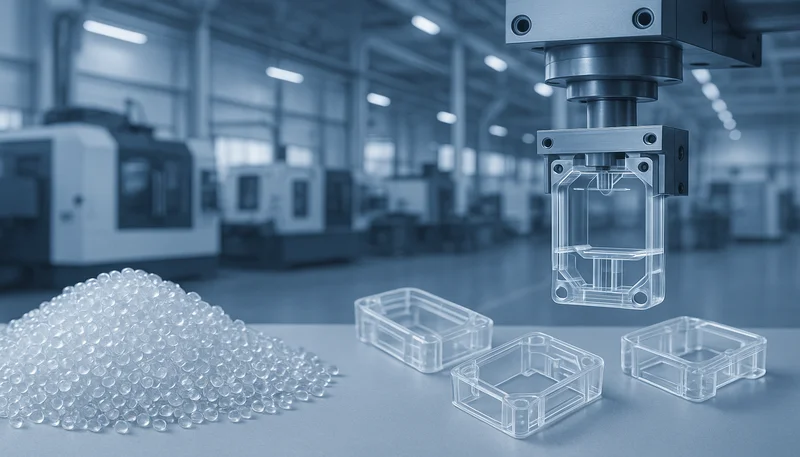
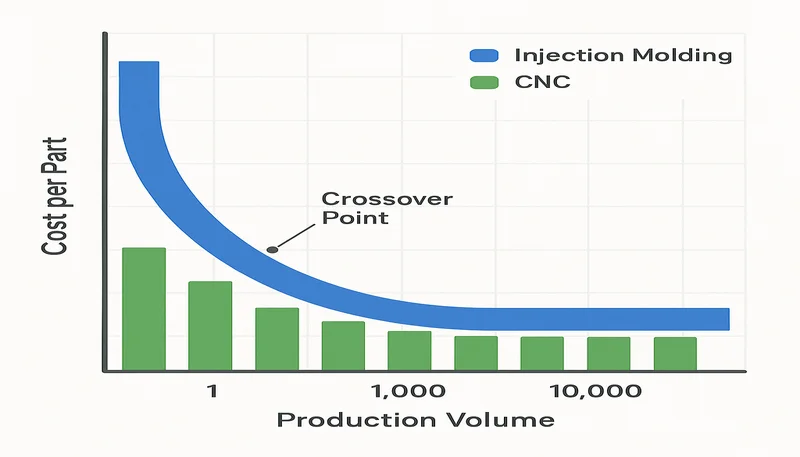
- Kühlung ist die dominante Phase in Bezug auf die Zykluszeit, selbst beim Dünnwandspritzgießen. Da die Wandstärke gering ist, ist die thermische Diffusion schnell – typischerweise sind 2–4 Sekunden Kühlung ausreichend, um die Ausstoßtemperatur zu erreichen. Konforme Kühlkanäle, die dem Kavitätenkontur folgen, anstatt gerade gebohrte Kanäle, reduzieren die Temperaturvariation über das Bauteil um 40–60% und ermöglichen 20–30% schnellere Zyklen. Für einen 0,6 mm PP-Behälter liefert gut gestaltete konforme Kühlung ausstoßbereite Teile in unter 2 Sekunden.
- Zykluszeiten von 2–5 Sekunden sind erreichbar — 5- bis 10-mal schneller als beim konventionellen Spritzgießen —, wodurch dieses Verfahren für großvolumige Verpackungs- und Elektronikanwendungen wirtschaftlich ist.
- Die Werkstoffauswahl ist entscheidend: Polypropylen (PP) mit einem MFI von 40–60 g/10 min sowie hochfließende ABS- oder PA66+GF-Typen dominieren Dünnwandanwendungen.
- Die Werkzeugstahlsorte (P20 für Prototypen, H13 für Produktionsläufe mit mehr als 500,000 Zyklen) und konturnahe Kühlkanäle bestimmen unmittelbar die Teilequalität und Werkzeugstandzeit.
- ZetarMold betreibt 47 Spritzgießmaschinen, darunter spezielle Hochgeschwindigkeitspressen für Dünnwandanwendungen, und unterstützt Kunden von der DFM-Prüfung bis zur Serienproduktion.
Was ist Dünnwandspritzgießen?
Dünnwand-Spritzgießen1 ist ein Fertigungsverfahren für Teile mit Wanddicken unter 1 mm und Einspritzgeschwindigkeiten von 500 bis 1.500 mm/s. Dieser Artikel behandelt Parameter, Materialien, Werkzeuge und Strategien zur Fehlervermeidung, die bei Wanddicken unter einem Millimeter über den Erfolg entscheiden.
Einen breiteren Überblick über Prozessgrundlagen, Materialverhalten und Produktionsentscheidungen bietet unser vollständiger Leitfaden zum Spritzgießen.
Für einen breiteren Kontext vergleichen Sie dieses Thema mit Spritzgießen, Spritzgießform2 und unserem Leitfaden zur Lieferantenbeschaffung.
Dünnwand-Spritzgießen ist ein spezialisiertes Fertigungsverfahren für Kunststoffteile mit Wandbereichen unter 1,0 mm, bei Großserienverpackungen und Unterhaltungselektronik oft sogar nur 0,4 mm. Anders als herkömmliches Formen erfordert es höhere Einspritzgeschwindigkeiten, erhöhte Nachdrücke und Präzisionswerkzeuge, damit die Kavität vollständig gefüllt ist, bevor das dünne Material in der Form erstarrt. Die Auslegungsreserven sind gering, und jeder Parameter von der Schmelzetemperatur bis zur Anschnittposition ist für eine gleichbleibende Teilequalität3 entscheidend.
| Metrisch | Dünnwandig | Konventionell | Warum es wichtig ist |
|---|---|---|---|
| Wandstärke | <1.0 mm | 1.5–4.0 mm | Bestimmt die erforderliche Füllgeschwindigkeit |
| L/T-Verhältnis | >150:1 | <100:1 | Primäres Klassifizierungskriterium |
| Einspritzgeschwindigkeit | 500–1,500 mm/s | 50–200 mm/s | Muss dem Einfrieren zuvorkommen |
| Schließkraft | 0,5–0,8 t/cm² | 0,3–0,5 t/cm² | Widersteht Gratbildung bei hohem Druck |
In unserem Werk bei ZetarMold klassifizieren wir ein Teil üblicherweise als dünnwandig, wenn ein Bereich unter 0.8 mm liegt oder das L/T-Verhältnis 200:1 überschreitet. Ab dieser Schwelle können konventionelle Maschinen die Kavität nicht mehr füllen — das Material erstarrt mitten im Fluss, und es entsteht jedes Mal ein Kurzschuss. Der praktische Wanddickenbereich für die meisten Konsumgüterverpackungen beträgt 0.5–0.9 mm; Elektronik- und Medizinteile können bei geeigneter Werkzeuggeometrie bis auf 0.3 mm gehen.
Das Verfahren ist nicht einfach “gewöhnliches Spritzgießen mit dünneren Wänden”. Es erfordert spezielle Anlagen mit Akkumulatoren, eine grundlegend andere Anschnittstrategie, eine präzisere Temperaturregelung und – besonders wichtig – eine Werkzeugkonstruktion, die für die höhere Schließkraft ausgelegt ist, die zur Vermeidung von Gratbildung bei erhöhten Drücken benötigt wird. Alle Elemente des Systems müssen aufeinander abgestimmt konstruiert werden.
Wie funktioniert das Dünnwandspritzgießen?
Dünnwandspritzgießen ähnelt dem konventionellen Spritzgießen, arbeitet jedoch mit extremen Parametern und füllt den Hohlraum in unter 150 Millisekunden. Die Einspritzphase ist der Punkt, an dem sich Dünnwand am stärksten vom konventionellen Verfahren unterscheidet – sie erfordert eine völlig andere Maschinenspezifikation und eine Werkzeugstrategie, die auf schnelle Füllung und präzise Temperaturregelung ausgelegt ist.
Die Einspritzgeschwindigkeit muss 500–1,500 mm/s erreichen, damit die Kavität gefüllt ist, bevor die Schmelzefront unter die Nichtfließtemperatur des Werkstoffs fällt. Zum Vergleich: Beim konventionellen Spritzgießen werden üblicherweise 50–200 mm/s verwendet. Die höhere Geschwindigkeit verdichtet die Schmelze und erzeugt erhebliche Scherwärme, die den schnellen Wärmeverlust an die kalte Werkzeugwand teilweise ausgleicht. Die Zeit wird in Millisekunden gemessen: Ein Teil mit 0.5 mm Wanddicke kann sich in 0.05–0.10 Sekunden füllen. Auf unseren Hochgeschwindigkeitspressen überwachen wir die Einspritzzeit in Echtzeit, um Abweichungen zu erkennen, die auf eine verstopfte Entlüftung oder einen beginnenden Anschnittverschleiß hindeuten könnten.
| Phase | Dünnwandspritzgießen | Konventionelles Formen |
|---|---|---|
| Füllzeit | 0.05–0.15 s | 1–5 s |
| Nachdruckzeit | 0.5–1.5 s | 3–10 s |
| Abkühlungszeit | 2–4 s | 10–45 s |
| Gesamtzyklus | 2–5 s | 15–60 s |
Nachdruck und Haltedruck werden unmittelbar nach dem Füllen aufgebracht, um die Volumenschwindung beim Erstarren des Bauteils auszugleichen. Bei dünnwandigen Teilen ist die Nachdruckphase kurz – typischerweise 0,5–1,5 Sekunden –, weil die Wand schnell einfriert und eine längere Nachdruckzeit die Dichte nicht erhöht. Überpacken ist ein häufiger Fehler, der Gratbildung und Anhaften verursacht. In unserem Werk überwachen wir den Übergang vom Füllen zum Nachdruck mit Kavitätsdrucksensoren und beenden den Nachdruck, sobald sich der Druck stabilisiert – meist innerhalb von 0,8 Sekunden nach Abschluss der Füllung.
Auch beim Dünnwandspritzgießen dominiert die Kühlung die Zykluszeit. Aufgrund der geringen Wanddicke erfolgt die Wärmediffusion schnell; typischerweise genügen 2–4 Sekunden Kühlung bis zur Auswerfertemperatur. Konturnahe Kühlkanäle, die der Kavitätskontur statt geradlinigen Bohrungen folgen, verringern die Temperaturunterschiede im Bauteil um 40–60 % und ermöglichen 20–30 % schnellere Zyklen. Bei einem 0,6-mm-PP-Behälter liefert eine gut ausgelegte konturnahe Kühlung in weniger als 2 Sekunden auswerfbereite Teile.
„Eine höhere Einspritzgeschwindigkeit reduziert unvollständige Füllungen beim Dünnwandspritzgießen.“True
Bei dünnwandigen Teilen muss die Schmelzefront alle Endbereiche der Kavität erreichen, bevor der Kunststoff erstarrt. Eine Erhöhung der Einspritzgeschwindigkeit von 200 mm/s auf 800 mm/s verkürzt die Füllzeit um 75 %, hält die Schmelze durchgehend über der Fließgrenztemperatur und beseitigt damit die Grundursache von Kurzschüssen in dünnen Bereichen.
"Für dünnwandige Teile können Sie jede Standard-Spritzgießmaschine verwenden."False
Standardmaschinen verfügen nicht über die speicherunterstützte Einspritzeinheit, die für Einspritzgeschwindigkeiten von 500–1,500 mm/s erforderlich ist, und ihre Schließsysteme sind nicht für die hohen Kavitätsdrücke (140–250 MPa) ausgelegt, die dünne Wände erfordern. Der Einsatz einer konventionellen Maschine führt zu Kurzschüssen, übermäßigem Grat oder Maschinenschäden.
Was sind die wichtigsten Verarbeitungsparameter für das Dünnwandspritzgießen?
Die Dünnwandverarbeitung arbeitet in engen Prozessfenstern: Jede Abweichung vom optimalen Bereich führt unmittelbar zu Fehlern. Die folgenden Parameter sind die wichtigsten Stellgrößen, die unsere Prozessingenieure während der Qualifizierung anpassen. Eine Absenkung der Schmelzetemperatur um 5°C, eine Verringerung des Einspritzdrucks um 10 MPa oder eine Verzögerung der Kühlzeit um 2 Sekunden kann ein Teil von akzeptabel zu 100% Ausschuss verschieben — Toleranzen, die beim konventionellen Spritzgießen mit 2 mm Wandstärke ohne Bedeutung wären.
| Kenngröße | Dünnwandbereich | Konventioneller Bereich | Auswirkung der Abweichung |
|---|---|---|---|
| Einspritzgeschwindigkeit | 500–1,500 mm/s | 50–200 mm/s | Zu niedrig → Kurzschuss; zu hoch → Gratbildung oder Freistrahlbildung |
| Einspritzdruck | 140–250 MPa | 70–140 MPa | Zu niedrig → Kurzschuss; zu hoch → Grat, übermäßige Schließkraft |
| Schmelztemperatur | 220–280°C (PP) | 200–260°C | Zu hoch → Zersetzung; zu niedrig → Erstarrung |
| Temperatur der Form | 15–30°C (PP) | 20–60°C | Zu hoch → längere Zykluszeit; zu niedrig → Verzug |
| Zykluszeit | 2–5 s | 15–60 s | Zu kurz → Teil bei der Auswerfung nicht vollständig erstarrt |
| Schließkraft | 0,5–0,8 t/cm² | 0,3–0,5 t/cm² | Unzureichend → Gratbildung an der Trennlinie |
Die Steuerung der Schmelzetemperatur ist besonders kritisch, da Dünnwandbereiche 3–5-mal schneller abkühlen als herkömmliche Teile. Liegt die Schmelzetemperatur 10°C unter dem empfohlenen Bereich, erstarrt die Außenhaut, bevor die Schmelzefront die zuletzt gefüllte Zone erreicht, wodurch selbst bei maximaler Einspritzgeschwindigkeit eine Kurzfüllung entsteht. Wir stellen das Temperaturprofil des Zylinders so ein, dass die Düsenzone 5–10°C über der hinteren Zone liegt. Dadurch bleibt die Schmelzetemperatur am Anschnitt konstant und Schwankungen der Füllung zwischen den Schüssen werden reduziert.
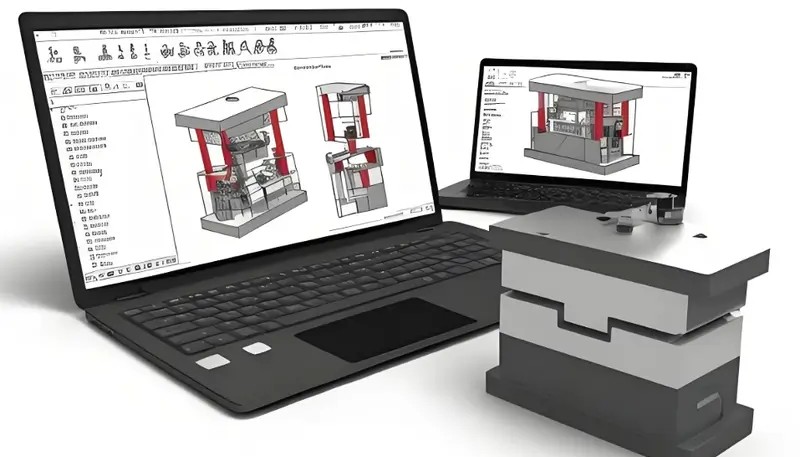
Die Berechnung der Schließkraft für Dünnwandwerkzeuge muss die erhöhten Kavitätsdrücke berücksichtigen. Die Standardabschätzung von projizierter Fläche × 0,3–0,5 t/cm² ist unzureichend – verwenden Sie 0,5–0,8 t/cm² für Dünnwandteile. Ein unterdimensioniertes Werkzeug zeigt Gratbildung an der Trennlinie, selbst wenn die Einspritzparameter korrekt sind, und eine einfache Reduzierung des Einspritzdrucks zur Gratvermeidung führt stattdessen zu unvollständigen Teilen.
| Kenngröße | Dünnwandanforderung | Konventionelle Ausgangsbasis | Grundregel |
|---|---|---|---|
| Schließkraft | 0,5–0,8 t/cm² | 0,3–0,5 t/cm² | Als Ausgangspunkt aus projizierter Fläche × 0.65 berechnen |
| Anschnittdicke | An Wandstärke anpassen (0.6–0.8 mm) | 0.5–1.5 mm | Nie kleiner als die Wanddicke |
| Anschnittposition | Dickster Bereich | An jeder ausgeglichenen Position | Zu dünnen Bereichen hin fließen, nicht davon weg |
| Entlüftungstiefe | 0.015–0.025 mm | 0.02–0.04 mm | An den zuletzt gefüllten Stellen, um den Dieseleffekt zu verhindern |
Die Anschnittdimensionierung ist bei Dünnwandwerkzeugen besonders kritisch. Ein zu kleiner Anschnitt begrenzt den Fluss und erhöht den Druckverlust; ein zu großer Anschnitt verursacht Freistrahlbildung oder Bindenähte. Bei Wänden unter 0.8 mm sollte die Anschnittdicke der Wanddicke entsprechen oder sie geringfügig überschreiten — typischerweise 0.6–0.8 mm — und am dicksten Bereich des Teils liegen, damit die Schmelzefront zu dünneren Bereichen fortschreiten kann, ohne vorzeitig einzufrieren.
Die Entlüftung wird häufig unterschätzt. Bei 1.500 mm/s wird eingeschlossene Luft in der Kavität schneller komprimiert, als sie durch die üblichen Trennspalte entweichen kann. Spezielle Entlüftungsnuten (0,015–0,025 mm tief, 3–5 mm breit) am letzten Füllpunkt verhindern Brandstellen, durch Lufteinschlüsse verursachte unvollständige Füllungen und den Dieseleffekt – einen gratähnlichen Fehler, der entsteht, wenn die adiabatische Verdichtung das Harz entzündet.
Welche Materialien eignen sich am besten für das Dünnwandspritzgießen?
Bei der Werkstoffauswahl für Dünnwandteile dominiert das Fließverhalten. Harze müssen einen ausreichend hohen Schmelzflussindex besitzen, um die Kavität vor dem Erstarren zu füllen, zugleich aber nach der Erstarrung genügend mechanische Integrität aufweisen, um das Auswerfen ohne Risse zu überstehen. Standardharze für konventionelles Formen sind für Dünnwandanwendungen häufig zu viskos.
Polypropylen (PP) ist das vorherrschende Dünnwandharz und macht etwa 60% der gesamten Dünnwandverpackungsproduktion aus. Die ideale Type weist einen MFI von 40–60 g/10 min auf (gemessen bei 230°C/2.16 kg). Typen mit hohem MFI fließen problemlos in 0.5 mm dicke Bereiche, können jedoch an Schlagzähigkeit einbüßen; Rezepturentwickler gleichen dies mit Nukleierungsmitteln und Schlagzähmodifikatoren aus. Die geringe Dichte von PP (0.90–0.91 g/cm3) reduziert außerdem das Teilegewicht, einen wichtigen Faktor für die Wirtschaftlichkeit von Verpackungen.
Für Struktur- und Elektronikanwendungen werden hochfließende ABS-Typen (MFI 15–25 g/10 min bei 220°C/10 kg) und mit 15–30 % Glasfasern verstärktes PA66 bevorzugt. Die Glasfaser erhöht die Steifigkeit deutlich — von ~2.5 GPa bei ungefülltem PA66 auf 6–8 GPa bei PA66+30%GF — und ermöglicht dünnere Wände bei gleichzeitiger Einhaltung der strukturellen Leistung, die für Steckverbindergehäuse, Halterungen und Gehäuseplatten erforderlich ist.
| Werkstoff | MFI (g/10 Min.) | Min. Wanddicke (mm) | Beste Anwendungen | Wesentliche Einschränkung |
|---|---|---|---|---|
| PP (hochfließend) | 40–60 | 0.4 | Verpackungen, Verschlüsse, Behälter | Geringere Steifigkeit als technische Harze |
| ABS (hochfließfähig) | Engineering-Harzkunststoff-Produktionslinie | 0.6 | Elektronikgehäuse, Spielzeug | Begrenzte Chemikalienbeständigkeit |
| „Die Ermittlung der Grundursache eines Fehlers vor der Anpassung von Prozessparametern ist bei der Fehlerbehebung von Dünnwandteilen unerlässlich.“ | 10–20 | 0.5 | Steckverbindergehäuse, Halterungen | Feuchtigkeitsaufnahme, höhere Kosten |
| HDPE (hochfließend) | 20–40 | 0.5 | Verschlüsse, lebensmittelgeeignete Verpackungen | Geringe Steifigkeit, neigt zum Verzug |
| LDPE / LLDPE | 15–30 | 0.4 | Flexible Deckel, Verschlüsse | Nicht für starre Strukturen geeignet |
Eine Entscheidung bei der Werkstoffwahl überrascht viele Käufer: Derselbe Kunststofftyp wie in konventionellen Werkzeugen funktioniert in einem Dünnwandwerkzeug wahrscheinlich nicht. Wir erleben häufig, dass Kunden einen PP-Typ mit einem MFI von 12 g/10 min einsetzen, der bei einem Teil mit 2 mm Wanddicke einwandfrei läuft, in einem Werkzeug mit 0,7 mm Wanddicke jedoch zu 100 % unvollständig gefüllte Teile erzeugt. Die Werkstoffqualifizierung ist ein Pflichtschritt und kein nachträglicher Gedanke. Planen Sie vor der Werkzeugfreigabe ein bis zwei Wochen für Materialversuche ein.
Wie sollten Sie eine Form für dünnwandige Teile konstruieren?
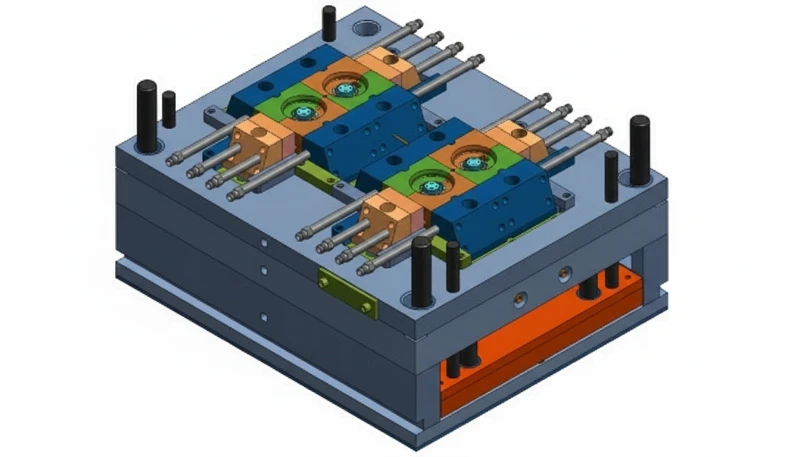
Eine Dünnwandform wird durch fünf kritische Konstruktionsbereiche definiert: Angussgeometrie, konforme Kühlung, Entlüftung, Auswerferstrategie und Stahlauswahl. Fehler in einem dieser Bereiche führen entweder zu fehlerhaften Teilen, einem beschädigten Werkzeug oder einer inakzeptabel langen Zykluszeit.
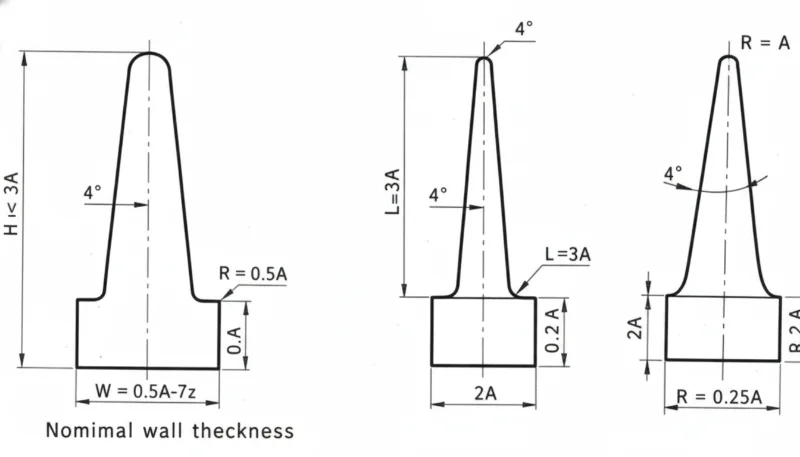
Die Angussauslegung bestimmt die Füllbalance und die Lage der Bindenähte. Bei rechteckigen dünnwandigen Bauteilen wie Lebensmittelbehältern erzeugt ein Filmanguss über die gesamte Breite einer Kante die gleichmäßigste Fließfront und beseitigt Bindenähte vollständig. Fächerangüsse eignen sich gut für kleinere Bauteile. Punktangüsse (Heiß- oder Kaltkanal) am dicksten Merkmal — typischerweise einem Dom oder einer Rippe — lenken die Schmelze in dünnere Bereiche, erfordern jedoch eine sorgfältige Simulation, um Bindenähte an sichtbaren Flächen zu vermeiden.
| Band | Empfohlener Stahl | Härte | Kosten im Vergleich zu P20 |
|---|---|---|---|
| <50,000 Schüsse | Aluminium (QC-10) | N/A | 30–50 % weniger |
| 100.000–500.000 Schuss | P20, vorgehärtet | 30–36 HRC | Ausgangsbasis |
| >1.000.000 Zyklen | H13-Warmarbeitsstahl | 48–52 HRC | 15–25 % mehr |
| >5.000.000 Zyklen | H13 + PVD-Beschichtung | Oberfläche 58–62 HRC | 25–40% mehr |
Die Stahlauswahl richtet sich nach dem Produktionsvolumen. Für Prototypenläufe unter 50,000 Schuss lässt sich Aluminium (Alcoa QC-10 oder gleichwertig) schneller bearbeiten und kostet 30–50 % weniger als Stahlwerkzeuge. Für Produktionsmengen von 100,000–500,000 Schuss ist vorgehärteter P20-Stahl (30–36 HRC) die bewährte Standardwahl. Für Großserien mit mehr als 1,000,000 Schuss — typisch in der Verpackungsindustrie — ist auf 48–52 HRC gehärteter H13-Warmarbeitsstahl erforderlich. H13 widersteht der höheren Kontaktspannung durch erhöhte Kavitätsdrücke und bewahrt die Maßgenauigkeit über Millionen von Zyklen.
"Bei der Dünnwandfertigung rechtfertigen konturnahe Kühlkanäle die zusätzlichen Werkzeugkosten."True
Konturnahe Kühlkanäle folgen der Kavitätskontur, verringern die Temperaturschwankung von ±15 °C auf ±5 °C und ermöglichen 20–30 % schnellere Zyklen. Bei 10 Millionen Schuss pro Jahr auf einer Verpackungslinie führt eine Verkürzung der Zykluszeit um 20 % zu 2 Millionen zusätzlichen Teilen jährlich — damit lassen sich die um 15–25 % höheren Formkosten problemlos rechtfertigen.
"Der Standard-Formenstahl P20 ist für alle Produktionsvolumina dünnwandiger Teile ausreichend."False
P20 (30–36 HRC) eignet sich für Prototypen und mittlere Produktionsmengen bis etwa 500,000 Schuss. Oberhalb dieses Grenzwerts verursachen die erhöhten Kavitätsdrücke beim Dünnwandspritzgießen (bis zu 250 MPa) beschleunigten Verschleiß und Maßdrift. H13 mit 48–52 HRC ist für die Großserienproduktion erforderlich, um Anguss- und Kavitätsmaße über Millionen von Zyklen beizubehalten.
Welche Fehler treten beim Dünnwandspritzgießen häufig auf und wie lassen sie sich vermeiden?
Dünnwandige Teile reagieren äußerst empfindlich auf Prozessschwankungen. Dieselbe Grundursache, die unter Nennbedingungen ein gerade noch akzeptables Teil erzeugt, führt zu einer Fehlerquote von 100 %, wenn ein Parameter um 10 % abweicht. Das Verständnis der konkreten Fehlerarten ermöglicht es Ingenieuren, enge Prozessalarmgrenzen festzulegen und Ausfallzeiten zu vermeiden. In unserem Qualitätssystem bei ZetarMold sind alle Dünnwandwerkzeuge mit Kavitätsdrucksensoren ausgestattet, die eine automatische Teileaussortierung auslösen, wenn der Spitzendruck um mehr als ±5 % vom Nennwert abweicht — so werden Kurzschüsse und Grat erkannt, bevor sie die Qualitätsprüfung erreichen.
Die folgende Tabelle fasst die sieben häufigsten Fehler zusammen, die uns bei Dünnwandwerkzeugen begegnen, einschließlich ihrer Grundursachen und der Korrekturmaßnahmen, mit denen sie zuverlässig behoben werden. Beachten Sie, dass mehrere Fehler dieselben Symptome aufweisen, aber entgegengesetzte Eingriffe erfordern — die korrekte Ermittlung der Grundursache vor der Parameteranpassung spart erheblich Zeit bei der Fehlersuche.
| Defekt | Verhindert Einfallstellen auf der gegenüberliegenden Oberfläche | Prävention |
|---|---|---|
| Kurzer Schuss | Geschwindigkeit/Druck unzureichend; Erstarrung vor vollständiger Füllung | Einspritzgeschwindigkeit erhöhen; Anschnittgröße optimieren; Schmelzetemperatur erhöhen |
| Blitzlicht | Übermäßiger Einspritzdruck; unzureichende Schließkraft; verschlissene Trennlinie | Nachdruck verringern; Schließkraft prüfen; Trennlinie kontrollieren |
| Verzug | Ungleichmäßige Kühlung; unausgewogener Fluss; Eigenspannung | Konturnahe Kühlung; ausbalancierter Angusskanal; symmetrische Anschnittpositionierung |
| Einfallstellen | Unzureichender Nachdruck; Anschnitt erstarrt zu früh | Nachdruck/-zeit erhöhen; Anguss vergrößern; Formtemperatur erhöhen |
| Schweißlinien | Mehrere Fließfronten treffen ohne ausreichende Wärme aufeinander | Anschnitt verlegen; Schmelzetemperatur erhöhen; Wanddickenunterschiede reduzieren |
| Brandstellen | Eingeschlossene Luft; zu hohe Einspritzgeschwindigkeit in der Endfüllzone | Entlüftungen an den zuletzt gefüllten Stellen hinzufügen; Geschwindigkeit in den letzten 5–10 % der Füllung reduzieren |
| Wasserstrahlen | Anschnitt zu klein; hohe Einspritzgeschwindigkeit bei ungünstiger Anschnittkonstruktion | Film- oder Fächeranschnitt verwenden; Anschnittdurchmesser vergrößern; Einspritzgeschwindigkeit am Anschnitt reduzieren |
"Bei der Fehlerbehebung an Dünnwandteilen muss vor der Anpassung der Prozessparameter zunächst die Fehlerursache ermittelt werden."True
Mehrere Dünnwandfehler zeigen ähnliche sichtbare Symptome, erfordern jedoch gegensätzliche Korrekturmaßnahmen. Bindenähte und Einfallstellen können beide als Oberflächenvertiefungen erscheinen — höherer Nachdruck behebt eine Einfallstelle, nicht aber die Ursache einer Bindenaht (Anschnittposition und Schmelzetemperatur). Ebenso entstehen Grat und Kurzschüsse durch gegensätzliche Bedingungen: Überdruck gegenüber unzureichendem Druck. Eine Fehldiagnose mit Anpassung in die falsche Richtung verschärft das Problem meist, verschwendet Maschinenzeit und kann das Werkzeug beschädigen.
"Für das Dünnwandspritzgießen von Verpackungen, Elektronik- und Medizinprodukten können dieselben Prozesseinstellungen verwendet werden."False
Jedes Anwendungssegment erfordert grundlegend andere Prozessparameter und Qualitätsanforderungen. Bei Verpackungen werden maximaler Durchsatz und minimale Materialkosten optimiert, mit einfacher Qualitätskontrolle und FDA-konformen Kunststoffen. Elektronik verlangt Oberflächenqualität der Klasse A und enge Maßtoleranzen von ±0,1 mm. Medizinische Anwendungen erfordern IQ-/OQ-/PQ-Prozessvalidierung, Reinraumproduktion und biokompatible Kunststoffe der USP-Klasse VI. Automobilteile benötigen PPAP-Qualifizierung und Kontrollen nach IATF 16949. Ein einziges Prozessfenster kann nicht alle diese Segmente bedienen – Werkstoffauswahl, Validierungsprotokolle und Strenge der Qualitätskontrolle unterscheiden sich erheblich.
Nach unserer Produktionserfahrung bei ZetarMold ist der am häufigsten fehldiagnostizierte Dünnwandfehler eine Schweißnaht, die für eine Einfallstelle gehalten wird. Eine Schweißnaht zeigt sich als sichtbare Linie auf der Oberfläche, häufig mit einer leichten Vertiefung. Bediener erhöhen manchmal den Nachdruck, wodurch die Tiefe, nicht aber die Sichtbarkeit der Naht behoben wird. Die eigentliche Abhilfe besteht darin, den Anguss so zu verlegen, dass beide Fließfronten an einer nicht sichtbaren Oberfläche zusammentreffen, oder vor der Werkzeugbearbeitung eine Formfüllanalyse durchzuführen, um Schweißnahtpositionen bereits in der Konstruktionsphase vorherzusagen und zu beseitigen, statt erst nach Produktionsbeginn.
Beherrschung von Gratbildung bei Dünnwandwerkzeugen
Die Gratvermeidung erfordert einen systematischen Ansatz. Neben der Anpassung der Einspritzparameter müssen Sie sicherstellen, dass die Schließkraft korrekt berechnet ist – für Dünnwandteile verwenden Sie die projizierte Kavitätsfläche multipliziert mit 0,5–0,8 t/cm² anstelle der konventionellen 0,3–0,5 t/cm². Unterdimensionierte Dünnwandwerkzeuge zeigen Gratbildung bereits bei niedrigem Nachdruck; eine Druckerhöhung zur ordnungsgemäßen Füllung verschlimmert den Grat nur. Wenn ein Werkzeug auch bei niedrigem Nachdruck konsistent Gräte aufweist, überprüfen Sie zuerst die Schließkraftberechnung, bevor Sie andere Parameter anpassen. Ein digitaler Schließkraftanzeiger an der Aufspannplatte liefert Echtzeit-Feedback und hilft, die Vermutungen zu vermeiden, die die meisten Gratfehler verursachen.
Wo wird Dünnwandspritzgießen eingesetzt?
Dünnwand-Spritzgießen ist das vorherrschende Verfahren für Leichtbauteile in Lebensmittelverpackungen, Elektronik, Medizintechnik, Automobilindustrie und Verschlüssen. Jedes Segment besitzt eigene Anforderungen an Wanddicke, Material, Qualität und Produktionsumfang, die Werkzeugkonstruktion und Prozessregelung unmittelbar beeinflussen.
| Industrie | Typische Wandstärke (mm) | Hauptmaterial | Volumen/Jahr |
|---|---|---|---|
| Lebensmittel- und Getränkeverpackungen | 0.5–0.8 | PP (FDA-Typ) | Milliarden Stück |
| Unterhaltungselektronik | 0.8–1.2 | ABS / PC-ABS | Hunderte Millionen |
| Medizinische Einwegprodukte | 0.3–0.7 | PP / PE (USP VI) | Milliarden Stück |
| Fahrzeuginnenraum | 1.0–1.5 | PA+GF / PBT | Dutzende Millionen |
| Industriekappen & -verschlüsse | 0.6–1.0 | PP / HDPE | Milliarden Stück |
Marktspezifische Anforderungen auf einen Blick
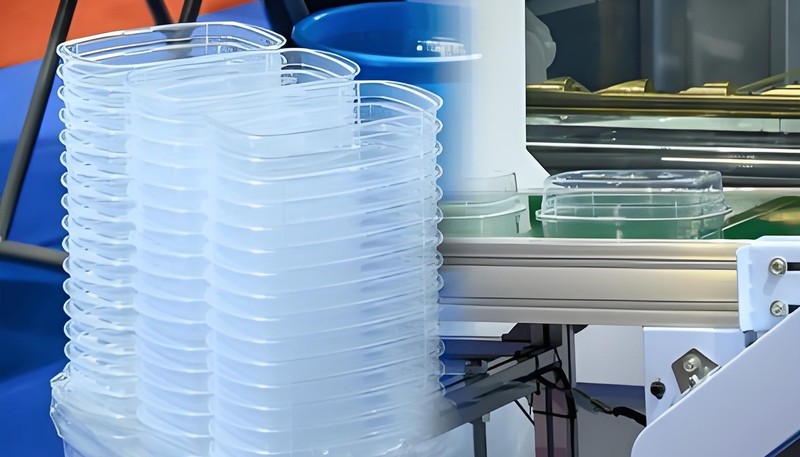
Lebensmittel- und Getränkeverpackungen machen mit Abstand das größte Volumen aus. Dünnwandige PP-Behälter für Joghurt, Feinkost und Fertiggerichte werden mit sehr hohen Raten von 10.000–50.000 Zyklen pro Tag und Kavität hergestellt. Die Wanddicke beträgt typischerweise 0,5–0,8 mm. FDA-konforme PP-Typen, die die Anforderungen von 21 CFR erfüllen, sind Standard; ohne Schwermetallstabilisatoren und ohne BPA. Die Wirtschaftlichkeit überzeugt: Ein Behälter mit 0,6 mm Wanddicke benötigt 25–30 % weniger Material als ein vergleichbarer Behälter mit 0,9 mm Wanddicke.
Gehäuse für Unterhaltungselektronik bilden das zweitgrößte Dünnwandsegment. Smartphone-Gehäuse, Laptop-Handauflagen und Tablet-Rückseiten benötigen Wandstärken von 0,8–1,2 mm aus ABS oder PC/ABS-Blends, um eine Oberfläche der Klasse A mit integrierten Schnappfunktionen und Filmscharnieren zu erreichen. Die Maßtoleranzen sind eng — typischerweise ±0,1 mm — und die Oberfläche muss frei von Fließmarken sein, was vor dem Werkzeugbau eine sorgfältige Anschnittplatzierung und Moldflow-Simulation erfordert. Nachgelagerte Arbeitsgänge wie Tampondruck, Ultraschallschweißen und Oberflächenbeschichtung erfordern eine Gleichmäßigkeit von Teil zu Teil, die Dünnwandprozesse bei ordnungsgemäßer Validierung liefern.
| Segment | Wichtige Norm | Kritische Anforderung |
|---|---|---|
| Lebensmittelverpackungen | FDA 21 CFR | Harzkonformität, BPA-frei |
| Medizinische Geräte | USP Klasse VI / ISO 10993 | Biokompatibilität, Prozessvalidierung |
| Automobilindustrie | IATF 16949 | PPAP, Cpk ≥1,67 |
| Elektronik | RoHS / REACH | Halogenfreie Materialien |
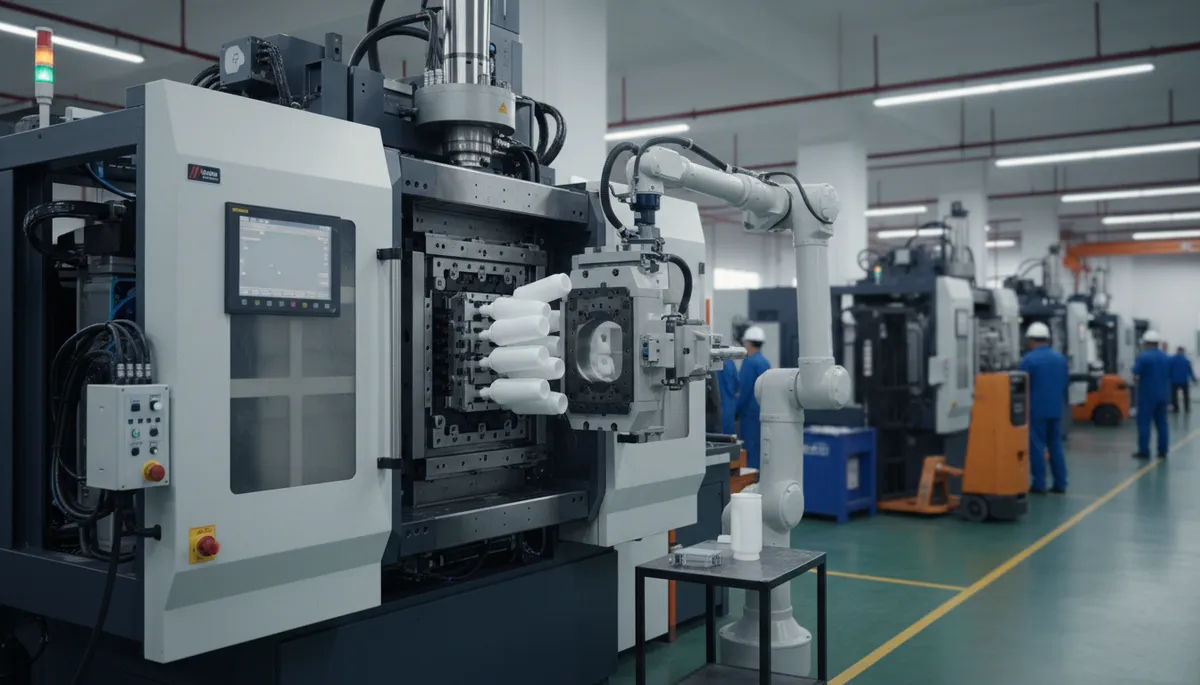
In unserem Werk in Shanghai betreiben wir 47 Spritzgießmaschinen von 90 T bis 1.850 T, darunter spezielle Hochgeschwindigkeitspressen für die Dünnwandproduktion. Mit Erfahrung in mehr als 400 Kunststoffmaterialien unterstützen wir Kunden von der DFM-Prüfung bis zur Großserienproduktion dünnwandiger Teile – von medizinischen Einwegprodukten mit 0,3 mm Wanddicke bis zu PP-Verpackungen in Großserie mit 15.000 Schuss pro Stunde.
Medizinische Einwegartikel – Spritzenzylinder, Pipettenspitzen, Diagnosekartuschen und Mikrofluidikchips – erfordern sowohl dünne Wände von 0,3–0,7 mm als auch biokompatible Werkstoffe wie nach USP-Klasse VI zertifizierte Kunststoffe. Reinraumproduktion und validierte Prozesse mit IQ-/OQ-/PQ-Qualifizierungsprotokollen erhöhen die Kosten, sind in regulierten Märkten jedoch unverzichtbar. Automobil-Innenraumteile wie Clipgehäuse, Steckerhalterungen und Türverkleidungseinsätze vervollständigen das Bild. Sie erfordern PA oder PBT mit hohem Glasfaseranteil für die strukturelle Steifigkeit in Motorraum und Innenraum bis 140 °C.
Häufig gestellte Fragen zum Dünnwandspritzgießen
Häufig gestellte Fragen
Welche Wanddicke gilt beim Spritzgießen als ‚dünnwandig‘?
Ein Teil wird als dünnwandig eingestuft, wenn ein beliebiger Querschnitt unter 1.0 mm liegt und das Verhältnis von Fließweg zu Dicke (L/T) über 150:1 beträgt. In der Praxis liegen die meisten Verpackungsanwendungen im Bereich von 0.5–0.8 mm. Teile mit Wanddicken von 1.0–1.5 mm und hohen L/T-Verhältnissen (150:1–200:1) liegen in einem Übergangsbereich, der einige Prozessanpassungen für Dünnwandteile, aber nicht zwingend spezielle Dünnwandanlagen erfordert. Das L/T-Verhältnis ist das zuverlässigere Einstufungskriterium: Ein langer, schlanker Abschnitt von 1.2 mm kann sich beim Füllen wie ein echtes Dünnwandteil verhalten.
Wie schnell ist Dünnwandspritzgießen im Vergleich zum Standardspritzgießen?
Die Zykluszeiten für dünnwandige Teile liegen typischerweise bei 2–5 Sekunden, verglichen mit 15–60 Sekunden beim konventionellen Spritzguss – ein Geschwindigkeitsvorteil um den Faktor 5–10. Ursache ist die schnelle Wärmeabfuhr aus den dünnen Querschnitten, die die Kühlzeit drastisch verkürzt. Bei ZetarMold laufen dünnwandige Verpackungen in Großserie auf Mehrkavitätenwerkzeugen mit 12.000–15.000 Schuss pro Stunde; mit einem 16-fach-Werkzeug entstehen so über 100.000 Fertigteile pro Stunde. Auf Jahresbasis führt dieser Geschwindigkeitsvorteil unmittelbar zu niedrigeren Stückkosten und einer schnelleren Reaktion auf Nachfragespitzen.
Welcher Einspritzdruck ist für Dünnwandteile erforderlich?
Dünnwandspritzgießen erfordert einen Einspritzdruck von 140–250 MPa, verglichen mit 70–140 MPa beim konventionellen Spritzgießen. Der höhere Druck ist notwendig, um die Schmelze mit hohem Volumenstrom in sehr dünne Kavitäten zu drücken, bevor sie erstarrt. Die Maschinen müssen mit Druckspeichern oder servogetriebenen Einspritzeinheiten ausgestattet sein, um den erforderlichen schnellen Druckaufbau zu erreichen; konventionelle Hydraulikmaschinen reagieren nicht schnell genug. Kavitätsdrucksensoren werden dringend empfohlen, damit der tatsächliche Druck im Werkzeug und nicht nur der Hydraulikdruck der Maschine überwacht und geregelt wird.
Kann ich meine vorhandene Spritzgießmaschine für Dünnwandteile verwenden?
In der Regel nicht ohne erhebliche Aufrüstung. Standardmaschinen besitzen kein speicherunterstütztes Spritzaggregat für Einspritzgeschwindigkeiten von 500–1,500 mm/s. Die Reaktionszeit des Spritzaggregats einer konventionellen Maschine ist zu langsam — bis der volle Druck aufgebaut ist, beginnt der dünne Bereich bereits zu erstarren. Für eine konstante Produktion sind spezielle Dünnwandpressen von Husky, Netstal oder Engel mit servoelektrischen oder speicherhydraulischen Systemen erforderlich. Manche Verarbeiter rüsten eine vorhandene Maschine mit einem Speicher nach; dies kann funktionieren, wenn Einspritzgeschwindigkeit und Reaktionszeit anschließend verifiziert werden.
Welche Mindestwanddicke lässt sich beim Spritzgießen erreichen?
Die minimal erreichbare Wandstärke im Serienspritzgießen beträgt etwa 0,3 mm unter Verwendung von hochfließfähigem PP oder LCP in Präzisionswerkzeugen mit lokaler Heizung. Wandstärken von 0,5–0,6 mm sind mit einer Reihe von Materialien routinemäßig erreichbar. Faktoren, die die minimale Wandstärke begrenzen, sind die Materialviskosität bei Fülltemperatur, die Entfernung vom Anguss zum letzten Füllpunkt (Fließweg), die Gleichmäßigkeit der Formtemperatur und der verfügbare Einspritzdruck. Unter 0,3 mm ist Mikrospritzgießen mit Spezialausrüstung – Zylindervolumina unter 1 cm³, Präzisionsschnecken – erforderlich, um Maßkonstanz zu gewährleisten.
Dünnwandiges Spritzgießen für Ingenieure
Ja. Für Prototypen und Kleinserien unter 50,000 Schuss sind Aluminiumwerkzeuge (Alcoa QC-10 oder gleichwertig) wirtschaftlich und schneller zu bearbeiten. Für mittlere Produktionsserien von 100,000–500,000 Schuss ist vorgehärteter P20-Stahl (30–36 HRC) die Standardwahl. Für Großserien mit mehr als 1,000,000 Schuss — wie sie in der Verpackungsindustrie üblich sind — ist auf 48–52 HRC gehärteter Warmarbeitsstahl H13 erforderlich, um den höheren Forminnendrücken von bis zu 250 MPa standzuhalten und die Maßhaltigkeit über Millionen von Zyklen ohne Angussverschleiß oder Kavitätsverformung zu bewahren.
Spritzgießen: Beim Spritzgießen wird Kunststoff aufgeschmolzen, in eine Formkavität eingespritzt und das Teil abgekühlt. Dieser Zyklus wird für eine stabile Serienfertigung wiederholt. ↩
Spritzgießform: Eine Spritzgießform ist das Präzisionswerkzeug, das Bauteilgeometrie, Kühlverhalten, Auswerfung, Anschnitt, Oberflächenqualität und Wiederholgenauigkeit bestimmt. ↩
Qualität: Qualität ist eine Produktionsdisziplin, die DFM, Formenvalidierung, Prozessfenster, Prüfpläne und Korrekturmaßnahmen zu wiederholbaren Ergebnissen verbindet. ↩