...

<50,000ショット

• ZetarMold Engineering Guide
• Plastic Injection Mold Manufacturing Since 2005
• Built by ZetarMold engineers for buyers comparing mold and molding solutions.

要点
  • 溶融温度の制御は特に重要です。なぜなら、薄肉部分は従来の部品よりも3~5倍速く冷却されるからです。溶融温度が推奨範囲を10°C下回ると、溶融フロントが最終充填領域に到達する前に外層が固化し、最大射出速度でもショートショットが発生します。私たちはバレル温度プロファイルを設定し、ノズルゾーンを後部ゾーンより5~10°C高く保つことで、ゲートでの溶融温度を一貫させ、ショット間の充填ばらつきを軽減しています。
  • Cycle times of 2–5 seconds are achievable — 5 to 10 times faster than conventional molding — making this process cost-effective for high-volume packaging and electronics.
  • Material selection is critical: polypropylene (PP) with MFI of 40–60 g/10 min and ABS or PA66+GF high-flow grades dominate thin-wall applications.
  • Tool steel grade (P20 for prototypes, H13 for production runs over 500,000 cycles) and conformal cooling channels directly determine part quality and tool life.
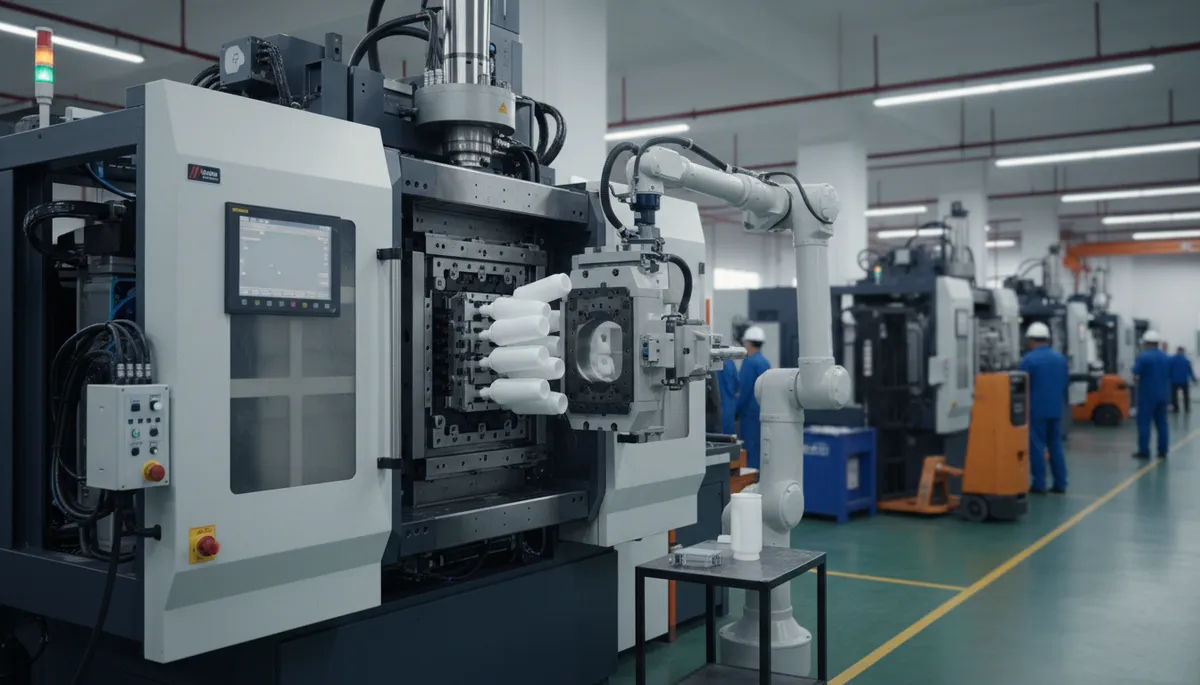
  • ZetarMold runs 47 injection molding machines, including dedicated high-speed presses for thin-wall work, supporting customers from DFM review through mass production.

What Is Thin Wall Injection Molding?

薄肉 射出成形1 これは、肉厚1mm未満の部品を、500〜1,500 mm/sの射出速度で製造するプロセスです。本記事では、肉厚が1ミリメートルを下回った際の成功を決定づけるパラメータ、材料、金型、欠陥防止戦略について説明します。

より広い視点では、当社の injection molding complete guide プロセスの基礎、材料挙動、生産判断について説明します。

For broader context, compare this topic with 射出成形, 射出成形金型2そして supplier sourcing guide.

薄肉射出成形は、肉厚が1.0mm以下、大量生産される包装材や民生電子機器では0.4mmまで薄いプラスチック部品を製造するための特殊な製造プロセスです。従来の成形とは異なり、薄肉成形では、薄肉材料が金型内で固化する前にキャビティを完全に充填するために、より高い射出速度、高い保圧圧力、精密な金型が必要です。設計マージンは厳しく、溶融温度からゲート配置までのあらゆるパラメータが、安定した部品品質を達成する上で重要となります。 品質3.

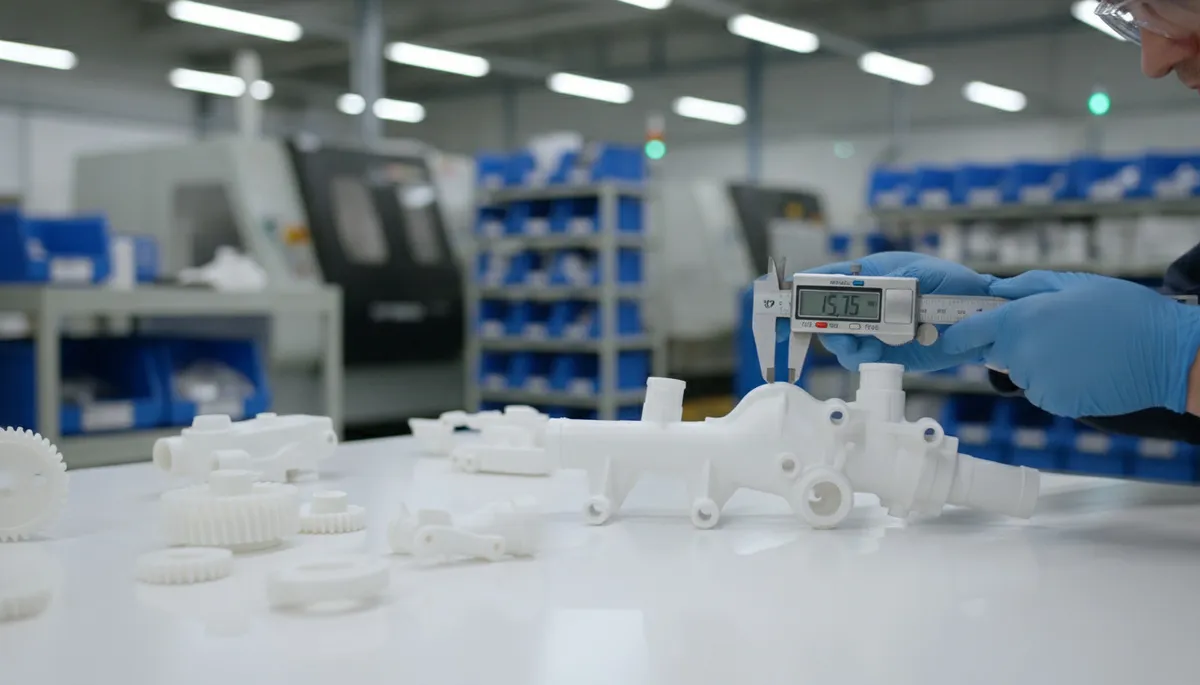
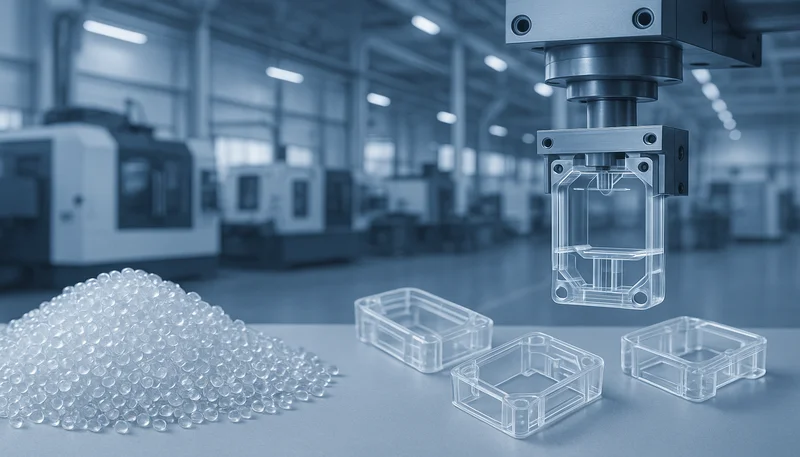
thin-wall-molded-plastic-part
射出成形の欠陥
Thin-Wall vs. Conventional Injection Molding: Key Definitions
メートル Thin-Wall Conventional Why It Matters
肉厚 <1.0 mm 1.5–4.0 mm Drives fill speed requirement
L/T ratio >150:1 <100:1 Primary classification criterion
射出速度 500–1,500 mm/s 50–200 mm/s Must outrun freeze-off
Clamp force 0.5–0.8 ton/cm2 0.3–0.5 ton/cm2 Resists flash at high pressure

In our factory at ZetarMold, we typically classify a part as thin-wall when any section falls below 0.8 mm or when the L/T ratio exceeds 200:1. At that threshold, conventional machines simply cannot fill the cavity — the material freezes off mid-flow and you get a short shot every time. The practical wall range for most consumer packaging is 0.5–0.9 mm; electronics and medical parts can push down to 0.3 mm with the right tool geometry.

The process is not just “regular injection molding with thinner walls.” It requires dedicated equipment with accumulators, a completely different gating strategy, tighter temperature control, and — critically — a mold design that accommodates the higher clamping force needed to resist flash at elevated pressures. Every element of the system must be engineered together.

How Does Thin Wall Injection Molding Work?

薄肉成形は従来の射出成形と似ていますが、極端なパラメータで動作し、キャビティ充填を150ミリ秒未満で完了します。射出段階は、薄肉成形が従来の成形と最も大きく異なる部分であり、迅速な充填と精密な温度制御を中心に構築された、全く異なる成形機仕様と金型戦略を要求します。

Injection speed must reach 500–1,500 mm/s to fill the cavity before the melt front drops below the material’s no-flow temperature. For reference, conventional molding typically runs at 50–200 mm/s. The higher speed compresses the melt and generates significant shear heat, which helps offset the rapid heat loss to the cold mold wall. Timing is measured in milliseconds: a 0.5 mm wall part may fill in 0.05–0.10 seconds. On our high-speed presses, we monitor injection time in real time to detect any drift that might indicate a blocked vent or a gate that is beginning to wear.

Thin-Wall vs. Conventional Injection Molding: Phase Comparison
Phase Thin-Wall Molding Conventional Molding
Fill time 0.05–0.15 s 1–5 s
Hold time 0.5–1.5 s 3–10 s
冷却時間 2–4 s 10–45 s
Total cycle 2–5 s 15–60 s

Pack and hold pressure is applied immediately after fill to compensate for volumetric shrinkage as the part solidifies. In thin-wall work, the hold phase is short — typically 0.5–1.5 seconds — because the wall freezes rapidly and additional hold time does not improve density. Over-packing is a common mistake that causes flash and sticking. In our factory, we monitor the hold-to-fill transition using in-cavity pressure sensors, cutting hold the moment pressure stabilizes — usually within 0.8 seconds of fill completion.

Cooling is the dominant phase in terms of cycle time even in thin-wall molding. Because wall thickness is small, thermal diffusion is fast — 2–4 seconds of cooling is typically sufficient to reach ejection temperature. Conformal cooling channels that follow the cavity contour, rather than straight-drilled channels, reduce temperature variation across the part by 40–60% and allow 20–30% faster cycles. For a 0.6 mm PP container, well-designed conformal cooling delivers ejection-ready parts in under 2 seconds.

“Higher injection speed reduces short shots in thin-wall molding.”

In thin-wall parts, the melt front must reach all extremities of the cavity before the plastic solidifies. Raising injection speed from 200 mm/s to 800 mm/s reduces fill time by 75%, keeping the melt above the no-flow temperature throughout and eliminating the root cause of short shots in thin sections.

“You can use any standard injection machine for thin-wall parts.”

Standard machines lack the accumulator-assisted injection unit needed to achieve 500–1,500 mm/s injection speeds, and their clamping systems are not designed for the high cavity pressures (140–250 MPa) required for thin walls. Using a conventional machine results in short shots, excessive flash, or machine damage.

What Are the Key Processing Parameters for Thin Wall Molding?

Thin-wall processing operates in narrow windows: any deviation from the optimal range immediately produces defects. The following parameters are the primary levers our process engineers adjust during qualification. A 5°C drop in melt temperature, a 10 MPa reduction in injection pressure, or a 2-second delay in cooling time can shift a part from acceptable to 100% scrap — tolerances that would be inconsequential in conventional 2 mm wall molding.

Key Processing Parameters for Thin-Wall Injection Molding
パラメータ Thin-Wall Range Conventional Range Effect of Deviation
射出速度 500–1,500 mm/s 50–200 mm/s Too low → short shot; too high → flash or jetting
射出圧力 140–250 MPa 70–140 MPa Too low → short shot; too high → flash, excessive clamp
溶融温度 220–280°C (PP) 200–260°C Too high → degradation; too low → freeze-off
金型温度 15–30°C (PP) 20–60°C Too high → cycle time increase; too low → warpage
サイクルタイム 2–5 s 15–60 s Too short → part not fully solid at ejection
Clamp force 0.5–0.8 ton/cm2 0.3–0.5 ton/cm2 Insufficient → flash at parting line

Melt temperature control is especially critical because thin-wall sections cool 3–5 times faster than conventional parts. If melt temperature is 10°C below the recommended range, the outer skin freezes before the melt front reaches the last-fill zone, producing a short shot even at maximum injection speed. We set the barrel temperature profile so the nozzle zone is 5–10°C above the rear zone, maintaining consistent melt temperature at the gate and reducing fill inconsistency between shots.

射出成形金型設計
射出成形金型設計

薄肉金型の型締力計算では、高いキャビティ内圧を考慮する必要があります。投影面積×0.3~0.5 ton/cm2という標準的な推定値では不十分です。薄肉成形では0.5~0.8 ton/cm2を使用してください。型締力が不足している金型は、射出パラメータが適切であってもパーティングラインでバリが発生します。バリを止めるために単に射出圧力を下げると、今度はショートショットが発生してしまいます。

Clamp Force and Gate Sizing Guide for Thin-Wall Tools
パラメータ Thin-Wall Requirement Conventional Baseline Key Rule
Clamp force 0.5–0.8 ton/cm2 0.3–0.5 ton/cm2 Calculate from projected area × 0.65 as starting point
Gate thickness Match wall (0.6–0.8 mm) 0.5–1.5 mm Never smaller than wall thickness
Gate position Thickest section Anywhere balanced Flow toward thin areas, not away
Vent depth 0.015–0.025 mm 0.02–0.04 mm At last-fill points to prevent diesel effect

Gate sizing is particularly critical in thin-wall tools. A gate that is too small restricts flow and elevates pressure drop; a gate that is too large causes jetting or weld-line defects. For walls under 0.8 mm, gate thickness should match or slightly exceed wall thickness — typically 0.6–0.8 mm — placed at the thickest section of the part to allow the melt front to progress toward thinner sections without premature freeze.

Venting is often underestimated. At 1,500 mm/s, trapped air in the cavity compresses faster than it can escape through normal parting line clearances. Dedicated vent slots (0.015–0.025 mm deep, 3–5 mm wide) at the last fill point prevent burn marks, short shots from air traps, and diesel effect — a flash-like defect caused by adiabatic compression igniting the resin.

Which Materials Work Best for Thin Wall Injection Molding?

Material selection for thin-wall parts is dominated by flow behavior. Resins must have a melt flow index high enough to fill the cavity before freeze-off, yet enough mechanical integrity after solidification to survive ejection without cracking. Standard resins used in conventional molding are frequently too viscous for thin-wall work.

ポリプロピレン(PP)は薄肉成形用樹脂の主流であり、薄肉包装材生産全体の約60%を占めています。理想的なグレードは、MFR(メルトフローレート)が40~60 g/10分(230°C/2.16 kg測定)のものです。MFRの高いグレードは0.5mmの肉厚部分にも容易に流れますが、衝撃強度が犠牲になる可能性があります。配合設計者は、核剤や衝撃改質剤を用いてこのバランスを取ります。PPの低密度(0.90–0.91 g/cm3)は部品重量の軽減にも寄与し、包装材の経済性における重要な要素です。

For structural and electronics applications, ABS high-flow grades (MFI 15–25 g/10 min at 220°C/10 kg) and PA66 reinforced with 15–30% glass fiber are preferred. The glass fiber increases stiffness significantly — from ~2.5 GPa for unfilled PA66 to 6–8 GPa for PA66+30%GF — allowing thinner walls while maintaining the structural performance required for connector housings, brackets, and enclosure panels.

Material Comparison for Thin-Wall Injection Molding
素材 MFI (g/10 min) Min Wall (mm) Best Applications Key Limitation
PP (high-flow) 40–60 0.4 Packaging, caps, containers Lower stiffness than engineering resins
ABS (high-flow) 15–25 0.6 Electronics housings, toys Limited chemical resistance
PA66+GF15% 10–20 0.5 Connector housings, brackets Moisture absorption, higher cost
HDPE (high-flow) 20–40 0.5 Caps, food-grade packaging Low stiffness, prone to warpage
LDPE / LLDPE 15–30 0.4 Flexible lids, closures Not suitable for rigid structures

One material decision point that surprises many buyers: using the same resin grade as in your conventional tools will likely not work in a thin-wall tool. We frequently see customers bring a PP grade with MFI 12 g/10 min that runs perfectly in a 2 mm wall part but causes 100% short shots in a 0.7 mm wall tool. Resin qualification is a mandatory step, not an afterthought — budget one to two weeks for material trials before tool sign-off.

How Should You Design a Mold for Thin Wall Parts?

薄肉金型は、ゲート形状、コンフォーマル冷却、ベンティング、取り出し戦略、鋼材選択という5つの重要な設計領域によって定義されます。これらのいずれか一つでも誤ると、不良品、破損した金型、あるいは許容できないほど長いサイクルタイムを生み出します。
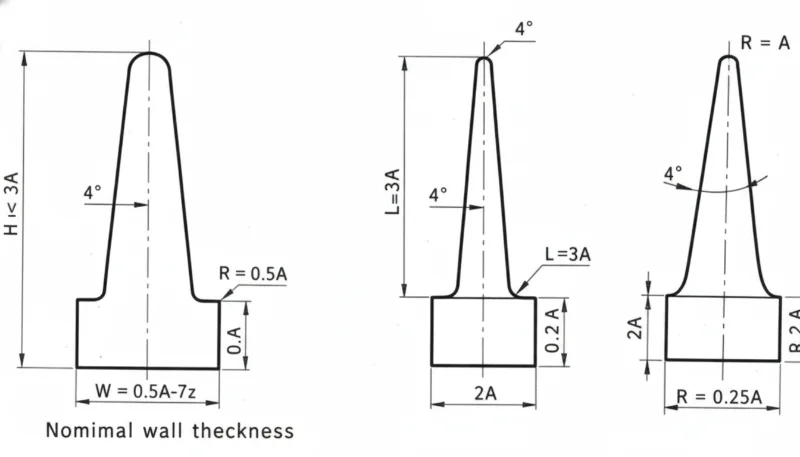
技術図面-壁厚設計
射出成形金型設計

Gate design drives fill balance and weld line location. For rectangular thin-wall parts like food containers, a film gate running along the full width of one edge gives the most uniform fill front and eliminates weld lines entirely. Fan gates work well for smaller parts. Point gates (hot or cold) at the thickest feature — typically a boss or rib — direct the melt toward thinner areas, but require careful simulation to avoid weld lines at visible surfaces.

Mold Steel Selection by Production Volume for Thin-Wall Tools
ボリューム Recommended Steel 硬度 Cost vs. P20
<50,000 shots RoHS / REACH N/A 30–50% less
100,000–500,000 shots P20 pre-hardened 30–36 HRC Baseline
>1,000,000 shots H13 hot-work tool steel 48–52 HRC 15–25% more
>5,000,000 shots H13 + PVD coating 58–62 HRC surface 25–40% more

Steel selection is determined by production volume. For prototype runs under 50,000 shots, aluminum (Alcoa QC-10 or equivalent) machines faster and costs 30–50% less than steel tooling. For production volumes of 100,000–500,000 shots, P20 pre-hardened steel (30–36 HRC) is the workhorse choice. For high-volume runs exceeding 1,000,000 shots — typical in packaging — H13 hot-work tool steel hardened to 48–52 HRC is required. H13 resists the higher contact stress from elevated cavity pressures and maintains dimensional accuracy over millions of cycles.

“Conformal cooling channels are worth the added mold cost for thin-wall production.”

Conformal cooling channels follow the cavity contour, reducing temperature variation from ±15°C to ±5°C and enabling 20–30% faster cycles. At 10 million shots per year on a packaging line, a 20% cycle time reduction translates to 2 million additional parts annually — easily justifying the 15–25% higher mold cost.

“Standard mold steel P20 is sufficient for all thin-wall production volumes.”

P20 (30–36 HRC) is adequate for prototype and medium-volume work up to approximately 500,000 shots. Above that threshold, the elevated cavity pressures in thin-wall molding (up to 250 MPa) cause accelerated wear and dimensional drift. H13 at 48–52 HRC is required for high-volume production to maintain gate and cavity dimensions through millions of cycles.

What Are the Common Defects in Thin Wall Injection Molding and How to Prevent Them?

Thin-wall parts are highly sensitive to process variation. The same root cause that produces a barely acceptable part at nominal conditions creates a 100% defect rate when one parameter drifts by 10%. Understanding the specific failure modes allows engineers to set tight process alarm limits and prevent downtime. In our quality system at ZetarMold, all thin-wall tools are fitted with cavity pressure sensors that trigger automatic part rejection when peak pressure deviates more than ±5% from the nominal value — catching short shots and flash before they reach the quality inspection stage.

The following table summarizes the seven most common defects we encounter on thin-wall tools, along with their root causes and the corrective actions that reliably fix them. Note that several defects share symptoms but require opposite interventions — correctly identifying the root cause before adjusting parameters saves significant troubleshooting time.

Common Thin-Wall Defects and Prevention Strategies
欠陥 Root Cause エネルギー消費量:
ショート・ショット Insufficient speed/pressure; freeze-off before fill complete Increase injection speed; optimize gate size; increase melt temp
フラッシュ Excessive injection pressure; insufficient clamp force; worn parting line Reduce pack pressure; verify clamp tonnage; inspect parting line
反り Non-uniform cooling; unbalanced flow; residual stress Conformal cooling; balanced runner; symmetrical gate placement
Sink marks 薄肉について知っておくべきすべてのこと | ZetarMold Increase hold pressure/time; enlarge gate; raise mold temperature
溶接ライン Multiple flow fronts meeting without sufficient heat Relocate gate; increase melt temperature; reduce wall variation
Burn marks Trapped air; excessive injection speed in end-fill zone Add venting at last-fill locations; reduce speed in final 5–10% of fill
ジェット噴射 Gate too small; high injection speed with poor gate design Use film or fan gate; increase gate diameter; reduce injection speed at gate

“Identifying the root cause of a defect before adjusting process parameters is essential in thin-wall troubleshooting.”

Several thin-wall defects share visible symptoms but require opposite corrective actions. Weld lines and sink marks can both appear as surface depressions — increasing pack pressure addresses a sink mark but does nothing for a weld line’s root cause (gate location and melt temperature). Similarly, flash and short shots are caused by opposite conditions: excess pressure vs. insufficient pressure. Misdiagnosing the defect and adjusting in the wrong direction typically makes the problem worse, wastes machine time, and can damage tooling.

“The same process settings can be used for thin-wall injection molding across packaging, electronics, and medical applications.”

Each application segment requires fundamentally different process parameters and quality requirements. Packaging optimizes for maximum throughput and minimum material cost (simple QC, FDA resin compliance). Electronics demands Class A surface quality with tight dimensional tolerances (±0.1 mm). Medical applications require IQ/OQ/PQ process validation, clean-room production, and biocompatible resins (USP Class VI). Automotive parts need PPAP qualification and IATF 16949 controls. A single process window does not serve all these segments — material selection, validation protocols, and QC rigor differ substantially.

In our production experience at ZetarMold, the most frequently misdiagnosed thin-wall defect is a weld line mistaken for a sink mark. A weld line appears as a visible seam on the surface, often with a slight depression. Operators sometimes increase pack pressure, which fixes the depth but not the seam visibility. The real fix is to reposition the gate so both flow fronts merge at a non-visible surface, or to run a mold flow analysis simulation before the tool is cut to predict and eliminate weld line locations during the design phase rather than after production has started.

Controlling Flash in Thin-Wall Tools

バリ防止には体系的なアプローチが必要です。射出パラメータの調整に加えて、型締力の計算が正しいことを確認する必要があります。薄肉部品の場合、従来の0.3~0.5 ton/cm2ではなく、キャビティの投影面積に0.5~0.8 ton/cm2を乗じた値を使用してください。型締力が不足した薄肉金型は、低い保圧圧力でもバリが発生します。適切に充填するために圧力を上げると、バリはさらに悪化します。低い保圧圧力でも金型に一貫してバリが発生する場合は、他のパラメータを調整する前に、まず型締力の計算を確認してください。プラテンに取り付けたデジタル型締力インジケーターはリアルタイムのフィードバックを提供し、バリ不良の大部分の原因となる推測作業を避けるのに役立ちます。

Where Is Thin Wall Injection Molding Used?

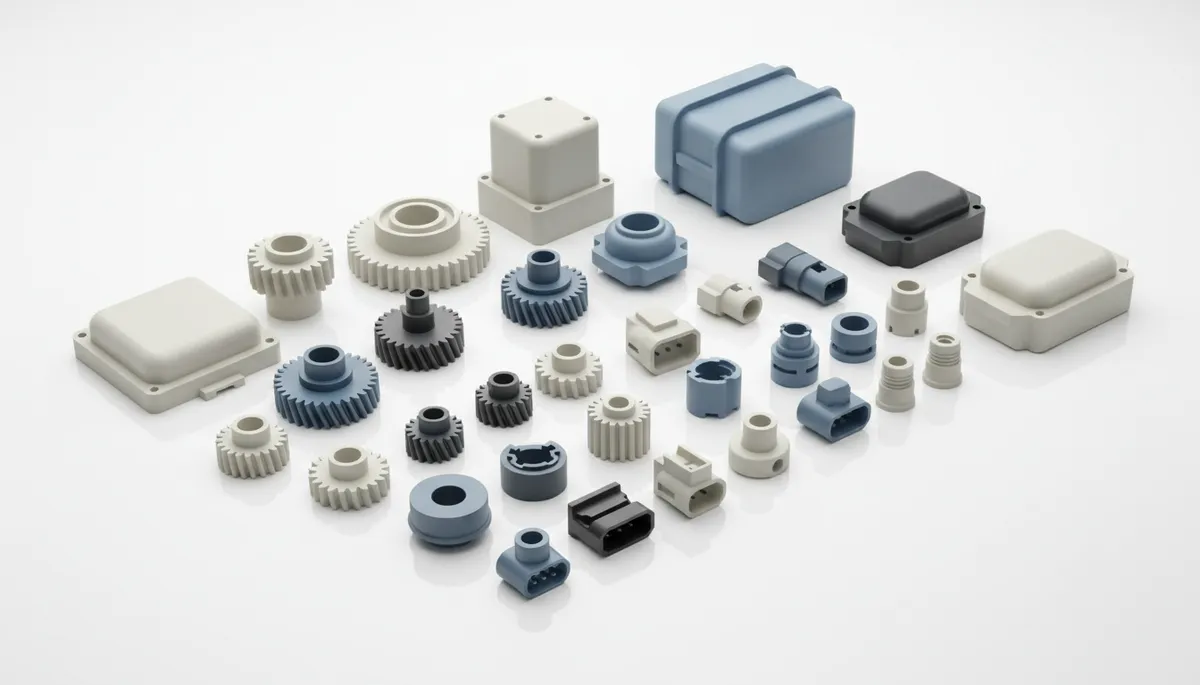
薄肉射出成形は、食品包装、電子機器、医療、自動車、キャップなどの軽量部品における主要なプロセスです。各分野には、金型設計とプロセス制御戦略に直接影響を与える、固有の肉厚要件、材料仕様、品質基準、生産規模要件があります。

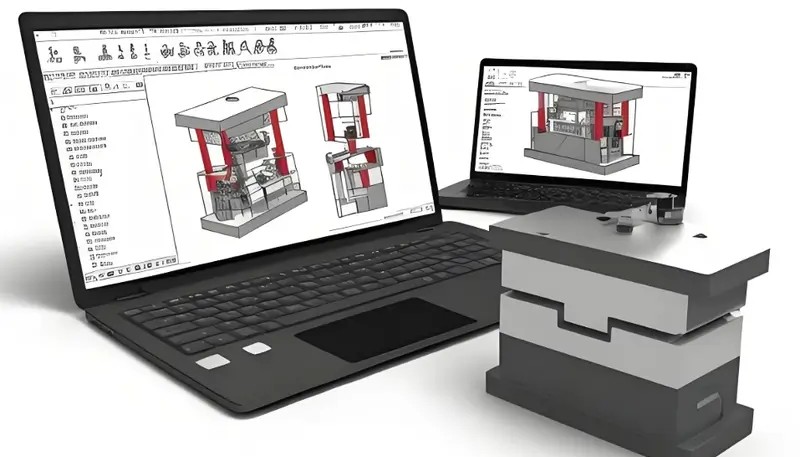
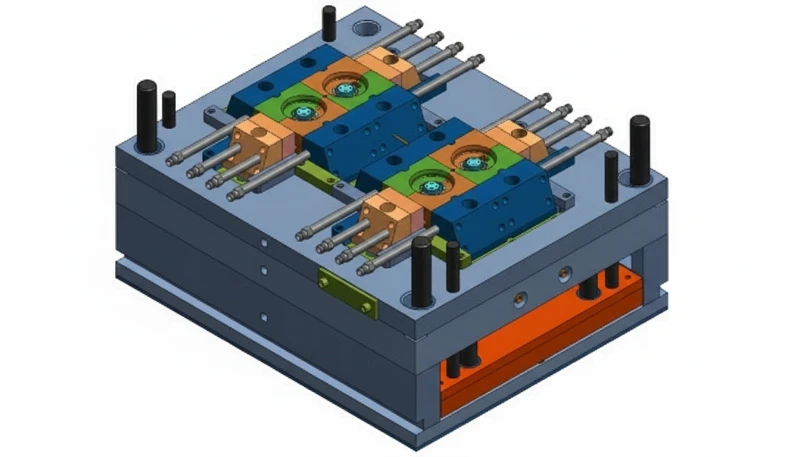
3D design of plastic injection mold
射出成形金型設計
Thin-Wall Injection Molding Applications by Industry
産業 Typical Wall (mm) Key Material Volume/Year
Food & beverage packaging 0.5–0.8 PP (FDA grade) Billions of units
家電製品 0.8–1.2 ABS / PC-ABS Hundreds of millions
Medical disposables 0.3–0.7 PP / PE (USP VI) Billions of units
Automotive interior 1.0–1.5 PA+GF / PBT Tens of millions
Industrial caps & closures 0.6–1.0 PP / HDPE Billions of units

Market-Specific Requirements at a Glance

Food and beverage packaging accounts for the largest volume by far. PP thin-wall containers for yogurt, deli items, and ready meals are produced at very high rates of 10,000–50,000 cycles per day per cavity. Wall thickness is typically 0.5–0.8 mm. FDA-compliant PP grades meeting 21 CFR requirements are standard; no heavy metal stabilizers, no BPA. The economics are compelling: a 0.6 mm wall container uses 25–30% less material than a 0.9 mm wall equivalent.

Consumer electronics enclosures represent the second-largest thin-wall segment. Smartphone housings, laptop palms, and tablet backs require walls of 0.8–1.2 mm in ABS or PC/ABS blends to achieve Class A surface quality with embedded snap features and living hinges. Dimensional tolerances are tight — typically ±0.1 mm — and surface finish must be free of flow marks, which demands careful gate placement and mold flow simulation before tooling. Post-mold operations including pad printing, ultrasonic welding, and surface coating require part-to-part consistency that thin-wall processes deliver when properly validated.

Regulatory and Quality Requirements by Industry Segment
Segment Key Standard Critical Requirement
食品包装 FDA 21 CFR Resin compliance, no BPA
医療機器 USPクラスVI / ISO 10993 Biocompatibility, process validation
自動車 IATF 16949 PPAP, Cpk ≥1.67
エレクトロニクス RoHS / REACH エンジニア向け薄肉射出成形
🏭 ZetarMold Factory Insight
At our Shanghai factory, we run 47 injection molding machines from 90T to 1850T, including dedicated high-speed presses for thin-wall production. With experience across 400+ plastic materials, we support customers from DFM review through mass production of thin-wall parts — from 0.3 mm medical disposables to high-volume PP packaging running at 15,000 shots per hour.

Medical disposables — syringe barrels, pipette tips, diagnostic cartridges, and microfluidic chips — require both thin walls (0.3–0.7 mm) and biocompatible materials (USP Class VI certified resins). Clean-room production and validated processes (IQ/OQ/PQ qualification protocols) add cost but are non-negotiable for regulated markets. Automotive interior parts (clip housings, connector brackets, door panel inserts) complete the picture, demanding PA or PBT with high glass fiber content for the structural rigidity required in underhood and cabin environments up to 140°C.

Frequently Asked Questions About Thin Wall Injection Molding?

よくある質問

What wall thickness qualifies as ‘thin wall’ in injection molding?

A part is classified as thin-wall when any cross-section is below 1.0 mm with a flow-length-to-thickness (L/T) ratio above 150:1. In practice, most packaging applications fall in the 0.5–0.8 mm range. Parts with walls of 1.0–1.5 mm and high L/T ratios (150:1–200:1) occupy a transitional zone that requires some thin-wall process adjustments but not necessarily dedicated thin-wall equipment. The L/T ratio is the more reliable classification criterion: a long, slender 1.2 mm section can behave like a true thin-wall part during fill.

How fast is thin wall injection molding compared to standard molding?

Cycle times for thin-wall parts are typically 2–5 seconds, compared to 15–60 seconds for conventional injection molding — a 5–10× speed advantage. This is driven by rapid heat dissipation from thin cross-sections, which cuts cooling time dramatically. At ZetarMold, high-volume thin-wall packaging runs at 12,000–15,000 shots per hour on multi-cavity tools, producing over 100,000 finished parts per hour on a 16-cavity tool. On an annual basis, this speed advantage translates directly to lower per-part cost and faster response to demand spikes.

What injection pressure is required for thin wall parts?

Thin-wall injection molding requires injection pressure of 140–250 MPa, compared to 70–140 MPa for conventional molding. The elevated pressure is necessary to drive high-flow-rate melt into very thin cavities before freeze-off occurs. Machines must be equipped with accumulators or servo-driven injection units to achieve the rapid pressure buildup required — conventional hydraulic machines cannot respond fast enough. Cavity pressure sensors are strongly recommended to monitor and control the actual pressure inside the mold, not just the hydraulic pressure at the machine.

Can I use my existing injection molding machine for thin wall parts?

Usually not without significant upgrades. Standard machines lack the accumulator-assisted injection unit needed to achieve 500–1,500 mm/s injection speeds. The injection unit response time on a conventional machine is too slow — by the time full pressure builds, the thin section has already started to freeze. Dedicated thin-wall presses from Husky, Netstal, or Engel with servo-electric or accumulator-hydraulic systems are required for consistent production. Some processors retrofit an accumulator to an existing machine, which can work if the injection speed and response time are verified post-retrofit.

What is the minimum wall thickness achievable with injection molding?

量産射出成形で実現可能な最小肉厚は、局所加熱を施した精密金型と高流動性のPPやLCP樹脂を使用して、約0.3mmです。0.5~0.6mmの肉厚は、より広範な材料で日常的に達成可能です。最小肉厚を制限する要因には、充填温度での材料粘度、ゲートから最終充填点までの距離(流動長)、金型温度の均一性、利用可能な射出圧力などがあります。0.3mm以下では、寸法安定性を維持するために、専用の設備(バレル容量1cm3未満、精密スクリューなど)を用いたマイクロ射出成形が必要です。

Does thin wall injection molding require special mold steel?

Yes. For prototype and low-volume work under 50,000 shots, aluminum tooling (Alcoa QC-10 or equivalent) is cost-effective and machines faster. For medium production runs of 100,000–500,000 shots, P20 pre-hardened steel (30–36 HRC) is the standard choice. For high-volume production above 1,000,000 shots — typical in packaging — H13 hot-work tool steel hardened to 48–52 HRC is required to resist the higher cavity pressures up to 250 MPa and maintain dimensional accuracy over millions of cycles without gate wear or cavity distortion.


  1. 射出成形射出成形とは、プラスチックを溶融し、金型キャビティに射出し、部品を冷却し、安定した量産のためにこのサイクルを繰り返す製造プロセスを指します。

  2. 射出成形金型: 射出成形金型とは、部品形状、冷却挙動、エジェクション、ゲーティング、表面仕上げ、再現性を規定する精密工具を指します。

  3. 品質: 品質は、DFM、金型検証、プロセスウィンドウ、検査計画、是正処置を結びつけて再現性のあるアウトプットを生み出す生産規律です。

最新の投稿
フェイスブック
ツイッター
LinkedIn
ピンタレスト
Mike Tangの写真
マイク・タン

Hi, I'm the author of this post, and I have been in this field for more than 20 years. and I have been responsible for handling on-site production issues, product design optimization, mold design and project preliminary price evaluation. If you want to custom plastic mold and plastic molding related products, feel free to ask me any questions.

私とつながる

クイック見積もり

図面および詳細要件を下記までお送りください。 

Emial:[email protected]

または下記のお問い合わせフォームにご記入ください:

クイック見積もり

図面および詳細要件を下記までお送りください。 

Emial:[email protected]

または下記のお問い合わせフォームにご記入ください:

クイック見積もり

図面および詳細要件を下記までお送りください。 

Emial:[email protected]

または下記のお問い合わせフォームにご記入ください:

クイック見積もり

図面および詳細要件を下記までお送りください。 

Emial:[email protected]

または下記のお問い合わせフォームにご記入ください:

クイック見積もり

図面および詳細要件を下記までお送りください。 

Emial:[email protected]

または下記のお問い合わせフォームにご記入ください:

ブランドのクイック見積もり

図面および詳細要件を下記までお送りください。 

Emial:[email protected]

または下記のお問い合わせフォームにご記入ください:

Спроситебыструюцитату。

Мы свяжемся с вами в течение одного рабочего дня, обратите внимание на письмо с суффиксом "[email protected]".

クイック見積もり

図面および詳細要件を下記までお送りください。 

Emial:[email protected]

または下記のお問い合わせフォームにご記入ください:

クイック見積もり

図面および詳細要件を下記までお送りください。 

Emial:[email protected]

または下記のお問い合わせフォームにご記入ください: