Sie haben gerade ein neues Werkzeug auf einer 200T-Maschine eingerichtet. Die ersten drei Schüsse sehen gut aus, dann treten unvollständige Füllungen auf. Sie verändern den Nachdruck, die Temperatur steigt um 5 Grad, und nun entsteht Grat. Kommt Ihnen das bekannt vor? Die meisten Spritzgießprobleme in der Fertigung lassen sich auf einige wenige Maschineneinstellungen zurückführen, die Bediener entweder übersehen oder aus Gewohnheit statt nach logischen Kriterien festlegen.
Dieser Artikel erläutert 18 Praxistipps, die wirklich zählen und die wir täglich beim Betrieb von 47 Maschinen anwenden. Unser vollständiger Spritzgießleitfaden liefert keine Theorie um ihrer selbst willen, sondern Maßnahmen, die zwischen einem stabilen Lauf und permanenter Fehlerbekämpfung entscheiden.
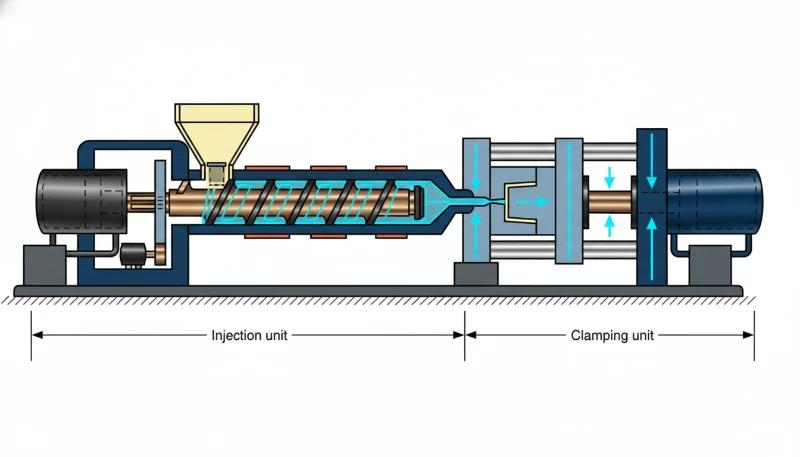
- Ein Staudruck von 5–15 bar sorgt für eine gleichmäßige Schmelze; über 20 bar steigt der Verschleiß bei abnehmendem Zusatznutzen.
- Das Massepolster von 3–9 mm muss konstant bleiben — selbst eine Abweichung von 1 mm verändert das Teilegewicht.
- Die Massetemperatur sollte an der Düse gemessen und nicht aus den Zylindereinstellungen abgeleitet werden.
- Eine Schwankung der Werkzeugtemperatur um ±2 °C kann bei technischen Harzen die Teilemaße um 0.1–0.3 mm verschieben.
- Gleichmäßige Kühlung — nicht Geschwindigkeit — ist der eigentliche Treiber der Maßhaltigkeit.
Welche Maschineneinstellungen sind für Spritzgießer am wichtigsten?
Die wichtigsten Maschineneinstellungen für Spritzgießer sind die in diesem Abschnitt erläuterten Kategorien. Wenn Sie Anbieter vergleichen oder die Beschaffung planen, behandelt unser Leitfaden zur Beschaffung von Spritzgießlieferanten RFQ-Vorbereitung, Qualifizierung und kommerzielle Risikoprüfungen.
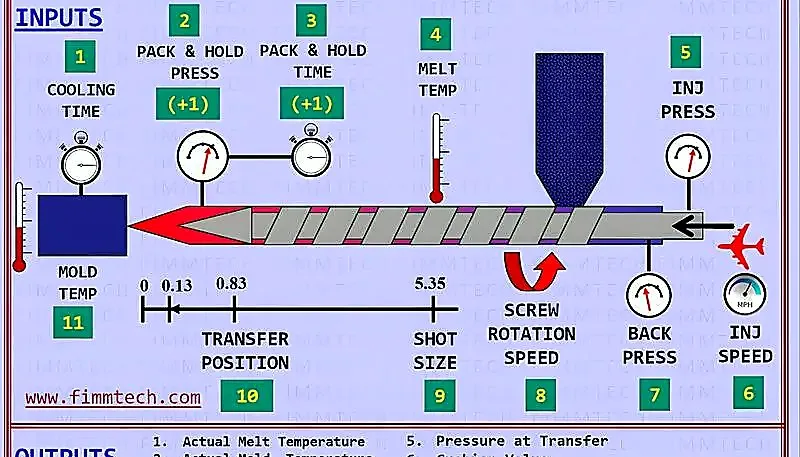
Die fünf Einstellungen, die 80 % der Produktionsprobleme verursachen, sind Staudruck1, Schneckendrehzahl, Massepolster2, Schmelzetemperatur und Formtemperatur. Sind sie korrekt, verschwinden die meisten Fehler wie Kurzschüsse, Einfallstellen und Maßdrift, ohne sekundäre Parameter nachzujustieren.
Nach unserer Erfahrung mit über 400 Materialien auf 47 Maschinen ist die am meisten unterangepasste Einstellung der Gegendruck. Die meisten Bediener belassen ihn auf Werkseinstellung. Das ist in Ordnung für PP oder PE. Bei glasfaserverstärktem Nylon oder Hochtemperatur-Polycarbonat bedeutet das, Qualität ungenutzt zu lassen.
Betrachten Sie diese fünf Parameter als System und nicht als unabhängige Stellgrößen. Eine Erhöhung des Staudrucks erzeugt zusätzliche Scherwärme, sodass möglicherweise die Zylindertemperaturen gesenkt werden müssen. Eine höhere Schneckendrehzahl bewirkt dasselbe. Jede Änderung hat Folgewirkungen. Die besten Maschinenführer ändern jeweils nur einen Parameter und beobachten das Ergebnis mindestens 10 aufeinanderfolgende Schüsse lang, bevor sie die nächste Änderung vornehmen.
Bevor wir jede Einstellung im Detail behandeln, folgt hier das kurze Schema, das wir in unserer Produktion verwenden: Zuerst werden die Temperaturen eingestellt (Zylinder und Form), dann die Drücke (Staudruck und Nachdruck), danach die Geschwindigkeiten (Schnecke und Einspritzung) und schließlich die Zeiten feinabgestimmt (Nachdruck und Kühlung). Diese Reihenfolge minimiert die Anzahl der gleichzeitig veränderten Variablen und ermöglicht eine systematische Fehlerbehebung.
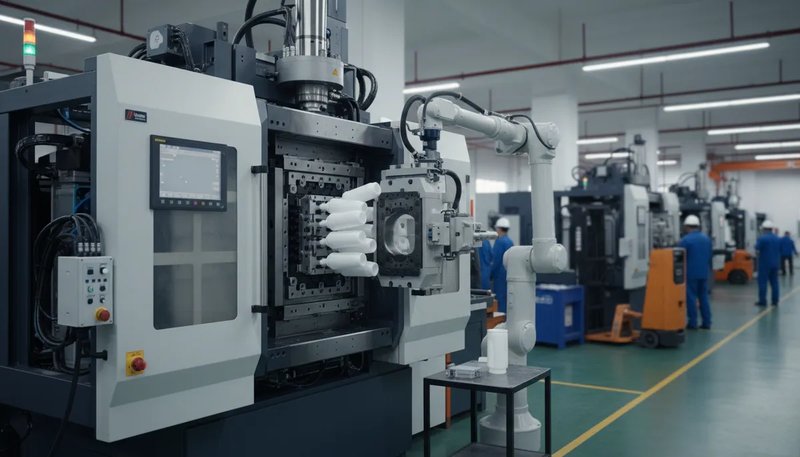
Wie sollten Sie Einspritzdüsen auswählen und warten?
Offene Düsen eignen sich für 90% der Produktionsläufe. Sie sind kostengünstiger, einfacher und weisen weniger Totzonen auf, in denen Material abbauen kann. Verwenden Sie geschlossene (Verschluss-)Düsen nur, wenn Sie niedrigviskose Harze wie PA6 oder POM auf einer Maschine ohne Schneckenrückzug verarbeiten — und selbst dann muss das Verschlussventil alle 2.000 Zyklen geprüft werden.
Der Radius der Düsenspitze muss 0,5 mm kleiner sein als der Radius der Angussbuchse. Eine Durchmesserabweichung von 1 mm klingt unbedeutend, verursacht jedoch Nachtropfen, Fadenziehen und Kaltpfropfen im Angusskanal. Wir prüfen die Düsenausrichtung bei jedem Formwechsel – mit einem Höhenmessgerät dauert dies 30 Sekunden und erspart stundenlange Fehlerproduktion.
Bei mischungsempfindlichen Materialien (Masterbatch-Farbwechsel, flammhemmende Mischungen) sollte ein statischer Mischer zwischen Zylinder und Düse erwogen werden. Er verlängert den Schmelzeweg um 50 mm, reduziert Farbschlieren jedoch um etwa 60%. Der Zielkonflikt besteht in einem leicht erhöhten Druckverlust – etwa 10–15 bar –, der durch eine Erhöhung des Einspritzdrucks ausgeglichen wird.
Die Wartung der Düse gehört zu den Aufgaben, die bei hoher Produktionsauslastung häufig ausgelassen werden. Doch Ablagerungen aus verkohlten Rückständen verändern den wirksamen Düsenöffnungsdurchmesser und damit die Scherrate sowie die Schmelzetemperatur am Anschnitt. Bei technischen Kunststoffen planen wir den Ausbau und die Reinigung der Düse alle 3,000 Zyklen, bei Standardkunststoffen alle 5,000 Zyklen.
Warum entscheidet der Staudruck über die Schmelzequalität?
Dieser Abschnitt behandelt den Einfluss des Staudrucks auf Schmelzequalität, Kosten, Qualität, Zeit und Beschaffungsrisiko. Der Staudruck ist die am stärksten unterschätzte Einstellung einer Spritzgießmaschine und steuert unmittelbar Schmelzehomogenität, Farbkonsistenz und Gewichtsstabilität von Schuss zu Schuss. Für die meisten technischen Kunststoffe liegt der optimale Bereich bei 5–15 bar. Bei 0–3 bar entstehen ungeschmolzene Körner, Farbschlieren und schwankende Schussgewichte; bei über 25 bar verlängert sich die Zykluszeit3, Scherwärme steigt und die Schnecke verschleißt schneller.
Der praktische Bereich für die meisten technischen Kunststoffe liegt bei 5–15 bar. Beginnen Sie mit 8 bar, führen Sie einen Freispritzversuch durch und prüfen Sie, ob die Extrusion gleichmäßig ist. Wirkt die Schmelze milchig oder sind Pellets sichtbar, erhöhen Sie den Druck in Schritten von 2 bar. Bei PC oder PEEK können aufgrund der hohen Viskosität 12–18 bar erforderlich sein.
Ein Fehler, den wir häufig beobachten: Bediener erhöhen den Staudruck, um eine verschlissene Schnecke auszugleichen. Das funktioniert vorübergehend, doch die eigentliche Lösung ist eine Inspektion von Schnecke und Zylinder. Wenn das Massepolster schwankt und die Dosierzeit immer länger wird, ist der Schneckensteg wahrscheinlich über ein Spiel von 0.5 mm hinaus verschlissen. Ab diesem Punkt kann keine Anpassung des Staudrucks die Prozesskonstanz wiederherstellen.
Ein weiteres subtiles Problem: Der Staudruck wirkt mit der Schneckendekompression (Rücksaugen) zusammen. Wenn Sie mit hohem Staudruck arbeiten und anschließend stark rücksaugen, können Luftblasen in die Schmelze gezogen werden. Die Lösung ist einfach – entweder den Staudruck leicht senken oder den Rücksaugweg auf 2–3 mm reduzieren. Bei Maschinen mit entlüftetem Zylinder, die hygroskopische Harze verarbeiten, ist die Regelung dieser Kombination besonders wichtig.
"Eine Erhöhung des Staudrucks von 3 bar auf 10 bar kann Farbschlieren bei ABS-Teilen um mehr als 50% reduzieren."True
Ein höherer Staudruck verbessert die Verteilung des Farbstoffs in der Schmelze, indem er das Material durch engere Spalte zwischen Schneckengängen und Zylinderwand zwingt. Dadurch wird über das gesamte Schussvolumen eine gleichmäßigere Pigmentierung erzielt.
"Ein höherer Staudruck führt immer zu besserer Teilequalität."False
Ein zu hoher Staudruck, bei den meisten Kunststoffen über 20 bar, erzeugt zu viel Scherwärme, baut die Polymerketten ab, verlängert wegen der längeren Schneckendosierzeit den Zyklus und beschleunigt den Verschleiß von Schnecke und Zylinder. Der optimale Wert ist werkstoffabhängig und liegt typischerweise zwischen 5 und 15 bar.
Wie beeinflusst die Schneckendrehzahl das Plastifizieren und die Bauteilkonsistenz?
Die Schneckendrehzahl bestimmt direkt die Gleichmäßigkeit der Schmelztemperatur und Farbkonsistenz – für die meisten Maschinen liegt der optimale Bereich bei 50–100 U/min. Schnellere Drehung erzeugt mehr Reibungswärme, führt aber zu weniger gleichmäßiger Schmelze; langsamere Drehung ermöglicht bessere Durchmischung, kann aber die Rückholzeit vor dem Öffnen der Form nicht abschließen. Der Schlüssel liegt darin, die Schneckendrehzahl so einzustellen, dass das Rückholen 1–2 Sekunden vor dem Öffnen der Form endet.
Faustregel: Stellen Sie die Schneckendrehzahl so ein, dass die Dosierung 1–2 Sekunden vor dem Öffnen des Werkzeugs abgeschlossen ist. Dosiert die Schnecke noch beim Öffnen, verlieren Sie Kühlzeit und belasten den Bediener unnötig. Ist die Dosierung deutlich vor dem Öffnen beendet, können Sie die Schnecke verlangsamen und die Schererwärmung verringern.
Unterschiedliche Materialien erfordern unterschiedliche Schneckendrehzahlen. PVC und PMMA sind scherempfindlich – halten Sie die Schneckendrehzahl unter 60 U/min, um Abbau zu verhindern. POM und PA66 vertragen 80–120 U/min. PEEK und LCP profitieren trotz ihrer hohen Schmelzetemperaturen von einer moderaten Schneckendrehzahl (40–80 U/min), da aufgrund ihrer niedrigen Viskosität weniger Schererwärmung erforderlich ist.
Auch die Schneckendrehzahl beeinflusst die Farbkonsistenz. Bei sehr niedrigen Drehzahlen (<30 rpm) ist die Schmelze möglicherweise nicht homogen genug für eine gleichmäßige Farbe. Bei sehr hohen Drehzahlen (>120 rpm bei kleinen Maschinen) kann es zu lokaler Überhitzung kommen, die Farbschlieren oder Verbrennungen verursacht. Ein mittlerer Bereich in Verbindung mit dem richtigen Staudruck liefert sowohl für die Schmelzequalität als auch für die Farbhomogenität die besten Ergebnisse.
Was ist das Schneckenpolster und warum muss es konstant bleiben?
Wenn das Prozessblatt 240 °C Schmelze und 60 °C Form angibt und die Teile gut aussehen – optimieren Sie beim nächsten Lauf nicht nach Gefühl. Dokumentierte, wiederholbare Prozessfenster schlagen die Beurteilung des Bedieners jedes Mal. So erreichen Sie gleichbleibende Qualität über 120+ Produktionsmitarbeiter auf mehreren Schichten hinweg.
Moderne Maschinen können das Massepolster auf ±0,1 mm konstant halten. Wenn Sie eine Abweichung von ±1 mm feststellen, prüfen Sie: (1) Leckage am Rückstromsperrventil, (2) ungleichmäßige Materialzufuhr, (3) einen verschlissenen Zylinder in der Dosierzone. In unserem Betrieb ist die Konstanz des Massepolsters der erste Prüfpunkt, wenn ein Kunde Maßabweichungen an einem Teil meldet, das zuvor einwandfrei lief.
Der Schneckenrückzug (Dekompression) ist damit verwandt, aber nicht identisch. Nach dem Einspritzen und vor dem Öffnen der Form zieht sich die Schnecke leicht zurück, um die Schmelze zu entspannen und Nachtropfen an der Düse zu verhindern. Der typische Rückzug beträgt 3–5 mm. Bei entlüfteten Zylindern für hygroskopische Werkstoffe ist der Rückzug auf 2 mm zu reduzieren — in die Schmelze eingezogene Luft erzeugt Blasen, die als Silberschlieren auf der Bauteiloberfläche erscheinen.
Beachten Sie beim Einstellen des Restmassepolsters: Der in die Maschinensteuerung programmierte Polsterwert setzt voraus, dass der Schneckennullpunkt korrekt ist. Nach dem Ziehen und Reinigen der Schnecke muss die Schneckenposition stets neu auf null gesetzt werden. Wir haben Fälle erlebt, in denen ein 3 mm Polster tatsächlich 0 mm betrug, weil sich der Nullpunkt beim Zusammenbau verschoben hatte — dadurch wurde kein Nachdruck übertragen, und beim ersten Einrichtversuch entstanden zu 100% Kurzschüsse.
Wie werden Plastifizierleistung berechnet und überprüft?
Die Plastifizierleistung³ ist die Geschwindigkeit, mit der Ihre Maschine Material gleichmäßig aufschmelzen kann, angegeben in kg/h PS-Äquivalent. Diese Kenngröße ist bei jeder Maschine im Handbuch aufgeführt. Das Problem besteht darin, dass die meisten Anwender nie prüfen, ob ihre tatsächliche Zykluszeit die Schmelzleistung der Maschine überschreitet.
Verwenden Sie diese Formel: tmin = (Gesamtschussgewicht in g × 3600) ÷ (Plastifizierleistung in kg/h × 1000). Ist die tatsächliche Zykluszeit kürzer als tmin, kann die Maschine das Material nicht schnell genug aufschmelzen. Die Folge sind schwankende Viskosität, Kurzschüsse in späteren Kavitäten und unterschiedlicher Oberflächenglanz.
Dies ist besonders kritisch bei Mehrkavitätenwerkzeugen mit hohem Schussgewicht. Ergibt Ihre Berechnung eine Auslastung der Plastifizierkapazität von 85 % oder mehr, sollten Sie entweder die Kühlzeit verlängern, die Kavitätenzahl reduzieren oder auf eine größere Maschine wechseln. Der Betrieb an der Grenze der Plastifizierkapazität führt mit hoher Wahrscheinlichkeit zu Ausschuss.
Ein weiterer Punkt: Die Plastifizierleistung nimmt über die Lebensdauer der Maschine ab. Eine verschlissene Schnecke mit größerem Stegspiel kann nicht dieselbe Scherung und Verdichtung erzeugen wie eine neue. Wenn Teile aus einer älteren Maschine bei demselben Werkzeug dauerhaft größere Farbabweichungen oder mehr unaufgeschmolzenes Material zeigen als auf einer neueren Maschine, sollten Schnecke und Zylinder vermessen werden. Ein Verschleiß von 0.3–0.5 mm am Stegdurchmesser kann die wirksame Plastifizierleistung um 15–25% verringern.
Warum ist die Steuerung der Massetemperatur entscheidend?
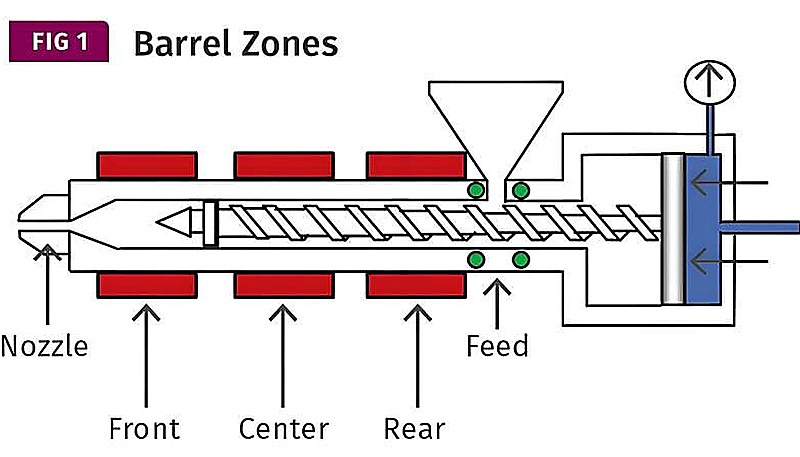
Die eingestellten Zylindertemperaturen Ihrer Maschine entsprechen nicht der Schmelzetemperatur. Es handelt sich um Sollwerte der Heizbänder. Die tatsächliche Schmelzetemperatur wird durch Schneckendrehzahl, Staudruck, Schussvolumen und Verweilzeit beeinflusst⁵. Die einzige zuverlässige Methode zur Bestimmung Ihrer Schmelzetemperatur ist die Messung an der Düse mit einem Pyrometer oder im Freispritzverfahren.
Tragen Sie bei Freispritzversuchen hitzebeständige Handschuhe und einen Gesichtsschutz. Extrudieren Sie eine kleine Menge Schmelze in einen Metallbehälter und führen Sie einen vorgewärmten Thermoelementfühler ein. Der Messwert sollte innerhalb von ±5 °C des vom Materiallieferanten empfohlenen Bereichs liegen. Liegt er 10–15 °C höher, führt die Schererwärmung durch Schneckendrehzahl und Staudruck zu viel Energie zu — reduzieren Sie einen oder beide Parameter.
Auch das Temperaturprofil ist wichtig. Stellen Sie die hintere Zone (Einzug) am kühlsten ein, um vorzeitiges Schmelzen und Brückenbildung zu verhindern. Erhöhen Sie die Temperatur zur Düse hin schrittweise. Die Düsenspitze kann 5–10 °C niedriger als die vordere Zone eingestellt werden, um Nachtropfen zu vermeiden. Wenn Sie keine Erfahrung mit einem bestimmten Harz haben, beginnen Sie stets bei der niedrigsten empfohlenen Temperatur und erhöhen Sie sie in Schritten von 5 °C.
Bei ZetarMold betreibt unser Werk in Shanghai 47 Spritzgießmaschinen von 90T bis 1850T. Mit über 20 Jahren Spritzgießerfahrung seit 2005 und 8 leitenden Formenbauingenieuren im Team standardisieren wir die Überprüfung der Schmelztemperatur als Teil jedes Produktionsaufbaus – vor der Erstmusterfreigabe muss der Bediener die tatsächliche Düsenschmelztemperatur innerhalb von ±5 °C des Prozessblatts bestätigen.
"Die Messung der Schmelzetemperatur beim Freispritzen ist genauer als die Orientierung an den Sollwerten der Zylinderheizung."True
Zylinder-Thermoelemente sind in die Stahlwand eingelassen und messen die Stahltemperatur, nicht die Polymertemperatur. Schererwärmung durch Schneckendrehung und Staudruck kann die tatsächliche Schmelzetemperatur um 10–30 °C über den Zylindersollwert anheben, sodass eine direkte Messung für die Prozesssteuerung unerlässlich ist.
"Der Einfachheit halber sollten alle Heizzonen auf dieselbe Temperatur eingestellt werden."False
Ein geeignetes Temperaturprofil beginnt in der Einzugszone kühler, um Brückenbildung zu verhindern, steigt in der Übergangszone für ein fortschreitendes Aufschmelzen an und kann an der Düsenspitze etwas niedriger sein, um Nachtropfen zu vermeiden. Einheitliche Einstellungen in allen Zonen verursachen Einzugsprobleme und uneinheitliches Aufschmelzen.
Wie steht es um Verweilzeit und Materialabbau?
Verweilzeit – wie lange Kunststoff im beheizten Zylinder verbleibt – ist der Haupttreiber für thermischen Abbau beim Spritzgießen. Jedes Polymer hat eine maximale sichere Verweilzeit bei einer bestimmten Temperatur; überschreitet man diese, kommt es zu Molekulargewichtsverlust, Verfärbung, Gasbildung und geschwächten Teilen, die visuell möglicherweise bestehen, aber im Einsatz versagen.
Berechnung: tVerweil = (Zylindervolumen in g × Zykluszeit in s) ÷ (Schussgewicht in g × 300). Dies ist ein Näherungswert; tatsächlich ist die Zeit wegen Material in Toträumen länger. Führen Sie bei Präzisionsarbeiten einen Farbspültest durch: Geben Sie farbiges Granulat hinzu und messen Sie die Zeit, bis die Farbe im Schuss erscheint.
Das größte Risiko: Maschinen mit großem Zylinder und kleinen Schussgewichten. Wenn Ihr Schuss weniger als 30% der Zylinderkapazität nutzt, kann die Verweilzeit leicht sichere Grenzwerte überschreiten. Die Lösung besteht darin, entweder eine kleinere Maschine zu verwenden oder den Zylinder bei längeren Läufen alle 15–20 Minuten zu spülen. Bei Werkstoffen wie POM oder PVC, die sich stark zersetzen, sollte eine Schussauslastung unter 20% vollständig vermieden werden.
Achten Sie auf frühe Anzeichen einer Zersetzung: silbrige Schlieren, hellbraune oder gelbliche Verfärbungen, einen schwach stechenden Geruch an der Düse oder eine allmähliche Abnahme des Teilegewichts ohne Prozessänderungen. All dies deutet darauf hin, dass sich das Material im Zylinder zersetzt. Stoppen und spülen Sie in diesem Fall sofort – die weitere Verarbeitung zersetzten Materials verunreinigt den Zylinder und verschärft das Problem bei den folgenden Schüssen.
Wie sollte die Formtemperatur geregelt werden?
Dieser Abschnitt behandelt, ob die Formtemperatur kontrolliert wird und ihre Auswirkungen auf Kosten, Qualität, Zeitplan oder Beschaffungsrisiko. Die Formtemperatur muss mit einem Kontaktthermometer an der Kavitätenoberfläche überprüft werden – niemals dem Anzeigewert des Temperiergeräts vertrauen, der um 5–15 °C abweichen kann. Für Teile mit engen Toleranzen halten Sie die Schwankung innerhalb von ±2 °C, indem Sie pro Kreislauf individuelle Temperiergeräte verwenden. Die Formtemperatur steuert direkt die Oberflächengüte, Kristallinität, Schrumpfung und Verzug.
Prüfen Sie die Werkzeugtemperatur stets mit einem Kontaktthermometer an der Kavitätsoberfläche und nicht anhand der Anzeige des Temperiergeräts. Die Anzeige zeigt die Kühlmitteltemperatur am Gerät, die je nach Kreislauflänge, Durchflussmenge und Kalkablagerungen in den Kanälen um 5–15 °C von der tatsächlichen Kavitätsoberfläche abweichen kann.
Halten Sie bei Teilen mit engen Toleranzen die Schwankung der Formtemperatur innerhalb von ±2 °C. In unserer Produktion bedeutet das, für kritische Formen einzelne Temperiergeräte pro Formkreislauf einzusetzen — statt mehrere Kreisläufe in Reihe an ein Gerät anzuschließen. Ja, das kostet mehr Ausrüstung. Nacharbeit und Ausschuss durch Maßabweichungen kosten jedoch noch mehr, insbesondere bei Mehrkavitätenformen, bei denen ein um 5 °C wärmerer Kreislauf die Hälfte der Kavitäten außerhalb der Spezifikation verschiebt.
Ein häufiger Fehler besteht darin, die Werkzeugtemperatur anhand der Werte festzulegen, die bei einem ähnlichen Material in einem anderen Werkzeug funktioniert haben. Werkzeuggröße, Kreislaufauslegung und Wanddicke beeinflussen, welche Temperatur die Kavitätsoberfläche tatsächlich erreicht. Eine Einstellung von 60 °C kann bei einem kleinen, einfachen Werkzeug 55 °C an der Oberfläche ergeben, während dieselbe Einstellung bei einem großen Werkzeug mit langen Kühlkreisläufen möglicherweise nur 42 °C erreicht. Messen Sie jedes Werkzeug, jedes Mal.
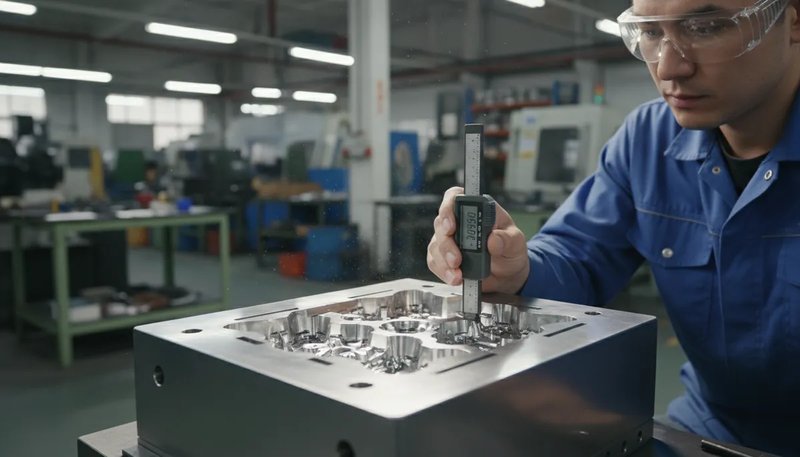
Warum ist eine gleichmäßige Kühlung wichtiger als eine schnelle Kühlung?
Gleichmäßige Kühlung ist wichtiger als schnelle Kühlung, weil Kosten-, Qualitäts-, Mengen- und Anwendungsabwägungen dafür sprechen. Viele Bediener kühlen die Form so schnell wie möglich. Unser vollständiger Leitfaden zur Spritzgießformkonstruktion zeigt: Geschwindigkeit zählt, Gleichmäßigkeit aber mehr. Ungleichmäßige Kühlung verursacht unterschiedliche Schwindung und damit Verzug, innere Spannungen und Maße außerhalb der Toleranz, selbst wenn die Zykluszeit gut aussieht.
Die kontraintuitive Technik: kühleres Wasser am Kern (Innenseite des Bauteils) und wärmeres Wasser an der Kavität (Außenseite) einsetzen. Dadurch gleichen sich die Abkühlraten dicker und dünner Bereiche an. Bei flachen Präzisionsteilen—etwa optischen Linsen, Dichtflächen oder zusammenpassenden Gehäusen—kann allein dies den Verzug um 40–60% verringern.
Prüfen Sie bei jedem Werkzeugwechsel den Durchfluss des Kühlkreislaufs. Ein Kreislauf, der beim letzten Lauf 12 l/min erreichte, kann durch Ablagerungen auf 4 l/min abgesunken sein. Bei geringem Durchfluss geht die turbulente in eine laminare Strömung über, die Wärmeübertragung sinkt um 30–50 % und Ihre sorgfältig eingestellten Temperaturen verlieren ihre Aussagekraft. Fällt der Durchfluss unter 60 % des Ausgangswerts, muss der Kreislauf vor Produktionsbeginn gereinigt oder ausgetauscht werden.
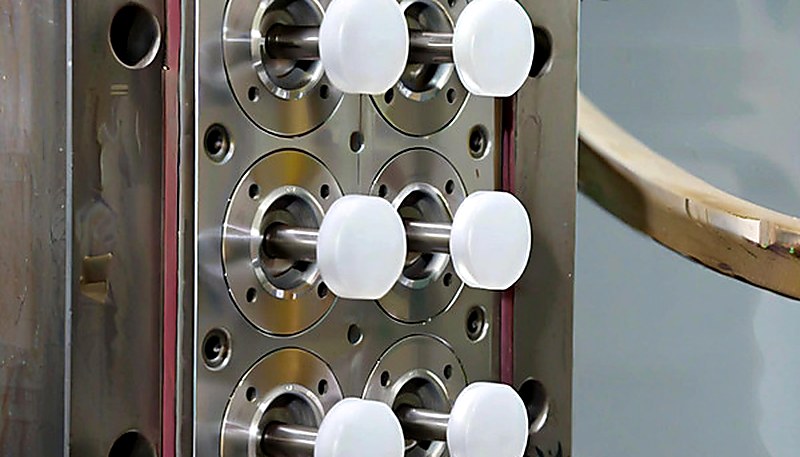
Bei Mehrkavitätenformen ist eine ausgeglichene Kühlung aller Kavitäten entscheidend. Die dem Wassereinlass nächstgelegene Kavität kühlt stets am schnellsten ab. Verwenden Sie Durchflussbegrenzer oder separate Kreisläufe für jede Kavität, um die Kühlung anzugleichen. Bei Formen mit acht Kavitäten haben wir in einem einzelnen Reihenkreislauf zwischen der ersten und letzten Kavität einen Temperaturunterschied von 8 °C gemessen — genug, um messbare Maßabweichungen zwischen den Teilen zu verursachen.
Welche Hinweise werden von Spritzgießern am häufigsten übersehen?
Die am häufigsten übersehenen Hinweise für Spritzgießer sind die in diesem Abschnitt erläuterten Hauptkategorien oder Optionen. Neben den fünf Kerneinstellungen sorgen mehrere sekundäre Faktoren regelmäßig für unerwartete Probleme:
Tipp 14: Prüfen Sie das Rückschlagventil. Das Ringrückschlagventil an der Schneckenspitze verschleißt allmählich. Übersteigt das Spiel 0,1 mm, wird der Nachdruck inkonsistent. Prüfen Sie es alle 500.000 Schuss oder sobald die Massepolsterschwankung ±0,5 mm überschreitet. Ein Ersatz kostet einige Hundert Dollar; die Produktion mit einem verschlissenen Ventil verursacht Tausende Dollar Ausschuss.
Tipp 15: Entlüften Sie die Form richtig. Eingeschlossene Luft verursacht Verbrennungen, Dieseleffekt und Kurzschüsse in Sackbereichen. Entlüftungen an der Trennlinie sollten 0,01–0,02 mm tief und sauber sein, nicht durch früheren Grat zugeschliffen. Ergänzen Sie Entlüftungsstifte am Ende von Fließwegen und in blinden Taschen.
Tipp 16: Trocknen Sie das Material korrekt. Hygroskopische Harze (PC, Nylon, PET, TPU) nehmen Feuchtigkeit auf, die Silberschlieren, molekularen Abbau und geschwächte Bindenähte verursacht. PC muss 3–4 Stunden bei 120 °C und einem Taupunkt unter −20 °C getrocknet werden. Ein Material, das trocken aussieht, ist nicht zwingend trocken; prüfen Sie es vor jedem Produktionslauf mit einem Feuchtemessgerät.
Tipp 17: Dokumentieren Sie alles: jede Parameteränderung, jeden Temperaturwert und jedes Kavitätsmaß der ersten 10 Schüsse. Treten am dritten Produktionstag Probleme auf, benötigen Sie diese Ausgangsbasis. Alle Bediener müssen vor der Erstmusterfreigabe ein Einrichtprotokoll ausfüllen. Zehn Minuten Dokumentation sparen später Stunden gegenseitiger Schuldzuweisungen.
Tipp 18: Vertrauen Sie den Daten, nicht dem Bauchgefühl. Gibt das Prozessblatt 240 °C Schmelze und 60 °C Form vor und sind die Teile gut, optimieren Sie beim nächsten Lauf nicht nach Gefühl. Dokumentierte, wiederholbare Prozessfenster schlagen Bedienerintuition. So entsteht über mehrere Schichten und mehr als 120 Produktionsmitarbeiter hinweg gleichbleibende Qualität.
Welche Fragen zu Spritzgießtipps werden am häufigsten gestellt?
Welcher Staudruck ist beim Spritzgießen ideal?
Der ideale Gegendruck für die meisten technischen Kunststoffe liegt bei 5–15 bar. Beginnen Sie mit 8 bar für Standardmaterialien wie ABS und PP. Erhöhen Sie auf 12–18 bar für hochviskose Kunststoffe wie Polycarbonat oder PEEK. Über 20 bar bringt abnehmende Qualitätsgewinne, beschleunigt aber den Verschleiß der Schnecke und verlängert die Zykluszeit. Überprüfen Sie das Ergebnis immer mit einem Luftschuss-Test. Bei unseren 47 Maschinen, die über 400 Materialien verarbeiten, stellen wir fest, dass ein Gegendruck zwischen 8–12 bar etwa 80% der Produktionsaufträge problemlos abdeckt.
Wie groß sollte das Schneckenpolster sein?
Halten Sie bei Maschinen unter 300T ein Massepolster von 3 mm und bei Maschinen über 1000T ein Massepolster von 6–9 mm ein. Die entscheidende Kennzahl ist die Konstanz — das Massepolster sollte von Schuss zu Schuss nicht um mehr als ±0,5 mm schwanken. Größere Abweichungen deuten typischerweise auf ein verschlissenes Rückschlagventil, eine ungleichmäßige Materialzufuhr oder Zylinderverschleiß in der Dosierzone hin. Prüfen und beheben Sie die Grundursache, statt sie durch andere Parameter auszugleichen. In unserem Werk protokollieren die Bediener die Massepolsterwerte alle 50 Schuss; jeder Trend über ±1 mm löst eine Ventilprüfung aus, bevor der Lauf fortgesetzt wird.
Wie überprüfe ich die tatsächliche Schmelzetemperatur?
Verwenden Sie das Freispritzverfahren mit einem vorgewärmten Pyrometerfühler. Extrudieren Sie mit hitzebeständigen Handschuhen und Gesichtsschutz eine kleine Schmelzeprobe in einen Metallbehälter und führen Sie den Fühler sofort ein. Der Messwert sollte innerhalb von ±5 °C des Datenblattbereichs liegen. Die Sollwerte der Zylinderheizung sind keine zuverlässigen Indikatoren für die Schmelzetemperatur, da die Schererwärmung durch die Schneckendrehung die tatsächliche Temperatur um 10–30 °C über den Sollwert anheben kann. Bei kritischen Aufträgen empfehlen wir Freispritzmessungen zu Beginn jeder Schicht und nach jeder Änderung von Drehzahl oder Staudruck.
Warum verziehen sich meine Spritzgussteile?
Verzug tritt auf, wenn die Abkühlgeschwindigkeit über das Teil hinweg um mehr als 15 °C variiert; Ursache sind typischerweise ungleichmäßige Wanddicken mit einem Verhältnis über 3:1 oder eine unzureichende Auslegung des Kühlkreislaufs. Stellen Sie zunächst eine gleichmäßige Kühlung her, indem Sie auf der Kernseite kühleres und auf der Kavitätsseite wärmeres Wasser einsetzen. Diese Differenzkühlung reduziert den Verzug flacher Präzisionsteile um 40–60 %, ohne die Zykluszeit wesentlich zu verändern. Prüfen Sie außerdem, ob die Anschnittposition eine ausgewogene Füllung unterstützt – asymmetrische Füllung erzeugt Eigenspannungen, die den Verzug selbst bei gleichmäßiger Kühlung verstärken.
Wie häufig sollten Spritzgießdüsen geprüft werden?
Offene Düsen bei jedem Werkzeugwechsel auf Ausrichtung und Verschleiß des Spitzenradius prüfen – der Spitzenradius sollte 0.5 mm kleiner als der Radius der Angussbuchse sein. Verschlussdüsen alle 2,000 Zyklen auf die Dichtheit des Ventilsitzes prüfen. Bei technischen Kunststoffen alle 3,000 Zyklen und bei Standardkunststoffen alle 5,000 Zyklen einen Düsenausbau mit Reinigung einplanen, um Ablagerungen karbonisierter Rückstände zu verhindern. In Monaten mit hoher Produktionsauslastung baut unser Team die Düsen an Maschinen mit glasfaserverstärktem Nylon wöchentlich aus, da abrasive Füllstoffe den Verschleiß erheblich beschleunigen.
Was geschieht, wenn die Verweilzeit im Zylinder zu lang ist?
Eine übermäßige Verweilzeit führt zu thermischem Abbau: Das Molekulargewicht sinkt, Verfärbungen treten auf (gelblicher oder brauner Farbton), die Gasbildung nimmt zu und die mechanischen Eigenschaften verschlechtern sich. Das Risiko ist am höchsten, wenn das Schussgewicht weniger als 30% des Zylindervolumens nutzt. Spülen Sie den Zylinder bei solchen Läufen alle 15–20 Minuten oder wechseln Sie auf eine kleinere Maschine. Achten Sie auf frühe Anzeichen wie Silberschlieren oder einen stechenden Geruch. Berechnen Sie die Verweilzeit, indem Sie das Zylindervolumen durch das Schussvolumen teilen und mit der Zykluszeit multiplizieren — übersteigt sie bei den meisten technischen Kunststoffen 5 Minuten, befinden Sie sich im Abbaubereich.
Wie berechne ich, ob meine Maschine über ausreichende Plastifizierleistung verfügt?
Teilen Sie das Gesamtschussgewicht in Gramm durch 1000, multiplizieren Sie es mit 3600 und teilen Sie das Ergebnis anschließend durch die Nennplastifizierleistung der Maschine in kg/h. Das Ergebnis ist Ihre Mindestzykluszeit in Sekunden. Ist Ihre tatsächliche Zykluszeit kürzer als dieses berechnete Minimum, kann die Maschine den Werkstoff nicht schnell genug für eine gleichbleibende Qualität aufschmelzen — Viskositätsschwankungen und Oberflächenfehler sind die Folge. Planen Sie stets einen Puffer von 10–15% über dem berechneten Minimum ein, um Schwankungen zwischen Materialchargen und Änderungen der Umgebungstemperatur zu berücksichtigen, die den realen Durchsatz beeinflussen.
Sollten alle Werkzeugkühlkreisläufe dieselbe Wassertemperatur verwenden?
Nein. Verwenden Sie bei Teilen mit erheblichen Wanddickenunterschieden eine differenzielle Kühlung: kühleres Wasser (10–15 °C niedriger) auf der Kernseite und wärmeres Wasser auf der Kavitätsseite. Dadurch gleichen sich die Abkühlgeschwindigkeiten dicker und dünner Bereiche an, was den Verzug um 40–60 % verringert. Verwenden Sie bei Mehrkavitätenwerkzeugen für jede Kavität einen eigenen Kreislauf oder Durchflussbegrenzer, um die Kühlung aller Kavitäten auszugleichen. In unserem Werk in Shanghai prüfen wir die Durchflussraten der Kühlkreisläufe bei jedem Werkzeugwechsel mit einem Durchflussmesser — ein Kreislauf mit weniger als 80 % seines Auslegungsdurchflusses wird vor Produktionsbeginn entkalkt oder ersetzt.
Staudruck: Der Staudruck ist der während des Dosierhubs auf die Schnecke ausgeübte Widerstand in bar oder MPa. Er steuert Schmelzehomogenität und Mischqualität im Spritzzylinder. ↩
Massepolster: Das Massepolster bezeichnet das kleine Volumen geschmolzenen Kunststoffs, das am Einspritzende vor der Schneckenspitze verbleibt, typischerweise 3–9 mm, und eine gleichmäßige Druckübertragung zur Kavität gewährleistet. ↩
Zykluszeit: Die Zykluszeit ist die gesamte Zeit vom Beginn eines Spritzgießschusses bis zum Beginn des nächsten, gemessen in Sekunden, einschließlich Einspritzen, Nachdruck, Kühlung und Auswerfung. ↩