È stato appena installato un nuovo stampo su una macchina da 200T. Le prime tre stampate sembrano corrette, poi iniziano a comparire stampate incomplete. Si regola la pressione di mantenimento, la temperatura aumenta di 5 gradi e ora compare la bava. Suona familiare? La maggior parte dei problemi di stampaggio a iniezione in reparto deriva da poche impostazioni della macchina che gli operatori trascurano o impostano per abitudine anziché secondo logica.
Questo articolo presenta 18 consigli pratici che contano davvero: quelli che applichiamo ogni giorno gestendo le attività descritte nella guida completa allo stampaggio a iniezione su 47 macchine. Niente teoria fine a sé stessa, ma solo indicazioni che fanno la differenza tra una produzione stabile e una continua gestione delle emergenze.
- Una contropressione di 5–15 bar rende il fuso uniforme; oltre 20 bar aumenta l'usura con benefici decrescenti.
- Il cuscino della vite, compreso tra 3 e 9 mm, deve rimanere costante: anche uno scostamento di 1 mm modifica il peso del pezzo.
- La temperatura del fuso deve essere misurata all'ugello, non dedotta dalle impostazioni del cilindro.
- Una variazione di ±2 °C della temperatura dello stampo può modificare le dimensioni di 0,1–0,3 mm nelle resine tecniche.
- L’uniformità del raffreddamento, non la velocità, è il vero fattore determinante della stabilità dimensionale.
Quali sono le impostazioni della macchina più critiche per gli addetti allo stampaggio a iniezione?
Le impostazioni macchina più critiche per gli stampatori a iniezione rientrano nelle principali categorie descritte in questa sezione. Se state confrontando fornitori o pianificando gli acquisti, la nostra guida alla selezione di un fornitore di stampaggio a iniezione tratta la preparazione della RFQ, la qualificazione e i controlli dei rischi commerciali.
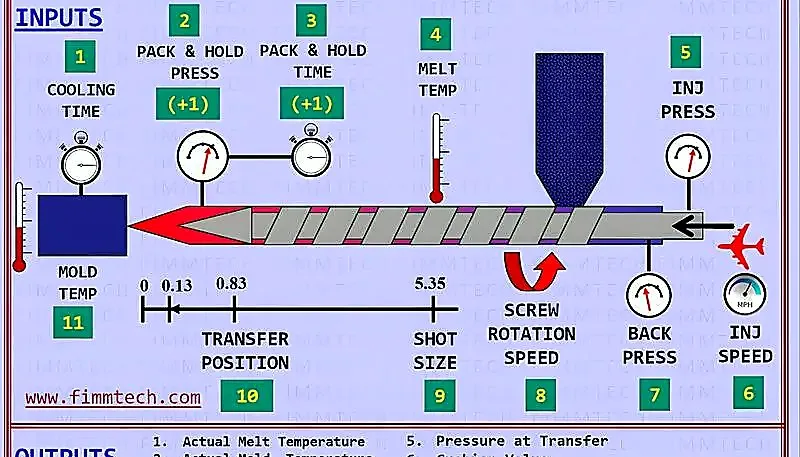
Le cinque impostazioni responsabili dell’80% dei problemi di produzione sono la contropressione1, la velocità della vite, il cuscino di materiale2, la temperatura del fuso e la temperatura dello stampo. Regolandole correttamente, la maggior parte dei difetti — riempimenti incompleti, risucchi e deriva dimensionale — si risolve senza intervenire sui parametri secondari.
Nella nostra esperienza con oltre 400 materiali su 47 macchine, l’impostazione più sottoregolata è la pressione di ritorno. La maggior parte degli operatori la lascia al valore predefinito di fabbrica. Va bene per PP o PE. Per il nylon caricato con vetro o il policarbonato ad alta temperatura, significa rinunciare a qualità.
Considerate questi cinque parametri come un sistema, non come regolazioni indipendenti. L’aumento della contropressione aggiunge calore da taglio, quindi potrebbe essere necessario abbassare le temperature del cilindro. L’aumento della velocità della vite produce lo stesso effetto. Ogni modifica ha conseguenze a cascata. Gli operatori migliori regolano un parametro alla volta e osservano il risultato per almeno 10 stampate consecutive prima di apportare la modifica successiva.
Prima di esaminare nel dettaglio ogni impostazione, ecco lo schema rapido che utilizziamo nel reparto produttivo: impostare innanzitutto le temperature (cilindro e stampo), poi le pressioni (contropressione e mantenimento), quindi le velocità (vite e iniezione) e infine regolare con precisione i tempi (mantenimento e raffreddamento). Questa sequenza riduce al minimo il numero di variabili che cambiano contemporaneamente e rende sistematica la risoluzione dei problemi.
Come scegliere e manutenere gli ugelli di iniezione?
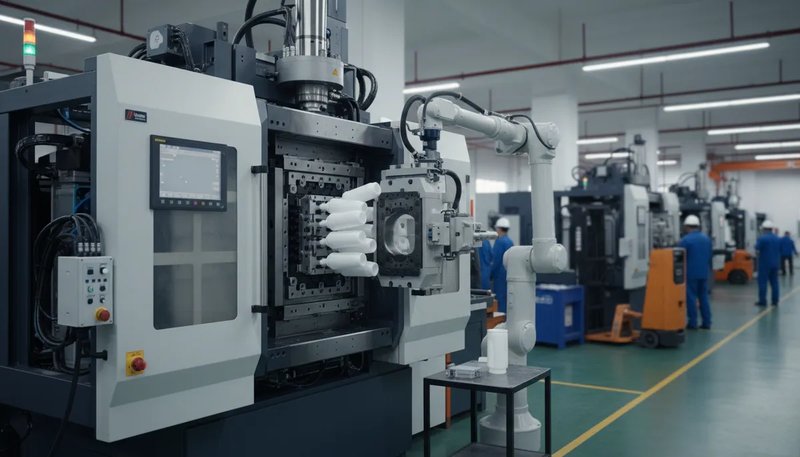
Gli ugelli aperti sono adatti al 90% delle produzioni. Sono più economici, più semplici e presentano meno zone morte nelle quali il materiale può degradarsi. Usare ugelli chiusi soltanto quando si lavorano resine a bassa viscosità come PA6 o POM su una macchina priva di arretramento della vite; anche in tal caso, la valvola di chiusura deve essere ispezionata ogni 2,000 cicli.
Il raggio della punta dell’ugello deve essere inferiore di 0,5 mm a quello della bussola di colata. Una differenza di diametro di 1 mm sembra trascurabile, ma causa colature, filamenti e pastiglie fredde nel canale. Controlliamo l’allineamento dell’ugello a ogni cambio stampo: richiede 30 secondi con un altimetro e fa risparmiare ore di difetti.
Per i materiali sensibili alla miscelazione (cambi colore del masterbatch, miscele ritardanti di fiamma), valutare l’aggiunta di un miscelatore statico tra cilindro e ugello. Aggiunge 50 mm al percorso del fuso, ma riduce di circa il 60% i difetti dovuti a striature di colore. Il compromesso è un lieve aumento della caduta di pressione, circa 10–15 bar, compensabile aumentando la pressione di iniezione.
La manutenzione dell’ugello è una di quelle attività che vengono trascurate quando la produzione è intensa. Tuttavia, l’accumulo di residui carbonizzati nell’ugello modifica il diametro effettivo dell’orifizio e, di conseguenza, la velocità di taglio e la temperatura del fuso al punto di iniezione. Programmiamo lo smontaggio e la pulizia degli ugelli ogni 3.000 cicli per le resine tecniche e ogni 5.000 per i materiali di largo consumo.
Perché la contropressione determina la qualità del fuso?
Questa sezione spiega perché la contropressione può determinare la qualità del fuso e quale impatto ha su costi, qualità, tempi e rischi di approvvigionamento. È il parametro più sottovalutato di una pressa a iniezione: controlla direttamente l’omogeneità del fuso, l’uniformità del colore e la stabilità del peso tra un’iniezione e l’altra. Per la maggior parte delle resine tecniche, l’intervallo ottimale è 5–15 bar. Se è troppo bassa (0–3 bar), si ottengono granuli non fusi, striature di colore e un peso dell’iniezione irregolare. Se è troppo alta (oltre 25 bar), aumentano il tempo di ciclo3, il calore da taglio e l’usura della vite.
L’intervallo pratico per la maggior parte delle resine tecniche è 5–15 bar. Iniziare a 8 bar, eseguire uno spurgo libero e verificare che l’estrusione sia uniforme. Se il fuso appare lattiginoso o presenta granuli visibili, aumentare con incrementi di 2 bar. Per PC o PEEK possono essere necessari 12–18 bar a causa della loro elevata viscosità.
Un errore che osserviamo spesso è l’aumento della contropressione da parte degli operatori per compensare l’usura della vite. Funziona temporaneamente, ma la vera soluzione è ispezionare vite e cilindro. Se il cuscino varia e il tempo di recupero continua ad allungarsi, probabilmente il gioco del filetto della vite ha superato 0,5 mm a causa dell’usura. A quel punto, nessuna regolazione della contropressione può ripristinare la costanza del processo.
Un altro problema sottile: la contropressione interagisce con la decompressione della vite (risucchio). Se si utilizza una contropressione elevata e poi si applica un risucchio aggressivo, si possono introdurre bolle d’aria nel fuso. La correzione è semplice: ridurre leggermente la contropressione oppure limitare la distanza di risucchio a 2–3 mm. Nelle macchine con cilindro ventilato che lavorano resine igroscopiche, il controllo di questa combinazione è particolarmente importante.
"L'aumento della contropressione da 3 bar a 10 bar può ridurre di oltre il 50% i difetti di striatura del colore nei componenti in ABS."True
Una contropressione più elevata migliora la dispersione del colorante nel materiale fuso, forzando il materiale attraverso giochi più stretti tra i filetti della vite e la parete del cilindro e producendo una pigmentazione più uniforme nell'intero volume della stampata.
"Una contropressione più elevata produce sempre una migliore qualità del pezzo."False
Una contropressione eccessiva (oltre 20 bar per la maggior parte delle resine) genera troppo calore da taglio, degrada le catene polimeriche, aumenta il tempo di ciclo a causa del recupero più lungo della vite e accelera l'usura di vite e cilindro. Il valore ottimale dipende dal materiale ed è generalmente compreso tra 5 e 15 bar.
In che modo la velocità della vite influisce sulla plastificazione e sulla costanza dei pezzi?
La velocità della vite determina direttamente l’uniformità della temperatura del fuso e la consistenza del colore — per la maggior parte delle macchine, 50–100 giri/min è l’intervallo ottimale. Una rotazione più veloce genera più calore per attrito ma produce un fuso meno uniforme; una rotazione più lenta dà una migliore miscelazione ma potrebbe non completare il recupero prima dell’apertura dello stampo. La chiave è regolare la velocità della vite in modo che il recupero termini 1–2 secondi prima dell’apertura dello stampo.
Regola pratica: regolare la velocità della vite affinché il recupero termini 1–2 secondi prima dell’apertura dello stampo. Se la vite sta ancora recuperando quando lo stampo si apre, si perde tempo di raffreddamento e si esercita pressione inutile sull’operatore. Se il recupero termina molto prima dell’apertura, si può rallentare la vite e ridurre il riscaldamento da taglio.
Materiali diversi richiedono velocità della vite diverse. PVC e PMMA sono sensibili al taglio: mantenere la velocità sotto 60 giri/min per evitare la degradazione. POM e PA66 tollerano 80–120 giri/min. PEEK e LCP, nonostante le elevate temperature di fusione, traggono vantaggio da una velocità moderata, 40–80 giri/min, perché la loro bassa viscosità richiede meno riscaldamento da taglio.
Anche la velocità della vite influisce sulla uniformità del colore. A velocità molto basse (<30 rpm), il fuso può non essere abbastanza omogeneo per ottenere un colore uniforme. A velocità molto elevate (>120 rpm sulle macchine piccole), può verificarsi un surriscaldamento localizzato che causa striature o bruciature. Un valore intermedio, insieme alla corretta contropressione, offre i migliori risultati sia per la qualità del fuso sia per l’uniformità del colore.
Che cos’è il cuscino della vite e perché deve rimanere costante?
Il cuscino vite² è la piccola quantità di materiale fuso che rimane davanti alla vite al termine dell’iniezione. Sulle macchine piccole, puntare a 3 mm. Sulle macchine grandi (1000T+), puntare a 6–9 mm. Il valore esatto conta meno della costanza: se il cuscino varia di 2 mm da un ciclo all’altro, il peso del componente oscillerà e le dimensioni deriveranno.
Le macchine moderne possono mantenere il cuscino entro ±0,1 mm. Se osservate una variazione di ±1 mm, controllate: (1) perdite della valvola di non ritorno, (2) alimentazione incoerente, (3) cilindro usurato nella zona di dosaggio. Nel nostro reparto, l’uniformità del cuscino è il primo controllo quando un cliente segnala variazioni dimensionali su un pezzo che in precedenza veniva prodotto correttamente.
L’arretramento della vite (risucchio) è correlato, ma diverso. Dopo l’iniezione e prima dell’apertura dello stampo, la vite arretra leggermente per decomprimere il fuso e prevenire colature dall’ugello. Il risucchio tipico è di 3–5 mm. Sui cilindri ventilati che lavorano materiali igroscopici, ridurre il risucchio a 2 mm: aspirare aria nel fuso crea bolle che appaiono come segni a ventaglio sulla superficie del pezzo.
La pressione di ritorno ideale per la maggior parte delle resine ingegneristiche è di 5–15 bar. Inizia a 8 bar per materiali generici come ABS e PP. Incrementa a 12–18 bar per resine ad alta viscosità come policarbonato o PEEK. Superare 20 bar offre rendimenti di qualità decrescenti mentre accelerano l’usura della vite e prolungano il tempo di ciclo. Verifica sempre il risultato con un controllo a sparo d’aria. Sui nostri 45 macchinari che lavorano oltre 400 materiali, troviamo che mantenere la pressione di ritorno tra 8–12 bar copre circa 80% dei lavori di produzione senza problemi.
Come calcolare e verificare la capacità di plastificazione?
La capacità di plastificazione³ è la velocità con cui la pressa può fondere uniformemente il materiale, espressa in kg/h di PS equivalente. Il manuale di ogni pressa riporta questo dato. Il problema è che la maggior parte degli operatori non verifica mai se il tempo ciclo effettivo superi la capacità di fusione della pressa.
Utilizzate questa formula: tmin = (peso totale dell’iniezione in g × 3600) ÷ (capacità di plastificazione in kg/h × 1000). Se il tempo di ciclo effettivo è inferiore a tmin, la macchina non riesce a fondere il materiale abbastanza rapidamente: si osserveranno viscosità irregolare, riempimenti incompleti nelle ultime cavità e variazioni della lucentezza superficiale tra i componenti della stessa stampata.
Questo aspetto è particolarmente critico per gli stampi multicavità con elevato peso di iniezione. Se il calcolo indica un utilizzo pari o superiore all’85% della capacità di plastificazione, occorre prolungare il tempo di raffreddamento, ridurre il numero di cavità oppure passare a una macchina più grande. Operare al limite della capacità di plastificazione porta inevitabilmente a scarti.
Un’altra considerazione: la capacità di plastificazione si riduce durante la vita utile della macchina. Una vite usurata, con un gioco maggiore tra i filetti, non può generare lo stesso taglio e la stessa compressione di una vite nuova. Se notate che i pezzi prodotti da una macchina più vecchia presentano costantemente una maggiore variazione cromatica o materiale non fuso rispetto allo stesso stampo su una macchina più recente, fate misurare vite e cilindro. Un’usura di 0,3–0,5 mm sul diametro dei filetti può ridurre la capacità di plastificazione effettiva del 15–25%.
Perché la gestione della temperatura del fuso è fondamentale?
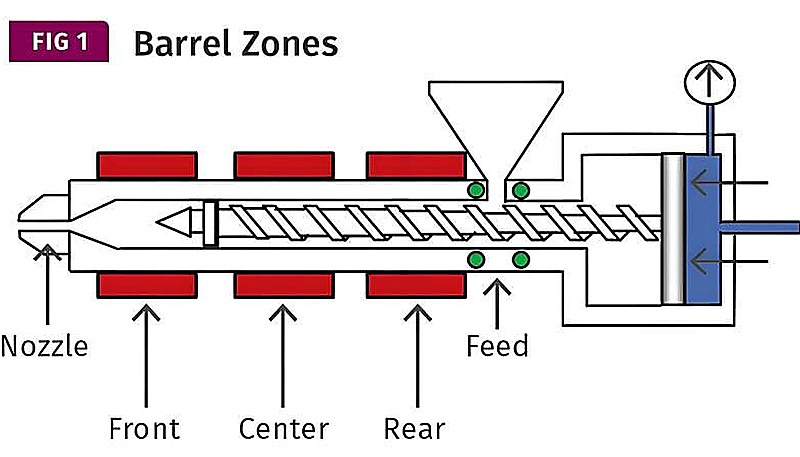
Le impostazioni della temperatura del cilindro della macchina non corrispondono alla temperatura del fuso. Sono valori impostati per le fasce riscaldanti. La temperatura effettiva del fuso è influenzata dalla velocità della vite, dalla contropressione, dal volume di iniezione e dal tempo di permanenza⁵. L’unico modo affidabile per conoscere la temperatura del fuso consiste nel misurarla all’ugello con un pirometro o mediante il metodo di spurgo in aria.
Per le estrusioni a vuoto, indossare guanti resistenti al calore e una visiera. Estrudere una piccola quantità di fuso in un contenitore metallico e inserirvi una sonda a termocoppia preriscaldata. La lettura deve rientrare entro ±5 °C dall’intervallo raccomandato dal fornitore del materiale. Se è superiore di 10–15 °C, il riscaldamento per taglio prodotto dalla velocità della vite e dalla contropressione sta apportando troppa energia: ridurre uno o entrambi i parametri.
Anche il profilo di temperatura è importante. Impostare la zona posteriore (alimentazione) alla temperatura più bassa per evitare fusione prematura e formazione di ponti. Aumentare progressivamente verso l’ugello. La punta dell’ugello può essere impostata 5–10 °C sotto la zona anteriore per evitare colature. Se non si ha esperienza con una determinata resina, iniziare sempre dalla temperatura minima raccomandata e aumentare con incrementi di 5 °C.
Presso ZetarMold, il nostro stabilimento di Shanghai gestisce 47 macchine per stampaggio a iniezione da 90T a 1850T. Con oltre 20 anni di esperienza nello stampaggio dal 2005 e 8 ingegneri senior dello stampo in organico, standardizziamo la verifica della temperatura del fuso come parte di ogni setup di produzione — prima dell'approvazione del primo articolo, l'operatore deve confermare che la temperatura effettiva del fuso all'ugello sia entro ±5 °C rispetto al foglio di processo.
"Misurare la temperatura del fuso con uno spurgo in aria è più accurato che affidarsi ai valori impostati dei riscaldatori del cilindro."True
Le termocoppie del cilindro sono incorporate nella parete d'acciaio e misurano la temperatura dell'acciaio, non quella del polimero. Il riscaldamento per taglio generato dalla rotazione della vite e dalla contropressione può portare la temperatura effettiva del fuso 10–30 °C sopra il valore impostato per il cilindro, rendendo essenziale la misurazione diretta per il controllo del processo.
"Per semplicità, tutte le zone di riscaldamento devono essere impostate alla stessa temperatura."False
Un profilo di temperatura corretto parte da una temperatura inferiore nella zona di alimentazione per prevenire la formazione di ponti, aumenta nella zona di transizione per una fusione progressiva e può essere leggermente più basso alla punta dell'ugello per evitare colature. Impostazioni uniformi in tutte le zone causano problemi di alimentazione e fusione incoerente.
E il tempo di permanenza e il degrado del materiale?
Il tempo di permanenza — quanto tempo la plastica rimane nella canna riscaldata — è il principale fattore di degradazione termica nello stampaggio a iniezione. Ogni polimero ha un tempo di permanenza massimo sicuro a una data temperatura; superarlo comporta perdita di peso molecolare, scolorimento, generazione di gas e parti indebolite che possono superare l’ispezione visiva ma fallire in servizio.
Calcolatelo così: tresidence = (volume del cilindro in g × tempo di ciclo in s) ÷ (peso dell’iniezione in g × 300). Si ottiene un valore approssimativo. Quello reale è sempre maggiore, perché il materiale ristagna nelle zone morte. Per le lavorazioni di precisione, eseguite una prova di spurgo con colore: aggiungete granuli colorati e misurate il tempo necessario affinché il colore compaia nella stampata.
Il rischio maggiore riguarda le macchine con cilindri grandi che lavorano pesi di iniezione ridotti. Se l’iniezione utilizza meno del 30% della capacità del cilindro, il tempo di permanenza può facilmente superare i limiti di sicurezza. La soluzione è utilizzare una macchina più piccola oppure spurgare il cilindro ogni 15–20 minuti durante le lavorazioni prolungate. Per materiali come POM o PVC, che si degradano rapidamente, si deve evitare del tutto un utilizzo inferiore al 20%.
Prestare attenzione ai primi segni di degradazione: striature argentate (splay), scolorimento marrone chiaro o giallastro, lieve odore acre in corrispondenza dell’ugello o graduale diminuzione del peso del pezzo senza modifiche al processo. Indicano tutti che il materiale si sta degradando nel cilindro. Quando compaiono, arrestare e spurgare immediatamente: continuare a lavorare materiale in degradazione contamina il cilindro e aggrava il problema per le iniezioni successive.
Come si deve controllare la temperatura dello stampo?
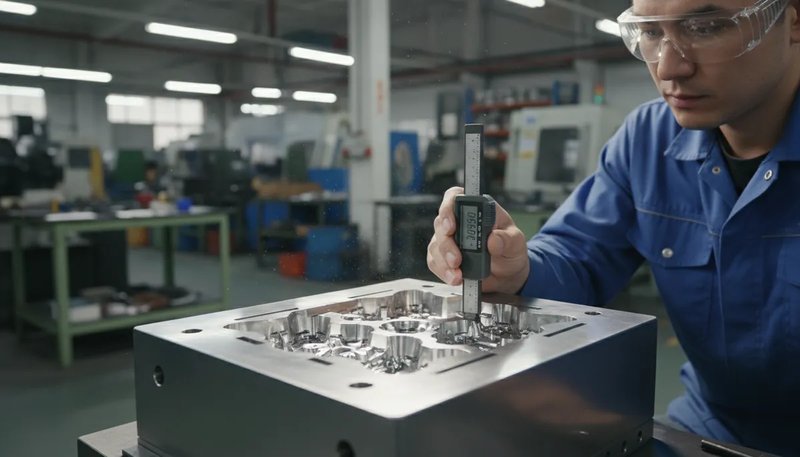
Questa sezione riguarda come la temperatura dello stampo debba essere controllata e il suo impatto su costi, qualità, tempistiche o rischi di approvvigionamento. La temperatura dello stampo deve essere verificata con un termometro a contatto sulla superficie della cavità — mai fidarsi del display del termoregolatore, che può differire di 5–15 °C. Per parti a tolleranze strette, mantenere la variazione entro ±2 °C utilizzando termoregolatori individuali per ogni circuito. La temperatura dello stampo controlla direttamente la finitura superficiale, la cristallinità, il ritiro e l’imbarcamento.
Verificare sempre la temperatura dello stampo con un termometro a contatto sulla superficie della cavità, non leggendo il display del termoregolatore. Il display mostra la temperatura del refrigerante presso l’unità, che può differire dalla superficie effettiva della cavità di 5–15 °C a seconda della lunghezza del circuito, della portata e dell’accumulo di incrostazioni nei canali.
Per i pezzi con tolleranze strette, mantenere la variazione della temperatura dello stampo entro ±2 °C. Nel nostro reparto ciò significa utilizzare termoregolatori individuali per ogni circuito dello stampo per gli stampi critici, senza collegare in serie più circuiti a una sola unità. Sì, comporta maggiori costi per le attrezzature. Ma rilavorazioni e scarti dovuti alla deriva dimensionale costano ancora di più, soprattutto negli stampi multicavità, dove un circuito che funziona a una temperatura superiore di 5 °C porta metà delle cavità fuori specifica.
Un errore comune consiste nell’impostare la temperatura dello stampo in base a quanto ha funzionato per un materiale simile su uno stampo diverso. Le dimensioni dello stampo, la disposizione dei circuiti e lo spessore della parete incidono tutti sulla temperatura effettivamente raggiunta dalla superficie della cavità. Un’impostazione di 60 °C su uno stampo piccolo e semplice può produrre 55 °C sulla superficie, mentre la stessa impostazione su uno stampo grande con lunghi circuiti di raffreddamento può raggiungere soltanto 42 °C. Misurate ogni stampo, ogni volta.
Perché un raffreddamento uniforme è più importante di un raffreddamento rapido?
Un raffreddamento uniforme è più importante di un raffreddamento rapido, perché offre un migliore equilibrio tra costi, qualità, volumi e applicazione. La maggior parte degli operatori cerca di raffreddare lo stampo il più velocemente possibile per ridurre i tempi descritti nella guida completa alla progettazione degli stampi a iniezione. La velocità conta, ma l’uniformità conta di più. Un raffreddamento non uniforme provoca ritiri differenziali e quindi deformazioni, tensioni interne e dimensioni fuori tolleranza, anche quando sulla carta il tempo di ciclo sembra eccellente.
La tecnica controintuitiva consiste nell’utilizzare acqua più fredda sull’anima (interno del pezzo) e acqua più calda sulla cavità (esterno). Ciò uniforma la velocità di raffreddamento tra le sezioni spesse e sottili. Per pezzi piani di precisione — come lenti ottiche, superfici di tenuta o alloggiamenti accoppiati — questa sola misura può ridurre la deformazione del 40–60%.
Controllare la portata del circuito di raffreddamento a ogni cambio stampo. Un circuito che nell’ultimo ciclo erogava 12 L/min potrebbe essere sceso a 4 L/min a causa dell’accumulo di incrostazioni. Una portata bassa trasforma il flusso turbolento in laminare, riduce il trasferimento termico del 30–50% e rende inutili le temperature impostate con cura. Se la portata scende sotto il 60% di quella originale, pulire o sostituire il circuito prima di avviare la produzione.
Negli stampi multicavità è fondamentale bilanciare il raffreddamento tra le cavità. La cavità più vicina all’ingresso dell’acqua si raffredda sempre più rapidamente. Utilizza restrittori di flusso o circuiti individuali per ogni cavità per uniformare il raffreddamento. Sugli stampi a otto cavità abbiamo misurato una differenza di temperatura di 8 °C tra la prima e l’ultima cavità di un singolo circuito in serie, sufficiente a produrre variazioni dimensionali misurabili tra i pezzi.
Quali sono i suggerimenti più trascurati dagli stampatori a iniezione?
I suggerimenti più trascurati dagli stampatori a iniezione corrispondono alle principali categorie o opzioni illustrate in questa sezione. Oltre alle cinque impostazioni fondamentali, diversi fattori secondari colgono regolarmente di sorpresa gli operatori:
Consiglio 14: controllate la valvola di non ritorno. La valvola ad anello sulla punta della vite si usura gradualmente. Quando il gioco supera 0,1 mm, la pressione di mantenimento perde uniformità. Ispezionatela ogni 500.000 iniezioni o quando la variazione del cuscino supera ±0,5 mm. Una valvola di ricambio costa poche centinaia di dollari; produrre con una valvola usurata genera scarti per migliaia di dollari.
Consiglio 15: sfiatate correttamente lo stampo. L’aria intrappolata causa bruciature, effetto diesel e riempimenti incompleti nelle zone terminali. Gli sfiati sulla linea di divisione devono avere una profondità di 0,01–0,02 mm ed essere puliti, non chiusi dalla lucidatura eseguita dopo precedenti bave. Aggiungete perni di sfiato alla fine dei percorsi di flusso e nelle tasche cieche in cui l’aria tende naturalmente ad accumularsi.
Consiglio 16: essiccate correttamente il materiale. Le resine igroscopiche (PC, nylon, PET, TPU) assorbono umidità, causando striature argentate, degradazione molecolare e linee di saldatura più deboli. Il PC deve essere essiccato a 120 °C per 3–4 ore, con un punto di rugiada inferiore a –20 °C. Un materiale che «sembra asciutto» non è necessariamente asciutto: verificatelo con un analizzatore di umidità prima di ogni ciclo produttivo.
Consiglio 17: registrate tutto. Ogni modifica dei parametri, ogni lettura della temperatura e ogni misura delle cavità sui primi 10 cicli. Quando i problemi compariranno il terzo giorno di produzione, avrete bisogno di questi valori di riferimento. Richiediamo a tutti gli operatori di compilare un registro di attrezzaggio prima dell’approvazione del primo articolo. I 10 minuti dedicati alla documentazione evitano in seguito ore di scarico delle responsabilità.
Consiglio 18: fidatevi dei dati, non dell’intuito. Se la scheda di processo indica un fuso a 240 °C e uno stampo a 60 °C e i componenti sono conformi, non «ottimizzate a sensazione» il ciclo successivo. Finestre di processo documentate e ripetibili sono sempre preferibili al giudizio dell’operatore. È così che si ottiene una qualità costante con oltre 120 addetti alla produzione distribuiti su più turni.
Quali sono le domande più frequenti sui suggerimenti per lo stampaggio a iniezione?
Qual è la contropressione ideale per lo stampaggio a iniezione?
La pressione di ritorno ideale per la maggior parte delle resine tecniche è 5–15 bar. Iniziare a 8 bar per materiali generici come ABS e PP. Aumentare a 12–18 bar per resine ad alta viscosità come policarbonato o PEEK. Superare i 20 bar fornisce rendimenti di qualità decrescenti mentre accelera l’usura della vite e prolunga il tempo di ciclo. Verificare sempre il risultato con un controllo a colpo d’aria. Sulle nostre 47 macchine che lavorano oltre 400 materiali, troviamo che mantenere la pressione di ritorno tra 8–12 bar copre circa l’80% dei lavori di produzione senza problemi.
18 Consigli Importanti per gli Stampatori ad Iniezione — Guida Pratica
Mantenere un cuscino di 3 mm sulle macchine sotto le 300 t e di 6–9 mm sulle macchine sopra le 1.000 t. Il parametro chiave è la costanza: il cuscino non dovrebbe variare di oltre ±0,5 mm da un’iniezione all’altra. Una variazione maggiore indica in genere una valvola di non ritorno usurata, un’alimentazione irregolare del materiale o l’usura del cilindro nella zona di dosaggio. Verificare e correggere la causa principale anziché compensare con altri parametri. Nel nostro stabilimento, gli operatori registrano i valori del cuscino ogni 50 iniezioni; qualsiasi tendenza superiore a ±1 mm determina un’ispezione della valvola prima di proseguire la produzione.
Come posso verificare la temperatura effettiva del fuso?
Utilizzare il metodo della colata libera con una sonda pirometrica preriscaldata. Indossando guanti resistenti al calore e una visiera, estrudere un piccolo campione di fuso in un contenitore metallico e inserire immediatamente la sonda. La lettura dovrebbe rientrare entro ±5 °C nell’intervallo indicato nella scheda tecnica del materiale. I valori impostati dei riscaldatori del cilindro non sono indicatori affidabili della temperatura del fuso, perché il riscaldamento da taglio dovuto alla rotazione della vite può innalzare la temperatura effettiva di 10–30 °C rispetto ai valori impostati. Per i lavori critici, raccomandiamo di effettuare letture mediante colata libera all’inizio di ogni turno e dopo qualsiasi variazione di velocità o contropressione.
Perché i miei componenti stampati a iniezione si deformano?
La deformazione si verifica quando la variazione della velocità di raffreddamento supera 15 °C sul pezzo, in genere a causa di uno spessore di parete non uniforme con rapporto superiore a 3:1 o di un circuito di raffreddamento inadeguato. Correggere anzitutto l’uniformità del raffreddamento usando acqua più fredda sul lato del nucleo e più calda sul lato della cavità. Questa tecnica di raffreddamento differenziale riduce la deformazione del 40–60% sui pezzi piani di precisione senza modificare significativamente il tempo ciclo. Verificare inoltre che la posizione del punto di iniezione favorisca un riempimento bilanciato: un riempimento asimmetrico crea tensioni interne che amplificano la deformazione anche quando il raffreddamento è uniforme.
Con quale frequenza devono essere ispezionati gli ugelli per stampaggio a iniezione?
A ogni cambio stampo, ispezionare gli ugelli aperti verificando l’allineamento e l’usura del raggio della punta: il raggio della punta deve essere inferiore di 0.5 mm rispetto al raggio della boccola di colata. Ispezionare gli ugelli con otturatore (chiusi) ogni 2,000 cicli per verificare l’integrità della sede della valvola. Programmare lo smontaggio e la pulizia degli ugelli ogni 3,000 cicli per le resine tecniche e ogni 5,000 cicli per i materiali di largo consumo, al fine di prevenire l’accumulo di residui carbonizzati. Nei mesi di picco produttivo, il nostro team smonta settimanalmente gli ugelli delle macchine che lavorano nylon caricato con fibra di vetro, poiché l’usura abrasiva accelera notevolmente con i composti caricati.
Che cosa accade se il tempo di permanenza nel cilindro è troppo lungo?
Un tempo di permanenza eccessivo causa degradazione termica: il peso molecolare diminuisce, compare scolorimento (tonalità gialla o marrone), aumenta la generazione di gas e calano le proprietà meccaniche. Il rischio è massimo quando il peso dell’iniezione utilizza meno del 30% della capacità del cilindro. Durante queste lavorazioni, spurgare il cilindro ogni 15–20 minuti oppure passare a una macchina più piccola. Prestare attenzione ai primi segnali, come striature argentate o odore acre. Calcolare il tempo di permanenza dividendo il volume del cilindro per il volume dell’iniezione e moltiplicando per il tempo ciclo: se supera 5 minuti per la maggior parte delle resine tecniche, ci si trova nella zona di degradazione.
Come posso calcolare se la mia macchina dispone di capacità di plastificazione sufficiente?
Dividere il peso totale della stampata in grammi per 1000, moltiplicare per 3600, quindi dividere per la capacità nominale di plastificazione della macchina in kg/h. Il risultato è il tempo ciclo minimo in secondi. Se il tempo ciclo effettivo è inferiore al minimo calcolato, la macchina non riesce a fondere il materiale abbastanza rapidamente da garantire una qualità costante — si osserveranno variazioni di viscosità e difetti superficiali. Prevedere sempre un margine del 10–15% rispetto al minimo calcolato per tenere conto delle variazioni tra i lotti di materiale e dei cambiamenti della temperatura ambiente che influiscono sulla produttività effettiva.
Tutti i circuiti di raffreddamento dello stampo devono usare acqua alla stessa temperatura?
No. Per i pezzi con variazioni significative dello spessore delle pareti, utilizzare un raffreddamento differenziale: acqua più fredda (10–15 °C in meno) sull’anima e acqua più calda sul lato cavità. Ciò uniforma le velocità di raffreddamento tra le sezioni spesse e sottili, riducendo la deformazione del 40–60%. Per gli stampi multicavità, utilizzare circuiti separati per ogni cavità o limitatori di flusso per bilanciare il raffreddamento tra tutte le cavità. Nel nostro stabilimento di Shanghai verifichiamo le portate dei circuiti di raffreddamento a ogni cambio stampo mediante un flussometro: un circuito con portata inferiore all’80% del valore di progetto viene disincrostato o sostituito prima dell’avvio della produzione.
contropressione: la contropressione è la resistenza applicata alla vite durante la fase di dosaggio, misurata in bar o MPa, che controlla l'omogeneità del fuso e la qualità della miscelazione nel cilindro di iniezione. ↩
cuscino di materiale: il cuscino di materiale, detto anche cuscino della vite, è il piccolo volume di plastica fusa che rimane davanti alla punta della vite al termine dell'iniezione, in genere 3–9 mm, e garantisce un trasferimento uniforme della pressione alla cavità. ↩
tempo di ciclo: il tempo di ciclo è il tempo totale trascorso dall'inizio di un'iniezione all'inizio della successiva, misurato in secondi, e comprende le fasi di iniezione, mantenimento, raffreddamento ed espulsione. ↩