 Перейти к содержанию

ПА6, ПА66, ПА12 и ПА1010 — четыре наиболее часто используемых литьё под давлением нейлоновые классы, каждый с различным поглощением влаги, термостойкостью и механическими свойствами, которые делают их подходящими для разных применений. Выбор неправильного класса приводит к размерной нестабильности, хрупким разрушениям или неоправданным затратам. Этот справочник сравнивает все четыре класса параллельно, чтобы вы могли выбрать правильный материал для вашего проекта инжекционного формования.
Для ознакомления с материалом сравните внешние справочные данные по полиамиду, нейлону 6 и нейлону 66 с таблицей данных по сушке от вашего поставщика. Эти справочные данные полезны для терминологии, но окончательное окно обработки всё равно должно быть подтверждено маркой смолы, тестом на влажность, температурой формы и результатами пробных отливок.
Планирование процесса также должно связывать выбор нейлона с поведением машины и формы. Проверьте восстановление шнека и время пребывания с настройкой восстановления шнека и времени пребывания, сравните влияние охлаждения с помощью анализа времени производства и проверьте риск размерных изменений с помощью анализа усадки формы перед утверждением производства.
- ПА66 обладает наибольшей жёсткостью и термостойкостью среди четырёх марок, что делает его стандартным выбором для автомобильных и электротехнических применений
- PA6 поглощает больше влаги, чем PA66, но стоит на 15-25% меньше и обрабатывается при более низких температурах, что идеально для потребительских и промышленных деталей
- ПА12 имеет наименьшее влагопоглощение (0,25% по массе), что обеспечивает стабильность размеров с малыми допусками во влажных условиях
- PA1010 обеспечивает наилучшую химическую стойкость и гибкость, получаемые из возобновляемого сырья касторового масла
- Все четыре марки требуют тщательной сушки (80-120°C, 4-8 часов) перед формованием, чтобы предотвратить выпотевание и гидролитическую деградацию

Что такое нейлоновые классы PA6, PA66, PA12 и PA1010?
PA6, PA66, PA12 и PA1010 — это четыре полукристаллические полиамидные классы, разработанные для разных термических, механических и влажных условий. Для сравнения поставщиков и планирования закупок, наш injection molding supplier sourcing guide covers RFQ prep, qualification, and commercial risk checks.
Марки нейлона являются полукристаллическими инженерными термопластами. Полиамид (нейлон) характеризуется сильными водородными связями между амидными группами в соседних полимерных цепях. Эта межмолекулярная связь придаёт нейлону характерное сочетание высокой прочности, ударной вязкости и стойкости к истиранию. Число в названии каждой марки указывает на количество атомов углерода в мономере, что напрямую влияет на кристалличность, температуру плавления и поведение при поглощении влаги.
Обзор семейств термопластичных полиамидов
ПА6 (полиамид 6) получают методом полимеризации капролактама с раскрытием цикла, мономером с шестью атомами углерода. Он плавится при температуре примерно 220°C и обладает хорошими механическими свойствами при умеренной стоимости. ПА6 кристаллизуется медленнее, чем ПА66, что немного увеличивает время цикла, но снижает риск коробления в сложных геометриях. ПА6 — самый широко используемый в мире марка нейлона для литья под давлением по объёму, применяемый во всём — от кабельных стяжек до впускных коллекторов автомобилей.
PA66: Нейлон для инженерных применений с высокой жесткостью
PA66 (полиамид 6,6) производится путем поликонденсации гексаметилендиамина и адипиновой кислоты, обоих шестиуглеродных мономеров. Симметричная молекулярная структура обеспечивает более высокую кристалличность и более высокую температуру плавления около 260°C. PA66 примерно на 15-20 процентов жестче, чем PA6, при комнатной температуре и лучше сохраняет механические свойства при повышенных температурах, чем любой незаполненный нейлоновый класс. Это делает PA66 стандартным выбором для автомобильных компонентов под капотом и электрических соединителей, работающих выше 120°C.
PA12: Нейлон с низким влагопоглощением для прецизионных деталей
PA12 (полиамид 12) производится из лауролактама, двенадцатиуглеродного мономера. Более длинная алифатическая цепь снижает плотность амидных групп вдоль полимерной основы, что значительно снижает поглощение влаги до примерно 0.25 процента по сравнению с 2.5-3.0 процентами для PA6. PA12 плавится примерно при 178°C, легко обрабатывается и обеспечивает отличную размерную стабильность в влажных условиях. Он имеет значительную ценовую надбавку над PA6 и PA66, обычно в 3-5 раз выше за килограмм.
PA1010: Биоразлагаемый гибкий нейлон
ПА1010 (полиамид 10,10) получают из себациновой кислоты и декаметилендиамина, оба производных касторового масла. Это возобновляемое сырьё делает ПА1010 привлекательным для применений, требующих сертификации биоосновного содержания. ПА1010 сочетает низкое влагопоглощение (примерно от 1,0 до 1,5 процентов) с хорошей химической стойкостью и гибкостью, занимая промежуточное положение между ПА12 и ПА6 как по характеристикам, так и по стоимости. Он находит всё большее применение в автомобильных топливных магистралях и гидравлических трубках, где требуется указанное содержание возобновляемого сырья.
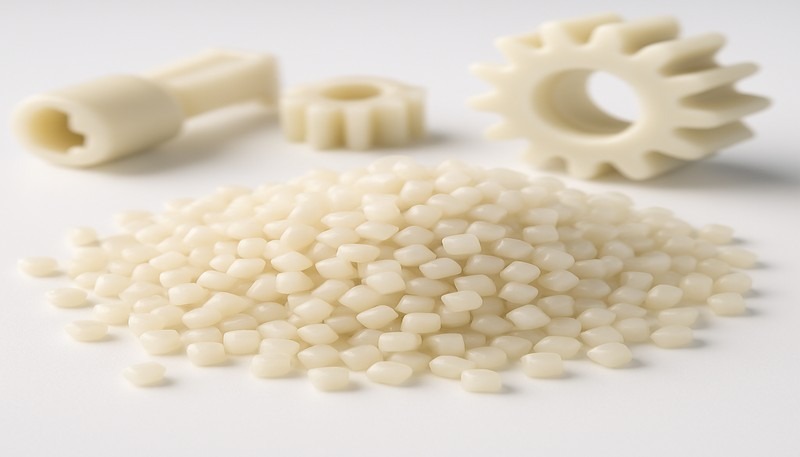
Каковы ключевые различия в свойствах между ПА6, ПА66, ПА12 и ПА1010?
PA66 самый жесткий, PA12 поглощает меньше влаги, PA6 самый дешевый, и PA1010 обеспечивает лучшую химическую устойчивость. Эти различия влияют на производительность деталей, стабильность допусков, время сушки и температуру формования. Выбор неправильного класса может привести к предотвращаемой деформации, хрупкости или размерному отклонению, связанному с влагой.
| Недвижимость | PA6 | PA66 | PA12 | PA1010 |
|---|---|---|---|---|
| Температура плавления | 220°C | 260°C | 178°C | 200°C |
| Влагопоглощение (23°C/50% отн. влаж.) | 2.8% | 2.5% | 0.25% | 1.2% |
| Прочность на растяжение (сухой) | 80 МПа | 85 МПа | 50 МПа | 55 МПа |
| Модуль упругости при изгибе (сухой) | 2,8 ГПа | 3.0 ГПа | 1,5 ГПа | 1,8 ГПа |
| Изодный удар (сухой) | 45 Дж/м | 40 Дж/м | NB* | NB* |
| Стоимость (относительно ПА6) | 1.0x | 1.15x | 3.5x | в 2,5 раза |
Moisture absorption is the single most important differentiator for processing and application design. PA6 and PA66 absorb 2.5 to 3.0 percent moisture at equilibrium in a 50 percent relative humidity environment, which causes dimensional swelling of 0.5 to 1.0 percent and reduces stiffness by 50 to 60 percent compared to the dry-as-molded state. PA12 absorbs only 0.25 percent, making its dimensional change negligible. Proper литьевая форма design accounts for these material-specific shrinkage differences. If your application requires tight tolerances in a humid environment, PA12 is the clear choice regardless of its higher raw material cost.
The notched Izod impact values marked NB (no break) for PA12 and PA1010 indicate that these grades are inherently tough and do not exhibit brittle fracture in standard impact tests. This toughness, combined with low moisture absorption, makes PA12 and PA1010 the preferred choices for fuel lines, hydraulic tubing, and pneumatic fittings where impact resistance must be maintained across temperature and humidity ranges.
Каковы ключевые параметры обработки для каждого марки нейлона?
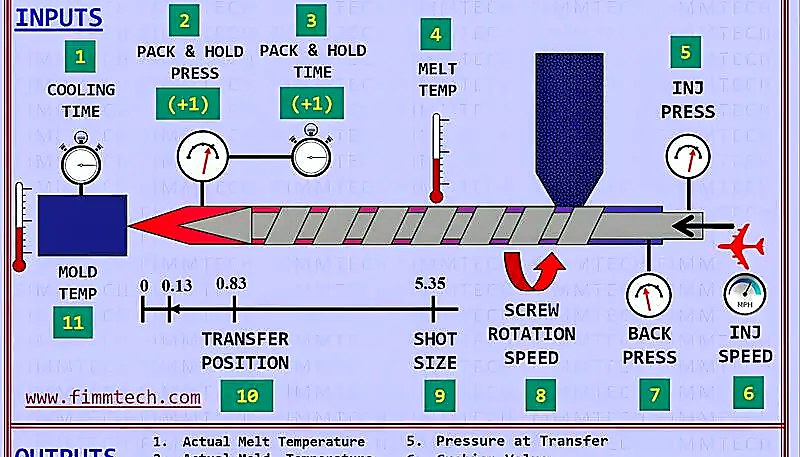
Nylon processing is sensitive to moisture and melt temperature. литье под давлением нейлона1 parameters are more demanding than commodity plastics like PP or PE because of the material’s high melting temperature, narrow processing window, and sensitivity to moisture. Getting drying and melt temperature wrong is the most common cause of defective nylon parts in production.
“Drying nylon to below 0.2 percent moisture content before molding is the single most impactful processing decision — inadequate drying causes splay, reduced molecular weight through гидролиз2, and dimensional instability that no parameter adjustment downstream can fix”Правда
Nylon is hygroscopic and absorbs moisture rapidly from ambient air. Processing wet nylon causes the water to react with amide bonds in the polymer chain (hydrolysis), permanently reducing molecular weight and mechanical properties. This damage is irreversible and undetectable by appearance alone.
“PA6 and PA66 can be processed at the same melt temperature because they are both polyamide materials with similar molecular structures”Ложь
PA6 melts at approximately 220°C and processes at 240-270°C, while PA66 melts at 260°C and requires 270-300°C melt temperature. Using PA6 temperatures for PA66 produces incomplete melting and high viscosity. Using PA66 temperatures for PA6 causes thermal degradation.
Recommended Drying Times and Temperatures by Grade
| Параметр | PA6 | PA66 | PA12 | PA1010 |
|---|---|---|---|---|
| Температура сушки | 80-100°C | 80-100°C | 70-80°C | 80-90°C |
| Время высыхания | 4-8 hours | 4-8 hours | 2-4 hours | 3-6 hours |
| Target Moisture | <0.2% | <0.2% | <0.1% | <0.15% |
| Температура расплава | 240-270°C | 270-300°C | 190-230°C | 210-250°C |
| Температура пресс-формы | 60-90°C | 70-100°C | 30-50°C | 40-70°C |
| Давление впрыска | 80-130 MPa | 90-140 MPa | 70-110 MPa | 75-120 MPa |
Drying requirements vary significantly across the four grades. PA6 and PA66 require 4 to 8 hours at 80 to 100°C in a dehumidifying hopper dryer to reach below 0.2 percent moisture. PA12 needs only 2 to 4 hours at 70 to 80°C due to its low moisture absorption. PA1010 falls between at 3 to 6 hours at 80 to 90°C. Verify moisture content with a Karl Fischer titration test before molding. All four grades should be dried immediately before molding — leaving dried pellets exposed to ambient air for more than 30 minutes negates the drying effort.
Как конструкция формы влияет на качество нейлоновых деталей?
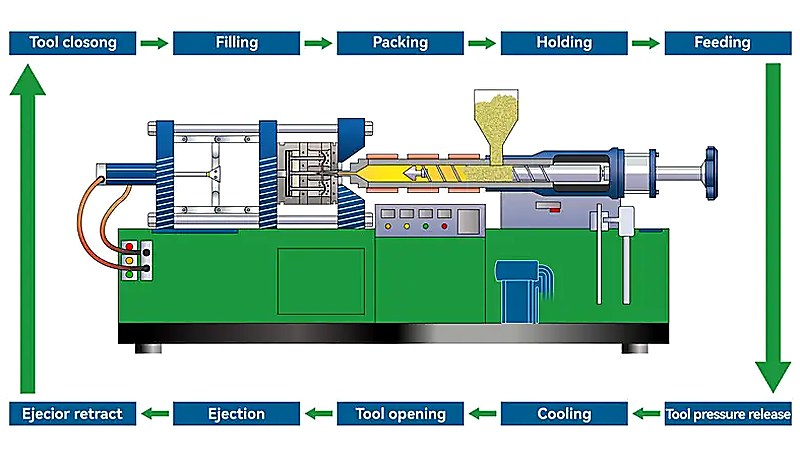
Mold design is the primary driver of nylon part quality through gate shear, cooling uniformity, and vent effectiveness. Proper проектирование пресс-форм для литья под давлением3 prevents flash, weld lines, and dimensional instability that nylon hygroscopic nature amplifies.
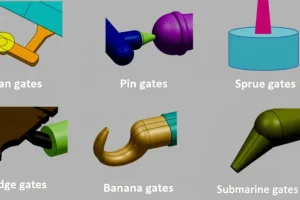
Gate design for nylon parts should prioritize flow balance and minimize shear heating. Edge gates and submarine gates are common for PA6 and PA66 parts, while hot-runner systems with valve gates reduce material waste for high-volume production. Gate size should be 50 to 80 percent of the nominal wall thickness at the gate location to minimize jetting and ensure progressive cavity fill without freeze-off before packing is complete.
Cooling channel design directly affects cycle time and dimensional consistency for nylon parts. Because PA6 and PA66 have relatively high mold temperature requirements (60 to 100°C), conformal cooling channels provide the most uniform thermal profile and reduce warpage in complex geometries. In practice, we have found that maintaining mold temperature variation below 5°C across the cavity surface reduces dimensional scatter by 30 to 40 percent on tight-tolerance PA66 parts. This is especially critical for glass-filled grades where fiber orientation amplifies differential shrinkage.
In our Shanghai factory, we run 47 injection molding machines from 90T to 1850T clamping force, giving us the range to handle everything from micro-nylon gears on small machines to large automotive structural brackets on high-tonnage presses. Our in-house mold manufacturing facility allows us to iterate on gate placement and cooling design quickly when optimizing new nylon part programs.
Ejection system design requires extra care with nylon because the material’s high friction coefficient and shrinkage around cores create significant ejection forces. Adequate draft angle (minimum 1 degree for unfilled nylon, 1.5 to 2 degrees for glass-filled grades) and sufficient ejector pin area prevent push-pin marks and part distortion during ejection. Stripper plates are preferred for cylindrical nylon parts where concentricity matters.
Какие дефекты литья нейлона встречаются чаще всего и как их предотвратить?
The most common nylon molding defects are moisture damage (splay, hydrolysis), temperature errors (short shots, flash), and dimensional warpage. Identifying which category your defect belongs to is the fastest path to a fix.
“PA12 costs 3 to 5 times more than PA6 per kilogram, making it uneconomical for applications where its low moisture absorption is not required”Правда
PA12 raw material typically costs $8-12/kg versus $2-3/kg for PA6. This premium is only justified when the application specifically demands dimensional stability in humid environments, fuel resistance, or low-temperature flexibility that PA6 cannot provide.
“Adding 30% glass fiber to PA6 eliminates moisture absorption entirely, so drying is unnecessary before molding glass-filled grades”Ложь
Glass fiber reinforcement reduces but does not eliminate moisture absorption. Glass-filled PA6 still absorbs approximately 1.5% moisture at equilibrium and requires the same drying protocol as unfilled grades. Molding wet glass-filled nylon causes the same splay and hydrolysis damage, with the added risk of fiber-matrix interface degradation.
Splay and silver streaks are the most visible moisture-related defect. These appear as fan-shaped surface marks on the part where water vapor expands rapidly as the melt enters the cavity. The fix is always more drying time or higher drying temperature — never a parameter adjustment at the machine. Check hopper dryer dew point (target below -30°C) and verify actual material moisture content with a Karl Fischer test before adjusting anything else.
Warpage in nylon parts is driven by differential shrinkage between flow and cross-flow directions, amplified by fiber orientation in glass-filled grades. The most effective countermeasure is uniform mold temperature across all cavity surfaces, followed by balanced gate placement that equalizes flow lengths. Post-molding fixtures that hold parts in the desired geometry during the first 24 hours of cooling can reduce warp by 40 to 60 percent for flat parts with varying wall thickness.
Как выбрать правильную марку нейлона для вашего применения?
The right nylon grade is determined by three factors: service temperature, tolerance needs, and chemical exposure. Match those requirements to each grade property profile below.
| Требования применения | Рекомендуемый сорт | Ключевая причина |
|---|---|---|
| Рабочая температура выше 120°C | PA66 | Самая высокая температура термоотклонения среди четырёх сортов |
| Жёсткие допуски во влажной среде | PA12 | Наименьшее влагопоглощение (0,25%) минимизирует изменение размеров |
| Бюджетные конструкционные детали при температуре ниже 100°C | PA6 | 15-25% имеет более низкую стоимость материала, чем PA66, при адекватной производительности |
| Требуется стойкость к топливу или химикатам | PA12 или PA1010 | Превосходная химическая стойкость к углеводородам и растворителям |
| Требуется сертификация био-состава | PA1010 | Получен из возобновляемого сырья — касторового масла |
| Автомобильные компоненты под капотом | PA66 (со стекловолокном) | Сохраняет жесткость при повышенных температурах благодаря армированию волокнами |
| Медицинские трубки и катетеры | PA12 | Гибкость, биосовместимость и химическая инертность |
| Электрические разъёмы (UL94 V0) | PA66 (огнестойкий) | Достигает V0 при 0,4 мм с правильными антипиреновыми добавками |
Автомобильные приложения потребляют более 40% мирового производства PA66. Подкапотные компоненты, такие как впускные коллекторы, крышки двигателя и бачки радиатора, работают при температурах выше 120°C, при которых PA6 теряет жёсткость. Электрические разъёмы, корпуса датчиков и блоки предохранителей используют огнестойкие сорта PA66 (с рейтингом V0), соответствующие требованиям стандарта воспламеняемости UL94. Внутренняя отделка и структурные кронштейны используют PA6 или стеклонаполненный PA6 для экономической эффективности там, где температурное воздействие умеренное.
Electrical and electronics applications leverage nylon’s excellent dielectric properties and flame retardancy. PA66 grades with red phosphorus or nitrogen-based flame retardants achieve UL94 flammability standard V0 rating at 0.4mm wall thickness, qualifying them for connectors, switches, and circuit breaker housings. The growing electric vehicle market drives demand for PA66 battery module components that combine flame retardancy with structural performance.
Производители товаров народного потребления выбирают нейлон за баланс прочности и качества поверхности. Корпуса электроинструментов используют стеклонаполненный PA6 для ударопрочности при разумной стоимости. Спортивные товары, такие как крепления для лыж и элементы шлемов, полагаются на усталостную стойкость PA66. Компоненты кухонных приборов, контактирующие с горячими поверхностями, требуют термостабилизированных сортов PA66, рассчитанных на непрерывную работу при 130°C.
Применения в медицинских устройствах требуют конкретных марок нейлона с документированной биосовместимостью. PA12 доминирует в использовании для катетеров и трубок благодаря гибкости и химической инертности. PA6 применяется в ручках хирургических инструментов, где автоклавная стерилизация требует термоциклирования между 121-134°C. Тестирование по ISO 10993 подтверждает биосовместимость для применений с контактом с пациентом, а прослеживаемость материала обязательна для всех проектов с медицинским нейлоном.
Имея более 20 лет опыта литья под давлением и команду из 8 старших инженеров, мы обработали более 400 видов пластиков на нашем производстве. В рамках производственных проверок наши инженеры отслеживают влажность смолы, температуру расплава, дефекты первого выстрела и размерные отклонения перед запуском нейлоновой партии. Наш рабочий процесс контроля качества — от входного контроля через контроль процесса до выходного контроля — выявляет характерные для нейлона дефекты, такие как серебристость и гидролитическая деградация, до того, как они попадут на вашу сборочную линию.
Часто задаваемые вопросы
Как долго следует сушить PA6 и PA66 перед литьём под давлением?
PA6 и PA66 требуют сушки в течение 4–8 часов при 80–100 °C в осушающей сушилке для достижения влажности ниже 0,2%. Точное время зависит от начального уровня влажности, размера гранул и производительности сушилки. PA66 с более высокой температурой плавления немного более чувствителен к остаточной влаге, чем PA6, поэтому при сомнениях используйте более длительный диапазон сушки. Всегда проверяйте с помощью калиброванного анализатора влажности перед запуском производства, чтобы избежать дефектов серебристости и гидролиза в отлитых деталях.
Можно ли формовать PA6 и PA66 на одной машине без изменений?
Да, PA6 и PA66 можно перерабатывать на одной машине, но требуются разные температурные профили. Для PA66 нужны температуры цилиндра 270–300 °C против 240–270 °C для PA6. Температура формы также различается: PA66 лучше всего работает при 70–90 °C, а PA6 — при 60–80 °C. При переходе с одного материала на другой необходимо тщательно очистить цилиндр совместимым переходным материалом, чтобы избежать перекрёстного загрязнения и деградации деталей. После изменения настроек цилиндра между сортами дайте 15–20 минут для стабилизации температуры.
Что произойдёт, если нейлон формовать без надлежащей сушки?
Литьё непросушенного нейлона вызывает три последовательные проблемы. Во-первых, влага создаёт поверхностные следы выпотевания и серебристые полосы, которые портят внешний вид детали. Во-вторых, вода запускает гидролиз при температурах переработки, разрывая амидные связи и необратимо снижая молекулярную массу, что уменьшает ударную прочность и относительное удлинение при разрыве на 30–50 процентов. В-третьих, захваченная влага вызывает изменение размеров, так как детали поглощают и выделяют влагу неравномерно при охлаждении. Эти дефекты невозможно устранить после формования, поскольку повреждение полимерных цепей необратимо, а затронутые детали подлежат утилизации.
Стоит ли PA12 значительной надбавки к цене по сравнению с PA6 для общих применений?
Для универсальных применений, где допустимо влагопоглощение и рабочие температуры остаются ниже 80 градусов Цельсия, PA6 более экономичен, составляя примерно треть цены PA12. PA12 оправдывает свою надбавку только тогда, когда вам нужно его исключительно низкое влагопоглощение на уровне 0,25%, превосходная размерная стабильность во влажных средах, стойкость к топливу и химикатам для автомобильных топливных магистралей или отличная гибкость при низких температурах до минус 40 градусов Цельсия. Оцените общую стоимость дефектов качества и постформовочной кондиционирования, прежде чем выбирать PA6 вместо PA12 для точных применений.
Как армирование стекловолокном влияет на процесс литья под давлением нейлона?
Стеклонаполненные марки нейлона, обычно с 30% короткого стекловолокна, требуют температуры цилиндра на 10-20 градусов Цельсия выше и давления впрыска на 20-30% выше по сравнению с ненаполненными марками. Стекловолокно увеличивает вязкость расплава, снижает усадку с 1,2% до 0,3% для PA6 и повышает жесткость в два-три раза. Износ оснастки значительно возрастает из-за абразивности волокон, поэтому для производственных серий свыше 100 000 циклов рекомендуется использовать закаленную сталь пресс-формы, такую как H13 или S136. Конструкция шнека должна использовать более низкое степень сжатия, чтобы минимизировать разрушение волокон при пластикации.
В чем разница между кондиционированными и сухими (как отлитыми) свойствами нейлона?
Свойства в сухом состоянии измеряются сразу после формования, когда влажность близка к нулю. Свойства в кондиционированном состоянии отражают равновесное влагопоглощение, обычно достигаемое при относительной влажности 50–60% в течение 48 часов. Кондиционированный PA6 часто показывает на 40–50% более низкую прочность на растяжение, но в 2–3 раза более высокую ударную вязкость по сравнению с данными в сухом состоянии. Всегда указывайте состояние, используемое в расчётах, проверках допусков и запросах поставщикам, чтобы коэффициенты безопасности не основывались на неверных данных. Это различие критично для нагруженных нейлоновых деталей.
Какие значения усадки следует использовать при проектировании нейлоновой формы?
Незаполненный PA6 даёт усадку примерно на 0,8–1,4%, а незаполненный PA66 — на 1,0–1,5%, в зависимости от толщины стенки, расположения литника и настроек температуры формы. Стеклонаполненные сорта дают значительно меньшую усадку: 0,3–0,7% для PA6-GF30 и 0,4–0,8% для PA66-GF30. Усадка в стеклонаполненных сортах анизотропна, то есть усадка в направлении течения и поперёк него различается на 0,2–0,4%. Ваш конструктор форм должен учитывать эту анизотропию в расчётах размеров полости, чтобы стабильно достигать жёстких допусков в производственных партиях.
Можно ли пересушить нейлон перед формованием?
Да, чрезмерная сушка выше 110 градусов Цельсия или дольше 12 часов вызывает термическое окисление, которое желтит гранулы и снижает механические свойства, особенно ударную прочность и удлинение при разрыве. Для дробленки или переработанного нейлона риск выше, потому что термическая история кумулятивна на протяжении нескольких циклов обработки. Если сушка должна длиться дольше 8 часов из-за задержек в производственном графике, снизьте температуру до 70-80 градусов Цельсия, чтобы безопасно хранить материал до начала производства. Контролируйте цвет гранул как быстрый визуальный индикатор повреждения от пересушки.
Почему стоит выбрать ZetarMold для литья под давлением из нейлона?
ZetarMold — надёжный партнёр по литью из нейлона с 47 прессами (90T–1850T), отдельными сушильными системами для каждого сорта и более чем 20-летним опытом работы с полиамидами. Мы используем индивидуальные сушилки для каждого сорта нейлона, чтобы предотвратить перекрёстное загрязнение, и проводим автоматический контроль влажности перед каждой сменой. Для сложных задач проектирования литьевых форм для стеклонаполненного нейлона наша инженерная команда даёт обратную связь по конструкторско-технологическому анализу в течение 48 часов.
ZetarMold — сильный партнер по литью нейлона, потому что мы сочетаем 47 прессов, специализированные системы сушки и более чем 20-летний опыт переработки полиамидов. Мы поддерживаем отдельные бункерные сушилки для каждой марки нейлона, чтобы предотвратить перекрестное загрязнение, и проводим автоматические проверки влажности перед началом производства. Наша инженерная команда может помочь вам сравнить PA6, PA66, PA12 и PA1010 по требованиям к допускам, нагреву, химической стойкости и стоимости до финализации оснастки.
Краткое правило: Перед формованием сушите PA6/PA66 при 80–100°C в течение 4–8 часов. Выбирайте PA66 для деталей выше 120°C, PA6 для экономически выгодных структурных деталей, PA12 для гибких или химически стойких применений, а PA1010 — когда важен био-состав.
-
литье под давлением нейлона: Литьё нейлона под давлением — это производственный процесс формования термопластичных полиамидных материалов с использованием оборудования для литья под давлением для изготовления инженерных компонентов с высокой прочностью и химической стойкостью. ↩
-
гидролиз: Гидролиз — это химическая реакция, при которой молекулы воды разрывают амидные связи в полимерных цепях полиамида, что приводит к необратимому снижению молекулярной массы и ухудшению механических свойств нейлоновых материалов. ↩
-
проектирование пресс-форм для литья под давлением: проектирование пресс-формы для литья под давлением — это инженерная дисциплина, охватывающая геометрию инструмента, компоновку каналов охлаждения, размещение литников и оптимизацию системы выталкивания для производства пластиковых деталей с точными размерами. ↩



 EN
EN  ES
ES  FR
FR  DE
DE  PT
PT  AR
AR  RU
RU  JA
JA  KO
KO  IT
IT  NL
NL  TR
TR  PL
PL 