

Если вы выбираете материал для несущей детали, которая должна сохранять форму под нагрузкой, при температуре и со временем — glass-filled nylon1 вероятно, входит в ваш короткий список. Добавление стекловолокна превращает нейлон из прочного, но гибкого инженерного пластика в материал, конкурирующий с литым под давлением алюминием.
Но процесс литья под давлением для марок, наполненных стеклом, — это совершенно другое дело по сравнению с ненаполненным нейлоном. Более высокая вязкость расплава, интенсивный износ инструмента, anisotropic shrinkage2[^2], и чувствительность к длине волокон означают, что необходимо правильно настроить параметры — иначе детали громко и ясно вам об этом сообщат.
В этом руководстве рассматривается то, что действительно важно при литье стеклонаполненного нейлона, основываясь на двух десятилетиях работы с этими материалами на реальных производственных площадках. В ZetarMold мы управляем 47 литьё под давлением машины (90–1850 тонн) с 400+ материалами на нашем шанхайском предприятии.
- Стеклонаполненный нейлон добавляет на 30–200% больше жесткости по сравнению с ненаполненными марками
- Влажность должна быть ниже 0,1% перед обработкой — сушка 4–6 часов при 80°C
- Температура расплава колеблется от 260 до 300°C в зависимости от PA6 или PA66
- Ориентация волокон вызывает анизотропную усадку — соответственно проектируйте литниковые системы
- Износ формы в 3–5 раз выше, чем у ненаполненного нейлона — используйте закаленную инструментальную сталь
Что такое стеклонаполненный нейлон и почему это важно?
Стеклонаполненный нейлон — это полиамид, армированный короткими стеклянными волокнами, обеспечивающий до 200% TП3T больше жесткости и HDT выше 250°C. Если вы сравниваете поставщиков, наш поставщик литья под давлением руководство по поиску поставщиков включает подготовку RFQ и квалификацию.
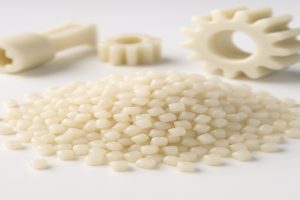
Стеклонаполненный нейлон[^1] — это стандартный полиамид (обычно PA6 или PA66), смешанный с короткими стекловолокнами в количестве 10%, 20%, 30% или 45% по весу. Результат — композитный термопласт, который значительно жестче, прочнее и обладает лучшей размерной стабильностью, чем его ненаполненная основа.
В нашей мастерской, PA6 GF303 и PA66 GF30 входят в пятерку наиболее часто перерабатываемых материалов. Они используются в автомобильных подкапотных компонентах, электротехнических корпусах, корпусах электроинструментов, промышленной арматуре и потребительских конструкционных кронштейнах.
Экономика очевидна: вы получаете жесткость, подобную металлической, со скоростями переработки пластмасс, а общая стоимость детали часто оказывается ниже, чем при литье под давлением или обработке ЧПУ из заготовки, когда объемы переходят порог в 5000 единиц.
В ZetarMold мы управляем 47 машинами для литья под давлением (90–1850 тонн) с опытом работы более чем с 400 материалами — PA6 GF30 и PA66 GF30 входят в пятерку наиболее часто перерабатываемых марок на нашем шанхайском предприятии.
Но вот что не расскажут вам технические данные — стекловолокна ориентируются по направлению течения во время впрыска. Это означает, что ваша деталь дает разную усадку вдоль и поперек пути течения, и эта анизотропная усадка является самой большой технологической проблемой при работе с этими материалами.
Каковы ключевые свойства стеклонаполненного нейлона?
При добавлении 30% TП3T стекловолокна к PA66 прочность на растяжение возрастает примерно с 80 МПа до 185 МПа — рост на 130% TП3T. Модуль упругости при изгибе увеличивается примерно с 2,9 ГПа до 9,0 ГПа, то есть материал становится в три раза жестче.
Температура тепловой деформации (HDT) при 1,8 МПа повышается примерно с 75°C до более 250°C, что является революционным изменением для применений в автомобильных подкапотных и электротехнических компонентах.
Но есть и компромиссы. Ударная прочность снижается, потому что стеклянные волокна создают концентраторы напряжений. Удлинение при разрыве падает с 50%+ до примерно 3%, то есть деталь не согнется перед разрушением. Поверхность также заметно более грубая.
| Недвижимость | PA6 Unfilled | PA6 GF30 | PA66 GF30 |
|---|---|---|---|
| Прочность на разрыв (МПа) | 79 | 170 | 185 |
| Flexural Modulus (GPa) | 2.8 | 8.5 | 9.0 |
| HDT @ 1.8 МПа (°C) | 65 | 215 | 255 |
| Ударная вязкость по Изоду с надрезом (Дж/м) | 55 | 110 | 105 |
| Усадка – вдоль потока (% TП3T) | 1.0–1.4 | 0.3–0.5 | 0.2–0.5 |
| Усадка – Поперечная (%) | 1.0–1.4 | 0,7–1,0 | 0.6–1.0 |
| Melt Temp Range (°C) | 230–260 | 260–290 | 275–300 |
| Density (g/cm3) | 1.13 | 1.35 | 1.37 |
Обратите внимание на разницу усадки вдоль и поперек потока. В PA6 GF30 усадка вдоль потока может составить 0,3% TП3T, а поперек — 0,9% TП3T. Эта трехкратная разница делает проектирование пресс-формы для стеклонаполненного нейлона специализированным навыком.
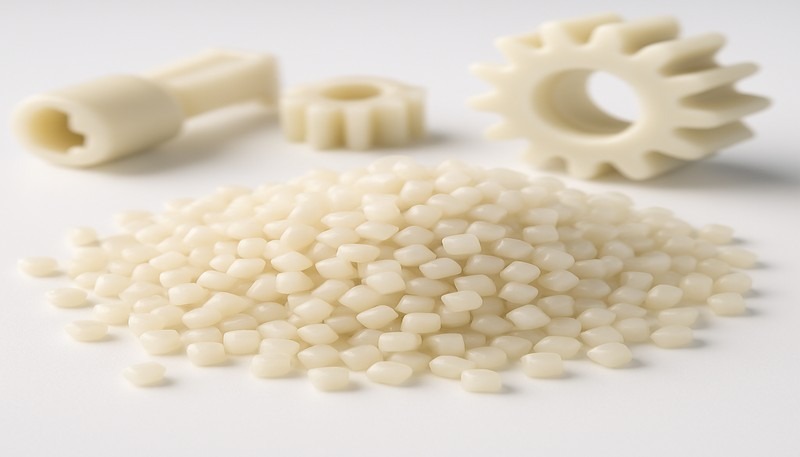
Какие параметры переработки контролируют формование стеклонаполненного нейлона?
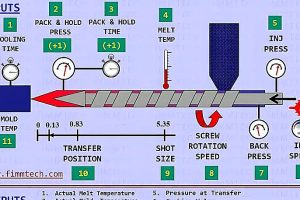
Сушка, температура расплава, температура формы и скорость впрыска — это четыре параметра, определяющие качество GF-нейлона. Эти параметры менее снисходительны, чем для ненаполненного нейлона, поэтому строгий контроль процесса обязателен.
Сушка: Обязательна
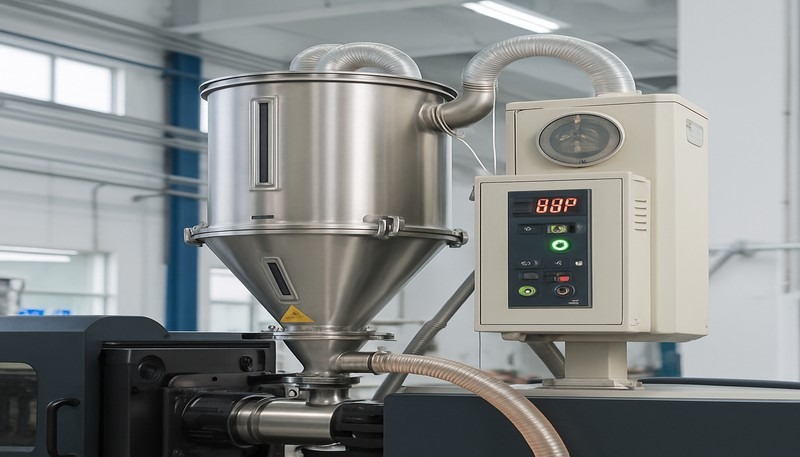
Нейлон гигроскопичен — он поглощает влагу из воздуха. Стекловолокно это не меняет. Вы должны использовать осушитель и сушить материал при 75–85°C в течение 4–6 часов, чтобы снизить влажность ниже 0,1% TП3T. Если пропустить этот шаг, появятся серебристые полосы, следы разбрызгивания и снизится молекулярная масса из-за гидролиза.
Мы видели поступающий материал с влажностью 0,4% TП3T, который выглядел сухим невооруженным глазом — но он не был сухим. Всегда проверяйте влагомером перед запуском.
Температура расплава
Для PA6 GF30 стремитесь к 260–285°C. Для PA66 GF30 требуется 275–300°C. Верхний предел обеспечивает лучшую текучесть и смачивание волокон, но повышает риск термического разложения.
На нашем предприятии в Шанхае мы обычно перерабатываем PA66 GF30 при 285–295°C — этот оптимальный диапазон обеспечивает хорошее качество поверхности без выгорания аппрета на стекловолокнах.
Температура пресс-формы
Поддерживайте температуру формы на уровне 80–100°C для стеклонаполненных марок. Более высокая температура формы улучшает степень кристалличности, качество поверхности и размерную стабильность. Но увеличивает время цикла.
Для деталей с жесткими допусками мы работаем с минимум 90°C. Ниже 70°C вы рискуете получить послелитьевую деформацию и нестабильные механические свойства — поверхностный слой кристаллизуется иначе, чем сердцевина.
Скорость и давление впрыска
Стеклонаполненный нейлон имеет более высокую вязкость расплава, поэтому требуется на 20–30% TП3T больше давления впрыска, чем для ненаполненных марок. Более высокие скорости впрыска помогают сохранить длину волокон и снизить слабость в зоне слияния потоков.
Но слишком высокая скорость приведет к фонтанному течению или облою на тонкостенных деталях. Мы обычно начинаем с умеренно-высокого профиля скорости и корректируем на основе анализа недолива.
Как содержание стеклянного волокна влияет на усадку и размерную стабильность?
This is where glass-filled nylon really earns its premium price. Unfilled PA66 shrinks about 1.0–1.4% in all directions. Add 30% glass fiber, and shrinkage in the flow direction drops to 0.2–0.5%.
For tight-tolerance parts like gear housings, sensor brackets, and connector inserts, this predictability is worth every penny of the material premium.
But transverse shrinkage only drops to about 0.6–1.0%. So your cavity design needs to account for differential shrinkage — you’re essentially building asymmetric compensation into the tool steel.
At our in-house литьевая форма manufacturing facility, our 8 senior engineers have learned to predict this behavior through years of tooling iteration. The key factors are fiber percentage, part geometry, gate location, and processing conditions.
For production parts requiring ±0.05 mm tolerances, we recommend PA66 GF30 or higher, processed with mold temperature above 85°C, and validated through first-article inspection using CMM measurement.
Каких принципов проектирования следует придерживаться для деталей из наполненного стеклом нейлона?
Keep walls between 2 and 3 mm, use radii above 0.5 mm, and add 1–3° draft — these are the essential design guidelines for glass-filled nylon parts. Glass fibers increase shrinkage anisotropy and tool wear, so standard unfilled-nylon rules do not apply.
Wall Thickness: Keep It Uniform
Uniform wall thickness is always important in injection molding, but critical with glass-filled nylon. Thickness transitions create differential cooling and shrinkage rates, which create warpage. Fibers orient differently in thick vs. thin sections too.
We recommend 2.0–3.5 mm nominal wall. Below 1.5 mm, you’ll struggle with filling and fiber breakage. Above 4.0 mm, you’ll see sink marks and excessive cycle times.
Radii: Generous, Always
Glass fibers create stress concentrators at sharp internal corners. Minimum 0.5 mm internal radius, 1.0 mm preferred. We’ve seen failure rates drop 40%+ by increasing internal radii from 0.3 mm to 1.0 mm.
The fibers can’t negotiate sharp corners — they pile up and create resin-rich and fiber-rich zones, both of which are weak points.
Draft Angles: More Than You Think
Glass-filled nylon is abrasive, which means the part grabs the cavity surface during ejection. Minimum 1.5° draft, preferably 2–3°, especially on textured surfaces.
The cost of a few extra degrees of draft is nothing compared to parts sticking, scoring, or cracking during ejection.
Rib and Boss Design
Ribs should be 50–75% of nominal wall thickness. With glass-filled nylon, thinner ribs (50–60%) are safer because the material is already stiff. Bosses should follow the same ratio with coring to reduce mass.
Каковы наиболее распространенные дефекты и как их устранить?
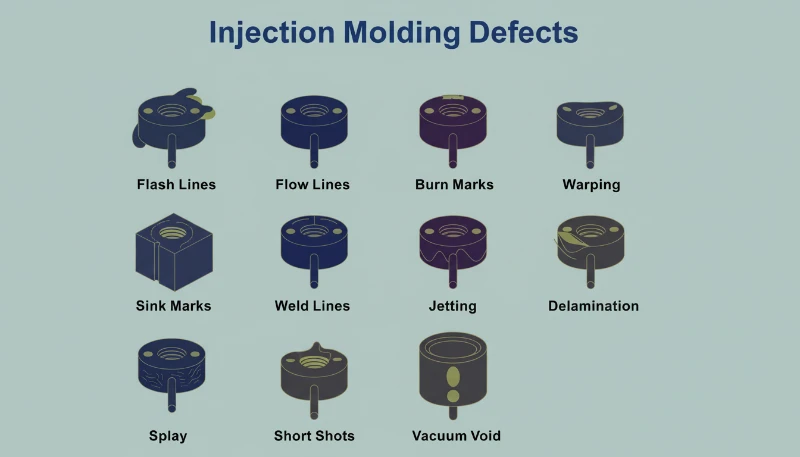
Fiber exposure, warp, weld lines, and moisture streaks are the four most common GF nylon defects — and most are preventable. Here is what causes each one and how we fix them in production.
Fiber Exposure and Poor Surface Finish
Those glass fibers poking through the surface mean the resin didn’t fully encapsulate the fibers at the cavity wall. Causes: mold temperature too low, injection speed too slow, or insufficient packing pressure.
Fix: raise mold temp to 90–100°C, increase injection speed, and ensure adequate hold pressure at 60–80% of injection pressure. For cosmetic A-surfaces, consider a polished cavity finish and a slight texture that masks the fiber pattern.
Warp and Dimensional Variation
Usually caused by differential shrinkage between flow and transverse directions, compounded by non-uniform wall thickness.
Fix: redesign for uniform walls, reposition gates for balanced flow, increase mold temperature, and consider post-mold annealing at 150–170°C for 30–60 minutes to relieve internal stresses.
Линии сварки
Glass fibers don’t cross weld lines — they orient parallel to the flow front, so the weld-line area is essentially unfilled nylon with much lower strength.
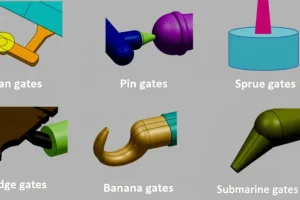
Fix: minimize weld lines through intelligent gate placement, position them in non-critical areas, and use higher melt and mold temperatures to improve knit strength.
Moisture-Related Defects
Silver streaks, splay, bubbles, and reduced mechanical properties. The fix is always the same: dry the material properly to below 0.1% moisture.
At our facility, IQC verifies material moisture content before any production run. We use closed-loop hopper loaders that maintain dry air throughout the run.
Как выбрать между марками PA6 GF и PA66 GF?
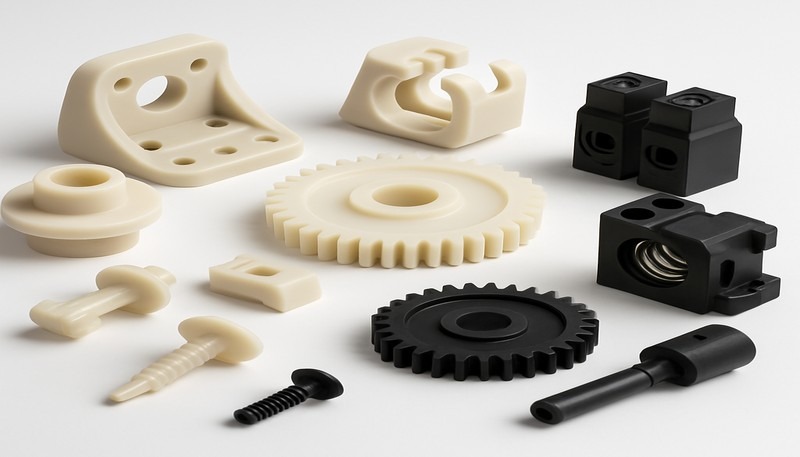
Use PA6 GF30 for cost-sensitive parts below 150°C; choose PA66 GF30 for higher temperatures or better chemical resistance. Both grades at 30% glass fiber loading deliver excellent stiffness — the key difference is thermal performance.
Choose PA6 GF30 when cost is the primary driver (PA6 resin is typically 10–15% cheaper), the part operates below 150°C continuously, or you need slightly better impact resistance. PA6 GF30 is our go-to for consumer electronics housings and non-critical structural parts.
Choose PA66 GF30 when the part operates above 150°C (automotive under-hood, electrical contact carriers), chemical resistance matters, dimensional stability at elevated temperature is critical, or you need higher tensile strength and creep resistance.
For both grades, 30% glass fiber is the sweet spot. 10–15% gives modest improvements. 40–45% maximizes stiffness but comes with poor surface finish, very high viscosity, and aggressive tool wear.
Стеклонаполненный нейлон против ненаполненного нейлона: когда обновление окупается?
The GF nylon upgrade pays off when the part needs tensile strength above 80 MPa, operating temps above 100°C, or shrinkage below 0.4%. The material costs 20–40% more per kilogram, but the total part cost often breaks even.
The upgrade pays off when the part bears structural loads unfilled nylon can’t handle at the required deflection limit, dimensional stability across temperature ranges matters, or the part operates where unfilled nylon’s HDT of 65–75°C is insufficient.
The upgrade is a waste when the part is purely cosmetic, unfilled nylon already meets the spec, or the volume is too low to justify the tooling wear premium. We’ve talked clients out of glass-filled nylon more than once — it’s the honest recommendation.
One more consideration: tool life. Glass-filled nylon is abrasive — those fibers act like microscopic sandpaper. Expect 3–5× more cavity wear. At our mold manufacturing facility, we default to hardened steel (H13 or S7) for any GF nylon tooling, which is why our molds deliver 500,000+ shots before major maintenance.
From a sourcing perspective, glass-filled nylon is widely available from major suppliers including DuPont (Zytel), BASF (Ultramid), and EMS-Grivory. Lead times for standard PA6 GF30 and PA66 GF30 grades are typically 2–4 weeks, but specialty grades like PA66 GF45 or UV-stabilized compounds can take 8–12 weeks. Plan your material procurement early — we’ve seen projects delayed because the specified GF grade was on allocation during peak automotive season.
“Glass-filled nylon requires the same drying procedure as unfilled nylon.”Правда
True. The nylon matrix remains hygroscopic regardless of fiber content. Moisture can also get trapped at the fiber-resin interface. Both grades require drying to below 0.1% moisture before processing.
“Glass-filled nylon parts always have better surface finish than unfilled nylon.”Ложь
False. Glass fibers create a matte, rough surface. Unfilled nylon produces a smoother, glossier finish. If cosmetics matter, unfilled grades or surface treatments are preferred.
Understanding how glass-filled nylon behaves during processing requires hands-on experience with the material across different part geometries and wall thicknesses. The fiber orientation patterns change with every gate relocation, wall thickness adjustment, or processing parameter shift. In our Shanghai facility, our engineers have documented these behavioral patterns across thousands of production runs, building an empirical database that helps us predict and prevent common defects before they occur in production.
“Glass-filled nylon shrinkage differs between flow and transverse directions.”Правда
True. Glass fibers orient in the flow direction during injection, creating anisotropic shrinkage — typically 0.3% in-flow vs. 0.8% transverse for PA6 GF30. This differential is the biggest challenge in mold design for these materials.
“Higher glass fiber content always produces a stronger part.”Ложь
False. While stiffness and tensile strength increase with fiber content, impact resistance can plateau or decrease. At 45% loading, brittleness and processing difficulty increase significantly. 30% remains the most balanced choice for most applications.
Часто задаваемые вопросы
Часто задаваемые вопросы
What is the injection molding temperature for glass-filled nylon?
For PA6 GF30, the melt temperature range is 260–285°C. For PA66 GF30, use 275–300°C. Mold temperature should be maintained at 80–100°C for optimal crystallinity and surface finish. Always verify with the specific grade’s datasheet, as manufacturer formulations can vary by plus or minus 10°C. Running too hot degrades the fiber sizing; running too cold causes poor fiber wetting and surface defects. In our Shanghai facility, we typically target the middle of each range and adjust based on short-shot testing and first-article inspection results.
How does glass fiber content affect nylon shrinkage?
Glass fibers dramatically reduce shrinkage in the flow direction — from approximately 1.2% for unfilled PA66 down to 0.3% for PA66 GF30. However, transverse shrinkage only drops to about 0.7–0.9%, creating significant anisotropic behavior that must be accounted for in mold design. Higher fiber content reduces overall shrinkage further but increases the differential between flow and transverse directions. This means a PA66 GF45 part might shrink only 0.2% in flow but still 0.6% across, making dimensional prediction even more complex for the tool designer.
Can you overmold glass-filled nylon with TPE or TPU?
Yes, glass-filled nylon (typically PA6 GF30) is commonly used as the rigid substrate in two-shot or overmold applications, with TPE or TPU as the soft overmold material. Adhesion depends on chemical compatibility between the substrate and overmold material, as well as proper substrate surface preparation and temperature management during the second shot. The glass fiber content can reduce mechanical bond strength compared to unfilled nylon substrates because the fibers reduce the available surface area for chemical interlocking with the TPE or TPU layer.
What causes fiber visibility on the surface of glass-filled nylon parts?
Fiber exposure occurs when the resin matrix doesn’t fully encapsulate glass fibers at the cavity surface during the packing phase. Common causes include low mold temperature below 80°C, slow injection speed that doesn’t push fibers away from the cavity wall, insufficient packing pressure, and high fiber content above 30%. The most effective fixes are raising mold temperature to 90–100°C and increasing injection speed. For parts requiring cosmetic A-surface quality, a polished cavity finish combined with a subtle texture pattern can help mask the inherent fiber read-through that glass-filled grades produce.
Is glass-filled nylon suitable for food-contact applications?
Glass-filled nylon can be FDA-compliant when using food-grade base resin and appropriate fiber sizing, but not all GF nylon grades carry food-contact certification. The glass fibers themselves are inert — compliance depends entirely on the nylon matrix and any additives or colorants used in the compound. Always check the specific grade’s FDA or EU 10/2011 compliance documentation from the material supplier. If food safety is required, specify this upfront so your molder sources certified material and maintains appropriate traceability documentation throughout the production process.
How do you prevent warp in glass-filled nylon injection molded parts?
Preventing warp requires a multi-pronged approach: design for uniform wall thickness between 2.0 and 3.5 mm, use generous internal radii of at least 1.0 mm, position gates to create balanced flow patterns, maintain mold temperature above 85°C throughout the cycle, and ensure adequate cooling time before ejection. For parts already showing warp in production, post-mold annealing at 150–170°C for 30 to 60 minutes can relieve internal stresses and improve flatness. The most effective strategy is addressing warp during mold design review rather than trying to fix it through processing adjustments alone.
What tool steel is recommended for glass-filled nylon molds?
Hardened tool steels like H13 at 48–52 HRC or S7 are recommended for production molds running glass-filled nylon. The abrasive glass fibers cause three to five times more wear than unfilled nylon, which means standard P20 tool steel will show cavity erosion and dimension shift much sooner. For high-volume production exceeding 500,000 shots, consider PVD coatings such as TiN or TiCN on cavity surfaces to extend tool life. The initial investment in hardened steel pays for itself through reduced maintenance downtime and more consistent part quality over the life of the mold.
Does glass-filled nylon require a special injection molding screw?
A general-purpose screw with a compression ratio of 2.5:1 to 3.0:1 works well for most glass-filled nylon grades. Avoid very high compression ratios above 3.5:1, which cause excessive fiber breakage and reduce the mechanical reinforcement the fibers provide. Wear-resistant screw and barrel materials such as bimetallic liners or Xaloy-coated components are strongly recommended for long production runs due to the abrasive nature of the glass fibers. Replacing a worn screw mid-production run is far more expensive than specifying wear-resistant components from the start.
Need a reliable partner for your glass-filled nylon injection molding project? ZetarMold has been running GF nylon grades since 2005 across our Shanghai facility. With 47 machines (90T–1850T), an in-house литьевая форма shop, and 8 senior engineers, we mold PA6 GF30 and PA66 GF30 parts daily for automotive, electronics, and industrial clients worldwide. Get a free quote and let our engineering team review your design.
-
glass-filled nylon: glass-filled nylon refers to nylon (PA6 or PA66) reinforced with short glass fibers, typically 10–45% by weight, to improve stiffness, strength, and heat resistance. ↩
-
anisotropic shrinkage: anisotropic shrinkage refers to differential shrinkage in flow vs. transverse directions caused by fiber orientation during injection, requiring careful mold design compensation. ↩
-
PA6 GF30: PA6 GF30 refers to polyamide 6 with 30% glass fiber content — a common grade balancing mechanical performance and processability for structural applications. ↩



 EN
EN  ES
ES  FR
FR  DE
DE  PT
PT  AR
AR  RU
RU  JA
JA  KO
KO  IT
IT  NL
NL  TR
TR  PL
PL 