 コンテンツへスキップ

負荷下、高温下、経時変化において形状を保持する必要がある構造部品の材料を選定する場合、 glass-filled nylon1 おそらく候補リストに挙がっているでしょう。ナイロンにガラス繊維を添加すると、強靭だが柔軟なエンジニアリングプラスチックから、ダイカストアルミニウムと競合する材料に変わります。
しかし、ガラス充填グレードの射出成形プロセスは、未充填ナイロンとは別物です。高い溶融粘度、激しい工具摩耗、 anisotropic shrinkage2[^2]、および繊維長の感度は、パラメータを適切に設定する必要があることを意味します。さもなければ、部品がそれを明確に示すでしょう。
このガイドでは、実際の生産現場で20年間これらの材料を扱ってきた経験に基づき、ガラス繊維強化ナイロン成形で実際に重要なポイントを解説します。ZetarMoldでは、上海工場で47台の 射出成形 成形機(90トン~1850トン)で400種類以上の材料を扱っています。
- ガラス充填ナイロンは、未充填グレードに比べて剛性を30〜200%向上させます
- 加工前の水分含有率は0.1%以下である必要があります。80°Cで4~6時間乾燥してください。
- 溶融温度はPA6とPA66により260~300°Cの範囲です
- 繊維配向により異方性収縮が生じるため、ゲート設計に留意してください
- 金型の摩耗は、未充填ナイロンよりも3~5倍高いため、焼入れ工具鋼を使用してください
ガラス充填ナイロンとは何か、なぜ重要なのか?
ガラス繊維強化ナイロンは短いガラス繊維で強化されたポリアミドで、剛性が最大200%向上し、熱変形温度(HDT)は250°Cを超えます。サプライヤーを比較する際は、当社の 射出成形サプライヤー 調達ガイドでは、RFQ準備と資格審査について説明しています。
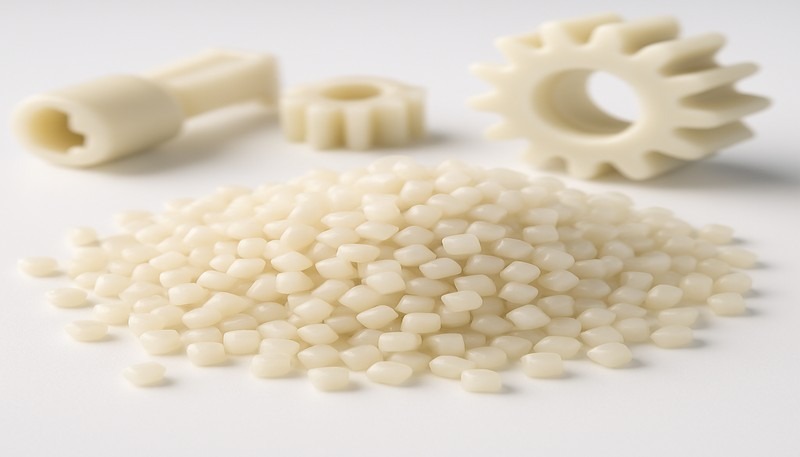
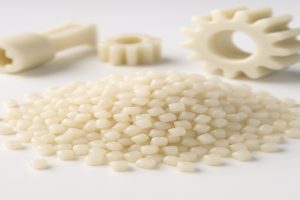
ガラス充填ナイロン[^1]は、標準ポリアミド(通常PA6またはPA66)に短いガラス繊維を重量比で10%、20%、30%、または45%混合したものです。その結果、未充填のベース材よりも劇的に剛性、強度、寸法安定性に優れた複合熱可塑性樹脂となります。
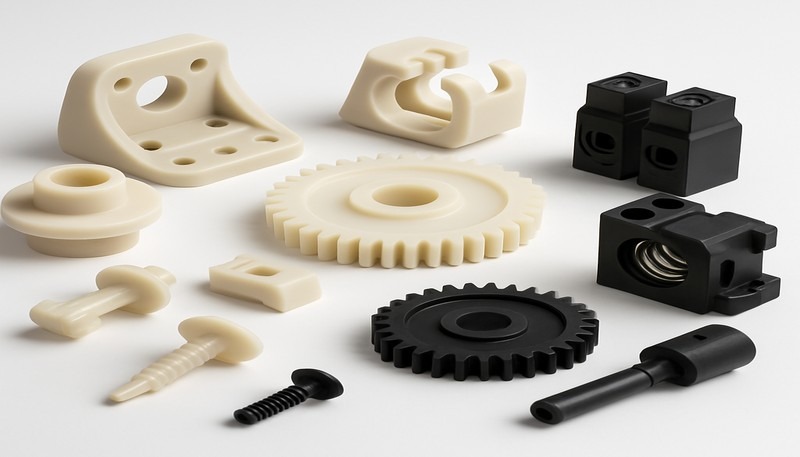
当社では、 PA6 GF303 とPA66 GF30は、最も多く成形される材料トップ5に入ります。自動車のボンネット内部品、電気機器ハウジング、電動工具ケース、工業用継手、民生用構造ブラケットなどに使用されます。
経済性は明らかです:金属のような剛性をプラスチック加工速度で得られ、生産量が5,000個を超えると、総部品コストはダイカストやCNC素材加工を下回ることが多いです。
ZetarMoldでは、47台の射出成形機(90T~1850T)を運転し、400種類以上の材料を扱ってきました。PA6 GF30とPA66 GF30は、当社上海工場で最も多く成形されるグレードのトップ5に入っています。
しかし、データシートには書かれていないことがあります。ガラス繊維は射出成形時に流動方向に配向します。つまり、部品は流動方向とそれに垂直な方向で異なる収縮を示し、この異方性収縮がこれらの材料における最大の加工課題です。
ガラス充填ナイロンの主要な材料特性は何か?
PA66に30%のガラス繊維を添加すると、引張強度は約80 MPaから185 MPaへと跳ね上がり、130%の増加となります。曲げ弾性率は約2.9 GPaから9.0 GPaとなり、材料は3倍硬くなります。
1.8 MPaでの熱変形温度(HDT)は約75°Cから250°C以上に上昇し、これは自動車ボンネット内や電気機器用途において画期的な変化です。
しかし、トレードオフもあります。ガラス繊維が応力集中源となるため、衝撃強度は低下します。破断伸びは50%以上から約3%に減少し、部品は曲がらずに破壊します。表面仕上げも明らかに粗くなります。
| プロパティ | PA6 Unfilled | PA6 GF30 | PA66 GF30 |
|---|---|---|---|
| 引張強さ (MPa) | 79 | 170 | 185 |
| Flexural Modulus (GPa) | 2.8 | 8.5 | 9.0 |
| 1.8 MPaにおけるHDT(°C) | 65 | 215 | 255 |
| ノッチ付きアイゾット衝撃強さ (J/m) | 55 | 110 | 105 |
| 収縮率 – 流動方向(%) | 1.0–1.4 | 0.3–0.5 | 0.2–0.5 |
| 収縮率 – 横方向 (%) | 1.0–1.4 | 0.7–1.0 | 0.6–1.0 |
| Melt Temp Range (°C) | 230–260 | 260–290 | 275–300 |
| Density (g/cm3) | 1.13 | 1.35 | 1.37 |
流動方向と横方向の収縮率の違いに注目してください。PA6 GF30では、流動方向で0.3%の収縮率でも、それに垂直な方向では0.9%となることがあります。この3倍の差こそが、ガラス充填ナイロン用金型設計を専門技術たらしめる理由です。
ガラス充填ナイロン成形を制御する主要な加工パラメータは何か?
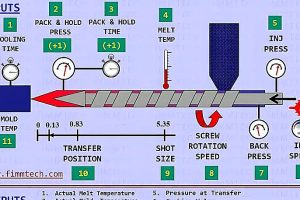
乾燥、溶融温度、金型温度、射出速度は、GFナイロンの品質を決定する4つのパラメータです。未充填ナイロンより許容範囲が狭いため、厳密なプロセス管理が不可欠です。
乾燥:非妥協項目
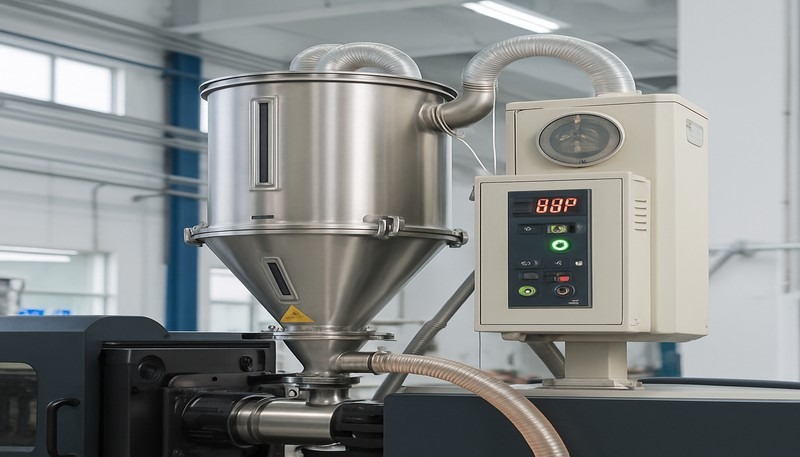
ナイロンは吸湿性があり、空気中の湿気を吸収します。ガラス繊維はこれを変えません。乾燥剤式乾燥機を使用し、材料を75〜85°Cで4〜6時間乾燥させ、水分を0.11%未満にする必要があります。これを怠ると、銀条痕、スプレーマーク、加水分解による分子量低下が発生します。
外見は乾いて見えたが、実際には0.4%の水分を含む原材料が入荷したことがあります。運転前には必ず水分分析計で確認してください。
溶融温度
PA6 GF30では260~285°C、PA66 GF30では275~300°Cを目標とします。高温側は流動性と繊維の濡れ性を向上させますが、熱劣化リスクが高まります。
当社の上海工場では、通常PA66 GF30を285~295°Cで成形しています。この最適温度帯は、ガラス繊維のサイジングを焼損させることなく良好な表面仕上げを得られます。
金型温度
ガラス充填グレードでは、金型温度を80~100°Cで運転します。金型温度を高くすると、結晶性、表面仕上げ、寸法安定性が向上しますが、サイクルタイムは延長します。
厳密な公差部品では、最低90°Cで運転します。70°C以下では、成形後の反りや機械的特性のばらつきを招きます。外皮とコアでは結晶化が異なるためです。
射出速度と射出圧力
ガラス繊維強化ナイロンは溶融粘度が高いため、未充填グレードより20~30%高い射出圧力が必要です。高速射出は繊維長を維持し、溶接部の脆弱性を低減します。
But too fast and you’ll get jetting or flash on thin-wall parts. We usually start with a moderate-fast speed profile and adjust based on short-shot analysis.
ガラス繊維含有率は収縮と寸法安定性にどのような影響を与えるか?
This is where glass-filled nylon really earns its premium price. Unfilled PA66 shrinks about 1.0–1.4% in all directions. Add 30% glass fiber, and shrinkage in the flow direction drops to 0.2–0.5%.
For tight-tolerance parts like gear housings, sensor brackets, and connector inserts, this predictability is worth every penny of the material premium.
But transverse shrinkage only drops to about 0.6–1.0%. So your cavity design needs to account for differential shrinkage — you’re essentially building asymmetric compensation into the tool steel.
At our in-house 射出成形金型 manufacturing facility, our 8 senior engineers have learned to predict this behavior through years of tooling iteration. The key factors are fiber percentage, part geometry, gate location, and processing conditions.
For production parts requiring ±0.05 mm tolerances, we recommend PA66 GF30 or higher, processed with mold temperature above 85°C, and validated through first-article inspection using CMM measurement.
ガラス充填ナイロン部品の設計ガイドラインは?
Keep walls between 2 and 3 mm, use radii above 0.5 mm, and add 1–3° draft — these are the essential design guidelines for glass-filled nylon parts. Glass fibers increase shrinkage anisotropy and tool wear, so standard unfilled-nylon rules do not apply.
Wall Thickness: Keep It Uniform
Uniform wall thickness is always important in injection molding, but critical with glass-filled nylon. Thickness transitions create differential cooling and shrinkage rates, which create warpage. Fibers orient differently in thick vs. thin sections too.
We recommend 2.0–3.5 mm nominal wall. Below 1.5 mm, you’ll struggle with filling and fiber breakage. Above 4.0 mm, you’ll see sink marks and excessive cycle times.
Radii: Generous, Always
Glass fibers create stress concentrators at sharp internal corners. Minimum 0.5 mm internal radius, 1.0 mm preferred. We’ve seen failure rates drop 40%+ by increasing internal radii from 0.3 mm to 1.0 mm.
The fibers can’t negotiate sharp corners — they pile up and create resin-rich and fiber-rich zones, both of which are weak points.
Draft Angles: More Than You Think
Glass-filled nylon is abrasive, which means the part grabs the cavity surface during ejection. Minimum 1.5° draft, preferably 2–3°, especially on textured surfaces.
The cost of a few extra degrees of draft is nothing compared to parts sticking, scoring, or cracking during ejection.
Rib and Boss Design
Ribs should be 50–75% of nominal wall thickness. With glass-filled nylon, thinner ribs (50–60%) are safer because the material is already stiff. Bosses should follow the same ratio with coring to reduce mass.
最も一般的な不良は何か、そしてどう解決するか?
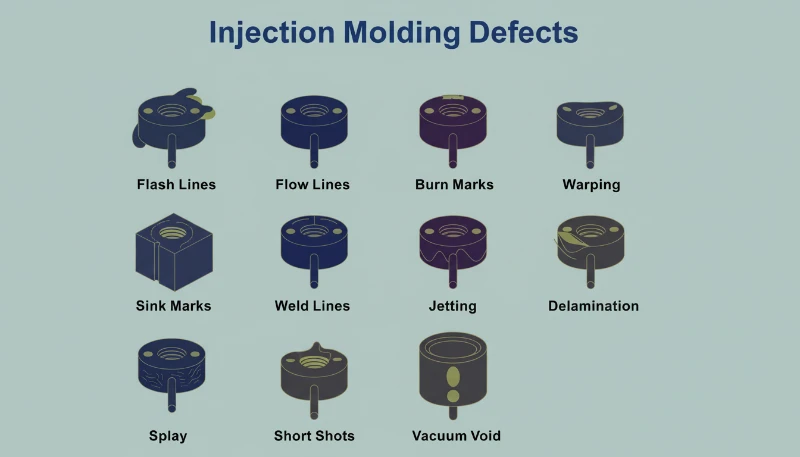
Fiber exposure, warp, weld lines, and moisture streaks are the four most common GF nylon defects — and most are preventable. Here is what causes each one and how we fix them in production.
Fiber Exposure and Poor Surface Finish
Those glass fibers poking through the surface mean the resin didn’t fully encapsulate the fibers at the cavity wall. Causes: mold temperature too low, injection speed too slow, or insufficient packing pressure.
Fix: raise mold temp to 90–100°C, increase injection speed, and ensure adequate hold pressure at 60–80% of injection pressure. For cosmetic A-surfaces, consider a polished cavity finish and a slight texture that masks the fiber pattern.
Warp and Dimensional Variation
Usually caused by differential shrinkage between flow and transverse directions, compounded by non-uniform wall thickness.
Fix: redesign for uniform walls, reposition gates for balanced flow, increase mold temperature, and consider post-mold annealing at 150–170°C for 30–60 minutes to relieve internal stresses.
溶接ライン
Glass fibers don’t cross weld lines — they orient parallel to the flow front, so the weld-line area is essentially unfilled nylon with much lower strength.
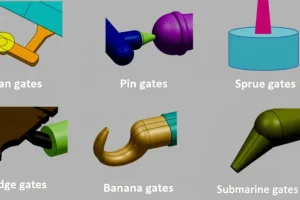
Fix: minimize weld lines through intelligent gate placement, position them in non-critical areas, and use higher melt and mold temperatures to improve knit strength.
Moisture-Related Defects
Silver streaks, splay, bubbles, and reduced mechanical properties. The fix is always the same: dry the material properly to below 0.1% moisture.
At our facility, IQC verifies material moisture content before any production run. We use closed-loop hopper loaders that maintain dry air throughout the run.
PA6 GFグレードとPA66 GFグレードの選択方法は?
Use PA6 GF30 for cost-sensitive parts below 150°C; choose PA66 GF30 for higher temperatures or better chemical resistance. Both grades at 30% glass fiber loading deliver excellent stiffness — the key difference is thermal performance.
Choose PA6 GF30 when cost is the primary driver (PA6 resin is typically 10–15% cheaper), the part operates below 150°C continuously, or you need slightly better impact resistance. PA6 GF30 is our go-to for consumer electronics housings and non-critical structural parts.
Choose PA66 GF30 when the part operates above 150°C (automotive under-hood, electrical contact carriers), chemical resistance matters, dimensional stability at elevated temperature is critical, or you need higher tensile strength and creep resistance.
For both grades, 30% glass fiber is the sweet spot. 10–15% gives modest improvements. 40–45% maximizes stiffness but comes with poor surface finish, very high viscosity, and aggressive tool wear.
ガラス充填ナイロン対未充填ナイロン:アップグレードが効果を発揮するのはいつか?
The GF nylon upgrade pays off when the part needs tensile strength above 80 MPa, operating temps above 100°C, or shrinkage below 0.4%. The material costs 20–40% more per kilogram, but the total part cost often breaks even.
The upgrade pays off when the part bears structural loads unfilled nylon can’t handle at the required deflection limit, dimensional stability across temperature ranges matters, or the part operates where unfilled nylon’s HDT of 65–75°C is insufficient.
The upgrade is a waste when the part is purely cosmetic, unfilled nylon already meets the spec, or the volume is too low to justify the tooling wear premium. We’ve talked clients out of glass-filled nylon more than once — it’s the honest recommendation.
One more consideration: tool life. Glass-filled nylon is abrasive — those fibers act like microscopic sandpaper. Expect 3–5× more cavity wear. At our mold manufacturing facility, we default to hardened steel (H13 or S7) for any GF nylon tooling, which is why our molds deliver 500,000+ shots before major maintenance.
From a sourcing perspective, glass-filled nylon is widely available from major suppliers including DuPont (Zytel), BASF (Ultramid), and EMS-Grivory. Lead times for standard PA6 GF30 and PA66 GF30 grades are typically 2–4 weeks, but specialty grades like PA66 GF45 or UV-stabilized compounds can take 8–12 weeks. Plan your material procurement early — we’ve seen projects delayed because the specified GF grade was on allocation during peak automotive season.
“Glass-filled nylon requires the same drying procedure as unfilled nylon.”真
True. The nylon matrix remains hygroscopic regardless of fiber content. Moisture can also get trapped at the fiber-resin interface. Both grades require drying to below 0.1% moisture before processing.
“Glass-filled nylon parts always have better surface finish than unfilled nylon.”偽
False. Glass fibers create a matte, rough surface. Unfilled nylon produces a smoother, glossier finish. If cosmetics matter, unfilled grades or surface treatments are preferred.
Understanding how glass-filled nylon behaves during processing requires hands-on experience with the material across different part geometries and wall thicknesses. The fiber orientation patterns change with every gate relocation, wall thickness adjustment, or processing parameter shift. In our Shanghai facility, our engineers have documented these behavioral patterns across thousands of production runs, building an empirical database that helps us predict and prevent common defects before they occur in production.
“Glass-filled nylon shrinkage differs between flow and transverse directions.”真
True. Glass fibers orient in the flow direction during injection, creating anisotropic shrinkage — typically 0.3% in-flow vs. 0.8% transverse for PA6 GF30. This differential is the biggest challenge in mold design for these materials.
「ガラス繊維含有量が高いほど、常により強度の高い部品が得られる」偽
誤りです。剛性と引張強度は繊維含有量の増加とともに向上しますが、衝撃強度は頭打ちになるか、むしろ低下することがあります。45%の充填では、脆性と加工困難性が著しく増加します。30%充填がほとんどの用途で最もバランスの取れた選択肢です。
よくある質問
よくある質問
ガラス繊維強化ナイロンの射出成形温度は何度ですか?
PA6 GF30の場合、溶融温度範囲は260~285°Cです。PA66 GF30の場合は275~300°Cを使用してください。金型温度は、最適な結晶化度と表面仕上げのために80~100°Cに維持する必要があります。メーカーの配合により±10°Cのばらつきがあるため、必ず特定グレードのデータシートで確認してください。温度が高すぎると繊維サイジングが劣化し、低すぎると繊維の濡れ性が悪化し表面欠陥の原因となります。当社の上海工場では、通常各範囲の中間値を目標とし、ショートショット試験と初品検査結果に基づいて調整しています。
ガラス繊維含有量はナイロンの収縮にどのような影響を与えますか?
ガラス繊維は流れ方向の収縮を劇的に低減します — 非強化PA66の約1.2%から、PA66 GF30では0.3%まで低下します。しかし、直角方向の収縮は約0.7~0.9%までしか低下せず、金型設計で考慮する必要のある著しい異方性挙動を生み出します。繊維含有量が高いと全体的な収縮はさらに減少しますが、流れ方向と直角方向の収縮率差は大きくなります。つまり、PA66 GF45部品は流れ方向では0.2%しか収縮しない一方、直角方向では依然として0.6%収縮する可能性があり、金型設計者にとって寸法予測がさらに複雑になります。
ガラス繊維強化ナイロンにTPEやTPUをオーバーモールドできますか?
はい、ガラス繊維強化ナイロン(一般的にPA6 GF30)は、ツーショット成形やオーバーモールド用途において、TPEやTPUを軟質オーバーモールド材として用いた場合の剛性基材として一般的に使用されます。密着性は、基材とオーバーモールド材の化学的適合性、ならびに適切な基材表面準備と第二射時の温度管理に依存します。ガラス繊維含有量は、非強化ナイロン基材と比較して機械的結合強度を低下させる可能性があります。これは、繊維がTPEまたはTPU層との化学的インターロックに利用可能な表面積を減少させるためです。
ガラス繊維強化ナイロン部品の表面に繊維が浮き出る原因は何ですか?
ファイバー露出は、パッキング工程で樹脂マトリックスがキャビティ表面のガラス繊維を完全に包埋できない場合に発生します。一般的な原因は、80°C以下の低い金型温度、キャビティ壁から繊維を押しのけられない低速射出、不十分な保圧圧力、30%を超える高い繊維含有量です。最も効果的な対策は、金型温度を90~100°Cに上げることと射出速度を上げることです。化粧面(A面)品質が要求される部品では、鏡面仕上げと微細なテクスチャパターンを組み合わせることで、ガラス繊維強化グレードに固有の繊維透けを目立たなくすることができます。
ガラス繊維強化ナイロンは食品接触用途に適していますか?
ガラス繊維強化ナイロンは、食品グレードのベース樹脂と適切な繊維サイジングを使用した場合、FDA適合となり得ますが、すべてのGFナイロングレードが食品接触認証を有するわけではありません。ガラス繊維自体は不活性です — 適合性は完全にナイロンマトリックスとコンパウンドに使用される添加剤や着色剤に依存します。材料サプライヤーから、特定グレードのFDAまたはEU 10/2011適合文書を必ず確認してください。食品安全性が要求される場合は、事前にこれを明記し、成形業者が認証材料を調達し、生産プロセス全体を通じて適切なトレーサビリティ文書を維持するようにしてください。
ガラス繊維強化ナイロンの射出成形部品の反りを防止するにはどうすればよいですか?
反りを防止するには、多角的なアプローチが必要です:肉厚を均一に(2.0~3.5 mm)設計し、内部Rを十分に(少なくとも1.0 mm)確保し、ゲート位置をバランスの取れた流動パターンが得られるように設定し、金型温度を85°C以上でサイクル全体を通して維持し、十分な冷却時間を確保してから取り出します。生産中に既に反りが見られる部品の場合、成形後150~170°Cで30~60分のアニーリングを行うことで内部応力を緩和し、平坦性を改善できます。最も効果的な戦略は、成形条件調整のみで修正しようとするのではなく、金型設計レビューの段階で反りに対処することです。
ガラス繊維強化ナイロン金型に推奨される工具鋼は何ですか?
ガラス繊維強化ナイロンの量産金型には、H13(48~52 HRC)やS7などの焼入れ工具鋼が推奨されます。研磨性のあるガラス繊維は、未強化ナイロンに比べて3~5倍の摩耗を引き起こすため、標準的なP20工具鋼ではキャビティの侵食や寸法変化が早期に発生します。50万ショットを超える大量生産では、金型寿命を延ばすため、キャビティ表面にTiNやTiCNなどのPVDコーティングを検討してください。焼入れ鋼への初期投資は、メンテナンスのダウンタイム削減と、金型寿命を通じた安定した部品品質によって回収されます。
ガラス繊維強化ナイロンには特殊な射出成形スクリューが必要ですか?
圧縮比2.5:1から3.0:1の汎用スクリューは、ほとんどのガラス繊維強化ナイロングレードに適しています。3.5:1を超える非常に高い圧縮比は、繊維の過度な破断を引き起こし、繊維が提供する機械的補強効果を低下させるため避けてください。ガラス繊維の摩耗性の高さから、長期生産には、バイメタルライナーやザロイコーティング部品などの耐摩耗性スクリュー・バレル材質の使用を強く推奨します。生産途中で摩耗したスクリューを交換するコストは、最初から耐摩耗性部品を選定するコストよりもはるかに高くなります。
ガラス繊維強化ナイロン射出成形プロジェクトの信頼できるパートナーをお探しですか?ZetarMoldは2005年から上海工場でGFナイロングレードの成形を行ってきました。47台の成形機(90T~1850T)、社内 射出成形金型 工場、および8名のシニアエンジニアを擁し、自動車、電子機器、産業用クライアント向けにPA6 GF30およびPA66 GF30部品を日々成形しています。 Get a free quote 当社のエンジニアリングチームに設計レビューを依頼してください。



 EN
EN  ES
ES  FR
FR  DE
DE  PT
PT  AR
AR  RU
RU  JA
JA  KO
KO  IT
IT  NL
NL  TR
TR  PL
PL 