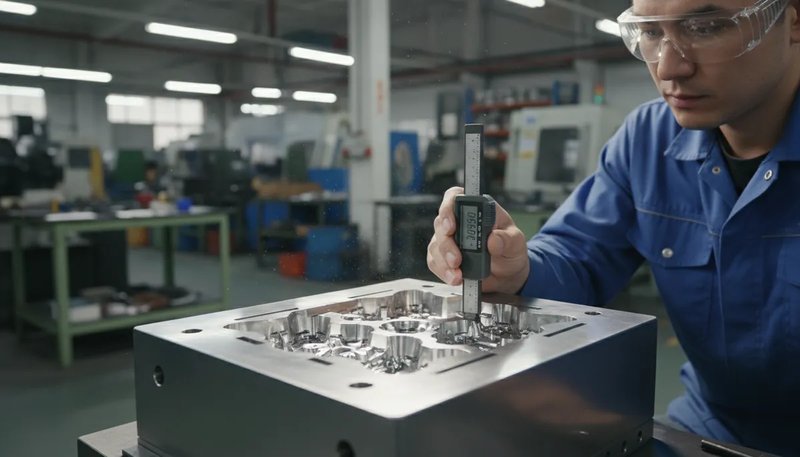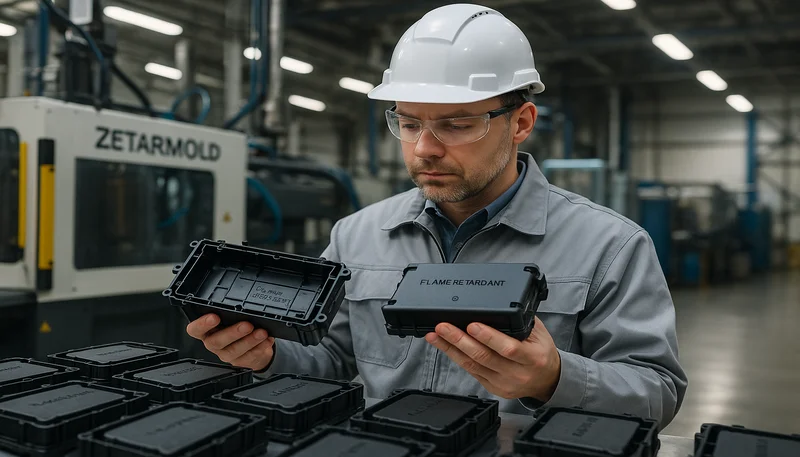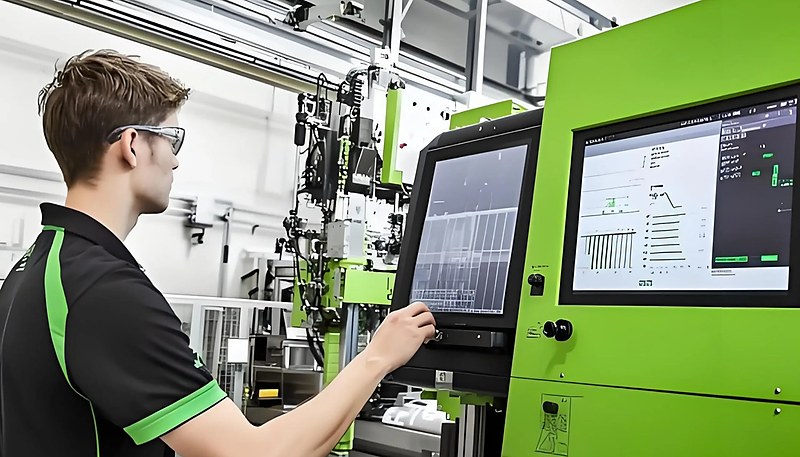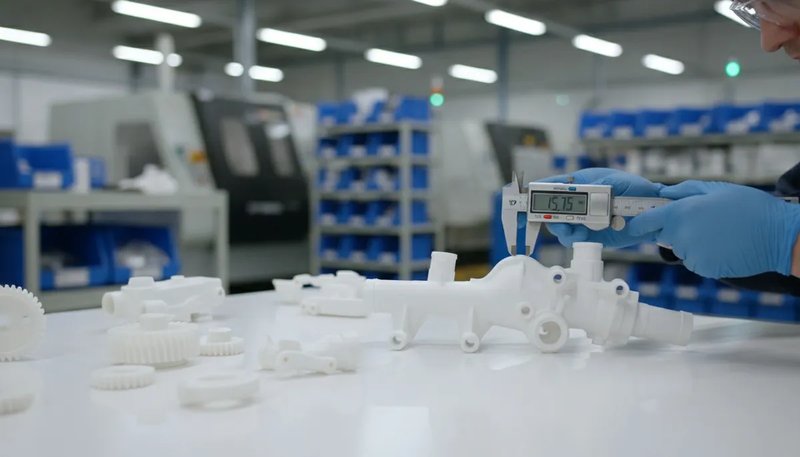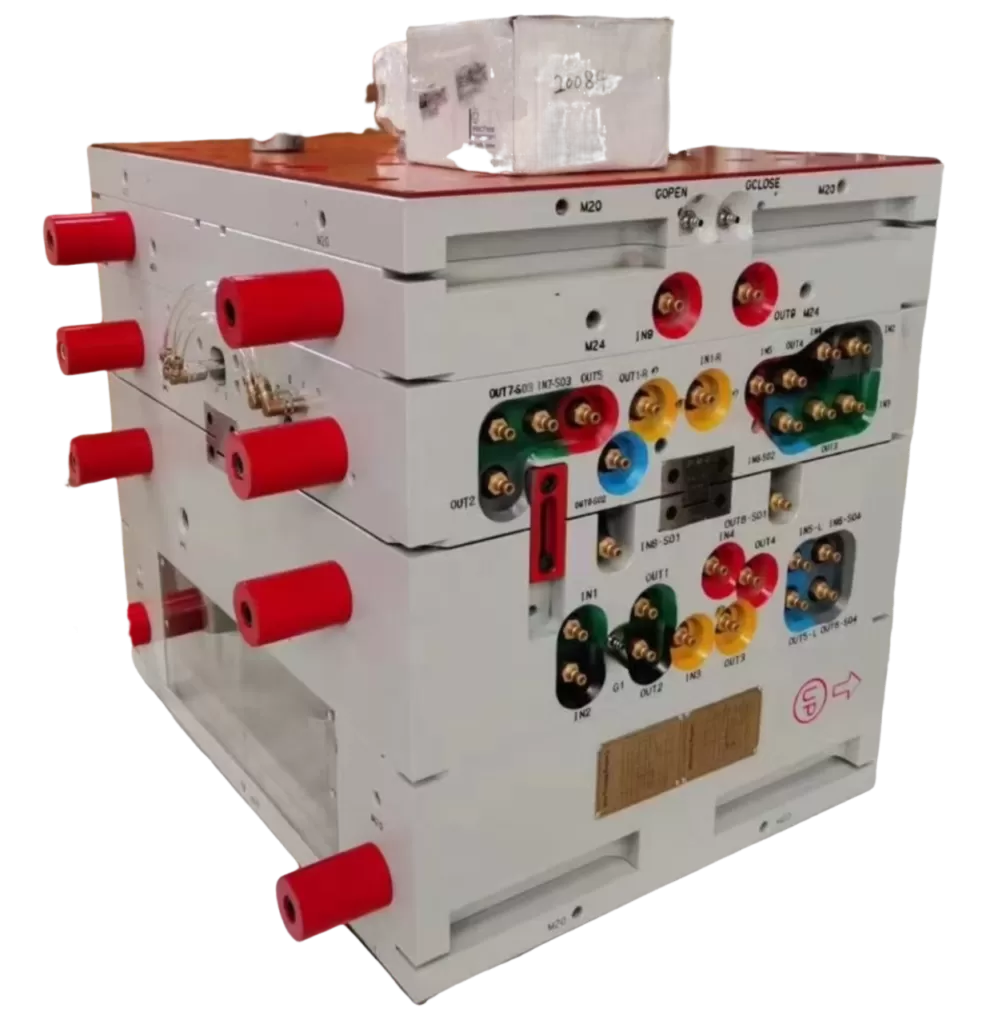
O processo de moldagem por injeção do material TPU é uma das técnicas de fabrico mais valiosas para produzir em escala peças flexíveis, duráveis e resistentes ao desgaste. O poliuretano termoplástico (TPU) ocupa uma posição única entre os plásticos rígidos e as borrachas macias, permitindo aos engenheiros criar peças que combinam elasticidade com resistência estrutural — algo que poucos outros materiais conseguem igualar. Desde capas de telemóvel e braceletes de relógio a casquilhos para automóveis, tubos médicos e correias transportadoras industriais, a moldagem por injeção de TPU está na base de produtos em praticamente todos os principais setores de fabrico.
A moldagem por injeção de TPU aquece e injecta pellets de TPU em moldes para criar peças flexíveis e resistentes, normalmente utilizadas em calçado, automóveis e eletrónica.
Esta breve visão geral apresenta as etapas fundamentais da moldagem por injeção de TPU, mas dominar as particularidades do processo pode melhorar significativamente o desempenho do produto e a eficiência da fabricação. Aprofunde-se no tema para entender como um projeto de molde preciso e a otimização do processo podem melhorar seus resultados. Para os conceitos fundamentais, consulte nosso Guia completo de moldagem por injeção.
"O TPU oferece excelente resistência à abrasão e flexibilidade."True
O TPU é amplamente reconhecido pela sua resistência superior à abrasão e flexibilidade, o que o torna ideal para aplicações exigentes, como solas de calçado e revestimentos de cabos.
"A moldagem por injeção de TPU é menos eficiente do que outros métodos."False
A moldagem por injeção de TPU pode ser altamente eficiente e é frequentemente selecionada pela sua capacidade de produzir peças detalhadas e duradouras.
O que é o material TPU?
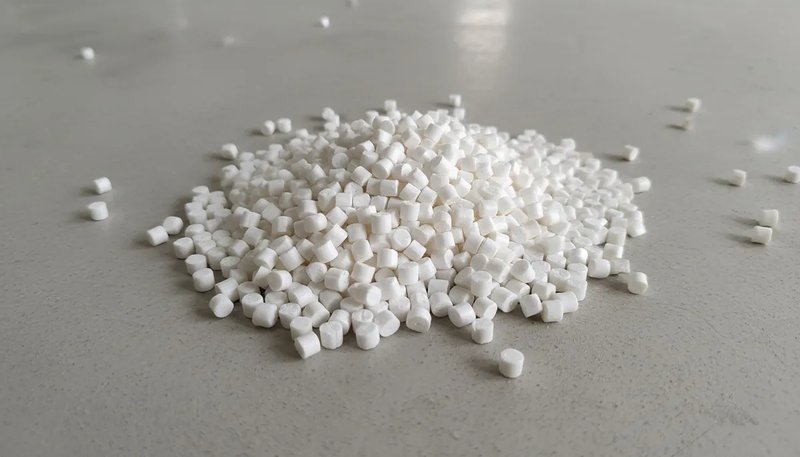
TPU significa borracha elastomérica de poliuretano termoplástico. Não é um tecido no sentido tradicional, muito menos couro. O TPU supera muitas das limitações do PVC, do couro de PU e do revestimento de PU, tendo permitido avanços significativos na aplicação de tecidos impermeáveis e respiráveis.
O TPU não só reúne a maioria das características da borracha e dos plásticos comuns, como também apresenta excelentes propriedades físicas e químicas globais. É um novo tipo de material polimérico ecológico entre a borracha e o plástico. Combina a flexibilidade da borracha com a dureza do plástico rígido.
"O TPU é simultaneamente flexível e durável."True
A composição única do TPU permite-lhe manter a flexibilidade ao mesmo tempo que proporciona força e resistência ao desgaste, tornando-o ideal para diversas aplicações.
"O TPU é utilizado apenas em vestuário e calçado."False
Embora o TPU seja popular no vestuário e no calçado, as suas aplicações estendem-se às indústrias automóvel, médica e eletrónica devido às suas propriedades adaptáveis.
Quais são as caraterísticas básicas dos materiais TPU?
As características básicas dos materiais de TPU são as principais categorias ou opções explicadas nesta seção. Esses materiais oferecem alta elasticidade, excelente resistência à abrasão e flexibilidade em uma ampla faixa de temperaturas, sendo ideais para calçados, dispositivos médicos — em conformidade com as normas de biocompatibilidade ISO 109931 para tubos e invólucros — e peças automotivas destinadas a ambientes exigentes.
Ampla gama de dureza
Alterando a proporção de cada componente da reação do TPU, é possível obter produtos com diferentes níveis de dureza Shore2. Mesmo com o aumento da dureza, eles mantêm boa elasticidade e resistência ao desgaste. A rigidez do TPU pode ser medida pelo módulo de elasticidade.
O módulo de elasticidade da borracha é normalmente 1~10Mpa, o do TPU é 10~1000Mpa e o de plásticos como nylon, ABS, PC e POM é 1000~10000Mpa.
Excelente resistência ao frio
A temperatura de transição vítrea do TPU3 é baixa, e o material permanece elástico e flexível mesmo a −35 °C. Sua flexibilidade se mantém em uma ampla faixa, de −40 a 120 °C, sem necessidade de plastificantes.
Resistente a óleos, resistente à água, resistente a produtos químicos e resistente ao bolor
O TPU apresenta boa resistência a óleos (óleos minerais, óleos de origem animal e vegetal e lubrificantes) e a muitos solventes. A resistência do TPU ao óleo é superior à da borracha nitrílica e apresenta uma excelente durabilidade em contacto com óleo.
O seu valor de desgaste Taber é de 0,5-0,35mg, que é o mais pequeno entre os plásticos. Se for adicionado MoS2, óleo de silicone, grafite, etc., o coeficiente de fricção pode ser reduzido e a resistência ao desgaste pode ser melhorada.
Resistência à tração e alongamento: o TPU tem uma resistência à tração 2-3 vezes superior à da borracha natural e da borracha sintética. A resistência à tração do TPU de poliéster é de quase 60MPa e o alongamento é de quase 410%. A resistência à tração do TPU de poliéter é de 50MPa e o alongamento é >30%.
"Os materiais TPU aumentam a durabilidade do produto em ambientes severos."True
A resistência do TPU à abrasão e aos produtos químicos torna-o adequado para utilização em condições difíceis.
"Os materiais TPU só são adequados para aplicações de calçado."False
Embora amplamente utilizados no calçado, os materiais TPU são também ideais para aplicações automóveis, médicas e industriais devido à sua versatilidade e resiliência.
Quais são as condições do processo de moldagem por injeção de Tpu?
Temperatura
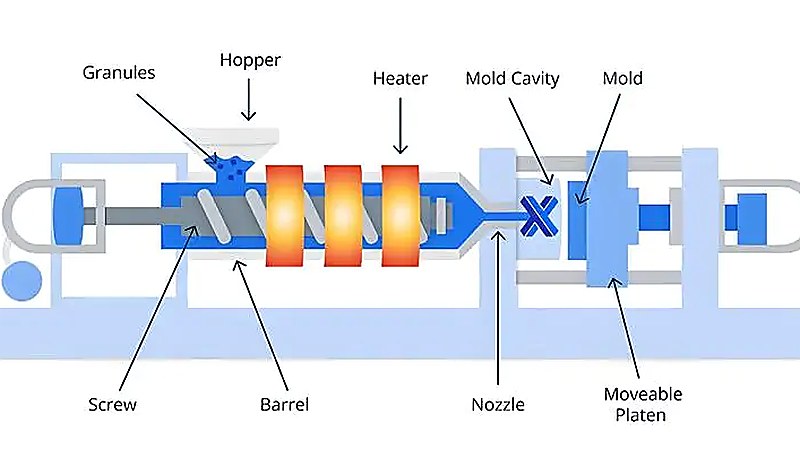
As temperaturas que precisam ser controladas no processo de moldagem de TPU são as do cilindro, do bico e do molde. As duas primeiras afetam principalmente a plastificação e o escoamento do TPU; a última afeta seu escoamento e resfriamento. Saiba mais em nosso Guia de projeto de moldes de injeção.
Temperatura do cilindro: a escolha depende da dureza do TPU. Quanto maior a dureza, maiores são a temperatura de fusão e a temperatura máxima no fim do cilindro. A faixa usada no processamento de TPU é de 177 a 232 °C. A temperatura geralmente aumenta de forma gradual do lado do funil, na extremidade traseira, até o bico, na extremidade dianteira, para aquecer o TPU de modo constante e obter plastificação uniforme.
Temperatura do bico: costuma ser ligeiramente inferior à temperatura máxima do cilindro para evitar que o material fundido escorra pelo bico aberto.
**Temperatura do molde:**A temperatura do molde é muito importante para o desempenho intrínseco e a qualidade da aparência dos produtos de TPU. É determinada por muitos fatores, como a cristalinidade do TPU e o tamanho do produto. Normalmente, a temperatura do molde é controlada por um meio de arrefecimento a temperatura constante, como a água.
A temperatura do molde para produtos em TPU é geralmente de 10~60℃. Quando a temperatura do molde é baixa, a massa fundida solidifica prematuramente e produz linhas de fluxo, o que não favorece o crescimento de esferulitos, resultando numa baixa cristalinidade do produto e num processo de cristalização tardia, que provoca pós-contração e alterações no desempenho do produto.
Pressão
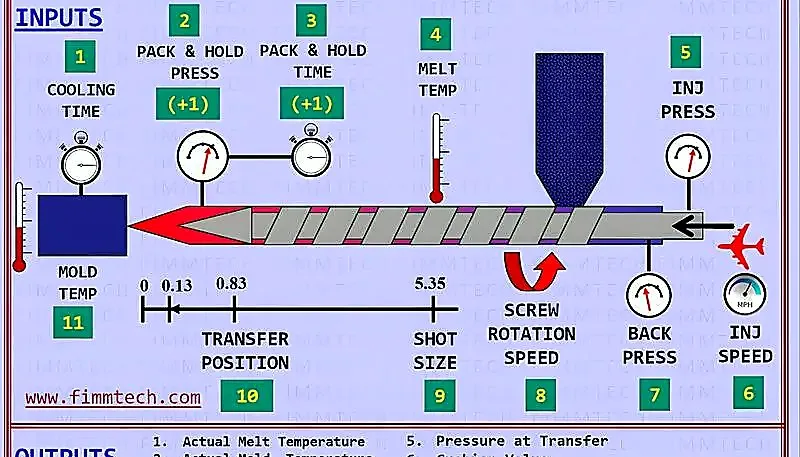
A pressão no processo de moldagem por injeção inclui a pressão de plastificação (contrapressão) e a pressão de injeção. Quando o fuso recua, a pressão sobre o fundido à sua frente é a contrapressão, que é ajustada pela válvula de descarga.
Aumentar a contrapressão aumentará a temperatura de fusão, reduzirá a velocidade de plastificação, tornará a temperatura de fusão uniforme, misturará os corantes uniformemente e descarregará o gás de fusão, mas estenderá o ciclo de moldagem. A contrapressão do TPU é normalmente de 0,3~4MPa.
A pressão de injeção é a pressão aplicada ao TPU pela extremidade do fuso. É utilizada para vencer a resistência ao escoamento do TPU desde o cilindro até à cavidade, aumentar a velocidade de enchimento com a massa fundida e compactá-la.
Por outras palavras, a viscosidade do fundido é determinada pela temperatura e pela pressão, bem como pela dureza do TPU e pela taxa de deformação. Quanto maior for a taxa de cisalhamento, menor será a viscosidade. Quando a taxa de cisalhamento permanece inalterada, quanto maior for a dureza do TPU, maior será a viscosidade.
Quando a taxa de cisalhamento é constante, a viscosidade diminui à medida que a temperatura aumenta, mas, com taxas de cisalhamento elevadas, a viscosidade não é tão afetada pela temperatura como acontece com taxas baixas. A pressão de injeção do TPU é geralmente de 20~110MPa.
Tempo
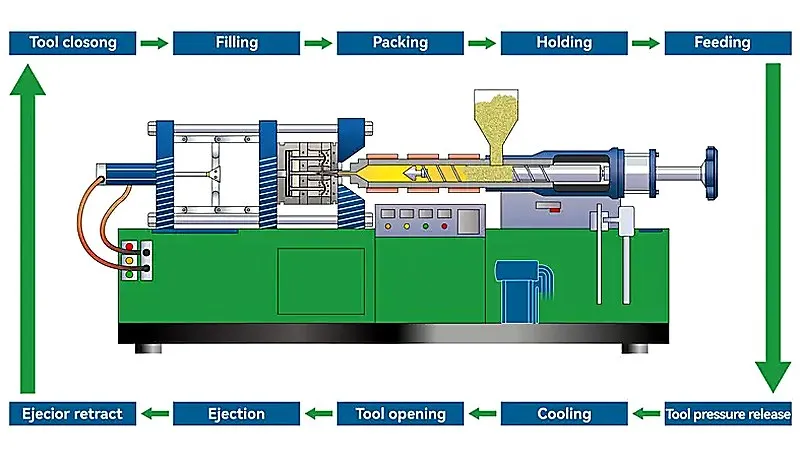
O tempo que leva para fazer uma injeção é chamado de ciclo de moldagem. O ciclo de moldagem inclui o tempo que demora a encher o molde, o tempo que demora a segurar o molde, o tempo que demora a arrefecer o molde e outros tempos (como o tempo que demora a abrir o molde, a retirar a peça do molde e a fechar o molde), que afectam a quantidade de trabalho que pode fazer e a utilização do seu equipamento.
O ciclo de moldagem do TPU é normalmente determinado pela dureza do TPU, pela espessura e pela forma da peça. O ciclo é curto para TPU duro, longo para peças espessas e longo para peças com formas muito complexas.
Velocidade de injeção
A velocidade de injeção é determinada principalmente pela configuração dos produtos de TPU. Os produtos com faces de extremidade espessas requerem velocidades de injeção mais baixas, enquanto os produtos com faces de extremidade finas requerem velocidades de injeção mais rápidas.
Velocidade do parafuso
Quando se processam produtos de TPU, é necessário utilizar uma taxa de cisalhamento baixa, pelo que é necessário utilizar uma velocidade de rosca mais baixa. A velocidade do parafuso do TPU é geralmente 20~80r/min, e 20~40r/min é melhor.
Tratamento de paragem
Uma vez que o TPU pode degradar-se após ser exposto a altas temperaturas durante muito tempo, deve ser limpo com PS, PE, plásticos acrílicos ou ABS após o encerramento; se o encerramento exceder 1 hora, o aquecimento deve ser desligado.
Pós-processamento de produtos
O TPU tem frequentemente uma cristalização, orientação e contração irregulares devido a uma plastificação desigual no cilindro ou a diferentes taxas de arrefecimento na cavidade do molde. Isto resulta em tensão interna no produto, que é mais proeminente em produtos de paredes espessas ou produtos com inserções de metal.
Os produtos com tensões internas sofrem frequentemente uma diminuição das propriedades mecânicas durante o armazenamento e a utilização, apresentam estrias prateadas na superfície e podem mesmo deformar-se e fissurar. A forma de resolver estes problemas na produção consiste em recozer o produto. A temperatura de recozimento depende da dureza do produto em TPU.
A temperatura de recozimento de produtos com elevada dureza é também elevada, e a temperatura de recozimento de produtos com baixa dureza é também baixa. Uma temperatura demasiado elevada pode provocar o empeno ou a deformação do produto, e uma temperatura demasiado baixa não permite atingir o objetivo de eliminar as tensões internas.
Reciclagem de materiais reciclados
No processo de processamento do TPU, os materiais residuais, tais como canais, sprues e peças fora das especificações, podem ser reciclados e reutilizados. A partir dos resultados dos testes, os materiais reciclados do 100% sem mistura com novos materiais não reduzem significativamente as propriedades mecânicas e podem ser totalmente utilizados.
"Condições corretas de moldação por injeção de TPU evitam defeitos nos produtos finais."True
O cumprimento das definições ideais de temperatura e pressão mantém as propriedades do material e reduz defeitos como deformações e bolhas.
"Pode utilizar qualquer temperatura de molde para TPU sem afetar o resultado."False
Temperaturas incorrectas do molde podem levar a um mau acabamento da superfície e a problemas estruturais, enfatizando a importância de intervalos de temperatura específicos.
Quais são as precauções no processo de moldagem por injeção de materiais TPU?
Secagem de materiais
Como o TPU absorve facilmente a humidade e sofre hidrólise com facilidade, uma secagem insuficiente das matérias-primas de TPU causará facilmente dificuldades de processamento.
Se for utilizado pó de carbono ou masterbatch para a coloração, este deve ser totalmente misturado com o corante natural de TPU e ambos devem ser secos em conjunto. Geralmente, utiliza-se um secador de ar circulante ou um secador desumidificador para secar o TPU.
Processamento de material reciclado
Os materiais dos bicos, os materiais das máquinas de lavar roupa ou os produtos finais de má qualidade podem ser triturados e misturados com novos materiais, mas devem ser novamente secos antes de serem utilizados. Devido a alguns requisitos físicos mecânicos, os materiais reciclados não podem ser utilizados em processos de moldagem por injeção.
Mais de 30% de todas as matérias-primas. Os materiais reciclados extrudidos devem ser processados separadamente ou adicionados a novos materiais de moldagem por injeção. Além disso, os materiais reciclados não devem ser armazenados durante demasiado tempo. Utilizar topos secos. Os resíduos que não podem ser reciclados podem ser incinerados para obter calor.
Controlo da velocidade e da pressão de injeção
A velocidade e a pressão de injeção são importantes para o fluxo do material TPU e o enchimento do molde. Se a velocidade e a pressão forem demasiado elevadas, o material pode romper-se ou formar bolhas.
Controlo da temperatura do molde
Contudo, se a temperatura do molde for demasiado elevada, pode provocar o sobreaquecimento e a decomposição do material ou a formação de bolhas. Se a temperatura do molde for demasiado baixa, pode provocar marcas de fluxo frio ou marcas de contração na superfície do produto.
Evitar o aquecimento excessivo e o cisalhamento
O aquecimento excessivo e as elevadas taxas de cisalhamento podem degradar o TPU durante o processamento, causando descoloração, formação de gases e perda permanente de propriedades mecânicas. Mantenha as temperaturas do cilindro dentro do intervalo recomendado para o grau específico de TPU e evite tempos de residência prolongados no cilindro. Se a máquina ficar inativa durante mais de alguns minutos, reduza as temperaturas definidas ou purgue o cilindro com um material compatível, como polietileno, para evitar a degradação térmica.
Manter um ambiente de moldagem por injeção limpo
A limpeza do ambiente de moldagem por injeção é muito importante para a qualidade da moldagem por injeção dos materiais TPU. Se existirem impurezas e manchas de óleo, estas podem aderir à superfície do molde ou misturar-se no material, o que causará defeitos na superfície do produto ou degradação do desempenho.
"A moldação por injeção de TPU exige uma gestão precisa da temperatura."True
A natureza termoplástica do TPU exige uma regulação consistente da temperatura para manter a integridade do material e evitar defeitos.
"Todos os materiais TPU podem ser moldados nas mesmas condições."False
Diferentes formulações de TPU podem exigir configurações variadas de temperatura, velocidade e pressão para alcançar os resultados desejados, destacando a necessidade de condições de processamento personalizadas.
Qual é o fluxo do processo de moldagem por injeção de material TPU?
Preparação do material
Antes de iniciar a moldagem por injeção de grânulos de TPU, precisa de os preparar. Isto significa secá-los, pré-aquecê-los e misturá-los. A secagem elimina qualquer humidade no material para que não surjam bolhas ou fissuras durante a moldagem por injeção.
Conceção de moldes
Ao conceber um molde de injeção de material TPU, é necessário ter em conta factores como a fluidez do material, a retração e a desmoldagem do produto. Uma conceção razoável do molde pode reduzir eficazmente a taxa de defeitos do produto e melhorar a eficiência da produção.
Seleção de máquinas de moldagem por injeção
Escolher a máquina de moldagem por injeção certa é fundamental para garantir a estabilidade do processo de moldagem por injeção do material TPU e a qualidade do produto.
Definição dos parâmetros do processo de moldagem por injeção
A definição dos parâmetros do processo de moldagem por injeção é crucial para garantir a qualidade da moldagem por injeção de material TPU. Estes parâmetros incluem a pressão de injeção, a velocidade de injeção, o tempo de espera, a temperatura do molde, etc.
Ao definir corretamente os parâmetros do processo, pode garantir que o material TPU flua e preencha completamente o molde durante o processo de moldagem por injeção, evitando defeitos como bolhas e vazios de retração.
Pós-processamento de produtos
Após a moldagem por injeção, os produtos TPU têm de ser pós-processados para eliminar o stress interno, melhorar a estabilidade dimensional e a qualidade da superfície. Os métodos comuns de pós-processamento incluem tratamento térmico, arrefecimento e tratamento de superfície.
O tratamento térmico pode eliminar as tensões internas geradas pelo produto durante o processo de moldagem por injeção e melhorar a sua estabilidade dimensional. O arrefecimento ajuda o produto a moldar-se rapidamente e a reduzir a deformação. O tratamento da superfície pode melhorar o aspeto e o desempenho do produto.
"A moldação por injeção de TPU resulta em produtos duráveis e flexíveis."True
As propriedades únicas do TPU tornam-no ideal para a produção de peças que requerem elasticidade e resiliência.
"O TPU é igual ao TPE na moldação por injeção."False
Embora o TPU e o TPE tenham semelhanças em termos de flexibilidade, são materiais distintos com composições e caraterísticas de desempenho diferentes.
Quais são os defeitos no processo de moldagem por injeção de materiais TPU?
O produto tem fissuras
As fissuras são um problema crítico para os produtos em TPU, aparecendo geralmente como fissuras finas na superfície do produto. Quando o produto tem arestas e cantos vivos, muitas vezes fissura nesta parte, o que é muito perigoso para o produto.
Para evitar fissuras causadas por uma desmoldagem deficiente, a cavidade do molde deve ter uma inclinação de desmoldagem suficiente, e o tamanho, posição e forma do pino ejetor devem ser adequados. Ao ejetar, a resistência à desmoldagem de cada parte do produto deve ser uniforme.
O excesso de enchimento ocorre quando se injeta demasiado plástico no molde. Isto pode ser causado por pressão de injeção excessiva ou por uma dosagem excessiva de material.
Quando se enche demasiado o molde, também se coloca mais tensão nos componentes do molde, o que torna mais difícil retirar a peça do molde e faz com que a peça se rache (ou até parta). Quando isto acontece, é necessário reduzir a pressão de injeção para parar o enchimento excessivo.
A tensão interna resultante do enchimento excessivo permanece normalmente na área da porta. A área próxima do portão é frágil, especialmente a área direta do portão, e partirá devido à tensão interna.
Fraco brilho superficial dos produtos
O brilho superficial deficiente é geralmente causado por um polimento inadequado da superfície do molde. Quando o estado da superfície da cavidade do molde é bom, aumentar a temperatura do material e do molde pode melhorar o brilho superficial do produto.
Além disso, se o material absorver humidade ou estiver contaminado com substâncias voláteis ou matérias estranhas, pode levar a um fraco brilho da superfície. Por conseguinte, deve prestar-se atenção aos factores relacionados com o molde e os materiais.
O produto tem rebarbas
Os produtos de TPU têm frequentemente rebarbas. Quando a pressão da matéria-prima na cavidade do molde é demasiado grande, a força de separação gerada é maior do que a força de aperto, forçando o molde a abrir, fazendo com que a matéria-prima transborde e forme rebarbas.
Existem muitas razões para as rebarbas, tais como problemas com as matérias-primas, problemas com a máquina de moldagem por injeção, ajuste inadequado ou mesmo o próprio molde. Portanto, ao determinar a causa das rebarbas, proceda do mais fácil para o mais difícil.
Verificar se as matérias-primas estão bem secas, se existem objectos estranhos misturados, se estão misturados diferentes tipos de matérias-primas e a influência da viscosidade das matérias-primas.
ajustar corretamente o sistema de controlo da pressão da máquina de moldagem por injeção e o ajuste da velocidade de injeção deve ser coordenado com a força de aperto utilizada; se certas partes do molde estão gastas, se os orifícios de exaustão estão bloqueados e se o desenho do canal de fluxo é razoável.
se existe um desvio no paralelismo entre os modelos da máquina de moldagem por injeção, se a distribuição da força do tirante do modelo é uniforme e se o anel de verificação do parafuso e o cilindro de fusão estão gastos.
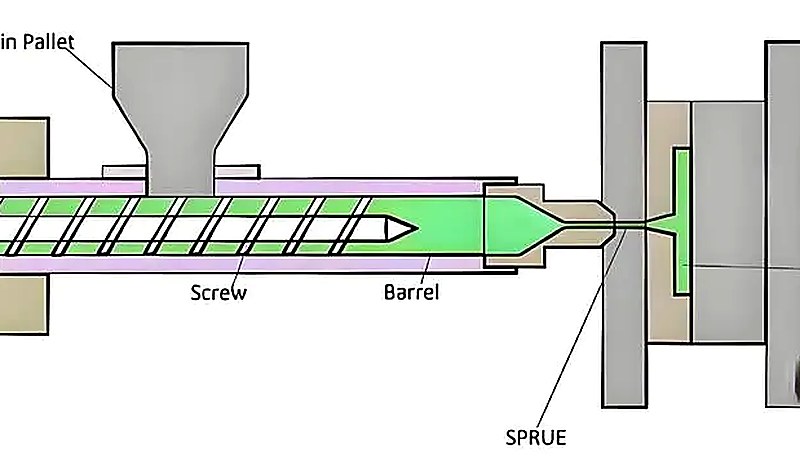
Enchimento insuficiente de produtos
Quando o material fundido não flui através de todos os cantos do molde, é chamado de enchimento insuficiente. Existem algumas razões para isso: as condições de moldagem aren\‘t set right, o molde isn\‘t projetado ou feito bem, o produto tem partes grossas e partes finas, e assim por diante.
Para corrigir isto, pode aumentar a temperatura do material e do molde, aumentar a pressão e velocidade de injeção e melhorar o fluxo do material. Também pode aumentar o canal de distribuição ou o canal de fluxo, ou alterar a posição, tamanho ou número do ponto de injeção para melhorar o fluxo do material.
Deformação e empeno do produto
As razões para o empeno e a deformação dos produtos moldados por injeção de TPU são um tempo de arrefecimento e moldagem demasiado curto, uma temperatura do molde demasiado elevada e irregular e um sistema de canais de fluxo assimétrico.
Por conseguinte, ao conceber o molde, tente evitar uma diferença de espessura demasiado grande na mesma peça de plástico; evite ângulos agudos excessivos; evite uma zona tampão demasiado curta, de modo a que as espessuras sejam muito diferentes; além disso, preste atenção à definição do número adequado de ejectores e à conceção de um canal de fluxo de arrefecimento da cavidade razoável.
"O empeno é um defeito comum na moldação por injeção de TPU."True
O empeno ocorre devido a taxas de arrefecimento irregulares que provocam tensões internas, levando à distorção das peças moldadas.
"As marcas de afundamento são apenas um problema estético na moldagem de TPU."False
As marcas de afundamento indicam potenciais fragilidades estruturais, que afectam tanto o aspeto como a integridade do produto final.
Se estiver avaliando fornecedores de moldagem por injeção de TPU para seu próximo projeto, nosso Guia de seleção de fornecedores de moldagem por injeção oferece uma estrutura prática para comparar capacidades, prazos e preços entre fabricantes.
- A moldagem por injeção de TPU requer um controlo preciso da temperatura: cilindro 190–230°C, molde 10–60°C, ajustados ao grau de dureza Shore.
- A secagem adequada (80–110°C durante 2–3 horas) é essencial — a humidade residual causa estrias prateadas e degradação das propriedades mecânicas.
- A pressão e velocidade de injeção devem corresponder à dureza do TPU: graus mais duros necessitam de maior pressão, graus mais macios necessitam de enchimento mais rápido.
- Defeitos comuns como empenamento, peças incompletas e marcas de encolhimento podem ser evitados otimizando o tempo de arrefecimento, a temperatura do molde e a pressão de manutenção.
- A combinação única de flexibilidade, resistência à abrasão e intervalo de temperaturas (−40 a 120°C) do TPU torna-o indispensável em aplicações de calçado, automóveis e dispositivos médicos.
Quais São as Perguntas Frequentes Sobre a Moldagem por Injeção de TPU?
A que temperatura deve ser moldado por injeção o TPU?
O TPU é normalmente moldado por injeção com temperaturas do cilindro de 190–230°C e temperaturas do molde mantidas entre 10–60°C, embora os parâmetros exatos dependam fortemente do grau de dureza Shore do material TPU específico em processamento. Os graus de TPU mais duros exigem temperaturas do cilindro mais elevadas para obter um escoamento adequado do fundido, enquanto os graus mais macios são processados eficazmente a temperaturas mais baixas. Em geral, a temperatura do bico deve ser regulada ligeiramente abaixo da temperatura máxima do cilindro para evitar o escorrimento prematuro. Consulte sempre a ficha técnica do fabricante para conhecer as janelas de processamento específicas do grau.
O TPU precisa de ser seco antes da moldagem por injeção?
Sim, o TPU deve ser completamente seco antes da moldagem por injeção para evitar defeitos superficiais e garantir um desempenho mecânico consistente nas peças acabadas. As condições de secagem recomendadas são 80–110°C durante 2–3 horas, utilizando um secador de funil desumidificador, reduzindo o teor de humidade para abaixo de 0,1% em peso. A humidade residual acima deste limiar causa estrias prateadas, bolhas superficiais e uma degradação significativa das propriedades mecânicas, incluindo redução da resistência à tração e da elongação na rotura. Os TPUs à base de éster tendem a absorver mais humidade do que os graus à base de éter e podem exigir ciclos de secagem prolongados. Verifique sempre a secagem com um analisador de humidade antes de carregar o material no funil.
Qual é a diferença entre TPU à base de éster e TPU à base de éter para moldagem por injeção?
O TPU à base de éster oferece resistência mecânica superior, resistência à abrasão e resistência a óleos, sendo a escolha preferida para aplicações de alta exigência, como correias transportadoras industriais, vedantes hidráulicos e solas de calçado desportivo. No entanto, os graus à base de éster são mais suscetíveis à hidrólise em ambientes húmidos ou molhados ao longo do tempo. O TPU à base de éter oferece excelente resistência à hidrólise, melhor flexibilidade a baixas temperaturas (até -40°C) e resistência microbiana inerente, o que o torna a escolha padrão para tubos médicos, revestimentos de cabos para exterior e equipamento para desportos aquáticos. Ambos os tipos processam-se de forma semelhante em máquinas de moldagem por injeção padrão, mas os requisitos de secagem e os perfis de temperatura de fusão ideais podem variar entre graus.
O que causa a deformação em peças moldadas por injeção de TPU?
A deformação em peças moldadas por injeção de TPU é causada principalmente por arrefecimento desigual na peça, tempo de arrefecimento insuficiente antes da ejeção, ou temperaturas inconsistentes da superfície do molde entre as metades do núcleo e da cavidade. Fatores adicionais incluem pressão de injeção excessiva combinada com baixa temperatura do molde, e geometrias da peça com variações significativas na espessura da parede. As contramedidas mais eficazes são prolongar o ciclo de arrefecimento, garantir temperatura uniforme do molde através de um projeto equilibrado dos canais de arrefecimento, e reduzir o diferencial de temperatura entre o núcleo e a cavidade para dentro de 5°C.
O TPU pode ser sobre-moldado noutros materiais?
Sim, o TPU é um dos materiais mais comumente utilizados em sobre-moldagem e liga-se bem a substratos incluindo ABS, PC, PA e insertos metálicos quando são cumpridas as condições de processamento adequadas. Uma sobre-moldagem bem-sucedida requer temperatura de fusão adequada para ligação química, superfícies de substrato limpas e química de material compatível entre o TPU e o substrato. A moldagem de dois componentes (bi-injeção) é o método de produção mais eficiente, amplamente utilizado para pegas de eletrónica de consumo, cabos de ferramentas elétricas e componentes interiores automóveis onde é necessária uma superfície de toque suave sobre uma estrutura rígida.
Na nossa experiência, a nossa equipa vê os defeitos em TPU aumentarem rapidamente quando a secagem, o calor do cilindro ou a taxa de corte se desviam de uma janela de processo estável. Na nossa fábrica, processamos mais de 400 materiais em 47 máquinas de moldagem por injeção de 90T a 1850T. Para ensaios de TPU, normalmente começamos com pressão de retorno de 0.3MPa a 4.0MPa, pressão de injeção de 20.0MPa a 110.0MPa e velocidade do parafuso de 20.0r/min a 80.0r/min, depois ajustamos conforme a dureza e a espessura da parede.
Como Pode Dominar a Moldagem por Injeção de TPU para Obter Produtos Melhores?
O processo de moldagem por injeção de materiais TPU é uma tecnologia complexa e delicada que requer uma consideração abrangente de múltiplos fatores, como propriedades do material, conceção do molde, seleção da máquina de moldagem por injeção e definição dos parâmetros do processo.
Ao controlar com precisão os principais elos e pontos técnicos no processo de moldagem por injeção, podemos produzir produtos de TPU de alta qualidade e precisão. No futuro, com a melhoria contínua do desempenho do material TPU e a inovação contínua da tecnologia de moldagem por injeção, temos razões para acreditar que a tecnologia de moldagem por injeção de material TPU será amplamente utilizada em mais áreas e promoverá o desenvolvimento sustentável das indústrias relacionadas.
biocompatibilidade ISO 10993: conjunto de normas para avaliar a biocompatibilidade de dispositivos médicos, relevante para tipos de TPU de grau médico usados em tubos e invólucros de dispositivos. ↩
dureza Shore: medida padronizada da dureza de materiais; a escala Shore A, de 0 a 100, é usada para elastômeros mais macios como o TPU, e a Shore D para plásticos mais duros. ↩
temperatura de transição vítrea do TPU: temperatura em que o TPU passa do estado rígido ao estado elastomérico, geralmente entre −40 °C e −20 °C nos tipos à base de poliéter. ↩