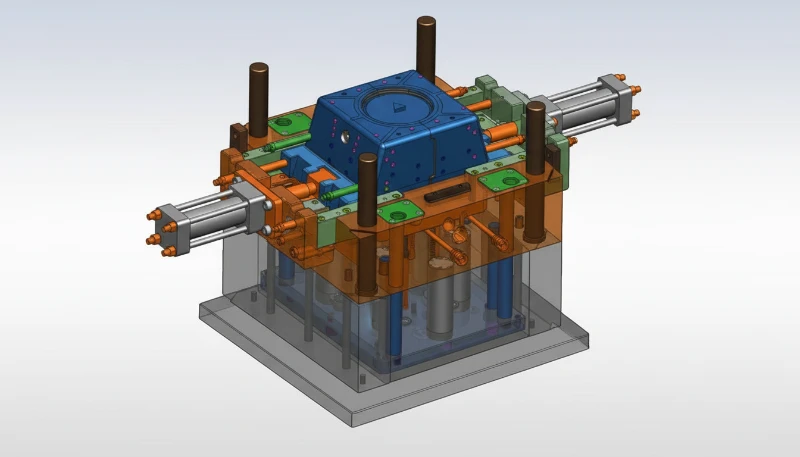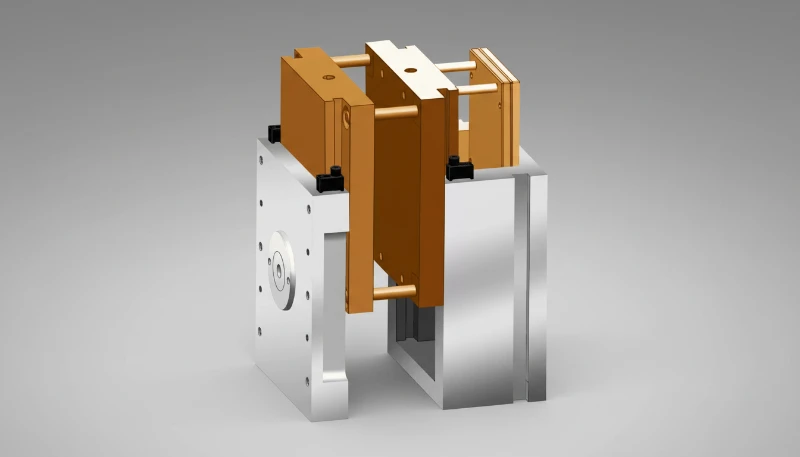
Retirar uma peça plástica do molde parece simples, até que ela fique presa, seja arranhada ou se deforme durante a extração. A diferença entre uma extração suave e uma peça presa costuma depender de uma decisão do projeto do molde de injeção: o ângulo de saída1. Em mais de 20 anos produzindo peças pelo processo de moldagem por injeção na fábrica da ZetarMold em Xangai, vimos como o ângulo de saída correto reduz o tempo de produção e o refugo, além de prolongar a vida útil do molde. Este guia explica como projetar ângulos de saída eficazes com menos suposições.
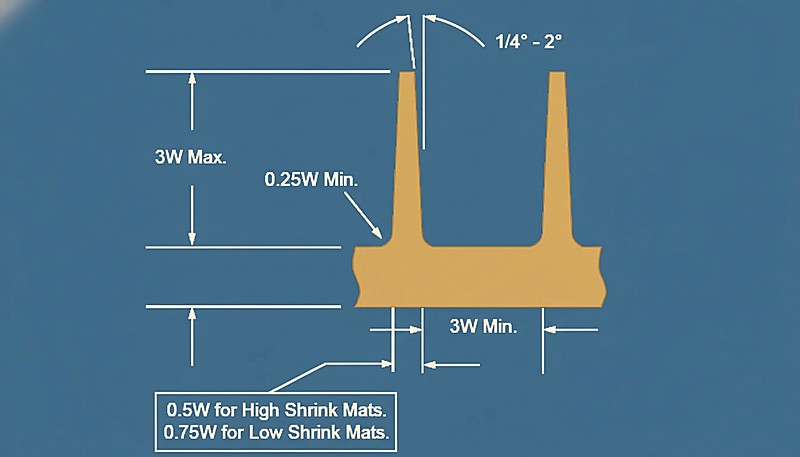
- Um ângulo de saída é a inclinação aplicada às paredes verticais de uma cavidade do molde para permitir a remoção suave da peça
- O ângulo de saída padrão varia de 0.5° a 3°, dependendo do material, acabamento superficial e geometria da peça
- Superfícies texturizadas exigem ângulo de saída de 3–7° — significativamente maior que superfícies polidas
- Ângulo de saída zero é possível com materiais e projetos de molde específicos, mas acarreta riscos de produção
- Excluir sempre o ângulo de saída das medições de tolerância da peça, salvo indicação explícita em contrário
O que é um ângulo de saída na moldagem por injeção?
O ângulo de saída na moldagem por injeção é definido pela função, pelas restrições e pelos compromissos explicados nesta seção. Se você estiver comparando fornecedores ou planejando uma compra, nosso guia para seleção de fornecedores de moldagem por injeção aborda a preparação da RFQ, a qualificação e as verificações de risco comercial.
O ângulo de saída é a pequena inclinação projetada nas paredes verticais da cavidade e do macho do molde. Em vez de paredes laterais perfeitamente paralelas, as paredes da cavidade se inclinam para fora, de uma fração de grau a vários graus, criando uma folga entre o plástico solidificado e o aço durante a abertura do molde.
Pense numa cuvete de gelo: a forma cónica de cada compartimento permite retirar facilmente os cubos. Sem essa conicidade, teria de torcer, aquecer ou forçar a saída dos cubos. O mesmo princípio aplica-se à moldação por injeção — mas as consequências são muito maiores quando se produzem peças de precisão em escala.
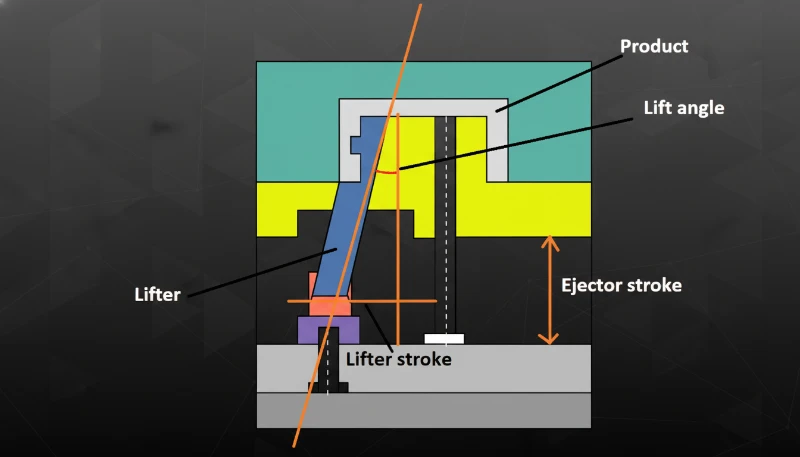
Existem ângulos de desmolde nos dois lados do molde. O lado da cavidade (lado A ou molde frontal) e o lado do núcleo (lado B ou molde traseiro) têm, cada um, seu próprio ângulo de desmolde. Para moldes com ações laterais — como gavetas ou levantadores — a direção de desmolde acompanha o movimento desses núcleos laterais, e não a linha de partição principal.
Na nossa fábrica de Xangai, passámos 20+ anos a aperfeiçoar as diretrizes de ângulos de desmoldagem em milhares de designs de moldes. A nossa unidade interna de fabrico de moldes produz 100+ conjuntos de moldes por mês, o que nos fornece dados reais abrangentes sobre os valores de desmoldagem que realmente funcionam na produção.
Por que todo molde de injeção precisa de um ângulo de saída?
Esta secção aborda a necessidade de um ângulo de saída em todos os moldes de injeção e o seu impacto no custo, qualidade, tempo ou risco de aprovisionamento. Sem um ângulo de saída, a peça de plástico cria uma vedação de vácuo contra a parede do molde durante o arrefecimento e a contração. Quando o molde abre ou os pinos ejetores empurram, essa vedação tem de ser quebrada à força, o que leva a riscos, marcas, deformação ou aderência total.
Eis o que acontece quando o ângulo de desmoldação é insuficiente ou inexistente:
Um ângulo de saída corretamente projetado elimina estes problemas ao criar uma pequena folga entre a peça e a parede do molde assim que este começa a abrir. A peça é libertada de forma limpa, consistente e sem danos — ciclo após ciclo.
"Um ângulo de saída de 1° por lado é suficiente para a maioria das peças com superfície polida e profundidade inferior a 50 mm."True
Para superfícies polidas padrão com plásticos de engenharia comuns, como ABS ou PP, 0.5° a 1° por lado proporciona folga de desmoldagem adequada para peças com até 50 mm de profundidade. Peças mais profundas ou superfícies texturizadas precisam de maior ângulo de saída para compensar o aumento da área de contato superficial.
"Os ângulos de saída só são necessários no lado A do molde, correspondente à cavidade."False
O ângulo de saída é necessário tanto no lado da cavidade quanto no do macho. O lado do macho geralmente precisa de um ângulo maior porque o plástico se contrai sobre ele durante o resfriamento, criando uma aderência mais forte que no lado da cavidade. Omitir o ângulo no macho é uma causa comum de falhas de extração.
Quais são os valores padrão de ângulo de saída por material?
Os valores normalizados do ângulo de saída por material são as principais categorias ou opções explicadas nesta secção. Os diferentes plásticos apresentam taxas de contração, coeficientes de atrito e níveis de rigidez distintos, o que significa que o ângulo de saída ideal varia significativamente consoante o material. Segue-se uma tabela de referência prática baseada na nossa experiência com 400+ materiais na ZetarMold.
| Material | Ângulo de saída mínimo (polido) | Ângulo de saída recomendado | Notas |
|---|---|---|---|
| ABS | 1° | 1–2° | Boa rigidez; o ângulo de saída padrão funciona bem |
| PC (Policarbonato) | 1° | 1.5–2° | Rígido; maior contração exige mais ângulo de saída |
| PP (Polipropileno) | 0.5° | 0.5–1° | Flexível; pode utilizar valores de saída inferiores |
| PA6/PA66 (náilon) | 0.5° | 0.5–1.5° | O baixo atrito ajuda; material com fibra de vidro precisa de 1–3° |
| PS (Poliestireno) | 2° | 2–3° | Frágil; necessita de maior ângulo de saída para evitar fissuras |
| POM (acetal) | 0.5° | 1–1.5° | Baixo atrito, mas elevada contração cristalina |
| PMMA (acrílico) | 1.5° | 2–3° | Transparente; risca facilmente, exige ângulo generoso |
| TPU/TPE | 0.5° | 0.5–1° | Elástico; o material se estica durante a ejeção |
| Reforçado com fibra de vidro (qualquer grau) | 1.5° | 2–3° | Fibras abrasivas aumentam o atrito nas paredes do molde |
Esses valores pressupõem superfícies de molde polidas. Para acabamentos texturizados, acrescente de 1° a 4°, conforme a profundidade da textura — tema abordado em detalhes na seção sobre acabamento superficial2 abaixo. A principal conclusão é que materiais rígidos, frágeis e reforçados com fibra de vidro sempre exigem mais ângulo de saída que plásticos flexíveis e de baixo atrito.
Como calcular o ângulo de saída necessário?
Esta secção explica como calcular o ângulo de saída necessário e o respetivo impacto no custo, na qualidade, nos prazos ou no risco de aprovisionamento. Embora os ângulos de saída sejam frequentemente escolhidos com base em tabelas empíricas, existe um cálculo geométrico simples que pode utilizar quando precisa de um ponto de partida mais preciso.
A fórmula fundamental relaciona o ângulo de saída (α), a profundidade da peça (H) e a diferença de tamanho entre a parte superior e inferior da parede inclinada:
Fórmula: tan(α) = (D − d) / (2 × H)
Uma regra comum da loja é aumentar o esboço à medida que a textura se torna mais profunda, depois verificar o valor com os dados do fornecedor da textura e a direção real de liberação. Isto evita arrastamentos e arranhões nas superfícies cosméticas.
Exemplo: uma peça com parede de 60 mm de profundidade precisa de 0,5 mm de folga por lado para facilitar a extração. Pela fórmula: tan(α) = 0,5 / 60 = 0,0083, o que resulta em α ≈ 0,48°. Arredondando, são 0,5° por lado — exatamente o mínimo recomendado para uma peça de PP polido nessa profundidade.
Os nossos 8 engenheiros seniores utilizam a simulação Moldflow3 em conjunto com a fórmula geométrica para verificar os ângulos de saída antes de maquinar o aço. Com 47 máquinas de moldação por injeção de 90T a 1850T, podemos validar as opções de ângulo de saída através de ensaios de moldação reais — uma etapa que a maioria das empresas dedicadas apenas ao projeto omite.
Quais fatores influenciam a escolha do ângulo de saída?
Esta secção aborda os fatores que influenciam a seleção do ângulo de saída e o seu impacto no custo, qualidade, tempo ou risco de aprovisionamento. Para além do material em si, vários fatores de design e produção determinam a quantidade de ângulo de saída necessária. Ignorar qualquer um destes fatores pode levar a problemas de produção que são dispendiosos de corrigir após a construção do molde.
Profundidade da peça ou altura da parede: geometrias mais profundas exigem uma seleção cuidadosa do ângulo de saída. Um ângulo de 0,5° em uma parede de 10 mm cria apenas 0,09 mm de folga por lado, mas os mesmos 0,5° em uma parede de 100 mm geram 0,87 mm, geralmente suficientes. Como regra, quanto mais profunda a parede, mais crítico se torna o ângulo de saída, embora o próprio ângulo às vezes possa ser menor.
Espessura da parede: paredes mais espessas sofrem maior contração durante o resfriamento e se prendem com mais força ao núcleo. Se a espessura da parede ultrapassar 3 mm, considere aumentar o ângulo de saída entre 0,5° e 1° acima da recomendação básica do material.
Lado do núcleo versus lado da cavidade: durante o resfriamento, o plástico contrai sobre o núcleo (lado B); por isso, o lado do núcleo geralmente precisa de 0,5° a 1° a mais de ângulo de saída que o lado da cavidade. Isso é especialmente importante em peças com ressaltos ou nervuras profundas, nas quais o plástico envolve firmemente o aço.
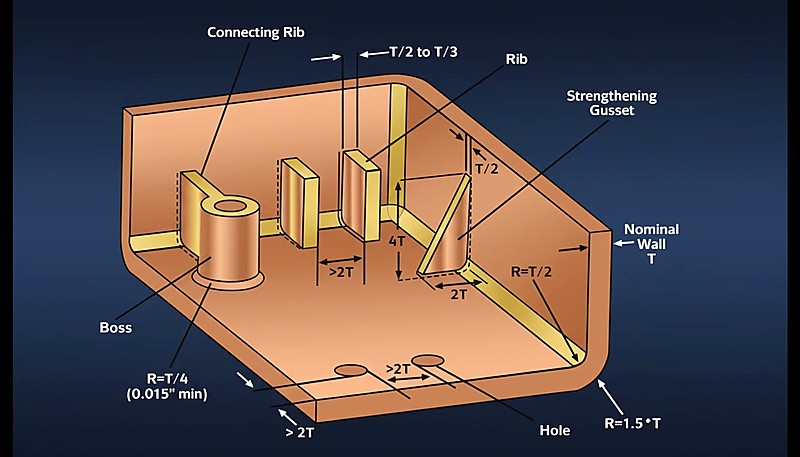
Nervuras de reforço e ressaltos: nervuras com menos de 3 mm de altura podem usar um ângulo de saída de 0,5°. Entre 3 e 5 mm, use 1°. Acima de 5 mm, preveja 1,5°. Os ressaltos seguem a mesma progressão, mas exigem mais 0,5°, pois contraem ao redor do pino do núcleo durante o resfriamento.
"As superfícies texturadas exigem ângulos de saída maiores do que as superfícies polidas para a mesma geometria de peça."True
A textura da superfície cria reentrâncias microscópicas que prendem fisicamente o plástico solidificado durante a ejeção. Quanto mais áspera a textura, maior deve ser o ângulo de saída para liberar a peça sem arrastá-la.
"O ângulo de desmoldagem deve ser sempre incluído na especificação das tolerâncias dimensionais da peça."False
Na prática padrão de projeto de moldes, o ângulo de desmoldagem costuma ser tratado como um recurso de ferramental e liberação, e não como uma tolerância dimensional normal. Se o ângulo de desmoldagem tiver de afetar uma tolerância crítica, isso deverá ser indicado explicitamente durante a DFM.
Como as texturas de superfície afetam os requisitos de ângulo de saída?
O acabamento superficial é um dos fatores mais subestimados no projeto do ângulo de saída. Uma textura que parece meramente estética cria, na verdade, pequenas retenções que dificultam a extração — e o ângulo de saída precisa compensar esse travamento mecânico.
| Acabamento da superfície | Profundidade da textura | Ângulo de saída recomendado |
|---|---|---|
| Polido (SPI A-1 a A-3) | < 0.001 mm | 0.5°–1° |
| Mate fino (SPI B-1 a B-3) | 0.001–0.01 mm | 1°–1.5° |
| Textura média (MT11010) | 0.01–0.05 mm | 1.5°–3° |
| Textura grossa (MT11020) | 0.05–0.1 mm | 3°–5° |
| Grão de couro / textura profunda | 0.1–0.2+ mm | 5°–7°+ |
Uma regra prática útil: para cada 0,01 mm de profundidade da textura, adicione aproximadamente 1° de ângulo de saída. Assim, uma textura com 0,05 mm de profundidade necessita de cerca de 5° de ângulo de saída para libertar a peça de forma limpa. Esta relação é suficientemente linear para ser útil durante as revisões iniciais de DFM, mesmo antes de estarem disponíveis amostras físicas de textura do seu fornecedor de ferramentas.
Esta é uma das razões pelas quais, na ZetarMold, perguntamos sempre sobre o acabamento superficial numa fase inicial do processo de projeto. Mudar de um acabamento polido para uma textura de couro a meio de um projeto pode exigir a reformulação de todo o esquema de ângulos de saída da cavidade — algo muito mais fácil de fazer antes do corte do aço do que depois.
Quais são os erros comuns de ângulo de saída a evitar?
Os erros comuns de ângulo de saída a evitar são as principais categorias ou opções explicadas nesta secção. Após analisar milhares de designs de moldes ao longo de duas décadas na nossa fábrica de Xangai, vemos repetidamente os mesmos erros de ângulo de saída. Estes erros levam a taxas de refugo aumentadas, retrabalho dispendioso do molde e atrasos na produção que poderiam ter sido evitados com um planeamento adequado durante a fase de DFM. Aqui estão os mais comuns — e como evitá-los no seu próximo projeto.
Erro 1: ausência de ângulo de saída em paredes verticais. Alguns projetistas supõem que tolerâncias estreitas exigem ângulo zero. Na prática, um ângulo de saída zero praticamente garante que a peça ficará presa, exceto com materiais flexíveis como TPU. Se for indispensável trabalhar com um ângulo próximo de zero, considere uma linha de partição escalonada ou deslocada em vez de uma parede vertical reta.
Erro 2: direção inconsistente do ângulo de saída. Todos os ângulos de um mesmo lado devem se inclinar na mesma direção, em direção à linha de partição. Direções misturadas criam reentrâncias indesejadas que impedem totalmente a extração e muitas vezes são difíceis de perceber no CAD antes da construção do molde.
Erro 3: ignorar os efeitos da contração no lado do núcleo. O plástico contrai sobre o núcleo durante o resfriamento. Se o mesmo ângulo de saída for usado na cavidade e no núcleo, o lado do núcleo apresentará resistência à extração muito maior. Sempre acrescente de 0,5° a 1° no lado do núcleo para compensar essa aderência por contração.
Erro 4: esquecer os requisitos de pós-processamento. Se a peça for soldada por ultrassom, montada por encaixe ou usinada após a moldagem, o ângulo de saída não deve interferir nas superfícies de acoplamento nem nos recursos de alinhamento. Planeje-o simultaneamente sob as perspectivas da moldagem e da montagem para evitar reprojetos caros e garantir um processamento posterior fluido.
"Adicionar saída em função da profundidade da textura é um ponto de partida fiável para superfícies de molde texturadas."True
Uma regra habitual na oficina consiste em aumentar o ângulo de saída à medida que a textura se aprofunda e, em seguida, confirmar o valor com os dados do fornecedor da textura e a direção real de desmoldação. Isto evita arrastamento e riscos nas superfícies cosméticas.
"Um ângulo de saída maior produz sempre melhores resultados de extração, sem quaisquer desvantagens."False
Um ângulo de desmolde excessivo pode alterar a espessura da parede, o ajuste da montagem, a aparência e o comportamento das tolerâncias. O ângulo de desmolde deve ser otimizado para a peça, em vez de ser maximizado indiscriminadamente.
Trabalhar com 400+ materiais ao abrigo dos sistemas de qualidade ISO 9001 e ISO 13485 significa que documentámos os resultados dos ângulos de saída para praticamente todos os plásticos de engenharia comuns. A nossa base de dados de processos ajuda-nos a assinalar riscos relacionados com os ângulos de saída antes de o design do molde estar concluído.
Como otimizar os ângulos de saída para peças complexas?
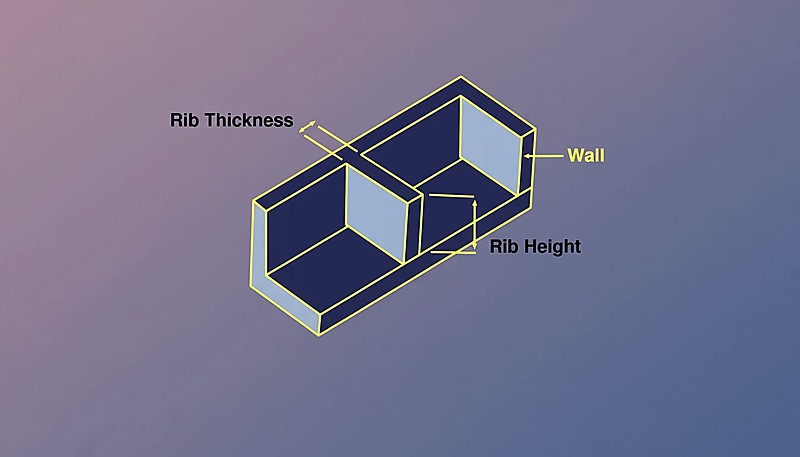
As peças simples com paredes retas são fáceis de conceber. Contudo, as peças reais moldadas por injeção têm nervuras, ressaltos, roscas, reentrâncias e elementos de encaixe — cada um com os seus próprios requisitos de ângulo de desmoldação. Eis como gerir esta complexidade sem comprometer a moldabilidade.
Peças com gavetas e extratores inclinados: o ângulo de saída de movimentos laterais acompanha a direção de deslocamento da gaveta, não a linha de partição principal. Use no mínimo 3° nas faces da gaveta para que o aço se afaste do plástico antes da retração. Nos extratores inclinados, o ângulo deve considerar o ângulo composto do movimento.
Peças de estampagem profunda: para paredes com mais de 100 mm de profundidade, considere um ângulo de saída escalonado — começando com um ângulo maior próximo à linha de partição e reduzindo-o em direção ao fundo. Isso mantém a uniformidade da espessura da parede e, ao mesmo tempo, oferece folga de extração adequada onde ela é mais necessária.
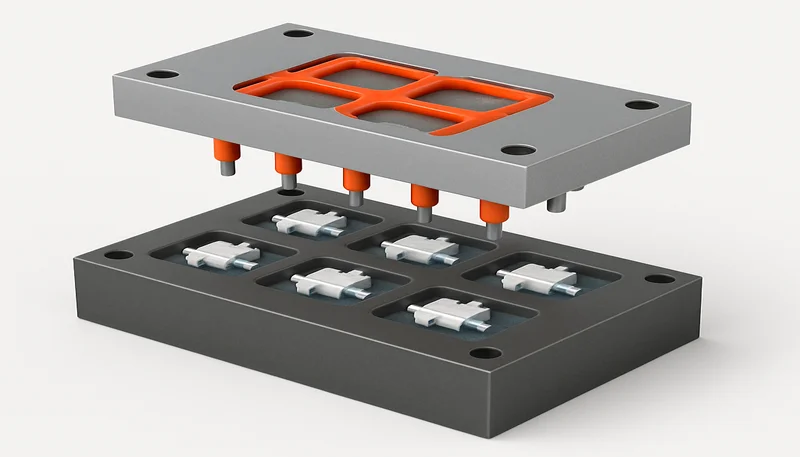
Moldes multicavidade: garanta que todas as cavidades usem os mesmos valores de ângulo de saída para manter forças de extração e tempos de ciclo consistentes em todo o molde. Diferenças entre cavidades são uma fonte comum de variação de qualidade difícil de diagnosticar na produção.
Verificação por simulação: antes de finalizar qualquer esquema complexo de ângulos de saída, execute uma simulação de fluxo do molde para verificar problemas de extração. Ferramentas como MOLDFLOW podem prever onde a peça ficará presa, onde as forças de extração se concentrarão e se o ângulo é suficiente — tudo antes de usinar o aço.
Como Deve Abordar o Design do Ângulo de Saída?
Esta secção aborda a conceção dos ângulos de saída e o seu impacto no custo, na qualidade, no prazo ou no risco de aprovisionamento. Conceber o ângulo de saída correto não é complicado, mas exige atenção aos pormenores: o material a moldar, o acabamento superficial necessário, a profundidade das paredes e a complexidade da geometria da peça. Se definir corretamente estes fatores, as peças serão extraídas sem problemas, os moldes durarão mais e os custos de produção diminuirão.
Na ZetarMold, a nossa equipa de engenharia aplica mais de 20 anos de experiência em projeto de moldes a todos os projetos, desde ferramentas simples de duas placas até moldes complexos com múltiplas corrediças. Se estiver a projetar uma nova peça e pretender uma avaliação especializada dos ângulos de desmoldagem (ou de qualquer outra decisão relativa ao projeto do molde), estamos disponíveis para ajudar.
Perguntas mais frequentes
Qual é o ângulo de saída mínimo para moldagem por injeção?
O ângulo de saída mínimo absoluto é de 0.5° por lado para materiais flexíveis como PP ou TPU com superfícies de molde polidas. Para plásticos de engenharia rígidos como ABS ou PC, comece com no mínimo 1°. Valores abaixo desses limites geram risco de aderência da peça, raspagem da superfície e forças de ejeção inconsistentes que podem danificar tanto a peça quanto o molde ao longo do tempo. Sempre adicione mais saída em superfícies texturizadas ou granuladas e considere aumentar o ângulo se a peça tiver paredes profundas ou geometria complexa. Em ambientes de produção, o custo de acrescentar 0.5° ao ângulo de saída é insignificante em comparação com o custo de corrigir um problema de peça presa depois que o molde estiver construído.
É possível moldar por injeção sem ângulo de saída?
Sim, mas apenas em casos muito específicos — normalmente com materiais flexíveis como TPU ou silicone, que podem se esticar e comprimir durante a ejeção sem deformação permanente. Mesmo assim, o ângulo zero aumenta significativamente a força de ejeção, a variabilidade do ciclo e a taxa de defeitos. A maioria dos moldes de produção usa pelo menos 0,25°–0,5° como mínimo absoluto, até em peças que nominalmente exigem ângulo zero. Se o projeto realmente não tolerar conicidade, considere núcleos colapsáveis, cavidades divididas ou um pequeno deslocamento da linha de partição para criar folga direcional de liberação.
Como o ângulo de saída afeta a tolerância da peça?
O ângulo de saída é normalmente excluído da zona de tolerância da peça — as dimensões são medidas num plano neutro ou referência especificados, e não nas próprias paredes inclinadas. Esta é uma prática padrão estabelecida pela ISO 8062 e pela maioria dos manuais de projeto de moldes utilizados no setor. Se a sua aplicação exigir que o ângulo de saída seja incluído na zona de tolerância (o que é raro e geralmente limitado a componentes médicos ou óticos de precisão), tal deve ser explicitamente indicado no desenho da peça. Na maioria das peças moldadas por injeção, a conicidade de saída não interfere nas dimensões funcionais relevantes.
Qual ângulo de saída é necessário para superfícies texturizadas?
As superfícies texturadas necessitam de um ângulo de saída significativamente maior do que as superfícies polidas, porque o padrão da textura cria contrassaídas microscópicas que prendem a peça de plástico durante a extração. Como regra prática, acrescente aproximadamente 1° de ângulo de saída por cada 0.01 mm de profundidade da textura. As texturas mate finas, com cerca de 0.01 mm de profundidade, necessitam de aproximadamente 1°–1.5°; as texturas médias, de 1.5°–3°; e os veios profundos tipo couro, com mais de 0.1 mm de profundidade, exigem 5°–7° ou mais. Consulte sempre a ficha de recomendações específica do fornecedor da textura, uma vez que diferentes processos de texturização podem ter requisitos de ângulo de saída distintos para o mesmo aspeto visual.
Como adicionar ângulo de saída ao projeto de uma peça existente?
Na maioria dos sistemas CAD, o ângulo de saída pode ser aplicado como elemento paramétrico que inclina faces em torno de um plano neutro ou linha de partição. Em peças complexas, aplique-o por etapas: paredes do macho, paredes da cavidade, nervuras, bossagens e elementos secundários. Verifique que todas as direções apontam para a linha. Se a ferramenta já estiver feita, aumentar o ângulo exige soldadura e nova maquinação, dispendiosas — mais uma razão para acertar à primeira.
O lado do macho precisa de mais ângulo de saída que o lado da cavidade?
Sim. O lado do macho beneficia de mais ângulo porque o plástico contrai sobre ele. Acrescentar 0.5°–1° face ao lado da cavidade é prática comum, especialmente em peças profundas, bossagens altas e nervuras densas.
ângulo de saída: é a inclinação que ajuda as paredes moldadas a se soltarem da cavidade ou do núcleo sem arrastar, arranhar ou deformar a peça. ↩
acabamento superficial: refere-se à qualidade da textura da superfície da cavidade do molde, que afeta diretamente o atrito na extração — texturas mais profundas exigem ângulos de saída maiores para uma extração limpa. ↩
simulação Moldflow: ferramenta de simulação de moldagem por injeção que prevê padrões de enchimento, comportamento de resfriamento e forças de extração, permitindo otimizar o ângulo de saída antes da fabricação do molde. ↩