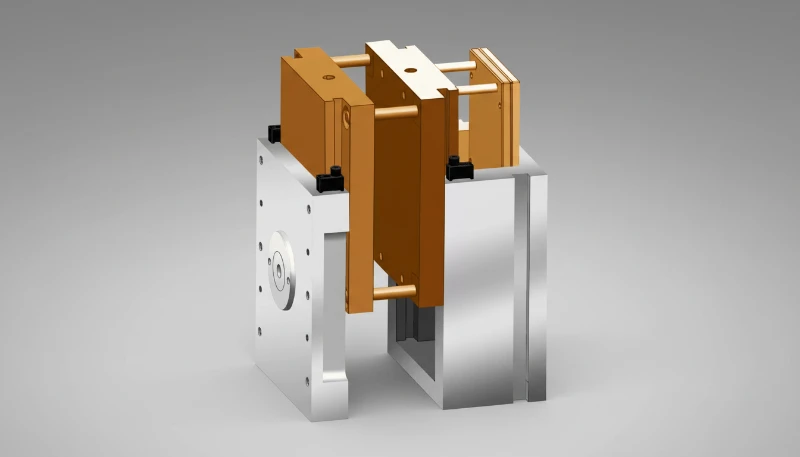
...

사출 금형의 드래프트 각도를 어떻게 설계하나요?

• ZetarMold Engineering Guide
• Plastic Injection Mold Manufacturing Since 2005
• Built by ZetarMold engineers for buyers comparing mold and molding solutions.

아래 섹션을 참조하세요. 핵심 요점: 강성, 취성, 유리 충전 재료는 항상 유연하고 마찰 계수가 낮은 플라스틱보다 더 많은 드래프트가 필요합니다. 사출 금형 설계 decision: 구배 각도1. In our 20+ years of building parts through the 사출 성형 공정 at ZetarMold’s Shanghai factory, we have seen how the right draft angle saves production time, reduces scrap, and extends mold life. This guide breaks down how to design draft angles that work with less guesswork.

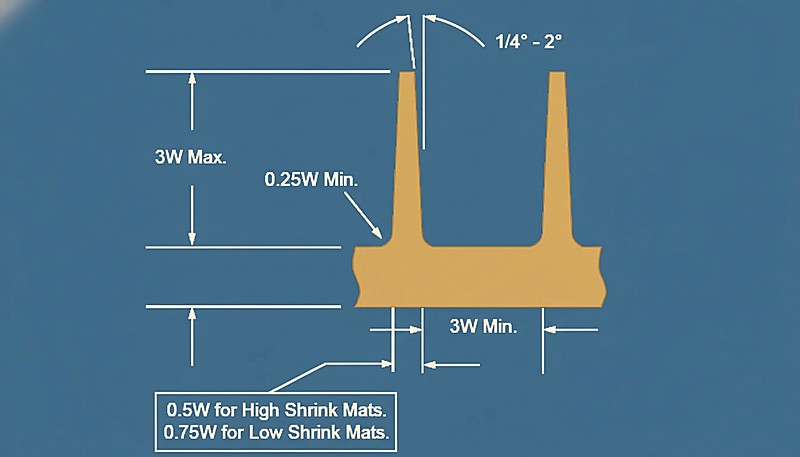
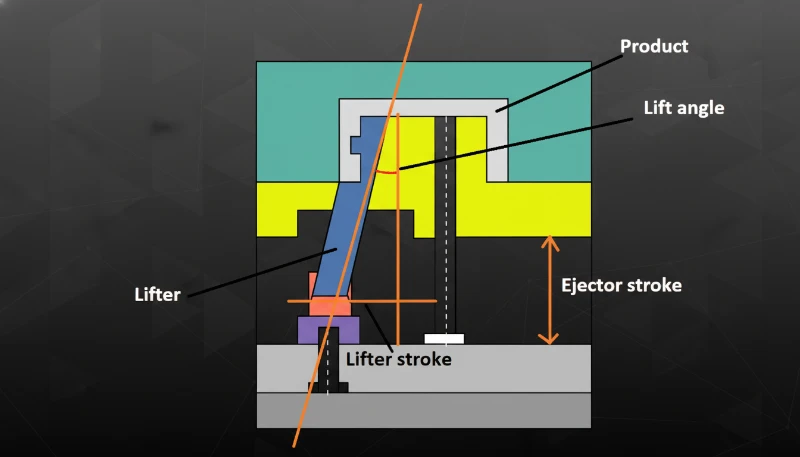
Injection molding draft angle diagram
Draft angle diagram
주요 내용
  • A draft angle is the taper applied to vertical walls of a mold cavity to allow smooth part removal
  • Standard draft ranges from 0.5° to 3° depending on material, surface finish, and part geometry
  • Textured surfaces require 3–7° of draft—significantly more than polished surfaces
  • Zero draft is possible with specific materials and mold designs, but it carries production risks
  • Always exclude draft angle from part tolerance measurements unless explicitly specified otherwise

What Is a Draft Angle in Injection Molding?

A draft angle in injection molding is defined by the function, constraints, and tradeoffs explained in this section. If you are comparing vendors or planning procurement, our injection molding supplier sourcing guide covers RFQ prep, qualification, and commercial risk checks.

A draft angle is the slight taper—or slope—designed into the vertical walls of a mold cavity and core. Instead of perfectly parallel sidewalls, the cavity walls lean outward by a fraction of a degree to several degrees, creating clearance between the solidified plastic and the steel as the mold opens.

Think of it like an ice cube tray: the tapered shape of each compartment lets you pop the cubes out easily. Without that taper, you’d need to twist, heat, or force the cubes out. The same principle applies to injection molding—except the stakes are much higher when you’re producing precision parts at scale.

Draft angles exist on both sides of the mold. The cavity side (A-side, or front mold) and the core side (B-side, or rear mold) each have their own draft. For molds with side actions—such as sliders or lifters—the draft direction follows the movement of those side cores rather than the main parting line.

🏭 ZetarMold Factory Insight
At our Shanghai factory, we’ve spent 20+ years refining draft angle guidelines across thousands of mold designs. Our in-house mold manufacturing facility produces 100+ mold sets per month, giving us extensive real-world data on what draft values actually work in production.

Why Does Every Injection Mold Need a Draft Angle?

이 섹션은 모든 사출 금형이 드래프트 각도가 필요한 이유와 그로 인한 비용, 품질, 일정 또는 조달 리스크에 대한 영향을 다룹니다. 드래프트 각도가 없으면, 플라스틱 부품은 냉각 및 수축 과정에서 금형 벽에 대해 진공 밀봉을 형성합니다. 금형이 열리거나 이젝터 핀이 밀어낼 때, 그 밀봉은 힘으로 깨져야 합니다. 이는 긁힘, 흠집, 변형 또는 완전한 부착으로 이어집니다.

Here’s what happens when draft is insufficient or missing:

A properly designed draft angle eliminates these problems by creating a small gap between the part and mold wall the instant the mold begins to open. The part releases cleanly, consistently, and without damage—cycle after cycle.

“A draft angle of 1° per side is sufficient for most polished-surface parts under 50 mm in depth.”True

For standard polished surfaces with common engineering plastics like ABS or PP, 0.5° to 1° per side provides adequate release clearance for parts up to 50 mm deep. Deeper parts or textured surfaces need more draft to compensate for increased surface contact area.

“Draft angles are only necessary on the cavity A-side of the mold.”False

Draft is required on both the cavity and core sides. The core side often needs more draft because the plastic shrinks onto it during cooling, creating a tighter grip than on the cavity side. Skipping draft on the core is a common cause of ejection failures.

What Are the Standard Draft Angle Values by Material?

The standard draft angle values by material are the main categories or options explained in this section. Different plastics have different shrinkage rates, friction coefficients, and stiffness levels—which means the ideal draft angle varies significantly by material. Here’s a practical reference table based on our experience across 400+ materials at ZetarMold.

재료 Min Draft (Polished) Recommended Draft 참고
ABS 1–2° Good stiffness; standard draft works well
PC(폴리카보네이트) 1.5–2° Rigid; higher shrinkage needs more draft
PP(폴리프로필렌) 0.5° 0.5–1° Flexible; can use lower draft values
PA6/PA66 (Nylon) 0.5° 0.5–1.5° Low friction helps; glass-filled needs 1–3°
PS(폴리스티렌) 2–3° Brittle; needs more draft to prevent cracking
POM (Acetal) 0.5° 1–1.5° Low friction, but high crystalline shrinkage
PMMA (Acrylic) 1.5° 2–3° Transparent; scratches easily, needs generous draft
TPU/TPE 0.5° 0.5–1° Elastic; material stretches during ejection
Glass-filled (any) 1.5° 2–3° Abrasive fibers increase friction on mold walls

These values assume polished mold surfaces. For textured finishes, add 1° to 4° depending on texture depth—a topic we’ll cover in detail in the 표면 마감2 section below. The key takeaway: rigid, brittle, and glass-filled materials always demand more draft than flexible, low-friction plastics.

How Do You Calculate the Required Draft Angle?

이 섹션은 필요한 드래프트 각도 계산과 그로 인한 비용, 품질, 일정 또는 조달 리스크에 대한 영향을 다룹니다. 드래프트 각도는 종종 경험 기반 표에서 선택되지만, 더 정확한 시작점이 필요할 때 사용할 수 있는 간단한 기하학적 계산법이 있습니다.

The fundamental formula relates draft angle (α), part depth (H), and the size difference between the top and bottom of the drafted wall:

tan(α) = (D − d) / (2 × H)

Where α is the draft angle per side, D is the larger dimension (at the parting line), d is the smaller dimension (at the bottom of the draw), and H is the total depth of the wall.

예시: A part with 60 mm wall depth needs to clear 0.5 mm per side for easy release. Using the formula: tan(α) = 0.5 / 60 = 0.0083, which gives α ≈ 0.48°. Rounded up, that’s 0.5° per side—exactly the minimum recommended for a polished PP part at that depth.

🏭 ZetarMold Factory Insight
Our 8 senior engineers use Moldflow simulation3 alongside the geometric formula to verify draft angles before cutting steel. With 47 injection molding machines from 90T to 1850T, we can validate draft choices through actual molding trials—a step most design-only firms skip.
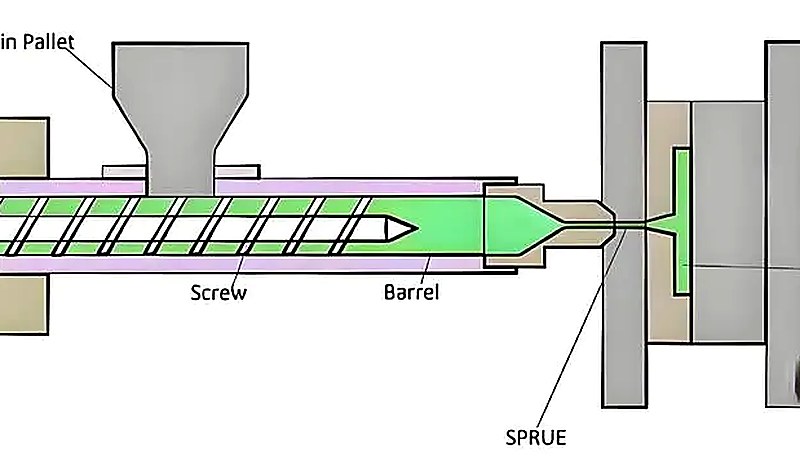
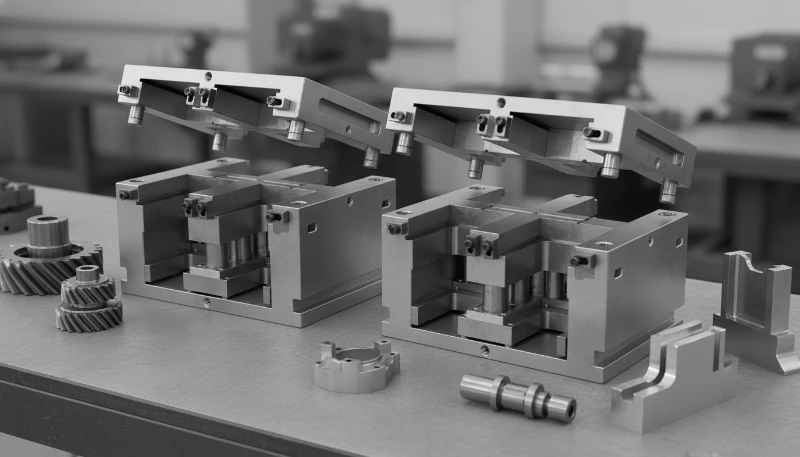
Injection molding machine diagram for process context
Machine process diagram

What Factors Influence Draft Angle Selection?

이 섹션은 드래프트 각도 선택에 영향을 미치는 요인과 그로 인한 비용, 품질, 일정 또는 조달 리스크에 대한 영향을 다룹니다. 재료 자체를 넘어서, 여러 설계 및 생산 요인이 얼마나 많은 드래프트가 필요한지를 결정합니다. 이들 중 어느 하나라도 무시하면 금형이 제작된 후 수정하는 데 비용이 많이 드는 생산 문제로 이어질 수 있습니다.

Part depth or wall height: Deeper draws require careful draft selection. A 0.5° draft on a 10 mm wall creates only 0.09 mm of clearance per side—but the same 0.5° on a 100 mm wall gives 0.87 mm, which is usually sufficient. As a rule, the deeper the wall, the more critical draft becomes, even though the angle itself can sometimes be smaller.

벽 두께: Thicker walls shrink more during cooling, pulling tighter against the core. If your wall thickness exceeds 3 mm, consider increasing draft by 0.5° to 1° above the material’s baseline recommendation.

Core vs. cavity side: Plastic shrinks onto the core (B-side) during cooling, so the core side generally needs 0.5° to 1° more draft than the cavity side. This is especially important for parts with deep bosses or ribs where the plastic wraps tightly around the steel.

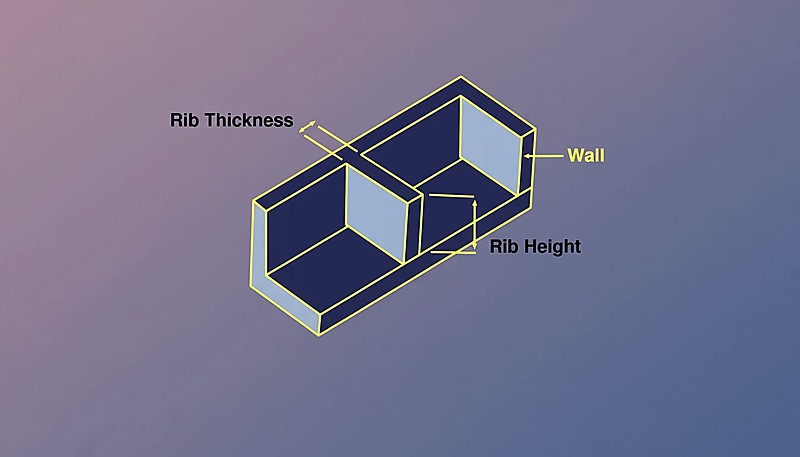
Reinforcing ribs and bosses: Ribs under 3 mm tall can use 0.5° draft. Between 3–5 mm, use 1°. Above 5 mm, allow 1.5°. Bosses follow the same progression but add 0.5° because they shrink around the core pin during cooling.

“Textured surfaces require larger draft angles than polished surfaces for the same part geometry.”True

Surface texture creates microscopic undercuts that physically grip the solidified plastic during ejection. The rougher the texture, the more draft is needed to release the part without dragging.

“The draft angle should always be included in the part dimensional tolerance specification.”False

In standard mold design practice, draft angle is usually treated as a tooling and release feature rather than a normal dimensional tolerance. If draft must affect a critical tolerance, it should be explicitly marked during DFM.

How Do Surface Textures Affect Draft Requirements?

Surface finish is one of the most underestimated factors in draft angle design. A texture that looks purely cosmetic actually creates tiny undercuts that resist ejection—and the draft must compensate for this mechanical interlock.

표면 마감 Texture Depth Recommended Draft
Polished (SPI A-1 to A-3) < 0.001 mm 0.5°–1°
Fine matte (SPI B-1 to B-3) 0.001–0.01 mm 1°–1.5°
Medium texture (MT11010) 0.01–0.05 mm 1.5°–3°
Coarse texture (MT11020) 0.05–0.1 mm 3°–5°
Leather grain / deep texture 0.1–0.2+ mm 5°–7°+

실용적인 경험 법칙: 질감 깊이 0.01mm마다 약 1°의 드래프트를 추가하세요. 따라서 0.05mm 깊이의 질감은 깨끗하게 이젝션되기 위해 약 5°의 드래프트가 필요합니다. 이 관계는 선형적이어서, 금형 공급업체로부터 물리적 질감 샘플을 받기 전에도 초기 DFM 검토 단계에서 유용하게 사용될 수 있습니다.
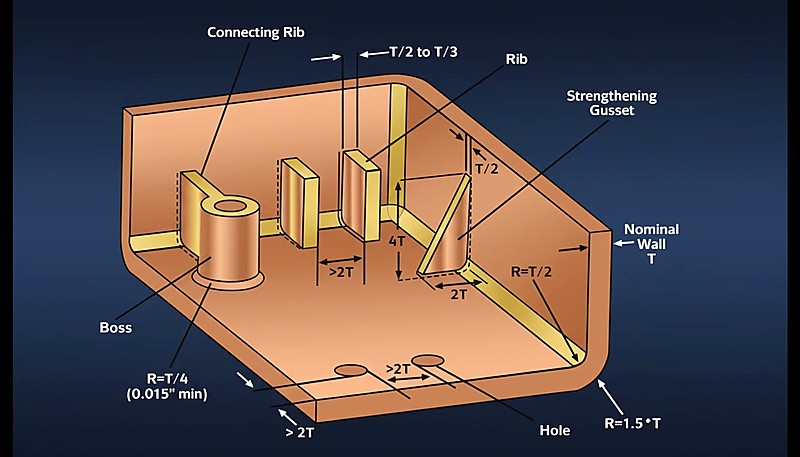
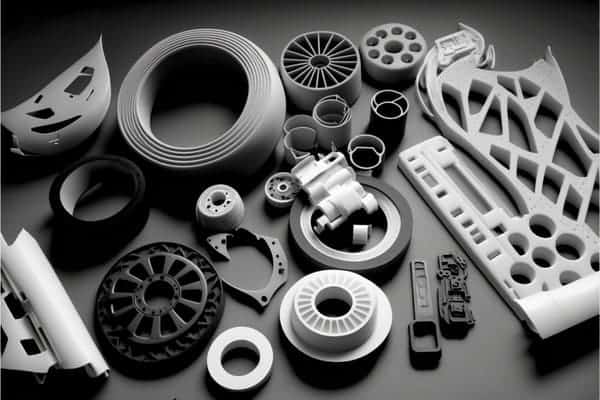
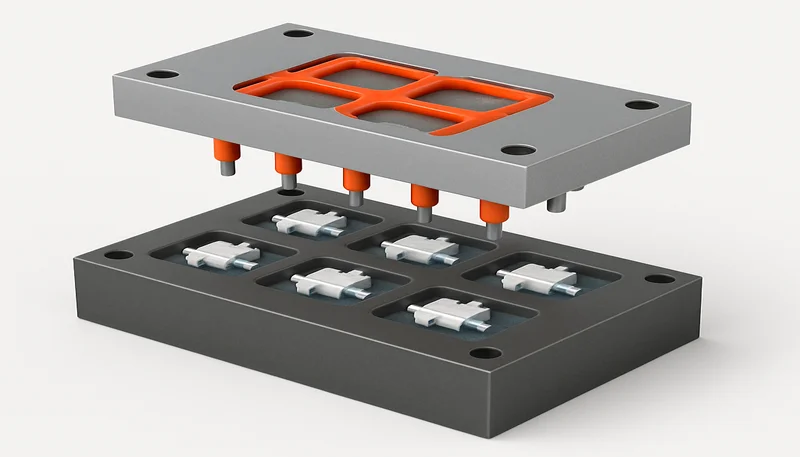
플라스틱 사출 성형 설계 다이어그램
드래프트 각도를 위한 금형 설계 고려사항

This is one reason we always ask about surface finish early in the design process at ZetarMold. Changing from polished to leather grain midway through a project can require redesigning the entire cavity’s draft scheme—which is far easier to do before steel is cut than after.

What Are the Common Draft Angle Mistakes to Avoid?

피해야 할 일반적인 드래프트 각도 실수는 이 섹션에서 설명하는 주요 범주 또는 옵션입니다. 상하이 공장에서 20년 넘게 수천 건의 금형 설계를 검토한 결과, 우리는 동일한 드래프트 각도 실수를 반복해서 목격합니다. 이러한 오류는 불량률 증가, 값비싼 금형 재작업 및 DFM 단계에서 적절한 계획으로 피할 수 있었던 생산 지연을 초래합니다. 다음은 가장 일반적인 실수들과 다음 프로젝트에서 이를 피하는 방법입니다.

Mistake 1: Zero draft on vertical walls. Some designers assume that tight tolerances require zero draft. In reality, zero draft virtually guarantees sticking unless you’re working with flexible materials like TPU. If you absolutely need near-zero draft, consider using a stepped or offset parting line instead of a straight vertical wall.

Mistake 2: Inconsistent draft direction. All draft angles on a given side should lean in the same direction—toward the parting line. Mixed draft directions create unintended undercuts that prevent ejection entirely, and they’re often hard to spot in CAD until the mold is built.

Mistake 3: Ignoring shrinkage effects on the core side. Plastic shrinks onto the core during cooling. If you use the same draft on both cavity and core, the core side will have significantly more ejection resistance. Always give the core side an extra 0.5°–1° of draft to account for this shrinkage grip.

Mistake 4: Forgetting post-processing requirements. 부품이 성형 후 초음파 용접, 스냅 피팅 또는 기계 가공될 예정이라면, 드래프트는 결합 표면이나 정렬 구조물을 방해해서는 안 됩니다. 값비싼 재설계를 피하고 원활한 후속 공정을 보장하기 위해 성형과 조립 관점을 동시에 고려하여 드래프트를 계획하세요.

“Adding draft for texture depth is a reliable starting point for textured mold surfaces.”True

A common shop rule is to increase draft as texture becomes deeper, then verify the value against the texture supplier data and the actual release direction. This prevents dragging and scuffing on cosmetic surfaces.

“A larger draft angle always produces better ejection results with no downsides.”False

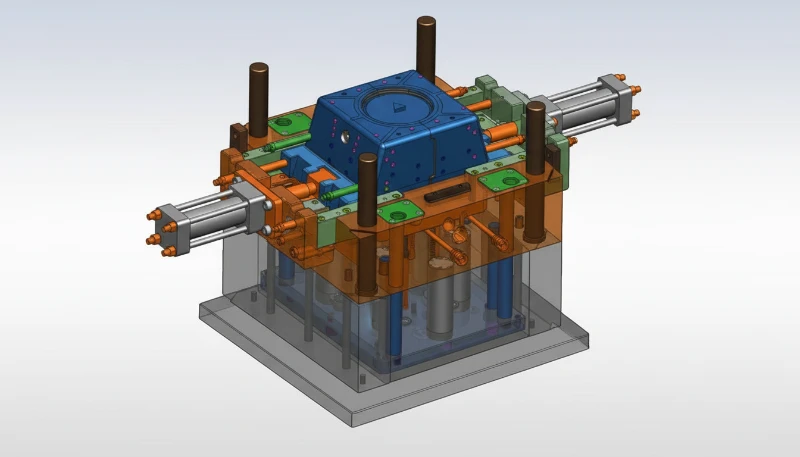
툴링 컨텍스트용 사출 성형기 개략도

🏭 ZetarMold Factory Insight
Working across 400+ materials under ISO 9001 and ISO 13485 quality systems means we’ve documented draft angle outcomes for virtually every common engineering plastic. Our process database helps us flag draft-related risks before the mold design is finalized.

How Do You Optimize Draft Angles for Complex Parts?

리브 두께 및 높이 설계 다이어그램
리브 설계 드래프트 고려사항

Simple parts with straight walls are straightforward. But real-world injection molded parts have ribs, bosses, threads, undercuts, and snap features—each with their own draft requirements. Here’s how to handle the complexity without sacrificing moldability.

Parts with sliders and lifters: Side-action draft follows the slider’s movement direction, not the main parting line. Use 3° minimum on slider faces to ensure the steel clears the plastic before the slider retracts. For angled lifters, the draft must account for the lifter’s compound angle of motion.

Deep-draw parts: For walls deeper than 100 mm, consider using a stepped draft—starting with a larger angle near the parting line and tapering to a smaller angle at the bottom. This maintains wall thickness uniformity while still providing adequate release clearance where it matters most.

Multi-cavity molds: Ensure all cavities use the same draft values to maintain consistent ejection forces and cycle times across the entire mold. Uneven draft between cavities is a common source of cavity-to-cavity quality variation that can be difficult to diagnose in production.

Simulation verification: Before finalizing any complex draft scheme, run a mold flow simulation to check for ejection issues. Tools like MOLDFLOW can predict where the part will stick, where ejection forces concentrate, and whether the draft is sufficient—all before any steel is cut.

드래프트 각도 설계에 어떻게 접근해야 할까요?

이 섹션은 드래프트 각도 설계 접근법과 그로 인한 비용, 품질, 일정 또는 조달 리스크에 대한 영향을 다룹니다. 적절한 드래프트 각도를 설계하는 것은 복잡하지 않지만 세부 사항에 주의가 필요합니다: 성형하는 재료, 필요한 표면 마감, 벽의 깊이, 부품 형상의 복잡성. 이러한 요소들을 올바르게 설정하면 부품은 깨끗하게 이젝션되고, 금형은 더 오래 지속되며, 생산 비용은 낮아질 것입니다.

At ZetarMold, our engineering team brings 20+ years of mold design experience to every project—from simple two-plate tools to complex multi-slide molds. If you’re designing a new part and want expert feedback on your draft angles (or any other mold design decision), we’re here to help.

자주 묻는 질문

사출 성형의 최소 드래프트 각도는 얼마인가요?

The absolute minimum draft angle is 0.5° per side for flexible materials like PP or TPU with polished mold surfaces. For rigid engineering plastics like ABS or PC, start at 1° minimum. Going below these values risks part sticking, surface scraping, and inconsistent ejection forces that can damage both the part and the mold over time. Always add more draft for textured or grained surfaces, and consider increasing the angle if your part has deep walls or complex geometry. In production environments, the cost of adding an extra 0.5° of draft is negligible compared to the cost of fixing a stuck-part problem after the mold is built.

드래프트 각도 없이 사출 성형할 수 있을까요?

Yes, but only in very specific cases—typically with flexible materials like TPU or silicone that can stretch and compress during ejection without permanent deformation. Even then, zero draft increases ejection force, cycle time variability, and defect rates significantly. Most production molds use at least 0.25°–0.5° of draft as an absolute minimum, even for parts that nominally require zero draft. If your design truly cannot tolerate any taper, consider alternative strategies like collapsible cores, split cavities, or a slight offset in the parting line to create directional release clearance.

드래프트 각도가 부품 공차에 어떤 영향을 미치나요?

Draft angle is normally excluded from the part tolerance zone—dimensions are measured at a specified neutral plane or datum, not at the tapered walls themselves. This is standard practice established by ISO 8062 and most mold design handbooks used across the industry. If your application requires draft to be included in the tolerance zone (which is rare and usually limited to precision medical or optical components), it must be explicitly called out on the part drawing. For most injection molded parts, the draft taper is transparent to the functional dimensions that matter.

텍스처 처리된 표면에 필요한 드래프트 각도는 얼마인가요?

Textured surfaces need significantly more draft than polished ones because the texture pattern creates microscopic undercuts that grip the plastic part during ejection. As a practical rule, add approximately 1° of draft for every 0.01 mm of texture depth. Fine matte textures around 0.01 mm depth need about 1°–1.5°, medium textures need 1.5°–3°, and deep leather grains exceeding 0.1 mm depth require 5°–7° or more. Always consult your texture supplier’s specific recommendation sheet, as different texturing processes can have different draft requirements for the same visual appearance.

기존 부품 설계에 도면을 추가하는 방법은 무엇인가요?

In most CAD systems, you can apply draft as a parametric feature that tilts selected faces by a specified angle around a neutral plane or parting line. For complex parts, apply draft in stages—start with core-side walls, then cavity-side walls, followed by ribs, bosses, and other secondary features. Verify that all draft directions are consistent and point toward the parting line. If the part has already been tooled and you discover insufficient draft, increasing it requires welding and re-machining the affected cavity surfaces, which is expensive and time-consuming—another reason to get draft right the first time.

코어 측이 캐비티 측보다 더 많은 드래프트가 필요한가요?

Yes, in most cases the core side benefits from additional draft. Because plastic shrinks onto the core during the cooling phase of the injection molding cycle, the core side experiences significantly more friction and gripping force during ejection. Adding 0.5°–1° more draft on the core side compared to the cavity side is standard mold design practice. This difference is especially important for deep-draw parts, components with tall bosses, and parts featuring dense rib patterns where the combined shrinkage force concentrates on the core steel.


  1. draft angle: draft angle refers to is the taper that helps molded walls release from the cavity or core without dragging, scratching, or deforming the part.

  2. surface finish: 표면 마감은 금형 캐비티 표면의 질감 품질을 의미하며, 이는 직접적으로 이젝션 마찰력에 영향을 미칩니다. 더 깊은 질감은 깨끗한 부품 이젝션을 위해 더 큰 드래프트 각도가 필요합니다.

  3. Moldflow simulation: 몰드플로우 시뮬레이션은 충전 패턴, 냉각 거동 및 이젝션 힘을 예측하는 사출 성형 시뮬레이션 도구로, 금형 제조 전에 드래프트 각도 최적화를 가능하게 합니다.

최신 게시물
Facebook
트위터
LinkedIn
Pinterest
Mike Tang 사진
마이크 탕

Hi, I'm the author of this post, and I have been in this field for more than 20 years. and I have been responsible for handling on-site production issues, product design optimization, mold design and project preliminary price evaluation. If you want to custom plastic mold and plastic molding related products, feel free to ask me any questions.

나와 연결하기 →

빠른 견적 요청하기

다음을 통해 도면 및 세부 요구 사항을 보내세요. 

Emial:[email protected]

또는 아래 문의 양식을 작성하세요:

빠른 견적 요청하기

다음을 통해 도면 및 세부 요구 사항을 보내세요. 

Emial:[email protected]

또는 아래 문의 양식을 작성하세요:

빠른 견적 요청하기

다음을 통해 도면 및 세부 요구 사항을 보내세요. 

Emial:[email protected]

또는 아래 문의 양식을 작성하세요:

빠른 견적 요청하기

다음을 통해 도면 및 세부 요구 사항을 보내세요. 

Emial:[email protected]

또는 아래 문의 양식을 작성하세요:

빠른 견적 요청하기

다음을 통해 도면 및 세부 요구 사항을 보내세요. 

Emial:[email protected]

또는 아래 문의 양식을 작성하세요:

브랜드에 대한 빠른 견적 요청하기

다음을 통해 도면 및 세부 요구 사항을 보내세요. 

Emial:[email protected]

또는 아래 문의 양식을 작성하세요:

댓글 작성하기

이 도움말에 대한 자세한 내용을 보려면 "[email protected]"으로 이메일 주소를 입력하세요.

빠른 견적 요청하기

다음을 통해 도면 및 세부 요구 사항을 보내세요. 

Emial:[email protected]

또는 아래 문의 양식을 작성하세요:

빠른 견적 요청하기

다음을 통해 도면 및 세부 요구 사항을 보내세요. 

Emial:[email protected]

또는 아래 문의 양식을 작성하세요: