...

지불 전에 구매자가 물어봐야 할 사출 성형 업체 검증 질문

• ZetarMold Engineering Guide
• Plastic Injection Mold Manufacturing Since 2005
• Built by ZetarMold engineers for buyers comparing mold and molding solutions.

You found an injection molding supplier with a slick website and a competitive quote. Before you wire a deposit, ask yourself: do you actually know what you are buying into? We have seen buyers lose six figures on tooling that never produced a usable part, and suppliers vanish after the first quality dispute. The difference between a successful project and an expensive lesson usually comes down to the questions you ask before signing the contract. This guide covers the verification questions that matter most—based on two decades of real production experience in 사출 성형.

주요 내용
  • Verify machine count and tonnage range before committing to a supplier
  • Insist on in-house tooling ownership and documented mold maintenance plans
  • Demand ISO certifications and real inspection data, not just marketing claims
  • Confirm material expertise with actual test reports and processing records
  • Walk away from suppliers who refuse factory audits or dodge technical questions

What Should You Ask About a Supplier’s Manufacturing Capabilities?

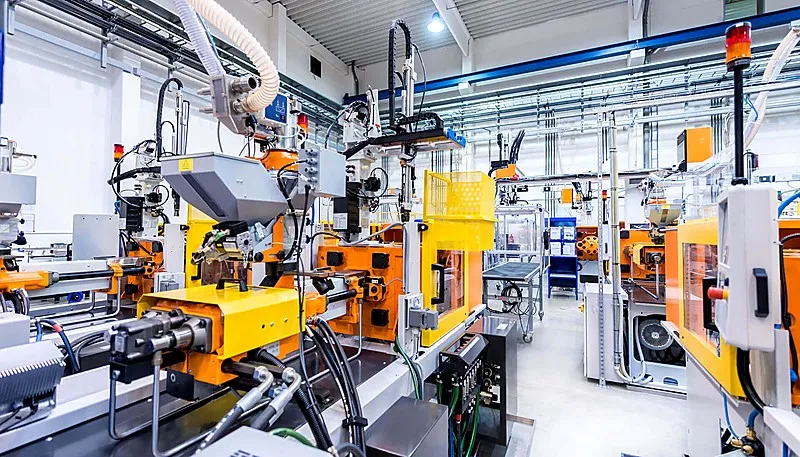
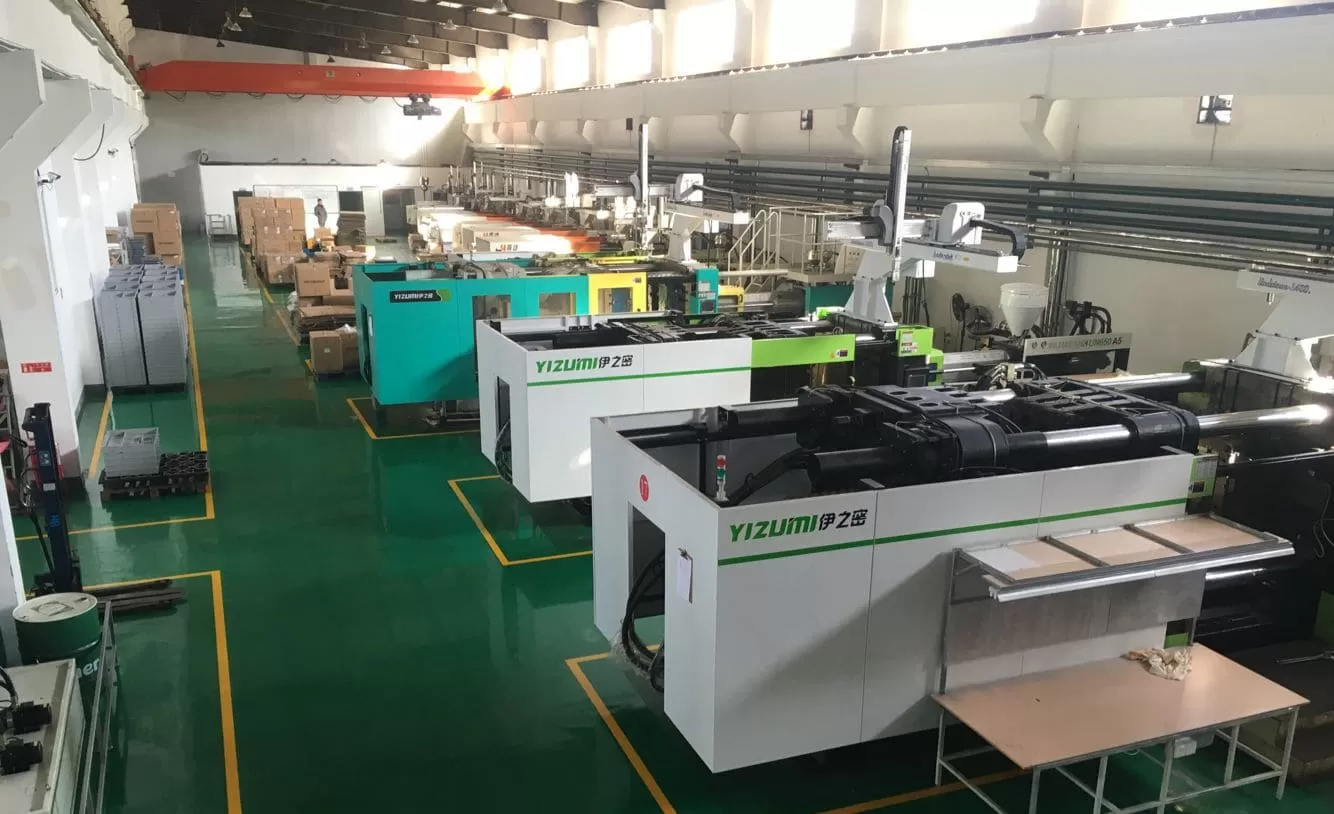
The first thing to verify is whether a supplier can actually produce your parts. Many trading companies present themselves as manufacturers, but they outsource everything to unknown workshops. Ask directly: how many injection molding machines do you operate, and what is your tonnage range? A supplier running 5 machines under 200T cannot handle an automotive housing that needs 1200T of clamping force. In our Shanghai factory, we run 47 injection molding machines from 90T to 1850T—enough range to cover everything from micro medical components to large industrial housings under one roof.

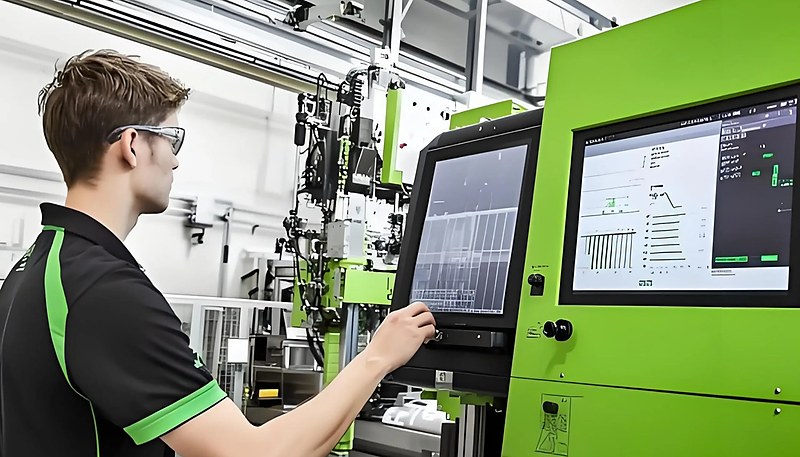
Ask about automation and process control. Do they use robotic part removal? Closed-loop pressure monitoring? Scientific molding principles with decoupled processes? A supplier still running machines in manual mode with operator-dependent quality is a liability for any production run above a few hundred pieces. Also request their machine maintenance schedule—a well-maintained 10-year-old machine with documented service history is usually better than a brand-new machine with no preventive maintenance plan. We have seen suppliers skip tie-bar lubrication for months and then wonder why their shot-to-shot consistency drifts by 15%.

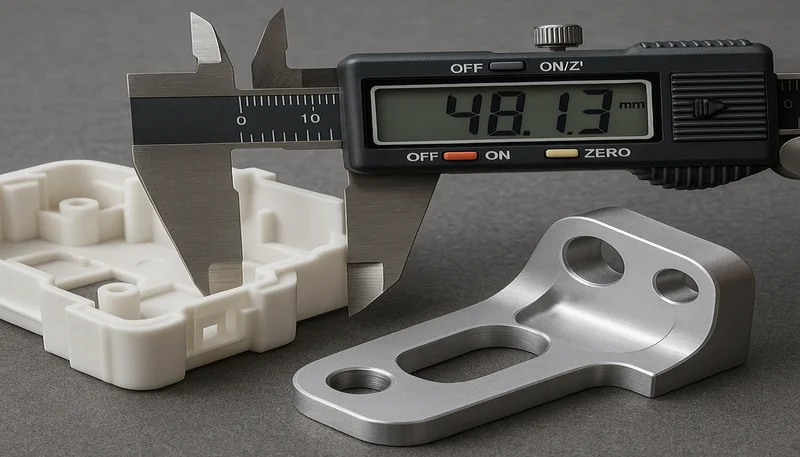
Also ask how the supplier compares injection molding tolerance capabilities against CNC machining alternatives for your specific part geometry. Understanding when injection molding achieves adequate tolerance versus when CNC machining post-processing is required shows genuine engineering judgment. A supplier who can explain the tolerance trade-offs between these processes and recommend the most cost-effective approach for your volume and precision requirements demonstrates the kind of technical depth that separates manufacturing partners from order takers.

Injection Molding Product vs CNC machining tolerance
Tolerance comparison between injection molding
🏭 ZetarMold Factory Insight
In our Shanghai factory, we run 47 injection molding machines with a tonnage range of 90T to 1850T, allowing us to handle everything from precision micro parts to large automotive components. This equipment breadth means we can produce your current part and scale to future projects without requiring a supplier change as your product line grows.

How Do You Verify Tooling and Mold Manufacturing Quality?

Tooling is where most money gets lost in any injection molding project. A mold is a precision instrument that costs anywhere from 5,000 to 200,000+ USD, and whoever builds it controls your production destiny for years to come. The critical question is whether the supplier has their own 사출 금형 manufacturing capability or outsources to a third-party tool shop. When tooling is outsourced, you have no direct line to the people cutting your steel—and when a revision is needed, every change request goes through a middleman who may not understand the engineering intent. This adds cost, delays, and miscommunication risk that compounds with every design iteration.

Ask these specific questions during your evaluation: Can I visit the tooling workshop in person? How many mold sets do you produce per month on average? What steel grades do you use for cores and cavities, and why? Do you run mold flow analysis before cutting steel? What is your standard mold life guarantee in shots? A supplier with in-house tooling can typically offer faster iteration cycles—when we identify a dimensional issue during T1 sampling, our tooling engineers can implement a steel change within 24 to 48 hours instead of waiting days for an external shop to fit the job into their queue. This speed advantage compounds over the life of a project with multiple design revisions.

🏭 ZetarMold Factory Insight
Our in-house mold manufacturing facility produces over 100 mold sets per month, giving us direct control over quality, timeline, and engineering communication throughout the tooling process.
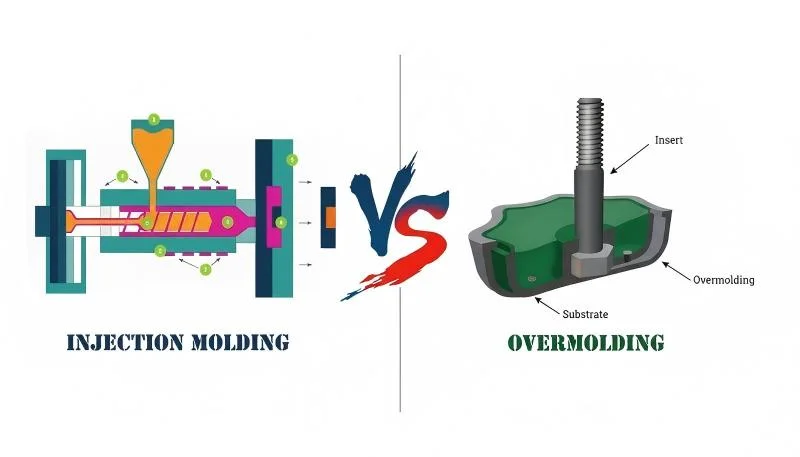
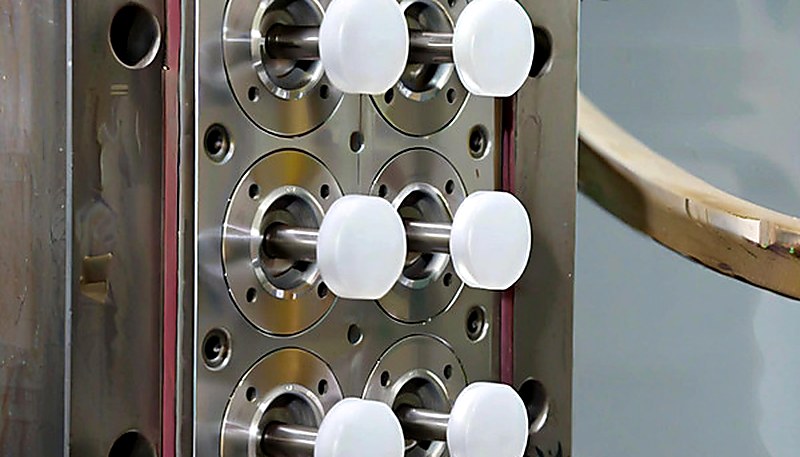
Injection Molding vs Overmolding Diagram
Overmolding capability signals technical breadth

What Quality Certifications and Systems Must a Supplier Have?

Quality certifications are the minimum proof that a supplier follows documented processes. ISO90011 is the baseline requirement, with ISO134852 for medical and IATF169493 for automotive as essential additions depending on your industry. Every supplier claims quality—the real verification question is whether they can show you the evidence. For medical components, ISO 13485 is required by regulators worldwide. For automotive parts, IATF 16949 is the recognized supply chain standard. Environmental management (ISO 14001) and occupational health (ISO 45001) certifications signal a mature operation that invests in systematic management rather than reactive firefighting. But certificates on a wall mean nothing without proof of daily compliance.

🏭 ZetarMold Factory Insight
We operate under ISO 9001, ISO 13485, ISO 14001, and ISO 45001 certified quality management systems with a dedicated team of over 10 QC specialists performing dimensional, visual, and functional inspection on every production order. Our quality lab is equipped with coordinate measuring machines, optical comparators, and surface roughness testers to ensure every part meets your specification requirements consistently across production runs.

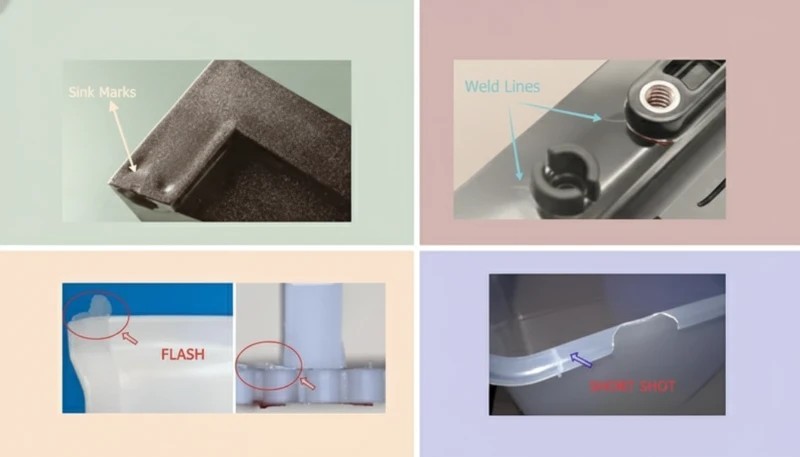
Beyond certifications, examine how the supplier handles injection molding defects such as weld lines, sink marks, flash, and short shots in their daily operations. A robust quality system should include systematic root cause analysis for every defect event, corrective action tracking with assigned owners and deadlines, and prevention measures built directly into the process parameters rather than relying on post-production inspection alone. Ask to see their defect log from recent production runs—suppliers who track and categorize defects by type and frequency are actively managing quality rather than simply reacting to customer complaints after shipment. Also ask about their scrap rate targets and how they measure improvement over time.

A factory that cannot tell you their current defect rate per thousand parts is not managing quality proactively.

사출 성형 결함
Defect tracking indicates supplier quality maturity

“A fast quote response always indicates good supplier communication.”True

False. Speed of quoting and quality of communication are different things. A supplier who quotes in two hours without asking questions may be cutting corners. Look for responsiveness paired with technical depth.

“ISO 9001 certification guarantees consistent part quality.”False

False. ISO 9001 certifies that a supplier has documented processes, not that every part meets specification. Always request actual inspection data and SPC records to verify real-world consistency.

Why Does Material Expertise Separate Good Suppliers from Bad Ones?

Material expertise is the single strongest predictor of whether a supplier will deliver consistent quality or costly surprises. A supplier who simply asks what material you want and orders it is a commodity broker, not a manufacturing partner. The right supplier should challenge your material choice, suggest alternatives, and explain the trade-offs. They should know that not all ABS grades perform the same, that nylon needs careful drying, and that PC has a narrow processing window where slight temperature deviations cause yellowing or brittleness. Ask how many different materials they process regularly. A supplier working with 400+ materials has seen and solved problems that a specialist in three resins never will.

Request material test reports (MTR) for your specific batches. Ask about their incoming material inspection: do they verify melt flow index, moisture content, and contamination before loading material into the machine? Do they maintain a material traceability system that can link a finished part back to the specific resin lot? These practices matter enormously when you are troubleshooting a field failure six months into production. Without lot traceability, root cause analysis becomes guesswork.

🏭 ZetarMold Factory Insight
With experience processing over 400 plastic materials accumulated over 20+ years, we maintain detailed processing parameter databases that help us optimize cycle times and part quality from the first trial run.

How Do You Evaluate Communication and Project Management?

Communication is the invisible cost that determines whether a project runs smoothly or becomes a months-long ordeal. The single most practical test: send a technical inquiry to the supplier and measure both response time and response quality. A one-line answer like “yes we can do it” is a red flag. A thoughtful response that asks clarifying questions about your application, tolerance requirements, and volume projections signals a team that actually understands your project.

Ask specifically about their English-language engineering support. Many Chinese suppliers have salespeople who speak decent English but engineers who only communicate in Mandarin. When technical issues arise—and they always do—you need engineers who can explain the problem and proposed solution clearly. Also ask about their project tracking systems: do they provide regular progress updates with photos? Can they share mold design for approval before cutting steel? Do they use standardized sampling reports with dimensional data? These are not luxury features—they are basic expectations for any serious injection molding sourcing project.

🏭 ZetarMold Factory Insight
Our team includes 30+ fluent English speakers and 8 senior engineers who communicate directly with international clients on technical decisions, eliminating the information loss that comes from relying solely on sales intermediaries.

What Red Flags Should Make You Walk Away from a Supplier?

The single biggest red flag is refusal to allow a factory audit—walk away immediately. After evaluating hundreds of suppliers over two decades, we have learned to recognize the warning signs that predict project failure. If a supplier will not let you or your third-party inspector walk the production floor, they are hiding something—it could be subcontracting to uncertified shops, poor working conditions, or equipment that does not match their claims. No legitimate manufacturer refuses a reasonable audit request.

Other red flags include: quotes that are dramatically lower than competitors without a clear explanation of how they achieve the savings; unwillingness to provide references from current customers in your industry; no documented quality management system; pressure to skip prototyping and go straight to production tooling; and vague answers about material sourcing with no traceability. Perhaps the most dangerous sign is a supplier who agrees to every request without pushback. A good manufacturing partner will tell you when your design has issues, when your tolerance expectations are unrealistic, or when your material choice creates unnecessary risk. Yes-men make expensive mistakes.

“A video call factory tour provides the same verification value as an on-site audit.”True

False. Video tours show only what the supplier wants you to see. They are useful as a preliminary screening tool but cannot replace walking the production floor, checking equipment condition, and verifying that the facility matches marketing claims.

“The lowest quote is usually the best value for injection molding.”False

False. Abnormally low quotes often indicate hidden costs: inferior steel grades for molds, no quality inspection, or planned change orders that inflate the final bill. Compare quotes line by line and ask suppliers to explain significant price differences.

When Should You Request a Factory Audit and What Should You Check?

Request an audit before committing to any tooling investment above a modest threshold. For projects under 10,000 USD in tooling, a video tour and reference check may suffice. For anything larger, schedule an on-site visit or hire a third-party inspection firm. During the audit, look beyond the showroom—every supplier has a clean room for visitors. Ask to see the actual production floor where your parts will be made. Check machine conditions: are they running, well-maintained, and appropriate for your part size and material? Look at the warehouse: is material stored properly with environmental controls? Check the quality lab: do they have calibrated measurement equipment with current certification stickers?

Pay attention to the people. Are operators focused on their work or visibly disengaged? Does the floor supervisor answer technical questions confidently? Is there evidence of 5S or lean manufacturing practices? These observations tell you more about daily operational quality than any certificate on the wall. Also ask to see their scrap tracking system—a factory that does not measure scrap rate cannot improve it, and a factory that hides its scrap rate is probably ashamed of it.

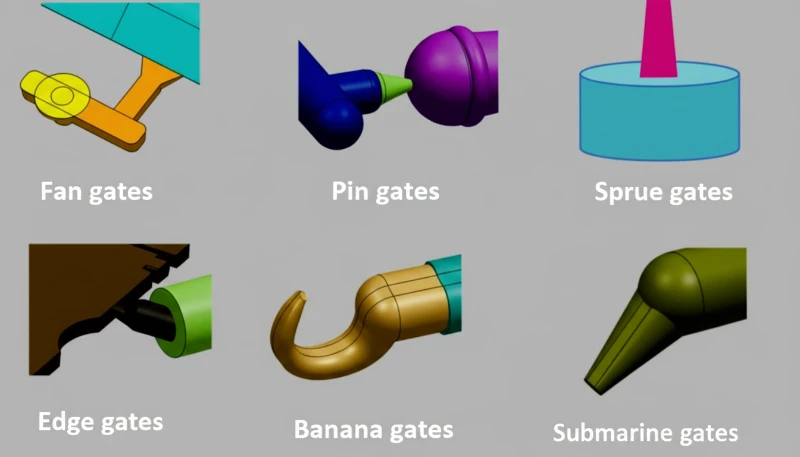
Types of plastic injection molding gates
게이트 설계 전문성은 제조 깊이를 반영합니다

사출 성형 공급업체 검증에 관한 가장 일반적인 질문은 무엇인가요?

자주 묻는 질문

자격을 갖춘 공급업체는 몇 대의 사출 성형기를 보유해야 하나요?

보편적인 최소 기준은 없지만, 10대 미만의 기계를 보유한 공급업체는 피크 기간 동안 생산 능력 유연성에 어려움을 겪을 수 있습니다. 총 대수보다 더 중요한 것은 그들의 톤 범위가 귀하의 특정 부품 요구사항을 충족하는지 여부입니다. 200톤 미만의 기계 5대를 모두 보유한 공급업체는 시도하려는 의지와 관계없이 800톤의 클램핑력이 필요한 부품을 생산할 수 없습니다. 임의의 기계 대수 기준에 의존하기보다는 항상 공급업체의 장비 프로필을 귀하의 실제 생산 요구사항과 일치시키십시오. 또한 그들의 가동률에 대해 물어보십시오—95% 용량으로 운영되는 공장은 귀하의 긴급 주문을 수용할 여유가 없습니다.

사출 성형 공급업체에게 가장 중요한 인증은 무엇인가요?

ISO 9001은 모든 산업용 사출 성형 공급업체의 필수 기준입니다. 의료 기기 부품을 생산하는 경우 규제 준수를 위해 ISO 13485가 절대적으로 중요합니다. 자동차 응용 분야의 경우 IATF 16949는 글로벌 공급망 전반에서 인정받는 표준입니다. 그러나 인증만으로는 생산 현장에서 일관된 부품 품질을 보장할 수 없습니다. 인증된 시스템이 연간 감사 기간뿐만 아니라 일상 운영에서 적극적으로 준수되는지 확인하려면 실제 검사 기록, SPC 차트, Cpk 데이터 및 최근 제3자 감사 보고서를 항상 요청하십시오.

주문하기 전에 항상 공장을 방문해야 하나요?

10,000 USD 이상의 금형 투자의 경우, 공장이 그들의 마케팅 주장과 일치하는지 검증하기 위해 현장 방문 또는 제3자 감사를 강력히 권장합니다. 그 기준 미만의 경우, 상세한 비디오 투어와 귀하의 산업 분야 현재 고객들의 레퍼런스 체크를 결합하면 초기 생산 주문에 대한 합리적인 확신을 제공할 수 있습니다. 핵심 원칙은 독립적인 증거를 통한 검증입니다. 그것이 개인 방문 시 귀하 자신의 눈으로 확인되는 것이든, 사출 성형 품질 요구사항을 이해하고 관찰 내용을 평가할 수 있는 신뢰할 수 있는 제3자 검사 파트너로부터 오는 것이든 상관없습니다.

금형 유지보수에 대해 어떤 질문을 해야 하나요?

예방 유지보수 일정, 예비 부품 재고 및 금형 보관 조건에 대해 자세히 물어보십시오. 자격을 갖춘 공급업체는 이젝터 핀을 얼마나 자주 점검하고, 슬라이딩 부품에 윤활유를 주며, 냉각 채널을 청소하는지 정확히 알려줄 수 있어야 합니다. 적절한 금형 유지보수는 부품 일관성과 전반적인 금형 수명에 직접적인 영향을 미칩니다—일상적인 유지보수를 소홀히 하면 백만 사이클 등급의 금형 수명을 절반으로 줄일 수 있습니다. 또한 장기 보관 전 금형 상태를 사진으로 찍고 문서화하는지, 그리고 저장된 금형을 새로운 생산 런에 재가동하기 전에 드라이 사이클 테스트를 수행하는지 물어보십시오.

무역 회사가 공장과 동일한 품질을 제공할 수 있나요?

무역 회사는 생산을 효과적으로 조정할 수 있지만, 귀하와 실제로 부품을 제조하는 사람들 사이에 중요한 의사소통 거리 계층을 추가합니다. 여유 있는 공차를 가진 단순 상품 부품의 경우, 이러한 구성은 허용 가능하고 비용 효율적일 수 있습니다. 엄격한 공차, 규제 요구사항 또는 복잡한 형상을 가진 모든 것에 대해서는 직접 공장 접근이 품질 결과에 대한 더 나은 통제력, 더 빠른 문제 해결 및 생산 중 문제 발생 시 더 명확한 책임 소재를 제공합니다. 올바른 선택은 귀하의 프로젝트 복잡성과 품질 위험 허용 범위에 따라 달라집니다.

공급업체가 실제로 자체 생산하는지 어떻게 확인하나요?

기계가 가동 중인 생산 현장을 보여주는 라이브 영상 통화를 요청하고, 일련 번호가 표시된 장비 명판 사진을 요청하며, 공장 방문 시 관찰한 내용과 그들이 주장하는 기계 목록을 교차 검증하십시오. 또한 허가된 생산 활동과 등록된 주소를 명시하는 제조 사업자 등록증을 요청할 수 있습니다. 또 다른 효과적인 검증 방법은 최근 작업에서 기계 할당을 보여주는 생산 기록을 요청하는 것입니다—동일한 기계가 여러 고객 주문에 걸쳐 일관되게 나타난다면, 그 공장은 알려지지 않은 작업장에 하도급을 주기보다 자체적으로 작업을 수행할 가능성이 높습니다.

검증된 사출 성형 파트너와 협업할 준비가 되셨나요?

적절한 사출 성형 공급업체를 선택하는 것은 향후 수년간 제품 품질, 일정 및 총 비용에 영향을 미치는 결정입니다. ZetarMold에서는 투명한 제조가 지속적인 파트너십을 구축한다고 믿기 때문에 귀하의 질문과 감사를 환영합니다. 당사의 상하이 시설은 내부 금형 설비, ISO 인증 품질 시스템 및 컨셉부터 생산까지 귀하의 프로젝트를 지원할 준비가 된 30명 이상의 영어를 구사하는 전문가 팀과 함께 47대의 사출 성형기를 운영합니다.

Get a Free Quote — 귀하의 부품 설계 및 요구사항을 보내주십시오. 우리는 24시간 이내에 투명한 가격, 재료 추천 및 생산 타임라인이 포함된 상세한 견적서를 제공할 것입니다. 숨겨진 비용 없음, 놀라움 없음—올바른 결정을 내리는 데 필요한 정보만 제공합니다.


  1. ISO9001: ISO9001은 iSO 9001:2015 품질 관리 시스템 요구사항을 의미합니다

  2. ISO13485: ISO13485는 iSO 13485:2016 의료기기 품질 관리 시스템을 의미합니다

  3. IATF16949: IATF16949는 iATF 16949:2016 자동차 품질 관리 시스템 표준을 의미합니다

최신 게시물
Facebook
트위터
LinkedIn
Pinterest
Mike Tang 사진
마이크 탕

Hi, I'm the author of this post, and I have been in this field for more than 20 years. and I have been responsible for handling on-site production issues, product design optimization, mold design and project preliminary price evaluation. If you want to custom plastic mold and plastic molding related products, feel free to ask me any questions.

나와 연결하기 →

빠른 견적 요청하기

다음을 통해 도면 및 세부 요구 사항을 보내세요. 

Emial:[email protected]

또는 아래 문의 양식을 작성하세요:

빠른 견적 요청하기

다음을 통해 도면 및 세부 요구 사항을 보내세요. 

Emial:[email protected]

또는 아래 문의 양식을 작성하세요:

빠른 견적 요청하기

다음을 통해 도면 및 세부 요구 사항을 보내세요. 

Emial:[email protected]

또는 아래 문의 양식을 작성하세요:

빠른 견적 요청하기

다음을 통해 도면 및 세부 요구 사항을 보내세요. 

Emial:[email protected]

또는 아래 문의 양식을 작성하세요:

빠른 견적 요청하기

다음을 통해 도면 및 세부 요구 사항을 보내세요. 

Emial:[email protected]

또는 아래 문의 양식을 작성하세요:

브랜드에 대한 빠른 견적 요청하기

다음을 통해 도면 및 세부 요구 사항을 보내세요. 

Emial:[email protected]

또는 아래 문의 양식을 작성하세요:

댓글 작성하기

이 도움말에 대한 자세한 내용을 보려면 "[email protected]"으로 이메일 주소를 입력하세요.

빠른 견적 요청하기

다음을 통해 도면 및 세부 요구 사항을 보내세요. 

Emial:[email protected]

또는 아래 문의 양식을 작성하세요:

빠른 견적 요청하기

다음을 통해 도면 및 세부 요구 사항을 보내세요. 

Emial:[email protected]

또는 아래 문의 양식을 작성하세요: