You found an injection molding supplier with a slick website and a competitive quote. Before you wire a deposit, ask yourself: do you actually know what you are buying into? We have seen buyers lose six figures on tooling that never produced a usable part, and suppliers vanish after the first quality dispute. The difference between a successful project and an expensive lesson usually comes down to the questions you ask before signing the contract. This guide covers the verification questions that matter most—based on two decades of real production experience in 射出成形.
- Verify machine count and tonnage range before committing to a supplier
- Insist on in-house tooling ownership and documented mold maintenance plans
- Demand ISO certifications and real inspection data, not just marketing claims
- Confirm material expertise with actual test reports and processing records
- Walk away from suppliers who refuse factory audits or dodge technical questions
What Should You Ask About a Supplier’s Manufacturing Capabilities?
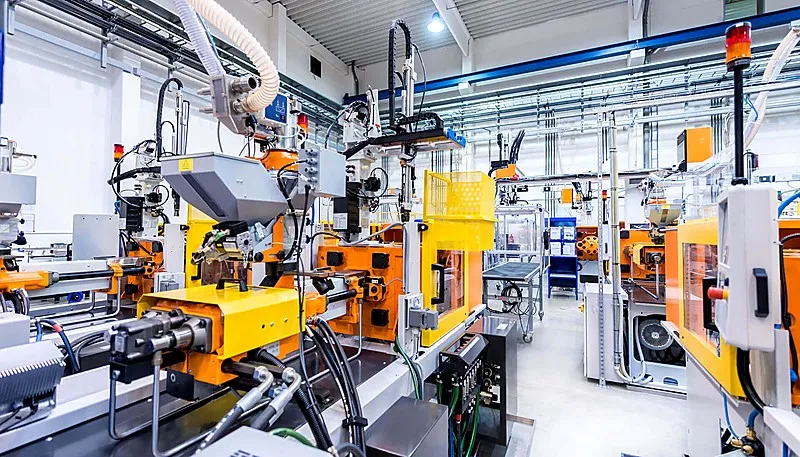
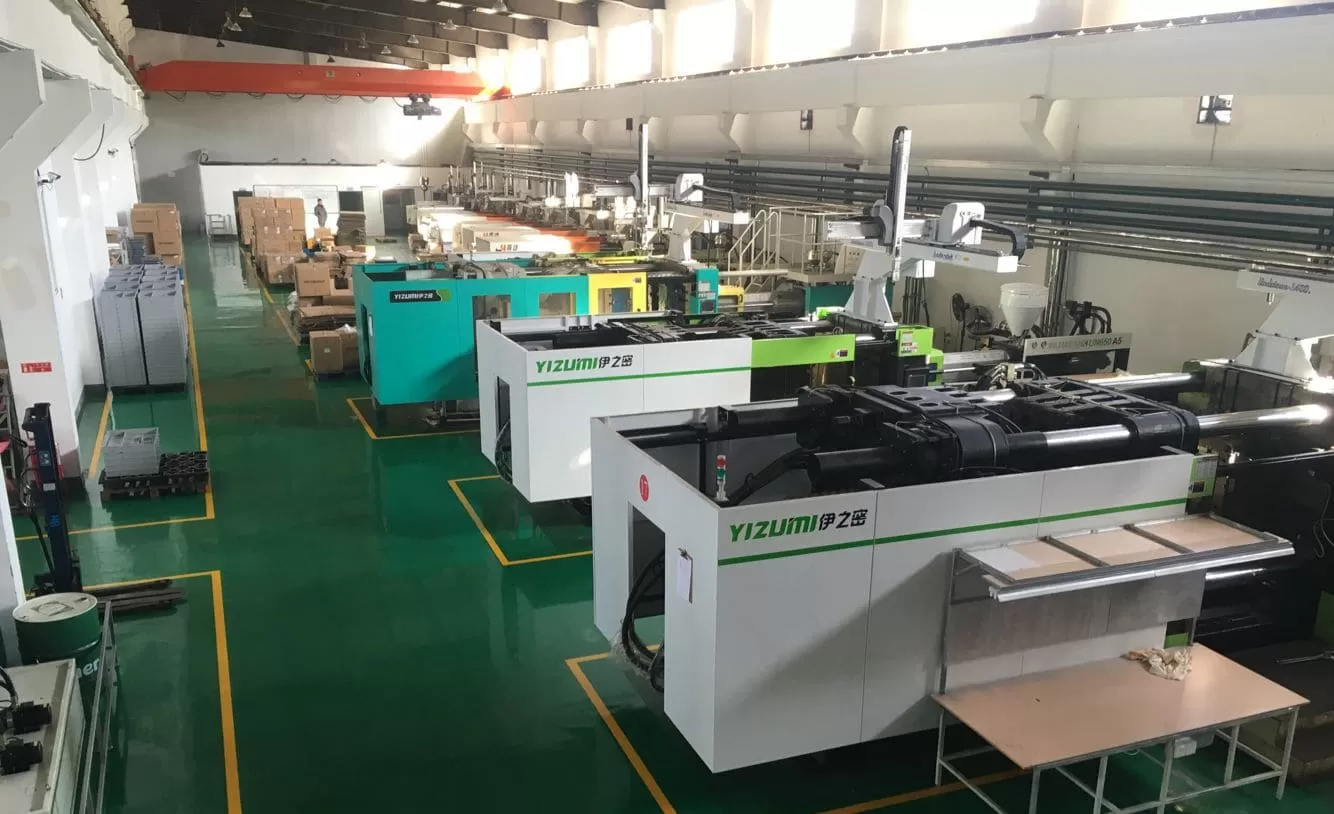
The first thing to verify is whether a supplier can actually produce your parts. Many trading companies present themselves as manufacturers, but they outsource everything to unknown workshops. Ask directly: how many injection molding machines do you operate, and what is your tonnage range? A supplier running 5 machines under 200T cannot handle an automotive housing that needs 1200T of clamping force. In our Shanghai factory, we run 47 injection molding machines from 90T to 1850T—enough range to cover everything from micro medical components to large industrial housings under one roof.
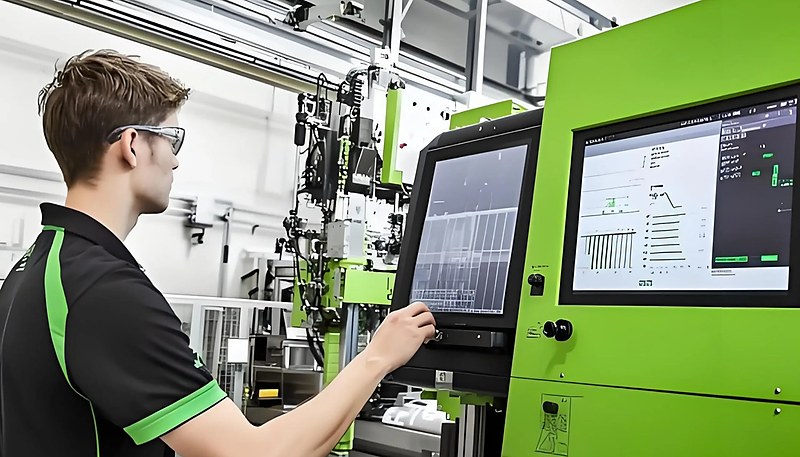
Ask about automation and process control. Do they use robotic part removal? Closed-loop pressure monitoring? Scientific molding principles with decoupled processes? A supplier still running machines in manual mode with operator-dependent quality is a liability for any production run above a few hundred pieces. Also request their machine maintenance schedule—a well-maintained 10-year-old machine with documented service history is usually better than a brand-new machine with no preventive maintenance plan. We have seen suppliers skip tie-bar lubrication for months and then wonder why their shot-to-shot consistency drifts by 15%.
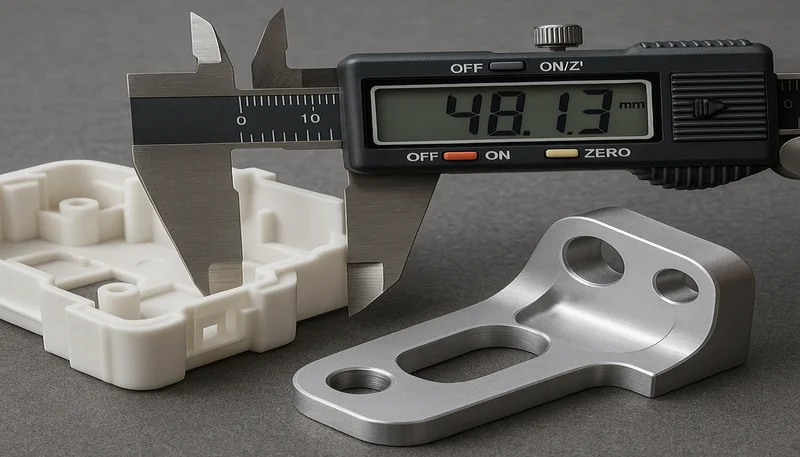
Also ask how the supplier compares injection molding tolerance capabilities against CNC machining alternatives for your specific part geometry. Understanding when injection molding achieves adequate tolerance versus when CNC machining post-processing is required shows genuine engineering judgment. A supplier who can explain the tolerance trade-offs between these processes and recommend the most cost-effective approach for your volume and precision requirements demonstrates the kind of technical depth that separates manufacturing partners from order takers.

In our Shanghai factory, we run 47 injection molding machines with a tonnage range of 90T to 1850T, allowing us to handle everything from precision micro parts to large automotive components. This equipment breadth means we can produce your current part and scale to future projects without requiring a supplier change as your product line grows.
How Do You Verify Tooling and Mold Manufacturing Quality?
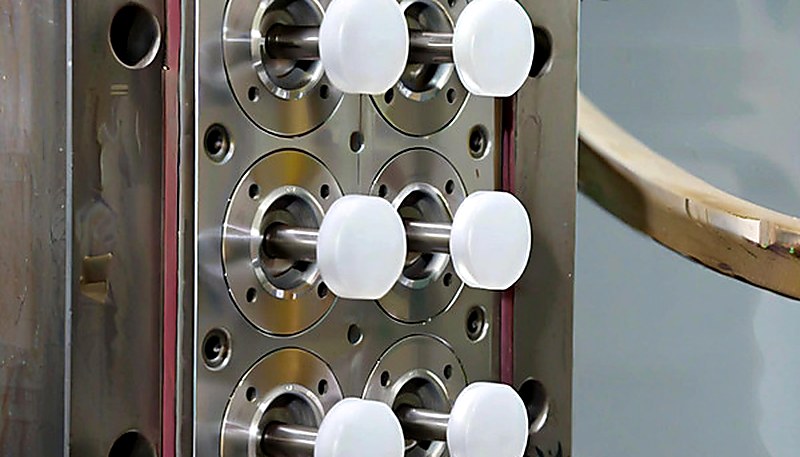
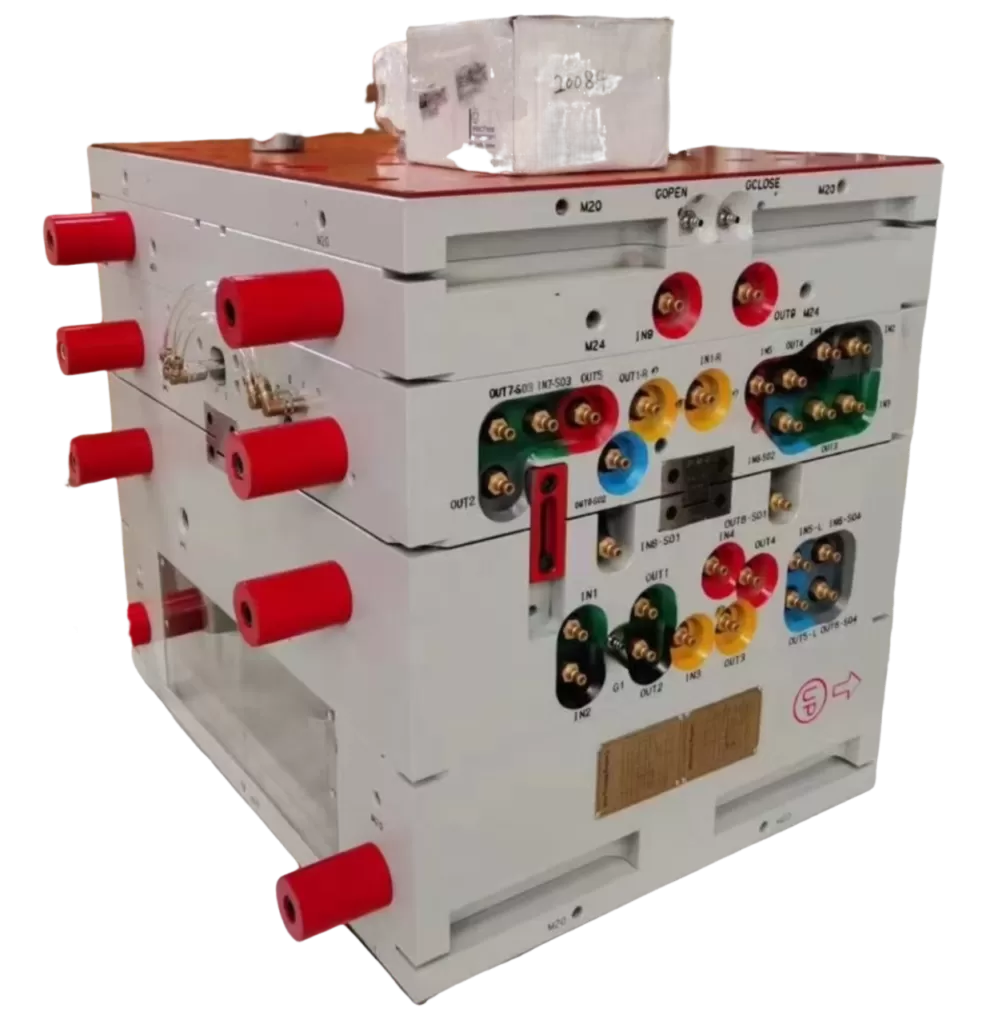
Tooling is where most money gets lost in any injection molding project. A mold is a precision instrument that costs anywhere from 5,000 to 200,000+ USD, and whoever builds it controls your production destiny for years to come. The critical question is whether the supplier has their own 射出成形金型 manufacturing capability or outsources to a third-party tool shop. When tooling is outsourced, you have no direct line to the people cutting your steel—and when a revision is needed, every change request goes through a middleman who may not understand the engineering intent. This adds cost, delays, and miscommunication risk that compounds with every design iteration.
Ask these specific questions during your evaluation: Can I visit the tooling workshop in person? How many mold sets do you produce per month on average? What steel grades do you use for cores and cavities, and why? Do you run mold flow analysis before cutting steel? What is your standard mold life guarantee in shots? A supplier with in-house tooling can typically offer faster iteration cycles—when we identify a dimensional issue during T1 sampling, our tooling engineers can implement a steel change within 24 to 48 hours instead of waiting days for an external shop to fit the job into their queue. This speed advantage compounds over the life of a project with multiple design revisions.
Our in-house mold manufacturing facility produces over 100 mold sets per month, giving us direct control over quality, timeline, and engineering communication throughout the tooling process.

What Quality Certifications and Systems Must a Supplier Have?
Quality certifications are the minimum proof that a supplier follows documented processes. ISO90011 is the baseline requirement, with ISO134852 for medical and IATF169493 for automotive as essential additions depending on your industry. Every supplier claims quality—the real verification question is whether they can show you the evidence. For medical components, ISO 13485 is required by regulators worldwide. For automotive parts, IATF 16949 is the recognized supply chain standard. Environmental management (ISO 14001) and occupational health (ISO 45001) certifications signal a mature operation that invests in systematic management rather than reactive firefighting. But certificates on a wall mean nothing without proof of daily compliance.
We operate under ISO 9001, ISO 13485, ISO 14001, and ISO 45001 certified quality management systems with a dedicated team of over 10 QC specialists performing dimensional, visual, and functional inspection on every production order. Our quality lab is equipped with coordinate measuring machines, optical comparators, and surface roughness testers to ensure every part meets your specification requirements consistently across production runs.
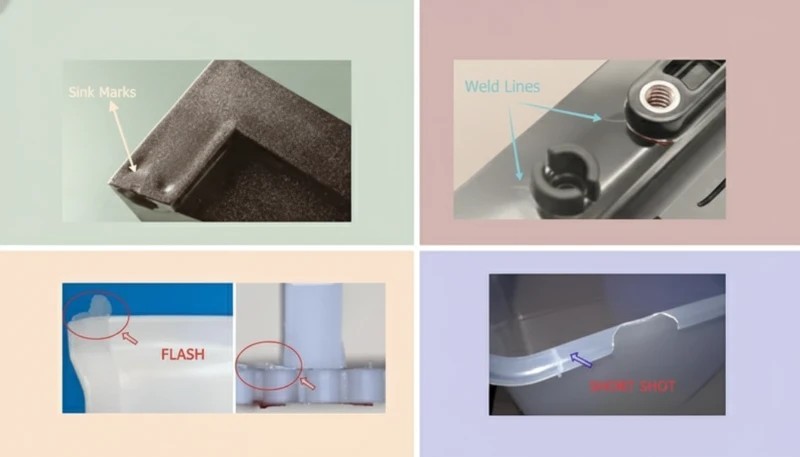
Beyond certifications, examine how the supplier handles injection molding defects such as weld lines, sink marks, flash, and short shots in their daily operations. A robust quality system should include systematic root cause analysis for every defect event, corrective action tracking with assigned owners and deadlines, and prevention measures built directly into the process parameters rather than relying on post-production inspection alone. Ask to see their defect log from recent production runs—suppliers who track and categorize defects by type and frequency are actively managing quality rather than simply reacting to customer complaints after shipment. Also ask about their scrap rate targets and how they measure improvement over time.
A factory that cannot tell you their current defect rate per thousand parts is not managing quality proactively.

“A fast quote response always indicates good supplier communication.”真
False. Speed of quoting and quality of communication are different things. A supplier who quotes in two hours without asking questions may be cutting corners. Look for responsiveness paired with technical depth.
“ISO 9001 certification guarantees consistent part quality.”偽
False. ISO 9001 certifies that a supplier has documented processes, not that every part meets specification. Always request actual inspection data and SPC records to verify real-world consistency.
Why Does Material Expertise Separate Good Suppliers from Bad Ones?
Material expertise is the single strongest predictor of whether a supplier will deliver consistent quality or costly surprises. A supplier who simply asks what material you want and orders it is a commodity broker, not a manufacturing partner. The right supplier should challenge your material choice, suggest alternatives, and explain the trade-offs. They should know that not all ABS grades perform the same, that nylon needs careful drying, and that PC has a narrow processing window where slight temperature deviations cause yellowing or brittleness. Ask how many different materials they process regularly. A supplier working with 400+ materials has seen and solved problems that a specialist in three resins never will.
Request material test reports (MTR) for your specific batches. Ask about their incoming material inspection: do they verify melt flow index, moisture content, and contamination before loading material into the machine? Do they maintain a material traceability system that can link a finished part back to the specific resin lot? These practices matter enormously when you are troubleshooting a field failure six months into production. Without lot traceability, root cause analysis becomes guesswork.
With experience processing over 400 plastic materials accumulated over 20+ years, we maintain detailed processing parameter databases that help us optimize cycle times and part quality from the first trial run.
How Do You Evaluate Communication and Project Management?
Communication is the invisible cost that determines whether a project runs smoothly or becomes a months-long ordeal. The single most practical test: send a technical inquiry to the supplier and measure both response time and response quality. A one-line answer like “yes we can do it” is a red flag. A thoughtful response that asks clarifying questions about your application, tolerance requirements, and volume projections signals a team that actually understands your project.
Ask specifically about their English-language engineering support. Many Chinese suppliers have salespeople who speak decent English but engineers who only communicate in Mandarin. When technical issues arise—and they always do—you need engineers who can explain the problem and proposed solution clearly. Also ask about their project tracking systems: do they provide regular progress updates with photos? Can they share mold design for approval before cutting steel? Do they use standardized sampling reports with dimensional data? These are not luxury features—they are basic expectations for any serious injection molding sourcing project.
Our team includes 30+ fluent English speakers and 8 senior engineers who communicate directly with international clients on technical decisions, eliminating the information loss that comes from relying solely on sales intermediaries.
What Red Flags Should Make You Walk Away from a Supplier?
The single biggest red flag is refusal to allow a factory audit—walk away immediately. After evaluating hundreds of suppliers over two decades, we have learned to recognize the warning signs that predict project failure. If a supplier will not let you or your third-party inspector walk the production floor, they are hiding something—it could be subcontracting to uncertified shops, poor working conditions, or equipment that does not match their claims. No legitimate manufacturer refuses a reasonable audit request.
Other red flags include: quotes that are dramatically lower than competitors without a clear explanation of how they achieve the savings; unwillingness to provide references from current customers in your industry; no documented quality management system; pressure to skip prototyping and go straight to production tooling; and vague answers about material sourcing with no traceability. Perhaps the most dangerous sign is a supplier who agrees to every request without pushback. A good manufacturing partner will tell you when your design has issues, when your tolerance expectations are unrealistic, or when your material choice creates unnecessary risk. Yes-men make expensive mistakes.
“A video call factory tour provides the same verification value as an on-site audit.”真
False. Video tours show only what the supplier wants you to see. They are useful as a preliminary screening tool but cannot replace walking the production floor, checking equipment condition, and verifying that the facility matches marketing claims.
“The lowest quote is usually the best value for injection molding.”偽
False. Abnormally low quotes often indicate hidden costs: inferior steel grades for molds, no quality inspection, or planned change orders that inflate the final bill. Compare quotes line by line and ask suppliers to explain significant price differences.
When Should You Request a Factory Audit and What Should You Check?
Request an audit before committing to any tooling investment above a modest threshold. For projects under 10,000 USD in tooling, a video tour and reference check may suffice. For anything larger, schedule an on-site visit or hire a third-party inspection firm. During the audit, look beyond the showroom—every supplier has a clean room for visitors. Ask to see the actual production floor where your parts will be made. Check machine conditions: are they running, well-maintained, and appropriate for your part size and material? Look at the warehouse: is material stored properly with environmental controls? Check the quality lab: do they have calibrated measurement equipment with current certification stickers?
Pay attention to the people. Are operators focused on their work or visibly disengaged? Does the floor supervisor answer technical questions confidently? Is there evidence of 5S or lean manufacturing practices? These observations tell you more about daily operational quality than any certificate on the wall. Also ask to see their scrap tracking system—a factory that does not measure scrap rate cannot improve it, and a factory that hides its scrap rate is probably ashamed of it.

射出成形サプライヤー検証に関する最も一般的な質問は何ですか?
よくある質問
適格なサプライヤーは何台の射出成形機を持つべきですか?
普遍的な最低基準はありませんが、10台未満の機械を持つサプライヤーは、繁忙期に生産能力の柔軟性に課題を抱える可能性があります。総数よりも重要なのは、そのトンナージ範囲がお客様の特定部品要件をカバーしているかどうかです。200T未満の機械しか5台持たないサプライヤーは、たとえ試す意欲があっても、800Tのクランプ力を必要とする部品を生産できません。常に、任意の機械台数の基準に依存するのではなく、サプライヤーの設備プロファイルを実際の生産ニーズに合わせてください。稼働率についても尋ねてください—95%の稼働率で運営されている工場には、お客様の緊急注文に対応する余地がありません。
射出成形サプライヤーにとって最も重要な認証は何ですか?
ISO 9001は、産業用射出成形サプライヤーにとって必須の基本要件です。医療機器部品を製造する場合は、規制遵守のためにISO 13485が絶対的に重要になります。自動車用途では、IATF 16949がグローバルサプライチェーンで認知された標準です。ただし、認証だけでは生産現場での一貫した部品品質は保証されません。常に実際の検査記録、SPCチャート、Cpkデータ、最近の第三者監査報告書を要求し、認証されたシステムが年次監査時だけでなく、日常業務で積極的に遵守されていることを確認してください。
注文を出す前に、必ず工場を訪問すべきですか?
10,000米ドルを超える金型投資については、工場がマーケティング上の主張と一致していることを確認するため、現地訪問または第三者監査を強くお勧めします。その閾値以下の場合は、詳細なビデオツアーと、お客様の業界における現在の顧客からの参照チェックを組み合わせることで、初期生産注文に対する合理的な確証を得ることができます。重要な原則は、独立した証拠による検証です。それは、自身の目で現地訪問するか、射出成形の品質要求を理解し観察内容を評価できる信頼できる第三者検査パートナーから得られます。
金型保守についてどのような質問をすべきですか?
予防保守スケジュール、スペアパーツの在庫、金型保管条件について詳細に質問してください。適格なサプライヤーは、エジェクターピンの点検頻度、摺動部品の潤滑、冷却チャンネルの清掃頻度を正確に説明できるはずです。適切な金型保守は、製品の一貫性と金型全体の寿命に直接影響します。定期的な保守を怠ると、100万サイクル対応と評価された金型の寿命が半分になる可能性があります。また、長期保管前に金型の状態を写真撮影し記録しているか、保管後の金型を新たな生産ロットで再稼働させる前にドライサイクルテストを実施しているかも質問してください。
商社は工場と同じ品質を提供できるか?
商社は生産を効果的に調整できますが、お客様と実際に部品を作っている人々の間に重要なコミュニケーションの隔たりを追加します。公差が緩やかな単純な汎用品部品では、この取り決めは受け入れ可能でコスト効果的かもしれません。厳しい公差、規制要件、複雑な形状を持つものについては、直接工場にアクセスすることで、品質結果に対するより良い管理、迅速な問題解決、生産中に問題が発生した際の明確な責任の所在が得られます。適切な選択は、プロジェクトの複雑さと品質リスク許容度に依存します。
サプライヤーが実際に自社内で製造していることをどう確認すればよいですか?
機械が実際に稼働している生産現場をライブビデオ通話で見せてもらい、シリアルナンバーが記載された設備の銘板の写真を要求し、主張されている機械リストと工場訪問時に観察した内容を照合してください。製造業の営業許可証(許可された生産活動と登録住所が記載されている)を要求することもできます。もう一つの効果的な検証方法は、最近のジョブから機械割り当てを示す生産記録を要求することです。複数の顧客注文で同じ機械が一貫して登場する場合、その工場は不明な下請け業者ではなく自社内で作業を行っている可能性が高いです。
検証済み射出成形パートナーと働く準備はできていますか?
適切な射出成形サプライヤーを選ぶことは、今後何年にもわたって製品品質、納期、総コストに影響する重要な決定です。ZetarMoldでは、お客様の質問や監査を歓迎します。透明性のある製造が永続的なパートナーシップを築くと信じているからです。当社の上海工場は47台の射出成形機を稼働させ、自社内での金型製作、ISO認証取得の品質システム、30名以上の英語を話す専門家チームが、コンセプトから生産までお客様のプロジェクトをサポートします。
Get a Free Quote — 部品設計と要件をお送りください。透明な価格設定、材料推奨、生産タイムラインを含む詳細な見積もりを24時間以内に提供します。隠れた費用や驚きはありません。適切な決定に必要な情報だけをお届けします。