 Saltar para o conteúdo

índice de fluidez
– Injection molding excels at high-precision, complex-geometry parts with tolerances as tight as ±0.05 mm; extrusion is ideal for long, uniform-profile products like pipes, tubing, and weatherstripping.
– Per-part cost for injection molding drops dramatically at volumes above 10,000 units, whereas extrusion offers lower tooling costs ($3,000–$25,000 vs. $5,000–$100,000+) and is cost-effective even at lower volumes.
– Choosing the right process depends on part geometry, production volume, dimensional tolerances, and material requirements — many manufacturers use both processes together in the same product.
O que é a moldagem por injeção e como funciona?
Injection molding is a manufacturing process that melts plastic pellets and injects the molten material under high pressure (typically 10,000–30,000 psi) into a closed steel mold cavity, where it cools and solidifies into a finished part. In our factory at Zetar, we run injection molding machines ranging from 50 to 1,800 tons of força de aperto1, producing everything from tiny medical connectors to large automotive bumper components.
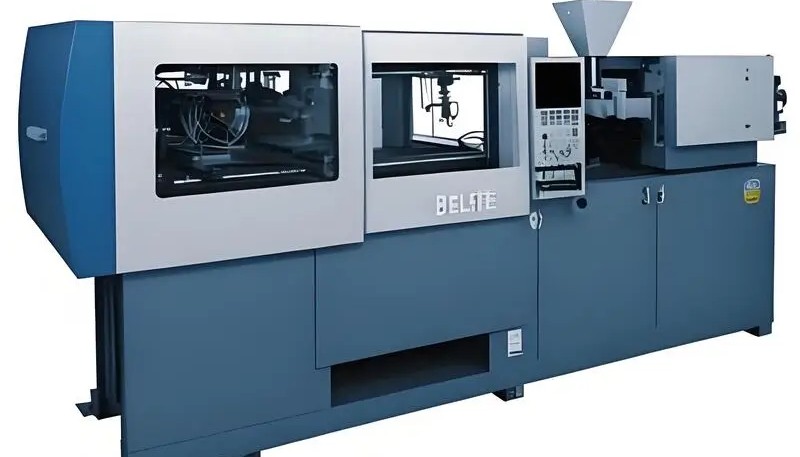
The process follows a precise cycle: the plastic granules are fed into a heated barrel, melted by a reciprocating screw, injected into the mold at high speed, held under pressure during cooling, then ejected as a finished part. A typical cycle takes 15–60 seconds depending on part size and wall thickness.
Injection molding produces discrete, individual parts — each shot creates one or more complete components. The mold defines every surface of the part, giving manufacturers full control over geometry, texture, and dimensional accuracy.
What Is Extrusion and How Does It Differ from Injection Molding?
Extrusion is a continuous manufacturing process that forces melted plastic through a shaped die opening to produce long, uniform-profile products such as pipes, tubing, sheets, films, and window frames. Unlike injection molding, which creates enclosed 3D shapes, extrusion produces open-ended 2D cross-sections that are cut to the desired length after forming.
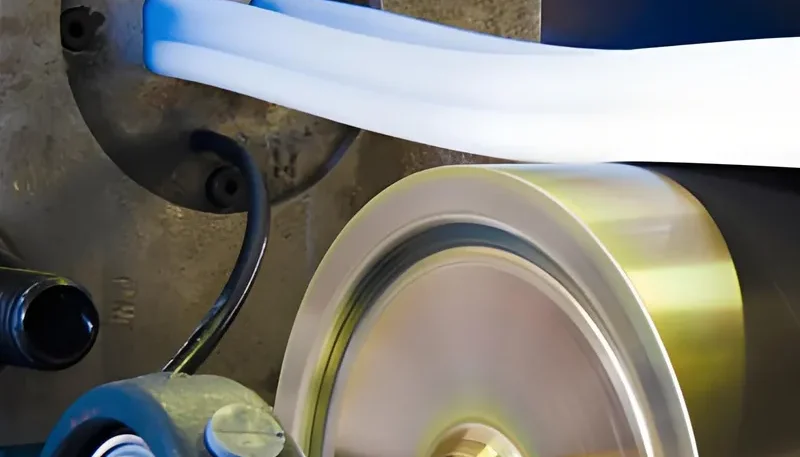
In extrusion, plastic pellets are fed into a heated barrel where a continuously rotating screw melts and pushes the material through a die. The extruded product emerges as a continuous strand and passes through a cooling system — typically a water bath or air-cooling setup — before being cut or coiled. We’ve worked with clients who needed both injection-molded end caps and extruded tubing for the same assembly, so understanding when to use each process is critical.
“Extrusion can produce complex 3D shapes with undercuts and internal features just like injection molding.”Falso
Extrusion can only produce parts with a consistent 2D cross-section along the length of the product. Complex 3D geometries, undercuts, internal cavities, and varying wall thicknesses require injection molding, where the mold fully encloses the part.
“Extrusion is the best process for manufacturing long, continuous-profile products like pipes, channels, and weatherstripping.”Verdadeiro
Extrusion excels at producing uniform cross-section profiles of virtually unlimited length. Products like PVC pipes, window frames, rubber seals, and plastic tubing are manufactured far more efficiently by extrusion than by any other process.
What Are the Key Technical Differences Between Injection Molding and Extrusion?
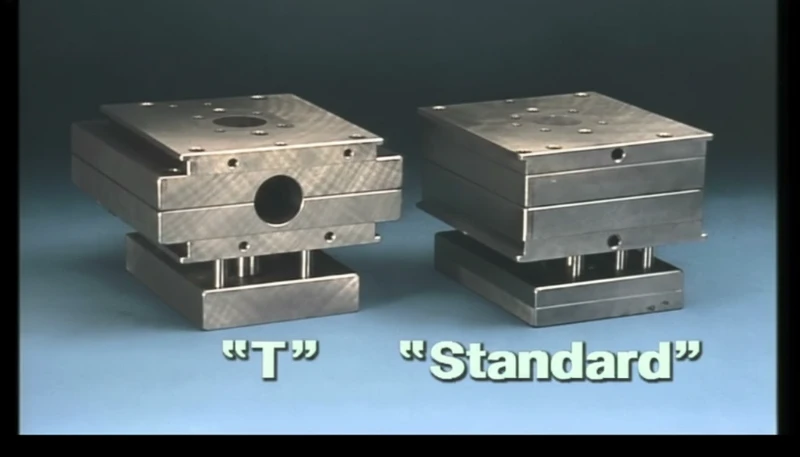
The fundamental technical differences between injection molding and extrusion come down to how the plastic is shaped, the tooling involved, and the type of products each process can create. Here’s a detailed comparison based on our experience manufacturing parts with both processes:
| Parâmetro | Moldagem por injeção | Extrusão |
|---|---|---|
| Tipo de processo | Batch / cyclical | Continuous |
| Tooling | Closed mold (cavity + core) | Open die (2D profile) |
| Geometria da peça | Complex 3D shapes | Uniform 2D cross-sections |
| Pressão | 10,000–30,000 psi | 1,500–5,000 psi |
| Tolerâncias | ±0.05 to ±0.1 mm | ±0.25 to ±0.5 mm |
| Custo das ferramentas | $5,000–$100,000+ | $3,000–$25,000 |
| Cycle / Output | 15–60 sec per shot | Continuous at 1–50+ m/min |
| Wall Thickness Control | Precise, variable | Uniform only |
| Acabamento da superfície | SPI A-1 to D-3 (mirror to textured) | Smooth to lightly textured |
| Typical Materials | ABS, PC, PP, PA, POM, TPE | PVC, PE, PP, ABS, PS |
How Do Material Requirements Differ Between the Two Processes?
Material selection differs significantly between injection molding and extrusion due to the different flow behaviors each process demands. Injection molding requires materials with high melt flow index2 Vedações

Extrusion, on the other hand, favors materials with lower MFI and higher melt strength. The extruded material must maintain its shape after leaving the die and before it’s fully cooled — if the melt strength is too low, the profile will sag or deform under gravity.
In our factory, we’ve seen cases where a client tried to use the same PP grade for both an extruded tube and an injection-molded fitting. The extrusion grade had too low a flow rate for the injection mold, causing short shots3 and incomplete filling. We switched to a higher-MFI injection grade and the problem disappeared.
| Material Property | Injection Molding Preference | Extrusion Preference |
|---|---|---|
| Índice de fluxo de fusão (MFI) | High (10–40 g/10min) | Low (0.3–5 g/10min) |
| Melt Strength | Less critical | High (must hold shape) |
| Viscosidade | Lower preferred | Higher preferred |
| Common Polymers | ABS, PC, PA6/66, POM, TPE | PVC, HDPE, LDPE, PP, PS |
| Aditivos | Flow enhancers, mold release | Stabilizers, lubricants |
“You can use the exact same plastic grade for both injection molding and extrusion without any issues.”Falso
Injection molding and extrusion require different material properties. Injection grades need high melt flow for cavity filling, while extrusion grades need high melt strength to maintain shape after leaving the die. Using the wrong grade causes defects in both processes.
“Most thermoplastic polymers like PP and PE come in specific injection and extrusion grades with different melt flow properties.”Verdadeiro
Resin manufacturers produce process-specific grades. For example, PP for injection molding typically has an MFI of 10–40 g/10min, while PP for extrusion has an MFI of 0.3–5 g/10min. Always specify the intended process when ordering material.
When Should You Choose Injection Molding Over Extrusion?
You should choose injection molding when your part requires complex 3D geometry, tight dimensional tolerances, or features like undercuts, threads, snap fits, living hinges, or varying wall thicknesses. Injection molding is the right choice for discrete, finished components that need to meet precise specifications.
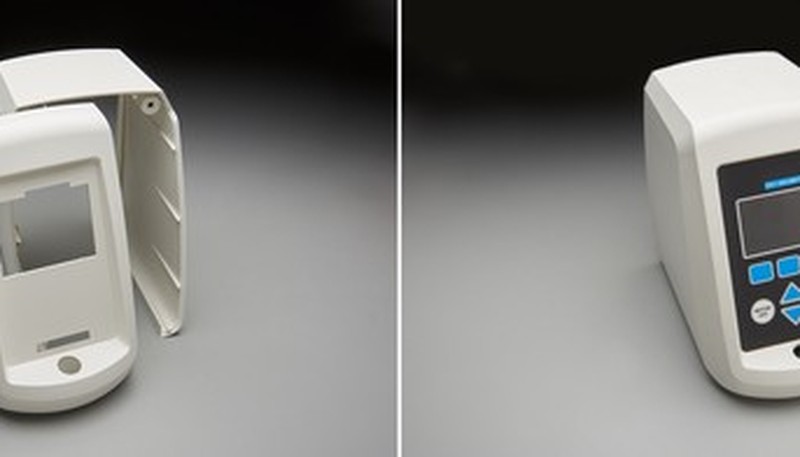
Here are the scenarios where injection molding is clearly the better option:
- Complex geometry: Parts with ribs, bosses, snap fits, textured surfaces, or internal features
- Alta precisão: Components requiring tolerances of ±0.05–0.1 mm
- High volume: Production runs above 10,000 units where per-part cost drops below $0.10–$1.00
- Multi-material parts: Overmolding or insert molding for combined materials
- Surface finish: Parts needing mirror polish, texture, or in-mold decoration
- Automotive and medical: Where dimensional consistency and material traceability are required
We’ve manufactured millions of automotive interior clips, consumer electronics housings, and medical device components through injection molding at Zetar. For these applications, extrusion simply isn’t an option because the parts are three-dimensional.
When Is Extrusion the Better Choice?
Extrusion is the better choice when you need long, continuous products with a uniform cross-section. If your product can be described as a profile that stays the same along its length, extrusion will be faster, cheaper, and more efficient than injection molding.

Common extrusion applications include:
- Pipes and tubing: PVC water pipes, medical tubing, garden hoses (diameters from 1 mm to 600+ mm)
- Profiles: Window frames, door seals, cable channels, corner guards
- Sheet and film: Packaging film, thermoforming sheets, protective barriers
- Wire coating: Insulation on electrical cables and wires
- WeatherstrippingQual processo é mais barato — moldagem por injeção ou extrusão?
Extrusion tooling costs $3,000–$25,000, compared to $5,000–$100,000+ for injection molds. For startups or low-volume runs, extrusion’s lower tooling investment can be decisive. We often advise clients to extrude the tube portion of an assembly and injection-mold only the complex end fittings.
How Do the Costs Compare Between Injection Molding and Extrusion?
The cost comparison between injection molding and extrusion depends on three main factors: tooling investment, per-unit cost, and production volume. Here’s how the economics break down based on our quoting experience at Zetar:

| Cost Factor | Moldagem por injeção | Extrusão |
|---|---|---|
| Tooling / Die Cost | $5,000–$100,000+ | $3,000–$25,000 |
| Tooling Lead Time | 4–12 weeks | 2–6 weeks |
| Per-Part Cost (high vol.) | $0.10–$5.00 | $0.05–$2.00 per meter |
| Setup Time | 1–4 hours | 0.5–2 hours |
| Resíduos de materiais | 5–10% (runners, sprues) | 1–3% (startup scrap) |
| Breakeven Volume | 5,000–10,000 units | 1,000–3,000 meters |
| Secondary Operations | Minimal (parts ready to use) | Cutting, drilling, bending |
In our experience, injection molding becomes cost-competitive with extrusion at around 10,000+ units for discrete parts. For continuous profiles, extrusion is almost always cheaper. We recently quoted a project where switching a bracket from machined extrusion to injection molding saved the client 40% per part at 50,000-unit volumes.
Can Injection Molding and Extrusion Be Used Together?
Yes, injection molding and extrusion are frequently used together in the same product or assembly. This hybrid approach leverages the strengths of each process — extrusion for the continuous-profile components and injection molding for the complex, discrete parts.
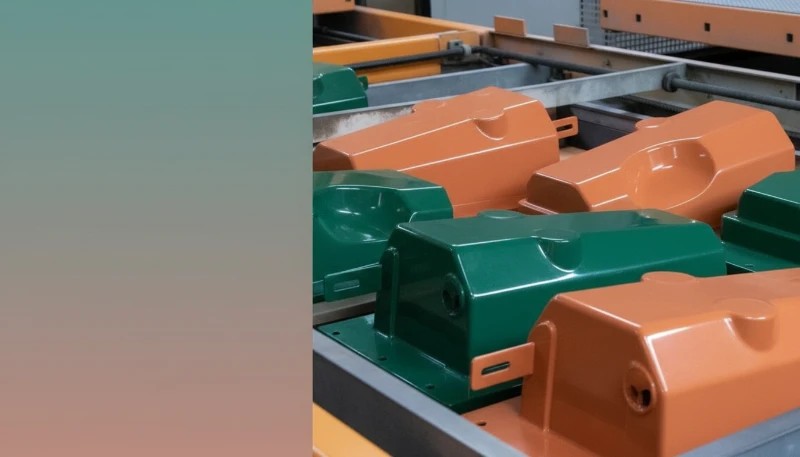
Common examples of combined use include:
- Window systems: Extruded PVC frames + injection-molded corner joints and hardware
- Automóvel: Extruded weatherstripping + injection-molded end caps and clips
- Dispositivos médicos: Extruded tubing + injection-molded connectors (Luer locks, Y-connectors)
- Produtos de consumo: Extruded handles or rails + injection-molded end fittings
- Construção: Extruded channels + injection-molded mounting brackets
At Zetar, we’ve handled numerous projects where we injection-mold custom mold components that snap or bond onto extruded profiles from partner suppliers. This approach often gives clients the best balance of cost, performance, and design flexibility.
What Are the Design Considerations for Each Process?
Designing for injection molding and designing for extrusion require fundamentally different approaches. Understanding these design rules helps engineers choose the right process early in product development, avoiding costly tooling changes later.
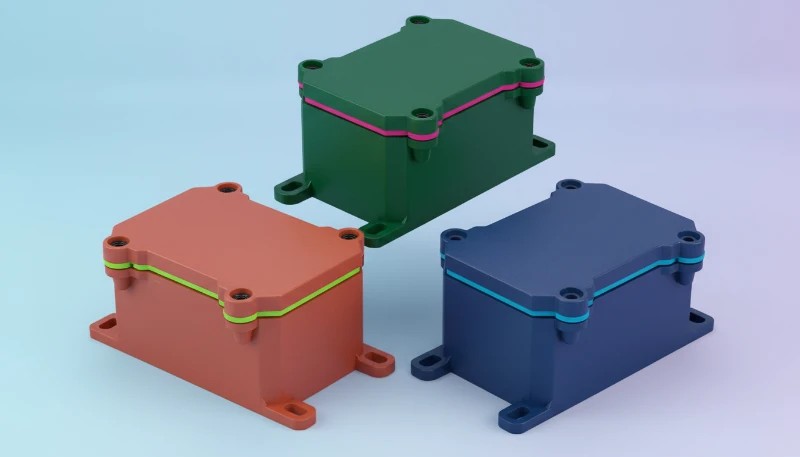
Injection molding design rules:
- Maintain uniform wall thickness (2–4 mm typical) to prevent sink marks and warpage
- Add draft angles (1–3°) on vertical walls for part ejection
- Design ribs at 50–70% of wall thickness to add strength without sink marks
- Position gates strategically for balanced filling (use análise do fluxo do molde4)
- Avoid sharp internal corners — use radii ≥0.5 mm to reduce stress concentration
Extrusion design rules:
- Keep wall thickness as uniform as possible (variations cause uneven cooling and warpage)
- Avoid hollow sections where possible; use ribs instead for rigidity
- Design symmetrical profiles to prevent twisting during cooling
- Maintain minimum wall thickness of 1–1.5 mm for rigid profiles
- Round all corners with generous radii for smooth material flow through the die
Perguntas mais frequentes
What is the main difference between injection molding and extrusion?
The main difference is that injection molding creates complex 3D parts by injecting plastic into a closed mold cavity, while extrusion produces continuous 2D-profile products by pushing plastic through an open die. Injection molding makes discrete parts; extrusion makes continuous lengths.
Which process is cheaper — injection molding or extrusion?
Moldagem por Injeção vs Extrusão: Principais Diferenças Explicadas | Zetar
Can the same plastic material be used for both injection molding and extrusion?
The same polymer type (e.g., polypropylene) can be used, but you typically need different grades. Injection molding requires high-MFI (high-flow) grades for cavity filling, while extrusion needs low-MFI (high melt strength) grades to maintain profile shape after leaving the die.
What products are made by injection molding vs. extrusion?
Injection molding produces discrete parts like bottle caps, automotive components, electronic housings, and medical devices. Extrusion produces continuous products like PVC pipes, window frames, plastic sheets, cable insulation, and weatherstripping.
Is injection molding faster than extrusion?
It depends on what you’re measuring. Injection molding cycles take 15–60 seconds per shot, producing individual parts. Extrusion runs continuously at 1–50+ meters per minute. For continuous-profile products, extrusion is much faster. For complex individual parts, injection molding is the only practical option.
Can injection molded parts and extruded parts be combined in one product?
Yes, this is very common. Many products use extruded profiles (tubes, channels, seals) combined with injection-molded discrete components (connectors, end caps, brackets). This hybrid approach takes advantage of each process’s strengths.
What tolerances can each process achieve?
Injection molding achieves tighter tolerances of ±0.05 to ±0.1 mm, making it suitable for precision components. Extrusion typically achieves ±0.25 to ±0.5 mm, which is adequate for most profile applications but not for precision fits.
Resumo
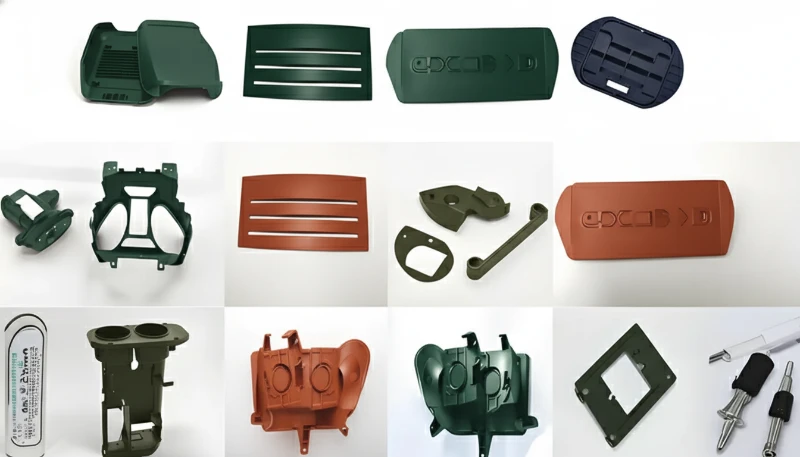
Injection molding and extrusion are complementary manufacturing processes, each optimized for different product types. Injection molding is the go-to process for complex 3D parts with tight tolerances and high production volumes. Extrusion is the best choice for continuous-profile products with uniform cross-sections.
At Zetar, with over 20 years of experience in injection molding and plastic injection molding, we help clients determine the optimal manufacturing process for their products. Whether your project needs injection molding, extrusion, or a combination of both, our engineering team can guide you from design through production.
The right choice depends on your part geometry, production volume, tolerance requirements, and budget. When in doubt, consult with an experienced manufacturer who understands both processes — it can save you significant time and tooling investment.
-
Clamping force is the force applied by the injection molding machine to keep the mold halves closed during injection. It must exceed the force generated by the injection pressure acting on the projected area of the part to prevent the mold from opening and causing flash. ↩
-
Melt flow index (MFI) is a measure of the ease of flow of a thermoplastic polymer, expressed in grams per 10 minutes. Higher MFI indicates a more fluid material, which is preferred for injection molding thin-walled parts. ↩
-
A short shot is an injection molding defect where the molten plastic fails to completely fill the mold cavity, resulting in an incomplete part. Common causes include insufficient injection pressure, low melt temperature, or inadequate material flow. ↩
-
Mold flow analysis is a computer simulation technique that predicts how molten plastic will fill a mold cavity. It helps engineers optimize gate location, wall thickness, and cooling channel placement to prevent defects before cutting steel. ↩





 PT
PT  EN
EN  ES
ES  FR
FR  DE
DE  AR
AR  RU
RU  JA
JA  KO
KO  IT
IT  NL
NL  TR
TR  PL
PL 