- 3D, sección transversal variable
- El utillaje de moldeo por inyección cuesta $5,000–$100,000, mientras que las matrices de extrusión cuestan $500–$5,000: una diferencia de 10–20×.
- Las tasas de producción por extrusión son de 10–200 kg/hora de forma continua; los ciclos de moldeo por inyección duran 10–120 segundos por ciclo, con pausas entre ellos.
- El moldeo por inyección alcanza tolerancias de ±0.05 mm; la extrusión alcanza ±0.1–0.5 mm debido al hinchamiento a la salida de la matriz y a las variaciones de enfriamiento.
- El moldeo por inyección admite geometrías 3D complejas; la extrusión se limita a secciones transversales constantes, pero destaca en grandes longitudes.
- Ambos procesos utilizan los mismos materiales termoplásticos, pero la extrusión requiere grados con un índice de fluidez más alto para un estirado uniforme.
¿Cuál es la diferencia fundamental entre el moldeo por inyección y la extrusión?
La diferencia esencial es que el moldeo por inyección fabrica piezas 3D individuales, mientras que el otro proceso produce perfiles continuos de sección constante. El moldeo por inyección y la extrusión1 dan forma al plástico de maneras distintas: el primero introduce plástico fundido en una cavidad cerrada a 500–2.000 bar para obtener piezas tridimensionales; la segunda lo empuja continuamente por una matriz abierta a 100–400 bar para producir perfiles que se cortan a medida. La inyección es cíclica y por lotes; la extrusión, continua y basada en longitud.
En ZetarMold operamos equipos de inyección y extrusión y ayudamos a elegir el proceso. La pregunta habitual es: ‘¿Puede extruirse esta pieza para ahorrar utillaje?’ Depende de si mantiene una sección constante y la geometría puede representarse como un perfil 2D desplazado en el espacio. Si es así, conviene evaluar la extrusión. Con sección variable, resaltes, nervaduras o características tridimensionales, solo es viable la inyección.
Para una referencia general del proceso, consulte nuestra guía completa del moldeo por inyección. Para decisiones específicas del utillaje, como disposición de cavidades, refrigeración, ángulos de desmoldeo y fabricabilidad, compare este artículo con la guía completa del molde de inyección.
Referencias de ingeniería relacionadas: el comportamiento de una máquina de moldeo por inyección con husillo afecta a la preparación del fundido, mientras que el tiempo de producción del moldeo por inyección determina si el proceso cíclico puede competir con la extrusión continua.
En ZetarMold, nuestra fábrica de Shanghái opera 47 máquinas de moldeo por inyección de 90T a 1850T. Para piezas que pueden moldearse o extruirse, nuestros ingenieros revisan la geometría, las secciones de pared, el riesgo del utillaje y el volumen previsto antes de recomendar un proceso.
¿Cómo funcionan el moldeo por inyección y la extrusión?
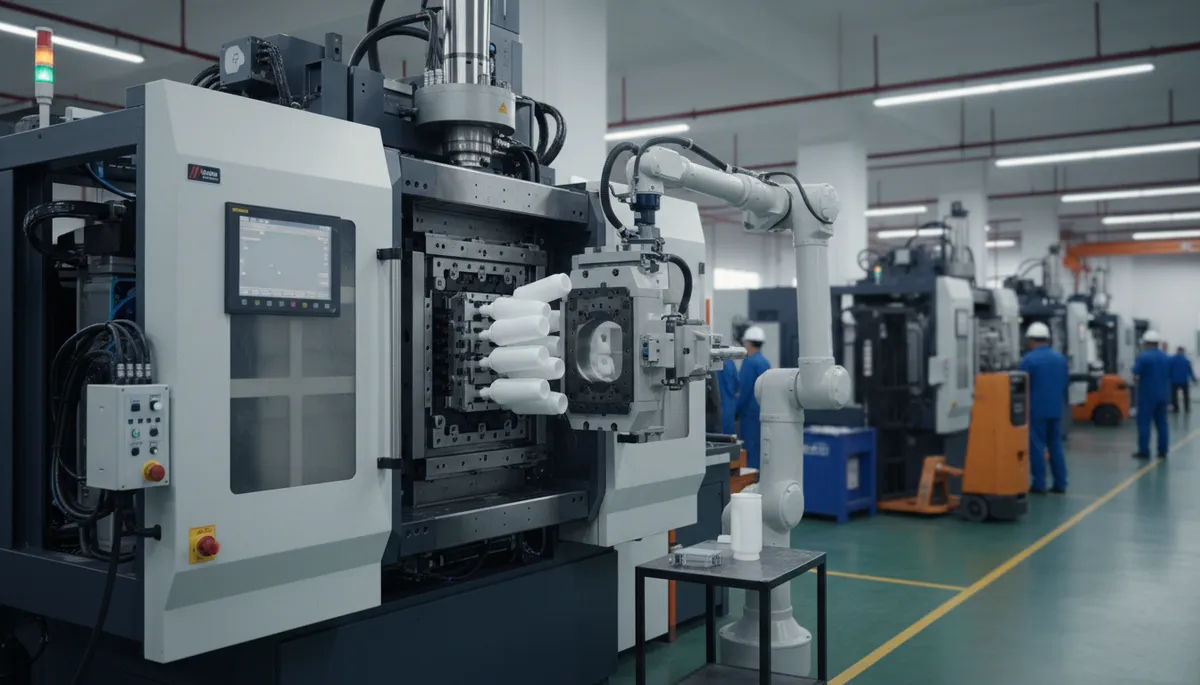
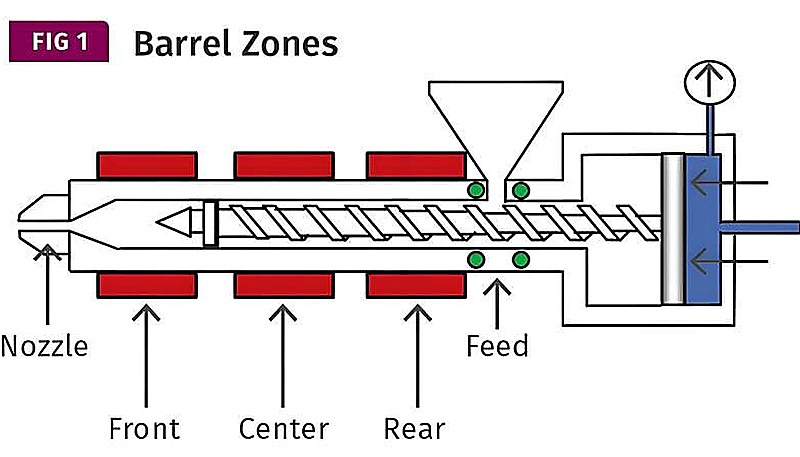
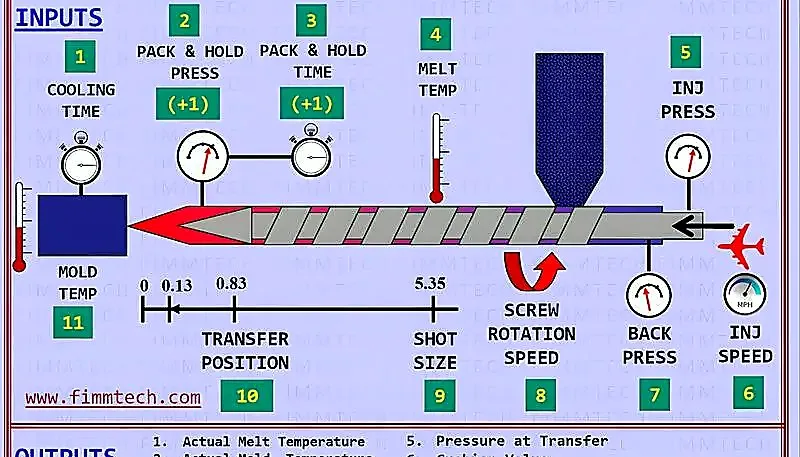
El moldeo por inyección es un proceso cíclico por inyecciones, mientras que la extrusión es un proceso continuo mediante matriz. En la inyección, un husillo alternativo funde e inyecta el plástico; el diseño del husillo2 controla la estabilidad de fusión y la uniformidad de la dosis. El husillo gira para plastificar y acumular una dosis medida delante de su punta, y luego avanza axialmente como un émbolo para introducirla en el molde cerrado. El molde se refrigera con agua y la pieza solidifica en 5–40 segundos antes de abrirse y ser expulsada. Entonces comienza el siguiente ciclo de plastificación.
En la extrusión, un husillo que gira continuamente transporta, funde y presuriza el plástico contra el extremo cerrado de un cilindro donde está instalada la matriz. La matriz da al flujo continuo de material fundido el perfil de sección transversal deseado. Inmediatamente después de salir de la matriz, el extruido pasa por una matriz de calibración (calibrador) y un tanque de refrigeración que solidifican y estabilizan dimensionalmente el perfil. Una unidad de arrastre tira del perfil a velocidad controlada, y una sierra de corte o cizalla volante lo corta a la longitud especificada.
La diferencia operativa clave es que el moldeo por inyección es intermitente —la máquina se enciende y apaga con cada inyección—, mientras que la extrusión funciona continuamente en estado estable. La extrusión alcanza su máxima eficiencia tras un periodo de arranque de 20–45 minutos, cuando se estabilizan las temperaturas del cilindro y la matriz. Cualquier interrupción del proceso (cambio de material, limpieza de la matriz, parada de la línea) exige una secuencia de reinicio completa, por lo que las series cortas son menos eficientes en extrusión que en moldeo por inyección.
¿Cómo difieren las matrices y los moldes en el costo del utillaje?
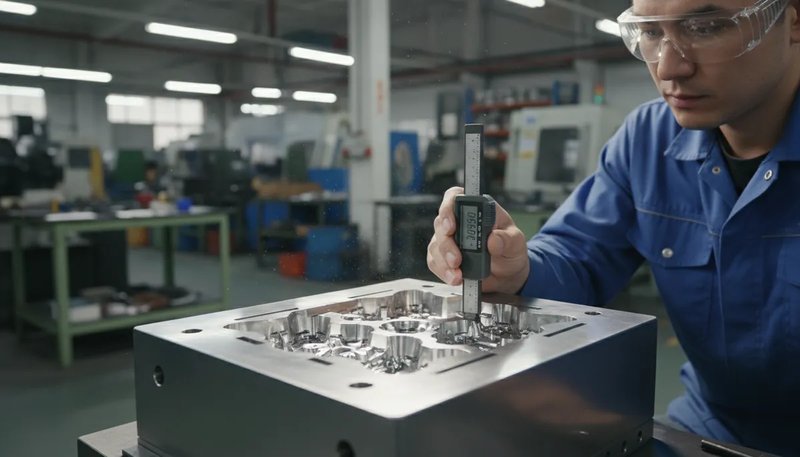
Las matrices de extrusión son más baratas porque conforman una sección transversal abierta en lugar de una cavidad de molde 3D cerrada. Normalmente cuestan menos porque conforman una sección transversal continua en lugar de una cavidad 3D cerrada. El coste del utillaje de extrusión es considerablemente inferior al del utillaje para moldeo por inyección. Una matriz de extrusión sencilla para un perfil estructural estándar cuesta $500–$3,000. Una matriz compleja de coextrusión con varios canales de material cuesta $3,000–$8,000. Los moldes de inyección para piezas comparables cuestan $5,000–$100,000 porque deben soportar presiones de inyección de 500–2,000 bar (frente a 100–400 bar en extrusión), requieren un mecanizado complejo de la cavidad y el núcleo y deben incorporar canales de refrigeración, sistemas de expulsión y la geometría de compuertas y canales.
El plazo de entrega de la matriz de extrusión también es menor: una matriz de perfil estándar puede diseñarse y mecanizarse en 2–4 semanas, frente a las 4–12 semanas de un molde de inyección. Esto hace que la extrusión sea más accesible para el desarrollo de productos y ciclos de vida más cortos. Sin embargo, las matrices de extrusión no son intercambiables entre secciones transversales: cada perfil requiere su propia matriz específica, por lo que una línea de productos con 10 tamaños de perfil distintos necesita 10 matrices independientes.
La corrección de la matriz es un aspecto crítico del utillaje de extrusión. Debido al hinchamiento del extruido (la tendencia del material extruido a expandirse al salir de la matriz por la recuperación elástica de la masa fundida de polímero), la abertura debe fabricarse intencionadamente más pequeña —normalmente un 5–20% menos que las dimensiones objetivo del perfil— para compensarlo. Acertar con las dimensiones de la matriz suele requerir entre 2 y 3 iteraciones de prueba, lo que añade entre 1 y 2 semanas y entre $500 y $2,000 en costes de ajuste. En cambio, las correcciones por contracción de los moldes de inyección se realizan una vez durante la cualificación y rara vez requieren iteraciones repetidas.
"El utillaje de matrices de extrusión cuesta 10–20× menos que el utillaje de moldes de inyección para secciones transversales de piezas comparables."True
Una matriz de extrusión sencilla para un perfil hueco rectangular cuesta $1,000–$3,000 y puede fabricarse en 2–3 semanas. Un molde de inyección para una pieza con una sección transversal similar, pero incluso con características 3D modestas (nervaduras, resaltes y orificios de montaje), cuesta $10,000–$30,000 y requiere entre 6 y 10 semanas. Esta diferencia de coste de 10–20× hace que la extrusión sea claramente preferible para piezas de sección transversal constante producidas en cualquier volumen, mientras que la inversión en utillaje para moldeo por inyección solo se justifica cuando la geometría de la pieza lo exige.
"La extrusión puede alcanzar las mismas tolerancias dimensionales que el moldeo por inyección para piezas de plástico."False
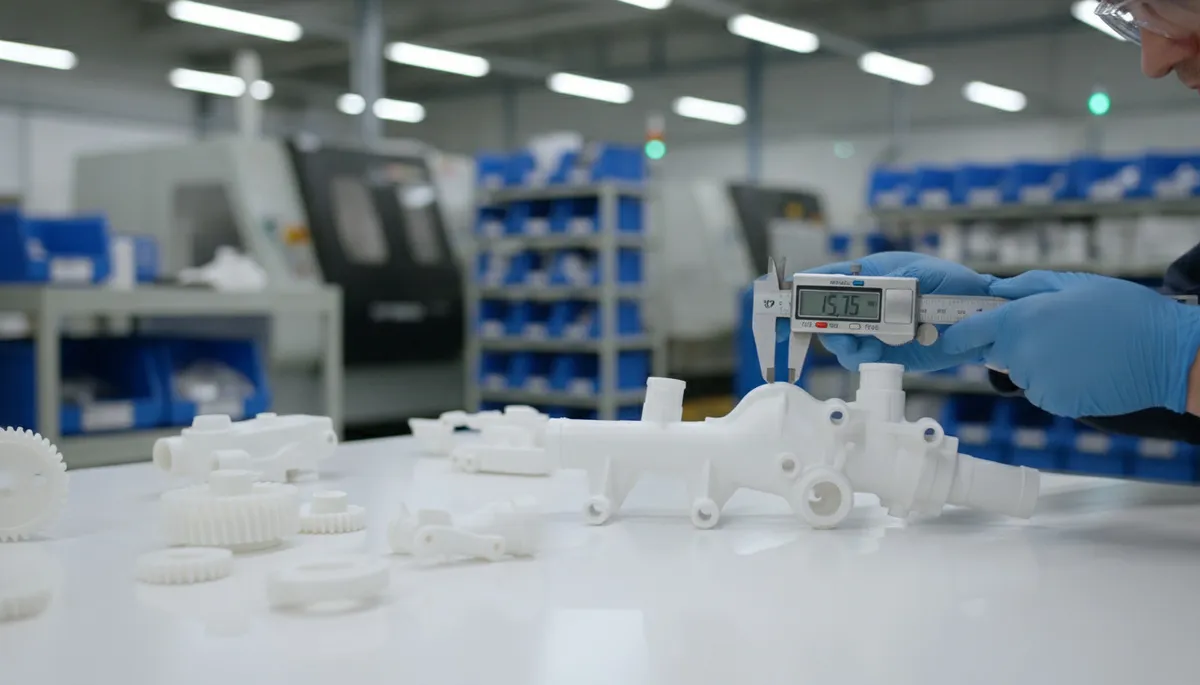
La extrusión alcanza tolerancias de ±0.1–0.5 mm en perfiles estándar, frente a ±0.05–0.15 mm en el moldeo por inyección. La variación dimensional en la extrusión procede de la variabilidad del hinchamiento a la salida de la matriz —que cambia con la temperatura de la masa fundida, la velocidad del husillo y la velocidad de arrastre—, la contracción por enfriamiento en el calibrador y la variación de tensión en la unidad de arrastre. La extrusión de perfiles con tolerancias estrechas de ±0.05 mm requiere matrices de calibrado de precisión, tanques de agua con control de temperatura y sistemas de arrastre servocontrolados, todo lo cual eleva notablemente el coste. El moldeo por inyección proporciona de forma inherente un control dimensional más estricto porque el material se solidifica en una cavidad de acero con dimensiones fijas.
Para las decisiones de diseño de moldes de inyección que tienen en cuenta la comparación del proceso con la extrusión, nuestro equipo de diseño de moldes de inyección documenta la justificación del diseño cuando un cliente podría utilizar cualquiera de los dos procesos. Esto evita cuestionamientos posteriores y garantiza que la inversión en utillaje esté justificada por los requisitos geométricos de la pieza.
Los requisitos de mantenimiento también difieren considerablemente. Los moldes de inyección requieren mantenimiento preventivo periódico cada 50,000–100,000 ciclos, incluido el pulido de cavidades, la lubricación de pasadores expulsores, la inspección de canales de agua y el reacondicionamiento de superficies de partición. Las matrices de extrusión requieren desmontaje y limpieza periódicos —normalmente cada 2–4 semanas de producción continua— para eliminar material degradado y depósitos de carbono de la zona de calibrado. El coste anual de mantenimiento de un molde de inyección de producción suele ser de $1,000–$5,000, mientras que mantener una matriz de extrusión cuesta $200–$800 al año. Esta diferencia es otro factor en la comparación económica del ciclo de vida.
¿Qué geometría de producto se adapta a cada proceso?
La mejor geometría es una sección transversal constante para la extrusión y una geometría 3D variable para el moldeo por inyección. La extrusión es adecuada para productos de sección constante, mientras que el moldeo por inyección se adapta a piezas tridimensionales con características variables. La extrusión puede producir cualquier producto con una sección transversal constante a lo largo de su longitud: tuberías, tubos, varillas, canales, ángulos, láminas, películas, perfiles de ventana, aislamiento de cables y burletes. La sección puede ser extremadamente compleja —los perfiles huecos multicámara para ventanas pueden tener docenas de cavidades internas—, pero debe mantenerse idéntica en toda la longitud. Cualquier variación longitudinal, incluidos conos, escalones o ramificaciones, es imposible en la extrusión estándar.
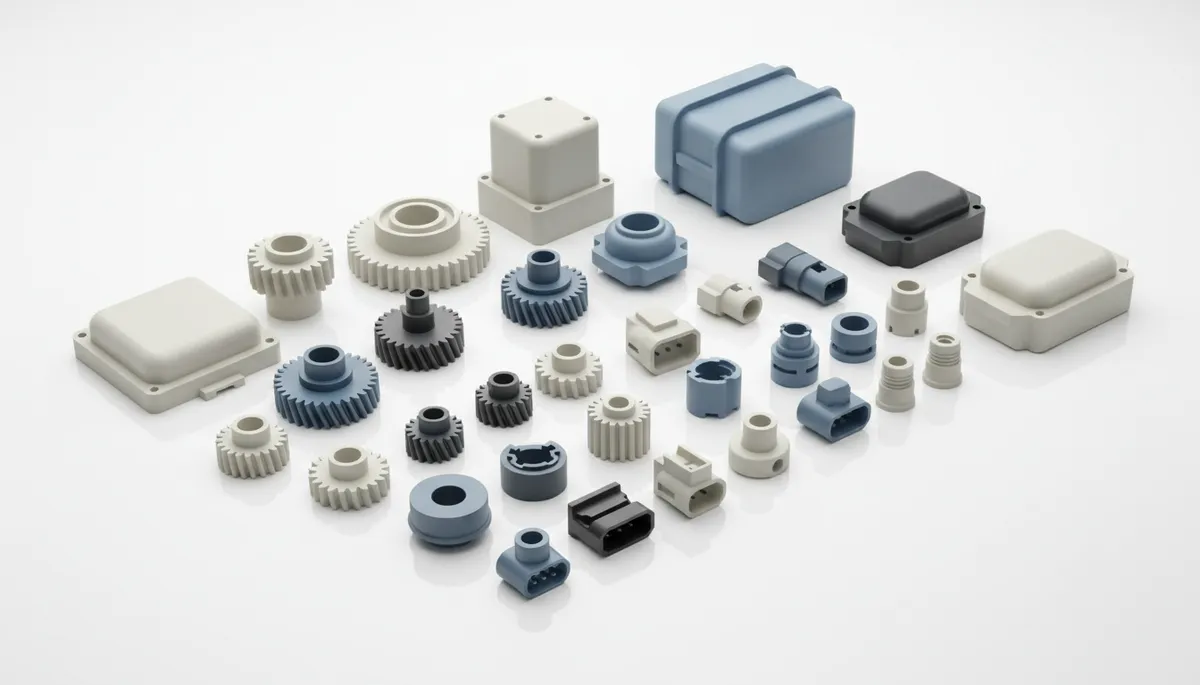
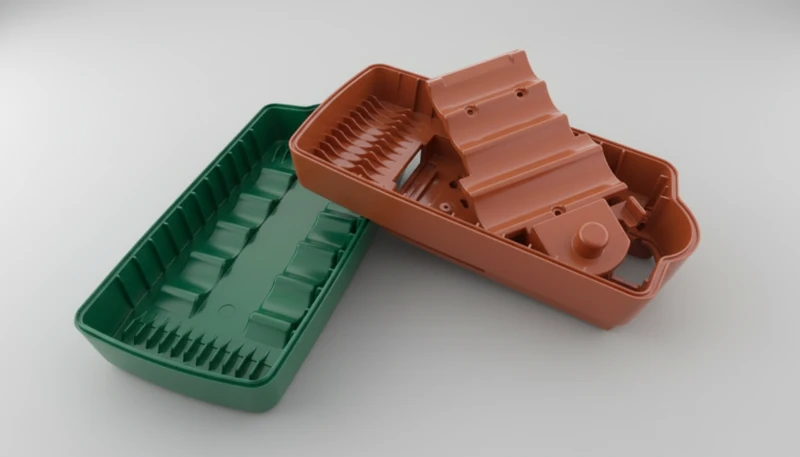
El moldeo por inyección puede producir prácticamente cualquier geometría tridimensional dentro de las limitaciones del ángulo de desmoldeo, la uniformidad del espesor de pared y la gestión de contrasalidas. Las piezas pueden incorporar nervaduras, resaltes, roscas, cierres a presión, bisagras vivas, insertos sobremoldeados y secciones variables en los tres ejes. Esta libertad geométrica convierte al moldeo por inyección en el proceso dominante para carcasas de electrónica de consumo, componentes de automoción, dispositivos médicos y equipos industriales.
La pregunta clave al evaluar el diseño de una pieza nueva es: ‘¿Tiene esta pieza la misma sección transversal en todos los puntos a lo largo de un eje?’ Si la respuesta es afirmativa, debe evaluarse la extrusión. Si la pieza tiene alguna característica tridimensional —incluso un solo orificio o una pestaña de montaje—, la extrusión por sí sola no puede fabricarla y se requiere moldeo por inyección u operaciones de mecanizado secundarias.
Los perfiles producidos por extrusión pueden mecanizarse posteriormente (taladrado, corte, punzonado) para añadir características tridimensionales después de la extrusión. Este enfoque híbrido, que consiste en extruir el perfil y después mecanizar las características, es habitual en la extrusión de aluminio y también se aplica a perfiles de plástico rígido. Para la producción de bajo volumen de piezas con geometría principalmente prismática y unas pocas características diferenciadas, puede resultar más económico que el moldeo por inyección si el número de características es bajo (menos de 5–10 operaciones secundarias).
"La extrusión es el proceso superior para tuberías, tubos, perfiles y láminas porque produce estas geometrías continuamente a menor coste que el moldeo por inyección."True
Una tubería de 3 metros no puede moldearse por inyección porque ningún molde podría abrirse alrededor de una pieza tubular de 3 metros sin que resultara mecánicamente imposible. La extrusión produce tuberías en longitudes continuas que se cortan según las especificaciones, a ritmos de producción de 10–100 kg/hora, con utillaje que cuesta $500–$3,000. Un molde de inyección equivalente para tramos de tubería de 3 metros costaría $50,000+ solo por el utillaje y aun requeriría soldadura posterior al moldeo para unir los tramos. Para todos los productos de sección transversal constante en los que predomina la longitud, la extrusión no tiene una alternativa viable.
"El moldeo por inyección siempre es más preciso y uniforme que la extrusión porque utiliza un molde cerrado."False
Aunque el moldeo por inyección logra tolerancias dimensionales más estrictas en las características 3D de las piezas, la extrusión puede alcanzar una uniformidad excelente en sus parámetros dimensionales específicos (forma de la sección transversal y espesor de pared) cuando se controla adecuadamente. Las líneas de extrusión modernas con medidores láser y control de diámetro en circuito cerrado mantienen continuamente el espesor de pared de tuberías y tubos dentro de ±0.05 mm. La ventaja del molde cerrado del moldeo por inyección se aplica a las características 3D y a las geometrías complejas; para dimensiones transversales sencillas de perfiles largos, la extrusión con medición en línea ofrece una gran capacidad.
¿Cómo difieren los materiales entre el moldeo por inyección y la extrusión?
Ambos procesos admiten muchas de las mismas familias de polímeros, pero requieren grados de resina y objetivos de fluidez distintos. Tanto la inyección como la extrusión procesan PE, PP, PVC, ABS, PC, nailon y polímeros técnicos. Sin embargo, la extrusión utiliza grados con mayor índice de fluidez3 (MFI), que fluyen mejor a baja presión, mientras que la inyección emplea grados de menor MFI y mayor peso molecular que compactan y mantienen mejor a alta presión.
El PVC es un caso especialmente interesante. Puede extruirse para fabricar tuberías, perfiles y aislamiento de cables, y es uno de los materiales de extrusión más comunes del mundo. Sin embargo, el PVC también se moldea por inyección para fabricar accesorios, válvulas y conectores. La diferencia clave es que el PVC de grado de extrusión tiene mayor contenido de plastificante y paquetes de estabilizadores distintos que el PVC de grado de moldeo por inyección. Utilizar el grado equivocado en el proceso incorrecto provoca degradación, decoloración o malas propiedades mecánicas.
Los polímeros de alta temperatura como PEEK y PPS se procesan en ambos tipos de máquina, pero la extrusión es más habitual para barras, láminas y productos semielaborados de PEEK destinados a mecanizado CNC posterior. Para implantes médicos y componentes de semiconductores de PEEK, se utiliza el moldeo por inyección cuando la compleja geometría 3D justifica la inversión en utillaje. La elección del proceso viene determinada por la geometría de la pieza, no por la compatibilidad del material.
Economía del volumen de producción: ¿cuándo resulta más rentable cada proceso?
El proceso económicamente ganador es el que se adapta a la geometría de la pieza antes de comparar el coste de las herramientas. La extrusión gana cuando el producto está dominado por su longitud y tiene una sección transversal constante; el moldeo por inyección gana cuando la geometría 3D justifica la inversión en herramientas. La comparación económica entre el moldeo por inyección y la extrusión depende de la geometría de la pieza, el volumen de producción y la naturaleza de los requisitos dimensionales del producto. Para productos de sección transversal constante, la extrusión gana en coste de herramientas y tasa de producción prácticamente a cualquier volumen. Para piezas tridimensionales que presentan una geometría prismática, la comparación es más matizada.
| Factor | Moldeo por inyección | Extrusión |
|---|---|---|
| Geometría de la pieza | 3D, sección transversal variable | Revisión de ingeniería de selección de procesos |
| Coste de utillaje | $5,000–$100,000 | $500–$5,000 |
| Plazos de entrega | 4–12 semanas | 2–4 semanas |
| Tasa de producción | 100–3,000 piezas/hora | 10–200 kg/h en continuo |
| Tolerancia dimensional | ±0.05–0.2 mm | ±0.1–0.5 mm |
| Longitud máxima de la pieza | Aprox. 1,200 mm | Ilimitado |
| Residuos materiales | 3–25% (canal frío) | <1% (solo recorte) |
| Flexibilidad del utillaje | Geometría fija | Cambio de matriz en 2–4 horas |
Para productos como accesorios de tuberías (codos, tes y acoplamientos), se utiliza el moldeo por inyección aunque la tubería recta correspondiente se extruya, porque la forma tridimensional del accesorio no puede extruirse. Los sistemas completos de tuberías combinan tuberías extruidas (PE, PVC, PP) con accesorios moldeados por inyección — ambos procesos se complementan en lugar de competir.
Cuando los clientes preguntan por alternativas al moldeo por inyección para reducir costes, la respuesta suele ser el moldeo por inyección de bajo volumen con moldes de aluminio, no la extrusión, porque la geometría de la pieza ya requiere características tridimensionales. Sustituirlo por extrusión solo es aplicable cuando el diseño puede simplificarse a una sección transversal constante, lo que normalmente exige rediseñar la pieza: una inversión de ingeniería considerable que puede estar justificada o no.
El cambio de material es considerablemente más rápido en extrusión que en moldeo por inyección. Cambiar una matriz en una línea de extrusión tarda 2–4 horas, frente a 4–8 horas para cambiar un molde en una máquina de moldeo por inyección. Esto aporta a la extrusión mayor flexibilidad para programar la producción cuando varios perfiles geométricos comparten el mismo material y máquina. Sin embargo, cambiar de material con la misma matriz exige purgar por completo el cilindro de la extrusora —normalmente 5–15 minutos y 2–5 kg de material—, comparable a los tiempos de purga del moldeo por inyección.
Los requisitos de posprocesamiento difieren entre ambos procesos. Las piezas moldeadas por inyección normalmente solo requieren recorte de compuerta e inspección tras el moldeo, sin operaciones adicionales de estabilización dimensional. Los perfiles extruidos suelen necesitar un recocido adicional (calentamiento al 50–80% de la temperatura de transición vítrea y enfriamiento lento) para aliviar tensiones residuales del estirado, especialmente en perfiles de pared gruesa de polímeros cristalinos como PA y POM. Este recocido añade 1–4 horas de producción por lote.
¿Qué problemas de calidad difieren entre el moldeo por inyección y la extrusión?
El riesgo de calidad es distinto: los defectos de moldeo proceden del llenado cíclico y los de extrusión, del flujo a través de la matriz. En el moldeo por inyección, el riesgo de calidad deriva del llenado cíclico del molde; en la extrusión, del flujo continuo por la matriz y del control del arrastre. Los defectos del moldeo por inyección —rechupes, líneas de soldadura, deformación, llenado incompleto y rebabas— surgen del proceso de llenado cíclico a alta presión y se corrigen mediante el diseño del molde y la optimización del proceso. Los defectos de extrusión —fractura de la masa fundida, líneas de matriz, variaciones del espesor de pared, perfiles deformados y rugosidad superficial— surgen del flujo continuo y se corrigen mediante la geometría de la matriz, el control de temperatura y la velocidad de arrastre.
La fractura de la masa fundida es el defecto de extrusión más grave y aparece como una superficie rugosa e irregular. Ocurre cuando la velocidad de cizallamiento en el labio de la matriz supera un valor crítico y la masa se fractura en lugar de fluir. Las soluciones incluyen aumentar la temperatura de la matriz, añadir auxiliares de proceso o rediseñar el ángulo de entrada para reducir la concentración de cizallamiento. No tiene equivalente directo en moldeo por inyección porque el recorrido es más corto y la alta presión vence la viscosidad localizada.
Para aplicaciones que requieren la máxima calidad superficial, el moldeo por inyección suele tener ventaja porque el acabado de la superficie del molde se reproduce directamente en la pieza: una cavidad pulida a espejo produce una pieza con acabado espejo. La calidad superficial de la extrusión está limitada por el estado de la matriz y el proceso de enfriamiento posterior; lograr una calidad óptica SPI A1 mediante extrusión requiere un control del proceso extremadamente estricto y no es una práctica habitual.
¿Cuándo conviene combinar el moldeo por inyección y la extrusión?
Un enfoque híbrido es el más adecuado cuando los perfiles largos necesitan conectores moldeados, tapas o elementos de montaje. Utilice ambos procesos cuando el producto requiera perfiles largos de sección constante junto con conectores, tapas o elementos de montaje moldeados. Muchos conjuntos combinan moldeo por inyección y extrusión en un mismo producto. Los marcos de ventana emplean perfiles de PVC extruido para los elementos principales y piezas de esquina y herrajes moldeados por inyección. Los embellecedores automotrices utilizan perfiles de sellado extruidos con tapas terminales moldeadas por inyección. Los mangos de dispositivos médicos usan tubos extruidos con conectores y puertos moldeados por inyección.
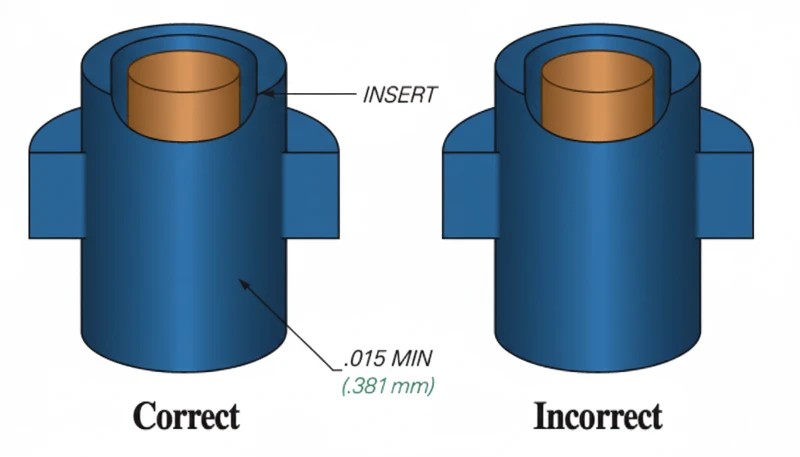
La extrusión con inserto —que consiste en empujar el compuesto de extrusión sobre un elemento continuo colocado previamente, como un alambre, una cuerda o un sustrato— crea productos compuestos que combinan las ventajas estructurales del núcleo con las propiedades protectoras o funcionales de la cubierta extruida. El aislamiento de cables es el ejemplo más común. Este proceso es fundamentalmente distinto del moldeo con insertos (colocar insertos discretos en la cavidad de un molde de inyección), pero ambos sirven para combinar materiales en una sola etapa de fabricación.
A los equipos que eligen entre procesos les recomendamos evaluar primero la geometría, después el volumen y finalmente el coste del utillaje. Si la pieza tiene sección constante, evalúe primero la extrusión; en caso contrario suele ser necesario el moldeo por inyección. El volumen y los costes determinan después si conviene un utillaje rápido de aluminio o moldes de producción para todo el ciclo previsto. Nuestro servicio de análisis de flujo del molde ayuda a validar la decisión antes de comprometer el utillaje.
Preguntas frecuentes
¿Puede utilizarse el mismo material plástico tanto en moldeo por inyección como en extrusión?
Sí, puede utilizarse la misma familia de polímeros en ambos procesos, pero el grado específico suele diferir. La extrusión requiere grados con mayor índice de fluidez (MFI), normalmente 2–10 g/10 min para extrusión general, porque el plástico debe fluir de forma continua a presiones menores (100–400 bar) a través de una matriz continua. El moldeo por inyección utiliza grados con menor MFI, normalmente 0.5–5 g/10 min para piezas estructurales, porque el mayor peso molecular proporciona mejor compactación, menor contracción y propiedades mecánicas más resistentes bajo las presiones superiores empleadas (500–2,000 bar). Usar un grado de inyección en extrusión causa presión excesiva en la matriz y puede detener la extrusora. Usar un grado de extrusión en inyección provoca demasiadas rebabas y control dimensional deficiente. Los proveedores ofrecen recomendaciones de grados específicas para cada proceso.
¿Por qué no se utiliza la extrusión para fabricar piezas de plástico complejas?
La extrusión no puede fabricar piezas de plástico complejas porque produce inherentemente una sección transversal constante. La masa fundida atraviesa una abertura fija, de modo que la sección del producto es idéntica en toda su longitud. Cualquier característica variable —nervaduras, resaltes, orificios, conicidad, escalones o ramas— es imposible mediante extrusión sola y requiere un molde cerrado o mecanizado secundario. Además, la naturaleza continua de la extrusión hace idénticos el inicio y el final: no permite formar un extremo cerrado, una tapa ni una brida en la misma tirada.
¿Cuál es la principal ventaja de la extrusión frente al moldeo por inyección?
La principal ventaja de la extrusión frente al moldeo por inyección es un coste de utillaje considerablemente menor, combinado con la capacidad de producir piezas de longitud ilimitada. Una matriz de extrusión para un perfil estándar cuesta $500–$3,000, mientras que un molde de inyección equivalente cuesta entre 10 y 20 veces más. Para productos de sección constante como tuberías, tubos, burletes, canales y láminas, la extrusión permite una producción continua de 10–200 kg/hora con residuos mínimos. Ningún molde de inyección podría producir una tubería de 6 metros ni un rollo continuo de lámina. La extrusión también ofrece plazos de utillaje más cortos (2–4 semanas) y menores costes de arranque, por lo que resulta idónea para introducir productos nuevos cuyo volumen es incierto.
¿Cómo se comparan las tolerancias del moldeo por inyección y la extrusión?
El moldeo por inyección logra tolerancias más estrechas que la extrusión para características dimensionales del mismo plástico. Las piezas de ABS pueden alcanzar ±0,05 mm en detalles pequeños al solidificar en una cavidad de acero dimensionalmente fija. Los perfiles extruidos alcanzan ±0,1–0,5 mm en su sección en condiciones normales. La banda más amplia se debe a la variación del hinchamiento al salir de la matriz, la contracción durante la refrigeración en el calibrador y la variación de la relación de estirado4.
Las líneas modernas de extrusión con medición láser en línea y control en lazo cerrado pueden alcanzar ±0.05 mm en dimensiones específicas, como el diámetro exterior de un tubo, pero esto requiere equipos de precisión y añade costes. Para elementos complejos de piezas 3D, como el paso de rosca, la altura de los resaltes o la flexión de un cierre a presión, el moldeo por inyección siempre es superior.
¿Es más respetuoso con el medio ambiente el moldeo por inyección o la extrusión?
Ambos procesos presentan perfiles ambientales similares cuando se evalúan según el aprovechamiento del material, pero difieren en categorías específicas. La extrusión genera menos desperdicio de material que el moldeo por inyección con canal frío: normalmente menos del 1% de recortes frente al 5–25% de desperdicio de canales. Sin embargo, el moldeo por inyección con canal caliente elimina el desperdicio de los canales y se aproxima a la eficiencia de materiales de la extrusión. El consumo energético por kilogramo de plástico procesado es similar en ambos (3–8 kWh/kg), aunque la extrusión funciona con mayor eficiencia en régimen estable. En cuanto a la reciclabilidad, los perfiles extruidos de un solo material (tuberías, tubos) son más fáciles de reciclar que los conjuntos multicomponente moldeados por inyección. El factor ambiental más significativo para ambos procesos es la elección del material, no el proceso en sí: en ambos pueden procesarse plásticos de base biológica y con contenido reciclado.
¿Cuándo debo elegir el moldeo por inyección en lugar de la extrusión para un producto nuevo?
Elija el moldeo por inyección en lugar de la extrusión cuando la pieza presente cualquiera de estas características: geometría tridimensional con elementos que varían a lo largo de la pieza (nervaduras, resaltes, orificios, bridas, cierres a presión), tolerancias dimensionales estrechas de ±0.05–0.15 mm en múltiples elementos, una geometría cerrada o compleja que no pueda definirse mediante una sección transversal 2D constante, necesidad de elementos de fijación integrados como resaltes, roscas y bisagras integradas, o volúmenes de producción suficientemente altos para amortizar un coste de utillaje de $5,000–$100,000. El moldeo por inyección también se prefiere cuando la calidad del acabado superficial exige reproducir una superficie de molde pulida, cuando deben combinarse varios materiales en una sola pieza (moldeo por inserción, sobremoldeo) o cuando es fundamental controlar con precisión el peso entre inyecciones para aplicaciones médicas o en contacto con alimentos.
extrusión: Proceso continuo en el que se fuerza termoplástico fundido a través de una abertura perfilada para producir perfiles, tubos, láminas o películas de sección constante, medidos en metros lineales por minuto. ↩
diseño del husillo: Geometría del husillo giratorio dentro del cilindro de una máquina de inyección o extrusión, definida por la relación L/D, la relación de compresión y la geometría de los filetes, que determinan la eficiencia de fusión y la uniformidad del fundido. ↩
índice de fluidez: El índice de fluidez (MFI) mide la facilidad de flujo de un polímero termoplástico fundido como la masa que atraviesa un orificio normalizado en 10 minutos bajo una carga y temperatura especificadas, expresada en g/10 min. ↩
relación de estirado: Medida del grado de estiramiento en extrusión, definida como la relación entre el área de la abertura de la matriz y la sección final del producto, normalmente entre 1,1 y 5,0; determina la orientación molecular y el control dimensional. ↩