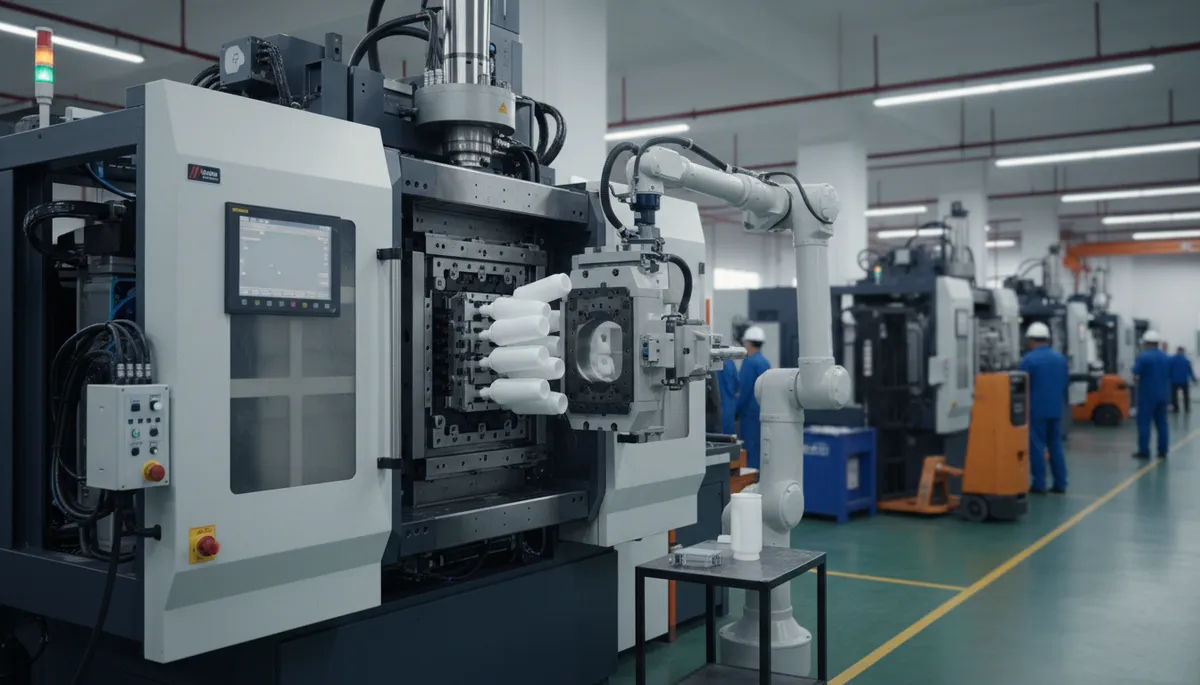
- Beim Spritzgießen entstehen einzelne dreidimensionale Bauteile in einem geschlossenen Werkzeug; bei der Extrusion entstehen durch eine offene Düse kontinuierliche Profile mit konstantem Querschnitt.
- Spritzgießwerkzeuge kosten $5.000–$100.000, Extrusionsdüsen dagegen $500–$5.000 – ein Unterschied um den Faktor 10–20.
- Die Extrusionsleistung beträgt kontinuierlich 10–200 kg/hour; beim Spritzgießen dauern die Zyklen mit Pausen dazwischen 10–120 Sekunden pro Schuss.
- Beim Spritzgießen werden Toleranzen von ±0.05 mm erreicht; bei der Extrusion sind es aufgrund von Düsenaufweitung und Kühlschwankungen ±0.1–0.5 mm.
- Spritzgießen bewältigt komplexe 3D-Geometrien; Extrusion ist auf konstante Querschnitte beschränkt, eignet sich jedoch hervorragend für große Längen.
- Beide Verfahren verwenden dieselben thermoplastischen Materialien, die Extrusion erfordert jedoch Typen mit höherem Schmelzflussindex für einen gleichmäßigen Abzug.
Was ist der grundlegende Unterschied zwischen Spritzgießen und Extrusion?
Der zentrale Unterschied besteht darin, dass Spritzgießen einzelne 3D-Teile erzeugt, während das Extrusionsverfahren kontinuierliche Profile mit konstantem Querschnitt herstellt. Spritzgießen und Extrusion1 unterscheiden sich grundlegend in der Formgebung von Kunststoff: Beim Spritzgießen wird Kunststoffschmelze mit 500–2.000 bar in einen geschlossenen Formhohlraum gedrückt, um einzelne dreidimensionale Teile herzustellen. Bei der Extrusion wird sie dagegen mit 100–400 bar kontinuierlich durch eine offene Düse gepresst, sodass auf Länge geschnittene Profile mit konstantem Querschnitt entstehen. Spritzgießen erfolgt zyklisch und chargenweise, Extrusion kontinuierlich und längenbezogen.
ZetarMold betreibt sowohl Spritzgieß- als auch Extrusionsanlagen und unterstützt Kunden regelmäßig bei der Auswahl des geeigneten Verfahrens für ihre Anwendung. Die häufigste Frage lautet: ‚Kann dieses Teil extrudiert statt spritzgegossen werden, um Werkzeugkosten zu sparen?‘ Die Antwort hängt davon ab, ob das Teil einen konstanten Querschnitt besitzt und seine Geometrie als durch den Raum gezogenes 2D-Profil darstellbar ist. Falls ja, sollte die Extrusion geprüft werden. Bei variablem Querschnitt, Domen, Rippen oder dreidimensionalen Merkmalen ist Spritzgießen die einzig praktikable Option.
Als breitere Prozessgrundlage dient unser vollständiger Leitfaden zum Spritzgießen. Bei werkzeugspezifischen Entscheidungen zu Kavitätenanordnung, Kühlung, Entformungsschrägen und Fertigbarkeit vergleichen Sie diesen Artikel mit dem vollständigen Leitfaden für Spritzgießformen.
Verwandte technische Referenzen: Das Verhalten einer Schnecken-Spritzgießmaschine beeinflusst die Schmelzeaufbereitung, während die Produktionszeit beim Spritzgießen bestimmt, ob das zyklische Formen mit der kontinuierlichen Extrusion konkurrieren kann.
Bei ZetarMold betreibt unser Werk in Shanghai 47 Spritzgießmaschinen von 90T bis 1850T. Für Teile, die spritzgegossen oder extrudiert werden könnten, prüfen unsere Ingenieure Geometrie, Wandstärken, Werkzeugrisiko und erwartete Stückzahl, bevor sie einen Prozess empfehlen.
Wie funktionieren Spritzgießen und Extrusion?
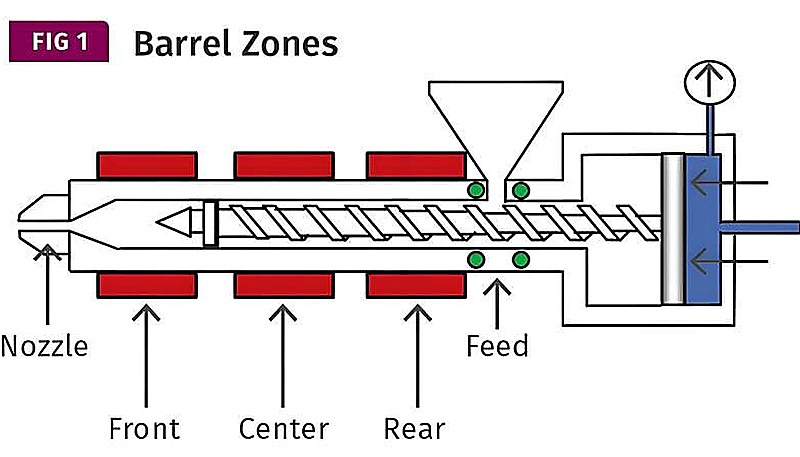
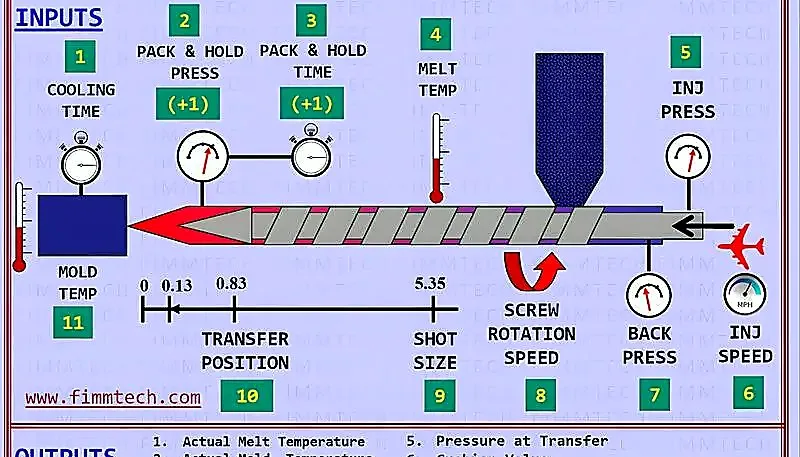
Spritzgießen ist ein zyklischer Schussprozess, Extrusion dagegen ein kontinuierlicher Düsenprozess. Spritzgießen arbeitet in definierten Zyklen, Extrusion als kontinuierliche Linie. Beim Spritzgießen schmilzt eine hin- und herbewegte Schnecke den Kunststoff und spritzt ihn zugleich ein; die Schneckenauslegung2 bestimmt die Stabilität des Aufschmelzens und die Gleichmäßigkeit der Schüsse. Die Schnecke dreht sich, um Kunststoffschmelze zu plastifizieren und eine abgemessene Menge vor der Schneckenspitze zu sammeln. Anschließend bewegt sie sich wie ein Kolben axial und spritzt den Schuss in die geschlossene Form. Die Form ist wassergekühlt; das Teil erstarrt innerhalb von 5–40 Sekunden, bevor sich die Form öffnet und das Teil ausgeworfen wird. Danach beginnt der nächste Plastifizierzyklus.
Bei der Extrusion fördert, schmilzt und verdichtet eine kontinuierlich rotierende Schnecke den Kunststoff gegen das geschlossene Zylinderende, an dem die Düse angebracht ist. Die Düse formt den kontinuierlichen Schmelzestrom zum gewünschten Querschnittsprofil. Unmittelbar nach dem Düsenaustritt durchläuft das Extrudat eine Kalibrierdüse und ein Kühlbecken, die das Profil erstarren lassen und maßlich stabilisieren. Eine Abzugseinheit zieht das Profil mit geregelter Geschwindigkeit, und eine Trennsäge oder fliegende Schere schneidet es auf die vorgegebene Länge.
Der wesentliche betriebliche Unterschied besteht darin, dass Spritzgießen diskontinuierlich erfolgt – die Maschine durchläuft mit jedem Schuss einen Ein-/Aus-Zyklus –, während die Extrusion kontinuierlich im stationären Zustand läuft. Die Extrusion erreicht ihre maximale Effizienz nach einer Anfahrzeit von 20–45 Minuten, wenn sich Zylinder- und Düsentemperaturen stabilisiert haben. Jede Prozessunterbrechung (Materialwechsel, Düsenreinigung, Linienstillstand) erfordert eine vollständige Neustartsequenz, wodurch kurze Produktionsläufe bei der Extrusion weniger effizient sind als beim Spritzgießen.
Wie unterscheiden sich Werkzeuge und Formen bei den Werkzeugkosten?
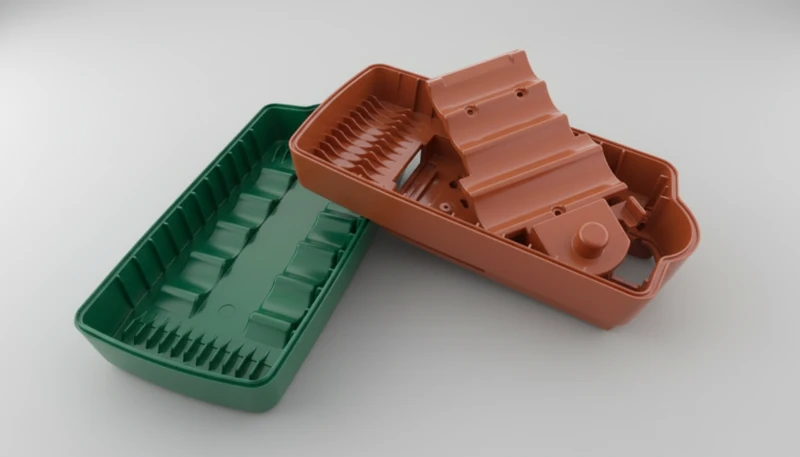
Extrusionswerkzeuge sind günstiger, da sie einen offenen Querschnitt formen und nicht einen geschlossenen 3D-Formhohlraum. Extrusionswerkzeuge kosten in der Regel weniger, weil sie einen kontinuierlichen Querschnitt formen und nicht einen geschlossenen 3D-Hohlraum. Die Kosten für Extrusionswerkzeuge sind deutlich niedriger als die für Spritzgießwerkzeuge. Ein einfaches Extrusionswerkzeug für ein Standard-Strukturprofil kostet $500–$3.000. Ein komplexes Coextrusionswerkzeug mit mehreren Materialkanälen kostet $3.000–$8.000. Spritzgießformen für vergleichbare Teile kosten $5.000–$100.000, da die Form Einspritzdrucken von 500–2.000 bar standhalten muss (gegenüber 100–400 bar bei der Extrusion), eine komplexe Bearbeitung von Hohlraum und Kern erfordert und Kühlkanäle, Auswerfersysteme sowie Anguss-/Läufergeometrie enthalten muss.
Auch die Vorlaufzeit für Extrusionswerkzeuge ist kürzer: Ein Standardprofilwerkzeug kann in 2–4 Wochen konstruiert und bearbeitet werden, verglichen mit 4–12 Wochen für ein Spritzgusswerkzeug. Dadurch ist Extrusion für die Produktentwicklung und kürzere Produktlebenszyklen besser zugänglich. Extrusionswerkzeuge sind jedoch nicht zwischen verschiedenen Querschnitten austauschbar – jedes Profil benötigt ein eigenes Werkzeug, sodass eine Produktlinie mit 10 verschiedenen Profilgrößen 10 separate Werkzeuge erfordert.
Die Düsenkorrektur ist ein entscheidender Aspekt von Extrusionswerkzeugen. Aufgrund der Düsenaufweitung – der Tendenz des extrudierten Materials, sich beim Austritt aus der Düse infolge der elastischen Rückstellung der Polymerschmelze auszudehnen – muss die Düsenöffnung bewusst unterdimensioniert werden, typischerweise 5–20 % kleiner als die Zielabmessungen des Profils. Die korrekte Bestimmung der Düsenmaße erfordert häufig 2–3 Versuchsiterationen und verursacht dadurch zusätzlich 1–2 Wochen sowie $500–$2,000 Anpassungskosten. Dagegen werden Korrekturen einer Spritzgussform für Schwindung einmal während der Werkzeugqualifizierung vorgenommen und erfordern selten wiederholte Iterationen.
"Extrusionswerkzeuge kosten bei vergleichbaren Bauteilquerschnitten 10–20× weniger als Spritzgießwerkzeuge."True
Eine einfache Extrusionsdüse für ein rechteckiges Hohlprofil kostet $1,000–$3,000 und kann in 2–3 Wochen gefertigt werden. Ein Spritzgießwerkzeug für ein Teil mit ähnlichem Querschnitt, aber selbst einfachen 3D-Merkmalen (Rippen, Dome, Befestigungsbohrungen), kostet $10,000–$30,000 und benötigt 6–10 Wochen. Aufgrund dieses Kostenunterschieds von 10–20× wird die Extrusion bei Teilen mit konstantem Querschnitt unabhängig vom Volumen klar bevorzugt. Die Investition in ein Spritzgießwerkzeug ist nur gerechtfertigt, wenn die Bauteilgeometrie dies erfordert.
"Extrusion kann bei Kunststoffteilen dieselben Maßtoleranzen wie Spritzgießen erreichen."False
Die Extrusion erreicht bei Standardprofilen Toleranzen von ±0.1–0.5 mm, verglichen mit ±0.05–0.15 mm beim Spritzgießen. Maßschwankungen bei der Extrusion entstehen durch variable Strangaufweitung (abhängig von Schmelzetemperatur, Schneckendrehzahl und Abzugsgeschwindigkeit), Kühlschwindung im Kalibrator und Zugschwankungen in der Abzugseinheit. Eng tolerierte Extrusion von Profilen mit ±0.05 mm erfordert präzise kalibrierte Formwerkzeuge, temperaturgeregelte Wasserbäder und servogeregelte Abzugssysteme — was die Kosten erheblich erhöht. Spritzgießen bietet von Natur aus eine engere Maßkontrolle, da das Material in einer maßlich festen Stahlkavität erstarrt.
Für Spritzgießform-Designentscheidungen, die den Prozessvergleich mit Extrusion berücksichtigen, dokumentiert unser Spritzgießform-Designteam die Designbegründung, wenn ein Kunde potenziell beide Prozesse nutzen könnte. Dies verhindert späteres Zweifeln und stellt sicher, dass die Werkzeuginvestition durch die Anforderungen der Bauteilgeometrie gerechtfertigt ist.
Auch die Wartungsanforderungen unterscheiden sich deutlich. Spritzgießwerkzeuge erfordern alle 50.000–100.000 Zyklen eine regelmäßige vorbeugende Wartung, einschließlich Polieren der Kavitäten, Schmieren der Auswerferstifte, Prüfen der Wasserkanäle und Aufarbeiten der Trennflächen. Extrusionsdüsen müssen regelmäßig zerlegt und gereinigt werden — bei kontinuierlicher Produktion typischerweise alle 2–4 Wochen —, um abgebautes Material und Kohlenstoffablagerungen vom Düsensteg zu entfernen. Die jährlichen Wartungskosten eines Spritzgießwerkzeugs für die Produktion liegen typischerweise bei $1.000–$5.000, während die Wartung einer Extrusionsdüse $200–$800 pro Jahr kostet. Dieser Unterschied ist ein weiterer Faktor im wirtschaftlichen Lebenszyklusvergleich.
Welche Produktgeometrie passt zu welchem Prozess?
Die beste Geometrie ist konstanter Querschnitt für Extrusion und variable 3D-Geometrie für Spritzgießen. Extrusion eignet sich für Produkte mit konstantem Querschnitt, während Spritzgießen für dreidimensionale Teile mit variierenden Merkmalen passt. Extrusion kann jedes Produkt herstellen, das über seine Länge einen konstanten Querschnitt hat: Rohre, Hohlstäbe, Stangen, Kanäle, Winkel, Platten, Folien, Fensterprofile, Kabelisolierungen und Dichtungen. Der Querschnitt kann extrem komplex sein – hohle Mehrkammerprofile für Fensterrahmen können Dutzende innere Hohlräume haben – aber derselbe Querschnitt muss über die gesamte Länge beibehalten werden. Jede Längenvariation, einschließlich Verjüngungen, Stufen oder Verzweigungen, ist bei Standardextrusion unmöglich.
Spritzgießen kann innerhalb der Grenzen von Entformungsschräge, gleichmäßiger Wandstärke und Hinterschneidungsmanagement praktisch jede dreidimensionale Geometrie erzeugen. Bauteile können Rippen, Bosse, Gewinde, Schnappverbindungen, Filmscharniere, umspritzte Einsätze und in allen drei Achsen variierende Querschnitte aufweisen. Diese geometrische Freiheit macht das Spritzgießen zum vorherrschenden Verfahren für Gehäuse der Unterhaltungselektronik, Automobilkomponenten, Medizinprodukte und industrielle Bauteile.
Die zentrale Frage bei der Bewertung einer neuen Teilekonstruktion lautet: ‘Hat dieses Teil an jedem Punkt entlang einer Achse denselben Querschnitt?’ Lautet die Antwort ja, sollte Extrusion geprüft werden. Besitzt das Teil dreidimensionale Merkmale — selbst nur eine Montagebohrung oder Lasche —, kann es nicht allein durch Extrusion hergestellt werden; Spritzgießen oder nachgelagerte Bearbeitungsschritte sind erforderlich.
Extrudierte Profile können nachträglich bearbeitet werden (Bohren, Schneiden, Stanzen), um nach der Extrusion dreidimensionale Merkmale hinzuzufügen. Dieser hybride Ansatz – Profil extrudieren, anschließend Merkmale bearbeiten – ist bei Aluminiumstrangpressprofilen üblich und auch auf starre Kunststoffprofile anwendbar. Bei Kleinserienteilen mit überwiegend prismatischer Geometrie und wenigen einzelnen Merkmalen kann dies wirtschaftlicher als Spritzgießen sein, wenn die Anzahl der Merkmale gering ist (weniger als 5–10 Nachbearbeitungsschritte).
"Extrusion ist für Rohre, Schläuche, Profile und Platten das überlegene Verfahren, weil diese Geometrien kontinuierlich und kostengünstiger als beim Spritzgießen hergestellt werden."True
Ein 3-Meter-Rohr kann nicht spritzgegossen werden, weil sich keine Form um ein 3 Meter langes Rohrteil öffnen ließe, ohne mechanisch unmöglich zu sein. Bei der Extrusion werden Rohre in Endloslängen hergestellt und zugeschnitten, mit Produktionsraten von 10–100 kg/hour und Werkzeugkosten von $500–$3,000. Ein vergleichbares Spritzgießwerkzeug für 3-Meter-Rohrabschnitte würde allein für das Werkzeug $50,000+ kosten und dennoch ein nachträgliches Verschweißen der Abschnitte erfordern. Für alle Produkte mit konstantem Querschnitt und dominierender Längenausdehnung gibt es keine tragfähige Alternative zur Extrusion.
"Spritzgießen ist stets präziser und reproduzierbarer als Extrusion, weil dabei ein geschlossenes Werkzeug verwendet wird."False
Während das Spritzgießen bei dreidimensionalen Teilemerkmalen engere Maßtoleranzen erzielt, kann die Extrusion bei korrekter Prozessführung eine hervorragende Konstanz ihrer spezifischen Maßparameter (Querschnittsform und Wanddicke) erreichen. Moderne Extrusionslinien mit Lasermessgeräten und geschlossener Durchmesserregelung halten die Wanddicke von Rohren und Schläuchen kontinuierlich auf ±0.05 mm. Der Vorteil des geschlossenen Werkzeugs beim Spritzgießen gilt für dreidimensionale Merkmale und komplexe Geometrien; bei einfachen Querschnittsabmessungen langer Profile ist die Extrusion mit Inline-Messung sehr leistungsfähig.
Wie unterscheiden sich Materialien zwischen Spritzgießen und Extrusion?
Beide Verfahren können viele derselben Polymerfamilien verarbeiten, doch die optimale Harzqualität und der Zielwert für das Fließverhalten unterscheiden sich. Spritzgießen und Extrusion verarbeiten dieselben Thermoplastklassen – PE, PP, PVC, ABS, PC, Nylon und technische Polymere. Die ideale Materialqualität ist jedoch verfahrensabhängig. Bei der Extrusion werden Qualitäten mit höherem Schmelzflussindex3 (MFI) verwendet, die unter geringerem Druck leichter fließen. Beim Spritzgießen kommen dagegen Qualitäten mit niedrigerem MFI und höherem Molekulargewicht zum Einsatz, die sich unter hohem Druck besser verdichten und nachdrücken lassen.
PVC ist ein besonders interessanter Fall. PVC kann zu Rohren, Profilen und Kabelisolierungen extrudiert werden — weltweit gehört es zu den gängigsten Extrusionsmaterialien. PVC wird jedoch auch für Fittings, Ventile und Steckverbinder spritzgegossen. Der entscheidende Unterschied besteht darin, dass PVC für die Extrusion einen höheren Weichmachergehalt und andere Stabilisatorpakete aufweist als PVC für das Spritzgießen. Der Einsatz der falschen Werkstoffgüte im falschen Verfahren führt zu Zersetzung, Verfärbung oder schlechten mechanischen Eigenschaften.
Hochtemperaturpolymere wie PEEK und PPS werden auf beiden Maschinentypen verarbeitet, doch Extrusion ist bei PEEK-Stäben, -Platten und -Halbzeugen für die anschließende CNC-Bearbeitung gebräuchlicher. Bei medizinischen PEEK-Implantaten und Halbleiterkomponenten wird Spritzgießen eingesetzt, wenn die komplexe 3D-Geometrie die Werkzeugkosten rechtfertigt. Die Verfahrenswahl wird von der Bauteilgeometrie bestimmt, nicht von der Materialverträglichkeit.
Wirtschaftlichkeit nach Produktionsvolumen: Wann ist welches Verfahren überlegen?
Wirtschaftlich gewinnt das Verfahren, das zur Bauteilgeometrie passt, noch bevor Werkzeugkosten verglichen werden. Extrusion ist bei längenbestimmten Produkten mit konstantem Querschnitt im Vorteil; Spritzgießen gewinnt, wenn die 3D-Geometrie die Werkzeuginvestition rechtfertigt. Der wirtschaftliche Vergleich hängt von Bauteilgeometrie, Produktionsvolumen und Art der Maßanforderungen ab. Bei Produkten mit konstantem Querschnitt ist Extrusion bei nahezu jedem Volumen hinsichtlich Werkzeugkosten und Produktionsrate überlegen. Bei dreidimensionalen Bauteilen mit prismatischer Geometrie ist der Vergleich differenzierter.
| Faktor | Spritzgießen | Extrusion |
|---|---|---|
| Teil-Geometrie | 3D, variabler Querschnitt | Nur konstanter Querschnitt |
| Werkzeugkosten | $5,000–$100,000 | Vergleichen Sie Spritzguss vs. Extrusion: Prozessmechanik, Werkzeugkosten, Toleranzen, Produktionsvolumen und Materialkompatibilität für die Kunststoffteilkonstruktion. |
| Vorlaufzeit | 4–12 Wochen | 2–4 Wochen |
| Produktionsrate | 100–3.000 Teile/Stunde | 10–200 kg/Stunde kontinuierlich |
| Abmessungstoleranz | ±0.05–0.2 mm | ±0.1–0.5 mm |
| Maximale Teilelänge | ca. 1.200 mm | Unbegrenzt |
| Materialabfälle | 3–25% (Kaltkanal) | <1% (nur Beschnitt) |
| Werkzeugflexibilität | Feste Geometrie | Werkzeugwechsel in 2–4 Stunden |
Bei Produkten wie Rohrformstücken – Bögen, T-Stücken und Kupplungen – wird Spritzguss eingesetzt, obwohl das zugehörige gerade Rohr extrudiert wird, weil sich die dreidimensionale Form des Formstücks nicht extrudieren lässt. Vollständige Rohrleitungssysteme verbinden extrudierte Rohre aus PE, PVC oder PP mit spritzgegossenen Formstücken. Die beiden Verfahren ergänzen sich, statt miteinander zu konkurrieren.
Wenn Kunden nach Alternativen zum Spritzgießen zur Kostenreduzierung fragen, ist die Antwort oft Spritzgießen in kleinen Stückzahlen mit Aluminiumwerkzeugen, nicht Extrusion, weil die Bauteilgeometrie bereits dreidimensionale Merkmale erfordert. Ein Austausch durch Extrusion kommt nur infrage, wenn das Bauteildesign auf einen konstanten Querschnitt vereinfacht werden kann, was in der Regel eine Neukonstruktion des Teils erfordert – eine erhebliche technische Investition, die gerechtfertigt sein kann oder nicht.
Der Materialwechsel erfolgt bei der Extrusion deutlich schneller als beim Spritzgießen. Ein Düsenwechsel an einer Extrusionslinie dauert 2–4 Stunden gegenüber 4–8 Stunden für einen Formwechsel an einer Spritzgießmaschine. Dadurch ist die Extrusion flexibler für die Produktionsplanung, wenn mehrere Profilgeometrien dasselbe Material und dieselbe Maschine nutzen. Materialwechsel innerhalb derselben Düsenkonfiguration erfordern jedoch eine vollständige Spülung des Extruderzylinders — typischerweise 5–15 Minuten und 2–5 kg Material —, was mit den Spülzeiten beim Spritzgießen vergleichbar ist.
Die Anforderungen an die Nachbearbeitung unterscheiden sich zwischen den beiden Verfahren. Spritzgussteile benötigen nach dem Formen typischerweise nur das Entfernen des Anschnitts und eine Prüfung; zusätzliche Schritte zur Maßstabilisierung sind nicht erforderlich. Extrudierte Profile müssen häufig zusätzlich getempert werden: Erwärmung auf 50–80% der Glasübergangstemperatur und langsames Abkühlen bauen Eigenspannungen aus dem Ziehprozess ab. Dies gilt besonders für dickwandige Profile aus kristallinen Polymeren wie PA und POM. Der Temperschritt verlängert die Produktionszeit je Charge um 1–4 Stunden.
Welche Qualitätsprobleme unterscheiden sich zwischen Spritzgießen und Extrusion?
Das Qualitätsrisiko ist unterschiedlich: Spritzgießfehler entstehen durch zyklisches Füllen, Extrusionsfehler durch Werkzeugfluss. Das Qualitätsrisiko beim Spritzgießen kommt vom zyklischen Formfüllen, während das Qualitätsrisiko bei der Extrusion vom kontinuierlichen Werkzeugfluss und der Zugvorlagensteuerung herrührt. Spritzgießfehler – Einfallstellen, Schweißlinien, Verzug, unvollständige Füllung und Grat – entstehen durch den zyklischen Hochdruck-Füllprozess und werden durch Formdesign und Prozessoptimierung behoben. Extrusionsfehler – Schmelzebruch, Werkzeuglinien, Wandstärkenschwankungen, verzogene Profile und Oberflächenrauheit – entstehen durch den kontinuierlichen Fließprozess und werden durch Werkzeuggeometrie, Temperaturregelung und Abzuggeschwindigkeit adressiert.
Schmelzebruch ist der schwerwiegendste Extrusionsfehler und zeigt sich als raue, unregelmäßige Oberfläche des Extrudats. Er tritt auf, wenn die Schergeschwindigkeit an der Düsenlippe einen materialspezifischen kritischen Wert überschreitet, sodass die Schmelze bricht, statt gleichmäßig zu fließen. Zu den Lösungen zählen eine höhere Düsentemperatur (verringert die Viskosität), die Zugabe von Verarbeitungshilfsmitteln (Gleitmitteln) oder eine Neugestaltung des Düseneintrittswinkels zur Verringerung der Scherkonzentration. Beim Spritzgießen gibt es kein direktes Gegenstück zum Schmelzebruch, weil der Fließweg kürzer ist und die Hochdruckeinspritzung lokale Viskosität überwinden kann.
Bei Anwendungen mit höchsten Anforderungen an die Oberflächenqualität ist das Spritzgießen im Allgemeinen im Vorteil, da die Werkzeugoberfläche unmittelbar auf dem Teil abgebildet wird — eine hochglanzpolierte Kavität erzeugt ein Teil mit Hochglanzoberfläche. Die Oberflächenqualität bei der Extrusion wird durch Düsenzustand und Kühlprozess nach der Düse begrenzt; das Erreichen optischer SPI A1-Qualität bei der Extrusion erfordert eine äußerst enge Prozessregelung und ist keine Standardpraxis.
Wann sollten Sie Spritzgießen und Extrusion kombinieren?
Ein hybrider Ansatz ist am besten, wenn lange Profile geformte Verbinder, Kappen oder Befestigungsmerkmale benötigen. Verwenden Sie beide Verfahren, wenn das Produkt lange konstante Profile plus geformte Verbinder, Kappen oder Befestigungsmerkmale benötigt. Viele Produktbaugruppen verwenden sowohl Spritzgießen als auch Extrusion im selben Produkt. Fensterrahmenbaugruppen verwenden extrudierte PVC-Profile für die Hauptrahmenteile und spritzgegossene Eckstücke und Beschläge. Automobilzierleistenbaugruppen verwenden extrudierte Dichtungsprofile mit spritzgegossenen Endkappen. Medizinische Gerätegriffe verwenden extrudiertes Schlauchmaterial mit spritzgegossenen Verbindern und Anschlüssen.
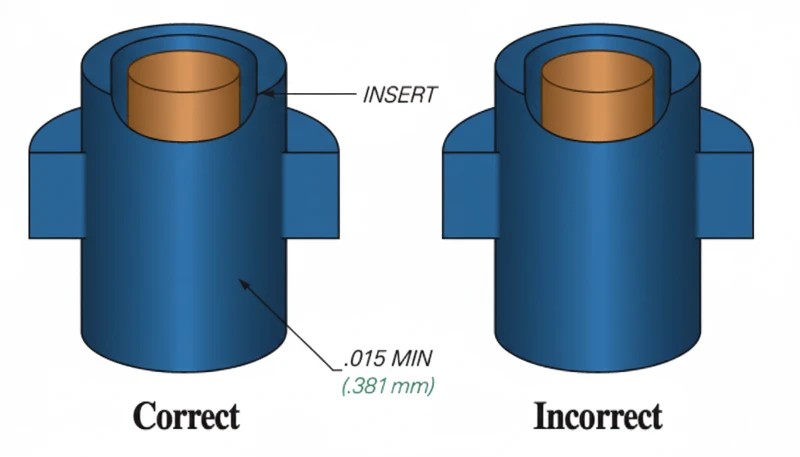
Bei der Einlegerextrusion — dem Aufbringen einer Extrusionsmasse auf ein vorpositioniertes durchgehendes Element wie Draht, Seil oder Substrat — entstehen Verbundprodukte, welche die strukturellen Vorteile des Kerns mit den schützenden oder funktionalen Eigenschaften des extrudierten Mantels kombinieren. Kabelisolierung ist das häufigste Beispiel. Dies unterscheidet sich grundlegend vom Insert-Molding (Einlegen einzelner Einleger in eine Spritzgusskavität), doch beide Verfahren dienen dazu, Materialien in einem einzigen Fertigungsschritt zu verbinden.
Produktentwicklungsteams, die zwischen den Verfahren wählen, empfehlen wir, zuerst die Geometrie, dann die Stückzahl und schließlich die Werkzeugkosten zu bewerten. Die Geometrie ist der wichtigste Faktor: Hat das Teil einen konstanten Querschnitt, sollte zuerst die Extrusion geprüft werden. Andernfalls ist in der Regel Spritzgießen erforderlich. Eine anschließende Stückzahl- und Kostenanalyse zeigt, ob Aluminium-Schnellwerkzeuge oder Spritzgießformen für die Serienproduktion über den vorgesehenen Produktlebenszyklus sinnvoll sind. Unsere Moldflow-Analyse hilft, Spritzgießentscheidungen zu validieren, bevor das Werkzeug verbindlich beauftragt wird.
Häufig gestellte Fragen
Kann derselbe Kunststoff sowohl beim Spritzgießen als auch bei der Extrusion verwendet werden?
Ja, dieselbe Polymerfamilie kann in beiden Verfahren eingesetzt werden, doch die konkrete Sorte unterscheidet sich meist. Extrusion erfordert Typen mit höherem Schmelzflussindex (MFI), bei allgemeiner Extrusion typischerweise 2–10 g/10 min, weil der Kunststoff bei niedrigeren Drücken von 100–400 bar stetig durch eine kontinuierliche Düse fließen muss. Spritzgießen verwendet für Strukturteile Typen mit niedrigerem MFI von typischerweise 0.5–5 g/10 min, da das höhere Molekulargewicht bei den eingesetzten höheren Drücken von 500–2.000 bar besseres Nachdrücken, geringere Schwindung und stärkere mechanische Eigenschaften bietet. Ein Spritzgießtyp erzeugt bei der Extrusion übermäßigen Düsendruck und kann den Extruder zum Stillstand bringen. Ein Extrusionstyp verursacht beim Spritzgießen starke Gratbildung und schlechte Maßkontrolle. Materiallieferanten geben verfahrensspezifische Sortenempfehlungen.
Warum wird Extrusion nicht zur Herstellung komplexer Kunststoffteile eingesetzt?
Durch Extrusion lassen sich keine komplexen Kunststoffteile herstellen, weil das Verfahren grundsätzlich einen konstanten Querschnitt erzeugt. Die Kunststoffschmelze wird durch eine feste Düsenöffnung gedrückt, sodass die Form des Produktquerschnitts an jeder Stelle über seine Länge identisch ist. Jedes Merkmal, das sich entlang der Länge verändert – Rippen, Dome, Befestigungsbohrungen, Verjüngungen, Stufen oder Abzweigungen –, kann durch Extrusion allein nicht hergestellt werden. Solche Merkmale erfordern entweder ein geschlossenes Werkzeug (Spritzgießen) oder nachgelagerte Bearbeitungsschritte nach der Extrusion. Zudem bedeutet die kontinuierliche Natur der Extrusion, dass Anfang und Ende jedes extrudierten Teils identisch sind – ein geschlossenes Ende, ein Deckel oder ein Flanschmerkmal als Bestandteil desselben Extrusionslaufs lässt sich nicht formen.
Was ist der Hauptvorteil der Extrusion gegenüber dem Spritzgießen?
Der Hauptvorteil der Extrusion gegenüber dem Spritzguss liegt in den deutlich niedrigeren Werkzeugkosten in Verbindung mit der Möglichkeit, Bauteile in unbegrenzter Länge herzustellen. Eine Extrusionsdüse für ein Standardprofil kostet $500–$3,000, während ein vergleichbares Spritzgießwerkzeug 10–20× mehr kostet. Produkte wie Rohre, Schläuche, Dichtungsprofile, Kanalprofile und Platten mit konstantem Querschnitt werden durch Extrusion kontinuierlich mit 10–200 kg/hour und minimalem Ausschuss gefertigt. Kein Spritzgießwerkzeug könnte ein 6-meter langes Rohr oder eine kontinuierliche Rolle aus Plattenmaterial herstellen. Zudem bietet die Extrusion kürzere Werkzeugvorlaufzeiten (2–4 weeks) und geringere Anlaufkosten, wodurch sie sich ideal für neue Produkte mit ungewissem Produktionsvolumen eignet.
Wie unterscheiden sich die Toleranzen beim Spritzgießen und Extrudieren?
Spritzgießen erreicht bei Maßmerkmalen desselben Kunststoffs engere Toleranzen als Extrusion. Spritzgussteile aus amorphen Werkstoffen wie ABS können bei kleinen Merkmalen ±0,05 mm erreichen, weil das Material in einem maßlich fixierten Stahlhohlraum erstarrt. Extrudierte Profile erreichen unter Standardbedingungen bei Querschnittsabmessungen ±0,1–0,5 mm. Das breitere Toleranzband der Extrusion entsteht durch Schwankungen der Düsenaufweitung – das Material dehnt sich nach dem Verlassen der Düse aus –, Kühlschwindung im Kalibrator und Schwankungen des Abzugsverhältnisses4.
Moderne Extrusionsanlagen mit Inline-Lasermessung und geschlossener Regelung können bei spezifischen Abmessungen wie dem Außendurchmesser von Rohren ±0,05 mm erreichen, dies erfordert jedoch Präzisionsausrüstung und erhöht die Kosten. Für komplexe 3D-Teilemerkmale wie Gewindesteigung, Bundhöhe oder Schnappverbindungsauslenkung ist Spritzgießen immer überlegen.
Ist Spritzgießen oder Extrusion umweltfreundlicher?
Bei einer Bewertung anhand der Materialausnutzung weisen beide Verfahren ein ähnliches Umweltprofil auf, unterscheiden sich jedoch in einzelnen Kategorien. Bei der Extrusion fällt weniger Materialabfall an als beim Kaltkanal-Spritzgießen — typischerweise weniger als 1% Verschnitt gegenüber 5–25% Angussabfall. Beim Heißkanal-Spritzgießen entfällt der Angussabfall jedoch, sodass die Materialeffizienz nahezu der Extrusion entspricht. Der Energieverbrauch pro verarbeitetem Kilogramm Kunststoff ist bei beiden Verfahren ähnlich (3–8 kWh/kg), wobei die Extrusion im stationären Betrieb effizienter läuft. Hinsichtlich der Recyclingfähigkeit lassen sich extrudierte Profile aus einem einzigen Werkstoff (Rohr, Schlauch) leichter recyceln als spritzgegossene Mehrkomponentenbaugruppen. Der wichtigste Umweltfaktor beider Verfahren ist die Werkstoffwahl, nicht das Verfahren selbst — biobasierte Kunststoffe und Kunststoffe mit Rezyklatanteil können mit beiden Verfahren verarbeitet werden.
Wann sollte ich für ein neues Produkt Spritzgießen statt Extrusion wählen?
Wählen Sie Spritzgießen statt Extrusion, wenn Ihr Teil eines dieser Merkmale aufweist: dreidimensionale Geometrie mit Merkmalen, die entlang der Teilelänge variieren (Rippen, Dome, Löcher, Flansche, Schnappverbindungen), enge Maßtoleranzen von ±0.05–0.15 mm an mehreren Merkmalen, eine geschlossene oder komplexe Geometrie, die nicht durch einen konstanten 2D-Querschnitt definiert werden kann, einen Bedarf an integrierten Befestigungsmerkmalen wie Domen, Gewinden und Filmscharnieren oder Produktionsmengen, die hoch genug sind, um Werkzeugkosten von $5,000–$100,000 zu amortisieren. Spritzgießen wird außerdem bevorzugt, wenn die geforderte Oberflächengüte die Abbildung einer polierten Werkzeugoberfläche verlangt, wenn mehrere Materialien in einem Teil kombiniert werden müssen (Insert-Molding, Umspritzen) oder wenn eine präzise Gewichtskontrolle von Schuss zu Schuss für Medizin- oder Lebensmittelkontaktanwendungen entscheidend ist.
Extrusion: Extrusion ist ein kontinuierliches Fertigungsverfahren, bei dem geschmolzener Thermoplast durch eine geformte Düsenöffnung gepresst wird, um Profile, Rohre, Platten oder Folien mit konstantem Querschnitt herzustellen; die Leistung wird in Laufmetern pro Minute gemessen. ↩
Schneckenauslegung: Die Schneckenauslegung bezeichnet die Geometrie der rotierenden Schnecke im Zylinder einer Spritzgieß- oder Extrusionsmaschine. Sie wird durch Parameter wie das L/D-Verhältnis (Länge zu Durchmesser), das Verdichtungsverhältnis und die Ganggeometrie definiert, die Aufschmelzleistung und Schmelzehomogenität bestimmen. ↩
Schmelzflussindex: Der Schmelzflussindex (MFI) ist ein Maß für die Fließfähigkeit eines geschmolzenen thermoplastischen Polymers. Er ist als die Polymermasse definiert, die bei einer bestimmten Last und Temperatur innerhalb von 10 Minuten durch eine Standarddüse fließt, und wird in g/10 min angegeben. ↩
Abzugsverhältnis: Das Abzugsverhältnis misst den Streckgrad bei der Extrusion. Es ist als Verhältnis der Fläche der Düsenöffnung zur Querschnittsfläche des Endprodukts definiert, liegt typischerweise zwischen 1,1 und 5,0 und bestimmt die Molekülorientierung sowie Maßhaltigkeit extrudierter Produkte. ↩