In Ihrer Designdatei steht ±0,1 mm. Ihr Spritzgießer gibt einen Wert von ±0,2 mm an. Ihr Kunde benötigt eine Ebenheit innerhalb von 0,05 mm über die gesamte Dichtfläche. Drei verschiedene Nummern – keine von ihnen spricht die gleiche Sprache. Das ist das Kernproblem der Toleranzen beim Spritzgießen: Längenmaße und geometrische Toleranzen sind nicht dasselbe, und ihre Verwechslung kann einen ganzen Produktionslauf kosten.
Dieser Leitfaden erläutert, was geometrische Toleranzen beim Spritzgießen tatsächlich bedeuten, wie GD&T-Symbole in Werkzeug- und Bauteilanforderungen umgesetzt werden und welche Werte in der Produktion realistisch eingehalten werden können — mit konkreten Zahlen statt vager Bereiche.
- Geometrische Toleranzen steuern Form, Ausrichtung und Position – nicht nur Größe – und sind daher entscheidend für Dichtflächen, Pass teile und Baugruppen.
- Standardmäßige spritzgegossene Teile halten lineare Toleranzen von ±0,1–0,2 mm; kritische Merkmale können mit geeigneter Formkonstruktion und Materialauswahl ±0,05 mm erreichen.
- GD&T-Ebenheit, Rechtwinkligkeit und Position sind die drei am häufigsten spezifizierten geometrischen Toleranzen in Kunststoffteilzeichnungen.
- Schrumpfung, Verzug und Trennlinienversatz sind die drei Hauptursachen für Fehler bei geometrischen Toleranzen im Spritzguss.
- Die Angabe einer GD&T-Ebenheit für Formtrennebenen reduziert Gratfehler im Vergleich zu ausschließlich linearen Toleranzangaben um ungefähr 60%.
Was sind geometrische Toleranzen beim Spritzgießen?
Geometrische Toleranzen beim Spritzgießen sind die Hauptkategorien oder Optionen, die in diesem Abschnitt erläutert werden. Wenn Sie Lieferanten vergleichen oder die Beschaffung planen, deckt unser Beschaffungsleitfaden für Spritzgusslieferanten die RFQ-Vorbereitung, Qualifizierung und kommerzielle Risikoprüfung ab.
Geometrische Toleranzen definieren die zulässige Abweichung in Form, Ausrichtung, Lage und Rundlauf einer Geometrie – nicht nur ihrer Größe. Beim Spritzgießen kann ein Teil im Durchmesser innerhalb von ±0,1 mm liegen und trotzdem die Montage verfehlen, weil seine Passfläche um 0,3 mm nicht eben ist. Dieses Versagen ist ein geometrisches Toleranzproblem, kein dimensionales.
Das formale System zur Angabe geometrischer Toleranzen ist GD&T — Geometric Dimensioning and Tolerancing —, normiert nach ASME Y14.5 und ISO 1101. GD&T unterteilt Toleranzen in fünf Kategorien: Form (Ebenheit, Geradheit, Rundheit, Zylindrizität), Richtung (Parallelität, Rechtwinkligkeit, Neigung), Ort (Position, Konzentrizität, Symmetrie), Lauf (Rundlauf, Gesamtlauf) und Profil (Linienprofil, Flächenprofil).
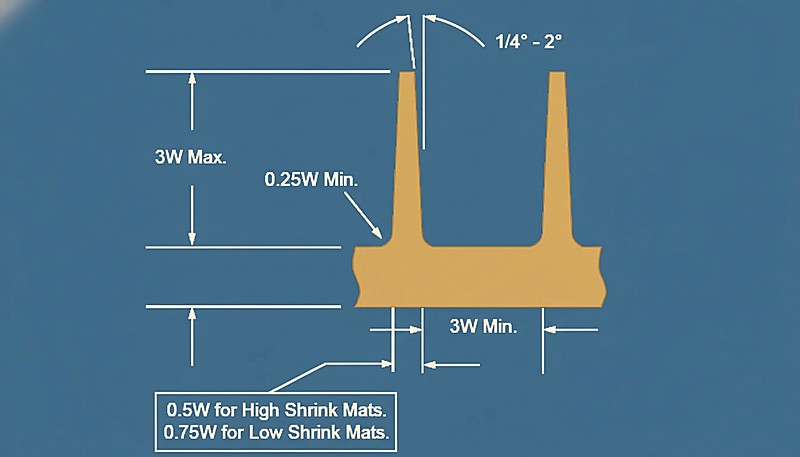
Bei Spritzgussteilen sind Ebenheit (Dichtflächen, Montageflächen), Position (Positionen von Domen, Schnapphaken) und Rechtwinkligkeit (Wände, Rippen, Stifte) die am häufigsten angewandten GD&T-Toleranzen. Jede dieser Toleranzen muss berücksichtigen, wie sich Kunststoff beim Abkühlen verhält — etwas, das eine rein maßliche Angabe nicht erfassen kann.
Welche Toleranzniveaus kann Spritzguss tatsächlich halten?
Standard-Spritzguss in kommerzieller Qualität hält ±0,2 mm bei nicht-kritischen Merkmalen. Fein-Toleranz-Produktion erreicht ±0,05–0,1 mm bei kritischen Abmessungen mit kontrollierten Materialien und validierten Werkzeugen. Alles, was enger als ±0,05 mm ist, erfordert typischerweise nachträgliche Bearbeitung oder Präzisionswerkzeuge mit temperaturgeregelten Pressen.
Die SPI-Toleranzrichtlinien (Society of the Plastics Industry) kategorisieren Teile in drei Klassen. Die kommerzielle Klasse erlaubt ±0,25 mm bei den meisten Merkmalen und eignet sich für Konsumgüter. Die Fein-Klasse zielt auf ±0,13 mm für funktionale Komponenten ab. Die Präzisionsklasse strebt ±0,05 mm bei kritischen Merkmalen an und gilt für medizinische, Luft- und Raumfahrt- sowie automobiltechnische Dichtungsflächen.
Geometrische Toleranzen fügen eine weitere Ebene hinzu. Selbst wenn eine Abmessung innerhalb der Spezifikation liegt, kann die Form es nicht sein. Eine flache Bossfläche, die mit einer Ebenheit von 0,1 mm spezifiziert ist, ist weit anspruchsvoller als eine ±0,1 mm Abmessungsangabe – sie erfordert, dass die gesamte Oberfläche innerhalb einer 0,1 mm Toleranzzone liegt, unabhängig davon, wo das Teil dimensionell liegt.
| Toleranzklasse | Lineare Toleranz | Ebenheit (GD&T) | Typische Anwendung |
|---|---|---|---|
| Kommerziell | ±0.25 mm | 0.4 mm | Konsumgüter, Gehäuse |
| Fein | ±0.13 mm | 0.2 mm | Mechanische Baugruppen, Steckverbinder |
| Präzision | ±0.05 mm | 0.08 mm | Medizinische Geräte, Automobildichtungen |
| Ultrapräzision | ±0.025 mm | 0.04 mm | Erfordert nachträgliche Bearbeitung |
Die Materialauswahl beeinflusst die Toleranzfähigkeit ebenso wie die Werkzeuge. Amorphe Harze wie PC und ABS schrumpfen gleichmäßig und haben normalerweise engere Toleranzen. Teilkristalline Materialien wie Nylon und POM weisen höhere und variablere Schrumpfungsraten1 auf, wodurch es schwieriger wird, geometrische Kontrollen ohne Kompensation der Form zu erreichen.
Wie beeinflusst Kunststoffschrumpfung geometrische Toleranzen?
Schrumpfung ist die primäre Variable, die die Theorie der geometrischen Toleranzen von der Produktionsrealität trennt. Jedes Kunststoffmaterial schrumpft beim Übergang von der Schmelze zum Festkörper – typischerweise 0,1% bis 3% – und diese Schrumpfung ist nie perfekt gleichmäßig über ein komplexes Teil. Ungleichmäßige Schrumpfung erzeugt Verzug, was direkt gegen Ebenheits- und Rechtwinkligkeitsangaben verstößt.
Die Form wird absichtlich überdimensional ausgeführt, um Schrumpfung auszugleichen. Ein nominell 100 mm langes Teil mit einer Schrumpfungsrate von 0,5 % benötigt einen Formhohlraum von 100,5 mm. Aber wenn die Wandstärke variiert – z.B. 2 mm in einem Bereich und 4 mm in einem anderen – schrumpft der dickere Bereich mehr und später und zieht das Teil aus der Ebene, selbst wenn jeder Bereich individuell innerhalb des linearen Toleranzbandes liegt.
Aus diesem Grund erfordern geometrische Toleranzen eine Mold-Flow-Analyse2. Ohne die Simulation von Strömung und Abkühlung können Sie nicht vorhersagen, wo sich die unterschiedliche Schrumpfung konzentrieren wird, welche Zonen sich verziehen werden oder ob eine GD&T-Ebenheit von 0,1 mm erreicht werden kann, bevor Stahl geschnitten wird. Die Formflussanalyse wandelt geometrische Toleranzanforderungen in Designbeschränkungen um – Wandstärkengrenzen, Angusspositionen, Kühlkanallayouts – bevor mit der Werkzeugherstellung begonnen wird.
Verzug vs. Schrumpfung: Zwei verschiedene Probleme
Schrumpfung ist vorhersehbar und wird im Werkzeug ausgeglichen. Verzug ist die verbleibende Verformung, die nach dem Ausgleich bestehen bleibt – verursacht durch unterschiedliche Schrumpfung, Eigenspannung oder ungleichmäßige Abkühlung. Ein Teil kann korrekte Durchschnittsabmessungen haben, aber aufgrund von Verzug immer noch eine Ebenheitsangabe um 0,3 mm verfehlen. Die Unterscheidung ist wichtig, weil man sie unterschiedlich löst: Schrumpfung ist ein Werkzeugabmessungsproblem; Verzug ist ein Problem der Kühlung und Nachdruck.
Verzug wird relativ zu einer in der GD&T-Zeichnung definierten Bezugsebene gemessen. Kippelt das Teil auf seinem primären Bezug, werden alle nachgelagerten geometrischen Angaben unzuverlässig – Positionstoleranzen beziehen sich auf Bezüge, die nicht eben aufliegen. Die Festlegung stabiler Bezugsflächen ist daher der erste Schritt bei der Analyse geometrischer Toleranzen für spritzgegossene Baugruppen.
"„Die Angabe der GD&T-Ebenheit an Flächen der Trennebene3 3 reduziert Gratfehler wirksamer als lineare Toleranzangaben.“"True
Ebenheits toleranzen steuern die gesamte Oberflächengeometrie der Formtrennlinie und stellen sicher, dass beide Formhälften gleichmäßig über die gesamte Kontaktfläche schließen. Lineare Toleranzen beschränken nur Punkt-zu-Punkt-Abstände und übersehen lokale Hochpunkte, die flüssigen Kunststoff auslaufen lassen. Eine Ebenheitsangabe von 0,05 mm an der Trennlinie adressiert effektiv die Ursache von Grat, nicht nur sein Symptom.
"“Engere lineare Toleranzen machen geometrische GD&T-Tolerierungen bei Spritzgussteilen stets überflüssig.”"False
Lineare Toleranzen und geometrische Toleranzen steuern unterschiedliche Größen. Ein Bauteil kann bei jedem linearen Maß innerhalb von ±0.05mm liegen und dennoch eine Ebenheitstoleranz von 0.4mm verfehlen, weil lineare Toleranzen innerhalb des Maßfensters eine Wölbung oder Verwindung der Fläche zulassen. Geometrische GD&T-Kontrollen sind keine strengere Ausführung linearer Toleranzen, sondern eine andere Anforderungskategorie für Form, Orientierung und Lage.
Vergleich der Materialschwindung gängiger Kunststoffe
Verschiedene Materialien schwinden in sehr unterschiedlichem Maß, was unmittelbar beeinflusst, wie eng eine geometrische Toleranz realistisch eingehalten werden kann. Nachfolgend werden gängige Spritzgießharze und ihre typischen Schwindungsbereiche sowie die in der Produktion praktisch erreichbare Ebenheitstoleranz verglichen.
ABS und PC schwinden um 0.4–0.7% und erreichen in der Serie zuverlässig lineare Toleranzen von ±0.1mm bei einer Ebenheit von 0.15–0.2mm. Nylon 6/6 (PA66) schwindet um 1.0–2.0% und weist bei Glasfaserfüllung eine erhebliche Anisotropie auf. Um lineare Toleranzen von ±0.15mm und eine Ebenheit von 0.25mm zu erreichen, sind Werkzeugkompensation und eine sorgfältige Auslegung der Kühlung erforderlich. POM (Acetal) schwindet um 1.5–3.5%, verhält sich jedoch vorhersehbar und ermöglicht bei präzise gefertigten Teilen ±0.1–0.15mm. PEEK und technische Typen schwinden um 0.1–0.5%, erfordern jedoch spezialisierte Werkzeuge und Prozesssteuerung, um ihre inhärent geringe Schwindung zuverlässig einzuhalten.
Glasfaserverstärkte Typen erschweren geometrische Toleranzen zusätzlich. Die Glasfasern richten sich beim Einspritzen entlang der Fließrichtung aus und erzeugen anisotrope Schwindung — das Bauteil schwindet in Fließrichtung anders als quer dazu. Diese unterschiedliche Kontraktion wölbt flache Teile und verschiebt Schraubdome aus ihrer Positionstoleranz. Sehen Sie bei der Festlegung geometrischer Toleranzen für glasfaserverstärkte Teile 20–30% zusätzliche Toleranz vor oder validieren Sie sie zuerst mit einer Moldflow-Analyse.
Wie wird GD&T auf die Werkzeugkonstruktion angewendet?
GD&T-Angaben in einer Bauteilzeichnung werden direkt zu Anforderungen an den Formenstahl. Eine Ebenheitsangabe von 0.05mm auf einer Dichtfläche bedeutet, dass die Formkavität auf eine Ebenheit von besser als 0.02mm bearbeitet und poliert werden muss. Dabei ist zu berücksichtigen, dass die Formfläche deutlich präziser als das erzeugte Teil sein muss, um Werkzeugverschleiß und Prozessschwankungen auszugleichen.
Positionstoleranzen an Dom- und Stiftpositionen bestimmen die EDM- und CNC-Bearbeitungstoleranzen im Werkzeug. Eine Positionstoleranz von ±0.1mm an einem Steckverbinder-Stiftmuster erfordert, dass das Werkzeug die Kernstiftpositionen auf ±0.04mm oder besser hält, weil der Formprozess durch Nachdruck und Temperaturwechsel eigene Schwankungen einbringt.
An der Trennfuge interagieren Formdesign und geometrische Toleranzen am direktesten. Die Trennfugenoberfläche muss flach sein und über beide Formhälften genau passen. Jede Stufe oder Lücke an der Trennlinie erzeugt Grate und führt zu einem Bezugsfehler, der sich durch alle geometrischen Beschriftungen ausbreitet, die auf Oberflächen in der Nähe der Trennlinie verweisen. Bei hochpräzisen Teilen wird die Ebenheit der Trennfuge in der Form typischerweise auf 0,02–0,03 mm gehalten, was zu 0,04–0,07 mm auf dem Formteil führt.
Bezugsflächenauswahl in Zeichnungen von Spritzgussteilen
Das in einer GD&T-Zeichnung gewählte Bezugssystem muss der tatsächlichen Aufspannung des Teils entsprechen — im Werkzeug, in der Baugruppe und in der KMG-Prüfvorrichtung. Wenn Sie eine an die Trennfuge angrenzende Bezugsfläche wählen, entsteht durch Trennfugenversatz und Grat nahezu sicher eine Bezugsinstabilität. Bewährte Praxis: Primärbezüge auf Flächen legen, die von nur einer Werkzeughälfte geformt werden, nicht auf Trennflächen.
Für Spritzgussteile gilt die Drei-Bezugs-Regel strikt. Bezug A (primär) sollte die größte und stabilste Fläche sein — typischerweise eine flache, in der Kavitätshälfte geformte Basis. Bezug B (sekundär) begrenzt die Drehung. Bezug C (tertiär) begrenzt die Verschiebung. Wird diese Hierarchie in der Zeichnung verletzt, werden Prüfergebnisse mehrdeutig und Streitigkeiten bei der Wareneingangsprüfung sind kaum zu klären.
"„Die Anordnung primärer Bezüge auf Flächen, die von einer einzigen Formhälfte gebildet werden, verbessert die Wiederholgenauigkeit geometrischer Toleranzen.“"True
Oberflächen, die vollständig in einer Formhälfte ausgebildet werden, sind weder von Schwankungen bei der Ausrichtung der Trennebene noch von einer inkonsistenten Formschließkraft oder Gratbildung an der Trennstelle betroffen. Dadurch sind sie als Messbezüge grundsätzlich stabiler. Wenn sich die Bezugsfläche über beide Formhälften erstreckt, überträgt sich die von Teil zu Teil variierende Lage des Bezugs auf jede nachgelagerte geometrische Toleranzangabe und vergrößert die scheinbare Toleranzkette.
"“Jede ebene Fläche an einem Spritzgussteil kann als zuverlässiger Bezug für eine GD&T-Messung dienen.”"False
Nicht alle eben erscheinenden Flächen an Formteilen sind geometrisch stabile Bezugselemente. Flächen neben Anschnitten erfahren durch den Nachdruck lokale Spannungskonzentrationen. Flächen in der Nähe dünner Wände verziehen sich beim Auswerfen. Flächen an der Trennfuge weisen Versatzfehler auf. Nur Flächen, die gezielt für Bezugsstabilität ausgelegt sind — groß, weit von Anschnitten entfernt und in einer einzigen Formhälfte ausgebildet —, sollten in einer GD&T-Zeichnung als primäre Bezugselemente festgelegt werden.
Was sind die häufigsten Fehler bei geometrischen Toleranzen im Spritzguss?
Die häufigsten geometrischen Toleranzfehler beim Spritzgießen sind die in diesem Abschnitt erläuterten Hauptkategorien oder Ausprägungen. Ebenheitsfehler an Dichtflächen machen den Großteil der Beanstandungen geometrischer Toleranzen im Spritzguss aus. Die Ursache ist fast immer eine unterschiedliche Kühlung — ein Bereich des Bauteils erstarrt schneller und zieht die Oberfläche in eine Schüssel- oder Sattelform. Die Teile liegen an jedem einzelnen Messpunkt innerhalb der Maßspezifikation, verletzen jedoch über die gesamte Oberfläche das Ebenheitstoleranzband.
Lageabweichungen bei Domen und Lochbildern sind der zweithäufigste Ablehnungsgrund. Unterschiedliche Schwindung zwischen dem Dombereich und der umgebenden Wand verschiebt die Mittellinie des Doms aus ihrer Nennposition. Bei einem 200mm langen Bauteil mit vier Befestigungsdomen verschiebt eine Schwindungsschwankung von ±0.5mm die äußeren Dome um 0.3–0.5mm — damit wird eine Positionstoleranz von ±0.2mm selbst ohne Bearbeitungsfehler am Werkzeug leicht überschritten.
Rechtwinkligkeitsfehler an Schnapphaken und Rastarmen treten auf, wenn eine ungleichmäßige Wanddicke dazu führt, dass sich das vertikale Merkmal beim Auswerfen neigt. Die Basis der Schnappverbindung ist steifer und schwindet weniger; die Spitze kühlt zuletzt ab und zieht sich zusammen, wodurch der Haken aus der Senkrechten gezogen wird. Die Lösung ist meist eine kleine Rippe hinter dem Schnapparm — eine 10-minütige DFM-Änderung, die einen Toleranzfehler verhindert, der nach dem Werkzeugbau nicht mehr im Werkzeug korrigiert werden kann.
Toleranzketten in montierten Kunststoffbaugruppen
Fehler bei geometrischen Toleranzen treten selten isoliert auf. In einer Baugruppe aus drei oder vier Spritzgussteilen, die jeweils eigene Abweichungen bei Ebenheit, Position und Rechtwinkligkeit aufweisen, kann die ungünstigste Toleranzkette eine ordnungsgemäße Passung verhindern, obwohl alle Einzelteile die Wareneingangsprüfung bestehen. Dies ist das Problem der Toleranzakkumulation, das bei Kunststoff besonders ausgeprägt ist, weil die Streuung von Teil zu Teil höher ist als bei zerspanten Metallkomponenten.
Die Lösung ist eine statistische Toleranzanalyse — RSS (Root Sum Square) oder Monte-Carlo-Simulation — bereits in der Konstruktionsphase und nicht erst nach dem Scheitern der Erstmuster. Bei Baugruppen mit mehr als drei Formteilen sollte die statistische Toleranzkette vor der Werkzeugfreigabe ein verbindliches Konstruktionstor sein. Andernfalls zeigt sich erst in der Produktion, dass 100% Gutteile bei den Einzelkomponenten zu 20% Ausschuss in der Montage führen.
Wie gibt man geometrische Toleranzen auf einer Kunststoffteil-Zeichnung an?
Beginnen Sie mit der Funktion, nicht mit Gewohnheiten. Fragen Sie: Was muss diese Fläche leisten? Eine Dichtfläche braucht Ebenheit, eine Lagerbohrung Zylindrizität und ein Steckverbinder-Stiftbild Positionstoleranz. Legen Sie nur die geometrischen Toleranzen fest, die die Funktion tatsächlich erfordert — jede zusätzliche Angabe erhöht Prüfkosten und Ausschussrisiko.
Geben Sie auf der Zeichnung stets Material- und Prozessbedingungen an. GD&T-Angaben für Spritzgussteile sollten sich auf den Messzustand beziehen: direkt nach dem Spritzgießen, 24 Stunden nach dem Auswerfen oder konditioniert bei 23°C/50% RH gemäß ASTM D5947. Eine Ebenheitstoleranz, die 5 Minuten nach dem Auswerfen gemessen wird, ergibt einen anderen Wert als eine Messung 24 Stunden später nach dem Spannungsabbau — bei großen Bauteilen mitunter um 0.1–0.2mm.
Stimmen Sie sich mit Ihrem Spritzgießer ab, bevor Sie die Zeichnung fertigstellen. Eine Toleranz, die bei einem Werkstoff technisch erreichbar ist, kann bei dem von Ihrer Lieferkette vorgegebenen Werkstoff unmöglich sein. Holen Sie die DFM-Empfehlungen Ihres Spritzgießers zu geometrischen Angaben ein, bevor der Revisionsstand der Zeichnung gesperrt wird — Änderungen nach der Werkzeugfreigabe kosten 10–50× mehr als Änderungen in der Konstruktionsphase.
| GD&T-Symbol | Steuerungen | Typischer Hinweiswert | Wann einsetzen |
|---|---|---|---|
| Ebenheit ⏥ | Oberflächenwölbung und Verwindung | 0.05–0.3 mm | Dichtflächen, Montageflächen, Trennlinien |
| Positionstoleranz ⊕ | Mittelpunktlage von Dom/Bohrung | ±0.1–0.5 mm | Anschlussstiftmuster, Positionen der Schnappverbindungen |
| Rechtwinkligkeit ⊥ | Winkel von Wand/Rippe/Stift | 0.1–0.4 mm | Vertikale Rippen, Rasthaken, Kernstifte |
| Konzentrizität ◎ | Mittellinie von Bohrung/Welle | 0.05–0.2 mm | Rotierende Teile, O-Ring-Nuten |
| Parallelität ∥ | Fläche-zu-Fläche-Winkel | 0.1–0.3 mm | Anschlussflansche, Führungsschienen |
| Zylindrizität ⌭ | Bohrungsrundheit + Konizität | 0.05–0.15 mm | Präzisionslagerbohrungen, Ventilsitze |
Nutzen Sie eine DFM-Prüfung, um geometrische Angaben gegenüber der Produktionsfähigkeit zu validieren, bevor Stahl geschnitten wird. Eine DFM-Prüfung dauert 4–8 Stunden und deckt Toleranzkonflikte auf, die sonst als Erstmusterfehler auftreten würden – zu einem Bruchteil der Kosten einer Formmodifikation.
In unserer Fabrik in Shanghai betreiben wir 47 Spritzgießmaschinen von 90T bis 1850T mit Erfahrung über 400+ Materialien. Unsere DFM-Prüfungen erkennen routinemäßig Konflikte bei geometrischen Toleranzen, bevor der Werkzeugbau beginnt – Ebenheitsangaben bei dünnwandigen Teilen, die 0,05 mm nicht halten können, oder wahre Positionsspezifikationen bei glasfasergefüllten Bossen, die 30% zusätzliche Toleranzzugabe benötigen.
Häufig gestellte Fragen
Was ist die engste geometrische Toleranz, die Spritzgießen halten kann?
Präzisionsspritzguss kann bei kritischen Längenmaßen ±0.025–0.05mm und bei der Ebenheit 0.04–0.08mm einhalten, wenn temperaturgeregelte Werkzeuge, validierte Materialien und eine wissenschaftliche Spritzguss-Prozessregelung eingesetzt werden. Engere Toleranzen als ±0.025mm sind allein durch Spritzguss im Allgemeinen nicht erreichbar und erfordern nach dem Formen eine sekundäre CNC-Bearbeitung. Die erreichbare geometrische Toleranz hängt stark von der Materialschwindung, der Komplexität der Teilegeometrie, der Gleichmäßigkeit der Wanddicke, der Auslegung des Kühlsystems und dem jeweils kontrollierten GD&T-Merkmal ab — Ebenheitstoleranzen sind bei vielen Spritzgussteil-Geometrien typischerweise schwieriger einzuhalten als Positionstoleranzen.
Wie beeinflusst die Materialwahl geometrische Toleranzen in Kunststoffteilen?
Schrumpfungsrate und Anisotropie des Materials sind die dominierenden Faktoren für die geometrische Toleranzfähigkeit. Amorphe Harze wie ABS, PC und PMMA schrumpfen mit 0,3–0,7 % gleichmäßig in alle Richtungen und erreichen durchweg engere geometrische Toleranzen als teilkristalline Materialien. Teilkristalline Harze wie PA66, POM und PP schrumpfen mit 1–3 % und erheblicher Richtungsabhängigkeit, was Ebenheits- und Positionsangaben ohne kompensierende Formgeometrie schwerer einzuhalten macht. Glasfaserverstärkte Typen führen zu Fließrichtungsanisotropie, die ohne korrigierende Formkonstruktion und validierte Füllsimulation 0,3–0,8 mm Verzug bei 200 mm Bauteilen verursachen kann.
Was ist der Unterschied zwischen einer linearen Toleranz und einer geometrischen GD&T-Toleranz?
Eine lineare Toleranz begrenzt den Abstand zwischen zwei Punkten eines Bauteils, kann jedoch Wölbung, Verdrehung, Konizität oder Versatz zwischen diesen Messpunkten nicht erfassen. Eine geometrische GD&T-Toleranz begrenzt die gesamte Form, Ausrichtung oder Lage einer Oberfläche beziehungsweise eines Merkmals innerhalb einer definierten Toleranzzone – sie betrifft die gesamte Oberfläche, nicht nur Punktabstände. Ein Bauteil kann an jedem Messpunkt innerhalb der linearen Toleranz von ±0.1mm liegen und zugleich eine Ebenheitstoleranz von 0.1mm verfehlen, weil sich die Oberfläche zwischen den Messpunkten so wölbt, dass Maßprüfungen dies nicht erfassen.
Kann ich für die Position von Domen die GD&T-Positionstoleranz anstelle von ±XY-Koordinaten verwenden?
Ja, und die wahre Position ist in der Regel die bessere Wahl für spritzgegossene Boss-Muster. Die wahre Position definiert eine kreisförmige Toleranzzone, die auf der nominalen Position zentriert ist, was etwas mehr Variation auf einer einzelnen Achse erlaubt, während gleichzeitig die Montagefunktion gewährleistet wird. Eine ±0,1-mm-XY-Angabe ergibt eine quadratische Zone; ein Durchmesser von 0,14 mm bei wahrer Position ergibt eine kreisförmige Zone mit äquivalenter Worst-Case-Fläche. Die wahre Position ist mit CMM-Software einfacher zu prüfen und repräsentiert die funktionalen Montageanforderungen besser, wodurch sie die bevorzugte Methode für die Positionskontrolle von Bossen und Stiften in der Produktion ist.
Warum verfehlen spritzgegossene Teile oft geometrische Toleranzen, selbst wenn die Maße im Spezifikationsbereich liegen?
Differenzielle Schrumpfung erzeugt Formfehler, die punkt-zu-punkt lineare Abmessungen völlig übersehen. Ein Bauteil kann an beiden Endpunkten exakt 100,0 mm messen, während es sich in der Mitte um 0,3 mm wölbt – innerhalb der Längentoleranz, aber eindeutig außerhalb einer Ebenheitsangabe von 0,1 mm. Druckgradienten am Anguss, ungleichmäßige Kühlung über dicke und dünne Wandzonen sowie abrupte Wanddickenübergänge erzeugen alle innere Eigenspannungen, die sich nach dem Auswerfen als geometrische Verformung und nicht als dimensionsbezogene Abweichungen an Messpunkten auswirken. Deshalb sind geometrische Kontrollen für funktionale Kunststoffbaugruppen unerlässlich.
Welche Softwarewerkzeuge helfen bei der Verwaltung geometrischer Toleranzen in gegossenen Teilen?
CAD-Pakete wie SolidWorks, Creo und CATIA enthalten integrierte GD&T-Module, die Toleranzsymbole direkt mit Merkmalen im 3D-Modell verknüpfen. Für die Simulation prognostizieren Moldflow und Moldex3D Schwindung und Verzug anhand Ihrer GD&T-Angaben, bevor der Stahl bearbeitet wird. Bei der Prüfung wandeln Werkzeuge wie PolyWorks und Calypso CMM-Tasterdaten in Abweichungskarten gegenüber Ihren geometrischen Toleranzvorgaben um. So lassen sich Überschreitungen erkennen, bevor Teile ausgeliefert werden. Die Kombination aus Simulation und GD&T-gestützter Prüfung senkt die Ablehnungsquote bei Erstmusterprüfungen in Produktionsumgebungen deutlich.
Bereit, Ihre spritzgegossenen Teile korrekt zu tolerieren?
Schnelle Regel: Weisen Sie Ebenheit Dichtflächen zu, wahre Position Boss-Mustern, Rechtwinkligkeit Schnappverbindungen und Zylindrizität präzisen Bohrungen. Geben Sie den Messzustand auf der Zeichnung an. Führen Sie eine Formfüllungsanalyse durch, bevor Sie Angaben für glasfasergefüllte oder teilkristalline Materialien finalisieren. Und validieren Sie Ihr Bezugsschema gegenüber Ihrer CMM-Aufspannung, bevor Erstmuster eintreffen.
Bei ZetarMold prüft unser Engineering-Team geometrische Toleranzangaben in jedem DFM-Prozess — unrealistische Spezifikationen werden vor dem Werkzeugbau gekennzeichnet, nicht danach. Wenn Sie eine Zeichnung mit GD&T-Angaben haben und unsicher sind, ob ein Spritzgießer sie einhalten kann, senden Sie sie uns. Wir erläutern genau, was erreichbar ist und was angepasst werden muss.
Benötigen Sie ein Angebot für Ihr Spritzgießprojekt?
Erhalten Sie wettbewerbsfähige Preise, DFM-Feedback und einen Produktionszeitplan vom Ingenieurteam von ZetarMold.
Kostenloses Angebot anfordern → In unserem Komplettleitfaden für Spritzgussformen finden Sie einen umfassenden Überblick.
Über ZetarMold — Ihren Spritzgusshersteller
Suchen Sie einen zuverlässigen Spritzgusshersteller? ZetarMold liefert monatlich 100+ Präzisionsformen mit Expertise in 400+ Materialien. Kostenloses Angebot anfordern →
Schrumpfung: Schrumpfung: Schrumpfung bezieht sich auf die Dimensionsverringerung, die ein Formteil beim Abkühlen und Erstarren erfährt, gemessen als Prozentsatz der ursprünglichen Formhohlraumabmessungen – typischerweise 0,1 % bis 3 %, je nach Material und Wandstärke. ↩
Formflussanalyse: Formflussanalyse: Die Formflussanalyse ist eine CAE-Simulationsmethode, mit der vorhergesagt wird, wie geschmolzener Kunststoff einen Formhohlraum füllt, sodass Ingenieure die Anschnittposition, die Wandstärke und die Kühlung vor dem Schneiden von Stahl optimieren können. ↩
Trennlinie: Trennlinie: Eine Trennlinie bezieht sich auf die Grenze eines Spritzgussteils, an der sich die beiden Hälften der Form treffen, und definiert die Trennebene, die zum Auswerfen des fertigen Teils verwendet wird. ↩