

Je offerte voor gereedschap is net binnen—ergens tussen €15.000 en €80.000. De eerste vraag die je baas stelt, gaat niet over het onderdeelontwerp. Het is: “Hoeveel shots halen we hier eigenlijk uit?” Een redelijke vraag. Het antwoord is geen enkel getal—het is een beslissing die je neemt voordat het staal wordt gesneden.
De levensduur van spuitgietmatrijzen varieert van 500 cycli voor een prototypegereedschap tot meer dan 1.000.000 cycli voor een geharde productiematrijs. Het aantal hangt af van de staalkwaliteit van de matrijs, het te vormen materiaal, het onderhoudsregime en het koelontwerp—niet van geluk of merknaam. Dit artikel bespreekt elke factor, zodat je de levensduur van de matrijs nauwkeurig kunt voorspellen en de duurste fout in gereedschap kunt vermijden: het kopen van de verkeerde klasse matrijs voor je productievolume.
- Productiematrijzen van H13 of S136 staal gaan meestal 500.000–1.000.000+ cycli mee.
- SPI Klasse 101–105 beoordeling correspondeert direct met verwachte levensduur—pas het aan op je volume.
- Abrasieve en corrosieve materialen (glasgevuld, PVC) verkorten de levensduur van de matrijs met 30–60%.[4]
- Preventief onderhoud bij elke 50.000–100.000 cycli is de grootste ROI factor.
- Staalkwaliteit is de grootste voorafgaande beslissing—wisselen na gereedschapvorming is geen optie.
Wat is de Levensduur van een Spuitgietmatrijs, en Waarom is het Belangrijk?
spuitgietvorm1 Levensduur is het totale aantal productiecycli dat een matrijs levert voordat onderdelen buiten aanvaardbare toleranties vallen. Het is belangrijk omdat de matrijskosten een vaste investering zijn—je amortiseert ze over elk geproduceerd onderdeel. Een matrijs die geschikt is voor 500.000 cycli in een programma van een miljoen eenheden is geen technisch falen; het is een budgetprobleem dat begon bij de ontwerpbeoordeling.
De industrie gebruikt het SPI-matrijsclassificatiesysteem als gemeenschappelijke taal.[1] Class 101-matrijzen zijn gebouwd voor 1.000.000+ cycli met gehard gereedschapsstaal en volledige koelcircuits. Class 105-matrijzen zijn wegwerpprototypes, gebouwd voor 500 shots of minder, vaak in aluminium of zacht staal. Als je het gesprek over welke klasse je nodig hebt overslaat, betaal je te veel of krijg je een matrijs die na 200.000 cycli faalt terwijl je programma 800.000 nodig heeft.

De financiële logica is eenvoudig. Een Class 101-matrijs van €60.000 die 1.000.000 onderdelen produceert, kost €0,06 per onderdeel in gereedschapsamortisatie. Een Class 103-matrijs van €20.000 die vervanging nodig heeft na 500.000 cycli kost €0,04 per onderdeel—maar vereist een tweede investering van €20.000 voor de volgende 500.000 onderdelen, wat het totaal op €0,08 per onderdeel brengt. Het matchen van de matrijsklasse aan het productievolume is niet alleen technische discipline; het is basiseconomie per eenheid.
Wat zijn de SPI Mold Klassen en hun verwachte schot aantallen?
SPI-matrijzenclassificatie biedt een gestandaardiseerd vijfklassenraamwerk dat de kwaliteit van de matrijsconstructie direct koppelt aan het verwachte aantal shots.
| SPI Klasse | Expected Cycles | Typisch staal | Beste voor |
|---|---|---|---|
| Klas 101 | 1,000,000+ | H13, S136, gehard P20 | Hoogvolume productie, automotive, medisch |
| Klasse 102 | 500,000–1,000,000 | P20, 420 SS | Medium-hoog volume, matige slijtage |
| Klasse 103 | 100,000–500,000 | P20, 1.2311 | Standaard productieruns |
| Klasse 104 | 100.000 of minder | Zacht P20, 1018 staal | Laag volume of beperkte productie |
| Klasse 105 | Minder dan 500 | Aluminium, epoxy | Alleen voor prototype- en conceptverificatie |
Dit zijn industriële richtwaarden, geen garanties. Een Klasse 102-matrijzen die een ongevuld polypropyleen onderdeel produceert met regelmatig onderhoud zal moeiteloos de bovenkant van zijn bereik halen. Dezelfde matrijs die 30% glasgevuld nylon verwerkt zonder onderhoudsprogramma haalt misschien niet eens 200.000 cycli. Het staaltype bepaalt het plafond; al het andere bepaalt of je het bereikt.
Een aspect dat kopers vaak over het hoofd zien: Klasse 101 betekent niet 'onverwoestbaar'. Het betekent dat de matrijs is gebouwd volgens een standaard die 1 miljoen+ cycli haalbaar maakt onder normale bedrijfsomstandigheden. Je moet hem nog steeds schoonmaken, smeren en slijtonderdelen volgens schema vervangen. Onderhoud negeren bij een Klasse 101-gereedschap is als een premium auto kopen en nooit de olie verversen—de klasse bepaalt alleen wat mogelijk is, niet wat automatisch gebeurt.
Hoe Beïnvloedt Matrijsstaalkwaliteit Hoe Lang een Matrijs Meegaat?
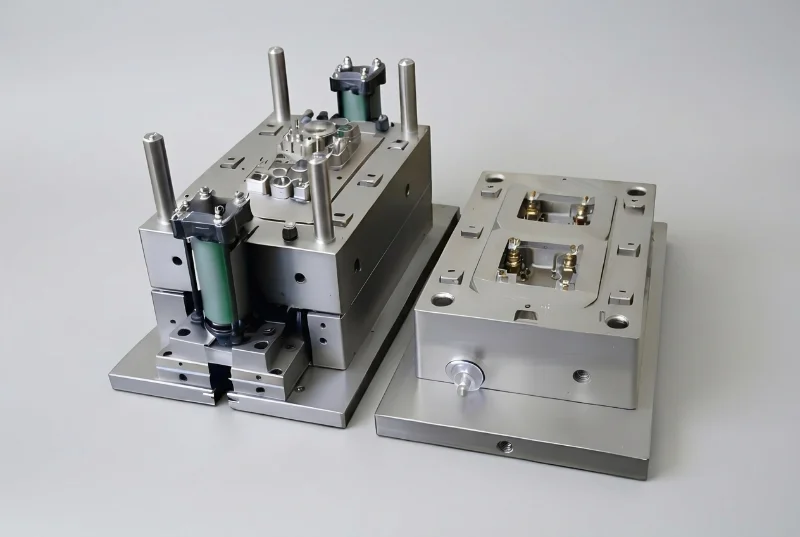
matrijsstaal2 is de meest bepalende factor voor matrijslevensduur. Hardheid, thermische geleidbaarheid en corrosieweerstand werken allemaal samen met de specifieke eisen van je onderdeel en materiaal.
P20 is het werkpaard: vooraf gehard tot 28–34 HRC,[2] goede bewerkbaarheid, kosteneffectief voor standaardproductie. Het is geschikt voor Class 102–103-matrijzen die niet-abrasieve thermoplasten verwerken. H13 is de keuze voor grote volumes: gehard tot 48–52 HRC,[3] uitstekende warmtewerk taaiheid en thermische vermoeiingsweerstand die P20 niet kan evenaren. Voor glasgevulde of mineraalgevulde materialen is H13 vaak de minimale keuze. S136 (1.2083) voegt corrosieweerstand toe—essentieel als je PVC, brandvertragende kwaliteiten, of materiaal dat corrosieve gassen vrijgeeft tijdens verwerking gebruikt.
| Staalkwaliteit | Hardheid (HRC) | Corrosiebestendigheid | Typisch levensduurbereik | Common Application |
|---|---|---|---|---|
| P20 / 1.2311 | 28–34 | Laag | 100K–500K cycli | Algemeen gebruik, niet-abrasieve kunststoffen |
| H13 / 1.2344 | 48–52 | Medium | 500K–1M+ cycles | Glass-filled, high-temp resins |
| S136 / 1.2083 | 50–54 | Hoog | 500K–1M+ cycles | PVC, FR grades, food-contact parts |
| 718H / 1.2738 | 33–38 | Medium-low | 300K–700K cycles | Large molds, reduced distortion risk |
| Aluminum (7075) | Brinell 150 | Medium | 5K–30K cycles | Prototype, bridge tooling only |
The decision tree we use in practice: start with P20 for standard production at moderate volume. Move to H13 if the material has any filler content above 10%, or if the program requires more than 500,000 cycles. Move to S136 if the resin is corrosive by nature—PVC, halogenated FR grades, and hygroscopic materials processed at high temperatures. The cost delta between P20 and H13 is typically 15–25% of tool cost. Over a million-part run, that’s usually the right investment.
“Switching from P20 to H13 can more than double a mold’s production lifespan.”Echt
P20 (28–34 HRC) fatigues and wears faster under cyclic thermal loading and abrasive resins. H13 hardened to 48–52 HRC resists surface cracking and erosion substantially better, commonly extending mold life from 300K cycles to 700K–1M+ for the same part and material.
“Aluminum molds are a cost-effective choice for production runs under 100,000 parts.”Vals
Aluminum molds are typically rated for 5,000–30,000 cycles under controlled conditions. For 100,000-part programs, aluminum introduces real risk: surface wear, parting line damage, and dimensional drift well before you reach your target volume. Class 104 soft-steel molds are the correct choice for runs in the 50K–100K range.
Hoe Beïnvloedt het Gegoten Materiaal de Matrijslevensduur?
The resin you run through a mold is as important as the mold steel itself. Some materials are gentle; others are quietly destructive—and the damage accumulates cycle by cycle.
Unfilled thermoplastics—standard ABS, PP, PE, and HDPE—are the most mold-friendly. They’re non-abrasive, relatively low-temperature, and don’t release corrosive byproducts. A well-maintained P20 mold running natural polypropylene can realistically exceed its SPI class rating. Glass-filled grades (10%, 20%, 30% GF) are a different story.[4] The glass fibers act like fine abrasive grit against the cavity surface, accelerating wear at gate areas, ribs, and thin edges. We routinely see gate erosion on P20 molds running 30% GF nylon within 150,000–200,000 cycles—well below the nominal Class 103 rating.
Corrosive materials create a different failure mode: chemical attack rather than mechanical wear. PVC releases hydrochloric acid vapor during processing;[5] standard P20 cavities will show rust and pitting if the mold sits idle for even a few days without proper corrosion inhibitor. Flame-retardant grades with halogenated additives create similar conditions. For these materials, S136 stainless mold steel isn’t optional—it’s the baseline. Budget accordingly.
| Type materiaal | Wear Mechanism | Lifespan Impact | Recommended Steel Minimum |
|---|---|---|---|
| Unfilled PP, PE, ABS | Minimal | None—may exceed SPI rating | P20 |
| PC, Nylon (unfilled) | Low thermal fatigue | ~10% reduction | P20 or H13 |
| Glass-filled (10–30%) | Abrasive erosion at gate/ribs | 30–50% reduction | H13 |
| Mineral-filled | Abrasive + thermal | 40–60% reduction | H13 or hardened steel |
| PVC, FR grades (halogenated) | Corrosive chemical attack | Severe without SS steel | S136 minimum |
| High-temp resins (PEEK, PPS) | Thermal fatigue, oxidation | Requires optimized cooling | H13 + hard chrome or nitriding |
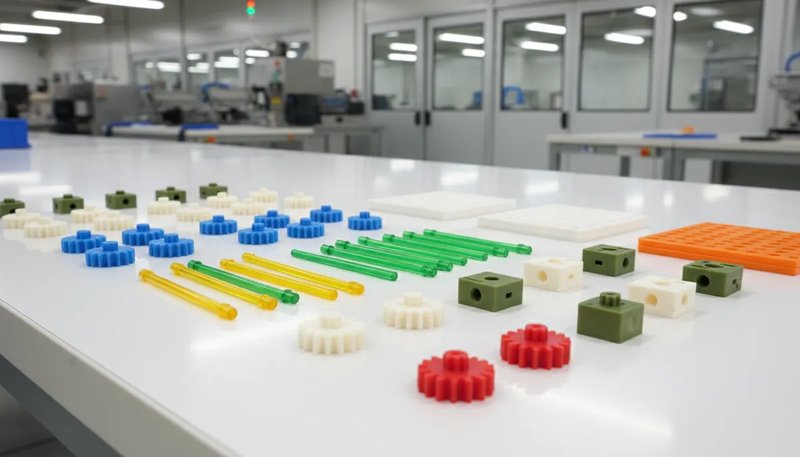
Processing conditions matter too. Running a mold hotter than specified—whether due to material viscosity, gate sizing, or just impatience—accelerates thermal fatigue. Mold temperature differentials greater than 20°C across a cavity cause differential expansion that stresses parting lines and core/cavity interfaces with each cycle. Over hundreds of thousands of cycles, that stress accumulates into flash, then dimensional drift, then cracking. The injection molding process parameters you set on day one either protect your mold investment or quietly erode it.
Waarom is matrijsonderhoud de actie met het hoogste ROI in gereedschap?
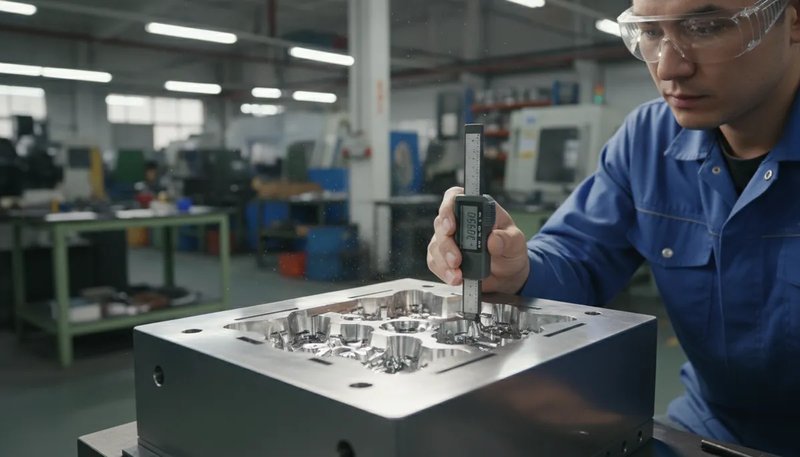
Preventive maintenance is the single highest-return action available after a mold is built. The math is simple: a $500 PM service at 50,000 cycles prevents a $5,000–$15,000 unplanned repair at 180,000 cycles and a $30,000–$50,000 premature mold replacement at 400,000 cycles.
Standard PM protocol for a Class 103 production mold running a non-abrasive thermoplastic typically covers: cavity and core cleaning (removing resin buildup and oxidation); ejector pin inspection and lubrication; venting channel cleaning (clogged vents cause short shots and burning, both of which stress the mold mechanically); parting line inspection for flash or wear; and cooling circuit flow verification. This takes 4–8 hours on a typical mold and should happen at every 50,000–100,000 cycles.[6]
For molds running glass-filled or corrosive materials, the interval drops. We recommend PM at every 25,000–50,000 cycles for abrasive resins, with specific attention to gate inserts (replaceable components that take the highest wear) and cavity surface inspection using a profilometer or at minimum a trained visual check under magnification. Gate inserts that can be replaced for $200–$500 per set are dramatically cheaper than re-machining or re-polishing a full cavity at $3,000–$8,000.
| Material Category | PM Interval (cycles) | Priority Focus Areas | Typical PM Cost |
|---|---|---|---|
| Unfilled PP, PE, ABS | 75,000–100,000 | Vent cleaning, general lubrication | $300–$600 |
| PC, Nylon (unfilled) | 50,000–75,000 | Ejector pins, cooling circuit check | $400–$800 |
| Glass-filled (10–30%) | 25,000–50,000 | Gate inserts, cavity surface inspection | $600–$1,200 |
| PVC, FR grades | 15,000–30,000 | Corrosion inhibitor application, full cavity check | $800–$1,500 |
| High-temp resins (PEEK, PPS) | 20,000–40,000 | Cooling uniformity, thermal fatigue inspection | $700–$1,400 |
At ZetarMold, we’ve been manufacturing and maintaining injection molds since 2005 out of our Shanghai factory. With 100+ molds produced per month and a team of 8 mold engineers, we track PM intervals for every mold in our portfolio. Our data consistently shows that molds on a strict PM schedule outlast their SPI class rating by 15–30%, while molds that skip maintenance rarely make it to 70% of their rated life. We also stock standardized gate insert sets for our most common mold families—replacement turnaround is typically 24–48 hours, versus 2–3 weeks for cavity re-machining.
Unplanned downtime is the hidden cost nobody budgets for. A production mold failure during a high-volume run doesn’t just cost the repair—it costs the line downtime, the expediting fees, the customer relationship friction. Building a maintenance schedule into the tool handoff documentation is part of responsible mold design, not an afterthought.
“Regular PM at 50,000-cycle intervals can extend mold life 15–30% beyond its rated SPI class.”Echt
Consistent cleaning, lubrication, and wear-component replacement prevent the compounding damage that cuts mold life short. Our production data shows PM-compliant molds routinely exceed their SPI class targets, while neglected molds often fail at 60–70% of rated life.
“You should wait until parts show quality issues before performing mold maintenance.”Vals
By the time part quality degrades, the mold has already experienced significant damage—ejector pin galling, vent blockage, or cavity erosion. Preventive maintenance at defined cycle intervals costs a fraction of reactive repair and prevents unplanned production downtime, which is often more expensive than the repair itself.
Hoe beïnvloeden mold design beslissingen de lange-termijn levensduur?
Mold design choices made before a single chip of steel is cut lock in the long-term lifespan trajectory of the tool. The three decisions with the highest impact: cooling circuit design, gate type and location, and ejection system design.
| Design Decision | Lifespan Risk if Wrong | Beste praktijk |
|---|---|---|
| Cooling channel diameter | Thermal fatigue, premature cracking | 8–12mm diameter, 1.5× diameter offset from cavity wall |
| Gate size and location | Erosion and jetting at gate zone | Replaceable H13 gate inserts; avoid undersizing |
| Ejector pin count and placement | Galling, pin-flash, deformation | Distribute force across ≥4 pins; minimum 1° draft |
| Parting line design | Flash and wear from clamp force imbalance | Match clamp force to projected area; add vent land hardening |
| Ontluchting | Burn marks, short shots, localized stress | Vent land 0.025–0.05mm depth; clean every 50K cycles |
Cooling is the most underestimated lifespan factor. Poor cooling creates thermal gradients across the mold; thermal gradients create cyclic stress; cyclic stress causes fatigue cracking—especially at sharp corners, thin cores, and deep ribs. Proper cooling design means uniform temperature distribution within ±5°C across the cavity and core, achieved through adequate channel diameter (typically 8–12mm), appropriate channel-to-cavity distance (1.5× diameter minimum), and sufficient coolant flow rate. Molds with undersized or poorly positioned cooling channels run hotter than designed, age faster, and require more frequent maintenance. This is covered extensively in our injection mold design guide.
Gate design is the second critical factor. Gates are the highest-wear point in any mold—the location where hot, pressurized resin enters the cavity at high velocity. Undersized gates create jetting and localized erosion; oversized gates leave weld marks and require higher clamp force. Edge gates in soft P20 steel running glass-filled materials typically show measurable wear within 50,000–80,000 cycles. The solution: use replaceable gate inserts in hardened steel (H13 or carbide-tipped) at the gate location, even if the rest of the mold is P20. This targeted hardening costs $300–$800 per gate location and can extend gate life by 3–5×.
“Replaceable hardened gate inserts can extend gate-area life by 3–5× compared to solid P20 cavities.”Echt
Poortzones ervaren de hoogste slijtage in elke matrijs door hoogwaardige harsinslag. Het installeren van vervangbare H13 of met hardmetaal getipte inzetstukken op poortlocaties kost $300–$800 per poort, maar kan 3–5× de slijtlevensduur van massief P20 opleveren—tegen een fractie van de volledige holtevervangingskosten.
“Uitwerpstiften zijn een kleine component zonder effect op de matrijslevensduur.”Vals
Ondergekwalificeerde of slecht verdeelde uitwerpstiften concentreren de uitwerpkracht op kleine oppervlakken, waardoor pinholes gallen en uitslijpen over honderdduizenden cycli. Dit veroorzaakt flits rond de stiften en vereist uiteindelijk matrijsrevisie. Correcte dimensionering van uitwerpstiften en minimaal 1° ontwerp zijn levensduurkritische technische beslissingen.
Het uitwerpontwerp beïnvloedt de levensduur via een minder voor de hand liggend mechanisme: uitwerpstiftbelastingen. Als het uitwerpsysteem ondergedimensioneerd is—te weinig stiften, verkeerde stiftdiameter of onvoldoende trekkegelhoeken op het onderdeel—concentreert de uitwerpkracht zich op een klein oppervlak. Herhaaldelijk uitwerpen met hoge kracht vervormt het onderdeel en belast de matrijs. Na verloop van tijd veroorzaakt dit dat uitwerpstiftgaten gaan grijpen, uitboren en uiteindelijk flits rond de stiften produceren. Juiste dimensionering van uitwerpstiften en onderdeeltrekhoek (minimaal 1°, 2° of meer voor getextureerde oppervlakken) zijn levensduurbeslissingen, niet alleen beslissingen voor spuitgietkwaliteit.
Wat zijn de tekenen dat een matrijs het einde van zijn levensduur nadert?
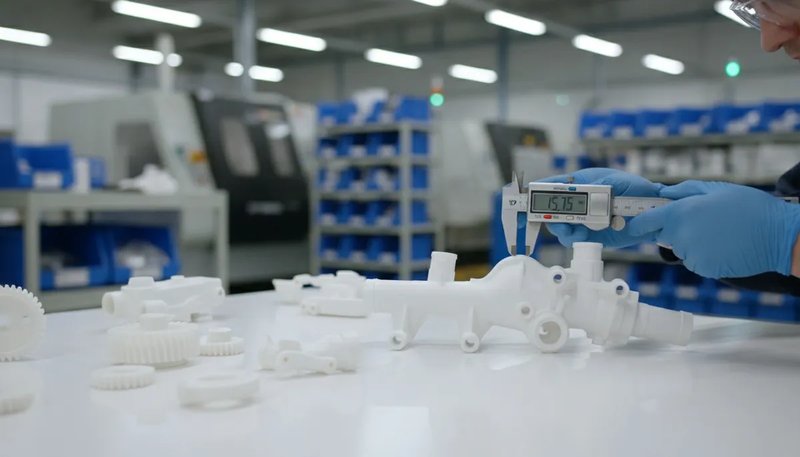
De meeste matrijsstoringen komen niet plotseling als catastrofale gebeurtenissen—ze kondigen zich geleidelijk aan via productkwaliteitssignalen die de meeste productieteams te laat leren lezen.
Het eerste signaal is flits op de scheidingslijn. Flits vanaf de eerste cyclus duidt op een bouwprobleem; flits die geleidelijk verschijnt na 200.000+ cycli betekent meestal slijtage van de scheidingslijn of vermoeidheidsgerelateerde dimensionele verschuiving. Het tweede signaal zijn onvolledige injecties of brandvlekken op dezelfde locatie—verstopte ventilatieopeningen door harsophoping verminderen gasontsnapping, waardoor terugdruk ontstaat die de hars verbrandt en de holtevulling verhindert. Dit is een onderhoudskwestie in de vroege stadia, maar kan wijzen op erosie van het ventilatieland in latere matrijslevensduur. Het derde signaal is dimensionele afwijking: onderdelen die binnen tolerantie waren bij T1 verschuiven geleidelijk naar de grens, veroorzaakt door holte-erosie bij poorten, ribben en dunne wanden.
| Signal | Stage | Likely Cause | Interventie |
|---|---|---|---|
| Progressieve uitvlieging op de scheidingslijn | Midden levensduur (200K+ cycli) | Slijtage van de scheidingslijn of dimensionele vermoeidheid | Scheidingslijn opnieuw slijpen, klemkracht verhogen |
| Terugkerende onvolledige injecties / brandvlekken | Vroeg tot midden stadium | Verstopte ventilatieopeningen door harsophoping | Reinig ventilatieopeningen; vervang als het ventilatieland is uitgehold |
| Dimensionele afwijking (buiten tolerantie) | Midden tot late levensduur | Uitholling van de holte bij poorten en ribben | Opnieuw meten tegen T1-basislijn; opnieuw bewerken indien nodig |
| Degradatie van oppervlakteafwerking | Laat stadium | Microbreuken en abrasieve erosie | Opnieuw polijsten (maximaal 2–3 cycli); daarna opnieuw bewerken |
| Flits van uitwerpstift | Midden levensduur | Galling of slijtage van uitwerpgat | Vervang uitwerpstiften; verander indien nodig de grootte van de gaten |
Degradatie van oppervlakteafwerking is het vierde en vaak laatste signaal voor pensionering van de matrijs. Holte-oppervlakken die bij de bouw op SPI A1 waren gepolijst, ruwen geleidelijk op door microbreuken en erosie. Zodra een oppervlak niet meer tot specificatie kan worden herpolijst—meestal na 2–3 herpolijstcycli—moet de holte worden herspanen of de matrijs worden vervangen. Hoe eerder u deze signalen opmerkt, hoe goedkoper de interventie: reinigen en herpolijsten bij 300.000 cycli kost een fractie van holtevervanging bij 500.000 cycli. De spuitgietproces parameters die u onderhoudt beïnvloeden ook direct hoe snel deze degradatiesignalen verschijnen.
Hoe Kun Je de Levensduur van een Mold Verlengen Boven de Originele Rating?
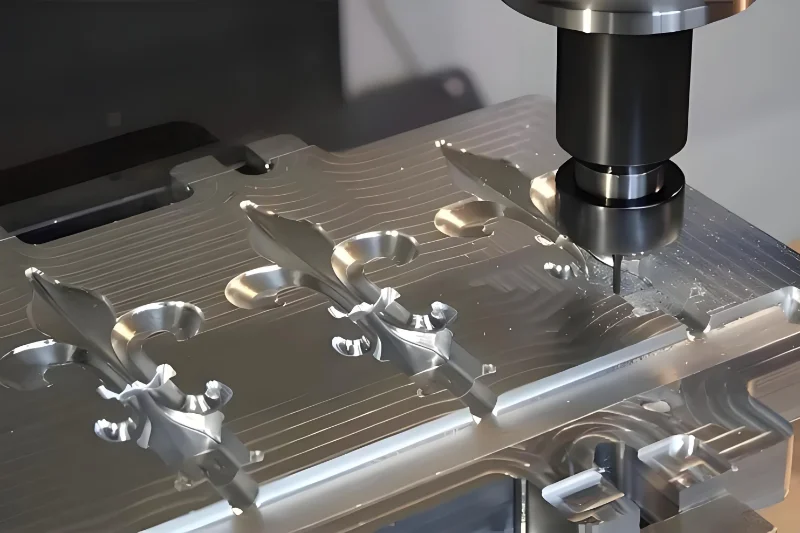
Het is echt mogelijk om de bruikbare levensduur van een matrijs verder te verlengen dan de oorspronkelijke SPI-klassebeoordeling door proactieve interventie—maar slechts tot op zekere hoogte, en alleen met de juiste aanpak.
Holte-herbewerking en opnieuw polijsten is de meest gebruikelijke levensduurverlengingsstrategie. Wanneer holteoppervlakken meetbare erosie vertonen maar de kerngeometrie nog binnen specificatie is, kan herbewerking om oppervlakteafwerking en dimensionale nauwkeurigheid te herstellen 100.000–300.000 cycli toevoegen aan een matrijs halverwege zijn levensduur. De kosten bedragen doorgaans 20–40% van de oorspronkelijke gereedschapskosten—een redelijke investering als de matrijs het grootste deel van zijn initiële kosten al heeft afgeschreven.
Vervanging van de holteinzet is de gerichte versie van herspanen. In plaats van de hele matrijs te bewerken, vervangt u alleen de versleten delen—instroominzetten, sterk slijtende kernen of beschadigde uitstootbussen. Deze aanpak vereist dat het oorspronkelijke matrijsontwerp vervanging voorzag: inzetvakken, gestandaardiseerde dimensionale interfaces en toegankelijkheid voor inzetwissel. Matrijzen die vanaf het begin met modulaire inzetten zijn ontworpen, zijn veel eenvoudiger en goedkoper te verlengen. Dit is een detail dat het vermelden waard is in uw eerste gereedschapsbrief, vooral voor programma's met een lange looptijd.
Nitridatie en chroomplating zijn oppervlaktebehandelingsopties die hardheid en corrosieweerstand toevoegen aan bestaand staal, waardoor de oppervlaktelevensduur wordt verlengd zonder het staal te vervangen. Gasnitridatie voegt een 0,1–0,3mm geharde laag toe tot dieptes van ongeveer 0,5mm, waardoor de oppervlaktehardheid toeneemt tot 60–70 HRC-equivalent.[7] Hardchroomplatering voegt 0,01–0,05 mm chroom toe voor corrosie- en slijtvastheid.[7] Deze behandelingen zijn het meest effectief als preventieve maatregelen op nieuwe matrijzen of als interventies in een vroeg stadium—het toepassen ervan op een holte die al significante erosie vertoont, heeft beperkt voordeel.
| Method | Extra cycli | Kosten (% van Nieuw Gereedschap) | Best Application |
|---|---|---|---|
| Herglanzend van de holte | 50K–100K | 5–15% | Oppervlakteafwerking degradatie, vroege erosie |
| Vervanging van de instroominzet | 100K–200K | 3–8% | Poortslijtage bij schurende harsen |
| Herspanen van de holte | 100K–300K | 20–40% | Meetbare dimensionele afwijking, oppervlakte-erosie |
| Gas nitriding | 100K–250K | 10–20% | Preventive or early-life surface hardening |
| Hard chrome plating | 50K–150K | 8–15% | Corrosion resistance, release improvement |
| Full cavity replacement | Full mold life reset | 50–80% | Core geometry still valid; cavities worn out |
The honest ceiling: there’s a point at which mold refurbishment costs more than building a new tool with lessons learned. A mold that has required two rounds of cavity re-machining, multiple insert replacements, and repeated PM interventions is often at or near that ceiling. The decision to refurbish vs. replace should be based on total remaining program volume, remaining technical life of the mold, and the cost differential between refurbishment and new tooling. The right answer is rarely emotionally satisfying—sometimes the financially correct decision is to retire a functional-looking mold and build a better one.
Hoe benadert ZetarMold de levensduur van matrijzen in productieprogramma's?
When we scope a tooling program, mold lifespan is one of the first engineering conversations—not an afterthought after the price is quoted.
ZetarMold has been building injection molds in Shanghai since 2005. We produce 100+ molds per month using equipment including CNC machines, EDMs, grinders, and precision engravers. Our mold engineering team of 8 specialists with 10+ years of experience handles steel selection, DFM review, and maintenance documentation for every tool we build. We’re certified to ISO 9001, ISO 13485, ISO 14001, and ISO 45001—which means our quality and documentation systems are externally audited, not just internally claimed. If you need a mold that lasts, the conversation starts with a brief: your volume, material, and timeline. We take it from there.
The process starts with production volume projection. If your program is 500,000 parts over three years, we design a Class 102 mold in P20 or H13 depending on your material. If it’s 2,000,000 parts over five years, Class 101 with full hardening is the answer—even though it costs more upfront.
| Annual Volume | Program Duration | Recommended SPI Class | Steel Choice |
|---|---|---|---|
| Under 50,000 | 1–2 years | Class 104–105 | Soft P20 or aluminum |
| 50,000–200,000 | 2–3 years | Klasse 103 | P20 (28–34 HRC) |
| 200,000–500,000 | 3–5 years | Class 102–103 | P20 or H13 |
| 500,000–1,000,000 | 5+ years | Klasse 102 | H13 (48–52 HRC) |
| 1,000,000+ | Long-term / repeat | Klas 101 | H13 or S136, full hardening |
We’ve run this conversation enough times to know that customers who push back on the upfront tooling investment are almost always the same ones who call us three years later asking why their mold is failing at 60% of expected volume. The conversation is uncomfortable at the quote stage and much more uncomfortable when the mold dies early.
Onze ontwerp van spuitgietmatrijzen3 process includes a standard DFM review that covers steel selection, gate design, cooling circuit layout, and ejection strategy—all with explicit lifespan impact analysis. We also supply a mold maintenance schedule with every tool we ship: cycle count PM intervals, consumables list (ejector pins, springs, gate inserts), and a documented T1 dimensional baseline for future comparison. In our experience, customers who follow the maintenance schedule reliably hit their target lifespan; those who don’t are usually back to us for unplanned repair within 18–24 months.
Veelgestelde Vragen over de Levensduur van Spuitgietmatrijzen
Hoeveel schoten gaat een typische spuitgietmal mee?
A typical production injection mold lasts 100,000 to 1,000,000+ shots, depending on SPI class. Class 101 molds in H13 steel are designed for 1M+ cycles; Class 103 molds in P20 steel typically target 100,000–500,000 cycles. Prototype Class 105 aluminum molds are rated for fewer than 500 shots. Actual lifespan depends heavily on the material being molded, maintenance discipline, and processing conditions—not just the nominal SPI class rating. Well-maintained molds routinely exceed their rated lifespan; neglected molds often fail at 60–70% of the target.
Wat vermindert de levensduur van een spuitgietmatrijs het meest?
Abrasive and corrosive materials cause the greatest lifespan reduction: glass-filled resins (10–30% GF) can cut mold life by 30–50% versus unfilled grades, and corrosive materials like PVC can destroy P20 steel cavities within tens of thousands of cycles without stainless steel protection. Lack of preventive maintenance is the second largest factor—molds that skip PM intervals rarely reach 70% of their rated lifespan. Mismatched processing parameters, including excessive injection pressure or mold temperatures above specification, also accelerate wear and thermal fatigue.
Kan een spuitgietmatrijs worden gerepareerd om zijn levensduur te verlengen?
Yes—cavity re-polishing, gate insert replacement, and cavity re-machining can extend mold life by 100,000–300,000 additional cycles. Repair cost is typically 20–40% of the original tooling investment, making it a worthwhile option for molds that have already amortized most of their initial cost. Surface treatments like gas nitriding or hard chrome plating add hardness and corrosion resistance to extend cavity surface life. However, there is a practical ceiling: molds requiring multiple repair rounds over their lifetime may become more economical to replace with a redesigned tool that incorporates lessons learned from the original production run.
Wat is het beste matrijsstaal voor een lange levensduur?
H13 (1.2344) hardened to 48–52 HRC is the most widely used choice for high-lifespan production molds handling abrasive or high-temperature materials, delivering consistent results over 500,000–1,000,000+ cycles. S136 (1.2083) is preferred for corrosive materials like PVC and halogenated flame-retardant grades because of its stainless properties, which resist chemical attack from processing gases. For standard non-abrasive resins at moderate production volume, P20 (28–34 HRC) delivers adequate lifespan at lower upfront cost. Steel selection must match your specific material and total program volume—there is no universally ‘best’ steel for all injection molding applications.
Hoe vaak moet een spuitgietmatrijs worden onderhouden?
Preventive maintenance intervals depend on the material being run and the mold class. A Class 103 mold running unfilled thermoplastics should be serviced every 50,000–100,000 cycles. Molds running glass-filled or corrosive materials need PM every 25,000–50,000 cycles. Each PM service should cover cavity and core cleaning to remove resin buildup and oxidation, ejector pin lubrication and wear inspection, vent channel clearing to prevent short shots and burning, parting line examination for flash or wear, and a cooling circuit flow check to confirm adequate heat removal.
Beïnvloedt de matrijsgrootte hoe lang hij meegaat?
Mold size affects lifespan indirectly through clamping force requirements, thermal mass distribution, and cooling circuit complexity. Larger molds experience greater thermal mass variation and are more sensitive to cooling circuit design quality—non-uniform cooling creates cyclic thermal stress that accelerates fatigue. Large molds built in 718H steel (33–38 HRC) rather than fully hardened H13 are less susceptible to distortion during heat treatment, which preserves dimensional stability over long production runs. For a given steel grade and maintenance program, mold size alone is not the primary lifespan driver.
Wat is het verschil tussen Class 101 en Class 103 mallen?
Class 101 molds are designed for 1,000,000+ cycles using fully hardened tool steel (H13, S136), robust cooling circuits, and heavy-duty ejection and gating systems—including replaceable hardened gate inserts. Class 103 molds target 100,000–500,000 cycles using semi-hardened or pre-hardened P20 steel with standard cooling and ejection. The upfront cost difference is typically 40–80% higher for Class 101. The correct choice is driven entirely by your total program volume: overspending on Class 101 for a 200,000-part run is as wasteful as underspending on Class 103 for a million-part production program.
Is het mogelijk om een spuitgietmatrijs te bouwen die oneindig lang meegaat?
No injection mold lasts indefinitely—all tool steel experiences fatigue, erosion, and eventual dimensional drift with repeated thermal cycling. Class 101 molds with hardened steel, optimized cooling, and disciplined maintenance programs can exceed 2,000,000 cycles in favorable conditions with non-abrasive materials, but even these eventually require cavity replacement or re-machining. The practical engineering goal is not infinite life but matched life: designing the mold to outlast your production program with adequate margin, without paying for unnecessary durability that will never be exercised.
Klaar om een Mold te Ontwerpen Die Zo Lang Meegaat als Je Programma Vereist?

Quick rule for your next tooling decision: match SPI class to your total program volume, select steel to your material’s wear and corrosion profile, and build a PM schedule before the mold ships—not after the first quality incident. Print that out and bring it to your next DFM review.
ZetarMold has been building production injection molds in Shanghai since 2005. We produce 100+ molds per month across a full range of SPI classes, with a dedicated team of mold engineers who handle steel selection, DFM review, and maintenance documentation for every tool. If you have a production volume target and a material spec, we can tell you exactly what class of mold you need and what it will cost—no vague ranges, no upselling on unnecessary features.
Ready to build a mold that lasts? Send us your part drawing, material, and annual volume—we’ll scope the right tooling solution for your program, no vague ranges, no upselling on unnecessary features. ZetarMold has delivered production molds to customers across North America, Europe, and Asia since 2005.
Referenties
- Plastics Industry Association - Customs and Practices of the Moldmaking Industry: Defines SPI mold classifications (Class 101–105) and their approximate lifespans. — plasticsindustry.org
- P20 / 1.2311 Mold Steel Properties — Pre-hardened delivery hardness of ~280–320 HB (≈28–34 HRC), per steel supplier data. — mwalloys.com — P20 Mold Steel
- H13 Gereedschapstaal (1.2344) Eigenschappen — Warmbewerkingsgereedschapsstaal gehard tot 48–52 HRC; veel gebruikt voor spuitgietmatrijzen met hoge volumes. — hudsontoolsteel.com — H13 Gereedschapsstaal
- Glasvezelslijtage op Spuitgietmatrijzen — Abrasie door glasvezels tijdens spuitgieten veroorzaakt belangrijke slijtageproblemen voor matrijsstaal. — ScienceDirect — Slijtage, Vol. 271 (2011); ook: MoldMaking Technology — Strategische Matrijsmateriaalkeuze
- PVC-corrosieaanval op Matrijzenstaal — PVC degradeert tijdens verwerking, waarbij zoutzuurdampen vrijkomen die standaard gereedschapsstalen corroderen; roestvrij matrijzenstaal (S136/1.2083) is de aanbevolen basislijn. — MoldMaking Technology — Oppervlaktebehandelingen Beschermen Matrijsafwerkingen
- Intervallen voor Preventief Onderhoud van Spuitgietmatrijzen — Eerste PM aanbevolen bij 25.000–50.000 cycli; regelmatige intervallen verlengen de matrijs levensduur. — VEM Tooling — Verwachte Levensduur van Matrijzen
- Eigenschappen van Gasnitrering en Hardchroomplating — Gasnitrideren kan een oppervlaktehardheid van meer dan 67 HRC bereiken; hardchromlaag 0,02–0,05mm bij HV800–HV1000. — SSAB — Gasnitrering Gereedschapsstaal; Hoorenwell — Gids voor Matrijzenstandaardisatie
-
injection mold: Een spuitgietmatrijs is een precisiebewerkt stalen gereedschap dat de vorm van een kunststofonderdeel bepaalt door herhaalde injectie-, koel- en uitwerpcycli, met een gegarandeerde levensduur bepaald door de staalkwaliteit en SPI-classificatie. ↩
-
mold steel: Matrijzenstaal is een categorie van gereedschapsstaallegeringen—zoals P20, H13 en S136—specifiek geselecteerd voor de constructie van spuitgietmatrijzen op basis van hardheid, corrosieweerstand en thermische vermoeiingsweerstand. ↩
-
injection mold design: Spuitgietmatrijsontwerp is het technische proces van het definiëren van matrijzenmeetkunde, staalkwaliteit, aanvoer, koeling en uitwerpsystemen om dimensionaal nauwkeurige kunststofonderdelen te produceren met de laagst mogelijke cyclustijd en de langste matrijzenlevensduur. ↩



 EN
EN  ES
ES  FR
FR  DE
DE  PT
PT  AR
AR  RU
RU  JA
JA  KO
KO  IT
IT  NL
NL  TR
TR  PL
PL 