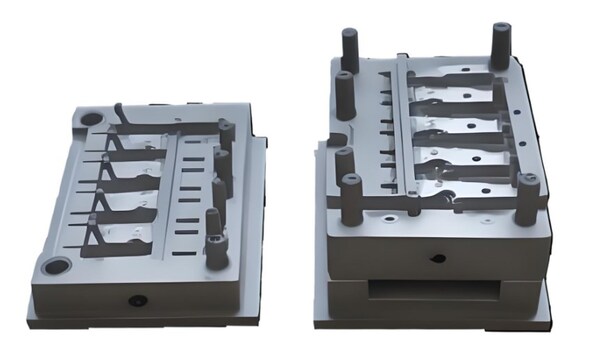
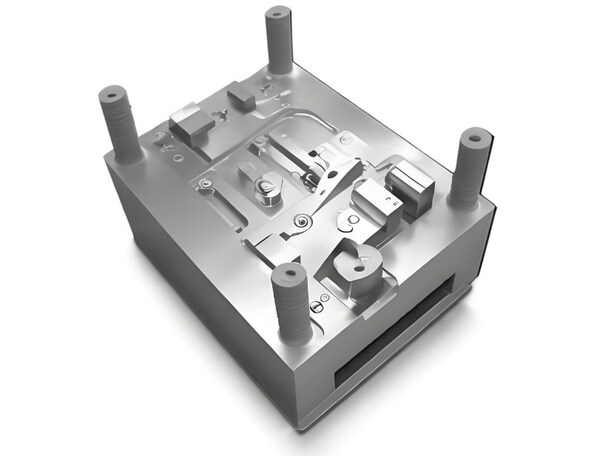
Your tooling quote just landed—somewhere between $15,000 and $80,000. The first question your boss asks isn’t about the part design. It’s: “How many shots will we actually get out of this thing?” Reasonable question. The answer isn’t a single number—it’s a decision you make before the steel gets cut.
Injection mold lifespan ranges from 500 cycles for a prototype tool to over 1,000,000 cycles for a hardened production mold. The number depends on mold steel grade, material being molded, maintenance discipline, and cooling design—not on luck or brand name. This article breaks down each factor so you can forecast mold life accurately and avoid the most expensive mistake in tooling: buying the wrong class of mold for your production volume.
- Production molds in H13 or S136 steel typically last 500,000–1,000,000+ cycles.
- SPI Class 101–105 rating directly maps to expected lifespan—match it to your volume.
- Abrasive and corrosive materials (glass-filled, PVC) cut mold life by 30–60%.[4]
- Preventive maintenance at every 50,000–100,000 cycles is the single biggest ROI lever.
- Steel grade is the biggest upfront decision—switching after tooling is not an option.
What Is Injection Mold Lifespan, and Why Does It Matter?
injection mold1 lifespan is the total number of production cycles a mold delivers before parts fall outside acceptable tolerances. It matters because mold cost is a fixed investment—you’re amortizing it across every part produced. A mold rated for 500,000 cycles running a million-unit program isn’t a failure of engineering; it’s a budget problem that started at the design review.
The industry uses the SPI mold classification system as a common language.[1] Class 101 molds are built for 1,000,000+ cycles with hardened tool steel and full cooling circuits. Class 105 molds are disposable prototypes, built for 500 shots or fewer, often in aluminum or soft steel. If you skip the conversation about which class you need, you’ll either overpay or get a mold that fails at 200,000 cycles when your program needs 800,000.
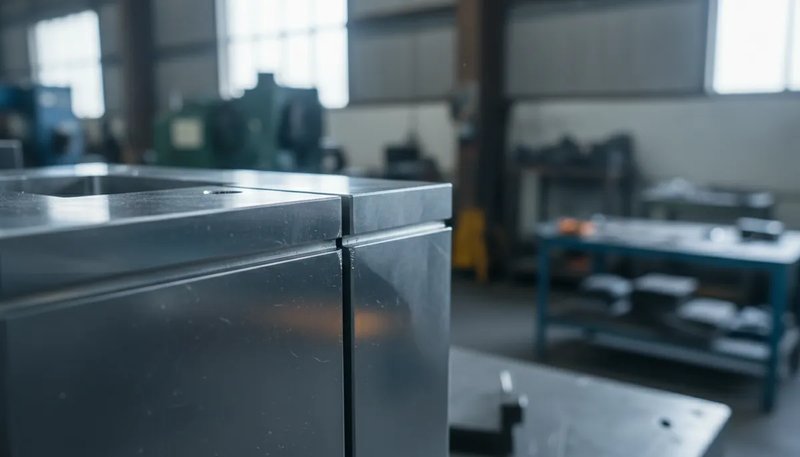
The financial logic is straightforward. A $60,000 Class 101 mold producing 1,000,000 parts costs $0.06 per part in tooling amortization. A $20,000 Class 103 mold that needs replacement at 500,000 cycles costs $0.04 per part—but requires a second $20,000 investment for the next 500,000 parts, bringing the total to $0.08 per part. Matching mold class to production volume isn’t just engineering discipline; it’s basic unit economics.
What Are the SPI Mold Classes and Their Expected Shot Counts?
SPI mold classification provides a standardized five-class framework tying mold construction quality directly to expected shot count.
| SPI Class | Expected Cycles | Typical Steel | Best For |
|---|---|---|---|
| Class 101 | 1,000,000+ | H13, S136, hardened P20 | High-volume production, automotive, medical |
| Class 102 | 500,000–1,000,000 | P20, 420 SS | Medium-high volume, moderate abrasion |
| Class 103 | 100,000–500,000 | P20, 1.2311 | Standard production runs |
| Class 104 | 100,000 or less | Soft P20, 1018 steel | Low-volume or limited production |
| Class 105 | Under 500 | Aluminum, epoxy | Prototype and concept verification only |
These are industry benchmarks, not guarantees. A Class 102 mold running an unfilled polypropylene part with regular maintenance will comfortably hit the upper end of its range. The same mold running 30% glass-filled nylon without a maintenance program might not make it to 200,000 cycles. Steel grade sets the ceiling; everything else determines whether you reach it.
One thing buyers often miss: Class 101 doesn’t mean “indestructible.” It means the mold was built to a standard that makes 1M+ cycles achievable under normal operating conditions. You still need to clean it, grease it, and replace wear components on schedule. Ignoring maintenance on a Class 101 tool is like buying a premium car and never changing the oil—the grade just determines what’s possible, not what’s automatic.
How Does Mold Steel Grade Affect How Long a Mold Lasts?
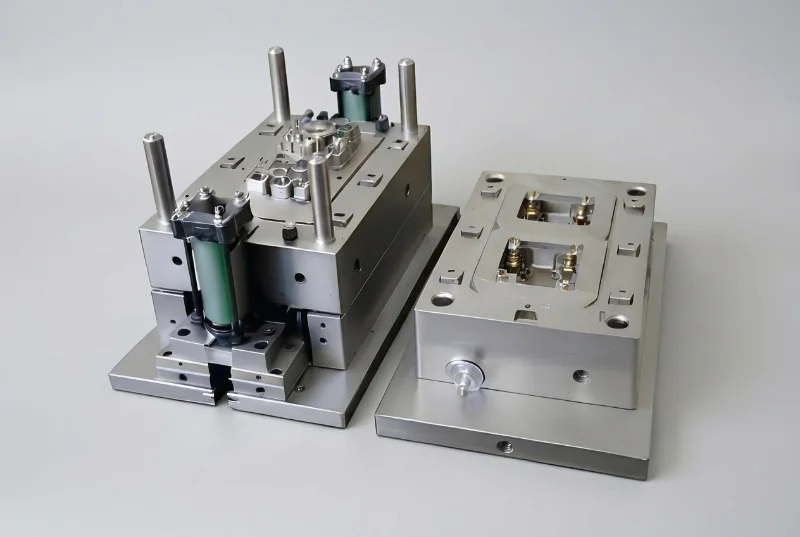
mold steel2 is the single most determinative factor in mold lifespan. Hardness, thermal conductivity, and corrosion resistance all interact with the specific demands of your part and material.
P20 is the workhorse: pre-hardened to 28–34 HRC,[2] good machinability, cost-effective for standard production. It’s appropriate for Class 102–103 molds running non-abrasive thermoplastics. H13 is the high-volume choice: hardened to 48–52 HRC,[3] excellent hot-work toughness, and thermal fatigue resistance that P20 can’t match. For glass-filled or mineral-filled materials, H13 is often the minimum viable choice. S136 (1.2083) adds corrosion resistance—essential if you’re running PVC, flame-retardant grades, or any material that releases corrosive gases during processing.
| Steel Grade | Hardness (HRC) | Corrosion Resistance | Typical Lifespan Range | Common Application |
|---|---|---|---|---|
| P20 / 1.2311 | 28–34 | Low | 100K–500K cycles | General purpose, non-abrasive resins |
| H13 / 1.2344 | 48–52 | Medium | 500K–1M+ cycles | Glass-filled, high-temp resins |
| S136 / 1.2083 | 50–54 | High | 500K–1M+ cycles | PVC, FR grades, food-contact parts |
| 718H / 1.2738 | 33–38 | Medium-low | 300K–700K cycles | Large molds, reduced distortion risk |
| Aluminum (7075) | Brinell 150 | Medium | 5K–30K cycles | Prototype, bridge tooling only |
The decision tree we use in practice: start with P20 for standard production at moderate volume. Move to H13 if the material has any filler content above 10%, or if the program requires more than 500,000 cycles. Move to S136 if the resin is corrosive by nature—PVC, halogenated FR grades, and hygroscopic materials processed at high temperatures. The cost delta between P20 and H13 is typically 15–25% of tool cost. Over a million-part run, that’s usually the right investment.
“Switching from P20 to H13 can more than double a mold’s production lifespan.”True
P20 (28–34 HRC) fatigues and wears faster under cyclic thermal loading and abrasive resins. H13 hardened to 48–52 HRC resists surface cracking and erosion substantially better, commonly extending mold life from 300K cycles to 700K–1M+ for the same part and material.
“Aluminum molds are a cost-effective choice for production runs under 100,000 parts.”False
Aluminum molds are typically rated for 5,000–30,000 cycles under controlled conditions. For 100,000-part programs, aluminum introduces real risk: surface wear, parting line damage, and dimensional drift well before you reach your target volume. Class 104 soft-steel molds are the correct choice for runs in the 50K–100K range.
How Does the Molded Material Affect Mold Life?
The resin you run through a mold is as important as the mold steel itself. Some materials are gentle; others are quietly destructive—and the damage accumulates cycle by cycle.
Unfilled thermoplastics—standard ABS, PP, PE, and HDPE—are the most mold-friendly. They’re non-abrasive, relatively low-temperature, and don’t release corrosive byproducts. A well-maintained P20 mold running natural polypropylene can realistically exceed its SPI class rating. Glass-filled grades (10%, 20%, 30% GF) are a different story.[4] The glass fibers act like fine abrasive grit against the cavity surface, accelerating wear at gate areas, ribs, and thin edges. We routinely see gate erosion on P20 molds running 30% GF nylon within 150,000–200,000 cycles—well below the nominal Class 103 rating.
Corrosive materials create a different failure mode: chemical attack rather than mechanical wear. PVC releases hydrochloric acid vapor during processing;[5] standard P20 cavities will show rust and pitting if the mold sits idle for even a few days without proper corrosion inhibitor. Flame-retardant grades with halogenated additives create similar conditions. For these materials, S136 stainless mold steel isn’t optional—it’s the baseline. Budget accordingly.
| Material Type | Wear Mechanism | Lifespan Impact | Recommended Steel Minimum |
|---|---|---|---|
| Unfilled PP, PE, ABS | Minimal | None—may exceed SPI rating | P20 |
| PC, Nylon (unfilled) | Low thermal fatigue | ~10% reduction | P20 or H13 |
| Glass-filled (10–30%) | Abrasive erosion at gate/ribs | 30–50% reduction | H13 |
| Mineral-filled | Abrasive + thermal | 40–60% reduction | H13 or hardened steel |
| PVC, FR grades (halogenated) | Corrosive chemical attack | Severe without SS steel | S136 minimum |
| High-temp resins (PEEK, PPS) | Thermal fatigue, oxidation | Requires optimized cooling | H13 + hard chrome or nitriding |
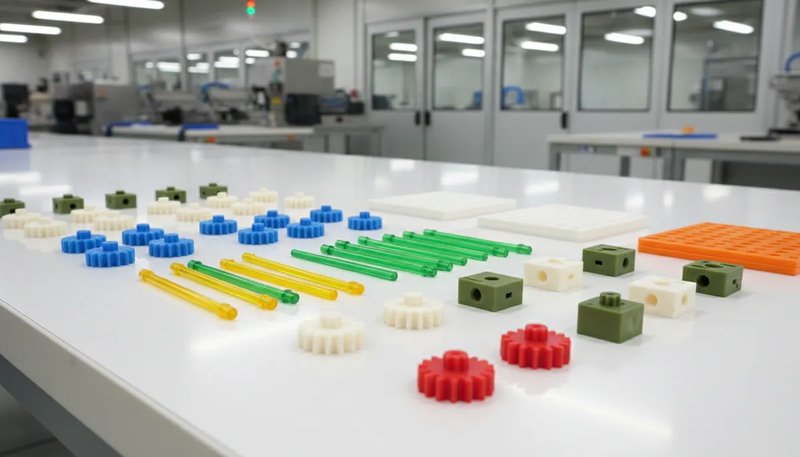
Processing conditions matter too. Running a mold hotter than specified—whether due to material viscosity, gate sizing, or just impatience—accelerates thermal fatigue. Mold temperature differentials greater than 20°C across a cavity cause differential expansion that stresses parting lines and core/cavity interfaces with each cycle. Over hundreds of thousands of cycles, that stress accumulates into flash, then dimensional drift, then cracking. The injection molding process parameters you set on day one either protect your mold investment or quietly erode it.
Why Is Mold Maintenance the Highest-ROI Action in Tooling?
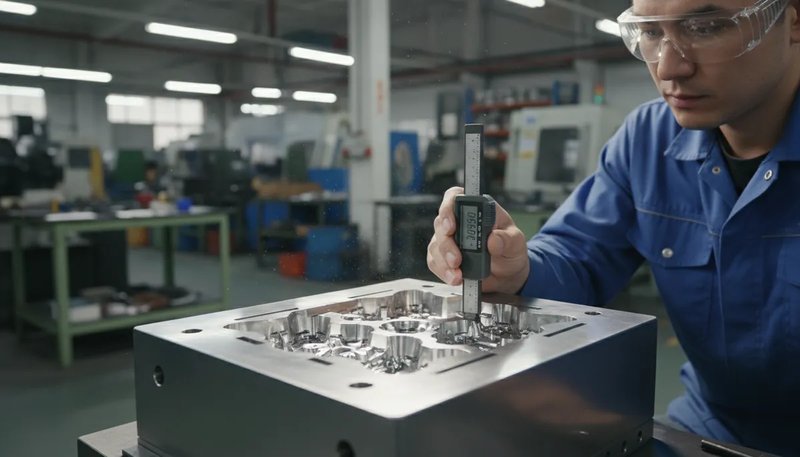
Preventive maintenance is the single highest-return action available after a mold is built. The math is simple: a $500 PM service at 50,000 cycles prevents a $5,000–$15,000 unplanned repair at 180,000 cycles and a $30,000–$50,000 premature mold replacement at 400,000 cycles.
Standard PM protocol for a Class 103 production mold running a non-abrasive thermoplastic typically covers: cavity and core cleaning (removing resin buildup and oxidation); ejector pin inspection and lubrication; venting channel cleaning (clogged vents cause short shots and burning, both of which stress the mold mechanically); parting line inspection for flash or wear; and cooling circuit flow verification. This takes 4–8 hours on a typical mold and should happen at every 50,000–100,000 cycles.[6]
For molds running glass-filled or corrosive materials, the interval drops. We recommend PM at every 25,000–50,000 cycles for abrasive resins, with specific attention to gate inserts (replaceable components that take the highest wear) and cavity surface inspection using a profilometer or at minimum a trained visual check under magnification. Gate inserts that can be replaced for $200–$500 per set are dramatically cheaper than re-machining or re-polishing a full cavity at $3,000–$8,000.
| Material Category | PM Interval (cycles) | Priority Focus Areas | Typical PM Cost |
|---|---|---|---|
| Unfilled PP, PE, ABS | 75,000–100,000 | Vent cleaning, general lubrication | $300–$600 |
| PC, Nylon (unfilled) | 50,000–75,000 | Ejector pins, cooling circuit check | $400–$800 |
| Glass-filled (10–30%) | 25,000–50,000 | Gate inserts, cavity surface inspection | $600–$1,200 |
| PVC, FR grades | 15,000–30,000 | Corrosion inhibitor application, full cavity check | $800–$1,500 |
| High-temp resins (PEEK, PPS) | 20,000–40,000 | Cooling uniformity, thermal fatigue inspection | $700–$1,400 |
At ZetarMold, we’ve been manufacturing and maintaining injection molds since 2005 out of our Shanghai factory. With 100+ molds produced per month and a team of 8 mold engineers, we track PM intervals for every mold in our portfolio. Our data consistently shows that molds on a strict PM schedule outlast their SPI class rating by 15–30%, while molds that skip maintenance rarely make it to 70% of their rated life. We also stock standardized gate insert sets for our most common mold families—replacement turnaround is typically 24–48 hours, versus 2–3 weeks for cavity re-machining.
Unplanned downtime is the hidden cost nobody budgets for. A production mold failure during a high-volume run doesn’t just cost the repair—it costs the line downtime, the expediting fees, the customer relationship friction. Building a maintenance schedule into the tool handoff documentation is part of responsible mold design, not an afterthought.
“Regular PM at 50,000-cycle intervals can extend mold life 15–30% beyond its rated SPI class.”True
Consistent cleaning, lubrication, and wear-component replacement prevent the compounding damage that cuts mold life short. Our production data shows PM-compliant molds routinely exceed their SPI class targets, while neglected molds often fail at 60–70% of rated life.
“You should wait until parts show quality issues before performing mold maintenance.”False
By the time part quality degrades, the mold has already experienced significant damage—ejector pin galling, vent blockage, or cavity erosion. Preventive maintenance at defined cycle intervals costs a fraction of reactive repair and prevents unplanned production downtime, which is often more expensive than the repair itself.
How Do Mold Design Decisions Affect Long-Term Lifespan?
Mold design choices made before a single chip of steel is cut lock in the long-term lifespan trajectory of the tool. The three decisions with the highest impact: cooling circuit design, gate type and location, and ejection system design.
| Design Decision | Lifespan Risk if Wrong | Best Practice |
|---|---|---|
| Cooling channel diameter | Thermal fatigue, premature cracking | 8–12mm diameter, 1.5× diameter offset from cavity wall |
| Gate size and location | Erosion and jetting at gate zone | Replaceable H13 gate inserts; avoid undersizing |
| Ejector pin count and placement | Galling, pin-flash, deformation | Distribute force across ≥4 pins; minimum 1° draft |
| Parting line design | Flash and wear from clamp force imbalance | Match clamp force to projected area; add vent land hardening |
| Venting | Burn marks, short shots, localized stress | Vent land 0.025–0.05mm depth; clean every 50K cycles |
Cooling is the most underestimated lifespan factor. Poor cooling creates thermal gradients across the mold; thermal gradients create cyclic stress; cyclic stress causes fatigue cracking—especially at sharp corners, thin cores, and deep ribs. Proper cooling design means uniform temperature distribution within ±5°C across the cavity and core, achieved through adequate channel diameter (typically 8–12mm), appropriate channel-to-cavity distance (1.5× diameter minimum), and sufficient coolant flow rate. Molds with undersized or poorly positioned cooling channels run hotter than designed, age faster, and require more frequent maintenance. This is covered extensively in our injection mold design guide.
Gate design is the second critical factor. Gates are the highest-wear point in any mold—the location where hot, pressurized resin enters the cavity at high velocity. Undersized gates create jetting and localized erosion; oversized gates leave weld marks and require higher clamp force. Edge gates in soft P20 steel running glass-filled materials typically show measurable wear within 50,000–80,000 cycles. The solution: use replaceable gate inserts in hardened steel (H13 or carbide-tipped) at the gate location, even if the rest of the mold is P20. This targeted hardening costs $300–$800 per gate location and can extend gate life by 3–5×.
“Replaceable hardened gate inserts can extend gate-area life by 3–5× compared to solid P20 cavities.”True
Gate zones experience the highest wear in any mold due to high-velocity resin impingement. Installing replaceable H13 or carbide-tipped inserts at gate locations costs $300–$800 per gate but can deliver 3–5× the wear life of solid P20—at a fraction of full cavity replacement cost.
“Ejector pins are a minor component with no effect on mold lifespan.”False
Undersized or poorly distributed ejector pins concentrate ejection force on small surface areas, causing pin holes to gall and ream out over hundreds of thousands of cycles. This produces flash around pins and eventually requires mold rework. Proper ejector pin sizing and minimum 1° draft are lifespan-critical engineering decisions.
Ejection design affects lifespan through a less obvious mechanism: ejector pin loads. If the ejection system is undersized—too few pins, wrong pin diameter, or insufficient draft angles on the part—ejection force concentrates on a small surface area. Repeated high-force ejection deforms the part and stresses the mold. Over time, this causes ejector pin holes to gall, ream out, and eventually produce flash around the pins. Proper ejector pin sizing and part draft (minimum 1°, 2° or more for textured surfaces) are lifespan decisions, not just molding quality decisions.
What Are the Signs That a Mold Is Approaching End of Life?
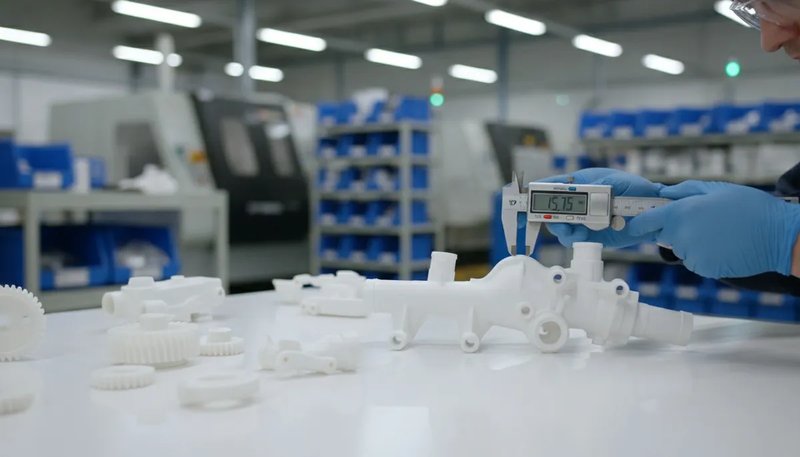
Most mold failures don’t arrive as sudden catastrophic events—they announce themselves progressively through part quality signals that most production teams learn to read too late.
The first signal is flash on the parting line. Flash from the first cycle indicates a build problem; flash that appears progressively after 200,000+ cycles usually means parting line wear or fatigue-related dimensional shift. The second signal is short shots or burn marks in the same location—clogged vents from resin buildup reduce gas escape, creating back-pressure that burns the resin and prevents cavity fill. This is a maintenance issue at early stages but can indicate vent land erosion in later mold life. The third signal is dimensional drift: parts that were within tolerance at T1 gradually creep toward the boundary, caused by cavity erosion at gates, ribs, and thin walls.
| Signal | Stage | Likely Cause | Intervention |
|---|---|---|---|
| Progressive flash on parting line | Mid-life (200K+ cycles) | Parting line wear or dimensional fatigue | Re-grind parting line, increase clamp force |
| Recurring short shots / burn marks | Early to mid-life | Clogged vents from resin buildup | Clean vents; replace if vent land is eroded |
| Dimensional drift (out-of-tolerance) | Mid to late life | Cavity erosion at gates and ribs | Re-measure against T1 baseline; re-machine if needed |
| Surface finish degradation | Late life | Micro-fracturing and abrasive erosion | Re-polish (2–3 cycles max); then re-machine |
| Ejector pin flash | Mid-life | Ejector hole galling or wear | Replace ejector pins; resize holes if needed |
Surface finish degradation is the fourth and often final signal before mold retirement. Cavity surfaces that were polished to SPI A1 at build gradually roughen through micro-fracturing and erosion. Once a surface can no longer be re-polished to specification—usually after 2–3 re-polish cycles—the cavity needs re-machining or the mold needs replacement. The earlier you catch these signals, the cheaper the intervention: cleaning and re-polishing at 300,000 cycles costs a fraction of cavity replacement at 500,000 cycles. The injection molding process parameters you maintain also directly affect how quickly these degradation signals appear.
How Can You Extend Mold Life Beyond Its Original Rating?
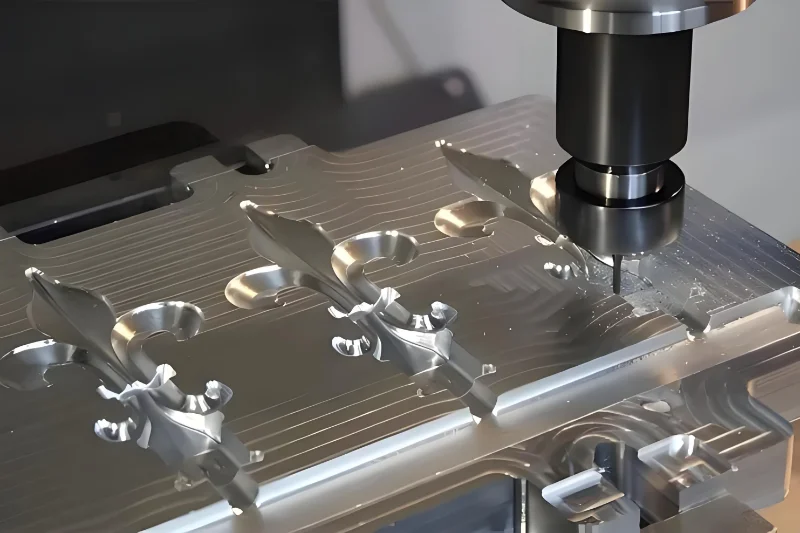
It’s genuinely possible to extend a mold’s useful life beyond its original SPI class rating through proactive intervention—but only up to a point, and only with the right approach.
Cavity re-machining and re-polishing is the most common life extension strategy. When cavity surfaces show measurable erosion but the core geometry is still within spec, re-machining to restore surface finish and dimensional accuracy can add 100,000–300,000 cycles to a mid-life mold. Cost is typically 20–40% of original tooling cost—a reasonable investment if the mold has already amortized most of its initial cost.
Cavity insert replacement is the targeted version of re-machining. Instead of reworking the entire mold, replace only the worn sections—gate inserts, high-wear cores, or damaged ejector bushings. This approach requires that the original mold design anticipated replacement: insert pockets, standardized dimensional interfaces, and accessibility for insert swap. Molds designed with modular inserts from the start are far easier and cheaper to extend. This is a detail worth specifying in your initial tooling brief, especially for long-run programs.
Nitriding and chrome plating are surface treatment options that add hardness and corrosion resistance to existing steel, extending surface life without replacing the steel. Gas nitriding adds a 0.1–0.3mm hardened layer to depths of approximately 0.5mm, increasing surface hardness to 60–70 HRC equivalent.[7] Hard chrome plating adds 0.01–0.05mm of chromium for corrosion and wear resistance.[7] These treatments are most effective as preventive measures on new molds or as early-life interventions—applying them to a cavity already showing significant erosion has limited benefit.
| Method | Additional Cycles | Cost (% of New Tool) | Best Application |
|---|---|---|---|
| Cavity re-polishing | 50K–100K | 5–15% | Surface finish degradation, early erosion |
| Gate insert replacement | 100K–200K | 3–8% | Gate wear on abrasive resins |
| Cavity re-machining | 100K–300K | 20–40% | Measurable dimensional drift, surface erosion |
| Gas nitriding | 100K–250K | 10–20% | Preventive or early-life surface hardening |
| Hard chrome plating | 50K–150K | 8–15% | Corrosion resistance, release improvement |
| Full cavity replacement | Full mold life reset | 50–80% | Core geometry still valid; cavities worn out |
The honest ceiling: there’s a point at which mold refurbishment costs more than building a new tool with lessons learned. A mold that has required two rounds of cavity re-machining, multiple insert replacements, and repeated PM interventions is often at or near that ceiling. The decision to refurbish vs. replace should be based on total remaining program volume, remaining technical life of the mold, and the cost differential between refurbishment and new tooling. The right answer is rarely emotionally satisfying—sometimes the financially correct decision is to retire a functional-looking mold and build a better one.
How Does ZetarMold Approach Mold Lifespan in Production Programs?
When we scope a tooling program, mold lifespan is one of the first engineering conversations—not an afterthought after the price is quoted.
ZetarMold has been building injection molds in Shanghai since 2005. We produce 100+ molds per month using equipment including CNC machines, EDMs, grinders, and precision engravers. Our mold engineering team of 8 specialists with 10+ years of experience handles steel selection, DFM review, and maintenance documentation for every tool we build. We’re certified to ISO 9001, ISO 13485, ISO 14001, and ISO 45001—which means our quality and documentation systems are externally audited, not just internally claimed. If you need a mold that lasts, the conversation starts with a brief: your volume, material, and timeline. We take it from there.
The process starts with production volume projection. If your program is 500,000 parts over three years, we design a Class 102 mold in P20 or H13 depending on your material. If it’s 2,000,000 parts over five years, Class 101 with full hardening is the answer—even though it costs more upfront.
| Annual Volume | Program Duration | Recommended SPI Class | Steel Choice |
|---|---|---|---|
| Under 50,000 | 1–2 years | Class 104–105 | Soft P20 or aluminum |
| 50,000–200,000 | 2–3 years | Class 103 | P20 (28–34 HRC) |
| 200,000–500,000 | 3–5 years | Class 102–103 | P20 or H13 |
| 500,000–1,000,000 | 5+ years | Class 102 | H13 (48–52 HRC) |
| 1,000,000+ | Long-term / repeat | Class 101 | H13 or S136, full hardening |
We’ve run this conversation enough times to know that customers who push back on the upfront tooling investment are almost always the same ones who call us three years later asking why their mold is failing at 60% of expected volume. The conversation is uncomfortable at the quote stage and much more uncomfortable when the mold dies early.
Our injection mold design3 process includes a standard DFM review that covers steel selection, gate design, cooling circuit layout, and ejection strategy—all with explicit lifespan impact analysis. We also supply a mold maintenance schedule with every tool we ship: cycle count PM intervals, consumables list (ejector pins, springs, gate inserts), and a documented T1 dimensional baseline for future comparison. In our experience, customers who follow the maintenance schedule reliably hit their target lifespan; those who don’t are usually back to us for unplanned repair within 18–24 months.
Frequently Asked Questions About Injection Mold Lifespan
How many shots does a typical injection mold last?
A typical production injection mold lasts 100,000 to 1,000,000+ shots, depending on SPI class. Class 101 molds in H13 steel are designed for 1M+ cycles; Class 103 molds in P20 steel typically target 100,000–500,000 cycles. Prototype Class 105 aluminum molds are rated for fewer than 500 shots. Actual lifespan depends heavily on the material being molded, maintenance discipline, and processing conditions—not just the nominal SPI class rating. Well-maintained molds routinely exceed their rated lifespan; neglected molds often fail at 60–70% of the target.
What reduces injection mold lifespan the most?
Abrasive and corrosive materials cause the greatest lifespan reduction: glass-filled resins (10–30% GF) can cut mold life by 30–50% versus unfilled grades, and corrosive materials like PVC can destroy P20 steel cavities within tens of thousands of cycles without stainless steel protection. Lack of preventive maintenance is the second largest factor—molds that skip PM intervals rarely reach 70% of their rated lifespan. Mismatched processing parameters, including excessive injection pressure or mold temperatures above specification, also accelerate wear and thermal fatigue.
Can an injection mold be repaired to extend its life?
Yes—cavity re-polishing, gate insert replacement, and cavity re-machining can extend mold life by 100,000–300,000 additional cycles. Repair cost is typically 20–40% of the original tooling investment, making it a worthwhile option for molds that have already amortized most of their initial cost. Surface treatments like gas nitriding or hard chrome plating add hardness and corrosion resistance to extend cavity surface life. However, there is a practical ceiling: molds requiring multiple repair rounds over their lifetime may become more economical to replace with a redesigned tool that incorporates lessons learned from the original production run.
What is the best mold steel for long life?
H13 (1.2344) hardened to 48–52 HRC is the most widely used choice for high-lifespan production molds handling abrasive or high-temperature materials, delivering consistent results over 500,000–1,000,000+ cycles. S136 (1.2083) is preferred for corrosive materials like PVC and halogenated flame-retardant grades because of its stainless properties, which resist chemical attack from processing gases. For standard non-abrasive resins at moderate production volume, P20 (28–34 HRC) delivers adequate lifespan at lower upfront cost. Steel selection must match your specific material and total program volume—there is no universally ‘best’ steel for all injection molding applications.
How often should an injection mold be serviced?
Preventive maintenance intervals depend on the material being run and the mold class. A Class 103 mold running unfilled thermoplastics should be serviced every 50,000–100,000 cycles. Molds running glass-filled or corrosive materials need PM every 25,000–50,000 cycles. Each PM service should cover cavity and core cleaning to remove resin buildup and oxidation, ejector pin lubrication and wear inspection, vent channel clearing to prevent short shots and burning, parting line examination for flash or wear, and a cooling circuit flow check to confirm adequate heat removal.
Does mold size affect how long it lasts?
Mold size affects lifespan indirectly through clamping force requirements, thermal mass distribution, and cooling circuit complexity. Larger molds experience greater thermal mass variation and are more sensitive to cooling circuit design quality—non-uniform cooling creates cyclic thermal stress that accelerates fatigue. Large molds built in 718H steel (33–38 HRC) rather than fully hardened H13 are less susceptible to distortion during heat treatment, which preserves dimensional stability over long production runs. For a given steel grade and maintenance program, mold size alone is not the primary lifespan driver.
What is the difference between Class 101 and Class 103 molds?
Class 101 molds are designed for 1,000,000+ cycles using fully hardened tool steel (H13, S136), robust cooling circuits, and heavy-duty ejection and gating systems—including replaceable hardened gate inserts. Class 103 molds target 100,000–500,000 cycles using semi-hardened or pre-hardened P20 steel with standard cooling and ejection. The upfront cost difference is typically 40–80% higher for Class 101. The correct choice is driven entirely by your total program volume: overspending on Class 101 for a 200,000-part run is as wasteful as underspending on Class 103 for a million-part production program.
Is it possible to build an injection mold that lasts indefinitely?
No injection mold lasts indefinitely—all tool steel experiences fatigue, erosion, and eventual dimensional drift with repeated thermal cycling. Class 101 molds with hardened steel, optimized cooling, and disciplined maintenance programs can exceed 2,000,000 cycles in favorable conditions with non-abrasive materials, but even these eventually require cavity replacement or re-machining. The practical engineering goal is not infinite life but matched life: designing the mold to outlast your production program with adequate margin, without paying for unnecessary durability that will never be exercised.
Ready to Design a Mold That Lasts as Long as Your Program Needs?
Quick rule for your next tooling decision: match SPI class to your total program volume, select steel to your material’s wear and corrosion profile, and build a PM schedule before the mold ships—not after the first quality incident. Print that out and bring it to your next DFM review.
ZetarMold has been building production injection molds in Shanghai since 2005. We produce 100+ molds per month across a full range of SPI classes, with a dedicated team of mold engineers who handle steel selection, DFM review, and maintenance documentation for every tool. If you have a production volume target and a material spec, we can tell you exactly what class of mold you need and what it will cost—no vague ranges, no upselling on unnecessary features.
Ready to build a mold that lasts? Send us your part drawing, material, and annual volume—we’ll scope the right tooling solution for your program, no vague ranges, no upselling on unnecessary features. ZetarMold has delivered production molds to customers across North America, Europe, and Asia since 2005.
References
- Plastics Industry Association — Customs and Practices of the Moldmaking Industry: Defines SPI mold classifications (Class 101–105) and their approximate lifespans. — plasticsindustry.org
- P20 / 1.2311 Mold Steel Properties — Pre-hardened delivery hardness of ~280–320 HB (≈28–34 HRC), per steel supplier data. — mwalloys.com — P20 Mold Steel
- H13 Tool Steel (1.2344) Properties — Hot-work tool steel hardened to 48–52 HRC; widely used for high-volume injection molds. — hudsontoolsteel.com — H13 Tool Steel
- Glass-Fiber Abrasion on Injection Molds — Abrasion by glass fibers during injection molding raises significant wear challenges for mold steel. — ScienceDirect — Wear, Vol. 271 (2011); also: MoldMaking Technology — Strategic Mold-Material Selection
- PVC Corrosion Attack on Mold Steel — PVC degrades during processing, releasing hydrochloric acid vapors that corrode standard tool steels; stainless mold steel (S136/1.2083) is the recommended baseline. — MoldMaking Technology — Surface Treatments Protect Mold Finishes
- Injection Mold Preventive Maintenance Intervals — First PM recommended at 25,000–50,000 cycles; regular intervals extend mold service life. — VEM Tooling — Mold Life Expectancy
- Gas Nitriding and Hard Chrome Plating Properties — Gas nitriding can achieve surface hardness exceeding 67 HRC; hard chrome plating layer 0.02–0.05mm at HV800–HV1000. — SSAB — Gas Nitriding Tool Steel; Hoorenwell — Mold Standardization Guide
-
injection mold: An injection mold is a precision-machined steel tool that defines the shape of a plastic part through repeated injection, cooling, and ejection cycles, with a rated lifespan determined by its steel grade and SPI classification. ↩
-
mold steel: Mold steel is a category of tool steel alloys—such as P20, H13, and S136—specifically selected for injection mold construction based on hardness, corrosion resistance, and thermal fatigue resistance. ↩
-
injection mold design: Injection mold design is the engineering process of defining mold geometry, steel grade, gating, cooling, and ejection systems to produce dimensionally accurate plastic parts at the lowest possible cycle time and longest mold lifespan. ↩