...

사출 금형에는 어떤 부품과 구성품이 포함되나요?

• ZetarMold Engineering Guide
• Plastic Injection Mold Manufacturing Since 2005
• Built by ZetarMold engineers for buyers comparing mold and molding solutions.

실제로, 캐비티와 코어 설계는 재료 수축을 고려해야 합니다. 모든 플라스틱 재료는 냉각되면서 수축하는데, 일반적으로 수지에 따라 0.5%에서 2.5%까지 수축합니다. 금형 설계자는 예상 수축률에 따라 캐비티 치수를 조정하여 냉각 후 최종 부품이 사양을 충족하도록 해야 합니다. 이를 잘못 계산하면 부품이 지속적으로 크거나 작게 만들어집니다.

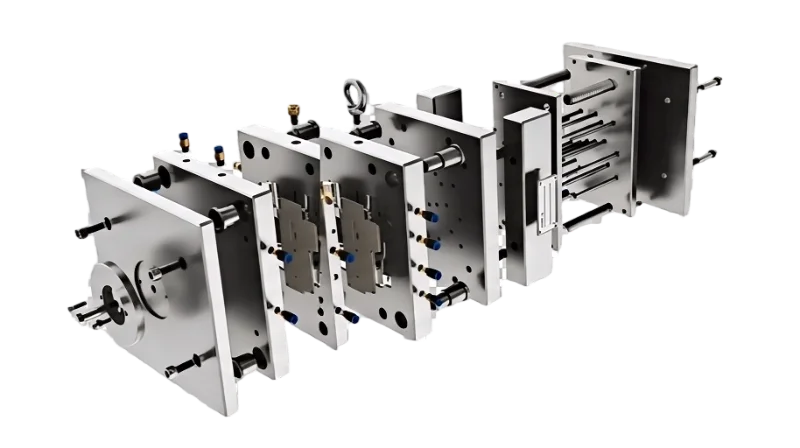
사출 금형은 일반적으로 몰드 베이스, 캐비티 및 코어 인서트, 러너 시스템(스프루, 러너, 게이트), 냉각 채널, 이젝터 핀 및 플레이트, 가이드 핀 및 부싱, 배기 홈, 서포트 필러, 그리고 스프링, 씰, 리프터와 같은 다양한 보조 구성 요소를 포함합니다 — 이 모든 것은 반복 가능한 정밀도로 플라스틱 부품을 성형, 냉각 및 탈형하도록 설계되었습니다.

This guide breaks down every major component group, explains what each part does, and shares practical insights from two decades of building and running injection molds in our Shanghai factory. If you are designing a new mold or troubleshooting an existing one, understanding these components is where good decisions start.

주요 내용
  • An injection mold has 8+ component groups: cavity/core, runner, cooling, ejection, guiding, venting, support, and auxiliary systems
  • The cavity and core define the part shape — their material and finish directly affect part quality
  • Runner design (hot vs. cold) impacts material waste, cycle time, and production cost
  • Cooling channels control cycle time and part warpage — conformal cooling can cut cycles by 20-40%
  • Ejector pin type, count, and placement determine whether parts release cleanly or with damage
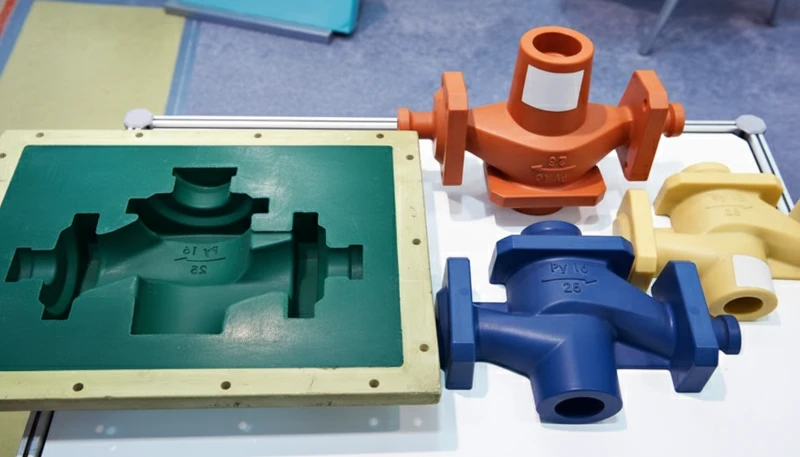
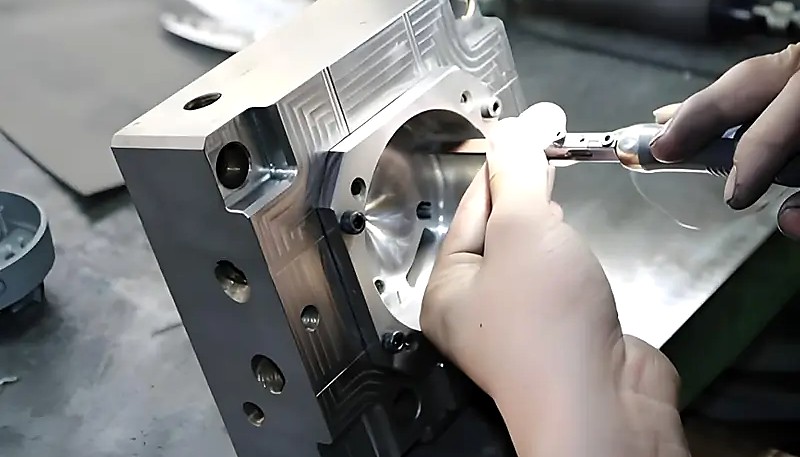
Prototype injection mold and parts display

What Are the Core Components of an Injection Mold?

Every injection mold, regardless of complexity, shares a common set of core components that work together to form, cool, and eject plastic parts. Understanding these building blocks is essential for anyone involved in mold design, sourcing an injection molding supplier, or production.

At the most fundamental level, an 사출 금형 consists of two halves — the fixed (stationary) half and the moving half — mounted on the respective platens of the 사출 성형 machine. When these two halves close, they create a sealed cavity that defines the shape of the final part. The fixed half typically contains the cavity (the concave side), while the moving half contains the core (the convex side).

몰드 베이스(몰드 프레임이라고도 함)는 구조적 기초입니다. 모든 인서트, 플레이트 및 서브시스템을 정밀하게 정렬하여 고정합니다. 몰드 베이스는 일반적으로 P20 또는 S50C와 같은 중탄소강으로 제작되며, 수천 톤의 클램핑 힘을 편향 없이 견뎌내야 합니다. 이러한 구성 요소는 직접적으로 영향을 미칩니다. 사출 성형 단계 및 총 사출 성형 생산 시간, 왜냐하면 충전, 냉각, 이젝션 및 검사는 모두 금형 레이아웃에 의존하기 때문입니다.

“An injection mold contains multiple subsystems that must work in precise coordination.”True

The cavity, runner, cooling, ejection, guiding, venting, and support systems must all function together within tight tolerances — typically ±0.005 mm — for the mold to produce acceptable parts consistently.

“All injection molds use the same set of components regardless of part complexity.”False

Component selection varies widely: a simple single-cavity mold may use basic guide pins and straight-pull ejection, while a complex multi-cavity mold requires lifters, slides, hot runners, and sequential valve gates.

  • Cavity and core inserts — the form-giving surfaces that define part geometry
  • Runner system — channels that deliver molten plastic from the machine nozzle to the cavity
  • 냉각 시스템 — water or oil channels that extract heat from the molded part
  • Ejection system — pins, sleeves, and plates that push the part out after cooling
  • Guiding system — leader pins and bushings that ensure mold halves align perfectly
  • Venting system — shallow grooves that allow trapped air and gases to escape
  • Support system — pillars, spacer blocks, and return pins that maintain structural rigidity

In practice, a production-class mold for a medium-complexity part might contain 50 to 200 individual components. A multi-cavity mold for something like a medical syringe barrel could have over 500 precision-machined parts. Each component must be manufactured to tight tolerances — often within ±0.005 mm — because any misalignment or dimensional drift shows up directly on the finished part.

🏭 ZetarMold Factory Insight
상하이 공장에서 당사 팀은 내부 금형 제조 시설의 지원을 받아 90톤에서 1850톤에 이르는 47대의 사출 성형기를 운영합니다. 금형 제작과 생산을 한 지붕 아래에서 진행한다는 것은 금형 구성 요소를 신속하게 반복 개선할 수 있음을 의미합니다 — 만약 ejector pin1 재배치가 필요하거나 냉각 채널을 확대해야 하는 경우, 변경은 부품이 성형되는 동일한 층에서 발생합니다.

What Role Do the Cavity and Core Play in Mold Design?

The cavity and core are the heart of any injection mold — they are the surfaces that directly shape the plastic part. Get these right, and everything else becomes easier. Get them wrong, and no amount of process tuning will save the part.

그리고 cavity is the concave (recessed) side of the mold that forms the external surfaces of the part. The 라인이 비중요 표면에 위치하고 밀봉, 조립, 냉각 및 금형 강도를 보호한다면, 그것을 취약하거나 비싼 공구 위치에 숨기는 것보다 더 나을 수 있습니다. is the convex (protruding) side that forms the internal surfaces. When the mold closes, the gap between cavity and core defines the wall thickness and geometry of the molded part. This gap is the 몰드 캐비티2 in the broader sense.

Material selection for cavity and core inserts is critical. For high-volume production (over 500,000 cycles), hardened tool steel such as H13, S136, or 8407 is standard. For shorter runs or prototypes, aluminum (such as 7075-T6) or P20 pre-hardened steel can reduce cost and lead time significantly. The surface finish of these inserts also transfers directly to the part — mirror-polished cavities produce glossy parts, while textured surfaces (applied via EDM or photo-etching) can hide flow marks and create grip patterns.

In practice, cavity and core design must account for material shrinkage. Every plastic material shrinks as it cools — typically 0.5% to 2.5% depending on the resin. The mold designer must scale the cavity dimensions by the expected shrinkage rate so that the final part meets specification after cooling. Getting this wrong means parts that are consistently oversized or undersized.

🏭 ZetarMold Factory Insight
400종 이상의 플라스틱 소재에 걸친 경험을 바탕으로, 당사 엔지니어는 강철을 절단하기 전에 MOLDFLOW 시뮬레이션을 사용하여 수축률, 용접선 위치 및 공기 트랩 위치를 예측합니다. 당사 팀은 특히 유리 충전 나일론이나 섬유 강화 PP와 같이 수축률이 높거나 이방성인 소재의 경우, 이 선행 분석을 금형 위험 검사 도구로 활용합니다.
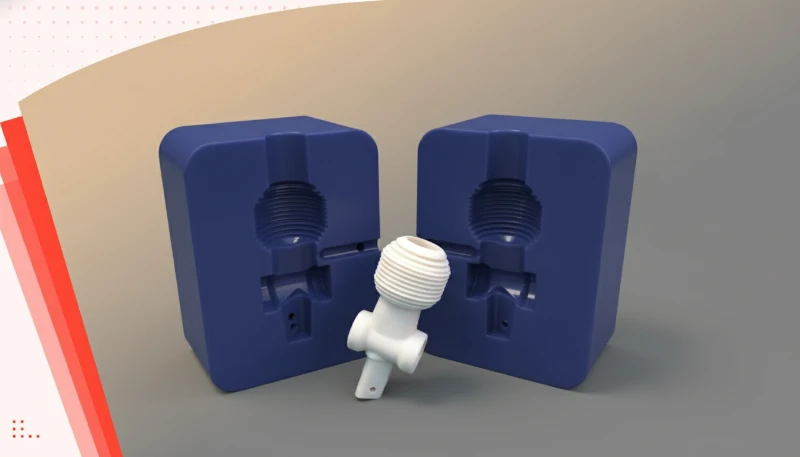
Blue plastic injection mold with finished part
Blue plastic injection mold with finished

How Does the Runner System Deliver Molten Plastic?

The runner system is the network of channels that transports molten plastic from the injection machine nozzle into the mold cavity. Its design directly affects fill balance, material waste, cycle time, and part quality.

A runner system has four main elements: the sprue (the main channel from the nozzle), the runners (distribution channels branching to each cavity), the gates (the narrow entry points into the cavity), and the cold slug wells (pockets that catch cooled material at the front of the melt stream). In multi-cavity molds, runner balance — ensuring each cavity fills at the same rate and pressure — is a fundamental design requirement.

There are two broad categories of runner systems. 콜드 러너 시스템 are simpler and cheaper. The plastic in the channels solidifies with each cycle and is ejected as waste (or reground and reused). Hot runner systems use heated manifolds and nozzles to keep the plastic molten inside the mold, eliminating runner waste entirely. Hot runners add upfront cost but pay off quickly in high-volume production.

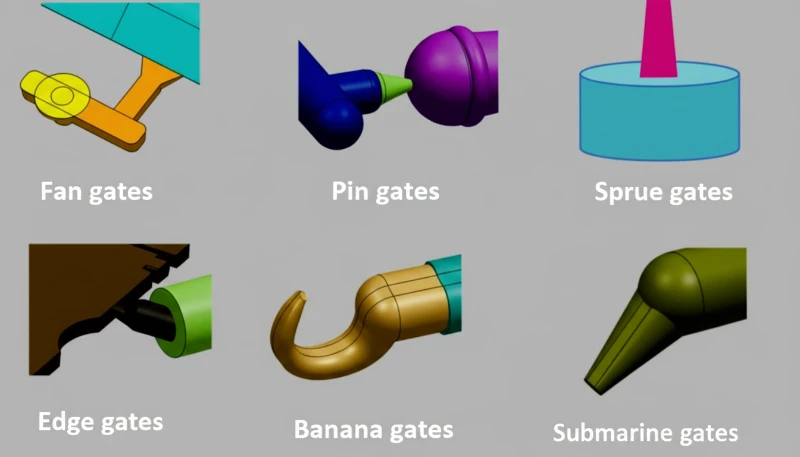
Gate design deserves special attention because the gate is where the melt enters the cavity and leaves a witness mark on the part. Common gate types include edge gates, submarine (tunnel) gates, pin-point gates, and valve gates. The choice depends on part geometry, aesthetic requirements, and whether gate vestige is acceptable on the visible surface.

In multi-cavity molds, achieving runner balance is essential for consistent part weight and dimensions across all cavities. Naturally balanced runners use equal-length paths from the sprue to each cavity, while artificially balanced runners adjust cross-section dimensions to equalize pressure drop. For high-precision parts with tight tolerances, even a 2-3% variation in fill time between cavities can produce measurable dimensional differences — which is why many production molds use valve-gated hot runner systems for positive shutoff and precise timing control.

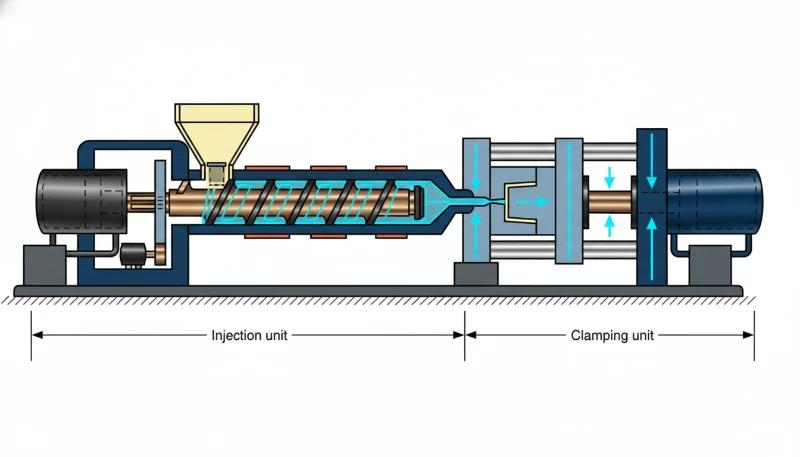
Diagram of a plastic injection molding machine
Diagram of a plastic injection molding

“Hot runner systems eliminate runner waste by keeping plastic molten inside the mold.”True

Heated manifolds and nozzles maintain the polymer above its melting point throughout the feed system, so no solidified runner is produced — saving material and reducing post-processing.

“Runner design has no impact on part quality — only on material cost.”False

Runner layout and gate placement critically affect fill pattern, weld-line position, air traps, packing pressure, and dimensional consistency — all of which directly influence part quality.

Why Is the Cooling System Critical for Part Quality?

Cooling accounts for 60-70% of the total injection molding cycle time. A well-designed cooling system produces consistent parts faster; a poor one leads to warpage, sink marks, longer cycles, and higher per-part cost.

The cooling system consists of a network of channels drilled through the mold plates, typically carrying temperature-controlled water (or oil for high-temperature applications). These channels are positioned as close to the cavity surfaces as possible to extract heat efficiently. The layout must balance cooling uniformity against structural integrity — you cannot drill channels so close to the cavity that the mold cracks under injection pressure.

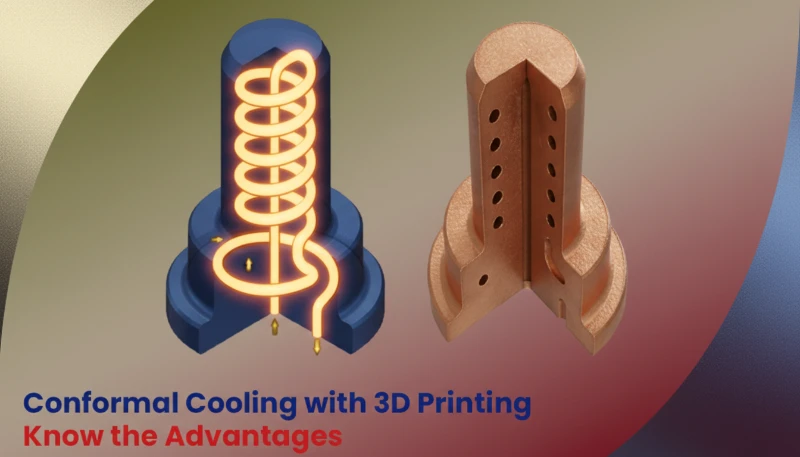
Traditional cooling uses straight, drilled channels, which work well for simple geometries. For complex parts with deep ribs or curved surfaces, conformal cooling3 channels — manufactured using metal 3D printing (DMLS/SLM) — follow the contour of the cavity surface. Studies have shown conformal cooling can reduce cycle time by 20-40% while improving dimensional consistency.

Cooling channel design also affects part aesthetics. Uneven cooling causes differential shrinkage, which shows up as warpage, sink marks on thick sections, or internal stress that leads to cracking later. Mold temperature must be matched to the material — running a mold too cold for a semi-crystalline material like nylon can cause premature freezing and incomplete fill.

The thermal conductivity of the mold steel itself also plays a role in cooling performance. Standard P20 steel has a thermal conductivity of about 30-35 W/(m·K), while beryllium copper inserts — sometimes used in hard-to-cool areas — offer 200+ W/(m·K), dramatically improving heat extraction. For molds running engineering resins that require higher mold temperatures (such as PEEK or LCP), oil-heated thermal regulators maintain mold temperature at 150-200°C rather than using water cooling.

In multi-cavity molds, cooling balance between cavities is just as important as the absolute cooling rate. If one cavity cools faster than its neighbors, the resulting dimensional variation between parts from the same shot can be significant enough to reject some cavities outright. Flow regulators or restrictors in the cooling circuit help equalize water distribution across all cavities, ensuring consistent part quality from every cavity in the mold.

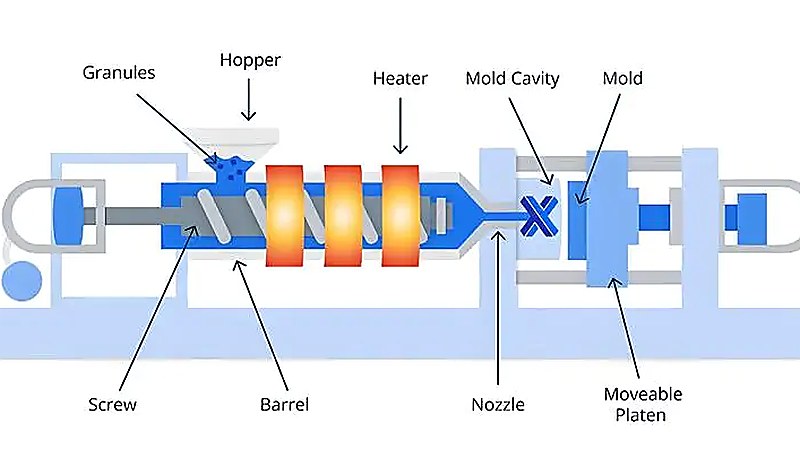
Injection Molding Machine Schematic
Injection molding machine schematic — cooling

“Cooling time accounts for 60-70% of the total injection molding cycle.”True

After the cavity is filled, the part must cool below its ejection temperature before the mold can open. This waiting period dominates cycle time, making cooling optimization the most effective lever for productivity.

“All cooling channels must be perfectly straight drilled holes.”False

While traditional drilling produces straight channels, conformal cooling channels made via metal 3D printing can follow curved cavity surfaces, providing far more uniform cooling for complex geometries.

The relationship between cooling channel diameter and flow rate is also important. Larger diameter channels (10-14 mm) allow higher flow rates and better heat removal but remove more steel from the mold, potentially weakening the structure. Smaller channels (6-8 mm) maintain structural integrity but require higher pressure to achieve adequate flow. Most production molds use 8-10 mm channels as a practical compromise, with baffles or inserts to direct flow precisely where it is needed most.

Baffle design inside cooling channels also matters. Straight-through channels are the simplest, but baffled channels — where a blade redirects flow to make a U-turn inside the channel — provide better heat transfer by forcing water against the cavity surface. For cores and slender features, spiral cooling channels or bubbler tubes deliver water deep into the feature and back out again, preventing hot spots that cause differential shrinkage and warpage.

How Does the Ejection System Remove Finished Parts?

이 섹션은 완성된 부품을 제거하는 이젝션 시스템과 그 비용, 품질, 시기 또는 조달 위험에 미치는 영향에 관한 것입니다. 플라스틱 부품이 충분히 냉각되면, 금형에서 깨끗하게 제거되어야 합니다. 이젝션 시스템은 이 중요한 단계를 처리하며, 그 설계는 부품이 깨끗하게, 일관되게, 외관 손상 없이 탈형되는지를 결정합니다.

The core ejection components include ejector pins (straight round pins that push on the part), ejector sleeves (hollow pins that push around a core pin), stripper plates (full-face plates that strip the entire part off the core), and lifters (angled mechanisms that form and release undercuts). These are driven by an ejector plate that moves as a unit, actuated by the injection machine’s hydraulic or mechanical ejection system.

Ejector pin placement is a careful balance. Too few pins, and the part distorts or cracks during ejection. Too many pins, and you leave excessive witness marks on the part surface. The pins must push on areas of the part that are structurally rigid — ribs, bosses, or thick wall sections — rather than on thin walls that would deform.

For parts with undercuts (features that cannot be released in a straight pull), the mold needs side-action mechanisms: lifters for internal undercuts and slides for external undercuts. These add significant complexity and cost to the mold but are essential for features like snap fits, thread profiles, or lateral holes.

What Are the Guiding and Positioning Components?

±0.005 mm

The primary guiding components are leader pins (also called guide pins) and guide bushings. Leader pins are mounted on one mold half (typically the moving side) and enter corresponding guide bushings on the opposite half as the mold closes. They engage before the cavity surfaces touch, ensuring the two halves are aligned before they bear the full clamping force.

For higher precision, molds also use tapered interlocks (also called locating rings or alignment locks). These are conical male-female pairs machined into the cavity and core inserts that provide final, tight alignment at the parting line. Straight leader pins handle coarse alignment; interlocks handle the last few microns.

In multi-plate molds (such as stripper-plate or three-plate molds), additional guide pin sets are needed to align each plate pair. Positioning pins (dowel pins) are also used throughout the mold to ensure inserts are locked in their correct positions and cannot rotate or shift under injection pressure.

What Auxiliary Components Enhance Mold Performance?

이 섹션은 금형 성능을 향상시키는 보조 구성 요소와 그 비용, 품질, 시기 또는 조달 위험에 미치는 영향에 관한 것입니다. 주요 서브시스템을 넘어서, 다양한 보조 구성 요소가 금형의 신뢰성, 수명 및 성능에 기여합니다. 이들은 실패하기 전까지는 거의 주목받지 않는 부품들입니다.

Venting grooves are shallow channels (typically 0.01-0.03 mm deep) ground into the parting surface that allow trapped air and decomposition gases to escape ahead of the advancing melt front. Without adequate venting, the trapped air compresses and heats to the point of diesel ignition — a phenomenon called gas burn or dieseling that chars the plastic surface.

Springs (return springs, stripper springs) provide the return force for ejection plates and preload for slide mechanisms. Disc springs are common in high-force applications, while coil springs handle lighter duties. Spring fatigue is a frequent maintenance item — springs lose force over time, causing ejection issues or incomplete slide return.

Seals and O-rings prevent coolant leaks at channel intersections and plug interfaces. A coolant leak inside the mold is a serious problem — it causes rust, contaminates parts, and can short-circuit heater circuits in hot runner molds. O-ring material must be compatible with the coolant temperature and chemistry (EPDM for water, fluorocarbon for high-temperature oil).

“Venting grooves that are too shallow will trap air and cause gas burns on the part.”True

When vent depth is insufficient, compressed air reaches ignition temperature and causes diesel effect — charring the plastic surface with visible burn marks at the end of fill.

“O-rings in cooling systems never need replacement if installed correctly.”False

O-rings degrade from thermal cycling, chemical exposure, and mechanical compression set. Most manufacturers recommend replacing coolant O-rings every 6-12 months as part of preventive maintenance.

Support pillars (also called support columns) sit between the B-plate and the support plate of the moving mold half. They prevent the B-plate from deflecting under injection pressure. Without adequate support, the plate bows, the parting line opens, and flash appears. The number and diameter of support pillars are calculated based on projected cavity area and peak injection pressure.

Other auxiliary components include heater bands and thermocouples (for hot runner temperature control), wear plates (replaceable surfaces that absorb sliding friction), chain pulleys 그리고 limit switches (for sequential slide motion).

🏭 ZetarMold Factory Insight
Maintaining 100+ mold sets per month means our tooling team handles auxiliary component wear every day. Vent cleaning, spring replacement, and O-ring swaps are part of our standard preventive maintenance protocol — not something that waits for a breakdown.

How Are Injection Molds Designed and Manufactured?

이 섹션은 설계 및 제조된 사출 금형과 그 비용, 품질, 시기 또는 조달 위험에 미치는 영향에 관한 것입니다. 생산 등급 사출 금형을 제작하는 것은 소프트웨어 시뮬레이션, 정밀 가공, 열처리 및 수동 마무리를 결합한 수개월에 걸친 엔지니어링 프로젝트입니다. 이 과정을 이해하면 금형 견적, 일정 및 품질을 평가하는 데 도움이 됩니다.

The process starts with part design review and DFM (Design for Manufacturability). The mold designer analyzes the part geometry for features that complicate molding — undercuts, uneven wall thickness, deep ribs, tight tolerances — and recommends modifications before any steel is cut. This is where the most cost-effective decisions are made.

Next comes mold flow simulation using software like MOLDFLOW or Moldex3D. The simulation predicts fill pattern, weld-line locations, air traps, shrinkage, and cooling efficiency. The designer adjusts gate locations, runner dimensions, and cooling layout based on the simulation results. A good simulation run saves weeks of trial-and-error during mold commissioning.

After simulation, the 금형 설계 is finalized in CAD (UG/NX, SOLIDWORKS, or similar). Every component — inserts, pins, bushings, springs, O-rings — is detailed with dimensions, tolerances, and material specifications. The completed design package includes assembly drawings, individual part drawings, and a bill of materials.

“Mold flow simulation can predict fill patterns and defect locations before any steel is cut.”True

Software like MOLDFLOW and Moldex3D simulates the injection process digitally, allowing designers to optimize gate locations, runner dimensions, and cooling layout — saving weeks of physical trial-and-error.

“A production mold only needs one trial run before it is ready for mass production.”False

Production molds typically go through 2-4 trial iterations to fine-tune gate size, vent depth, cooling balance, and ejection timing. Each trial produces samples that are measured and evaluated, with steel adjustments made between runs.

Mold Manufacturing Step Key Process Typical Tolerance
CNC Milling 3-5 axis machining of cavity/core blocks ±0.005 mm
사출 금형 부품: 부품 및 기능 완벽 가이드 Burn-forming deep ribs and sharp corners ±0.01 mm
Wire EDM Through-profiles for lifters and inserts ±0.005 mm
Surface Grinding Flat parting surface preparation ±0.002 mm
Polishing Mirror, SPI A-1 to A-3 finish Ra 0.012–0.025 μm

Machining involves CNC milling (for cavity/core blocks and mold base), EDM (Electrical Discharge Machining for fine details and sharp corners that cutters cannot reach), wire EDM (for through-profiles like angled lifters), surface grinding (for flat parting surfaces), and 연마 (for mirror or specified surface finishes). Hardened inserts may go through multiple heat-treatment cycles during machining to relieve stress and achieve target hardness (typically 48-52 HRC for P20, 50-54 HRC for H13).

Finally, the mold is assembled, tested, and qualified through T1 (first trial) sampling. The T1 samples are measured against part drawings, and any necessary steel adjustments (adding vents, adjusting gate size, polishing sticky areas) are made. A production mold typically goes through 2-4 trial iterations before it is released for production.

🏭 ZetarMold Factory Insight
Having built molds for 20+ years under ISO 9001, ISO 13485, ISO 14001, and ISO 45001 systems, our process is standardized from DFM review through T1 sampling. Every mold goes through documented quality gates — steel hardness verification, dimensional inspection of inserts, and at least two trial runs before we ship or start production.
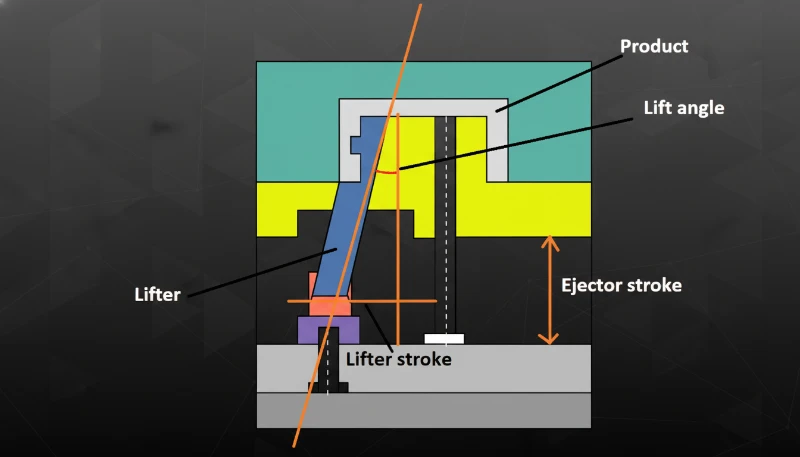
Injection mold lifter and ejector stroke diagram
Injection mold lifter and ejector stroke

Frequently Asked Questions About Injection Mold Components?

What is the difference between a cavity and a core in an injection mold?

The cavity is the concave (recessed) side of the mold that forms the external surfaces of the part, while the core is the convex (protruding) side that forms the internal surfaces. Together they define the complete geometry of the molded part, with the gap between them establishing wall thickness. In practice, the cavity is usually on the fixed (stationary) mold half and the core on the moving half, though this can vary depending on part geometry and ejection strategy. Understanding the distinction between these two components is essential when specifying mold requirements, reviewing DFM feedback, or troubleshooting flash and dimensional issues during production.

How many components does a typical injection mold have?

A standard single-cavity production mold typically contains 50 to 200 individual components, including cavity and core inserts, ejector pins, guide pins, cooling baffles, springs, and O-rings. Multi-cavity molds or those with complex side actions can contain 500 or more precision parts. Each component must be manufactured to tight tolerances, often within 0.005 mm, to ensure consistent part quality over thousands of production cycles. When evaluating mold quotes, understanding this component count helps you assess whether a supplier is proposing adequate tooling complexity or cutting corners on critical subsystems like cooling and ejection.

What material is used for injection mold components?

Cavity and core inserts are typically made from hardened tool steels such as H13, S136, P20, or 8407 for high-volume production molds. Mold bases use medium-carbon steel like S50C. Ejector pins are made from hardened SUJ2 bearing steel for wear resistance. For prototype or low-volume molds, aluminum alloys such as 7075-T6 can reduce cost and lead time by 30-50%. The choice of material depends on production volume, resin abrasiveness, required surface finish, and budget constraints. Your mold supplier should recommend specific grades based on your application rather than defaulting to a one-size-fits-all steel selection.

Why do injection molds need cooling channels?

Cooling channels circulate temperature-controlled water or oil through the mold to extract heat from the solidifying plastic part. Since cooling accounts for 60-70% of the total injection molding cycle time, efficient channel design is the single most effective lever for increasing production output and reducing per-part cost. Proper cooling also prevents common defects such as warpage, sink marks on thick sections, and internal residual stress by ensuring the part solidifies uniformly before ejection. Skipping cooling optimization during mold design is one of the most expensive mistakes you can make in tooling procurement.

What is the purpose of ejector pins in an injection mold?

Ejector pins are hardened steel rods that push the cooled and solidified part out of the mold cavity after the mold opens. They are mounted on an ejector plate that is actuated by the injection machine’s hydraulic or mechanical ejection system. Pin count, diameter, and placement must be carefully designed to apply uniform ejection force without distorting the part or leaving visible marks on appearance surfaces. Typical diameters range from 2 mm to 12 mm depending on part size, and pins should push on structurally rigid features like ribs or bosses rather than thin wall sections.

Understanding injection mold components directly affects your ability to specify the right mold, evaluate supplier quotes, and troubleshoot production issues.


  1. ejector pin: An ejector pin is a hardened steel rod that pushes the molded part out of the cavity after cooling, actuated by the injection machine’s ejection system.

  2. mold cavity: mold cavity refers to a mold cavity is the hollow space within a mold that defines the external shape and surface finish of the molded part.

  3. conformal cooling: conformal cooling refers to channels follow the contours of the mold cavity, providing more uniform cooling and reducing cycle time compared to traditional drilled channels.

최신 게시물
Facebook
트위터
LinkedIn
Pinterest
Mike Tang 사진
마이크 탕

Hi, I'm the author of this post, and I have been in this field for more than 20 years. and I have been responsible for handling on-site production issues, product design optimization, mold design and project preliminary price evaluation. If you want to custom plastic mold and plastic molding related products, feel free to ask me any questions.

나와 연결하기 →

빠른 견적 요청하기

다음을 통해 도면 및 세부 요구 사항을 보내세요. 

Emial:[email protected]

또는 아래 문의 양식을 작성하세요:

빠른 견적 요청하기

다음을 통해 도면 및 세부 요구 사항을 보내세요. 

Emial:[email protected]

또는 아래 문의 양식을 작성하세요:

빠른 견적 요청하기

다음을 통해 도면 및 세부 요구 사항을 보내세요. 

Emial:[email protected]

또는 아래 문의 양식을 작성하세요:

빠른 견적 요청하기

다음을 통해 도면 및 세부 요구 사항을 보내세요. 

Emial:[email protected]

또는 아래 문의 양식을 작성하세요:

빠른 견적 요청하기

다음을 통해 도면 및 세부 요구 사항을 보내세요. 

Emial:[email protected]

또는 아래 문의 양식을 작성하세요:

브랜드에 대한 빠른 견적 요청하기

다음을 통해 도면 및 세부 요구 사항을 보내세요. 

Emial:[email protected]

또는 아래 문의 양식을 작성하세요:

댓글 작성하기

이 도움말에 대한 자세한 내용을 보려면 "[email protected]"으로 이메일 주소를 입력하세요.

빠른 견적 요청하기

다음을 통해 도면 및 세부 요구 사항을 보내세요. 

Emial:[email protected]

또는 아래 문의 양식을 작성하세요:

빠른 견적 요청하기

다음을 통해 도면 및 세부 요구 사항을 보내세요. 

Emial:[email protected]

또는 아래 문의 양식을 작성하세요: