Votre devis d’outillage vient d’arriver, 70 % plus élevé que prévu parce que la pièce nécessite deux couleurs. Votre responsable veut savoir si ce surcoût est justifié. Dans la plupart des cas, oui — mais uniquement si la pièce exige réellement un moulage bi-injection1, ce qui n’est pas le cas de toutes les pièces bicolores.
Le moulage par injection bicolore produit une seule pièce composée de deux matériaux ou couleurs distincts en un cycle machine, éliminant ainsi l’assemblage secondaire. Ce guide présente la mécanique du procédé, le choix des matériaux, les règles de conception et la structure des coûts afin de vous permettre de prendre une décision en toute confiance.
- Le moulage bi-injection utilise deux unités d’injection et un moule rotatif pour produire des pièces bimatières en un seul cycle.
- Le substrat et les matériaux de surmoulage doivent être chimiquement compatibles : le TPE adhère bien au PP, mais pas au POM.
- Le coût de l’outillage est supérieur de 60–80 % à celui des moules mono-injection en raison de la conception à double empreinte et de l’alignement de précision.
- Les pièces comportant des surfaces de préhension souples, une esthétique multicolore ou des joints intégrés en bénéficient le plus.
- Si votre pièce peut être assemblée à partir de deux éléments séparés, le surmoulage peut constituer une solution moins coûteuse.
Qu’est-ce que le moulage par injection bicolore ?
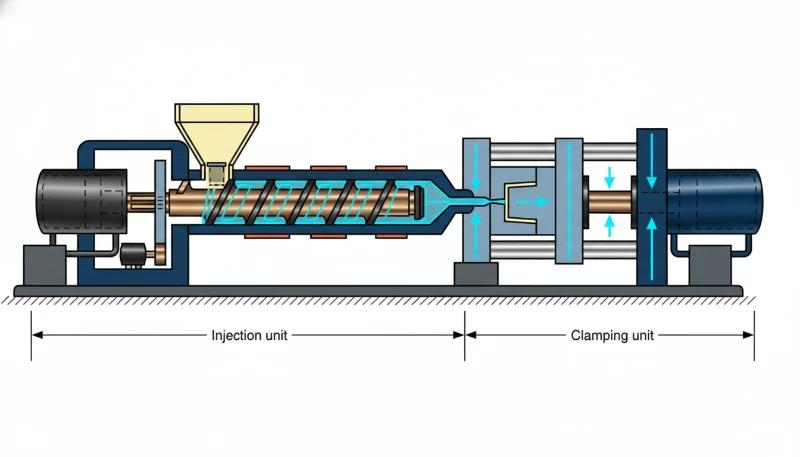
Le moulage par injection bicolore est un processus qui injecte deux matériaux dans un seul moule pour produire une pièce solidement liée en un seul cycle de machine. Également appelé moulage à deux coups, il utilise une machine spécialisée dotée de deux unités d’injection indépendantes.
Contrairement à la peinture, à la tampographie ou à l’assemblage de composants distincts, les deux matériaux fusionnent pendant le moulage. On obtient ainsi une pièce dont la limite entre les couleurs ou les matériaux est parfaitement continue : ni ligne de colle, ni fixation mécanique, ni opération secondaire. La liaison est permanente, car le second matériau est injecté alors que le premier est encore suffisamment chaud pour permettre une fusion moléculaire.
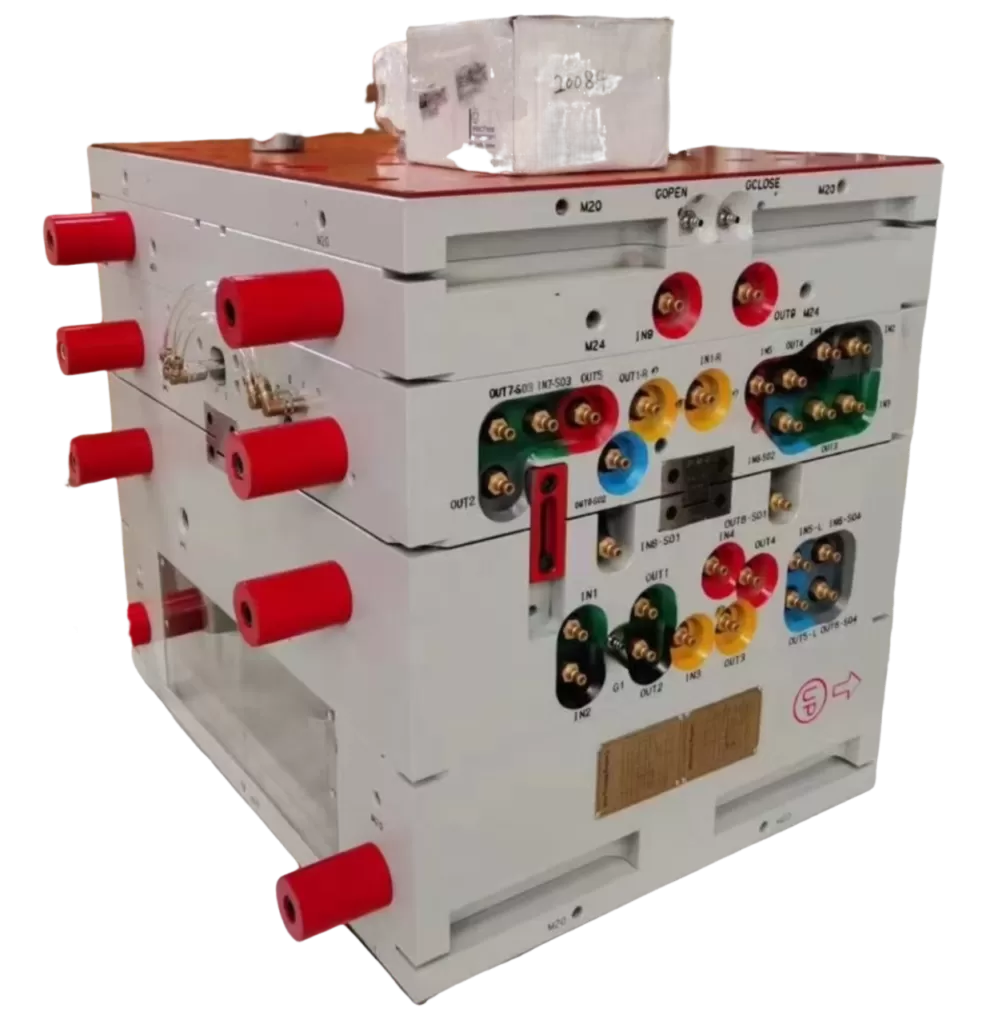
Il existe deux méthodes principales : rotative et à recul du noyau. Dans le moulage rotatif, un plateau tournant fait pivoter le moule de 180 degrés entre la première et la seconde injection. Dans le moulage à recul du noyau, un insert coulissant se rétracte pour découvrir la zone de la seconde empreinte sans faire tourner le moule. Dans les deux cas, la pièce issue de la première injection reste dans le moule pendant tout le cycle, ce qui maintient une grande précision de positionnement.
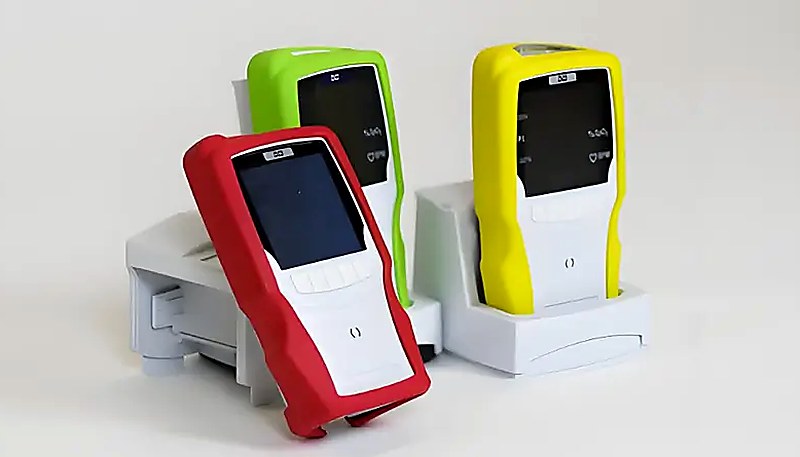
Les applications courantes ressemblent à une liste d’objets que vous touchez chaque jour : brosses à dents à poignée souple en caoutchouc, touches de clavier dont les caractères ne s’effacent jamais, garnitures intérieures automobiles avec zones souples intégrées et boîtiers de dispositifs médicaux dotés de zones fonctionnelles à code couleur. Le procédé de moulage par injection sous-jacent est identique à celui d’une injection simple ; seule la configuration de la machine et la conception du moule diffèrent.
Comment fonctionne le procédé de moulage bi-injection ?
Le procédé de moulage bi-injection est un cycle au cours duquel deux unités d’injection remplissent un moule rotatif ou coulissant afin de créer une pièce bimatière assemblée. L’ensemble du procédé se déroule sans ouvrir le moule ni retirer le substrat2.
Dans la méthode rotative, le moule possède deux demi-empreintes correspondantes montées sur une platine rotative. Étape un : la première unité d’injection remplit l’empreinte A avec le matériau substrat. Étape deux : la platine tourne de 180 degrés, déplaçant le substrat refroidi en alignement avec l’empreinte B. Étape trois : la deuxième unité d’injection remplit l’empreinte B avec le deuxième matériau ou couleur autour du substrat. Étape quatre : le moule s’ouvre et la pièce finie est éjectée.
La méthode à noyau rétractable fonctionne différemment. Au lieu de tourner, un insert coulissant se retire pour exposer la zone de la seconde empreinte. Plus compacte et souvent plus rapide pour les pièces symétriques, elle limite toutefois davantage la liberté de conception qu’un système rotatif, car les deux zones partagent la même moitié de moule.
Le temps de cycle n’est pas le double de celui du moulage en une seule injection — c’est une idée reçue courante. Comme la seconde injection commence alors que le matériau de la première refroidit encore, le cycle total n’est généralement que 1,2 à 1,5 fois plus long qu’un cycle à injection unique. La machine fait fonctionner les deux unités d’injection selon des phases qui se chevauchent, si bien que le débit reste étonnamment compétitif pour la production en grande série.
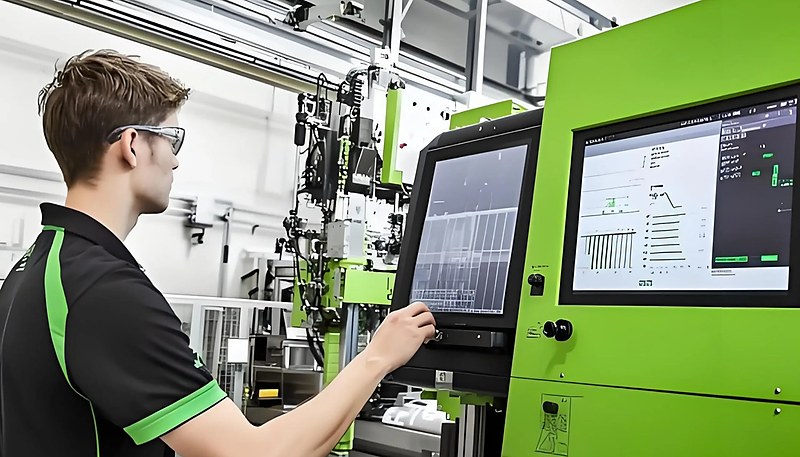
Les exigences relatives à la machine sont précises : il faut une machine bicolore avec deux fourreaux, un plateau rotatif ou un mécanisme coulissant, ainsi qu’une force de fermeture suffisante pour gérer simultanément les deux empreintes. Ces machines coûtent nettement plus cher que les unités standard à un seul fourreau, ce qui explique en partie le surcoût du moulage bi-injection par rapport au surmoulage conventionnel.
En pratique, le choix entre plateau rotatif et noyau rétractable dépend de la géométrie de la pièce. Les pièces à symétrie de révolution — boutons ronds, poignées cylindriques — conviennent bien au plateau rotatif. Les pièces plates ou allongées comportant une bande bicolore sont souvent mieux adaptées au noyau rétractable, car le moule coulisse linéairement au lieu de tourner.
Quels matériaux conviennent le mieux au moulage bicolore ?
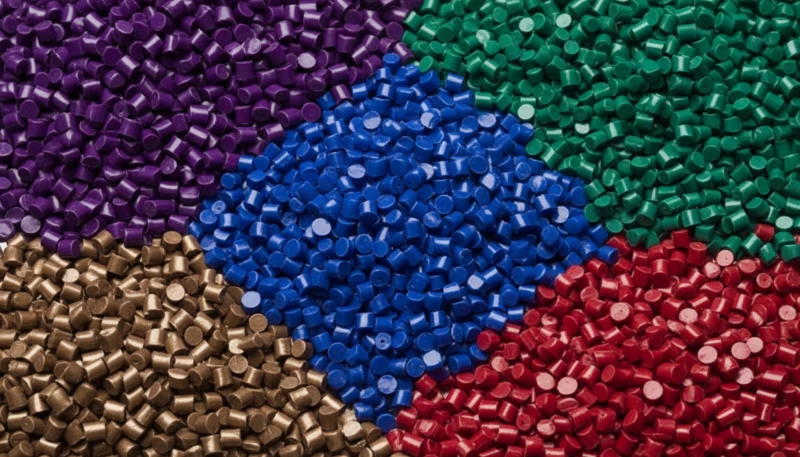
PP+TPE3, ABS+TPE et PC+TPU sont les associations de matériaux les plus fiables pour le moulage bicolore, car elles créent une liaison chimique. Sans compatibilité chimique, les deux matériaux se délaminent sous contrainte, quelle que soit la qualité de conception du moule.
L’adhésion se produit via deux mécanismes. L’adhésion chimique se produit lorsque des polymères compatibles fusionnent au niveau moléculaire pendant la seconde injection — la température de fusion du second matériau remet partiellement en fusion la surface du substrat. L’adhésion mécanique utilise des verrous physiques : contre-dépouilles, trous traversants ou surfaces texturées qui bloquent le second matériau en place même lorsque l’adhésion chimique est faible.
Le choix des matériaux ne se limite pas à la dureté et à la couleur. La température de la matière fondue est importante, car le matériau de la deuxième injection doit être assez chaud pour adhérer, sans l’être au point de déformer la première injection. Les taux de retrait doivent être similaires : tout écart provoque un gauchissement au niveau de la ligne de liaison. Les fenêtres de transformation doivent se chevaucher : si un matériau exige 280 degrés Celsius et que l’autre se dégrade au-dessus de 240 degrés, le problème est fondamental.
D’après notre expérience de la production bi-injection, la défaillance de matériau la plus courante n’est pas une rupture totale de l’adhérence, mais un délaminage lent qui apparaît après des centaines de cycles thermiques. Cela se produit généralement lorsque l’écart de température de fusion entre le substrat et le surmoulage dépasse 40 °C, empêchant une fusion complète à l’interface.
| Substrat | Matériau de surmoulage | Type de liaison | Qualité de l’adhérence |
|---|---|---|---|
| PP | TPE (à base de SEBS) | Première correction | Excellente |
| ABS | TPE (à base de SEBS) | Première correction | Bon |
| PC | TPU | Première correction | Bon |
| PA6 (Nylon) | TPE (à base de SEBS) | Première correction | Bon |
| PC/ABS | TPE | Première correction | Bon |
| POM (acétal) | TPE | Mécanique uniquement | Pauvre |
| Même résine de base | Même résine, couleur différente | Fusion de la matière | Excellente |
En résumé : commencez par PP+TPE ou ABS+TPE si aucune exigence technique particulière ne dicte votre choix de matériaux. Ce sont les paires les plus tolérantes, les plus répandues et les plus économiques pour la production bi-injection ; la plupart des fournisseurs les proposent dans différentes duretés et couleurs. Si votre application exige une résistance supérieure à la température ou aux produits chimiques, PC+TPU ou PA6+TPE constituent l’étape suivante. Le POM est un dernier recours pour la bi-injection — il n’adhère chimiquement à presque rien et exige presque toujours des emboîtements mécaniques intégrés à la géométrie de la pièce. En cas de doute, demandez à votre fournisseur de matériaux des fiches de compatibilité spécifiquement évaluées pour les applications de surmoulage multi-injection.
Quand choisir le moulage par injection bicolore ?
Le moulage bi-couleur est le meilleur choix pour les pièces nécessitant une liaison permanente, des surfaces à poignée douce ou une esthétique multi-couleur sans post-assemblage. Toutes les pièces bi-couleur ne justifient pas la prime d’outillage, et comprendre où se situe la limite permet d’économiser le budget.
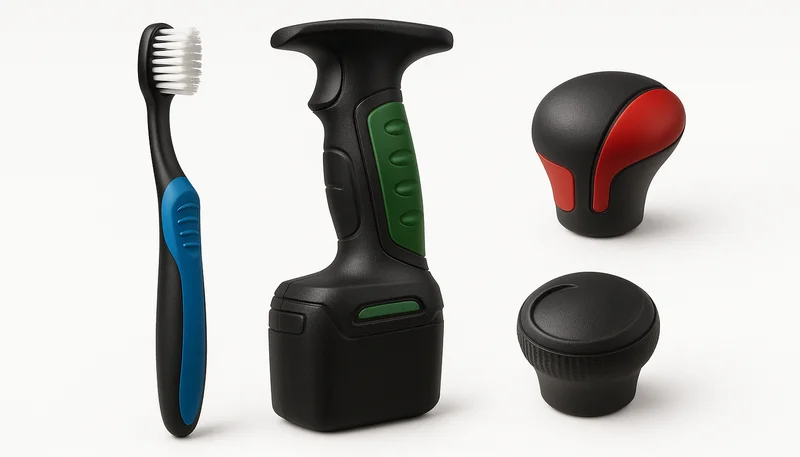
Le meilleur argument en faveur de la bi-injection est le volume de production. À partir de 10,000 unités, la suppression de l’assemblage secondaire — collage, soudage par ultrasons ou encliquetage de deux pièces séparées — compense généralement le coût supérieur de l’outillage. En dessous, l’équation est rarement favorable, sauf si la pièce est soumise à une exigence réglementaire de liaison permanente, comme pour les dispositifs médicaux ou les applications en contact avec les aliments.
Les composants d’habitacle automobile constituent un cas d’usage classique. Un pommeau de levier de vitesses exige un noyau en plastique dur pour la rigidité structurelle et une surface extérieure souple pour la prise en main. La peinture ou l’ajout d’un manchon en caoutchouc ne résiste pas à 100 000 cycles d’utilisation quotidienne. Le moulage bi-injection lie les matériaux de manière permanente et le résultat dure plus longtemps que le véhicule. Nous avons observé ce schéma sur les boutons de console centrale, les entourages de poignées de porte et les garnitures de tableau de bord, partout où une surface douce au toucher doit répondre à une exigence de rigidité structurelle.
Le délai de fabrication pour un moule à deux injections est généralement de 6 à 10 semaines à partir des données 3D finalisées jusqu’aux échantillons T1, contre 4 à 6 semaines pour un moule standard à injection unique. Le temps supplémentaire est consacré à la vérification de l’alignement — les deux cavités doivent correspondre parfaitement à la ligne de fermeture, sinon la liaison présente un désalignement visible sur chaque pièce produite.
Le moulage avec inserts réalise une intégration similaire, mais dans un autre but : incorporer des inserts métalliques ou des composants électroniques dans le plastique plutôt que lier deux matières plastiques. Les deux procédés éliminent l’assemblage secondaire, mais le moulage avec inserts vise l’intégration de types de matériaux, tandis que le bi-injection vise la liaison plastique sur plastique.
Quand ne pas utiliser la bi-injection : si seule une différenciation de couleur est nécessaire et que la pièce n’exige pas fonctionnellement deux matières, la tampographie ou la peinture est moins coûteuse quel que soit le volume. Si les deux zones de la pièce ont des exigences structurelles très différentes — l’une nécessite du PC transparent et l’autre du nylon renforcé de fibres de verre — l’écart de température de transformation peut être trop important pour obtenir une liaison fiable dans une seule machine.
"Le moulage bicolore produit une pièce assemblée de façon permanente : les matières chimiquement compatibles fusionnent au niveau moléculaire pendant la seconde injection."True
Lorsque le second matériau est injecté à la bonne température de fusion, il refond partiellement la surface du substrat dans la zone de contact, créant une liaison souvent plus résistante que les solutions adhésives ou mécaniques. C’est pourquoi la compatibilité des matériaux constitue la décision de conception la plus importante de tout projet bi-injection.
"Deux thermoplastiques quelconques peuvent être combinés en moulage par injection bicolore."False
L’incompatibilité chimique provoque le délaminage. Le POM et le TPE, par exemple, n’ont presque aucune affinité chimique : la liaison est purement mécanique et cède sous une contrainte de pelage. Vérifiez toujours les fiches de compatibilité des matériaux avec votre fournisseur avant de vous engager dans l’outillage.
La compatibilité des matériaux n’est pas une question binaire — elle s’inscrit dans un continuum. Certaines paires créent d’excellentes liaisons chimiques sans préparation spéciale. D’autres exigent des traitements de surface, des primaires ou des emboîtements mécaniques pour obtenir une résistance suffisante. Le coût de ces stratégies secondaires augmente rapidement ; le choix des matériaux doit donc être finalisé avant la conception du moule. Changer de matériau en cours de projet sur un moule bi-injection coûte bien plus cher que sur un moule mono-injection, car les deux jeux d’empreintes peuvent devoir être modifiés.
"L’outillage d’un moule bi-injection coûte généralement 60 à 80 percent de plus qu’un moule mono-empreinte comparable."True
Le moule doit comporter deux jeux complets d’empreintes alignés avec précision, un plateau rotatif ou un mécanisme à noyau coulissant, ainsi que des systèmes de canaux distincts pour chaque matériau. Cette complexité augmente considérablement le volume d’acier, le nombre d’heures d’usinage et le temps de conception technique.
« Le temps de cycle total du moulage bicolore est exactement le double de celui du moulage mono-injection. »False
Comme la deuxième injection commence pendant que la matière de la première est encore en phase de refroidissement, le cycle n’augmente en réalité que de 20 à 50 %. Les phases des deux unités d’injection se chevauchent, ce qui donne un rendement supérieur aux attentes de la plupart des ingénieurs.
Quelles sont les règles de conception essentielles pour les pièces bi-injectées ?
Les règles de conception pour le moulage à deux coups sont simples : un chevauchement de liaison minimum de 0,5 millimètre, des angles d’arrêt de 3 à 5 degrés, une épaisseur de paroi inférieure à 4 mm. Enfreindre l’une de ces règles entraînera la rupture de la pièce au niveau de la ligne de liaison.
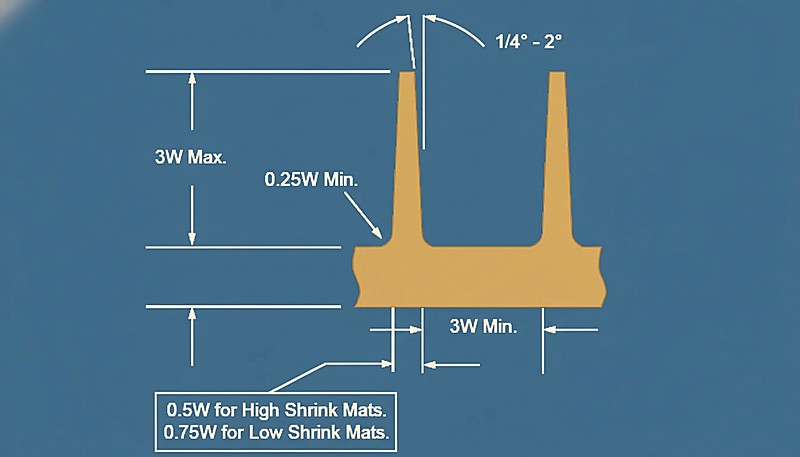
Le recouvrement de liaison est la zone dans laquelle le second matériau dépasse sur le bord du substrat. Si le recouvrement est insuffisant, le second matériau se décolle sous contrainte. Nous recommandons un minimum de 0,5 mm, mais 1,0 mm est plus sûr pour les pièces soumises à des cycles thermiques, à des chocs ou à des flexions répétées au niveau de la ligne de liaison.
La conception des zones de fermeture est critique. La fermeture est la surface sur laquelle le moule assure l’étanchéité entre l’empreinte de la première injection et celle de la seconde. Si l’angle est trop faible, des bavures apparaissent : la seconde matière fuit dans la zone de la première injection. S’il est trop prononcé, le moule s’use rapidement et l’étanchéité se dégrade au fil des séries. La norme du secteur se situe entre trois et cinq degrés, et la plupart des ingénieurs expérimentés en conception de moules signaleront tout écart à cette plage lors de la revue DFM.
L’épaisseur des parois importe davantage dans le moulage bi-injection que dans le moulage à injection unique, car deux matériaux différents refroidissent à des vitesses différentes. Si les deux parois dépassent 4 mm, le retrait différentiel provoque un gauchissement au niveau de la ligne de liaison. Si la paroi de la seconde injection est plus mince que 0,8 mm, les injections incomplètes deviennent un problème récurrent : le TPE ou le TPU se solidifie avant de remplir entièrement l’empreinte.
Le placement du seuil mérite également une attention particulière. Le seuil de la seconde injection doit être positionné de façon que la matière fondue s’écoule uniformément sur la surface de liaison. Un écoulement irrégulier crée des zones froides où la liaison est faible. En pratique, cela signifie que le seuil de la seconde injection se trouve généralement du côté opposé à celui de la première, offrant à la matière un trajet long et régulier sur la surface du substrat.
Les dépouilles doivent tenir compte des deux matériaux. Le substrat exige la dépouille standard de 1 à 2° par côté. La zone surmoulée exige au moins 0,5° pour se démouler proprement après la deuxième injection. Si la pièce comporte des contre-dépouilles conçues pour une liaison mécanique, vérifiez que leur profondeur ne dépasse pas 0,3 mm, sinon le matériau de surmoulage se déchirera à l’éjection.
Moulage bicolore ou surmoulage : de quel procédé avez-vous besoin ?
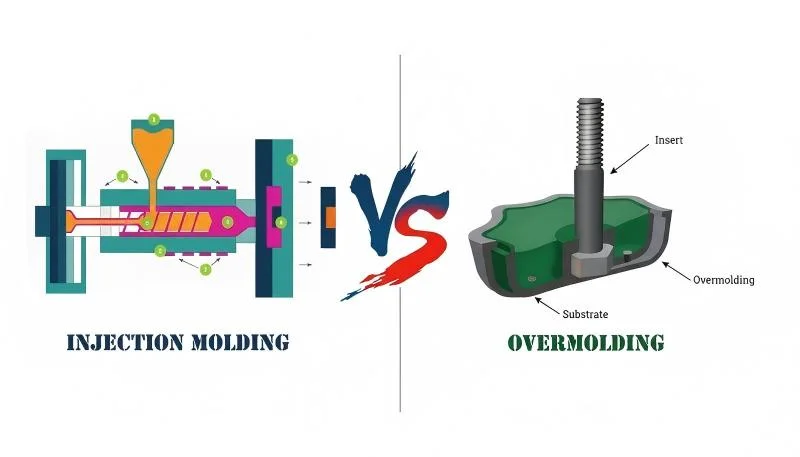
Le moulage bi-couleur est plus rapide et moins cher par pièce à grands volumes ; le surmoulage est plus flexible à faibles volumes. Les deux produisent des pièces double matériau liées, mais l’économie des processus diffère fondamentalement.
| Facteur | Moulage bicolore | Surmoulage |
|---|---|---|
| Machines requises | 1 (presse bi-injection) | 2 (ou 1, deux réglages) |
| Coût de l’outillage | 60–80% plus élevé | Inférieur (deux moules plus simples) |
| Temps de cycle par pièce | 1,2 à 1,5 fois l’injection unique | 2 × injection simple (deux cycles) |
| Coût unitaire (grand volume) | Inférieur | Plus élevé |
| Coût par pièce (faible volume) | Plus élevé | Inférieur |
| Qualité de la liaison | Chimique + mécanique | Chimique + mécanique |
| Maîtrise des tolérances | Plus serrées (un seul réglage) | Plus large (deux montages) |
| Seuil de volume | Au-delà de 10,000 unités | Tout volume |
La décision dépend du volume et des exigences de tolérance. Au-delà de 10 000 unités, le moulage bicolore est presque toujours moins cher par pièce, car il supprime la main-d’œuvre et la manutention d’un second cycle de moulage. Le coût horaire de la machine est plus élevé, mais l’avantage du temps de cycle s’accumule rapidement. En dessous de ce seuil, le surmoulage avec deux moules plus simples et des machines standard est le choix financier le plus sûr.
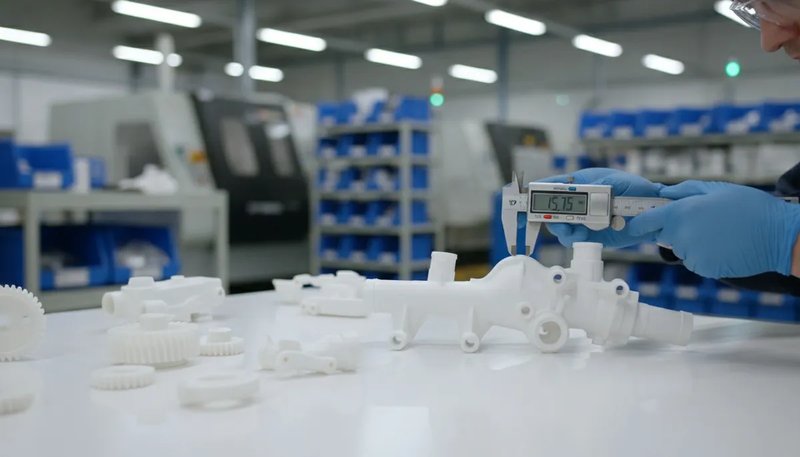
La tolérance est l’autre facteur décisif. Le moulage bicolore maintient la précision de positionnement à plus ou moins 0.05 mm, car la pièce reste dans une seule configuration. Le surmoulage exige de retirer et de repositionner le substrat — chaque manipulation introduit une variation d’alignement. Pour les dispositifs médicaux et l’électronique de précision où la ligne de liaison doit être visuellement invisible et fonctionnellement hermétique, le moulage bi-injection est le choix évident.
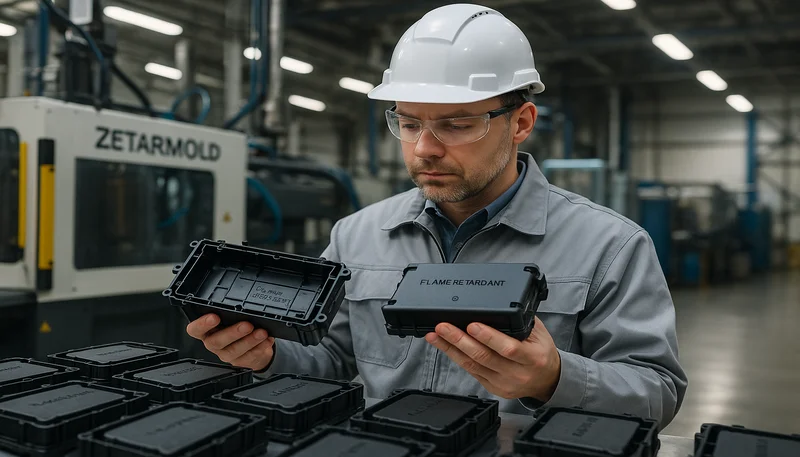
ZetarMold a ajouté 3 machines de moulage par injection bicolore dédiées à notre usine de Shanghai en 2024. Notre usine exploite 47 machines de moulage par injection avec des forces de serrage allant de 90T à 1850T, soutenues par 8 ingénieurs moules seniors ayant en moyenne plus de 10 ans d'expérience. Nous gérons la conception des moules bi-matière, la revue DFM et l'échantillonnage T1 entièrement en interne, avec plus de 400 matériaux qualifiés et les certifications ISO 9001 / 13485.
Combien coûte un outillage de moulage bi-injection ?
Un moule bi-matière standard coûte $20 000 à $80 000, soit 2 à 4 fois plus qu’un moule à injection unique comparable à $5 000 à $30 000. La prime couvre la conception à double empreinte, un mécanisme rotatif et des systèmes de canaux séparés pour chaque matériau.
Le délai d’un moule à double injection est généralement de 6 à 10 semaines entre les données 3D finalisées et les échantillons T1, contre 4 à 6 semaines pour un moule standard à injection unique. Le temps supplémentaire est consacré à la vérification de l’alignement : les deux empreintes doivent coïncider parfaitement sur la ligne de fermeture, faute de quoi la liaison présente un décalage visible sur chaque pièce produite.
Questions fréquemment posées
Questions fréquemment posées
Quelle est la différence entre le moulage bicolore et le surmoulage ?
Le moulage bicolore transforme les deux matériaux au cours d’un seul cycle sur une presse bi-injection équipée d’un mécanisme de moule rotatif ou coulissant. Le surmoulage utilise deux cycles de moulage distincts : le substrat est d’abord moulé et retiré de la machine, puis placé dans un second moule pour recevoir la couche surmoulée. Le moulage bicolore est plus rapide et plus précis en grande série, car la pièce ne quitte jamais le moule. Le surmoulage est plus flexible et économique à faibles volumes puisqu’il utilise des machines monovis standard et deux moules plus simples.
De combien d’unités ai-je besoin pour justifier le moulage bi-injection ?
Le seuil de rentabilité type se situe entre 8,000 et 15,000 unités, selon la complexité de la pièce et la paire de matériaux choisie. En dessous, le surcoût d’outillage de 60 à 80 pour cent ne s’amortit pas assez vite pour justifier l’investissement. Au-dessus de 20,000 unités, la double injection est presque toujours la solution la moins chère par pièce, car elle supprime la manutention secondaire et réduit le cycle en réalisant les deux injections dans un seul cycle de fermeture. Pour les très grands volumes de plus de 100,000 unités, les économies par pièce deviennent considérables.
Le moulage bicolore peut-il employer deux matériaux totalement différents ?
Oui, mais seulement si les deux matériaux sont chimiquement compatibles pour adhérer ou si la pièce comporte des verrouillages mécaniques tels que contre-dépouilles, trous traversants ou textures. Les couples compatibles courants comprennent PP/TPE, ABS/TPE et PC/TPU ; ils créent de fortes liaisons chimiques, car la température de la deuxième injection refond partiellement la surface du substrat au contact. Les couples incompatibles comme POM/TPE dépendent uniquement des liaisons mécaniques et présentent un risque de délaminage nettement supérieur sous contrainte ou cycles thermiques.
Quel est le délai habituel pour un moule bi-injection ?
La fabrication d’un moule bi-injection prend généralement 6 à 10 semaines entre la finalisation des données de conception 3D et les premières pièces d’échantillon T1, contre 4 à 6 semaines pour un moule mono-injection standard. Le délai supplémentaire est consacré à la vérification de l’alignement entre les deux ensembles d’empreintes, aux essais des paramètres d’injection séquentielle afin d’obtenir une liaison uniforme et à la validation de l’intégrité des zones d’obturation dans les conditions de production. Les moules bi-injection multi-empreintes complexes à tolérances serrées peuvent nécessiter jusqu’à 12 semaines selon la complexité géométrique de la pièce et le nombre d’empreintes.
Toute presse à injecter peut-elle produire des pièces bicolores ?
Non, le moulage bicolore ne peut pas être réalisé sur une presse à injecter standard à un seul fourreau. Il exige une machine spécialisée dotée de deux groupes d’injection indépendants — donc deux fourreaux, deux vis et soit un plateau rotatif, soit un mécanisme à noyau coulissant intégré à l’unité de fermeture. Les machines standard ne possèdent qu’un groupe d’injection et ne peuvent produire de pièces bi-injection. Ces machines spécialisées ont un tarif horaire supérieur, qui doit être intégré au coût de production unitaire global de tout projet bicolore.
Quelle est l’épaisseur minimale de paroi du matériau de surmoulage ?
La matière de surmoulage de la seconde injection doit avoir une épaisseur de paroi minimale de 0.8 mm pour les TPE ou TPU. Les parois plus minces risquent une injection incomplète, car la matière se solidifie avant de remplir entièrement l’empreinte, laissant la surface du substrat partiellement découverte. Pour la matière du substrat, les règles standard d’épaisseur de paroi du moulage par injection s’appliquent : 1.0 mm est le minimum absolu, la plage de conception pratique étant de 2.0 à 3.0 mm pour la plupart des applications en thermoplastiques techniques. Dépasser 4 mm pour l’une ou l’autre matière augmente le risque de retrait différentiel au niveau de la ligne de liaison.
Quel niveau de précision les tolérances des pièces bi-injectées peuvent-elles atteindre ?
Les pièces bi-injectées peuvent maintenir des tolérances de plus ou moins 0.05 mm au plan de liaison, car les deux matériaux sont moulés dans une seule configuration machine, sans manipulation ni repositionnement entre les injections. C’est nettement plus serré que le surmoulage, où le substrat doit être chargé dans un second moule et où la précision de position dépend entièrement du dispositif de chargement. Pour les dimensions critiques éloignées de la liaison, les pièces bi-injectées atteignent des tolérances comparables au moulage mono-injection standard, généralement plus ou moins 0.02 à 0.05 mm.
Le moulage bicolore convient-il aux dispositifs médicaux ?
Oui, le moulage bicolore est largement utilisé dans la fabrication de dispositifs médicaux pour des composants tels que les seringues à code couleur, les poignées souples d’outils chirurgicaux, les joints à double dureté et les boîtiers d’équipements de diagnostic. La liaison chimique permanente entre les deux matières élimine les risques de contamination liés aux adhésifs ou aux fixations mécaniques susceptibles de se dégrader avec le temps dans les environnements de stérilisation. Le moulage en une seule configuration produit aussi des tolérances dimensionnelles plus serrées, ce qui aide les fabricants à respecter à la fois les exigences réglementaires de la FDA et les normes de certification du système qualité ISO 13485 applicables à la production de dispositifs médicaux.
Choisir entre le moulage bicolore et le surmoulage est une décision qui influe sur le budget d’outillage, le coût unitaire et la qualité du produit pendant toute la série. Un mauvais choix conduit soit à payer trop cher un outillage qui n’est pas pleinement exploité, soit à subir des problèmes de tolérances qui s’accumulent sur des millions de pièces.
Règle rapide : au-delà de 15 000 unités avec des tolérances serrées, choisissez la bi-injection. En dessous de 10 000 unités ou pour une géométrie simple, choisissez le surmoulage. Entre les deux, faites les calculs avec votre fournisseur de moules et laissez les données décider.
ZetarMold exploite 47 machines de moulage par injection, dont des presses dédiées à la bi-injection, dans son usine de Shanghai. Nos 8 ingénieurs moulistes seniors réalisent en interne la revue DFM, la conception des moules et le contrôle des premières pièces. Avec plus de 400 matériaux qualifiés et les certifications ISO 9001 / 13485, nous pouvons évaluer votre projet bicolore et vous fournir un devis détaillé sous 48 heures. Demandez un devis pour votre projet de moulage bi-injection.
moulage bi-injection : Le moulage bi-injection est un procédé de moulage par injection dans lequel deux matériaux ou couleurs différents sont injectés successivement dans le même moule afin de produire une seule pièce assemblée. ↩
substrat : Dans le moulage multimatériau, le substrat désigne le matériau rigide de la première injection qui forme la base structurelle de la pièce et sur lequel la seconde matière est surmoulée. ↩
TPE : Un élastomère thermoplastique (TPE) est une classe de copolymères qui présentent à température ambiante une élasticité comparable à celle du caoutchouc, mais qui peuvent être fondus et transformés comme des thermoplastiques conventionnels. ↩