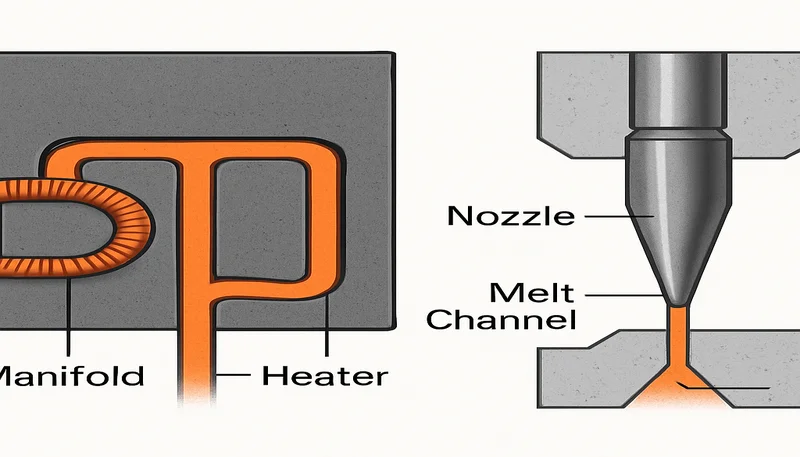
El diseño de su producto exige una empuñadura suave en una herramienta eléctrica, pero el equipo de compras cotiza el utillaje de sobremoldeo en $12,000, casi un 40% más que un molde monomaterial. La economía resulta clara al entender el sobremoldeo: un proceso de inyección secundaria1 en el que un elastómero termoplástico blando (TPE) o TPU se moldea sobre un sustrato plástico rígido2 en dos pasos, creando en un solo útil una pieza multimaterial unida permanentemente. El coste adicional se debe a la precisión necesaria para posicionar y sellar el sustrato de la primera inyección durante la segunda: canales de vacío, superficies de cierre y tolerancias más estrechas que evitan rebabas y delaminación.
Sin embargo, para la producción en volumen, donde importan la experiencia del usuario, la diferenciación de la marca y la seguridad ergonómica, el sobremoldeo ofrece ventajas que ninguna tampografía, película adhesiva o recubrimiento posterior al montaje puede igualar. Esta guía recorre todo el flujo de trabajo del sobremoldeo —selección de materiales, reglas de diseño del molde, parámetros del proceso y defectos comunes— basándose en lo que hemos aprendido durante más de 20 años de producción por sobremoldeo en las instalaciones de ZetarMold en Shanghai.
- El sobremoldeo es un proceso secundario de moldeo por inyección que une TPE/TPU blando sobre sustratos de plástico rígido.
- Los costes de los moldes son un 25–40% superiores a los de moldes para un solo material debido a los requisitos de posicionamiento y sellado del sustrato.
- El sustrato y los materiales de sobremoldeo deben tener compatibilidad química o requerir capas de unión para lograr una adhesión fiable.
- Las temperaturas de proceso deben diferir al menos 20°C para no fundir el sustrato durante la segunda inyección.
- El sobremoldeo elimina las operaciones secundarias de decoración y produce gráficos permanentes y resistentes a los arañazos.
¿Qué es el sobremoldeo?
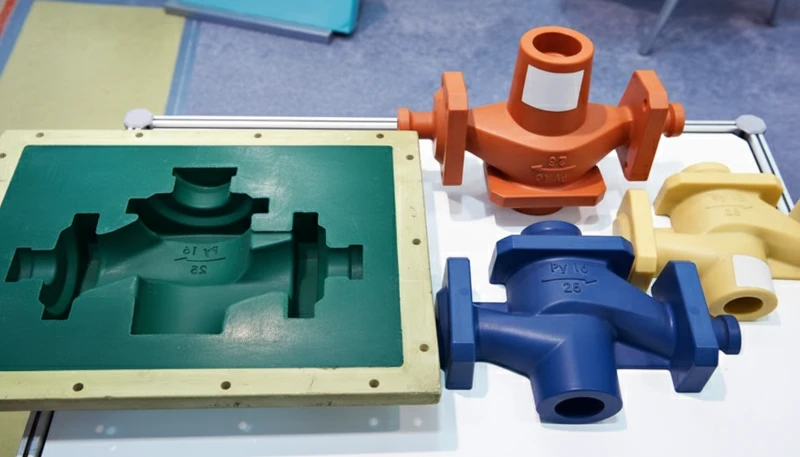
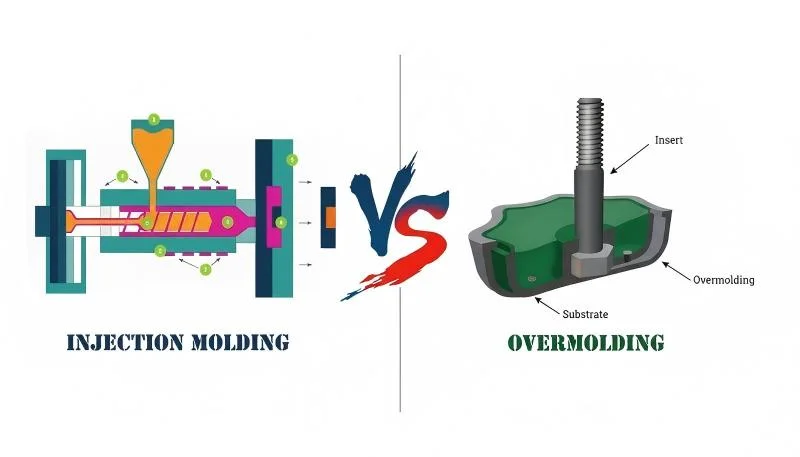
El sobremoldeo es una técnica especializada en la que se moldean secuencialmente dos materiales para crear una pieza integrada. La primera inyección produce el sustrato rígido, normalmente de ABS, policarbonato (PC) o polipropileno (PP). Luego se transfiere por robot o manualmente a una segunda cavidad donde se inyecta el sobremoldeo. Durante esta inyección, el material fundido se une químicamente a la superficie del sustrato y crea una interfaz permanente resistente al pelado y la separación en uso normal.
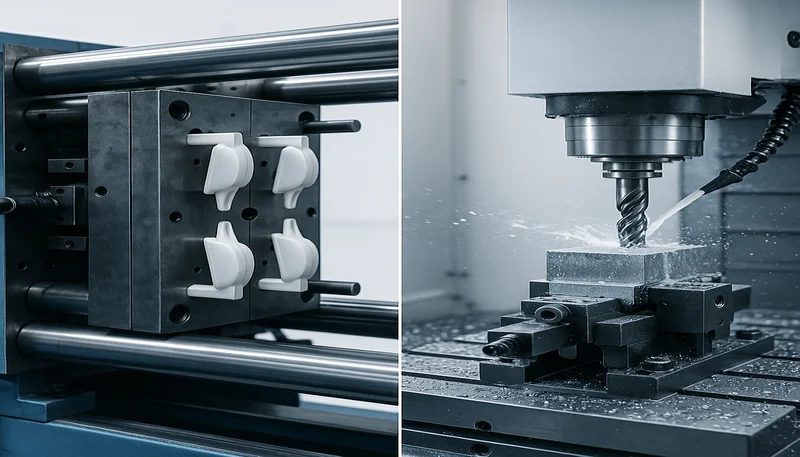
La tecnología surgió en el sector de la electrónica de consumo para mangos de herramientas eléctricas y empuñaduras de cepillos de dientes, donde la ergonomía y la resistencia al deslizamiento influyen directamente en la satisfacción del usuario. Desde entonces, el sobremoldeo se ha extendido a carcasas de dispositivos médicos, componentes interiores de automóviles y carcasas de productos de consumo. Si ha sostenido un taladro con empuñadura de tacto suave o una funda de smartphone con un borde de goma que nunca se desprendió, ha experimentado el sobremoldeo en la práctica.
Frente al moldeo por inyección estándar seguido de decoración secundaria, como tampografía o etiquetado adhesivo, el sobremoldeo produce una pieza cuya superficie funcional forma parte de la estructura. No hay adhesivo que se degrade, tinta que se desgaste ni montaje posterior que añada tiempo y coste. La contrapartida es una mayor inversión en utillaje y una configuración más compleja, pero la calidad y durabilidad justifican la inversión en la mayoría de los productos industriales y de consumo fabricados en serie.
"Las piezas sobremoldeadas no pueden separarse en sus materiales componentes sin destruir la pieza."True
La segunda inyección crea una unión química entre el sustrato y el material de sobremoldeo que es tan resistente o más que el propio material en masa. Al intentar despegar o separar ambos materiales, normalmente se fracturará uno de ellos o los dos antes de que falle la interfaz.
"Puede cambiar el color o el material del sobremoldeo en un molde existente sin modificarlo."False
La geometría de la cavidad de sobremoldeo queda fijada al construir el molde. Cambiar los materiales de sobremoldeo —en especial entre durómetros o familias como TPE y TPU— suele exigir ajustes en la compuerta, la ventilación o el perfil térmico para mantener la adhesión. Un verdadero cambio de utillaje de sobremoldeo requiere cualificación técnica, no solo sustituir material en la máquina.
¿Cómo funciona el proceso de sobremoldeo?
El sobremoldeo es una secuencia de proceso controlada que sigue las etapas y ajustes explicados en esta sección. Presenta una secuencia diferenciada del moldeo por inyección de dos colores en un aspecto crítico: las dos inyecciones se realizan en moldes separados o cavidades distintas, no simultáneamente en el mismo ciclo. Esta separación ofrece mucha más flexibilidad en la selección de materiales y la geometría de la pieza, pero también introduce dificultades de manipulación y posicionamiento que deben controlarse estrictamente. Este es el desglose completo del flujo de sobremoldeo, desde la producción del sustrato hasta la expulsión de la pieza terminada.
Paso 1: Primera inyección—Moldeo del sustrato
El proceso comienza moldeando el sustrato rígido en un molde de inyección convencional para un solo material. Este molde produce el componente estructural central: el cuerpo de plástico duro que recibirá el sobremoldeo en la segunda inyección. En esta fase, el sustrato debe cumplir criterios de calidad críticos: precisión dimensional de ±0.05 mm en las superficies que entrarán en contacto con la cavidad de sobremoldeo, refrigeración uniforme para evitar una deformación que impida el asentamiento correcto en el segundo molde y preparación de la superficie, como el control de la temperatura del molde, para garantizar que el material de sobremoldeo pueda adherirse de forma fiable durante la inyección secundaria.
Paso 2: Transferencia del sustrato
Después de expulsar el sustrato del primer molde, debe transferirse a la cavidad del segundo molde. En operaciones manuales, los operarios lo hacen a mano con guantes o pinzas especiales para evitar contaminar la superficie de unión. En una producción totalmente automatizada, un brazo robótico equipado con ventosas o pinzas mecánicas recoge el sustrato y lo coloca en los elementos de posicionamiento precisos de la cavidad de sobremoldeo. La precisión de posicionamiento es crítica: desviaciones superiores a 0.1 mm pueden causar un espesor de sobremoldeo desigual, rebaba en la línea de unión o impedir por completo que el sustrato se asiente correctamente en la segunda cavidad.
Paso 3: Posicionamiento y sellado del sustrato
La cavidad de sobremoldeo incorpora elementos de precisión que alinean y sellan el sustrato antes de la segunda inyección: pasadores o superficies de referencia correspondientes al sustrato, superficies de cierre que sellan la cavidad contra las zonas expuestas y, en diseños avanzados, canales de vacío que lo apoyan contra la pared. La posición correcta garantiza un llenado uniforme sin huecos, zonas delgadas ni partes sin encapsular. En nuestra fábrica, un sellado deficiente causa más del 60% del rechazo durante la cualificación, por lo que es el parámetro de diseño más crítico.
Paso 4: Inyección secundaria
Con el sustrato posicionado y sellado, el material de sobremoldeo se inyecta en la cavidad. La temperatura y velocidad se controlan con precisión para fundir la superficie del sustrato y crear un enlace químico sin deformarlo ni atravesarlo por fusión. La capa de unión3 de la superficie se activa a los pocos segundos de contactar con el material fundido y crea un enlace molecular. Los parámetros varían mucho entre pares de materiales: por ejemplo, TPE sobre PP requiere 190–210°C a velocidad moderada, mientras que TPU sobre PC puede necesitar 230–250°C y un llenado más lento para evitar la degradación térmica del PC.
Paso 5: Compactación, enfriamiento y expulsión
Tras llenar la cavidad, se aplica presión de mantenimiento para compensar la contracción y garantizar que el material de sobremoldeo se adapte por completo a la geometría de la cavidad. La fase de enfriamiento solidifica tanto el material de sobremoldeo como la interfaz de unión. Los tiempos de enfriamiento de las piezas sobremoldeadas suelen ser un 15–25% más largos que los de piezas de tamaño equivalente fabricadas con un solo material, porque el material de sobremoldeo actúa como aislante térmico en el lado del sustrato y ralentiza la extracción de calor. Una vez enfriado, el molde se abre y se expulsa la pieza terminada. La secuencia completa desde la transferencia del sustrato hasta la expulsión suele añadir 2–4 seconds al tiempo de ciclo respecto a una operación de moldeo estándar.
| Parámetro | Moldeo por inyección estándar | Sobremoldeado |
|---|---|---|
| Tiempo de ciclo (pieza típica) | 20–30 segundos | 25–35 s |
| Coste del molde frente a la referencia | Línea base | +25–40% |
| Operaciones secundarias | A menudo necesario (impresión, recubrimiento) | Eliminado |
| Opciones de materiales | Un solo material por pieza | Integración de varios materiales |
| Complejidad del utillaje | Estándar | Alta (posicionamiento, sellado) |
¿Qué materiales sirven para el sobremoldeo?
La compatibilidad de los materiales es el factor más crítico para el éxito del sobremoldeo. El sustrato y los materiales sobremoldeados deben unirse químicamente durante la inyección secundaria, lo que exige ajustar cuidadosamente sus energías superficiales, estructuras químicas y temperaturas de procesamiento. Elegir materiales incompatibles provoca delaminación, el defecto de sobremoldeo más frustrante porque puede no aparecer hasta semanas después de la producción, durante los ciclos térmicos o las pruebas de esfuerzo mecánico.
Sustratos de PP y PE: la opción predeterminada
El polipropileno (PP) y el polietileno (PE) son los sustratos de sobremoldeo más habituales porque se adhieren de forma fiable a los materiales de sobremoldeo TPE y TPU sin capas de unión químicas especiales. La ventana de proceso es relativamente amplia y los costes de material se mantienen bajos. Para la mayoría de las carcasas de consumo, recipientes de almacenamiento y componentes no estructurales, los sustratos de PP con sobremoldeo de TPE ofrecen un agarre, resistencia a la abrasión e imagen visual excelentes a un precio económico. En nuestras instalaciones de Shanghái, más de 65% de la producción sobremoldeada utiliza sustratos de PP, normalmente con una dureza del material sobremoldeado de 30–60 Shore A.
Sustratos de ABS y PC—grado de ingeniería
Los sustratos de ABS y policarbonato (PC) requieren una combinación de materiales más cuidadosa debido a sus mayores temperaturas de procesamiento y sus distintas químicas superficiales. El ABS suele adherirse bien a sobremoldeos de TPE cuando la temperatura de fusión se controla entre 220–240°C, mientras que el PC puede requerir formulaciones especiales de TPU con mayor estabilidad térmica. La ventana de adhesión es más estrecha que en los sistemas basados en PP y el riesgo de deformación del sustrato durante la inyección secundaria aumenta considerablemente. Realizamos habitualmente proyectos de sobremoldeo de ABS y PC para clientes de electrónica y dispositivos médicos, pero todos exigieron pruebas de compatibilidad de materiales antes de comprometer el utillaje, lo que suele añadir 2–3 semanas al plazo de cualificación.
Materiales de sobremoldeo de TPE, TPU y silicona
Los elastómeros termoplásticos (TPE) y los poliuretanos termoplásticos (TPU) dominan el mercado de materiales de sobremoldeo por su equilibrio entre flexibilidad, durabilidad y procesabilidad. El TPE es la opción predeterminada para productos de consumo en los que basta un tacto suave y una resistencia moderada a la abrasión: se procesa a temperaturas más bajas y se adhiere de forma fiable a la mayoría de los plásticos rígidos. El TPU ofrece una resistencia superior a la abrasión y a los productos químicos, por lo que es el material preferido para mangos de herramientas, zonas de agarre de productos sanitarios y aplicaciones donde la superficie sobremoldeada sufrirá un desgaste repetido. El sobremoldeo con caucho de silicona líquida (LSR) es posible, pero poco habitual porque requiere equipos específicos para procesar LSR y diseños de utillaje muy diferentes; normalmente solo se justifica en aplicaciones médicas o de contacto con alimentos donde la biocompatibilidad y la estabilidad térmica de la silicona son obligatorias.
En ZetarMold disponemos de 47 máquinas de moldeo por inyección de 90T a 1850T y una biblioteca de más de 400 resinas, incluidas formulaciones especializadas de TPE y TPU para sobremoldeo. Con más de 20 años de experiencia y 8 ingenieros sénior supervisando cada cualificación, hemos probado prácticamente todas las combinaciones comunes de sustrato y sobremoldeo y documentado ventanas fiables. Nuestros más de 120 operarios y más de 30 gestores de proyecto angloparlantes evitan que las especificaciones técnicas se pierdan en la traducción, un fallo frecuente cuando se depende de una guía para buscar proveedores de moldeo por inyección sin equipos internacionales de ingeniería dedicados.
En nuestra fábrica de Shanghái operamos 47 máquinas de moldeo por inyección de 90T a 1850T y contamos con instalaciones propias de fabricación de moldes con capacidad para más de 100 juegos de moldes al mes. Esto es importante para el sobremoldeo, porque los equipos de fabricación de moldes y producción pueden comprobar el cierre del sustrato, el acero de sellado y las pruebas del segundo componente antes de que un diseño llegue a la producción en serie.
¿Qué reglas de diseño rigen el utillaje de sobremoldeo?
Esta sección trata las reglas de diseño del utillaje de sobremoldeo y su impacto en coste, calidad, plazos y riesgo de suministro. El diseño de moldes de inyección para sobremoldeo difiere del estándar en varios aspectos críticos. No son mejoras opcionales, sino requisitos que determinan si el proyecto funciona con fiabilidad y poco desperdicio o se convierte en un problema continuo. Estas reglas separan una herramienta funcional de un pisapapeles caro.
Sellado del sustrato y superficies de cierre
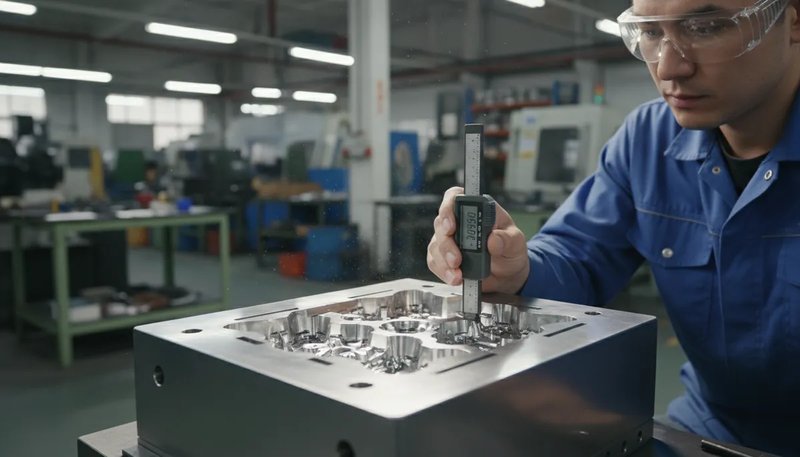
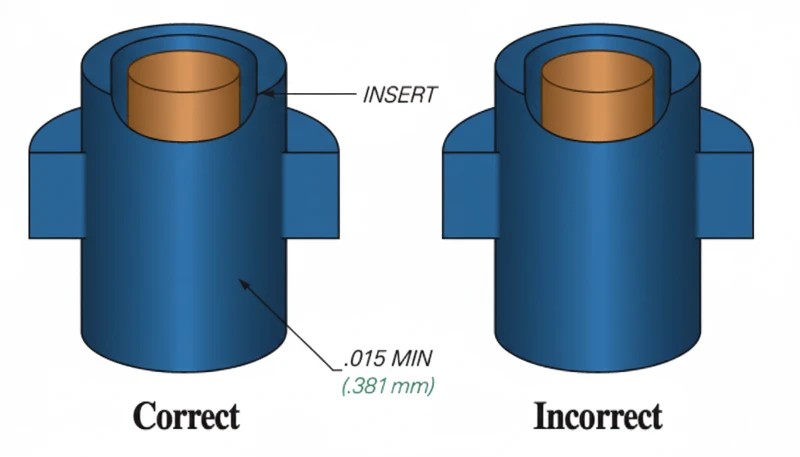
La cavidad de sobremoldeo debe sellar por completo el sustrato para evitar rebabas. Las superficies de cierre se diseñan con 0.05–0.10 mm de holgura: suficiente para evitar rebabas sin rozar el sustrato. Los bordes y esquinas son críticos. Según nuestra experiencia, un cierre insuficiente es la principal causa de tasas de rechazo superiores al 10% al iniciar la producción.
Características de posicionamiento y tolerancias
La cavidad de sobremoldeo incluye pasadores de posicionamiento, superficies de referencia y, en ocasiones, abrazaderas mecánicas que mantienen el sustrato en una posición precisa durante la inyección secundaria. Estos elementos deben mantener una precisión de posicionamiento de ±0.05 mm para asegurar que el material de sobremoldeo fluya uniformemente alrededor del sustrato. Si el sustrato se desplaza incluso ligeramente durante la inyección, el espesor del sobremoldeo variará y generará puntos débiles en la pieza donde el sobremoldeo sea demasiado fino, o rebaba donde la cavidad se abra en exceso. La tolerancia de posicionamiento se acumula con la variación dimensional del sustrato, lo que significa que el molde de la primera inyección debe producir piezas con especificaciones más estrictas que un molde convencional de un solo material: normalmente ±0.025 mm en las superficies que interactúan con la cavidad de sobremoldeo.
Ubicación de la compuerta y diseño del flujo
La entrada del sobremolde debe colocarse de forma que dirija el flujo para que el material fundido barra el sustrato sin crear líneas de soldadura que atraviesen superficies de unión críticas. En el moldeo convencional, la ubicación de la entrada se optimiza para el patrón de llenado y el aspecto estético. En el sobremoldeo, la ubicación de la entrada también debe evitar que la masa fundida incida directamente sobre la superficie del sustrato, ya que puede causar fusión o deformación local. Siempre que sea posible, el vestigio de la entrada debe quedar en una superficie no crítica del sobremolde, o sobre el sustrato únicamente si el par de materiales puede soportar el choque térmico sin degradarse. Hemos visto proyectos en los que un diseño incorrecto de la entrada causó marcas de quemadura visibles en la superficie del sustrato, lo que exigió rediseñar por completo el molde después del primer ensayo.
Diseño del sistema de eyección
Los expulsores no pueden atravesar el material sobremoldeado de forma que dejen marcas visibles o comprometan la unión. Esta restricción suele obligar al diseñador a dirigir toda la expulsión por el lado del núcleo (lado del sustrato) o a utilizar placas extractoras y sistemas de expulsión por aire que apliquen una fuerza uniforme sobre toda la superficie. El diseño tiene solución, pero exige una planificación deliberada; hemos encontrado moldes de sobremoldeo antiguos cuyos expulsores dejaban impresiones visibles en la superficie de agarre sobremoldeada, por lo que las piezas eran estéticamente inaceptables aunque funcionasen correctamente.
"Los moldes de sobremoldeo requieren tolerancias más estrictas y características de sellado adicionales en comparación con los moldes de inyección estándar."True
La necesidad de posicionar y sellar el sustrato durante la inyección secundaria añade requisitos de posicionamiento de ±0.05 mm, superficies de cierre con una holgura de 0.05–0.10 mm y elementos de sujeción mecánicos o por vacío. Estas adiciones suelen aumentar el coste del molde entre un 25–40% respecto a un molde monomaterial comparable.
"Cualquier molde de inyección estándar puede convertirse para sobremoldeo añadiendo simplemente una segunda cavidad."False
Un molde estándar carece de las características de diseño de posicionamiento, sellado y expulsión del sustrato necesarias para un sobremoldeo fiable. La conversión exigiría mecanizar cavidades nuevas, añadir superficies de cierre y posiblemente rediseñar el sistema de expulsión, costes que a menudo superan los de fabricar desde cero un nuevo molde de sobremoldeo.
Estas reglas de diseño no son opcionales. Si un fabricante de moldes propone omitir las superficies de cierre para reducir el coste del molde, o sugiere posicionar manualmente el sustrato en un proyecto de gran volumen, rechace la propuesta. Hemos visto demasiados proyectos en los que el ahorro inicial en el molde quedó anulado por tasas de desechos superiores al 15% durante la producción plena, además del coste de rehacer el molde después de que el primer lote de piezas no superara las pruebas de cualificación.
¿Qué parámetros del proceso controlan la calidad del sobremoldeo?
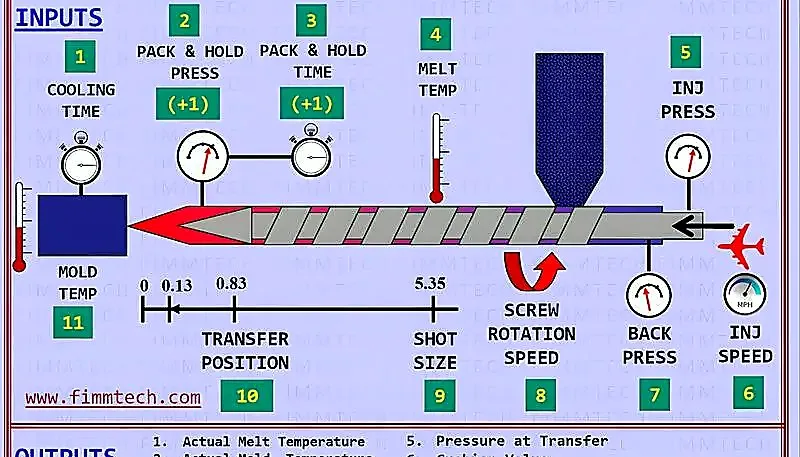
El sobremoldeo no consiste solo en disponer del molde adecuado: los parámetros de la máquina requieren un control más estricto que en el moldeo convencional. Estas son las cuatro variables que más rechazo generan cuando se desvían de su ventana de proceso.
Diferencia de temperatura entre disparos
El material de sobremoldeo debe inyectarse a una temperatura lo bastante alta para activar la capa de unión en la superficie del sustrato, pero no tan alta como para deformarlo o fundirlo. La regla general establece que la temperatura de fusión del sobremoldeo debe estar 20–40°C por encima de la temperatura de transición vítrea o del punto de reblandecimiento del sustrato. Para sustratos de PP con sobremoldeo de TPE, esto suele implicar sobremoldear a 190–210°C mientras el sustrato se moldeó a 200–220°C. Para sustratos de PC con sobremoldeo de TPU, la diferencia se reduce a 15–20°C porque la temperatura de procesamiento del PC ya está cerca del límite superior que muchas formulaciones de TPU toleran sin degradarse.
Velocidad y perfil de inyección
La velocidad de inyección afecta directamente al flujo del material de sobremoldeo alrededor del sustrato. Si es demasiado alta, el frente de material fundido puede desplazar el sustrato de su asiento y causar rebabas o desalineación. Si es demasiado baja, la capa de unión puede no activarse por completo antes de que el material se enfríe, lo que debilita la adhesión. La mayoría de los procesos de sobremoldeo utilizan un perfil de llenado multietapa: más lento al principio para establecer el flujo alrededor del sustrato y más rápido cuando el frente se estabiliza. Normalmente fijamos el 50–70% de la velocidad de inyección estándar para el primer 40% de la inyección y después aumentamos a la velocidad máxima durante el resto del llenado de la cavidad.
Presión y tiempo de mantenimiento
La presión de mantenimiento garantiza que el material de sobremoldeo se adapte por completo a la geometría de la cavidad y mantenga un contacto íntimo con la superficie del sustrato durante la refrigeración. Con una presión insuficiente, el sobremoldeo puede no encapsular por completo las características del sustrato y dejar vacíos o zonas delgadas. Con una presión excesiva, la cavidad puede forzar el material de sobremoldeo a penetrar en microhuecos de la interfaz con el sustrato, creando rebabas o afectando a la línea de unión. Por lo general, aplicamos el 60–80% de la presión de mantenimiento estándar para el sobremoldeo y prolongamos el tiempo de mantenimiento un 10–20% para garantizar que la interfaz de unión se haya solidificado por completo antes de la expulsión.
Diferencial de temperatura del molde
El lado de la cavidad, correspondiente al sobremoldeo, suele funcionar 5–10°C más frío que el lado del núcleo, correspondiente al sustrato, para proteger este último del calor excesivo durante la inyección secundaria. Esta diferencia ayuda al material de sobremoldeo a fluir y adherirse sin deformar térmicamente el sustrato. En moldes multicavidad, mantenerla de forma uniforme en todas las cavidades es uno de los controles de proceso más eficaces para reducir el rechazo; variaciones superiores a 3°C entre cavidades suelen correlacionarse con una calidad de unión irregular en la familia de piezas.
¿Cuáles son los defectos más comunes del sobremoldeo?
Cada defecto de sobremoldeo se remonta a una de cuatro causas raíz: colocación del sustrato, flujo del material fundido, gestión térmica o compatibilidad de materiales. Esto es lo que vemos con mayor frecuencia en la planta de producción y cómo abordamos cada caso.
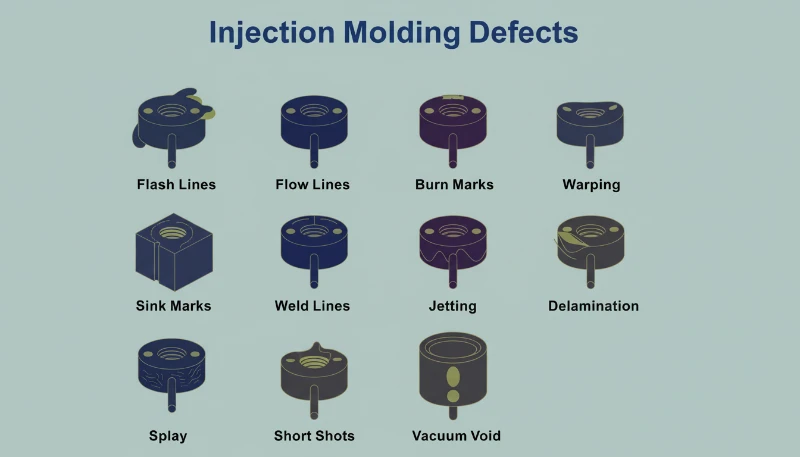
| Defecto | Causa raíz | Corrección |
|---|---|---|
| Rebaba en la línea de unión | Holgura de cierre insuficiente o presión de mantenimiento excesiva | Ajuste el cierre a 0.05–0.10 mm; reduzca la presión de mantenimiento un 10–20% |
| Delaminación / descamación | Materiales incompatibles o temperatura de fusión insuficiente | Verifique las pruebas de compatibilidad de materiales; aumente la temperatura de sobremoldeo entre 5–10°C |
| Zonas delgadas / llenado incompleto | Sustrato mal asentado o aire atrapado | Compruebe la posición del sustrato; añada venteos cerca de las zonas delgadas |
| Distorsión del sustrato | Temperatura de sobremoldeo demasiado alta o tiempo de ciclo prolongado | Reduzca la temperatura de sobremoldeo; acorte el ciclo o añada enfriamiento |
| Marcas visibles de los expulsores | Pasadores que atraviesan la superficie de agarre sobremoldeada | Rediseñar la expulsión para usar placa stripper o chorro de aire |
| Línea de soldadura en la superficie de unión | Ubicación de la entrada causando que los frentes de flujo se encuentren en la interfaz crítica | Reubicar la entrada; modificar la geometría del flujo |
Los defectos anteriores representan aproximadamente el 85% del scrap de sobremoldado en nuestra experiencia. El 15% restante son casos especiales—descarga estática afectando el flujo del material, variación de material entre lotes y deterioro del molde afectando la calidad del sellado en largas series de producción. El patrón importante es que la mayoría de defectos son prevenibles con un diseño adecuado del molde desde el inicio y un control disciplinado del proceso durante la producción. Cuando el molde está diseñado correctamente y la pareja de materiales está validada mediante pruebas, la ventana de proceso es suficientemente amplia para que operadores estándar puedan mantener la calidad sin intervención constante de ingeniería.
¿Cuándo conviene elegir el sobremoldeo?
El sobremoldeo no es la respuesta para cada producto multimaterial. Para series cortas o piezas con gráficos que cambian rápidamente, la prima de herramienta y las cantidades mínimas de pedido de material pueden no tener sentido económico. Aquí hay un marco de decisión basado en lo que recomendamos a los clientes en ZetarMold.
Elija Sobremoldeo Cuando:
El volumen de producción anual supera las 50.000 unidades. El costo fijo de la herramienta de sobremoldeo se amortiza rápidamente a escala, y la eliminación de operaciones secundarias como la impresión por tampografía o el recubrimiento adhesivo se vuelve económicamente significativa. La pieza requiere propiedades superficiales permanentes y duraderas, como agarre suave al tacto, resistencia a la abrasión o resistencia química, que no pueden lograrse con recubrimientos o películas que pueden degradarse con el tiempo. La diferenciación de marca y la calidad visual son requisitos competitivos, y usted desea gráficos integrados, logotipos o bloques de color que no se despeguen, desvanezcan o rayen con el uso normal. La geometría del producto permite un asentamiento limpio del sustrato en la cavidad del sobremoldeo; los subcortes profundos, ángulos de desmoldeo extremos o contornos 3D complejos que impiden un posicionamiento confiable son señales de advertencia.
Manténgase con Decoración Secundaria Cuando:
El volumen es inferior a 20,000 unidades por año. Los gráficos o tratamientos superficiales cambian frecuentemente en lotes pequeños—series promocionales, variantes regionales, ediciones limitadas o packaging estacional. La geometría de la pieza es demasiado compleja para un posicionamiento seguro del substrato—rebajes extremos, bisagras vivas o ratios de estiramiento superiores a 2:1 hacen el sobremoldado poco práctico. La compatibilidad de materiales es cuestionable y el plazo de validación excedería los cronogramas del proyecto. En esos casos, la impresión tampográfica, la serigrafía o las láminas adhesivas pueden dar resultados aceptables con menor costo inicial y riesgo.
También existe una solución intermedia: el moldeo de dos componentes en máquinas bicolor específicas puede ofrecer resultados similares al sobremoldeo con un ciclo más corto para productos de gran volumen cuya geometría permita el moldeo simultáneo. La clave es adecuar la tecnología decorativa a la geometría, el volumen y los requisitos de durabilidad de la pieza, en lugar de elegir el sobremoldeo por parecer más avanzado. Hemos desaconsejado el sobremoldeo cuando el volumen no lo justificaba o la geometría impedía posicionar el sustrato de forma fiable: un asesoramiento honesto crea relaciones más duraderas que vender en exceso una tecnología que no funcionará en producción.
Preguntas frecuentes
¿Qué significa sobremoldado?
Sobremoldeo se refiere a un proceso secundario de moldeo por inyección donde un material plástico blando, típicamente TPE o TPU, se inyecta sobre un sustrato plástico rígido para crear una pieza multimaterial permanentemente unida. El término describe específicamente el proceso secuencial de dos disparos, distinto del moldeo de dos colores que puede inyectar ambos materiales simultáneamente en el mismo ciclo. Las piezas sobremoldeadas son comunes en productos de consumo como herramientas eléctricas, cepillos de dientes y carcasas de electrónica donde el agarre, la comodidad o la durabilidad son factores críticos de la experiencia del usuario que impulsan directamente las decisiones de compra del producto y la lealtad a la marca.
¿Cuál es la diferencia entre molde y sobremoldeo?
Molde generalmente se refiere a la herramienta o matriz usada en moldeo por inyección para dar forma a piezas plásticas—la cavidad y el núcleo que forman la geometría de la pieza. Sobremoldado específicamente describe el proceso de aplicar un segundo material sobre una pieza existente o substrato. Mientras el molde es la herramienta, sobremoldado es la técnica que crea piezas multimaterial. Un proyecto de sobremoldado requiere múltiples moldes o cavidades—una para el substrato de la primera inyección y una o más para la inyección secundaria—mientras que un proyecto de moldeo estándar puede requerir solo una cavidad de molde. Entender esta distinción ayuda a especificar los requisitos de herramienta con precisión cuando se busca fabricación de sobremoldado para su próximo producto.
¿Cuál es la diferencia entre substrato y sobremoldado?
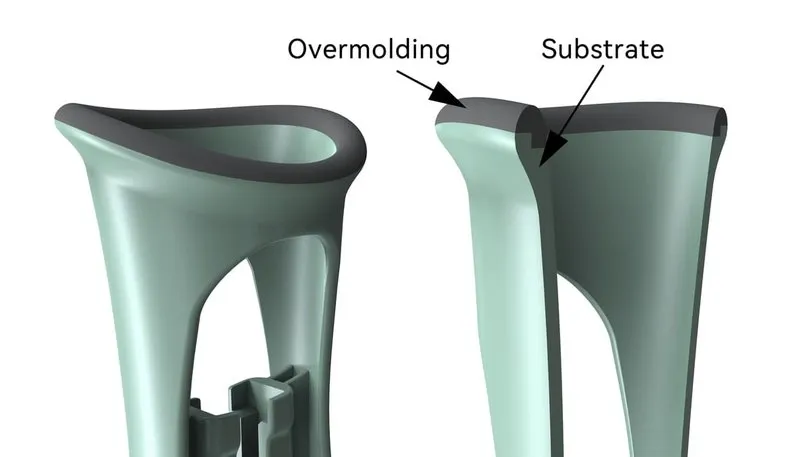
El sustrato es el material base rígido que proporciona soporte estructural en una pieza sobremoldeada, típicamente un plástico de ingeniería como ABS, PC o PP que forma el componente central. El sobremoldeo es el material blando aplicado sobre el sustrato en la inyección secundaria, típicamente TPE o TPU que proporciona agarre, amortiguación o protección superficial. El sustrato soporta cargas estructurales y define la geometría de la pieza, mientras que el sobremoldeo proporciona propiedades superficiales funcionales. Los dos materiales se unen químicamente durante el proceso de sobremoldeo, creando una sola pieza integrada donde el sobremoldeo no puede separarse del sustrato sin destruirlo.
¿Qué significa moldear sobre algo?
Moldear sobre algo se refiere al proceso de sobremoldado donde un material plástico fundido se injerta alrededor o sobre una pieza preexistente o substrato. El substrato se coloca en una cavidad del molde y el material de sobremoldado se injerta, fluyendo alrededor y adaptándose a la geometría del substrato. Durante la inyección, el calor del material de sobremoldado activa la superficie del substrato, creando una unión química. El resultado es una pieza única donde los dos materiales se integran permanentemente, en lugar de ser ensamblados o adheridos después del moldeo. Esto explica por qué el sobremoldado elimina el riesgo de delaminación que afecta a los métodos de ensamblaje basados en adhesivos.
¿Cuánto cuesta la herramienta de sobremoldado comparada con moldes estándar?
Los moldes de sobremoldado normalmente cuestan 25–40 por ciento más que los moldes estándar de tamaño equivalente y número de cavidades. La diferencia viene de las características de posicionamiento del substrato, superficies de cierre para sellado, tolerancias más estrechas en la geometría de la cavidad y, frecuentemente, sistemas de expulsión más complejos para evitar marcar la superficie del sobremoldado. Para un molde de sobremoldado de 4 cavidades típico para una carcasa de producto de consumo, esto podría significar un adicional de 8,000 a 15,000 dólares sobre un molde comparable de un solo material. Sin embargo, la eliminación de operaciones de decoración secundaria como impresión tampográfica o recubrimiento adhesivo normalmente recupera esta diferencia dentro de las primeras 100,000 a 200,000 unidades producidas.
¿Qué penalización de tiempo de ciclo añade el sobremoldado?
El sobremoldeo suele añadir un 15-25 por ciento al tiempo de ciclo en comparación con el moldeo por inyección estándar para una pieza equivalente. El tiempo adicional proviene del paso de transferencia del sustrato, ya sea manual o robótico, y del tiempo de enfriamiento ligeramente más largo requerido porque el material de sobremoldeo actúa como aislante térmico en el lado del sustrato. Para una pieza con un ciclo estándar de 20 segundos, espere 23-25 segundos con sobremoldeo. La penalización disminuye en piezas más grandes donde el tiempo de transferencia es una fracción menor del tiempo total del ciclo, y a menudo se justifica por la eliminación completa de los pasos de decoración secundaria.
¿Se pueden reciclar las piezas sobremoldadas?
Reciclar piezas sobremoldeadas es un desafío porque contienen dos o más plásticos diferentes unidos a nivel molecular. Si bien los materiales individuales, como PP, ABS, TPE, TPU, son cada uno reciclables en sus propios flujos, la pieza combinada no puede separarse fácilmente en sus materiales constituyentes sin un procesamiento mecánico o químico que degrade la calidad. Para la producción de alto volumen con consideraciones de fin de vida útil, la selección de materiales debe priorizar familias de materiales compatibles, como sustrato de PP con sobremoldeo de TPE a base de PP, para maximizar el potencial de reciclaje. El impacto ambiental se evalúa mejor en la etapa de diseño del producto, no después de que la herramienta esté completa.
inyección secundaria: La inyección secundaria es el segundo ciclo de moldeo del sobremoldeo, en el que el material se inyecta alrededor o sobre el sustrato preformado para crear la pieza multimaterial final. ↩
sustrato: El sustrato es el material base o núcleo de una pieza sobremoldeada, normalmente un plástico rígido que aporta soporte estructural y sobre el cual se aplica el material de sobremoldeo. ↩
capa de unión: Es una capa adhesiva o tratamiento superficial aplicado entre el sustrato y el material de sobremoldeo para mejorar el enlace químico y la adherencia entre plásticos diferentes. ↩