Su cliente de productos sanitarios acaba de enviarle el plano de una carcasa para audífono con una pestaña de encaje a presión de 0.3 mm de ancho. Su proveedor habitual de moldeo por inyección lo ha revisado y afirma que no puede fabricar el molde. Si quiere saber si el moldeo por inyección puede producir piezas tan pequeñas de forma fiable y en volúmenes industriales, esta guía le ofrece una respuesta directa desde la planta de fabricación.
- El micromoldeo por inyección produce piezas de menos de 1 gramo con tolerancias de más o menos 0.01 mm.
- Los volúmenes de inyección oscilan entre 0.001 cc y 5 cc, aproximadamente 1,000 veces menos que en el moldeo estándar.
- PEEK, LCP, POM y ABS de grado médico son los materiales más comunes para el micromoldeo.
- La fabricación de moldes depende de la electroerosión y el corte por hilo para las características inferiores a 0,5 mm, no del fresado CNC.
- Un espesor de pared inferior a 0.5 mm requiere temperaturas de molde superiores a 80 grados C para evitar la congelación prematura.
¿Qué es el micromoldeo por inyección y cómo funciona?
El micromoldeo por inyección es un proceso de fabricación especializado para producir piezas de plástico de menos de 1 gramo con detalles inferiores a 1 mm. Utiliza máquinas específicas de inyección por émbolo con volúmenes de inyección de 0.001 a 5 cc, aproximadamente 1,000 veces menores que los de una máquina de moldeo por inyección estándar. No se trata simplemente del «moldeo convencional a menor escala»: el equipo, el utillaje y los parámetros de proceso son fundamentalmente distintos.
Una máquina de moldeo por inyección estándar utiliza un husillo alternativo para dosificar e inyectar el material. Con pesos de pieza inferiores a un gramo, el husillo no puede controlar el volumen de inyección con suficiente precisión. Las máquinas de micromoldeo sustituyen el husillo por un sistema de émbolo que dosifica el material en una cámara separada y después lo inyecta con una precisión de posicionamiento de más o menos 0.0001 cc. Esta separación de la fusión y la inyección es lo que permite producir micropiezas de manera uniforme.
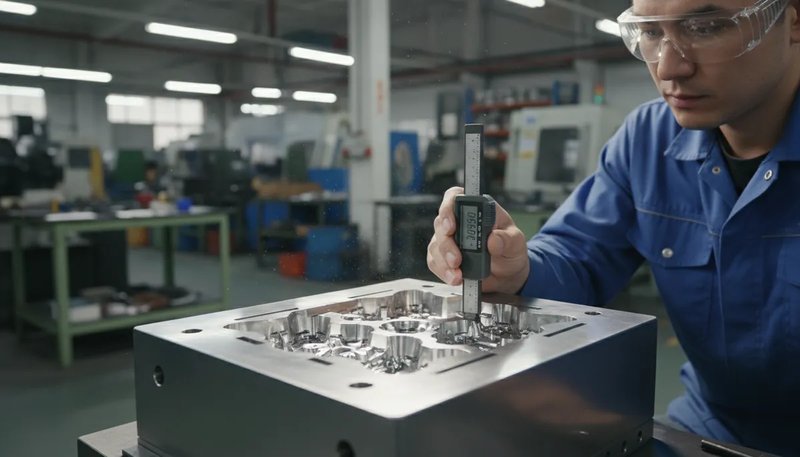
El propio molde también es diferente. Los elementos de la cavidad inferiores a 0.5 mm no pueden mecanizarse con herramientas CNC estándar. Requieren mecanizado por descarga eléctrica y corte por hilo para crear geometrías submilimétricas en acero templado para herramientas. El acabado superficial del molde también importa más: a microescala, una diferencia de acabado superficial de 0.5 micrometer Ra afecta directamente a la expulsión de la pieza y a la uniformidad dimensional.
"El micromoldeo por inyección utiliza máquinas de émbolo porque los husillos alternativos estándar no pueden dosificar con precisión volúmenes de inyección inferiores a 5 cc."True
El husillo alternativo de una máquina estándar dosifica el volumen de inyección mediante su posición, cuya tolerancia posicional es demasiado amplia para piezas de menos de un gramo. Los sistemas de émbolo separan la fusión de la inyección y utilizan una cámara de dosificación específica que controla el volumen con una precisión de más o menos 0.0001 cc, aproximadamente 100 veces mayor que la dosificación mediante husillo.
"Cualquier termoplástico apto para el moldeo por inyección estándar también puede utilizarse en el micromoldeo por inyección."False
Falso. Los materiales de alta viscosidad de masa, como policarbonato sin carga o PMMA, tienen dificultades para llenar detalles submilimétricos antes de solidificarse. Solo resinas de baja viscosidad como LCP2, POM y ciertos grados de PEEK y ABS llenan con fiabilidad paredes a microescala.
¿Cómo se compara el micromoldeo por inyección con otros métodos de microfabricación?
Para la producción de grandes volúmenes de geometrías plásticas complejas de menos de 1 gramo, el micromoldeo por inyección es la opción clara. Así se compara con las alternativas que hemos visto evaluar a los clientes antes de decidirse por un proceso.
| Método | Intervalo de tamaños de pieza | Tolerancia (mm) | Lo mejor para |
|---|---|---|---|
| Micromoldeo por inyección | 0.01–10 g | +/- 0.01 | Gran volumen, geometría compleja |
| Micromecanizado CNC | Cualquiera | +/- 0.005 | Metales, bajo volumen |
| Impresión 3D SLA | Cualquiera | +/- 0.025 | Solo prototipos |
| Proceso LIGA | 0.001–1 g | +/- 0.001 | Relación de aspecto ultraalta |
| Microestampación | 0.1–50 g | +/- 0.02 | Piezas metálicas planas |
El punto de equilibrio entre el micromoldeo y el micromecanizado CNC suele situarse entre 500 y 1,000 piezas. Por debajo de ese volumen, el CNC es más económico porque no se invierte en un molde. Por encima de 1,000 piezas, la ventaja del moldeo en coste por pieza resulta abrumadora. Un engranaje de POM de 0.05 g que cuesta $8 mediante mecanizado CNC baja de $0.10 por pieza con 10,000 unidades moldeadas. El molde cuesta entre $8,000 y $15,000, por lo que se amortiza rápidamente.
La impresión 3D SLA es útil para prototipos y validación del diseño, pero las propiedades del material no igualan las de los termoplásticos moldeados por inyección, especialmente en aplicaciones médicas y aeroespaciales que requieren biocompatibilidad o clasificación de inflamabilidad. Recomendamos SLA para prototipos iniciales y después pasar al micromoldeo para la producción.
"Un smartphone moderno contiene entre 10 y 20 componentes micromoldeados por inyección."True
Las piezas micromoldeadas de los teléfonos inteligentes incluyen soportes para módulos de cámara, conectores de antena, carcasas de micrófonos y elementos de bandejas para tarjetas SIM. Un dispositivo medio utiliza entre 12 y 18 piezas micromoldeadas en varios conjuntos, y esta cifra aumenta con cada generación a medida que los dispositivos se vuelven más compactos.
"El micromoldeo por inyección solo es viable para aplicaciones médicas y electrónicas."False
Aunque los sectores médico y electrónico son los más importantes, el micromoldeo se utiliza ampliamente en sensores de automoción, conectores aeroespaciales, mecanismos de relojes y productos de consumo. Cualquier industria que necesite piezas de plástico de precisión de menos de un gramo y geometría compleja puede utilizarlo.
¿Qué materiales funcionan mejor para el micromoldeo por inyección?
Esta sección trata los mejores materiales para microinyección y su impacto en coste, calidad, plazo o riesgo de abastecimiento. No todo termoplástico funciona a microescala: debe llenar detalles de 0.1 mm sin solidificarse y repetirlo durante miles de ciclos. Estos son los materiales que usamos realmente y por qué.
El LCP en el moldeo por inyección (polímero de cristal líquido) es la opción preferida para micropiezas de paredes delgadas. Su viscosidad en estado fundido es aproximadamente una décima parte de la de las resinas de ingeniería convencionales, por lo que llena detalles inaccesibles para otros materiales. Con LCP pueden lograrse paredes de 0.1 mm a temperaturas de molde de 120 a 150 grados C y velocidades de inyección superiores a 800 mm/s. Es la elección habitual para conectores electrónicos con pasos inferiores a 0.3 mm.
El PEEK domina las microaplicaciones médicas y aeroespaciales. Soporta temperaturas continuas de hasta 250 grados C, supera los ensayos de biocompatibilidad USP Class VI y resiste el ataque químico de los procesos de esterilización. Su procesamiento requiere temperaturas de cilindro de 370 a 400 grados C y temperaturas de molde de 160 a 200 grados C. Es fundamental controlar la temperatura dentro de más o menos 2 grados C: una desviación de 5 grados puede causar una variación dimensional del 30 por ciento en una micropieza de PEEK.
El POM (acetal) es el material habitual para micropiezas mecánicas como engranajes, casquillos y encajes a presión. Se mecaniza bien en el molde, presenta baja fricción y mantiene las tolerancias de forma uniforme. El ABS de grado médico completa las opciones comunes para alojamientos y carcasas donde se requiere biocompatibilidad, pero no una resistencia extrema a la temperatura o a los productos químicos.
Cómo seleccionar el material adecuado para micropiezas
Elegir el material adecuado también depende de las operaciones secundarias. Si la micropieza requiere soldadura ultrasónica, solo determinados grados de ABS y PMMA se unen de forma fiable en la interfaz. Para la soldadura láser, el par de materiales debe tener distintas características de absorción, normalmente una base con carga de carbono y una tapa de color natural. Estas restricciones suelen pasarse por alto durante el diseño y pueden obligar a cambiar de material en una fase avanzada del desarrollo.
Las ventanas de procesamiento de los materiales para micromoldeo son considerablemente más estrechas que las del moldeo estándar. Un engranaje POM típico puede tolerar una variación de temperatura del cilindro de más o menos 10 grados C a escala normal, pero el mismo material en una micropieza requiere un control de más o menos 3 grados C. Las máquinas de micromoldeo dedicadas incorporan varias zonas de temperatura del cilindro con controladores PID independientes y realimentación de termopares cada 50 mm a lo largo del cilindro.
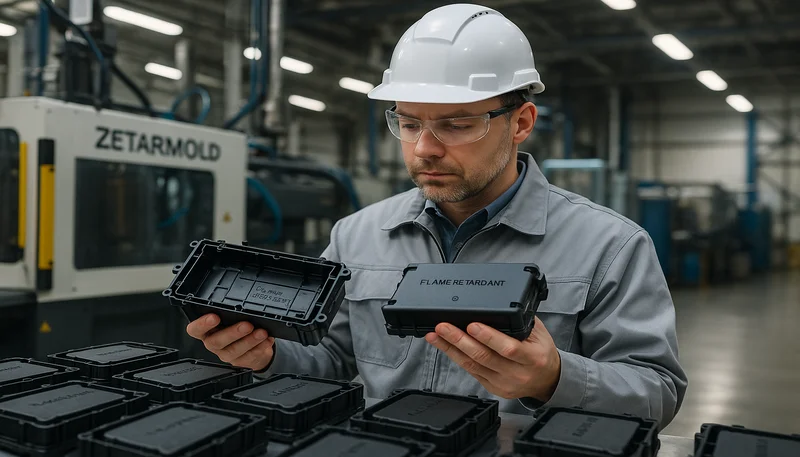
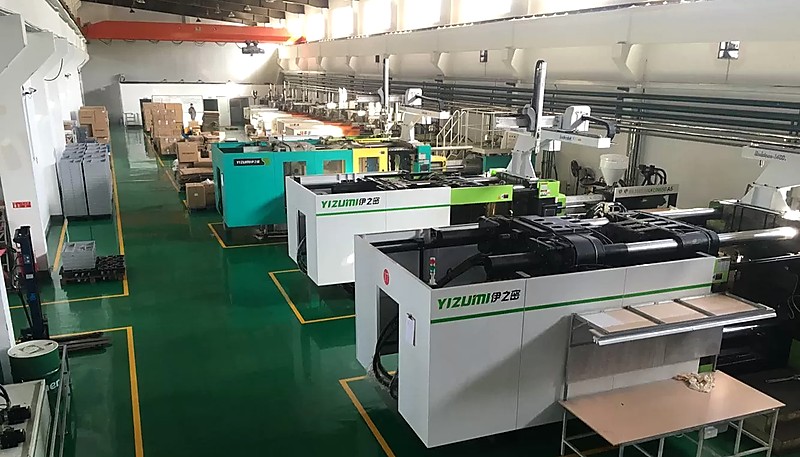
En la fábrica de ZetarMold en Shanghái, 47 máquinas de moldeo por inyección que abarcan de 90T a 1850T permiten realizar proyectos de micromoldeo desde series de prototipos hasta la producción de gran volumen. Nuestros más de 20 años de experiencia en moldeo por inyección y utillajes, junto con la experiencia con más de 400 materiales plásticos, ayudan a los ingenieros a armonizar el comportamiento de la resina, las limitaciones del utillaje y los planes de inspección antes de que las características pequeñas pasen a producción.
¿Cuáles son las reglas de diseño clave para las piezas micromoldeadas?
Diseñar para micromoldeo no equivale a reducir la escala de un diseño de pieza estándar. La física cambia en dimensiones submilimétricas y las reglas que funcionan a escala normal dejan de hacerlo. Estas son las directrices que realmente importan en producción.
El espesor de pared es el parámetro más crítico. Por debajo de 0.5 mm, la solidificación prematura se convierte en el principal riesgo de defectos. El material se solidifica al entrar en contacto con la pared de la cavidad antes de poder llenar por completo el detalle. Para contrarrestarlo se necesitan temperaturas del molde superiores a 80 grados C (más altas para materiales cristalinos), velocidades de inyección superiores a 500 mm/s y una compuerta situada a menos de 2 mm de la sección más delgada. Con un espesor de pared de 0.1 mm y LCP, se trabaja en el límite absoluto de lo que el proceso puede hacer.
Los ángulos de desmoldeo son más importantes a microescala, no menos. Un ángulo de 0.5 grados en un detalle de 5 mm de profundidad parece insignificante, pero en una micropieza con una pared de 0.2 mm determina si la pieza se expulsa limpiamente o se deforma. Como explicamos en nuestra guía de moldes de inyección, recomendamos al menos 1 grado en todas las superficies verticales de las micropiezas y 2 grados para detalles de más de 3 mm de profundidad.
Los radios deben ser de al menos 0,05 mm en todas las esquinas interiores. Las esquinas interiores agudas crean concentraciones de tensión que provocan grietas durante la expulsión o el uso. A microescala, incluso un radio de 0,02 mm produce una diferencia medible en la resistencia de la pieza. El diseño de la compuerta es igualmente importante: para piezas de menos de 0,5 g, una sola compuerta lateral con una longitud máxima de zona recta de 0,5 mm suele ser la mejor opción.
¿En qué se diferencia un micromolde de inyección de un molde estándar?
La diferencia fundamental reside en cómo se crea la cavidad. Los moldes estándar utilizan fresado CNC para la mayoría de los detalles, reservando la EDM3 para esquinas vivas y nervaduras profundas. En los micromoldes se invierte esta proporción: la EDM y el corte por hilo generan la mayoría de los detalles de la cavidad porque el CNC no puede crear de forma fiable geometrías inferiores a unos 0.3 mm.
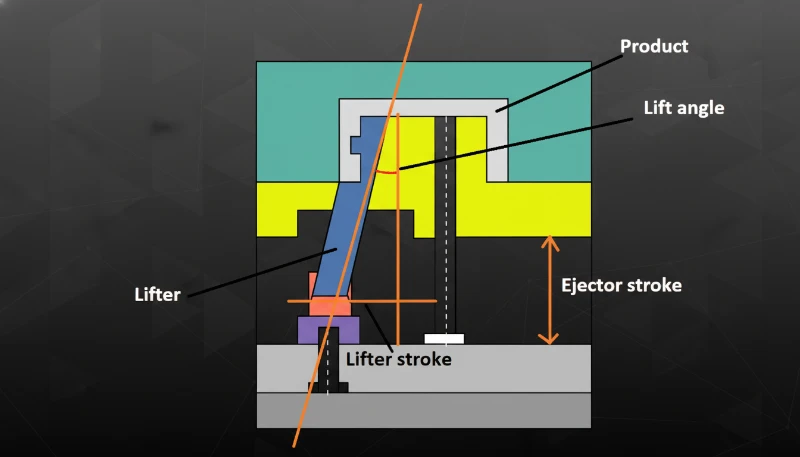
El control de la temperatura del molde también es más exigente. Un molde estándar puede funcionar entre 40 y 60 grados C con canales de agua sencillos. Un micromolde que procese PEEK necesita entre 160 y 200 grados C, con calentadores de cartucho y realimentación de termopares en cada inserto de cavidad. La uniformidad de la temperatura en la cavidad afecta al llenado, la contracción y el alabeo al menos 10 veces más a microescala que a escala normal.
La expulsión es la tercera diferencia principal. Los moldes estándar utilizan pasadores y placas expulsoras. En una micropieza con una pared de 0.3 mm, un pasador expulsor estándar de 2 mm cubre toda la superficie de la pared y la perforará. Los micromoldes emplean microexpulsores especializados (de 0.2 to 0.5 mm de diámetro), expulsión por aire o extracción robotizada. Algunos micromoldes no expulsan la pieza: un robot la extrae de la cavidad mediante una ventosa de vacío.
Los micromoldes de producción suelen durar entre 200,000 y 500,000 ciclos antes de reacondicionar la cavidad, según la abrasividad del material y la complejidad. Los que procesan materiales reforzados con vidrio pueden requerir retrabajo a los 100,000 ciclos. Para tolerancias ultraestrictas, planifique volver a medir las dimensiones críticas cada 20,000 ciclos.
¿Qué sectores dependen del micromoldeo por inyección?
Esta sección trata sobre las industrias que dependen del micromoldeo por inyección y su impacto en los costes, la calidad, los plazos o el riesgo de abastecimiento. Los dispositivos médicos representan aproximadamente el 40 por ciento de todas las piezas micromoldeadas producidas en el mundo. Los componentes de audífonos, las puntas de instrumentos quirúrgicos, los mecanismos de administración de fármacos y los cartuchos de pruebas diagnósticas dependen de piezas plásticas de menos de un gramo con características invisibles a simple vista. Los requisitos normativos (ISO 13485, USP Class VI) hacen más exigente la validación del proceso, pero los volúmenes justifican la inversión: un solo diseño de pluma de administración de fármacos podría alcanzar 5 millones de unidades al año.
La electrónica es el segundo sector más grande. Cada smartphone contiene entre 10 y 20 conectores micromoldeados, interruptores y elementos de lentes. Los dispositivos portátiles y sensores IoT están reduciendo el paso de los conectores por debajo de 0.3 mm, lo que exige características de molde inexistentes hace cinco años. La tendencia a la miniaturización no muestra señales de frenarse.
El micromoldeo para automoción crece rápidamente por la proliferación de sensores. Un vehículo moderno contiene entre 50 y 100 carcasas de sensores, juntas de conectores y componentes de válvulas micromoldeados. Deben soportar temperaturas bajo el capó de hasta 150 grados C y mantener estabilidad dimensional durante 15 años.
¿Cuánto cuesta realmente el micromoldeo por inyección?
Esta sección trata de cuánto cuesta realmente el micromoldeo por inyección y de su impacto en el coste, la calidad, los plazos o el riesgo de abastecimiento. El utillaje para micromoldes cuesta entre $5,000 y $25,000 según la complejidad de la pieza, el número de cavidades y el acabado superficial requerido. Los moldes prototipo de una sola cavidad para geometrías sencillas parten de unos $5,000. Los moldes de producción multicavidad con tolerancias estrechas y superficies de cavidad pulidas cuestan entre $15,000 y $25,000.
Los costes por pieza oscilan entre $0.02 y $0.50 para volúmenes superiores a 10,000 unidades. Con 100,000 unidades, la mayoría de las piezas micromoldeadas cuestan entre $0.02 y $0.10 cada una. La rentabilidad mejora drásticamente con el volumen porque el coste fijo del utillaje se amortiza rápidamente en una pieza pequeña y de ciclo rápido. Una micropieza con un tiempo de ciclo de 5 segundos en un molde de 16 cavidades produce casi 100,000 piezas al día en una sola máquina.
No olvide los costes auxiliares: manipulación de las piezas (las micropiezas suelen requerir recogida robotizada, no caída por gravedad), equipos de inspección (los sistemas de medición óptica cuestan entre $30,000 y $80,000) y embalaje (recipientes antiestáticos para piezas que pesan menos que un clip). Estos conceptos añaden entre un 20 y un 40 por ciento al coste total del proyecto, además del utillaje y el moldeo.
¿Cómo se garantiza la calidad en el micromoldeo por inyección?
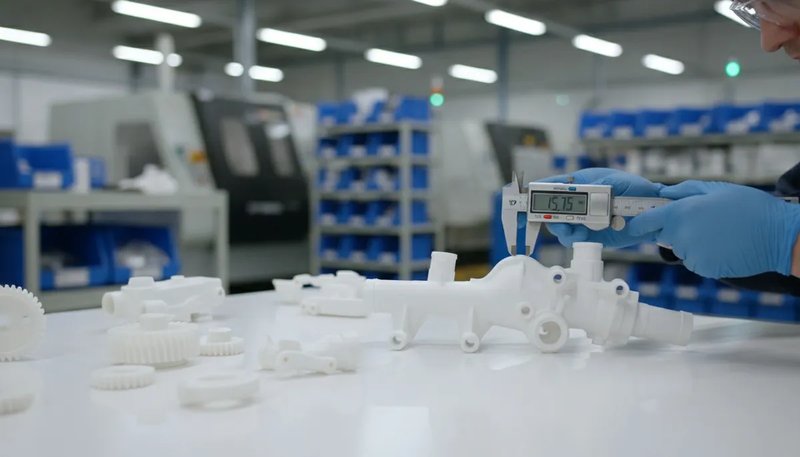
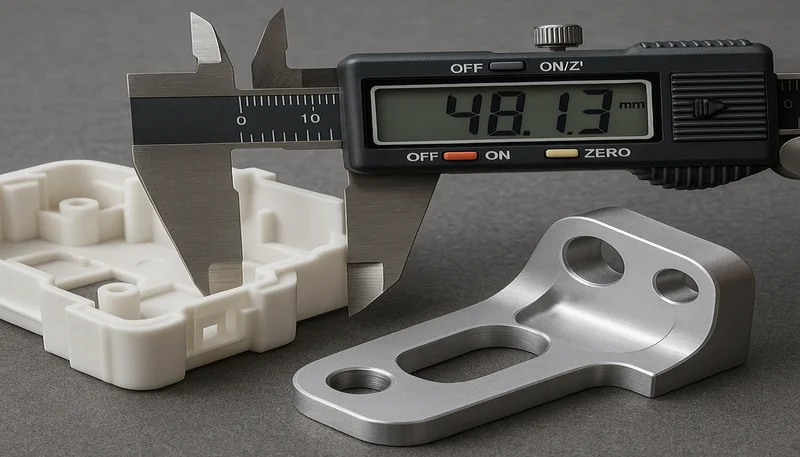
Esta sección trata sobre cómo garantizar la calidad en el micromoldeo por inyección y su impacto en el coste, la calidad, los plazos o el riesgo de abastecimiento. El control de calidad a microescala requiere métodos de inspección totalmente distintos de los del moldeo estándar. No pueden usarse calibradores en un elemento de 0.3 mm. Los sistemas de medición óptica (CMMs de visión) con aumentos de 10x a 200x son el estándar para la verificación dimensional. Estos sistemas miden el tamaño, la posición y la geometría de los elementos en imágenes ampliadas con una resolución de hasta 0.5 micrometers.
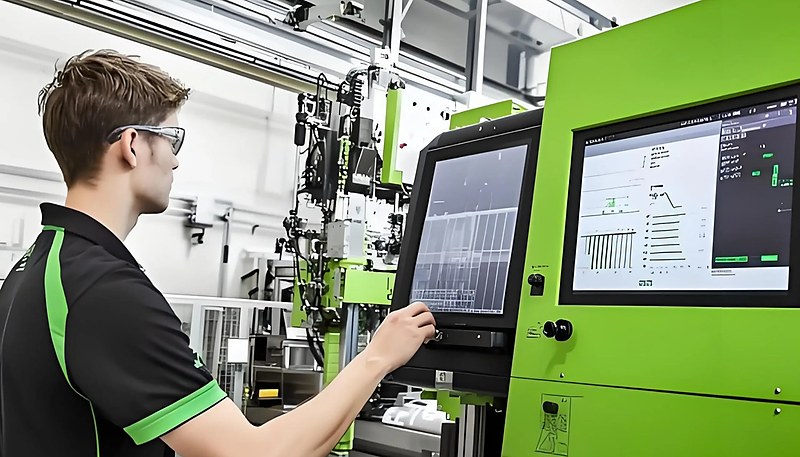
La supervisión del proceso es más importante que la inspección a microescala. Dado que no resulta económico medir todas las dimensiones de cada pieza, se recurre al control estadístico del proceso vinculado a los parámetros de la máquina. Supervisar la presión de inyección, la posición del husillo, la temperatura del molde y el tiempo de ciclo proporciona una indicación en tiempo real de la estabilidad del proceso.
Nuestro taller de utillaje incluye máquinas EDM, máquinas de corte por hilo, grabadoras de precisión y equipos de inspección CMM, todos necesarios para crear y verificar las características submilimétricas que definen las piezas micromoldeadas. Con 8 ingenieros sénior que promedian más de 10 años de experiencia, hemos realizado proyectos de micromoldeo para aplicaciones médicas, electrónicas y de automoción.
Preguntas frecuentes sobre el micromoldeo por inyección
¿Cuál es el tamaño mínimo de pieza para el moldeo por inyección micro?
El mínimo práctico es de aproximadamente 0.5 mm cúbicos de volumen, o piezas con un peso de tan solo 0.001 g. Lograrlo requiere sistemas de inyección de émbolo con cámaras de dosificación de precisión con una exactitud de 0.0001 cc y temperaturas del molde mantenidas por encima de 100 grados C durante todo el ciclo de inyección. Con estas dimensiones extremadamente pequeñas, incluso una variación de 0.0005 cc en el volumen de inyección produce un defecto de calidad visible, por lo que el control del proceso debe ser excepcionalmente estricto y validarse durante miles de ciclos consecutivos antes de autorizar la producción completa.
¿Cuánto cuesta un molde de microinyección?
El utillaje para micromoldeo cuesta entre $5,000 y $25,000, según la complejidad de la pieza, el número de cavidades y los requisitos de acabado superficial. Los moldes prototipo de una sola cavidad para geometrías sencillas parten de unos $5,000, mientras que los moldes de producción multicavidad con tolerancias estrechas y superficies de cavidad pulidas cuestan entre $15,000 y $25,000. El mayor coste refleja los procesos especializados de EDM y corte por hilo necesarios para crear detalles de cavidad submilimétricos que el fresado CNC convencional sencillamente no puede conseguir, independientemente de la calidad de las herramientas de corte o de la destreza del operario que maneje el equipo.
¿Qué tolerancia puede lograr el moldeo por inyección micro?
Las tolerancias estándar de micro moldeo varían entre más o menos 0,01 y 0,05 mm, dependiendo del material específico que se esté moldeando, la geometría de la pieza y la relación de aspecto de sus características críticas. Las superficies planas con un tramo inferior a 5 mm en materiales de baja contracción como el POM pueden lograr consistentemente más o menos 0,008 mm en producción. Los agujeros profundos con relaciones de aspecto superiores a 5:1 generalmente mantienen más o menos 0,03 mm debido a la deflexión del pasador del núcleo y la contracción desigual alrededor de las características largas de acero en la cavidad del molde.
¿Cuál es el espesor mínimo de pared para el moldeo por inyección micro?
Con materiales de baja viscosidad como LCP pueden lograrse espesores de pared de hasta 0.1 mm, siempre que el molde se caliente de 120 a 150 grados C y la velocidad de inyección supere 800 mm/s para evitar la solidificación prematura durante el llenado de la cavidad. Por debajo de 0.1 mm, llenar la cavidad se vuelve extremadamente difícil porque el material se solidifica casi al instante al contactar con la pared. Mantener una variación uniforme de pared inferior a más o menos 0.02 mm requiere optimizar la ubicación de la compuerta a menos de 2 mm de las secciones delgadas y supervisar rigurosamente el proceso durante toda la serie de producción.
¿Cuánto dura un molde de microinyección?
Los micromoldes de producción suelen durar entre 200,000 y 500,000 ciclos antes de reacondicionar la cavidad, según la abrasividad del material de moldeo y la complejidad de las características del diseño de la pieza producida. Los moldes que procesan materiales con fibra de vidrio o reforzados con fibra de carbono pueden necesitar retrabajo a los 100,000 ciclos debido al desgaste acelerado de los detalles finos de la cavidad. Para tolerancias extremadamente estrechas, recomendamos encarecidamente volver a medir las dimensiones críticas cada 20,000 ciclos y presupuestar el repulido de la cavidad o la sustitución del núcleo como mantenimiento preventivo rutinario para evitar desviaciones dimensionales inesperadas de la calidad durante la producción.
¿Puedes micro moldear PEEK?
Sí, el micromoldeo de PEEK se utiliza ampliamente en implantes médicos y aplicaciones aeroespaciales que requieren biocompatibilidad y resistencia continua a temperaturas de hasta 250 grados C. El procesamiento requiere temperaturas de cilindro de 370 a 400 grados C, temperaturas de molde de 160 a 200 grados C y velocidades de inyección superiores a 500 mm/s. Es fundamental controlar la temperatura del cilindro dentro de más o menos 2 grados C: una desviación de 5 grados C puede causar una variación dimensional del 30 por ciento en una micropieza de PEEK, por lo que una gestión térmica precisa es esencial para mantener la calidad de producción y la repetibilidad dimensional.
¿Cuál es la diferencia entre el micromoldeo y el moldeo de piezas pequeñas?
El micromoldeo se refiere específicamente a piezas de menos de 1 gramo con características críticas inferiores a 1 mm, que requieren máquinas específicas de inyección por émbolo con volúmenes de disparo de 0.001 a 5 cc y moldes fabricados por EDM con detalles de cavidad submilimétricos. El moldeo de piezas pequeñas produce piezas de 1 a 10 gramos en máquinas estándar de husillo alternativo con moldes convencionales de acero mecanizados por CNC. Se trata de categorías de equipos, enfoques de utillaje y parámetros de control del proceso fundamentalmente distintos, aunque ambos procesos produzcan en última instancia componentes plásticos relativamente pequeños para aplicaciones finales similares en múltiples industrias.
volúmenes de inyección: El volumen de inyección es la cantidad de plástico fundido introducida en la cavidad del molde en cada ciclo, medida en centímetros cúbicos. En micromoldeo, oscila entre 0.001 y 5 cc. ↩
LCP: LCP designa un termoplástico de alto rendimiento con excepcionales características de flujo para micropiezas de paredes delgadas, utilizado habitualmente en conectores electrónicos. ↩
EDM: EDM es un proceso de fabricación de precisión que elimina material mediante chispas eléctricas y permite crear detalles inferiores a 0.1 mm en acero endurecido para herramientas. ↩