Votre client du secteur médical vient de vous envoyer le plan d’un boîtier d’appareil auditif comportant une languette d’encliquetage de 0,3 mm de large. Votre fournisseur de moulage par injection habituel l’a examiné et vous a répondu qu’il ne pouvait pas fabriquer l’outillage. Si vous cherchez à savoir si le moulage par injection peut produire de manière fiable des pièces aussi petites en série, ce guide vous apporte une réponse directe, fondée sur l’expérience de l’atelier.
- Le micro-moulage par injection produit des pièces pesant moins de 1 gramme avec des tolérances de plus ou moins 0.01 mm.
- Les volumes injectés vont de 0.001 cc à 5 cc, soit environ 1,000 fois moins que pour le moulage standard.
- Le PEEK, le LCP, le POM et l’ABS de qualité médicale sont les matériaux de micromoulage les plus courants.
- La fabrication du moule repose sur l’EDM et la découpe au fil pour les détails inférieurs à 0.5 mm, et non sur le fraisage CNC.
- Une épaisseur de paroi inférieure à 0.5 mm exige une température de moule supérieure à 80 degrés C pour éviter une solidification prématurée.
Qu’est-ce que le micro-moulage par injection et comment fonctionne-t-il ?
Le micro-moulage par injection est un procédé spécialisé qui permet de fabriquer des pièces en plastique pesant moins de 1 gramme et présentant des détails inférieurs à 1 mm. Il emploie des machines dédiées à injection par piston, dont les volumes d’injection en moulage par injection vont de 0,001 à 5 cm³, soit environ 1 000 fois moins qu’une presse à injecter standard. Il ne s’agit pas simplement d’un « moulage ordinaire à plus petite échelle » : l’équipement, l’outillage et les paramètres du procédé sont fondamentalement différents.
Une presse à injecter standard utilise une vis alternative pour doser et injecter la matière. Pour des pièces de moins d’un gramme, la vis ne maîtrise pas assez précisément le volume injecté. Les machines de micromoulage la remplacent par un piston qui dose la matière dans une chambre séparée, puis l’injecte avec une précision de position de plus ou moins 0.0001 cc. Cette séparation de la fusion et de l’injection rend possible une production régulière de micropièces.
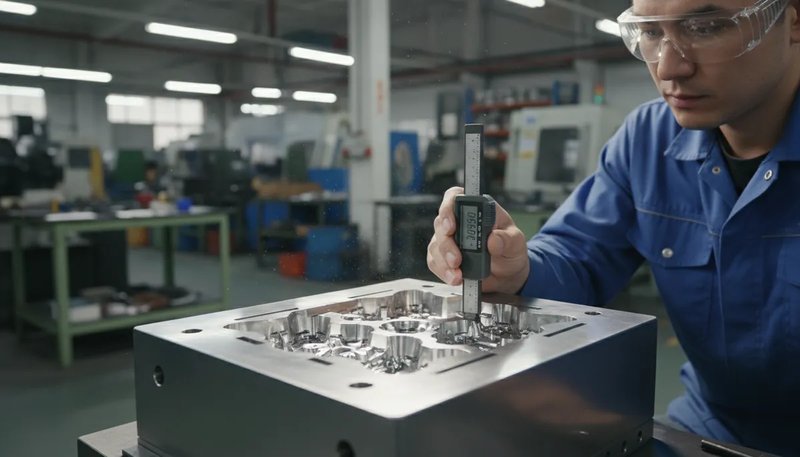
Le moule lui-même est également différent. Les détails d’empreinte inférieurs à 0.5 mm ne peuvent pas être usinés avec des outils CNC standard. Ils exigent l’électroérosion et la découpe au fil pour créer des géométries submillimétriques dans l’acier à outils trempé. La finition de surface du moule est aussi plus importante : à l’échelle microscopique, une différence de rugosité Ra de 0.5 micromètre influe directement sur l’éjection et la régularité dimensionnelle des pièces.
"Le micromoulage par injection utilise des machines à piston, car les vis alternatives standard ne peuvent pas doser avec précision des volumes injectés1 inférieurs à 5 cc."True
La vis alternative d’une machine standard dose le volume injecté selon sa position, dont la tolérance est trop élevée pour les pièces de moins d’un gramme. Les systèmes à piston séparent la fusion de l’injection et utilisent une chambre de dosage dédiée qui contrôle le volume à plus ou moins 0.0001 cc — soit une précision environ 100 fois supérieure à celle d’un dosage par vis.
"Tout thermoplastique adapté au moulage par injection standard peut aussi être utilisé en micro-injection."False
C'est faux. Les matériaux à forte viscosité à l'état fondu, comme le polycarbonate non chargé ou le PMMA, peinent à remplir des détails submillimétriques avant la solidification. Seules les résines à faible viscosité comme le LCP2, le POM et certaines nuances de PEEK et d'ABS peuvent remplir de manière fiable des épaisseurs de paroi microscopiques.
Comment le micro-moulage par injection se compare-t-il aux autres méthodes de microfabrication ?
Pour produire en grande série des géométries plastiques complexes de moins de 1 gramme, la micro-injection s’impose. Voici sa comparaison avec les solutions que nos clients ont évaluées avant de choisir un procédé.
| Méthode | Plage de tailles des pièces | Tolérance (mm) | Meilleur pour |
|---|---|---|---|
| Moulage par micro-injection | 0.01–10 g | +/- 0.01 | Grand volume, géométrie complexe |
| Micro-usinage CNC | Tous | +/- 0.005 | Métaux, faible volume |
| Impression 3D SLA | Tous | +/- 0.025 | Prototypage uniquement |
| Procédé LIGA | 0.001–1 g | +/- 0.001 | Rapport d’aspect ultra-élevé |
| Micro-emboutissage | 0.1–50 g | +/- 0.02 | Pièces métalliques planes |
Le seuil de rentabilité entre le micro-moulage et le micro-usinage CNC se situe généralement autour de 500 à 1,000 pièces. En dessous de ce volume, la CNC est moins chère, car aucun investissement dans un moule n’est nécessaire. Au-delà de 1,000 pièces, l’avantage du moulage en coût unitaire devient considérable. Un engrenage en POM de 0.05 g coûtant $8 à usiner en CNC passe sous $0.10 par pièce à 10,000 unités moulées. Le moule coûte de $8,000 à $15,000, de sorte que son amortissement est rapide.
L’impression 3D SLA est utile pour les prototypes et la validation de conception, mais les propriétés des matériaux ne correspondent pas à celles des thermoplastiques moulés par injection — en particulier pour les applications médicales et aérospatiales exigeant une biocompatibilité ou un classement au feu. Nous recommandons la SLA pour les premiers prototypes, puis le passage au micromoulage pour la production.
"Un seul smartphone moderne contient 10 à 20 composants micro-injectés."True
Les pièces micromoulées des smartphones comprennent les supports de module de caméra, les connecteurs d’antenne, les boîtiers de microphone et certains éléments du tiroir de carte SIM. Un appareil moyen utilise de 12 à 18 pièces micromoulées dans plusieurs assemblages, et ce nombre augmente à chaque génération à mesure que les appareils deviennent plus compacts.
"Le micro-moulage par injection n’est viable que pour les applications médicales et électroniques."False
Bien que le médical et l’électronique soient les plus grands secteurs, le micro-moulage est largement utilisé dans les capteurs automobiles, les connecteurs aérospatiaux, les mécanismes horlogers et les produits de consommation. Tout secteur exigeant des pièces plastiques de précision de moins d’un gramme et de géométrie complexe est un candidat.
Quels matériaux conviennent le mieux au micro-moulage par injection ?
Cette section traite des matériaux les mieux adaptés au micro-moulage par injection et de leur impact sur le coût, la qualité, les délais ou les risques d’approvisionnement. Tous les thermoplastiques ne fonctionnent pas à l’échelle micro. Le matériau doit remplir des caractéristiques aussi fines que 0,1 mm sans se figer, et il doit le faire de manière constante sur des milliers de cycles. Voici les matériaux que nous utilisons réellement en production pour les micro-pièces, et pourquoi.
Le LCP en moulage par injection (polymère à cristaux liquides) est le matériau privilégié pour les micropièces à parois minces. Sa viscosité à l’état fondu équivaut environ au dixième de celle des résines techniques courantes, ce qui lui permet de remplir des détails inaccessibles à d’autres matériaux. Avec le LCP, des parois de 0,1 mm sont réalisables à une température de moule comprise entre 120 et 150 °C et à une vitesse d’injection supérieure à 800 mm/s. C’est le choix standard pour les connecteurs électroniques dont le pas est inférieur à 0,3 mm.
Le PEEK domine les micro-applications médicales et aérospatiales. Il supporte des températures continues jusqu’à 250 °C, satisfait aux essais de biocompatibilité USP classe VI et résiste aux attaques chimiques des procédés de stérilisation. Sa transformation exige des températures de fourreau de 370 à 400 °C et des températures de moule de 160 à 200 °C. Un contrôle de la température à ±2 °C est essentiel : une dérive de 5 °C peut entraîner une variation dimensionnelle de 30 % sur une micropièce en PEEK.
Le POM (acétal) est le matériau de référence des micropièces mécaniques telles que les engrenages, bagues et encliquetages. Il s’usine bien dans le moule, présente un faible frottement et maintient des tolérances constantes. L’ABS de grade médical complète les choix courants pour les boîtiers et enveloppes exigeant une biocompatibilité, mais pas une résistance extrême à la température ou aux produits chimiques.
Comment sélectionner le matériau adapté aux micro-pièces
Le choix du matériau dépend aussi des opérations secondaires. Si la micropièce exige un soudage par ultrasons, seuls certains grades d’ABS et de PMMA se lient de manière fiable à l’interface du joint. Pour le soudage laser, la paire de matériaux doit présenter des caractéristiques d’absorption différentes — généralement une base chargée de carbone avec un couvercle de couleur naturelle. Ces contraintes sont souvent négligées pendant la conception et peuvent imposer un changement tardif de matériau.
Les fenêtres de transformation des matériaux de micromoulage sont nettement plus étroites que celles du moulage standard. À l’échelle normale, un engrenage type en POM peut tolérer une variation de température du fourreau de plus ou moins 10 degrés C, mais le même matériau dans une micropièce exige un contrôle à plus ou moins 3 degrés C. Les machines de micromoulage dédiées comportent plusieurs zones de température du fourreau, avec des régulateurs PID indépendants et un retour de thermocouple tous les 50 mm sur la longueur du fourreau.
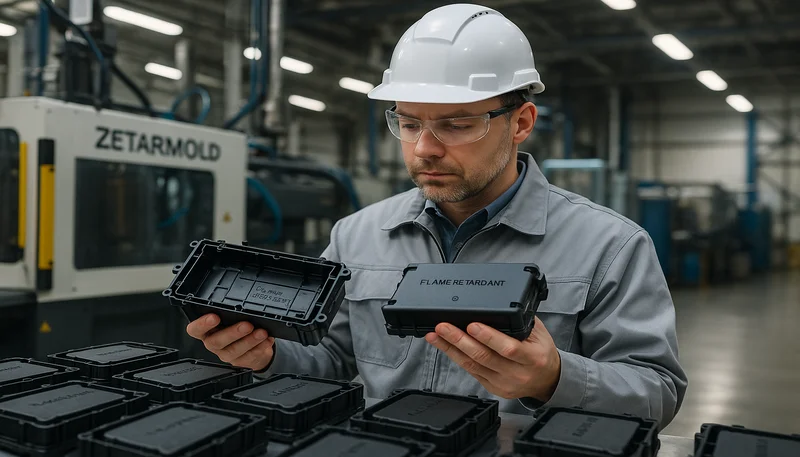
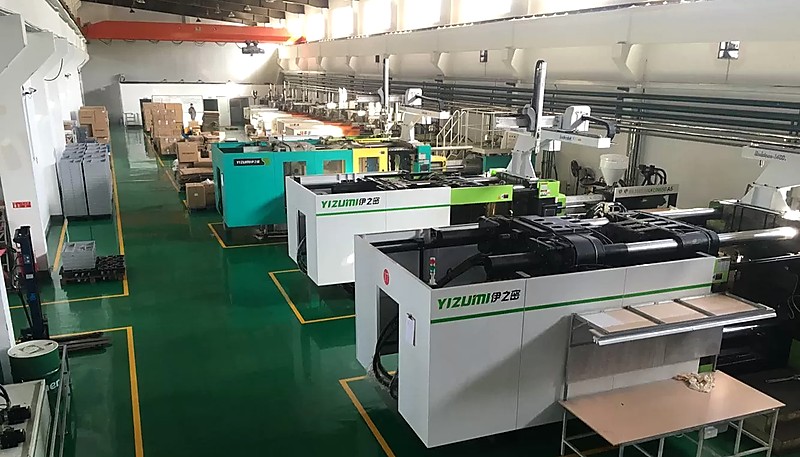
Dans l’usine ZetarMold de Shanghai, 47 presses à injecter de 90T à 1850T prennent en charge les projets de micromoulage, du prototype à la grande série. Plus de 20 ans d’expérience en injection et outillage, ainsi qu’une maîtrise de plus de 400 matières plastiques, aident les ingénieurs à concilier comportement de la résine, contraintes d’outillage et plans de contrôle avant la mise en production des petits détails.
Quelles sont les principales règles de conception des pièces micro-injectées ?
La conception pour le micromoulage ne consiste pas simplement à réduire l’échelle d’une pièce standard. La physique change aux dimensions submillimétriques et les règles valables à l’échelle normale ne s’appliquent plus. Voici les recommandations qui comptent réellement en production.
L’épaisseur de paroi est le paramètre le plus critique. Sous 0.5 mm, le gel prématuré devient le principal risque de défaut : la matière se solidifie au contact de l’empreinte avant de remplir complètement la forme. Pour y remédier, il faut une température de moule supérieure à 80 degrés C (davantage pour les matériaux cristallins), une vitesse d’injection supérieure à 500 mm/s et un seuil placé à moins de 2 mm de la section la plus mince. Avec une paroi de 0.1 mm en LCP, le procédé atteint sa limite absolue.
Les angles de dépouille sont encore plus importants à l’échelle microscopique. Une dépouille de 0,5 degré sur un détail de 5 mm de profondeur peut sembler négligeable, mais, sur une micropièce dotée d’une paroi de 0,2 mm, elle détermine si la pièce sera éjectée proprement ou se déformera. Comme indiqué dans notre guide des moules d’injection, nous recommandons une dépouille minimale de 1 degré sur toutes les surfaces verticales des micropièces, et de 2 degrés pour les détails dépassant 3 mm de profondeur.
Tous les angles intérieurs doivent présenter un rayon d’au moins 0,05 mm. Les angles vifs concentrent les contraintes et provoquent des fissures à l’éjection ou en service. À l’échelle microscopique, même un rayon de 0,02 mm améliore de façon mesurable la résistance. La conception du point d’injection est tout aussi importante : pour les pièces de moins de 0,5 g, un point d’injection latéral unique avec une portée maximale de 0,5 mm est généralement le meilleur choix.
En quoi un moule de micro-injection diffère-t-il d’un moule standard ?
La différence fondamentale réside dans la méthode de création de l’empreinte. Les moules standard font appel au fraisage CNC pour la plupart des détails, l’électroérosion3 étant réservée aux angles vifs et aux nervures profondes. Dans les micromoules, cette proportion s’inverse : l’électroérosion et la découpe par fil réalisent la majorité des détails de l’empreinte, car l’usinage CNC ne peut pas produire de façon fiable des géométries inférieures à environ 0,3 mm.
Le contrôle de la température du moule est également plus exigeant. Un moule standard peut fonctionner entre 40 et 60 degrés C avec de simples canaux d’eau. Un micromoule transformant du PEEK nécessite 160 à 200 degrés C, avec des cartouches chauffantes et un retour par thermocouple dans chaque insert d’empreinte. À l’échelle microscopique, l’uniformité de la température dans l’empreinte affecte le remplissage, le retrait et le gauchissement au moins 10 fois plus qu’à l’échelle normale.
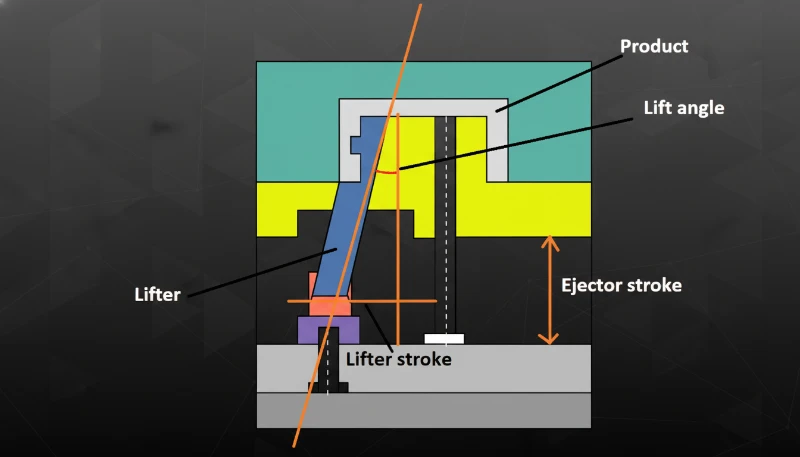
L’éjection constitue la troisième différence majeure. Les moules standard utilisent des broches et des plaques d’éjection. Sur une micropièce à paroi de 0.3 mm, une broche standard de 2 mm couvre toute la surface de la paroi — elle la perfore. Les micromoules utilisent des microbroches spécialisées (diamètre de 0.2 à 0.5 mm), une éjection pneumatique ou un retrait robotisé. Certains micromoules n’éjectent pas du tout : un robot retire la pièce de l’empreinte par préhension sous vide.
Les micromoules de production durent généralement 200,000 à 500,000 cycles avant la remise en état de l’empreinte, selon l’abrasivité du matériau et la complexité des caractéristiques. Les moules utilisant des matières chargées de verre peuvent nécessiter une reprise après 100,000 cycles. Pour des tolérances extrêmement serrées, prévoyez de remesurer les dimensions critiques tous les 20,000 cycles.
Quels secteurs dépendent du micro-moulage par injection ?
Cette section traite des industries qui dépendent du micro-moulage par injection et de son impact sur le coût, la qualité, les délais ou les risques d’approvisionnement. Les dispositifs médicaux représentent environ 40 % de toutes les pièces micro-moulées produites dans le monde. Les composants d’aides auditives, les embouts d’instruments chirurgicaux, les mécanismes d’administration de médicaments et les cartouches de tests de diagnostic reposent tous sur des pièces plastiques de moins d’un gramme avec des détails invisibles à l’œil nu. Les exigences réglementaires (ISO 13485, USP Classe VI) rendent la validation des processus plus exigeante, mais les volumes justifient l’investissement — une seule conception de stylo d’injection peut atteindre 5 millions d’unités par an.
L’électronique est le deuxième secteur. Chaque smartphone contient 10 à 20 connecteurs, commutateurs et éléments optiques micromoulés. Les appareils portables et capteurs IoT ramènent le pas des connecteurs sous 0.3 mm, exigeant des détails de moule inexistants il y a cinq ans. La miniaturisation ne montre aucun signe de ralentissement.
Le micromoulage automobile connaît une croissance rapide, portée par la multiplication des capteurs. Un véhicule moderne contient de 50 à 100 boîtiers de capteurs, joints de connecteurs et composants de vannes micromoulés. Ces pièces doivent résister à des températures sous capot pouvant atteindre 150 °C tout en conservant leur stabilité dimensionnelle pendant une durée de service de 15 ans.
Combien coûte réellement le micro-moulage par injection ?
Cette section traite du coût réel du micro-moulage par injection et de son impact sur le coût, la qualité, les délais ou les risques d’approvisionnement. Le coût des outillages de micro-moules varie entre 5 000 et 25 000 dollars, en fonction de la complexité de la pièce, du nombre d’empreintes et de la finition de surface requise. Les moules prototypes à une empreinte pour des géométries simples commencent autour de 5 000 dollars. Les moules de production multi-empreintes avec des tolérances serrées et des surfaces de cavité polis coûtent entre 15 000 et 25 000 dollars.
Le coût par pièce varie de $0.02 à $0.50 pour des volumes supérieurs à 10,000 unités. À 100,000 unités, la plupart des micro-pièces moulées coûtent entre $0.02 et $0.10 l’unité. L’économie s’améliore considérablement avec le volume, car le coût fixe de l’outillage s’amortit rapidement sur une petite pièce à cycle court. Une micro-pièce avec un cycle de 5 secondes dans un moule à 16 empreintes permet de produire près de 100,000 pièces par jour sur une seule machine.
N’oubliez pas les coûts annexes : manutention des pièces (les micropièces nécessitent souvent une préhension robotisée plutôt qu’une chute par gravité), équipements de contrôle (les systèmes de mesure optique coûtent de $30,000 à $80,000) et emballage (conteneurs antistatiques pour les pièces pesant moins qu’un trombone). Ces postes ajoutent 20 à 40 pour cent au coût total du projet, en plus de l’outillage et du moulage.
Comment garantir la qualité en micro-moulage par injection ?
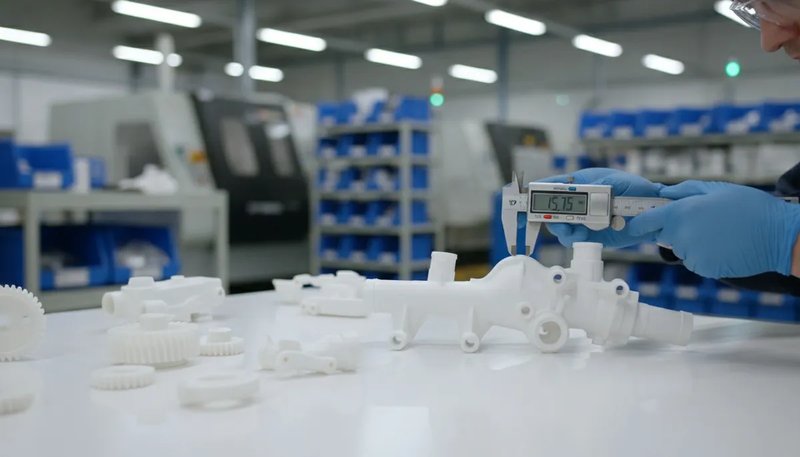
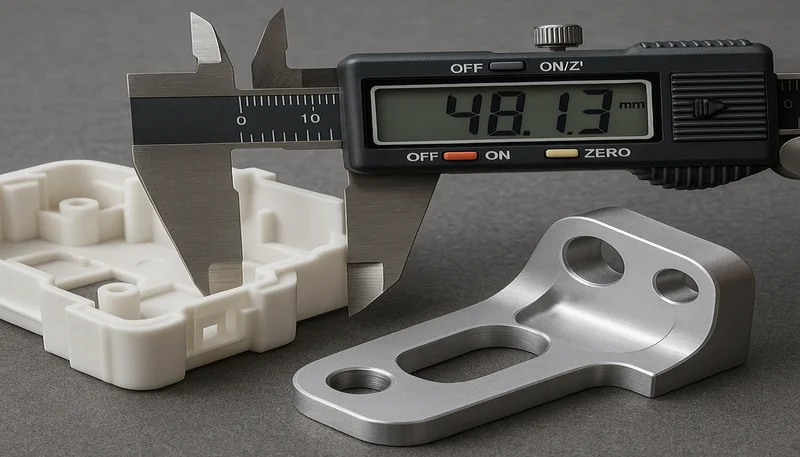
Cette section vise à garantir la qualité du moulage par micro-injection et son impact sur le coût, la qualité, le calendrier ou le risque d’approvisionnement. Le contrôle qualité à micro-échelle nécessite des méthodes d’inspection totalement différentes de celles du moulage standard. Vous ne pouvez pas utiliser de pied à coulisse sur une fonction de 0,3 mm. Les systèmes de mesure optiques (MMT vision) avec un grossissement de 10x à 200x constituent la norme en matière de vérification dimensionnelle. Ces systèmes mesurent la taille, la position et la géométrie des éléments à partir d’images agrandies avec une résolution allant jusqu’à 0,5 micromètre.
À l’échelle microscopique, la surveillance du procédé est plus importante que l’inspection. Comme il n’est pas économiquement possible de mesurer chaque cote de chaque pièce, il faut s’appuyer sur la maîtrise statistique du procédé liée aux paramètres de la machine. Le suivi de la pression d’injection, de la position de la vis, de la température du moule et du temps de cycle donne une indication en temps réel de la stabilité du procédé.
Notre atelier d’outillage comprend des machines EDM, des machines d’électroérosion à fil, des graveuses de précision et des équipements de contrôle CMM, tous nécessaires pour créer et vérifier les caractéristiques submillimétriques des pièces micromoulées. Avec 8 ingénieurs seniors possédant en moyenne plus de 10 ans d’expérience, nous avons réalisé des projets de micromoulage pour les secteurs médical, électronique et automobile.
Questions fréquentes sur le micro-moulage par injection
Quelle est la taille minimale d’une pièce en micro-moulage par injection ?
Le minimum pratique est d’environ 0.5 mm cube en volume, soit des pièces pesant seulement 0.001 g. Pour y parvenir, il faut des systèmes d’injection à piston dotés de chambres de dosage de précision exactes à 0.0001 cc et maintenir la température du moule au-dessus de 100 degrés C pendant tout le cycle d’injection. À ces dimensions extrêmement réduites, même une variation de 0.0005 cc du volume injecté produit un défaut de qualité visible ; la maîtrise du procédé doit donc être exceptionnellement rigoureuse et validée sur des milliers de cycles consécutifs avant le lancement de la production complète.
Combien coûte un moule de micro-injection ?
Un micro-outillage de moulage coûte entre $5,000 et $25,000 selon la complexité de la pièce, le nombre d’empreintes et les exigences de finition de surface. Les moules prototypes mono-empreinte destinés à des géométries simples débutent autour de $5,000, tandis que les moules de production multi-empreintes à tolérances serrées et surfaces d’empreinte polies coûtent de $15,000 à $25,000. Ce coût supérieur reflète les procédés spécialisés d’électroérosion et de découpe au fil nécessaires pour créer des détails d’empreinte submillimétriques que le fraisage CNC conventionnel ne peut tout simplement pas réaliser, quelles que soient la qualité des outils de coupe ou les compétences du machiniste qui utilise l’équipement.
Quelle tolérance le micro-moulage par injection peut-il atteindre ?
Les tolérances standard du micromoulage vont de plus ou moins 0,01 à 0,05 mm selon le matériau moulé, la géométrie de la pièce et le rapport d’aspect de ses caractéristiques critiques. Les surfaces planes d’une portée inférieure à 5 mm dans des matériaux à faible retrait comme le POM peuvent atteindre de façon constante plus ou moins 0,008 mm en production. Les trous profonds dont le rapport d’aspect dépasse 5:1 tiennent généralement plus ou moins 0,03 mm en raison de la flexion de la broche de noyau et du retrait irrégulier autour des longs éléments en acier de l’empreinte.
Quelle est l’épaisseur de paroi minimale en micro-moulage par injection ?
Des épaisseurs de paroi pouvant descendre jusqu’à 0,1 mm sont réalisables avec des matériaux à faible viscosité comme le LCP, à condition de chauffer le moule entre 120 et 150 degrés C et de dépasser une vitesse d’injection de 800 mm/s pour empêcher le gel prématuré pendant le remplissage de l’empreinte. En dessous de 0,1 mm, le remplissage devient extrêmement difficile, car le matériau se solidifie presque instantanément au contact de la paroi de l’empreinte. Pour maintenir une variation d’épaisseur régulière sous plus ou moins 0,02 mm, il faut optimiser l’emplacement du seuil à moins de 2 mm des sections minces et surveiller rigoureusement le procédé pendant toute la série de production.
Quelle est la durée de vie d’un moule de micro-injection ?
Les micro-moules de production durent généralement 200,000 à 500,000 cycles avant la remise en état des empreintes, selon l’abrasivité du matériau moulé et la complexité des caractéristiques de la pièce produite. Les moules traitant des matériaux chargés de fibres de verre ou renforcés de fibres de carbone peuvent nécessiter une reprise après 100,000 cycles en raison de l’usure accélérée des détails fins des empreintes. Pour les tolérances extrêmement serrées, nous recommandons vivement de remesurer les dimensions critiques tous les 20,000 cycles et de budgétiser le repolissage des empreintes ou le remplacement des noyaux comme maintenance préventive courante afin d’éviter toute dérive dimensionnelle inattendue de la qualité en production.
Peut-on micro-mouler le PEEK ?
Oui, le micromoulage du PEEK est largement utilisé pour les implants médicaux et les applications aérospatiales exigeant une biocompatibilité et une résistance continue à des températures allant jusqu’à 250 degrees C. La transformation nécessite des températures de fourreau de 370 à 400 degrees C, des températures de moule de 160 à 200 degrees C et des vitesses d’injection supérieures à 500 mm/s. Le contrôle de la température du fourreau à plus ou moins 2 degrees C est critique : une dérive de 5 degrees C peut entraîner une variation dimensionnelle de 30 percent sur une micropièce en PEEK, ce qui rend une gestion thermique précise indispensable à une qualité de production constante et à la répétabilité dimensionnelle.
Quelle est la différence entre le micromoulage et le moulage de petites pièces ?
Le micromoulage désigne spécifiquement des pièces de moins de 1 gramme comportant des détails critiques inférieurs à 1 mm. Il exige des machines dédiées à injection par piston, avec des volumes injectés de 0.001 à 5 cc, et des moules fabriqués par EDM comportant des détails d’empreinte submillimétriques. Le moulage de petites pièces produit des pièces de 1 à 10 grammes sur des machines standard à vis alternative, avec des moules classiques en acier usinés par CNC. Il s’agit de catégories d’équipements, d’approches d’outillage et de paramètres de contrôle du procédé fondamentalement différents, bien que les deux procédés produisent en définitive des composants plastiques relativement petits destinés à des applications finales similaires dans plusieurs secteurs.
volumes d’injection : le volume d’injection est la quantité de plastique fondu injectée dans l’empreinte à chaque cycle, mesurée en centimètres cubes. En micro-moulage, il varie de 0,001 à 5 cm³. ↩
LCP : le LCP est un thermoplastique haute performance doté de caractéristiques d’écoulement exceptionnelles pour les micropièces à parois minces, couramment employé dans les connecteurs électroniques. ↩
EDM : l’EDM, ou électroérosion, est un procédé de fabrication de précision qui enlève de la matière au moyen d’étincelles électriques et permet de créer des détails inférieurs à 0,1 mm dans l’acier à outils trempé. ↩