...

마이크로 사출 성형에 대한 종합 가이드

• ZetarMold Engineering Guide
• Plastic Injection Mold Manufacturing Since 2005
• Built by ZetarMold engineers for buyers comparing mold and molding solutions.

의료 기기 고객사가 너비 0.3mm의 스냅핏 탭이 있는 보청기 하우징 도면을 보냈습니다. 귀사의 표준 사출 성형 공급업체 살펴보고 가공할 수 없다고 말했습니다. 만약 당신이 사출 성형 can produce parts this small — reliably, in production volumes — this guide gives you the straight answer from the factory floor.

주요 내용
  • Micro injection molding produces parts weighing under 1 gram with tolerances of plus or minus 0.01 mm.
  • Shot volumes range from 0.001 cc to 5 cc, roughly 1,000 times smaller than standard molding.
  • PEEK, LCP, POM, and medical-grade ABS are the most common micro molding materials.
  • Mold fabrication relies on EDM and wire cutting for features under 0.5 mm, not CNC milling.
  • Wall thickness below 0.5 mm requires mold temperatures above 80 degrees C to prevent freeze-off.

What Is Micro Injection Molding and How Does It Work?

Micro injection molding is a specialized manufacturing process for producing plastic parts weighing less than 1 gram with features smaller than 1 mm. It uses dedicated plunger-injection machines with injection molding shot volumes of 0.001 to 5 cc — roughly 1,000 times smaller than a standard injection molding machine. The process is not simply “regular molding at a smaller scale.” The equipment, tooling, and process parameters are fundamentally different.

A standard injection molding machine uses a reciprocating screw to meter and inject material. At sub-gram part weights, the screw can’t control shot volume accurately enough. Micro molding machines replace the screw with a plunger system that meters material in a separate chamber, then injects it with positional accuracy of plus or minus 0.0001 cc. This separation of melting and injection is what makes consistent micro-part production possible.

The mold itself is also different. Cavity features under 0.5 mm can’t be machined with standard CNC tools. They require electrical discharge machining and wire cutting to create sub-millimeter geometries in hardened tool steel. Mold surface finish matters more too — at the micro scale, a 0.5 micrometer Ra surface finish difference directly affects part ejection and dimensional consistency.

“Micro injection molding uses plunger machines because standard reciprocating screws cannot accurately meter shot volumes1 below 5 cc.”True

The reciprocating screw in a standard machine meters shot volume by screw position, which has a positional tolerance too large for sub-gram parts. Plunger systems separate melting from injection, using a dedicated metering chamber that controls volume to plus or minus 0.0001 cc — roughly 100 times more precise than screw-based metering.

“Any thermoplastic that works for standard injection molding can also be used for micro injection molding.”False

This is false. Materials with high melt viscosity, such as unfilled polycarbonate or PMMA, struggle to fill sub-millimeter features before freeze-off occurs. Only low-viscosity resins like LCP2, POM, and certain grades of PEEK and ABS can reliably fill micro-scale wall thicknesses.

How Does Micro Injection Molding Compare to Other Micro Manufacturing Methods?

For high-volume production of complex plastic geometries under 1 gram, micro injection molding is the clear choice. Here is how it compares to the alternatives we’ve seen clients evaluate before committing to a process.

Micro Manufacturing Method Comparison
Method Part Size Range Tolerance (mm) 최상의 대상
마이크로 사출 성형 0.01–10 g +/- 0.01 High volume, complex geometry
Micro CNC Machining Any +/- 0.005 Metals, low volume
SLA 3D 프린팅 Any +/- 0.025 Prototyping only
LIGA Process 0.001–1 g +/- 0.001 Ultra-high aspect ratio
Micro Stamping 0.1–50 g +/- 0.02 Flat metal parts

The break-even between micro molding and micro CNC typically falls around 500 to 1,000 parts. Below that volume, CNC is cheaper because there’s no mold investment. Above 1,000 parts, the per-part cost advantage of molding becomes overwhelming. A 0.05 g POM gear that costs $8 to CNC machine drops below $0.10 per part at 10,000 molded units. The mold runs $8,000 to $15,000, so payback is fast.

SLA 3D printing is useful for prototypes and design validation, but the material properties don’t match injection molded thermoplastics — especially for medical and aerospace applications requiring biocompatibility or flame ratings. We recommend SLA for early-stage prototypes, then transitioning to micro molding for production.

“A single modern smartphone contains 10 to 20 micro injection molded components.”True

Micro molded parts in smartphones include camera module brackets, antenna connectors, microphone housings, and SIM card tray features. The average device uses 12 to 18 micro molded parts across multiple assemblies, and this number is growing with each generation as devices become more compact.

“Micro injection molding is only viable for medical and electronics applications.”False

While medical and electronics are the largest sectors, micro molding is widely used in automotive sensors, aerospace connectors, watch mechanisms, and consumer products. Any industry requiring sub-gram precision plastic parts with complex geometry is a candidate.

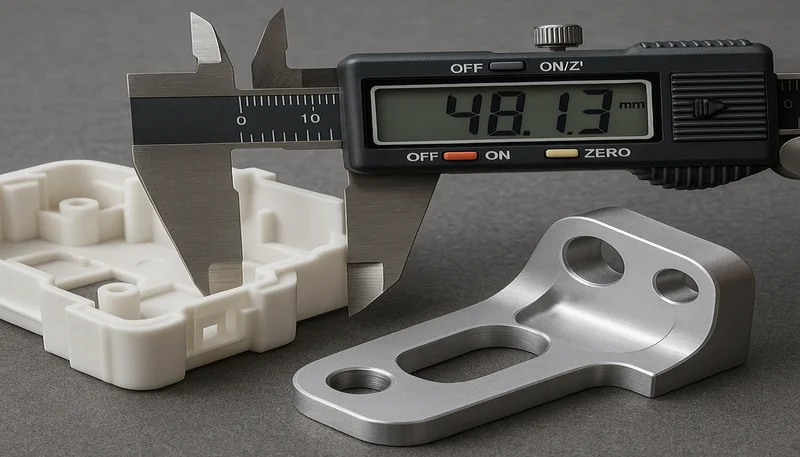
Injection Molding Product vs CNC machining tolerance
주입 몰딩 허용오차 vs CNC 가공

What Materials Work Best for Micro Injection Molding?

이 섹션은 마이코 주입 몰딩에 가장 적합한 소재와 그 영향(비용, 품질, 시간, 소싱 리스크)에 관한 것입니다. 모든 열가소성 소재가 마이코 규모에서 작동하지 않습니다. 소재는 0.1mm처럼 얇은 특징을 채우고 수천 번의 주기 동안 일관적으로 수행해야 합니다. 여기 마이코 부품 생산에서 실제로 사용하는 소재와 그 이유입니다.

LCP in injection molding (Liquid Crystal Polymer) is the go-to for thin-wall micro parts. Its melt viscosity is roughly one-tenth that of standard engineering resins, which means it can fill features that other materials can’t reach. Wall thicknesses down to 0.1 mm are achievable with LCP at mold temperatures of 120 to 150 degrees C and injection speeds above 800 mm/s. It’s the standard choice for electronic connectors with pitches below 0.3 mm.

PEEK dominates medical and aerospace micro applications. It handles continuous temperatures up to 250 degrees C, passes USP Class VI biocompatibility testing, and resists chemical attack from sterilization processes. Processing requires barrel temperatures of 370 to 400 degrees C and mold temperatures of 160 to 200 degrees C. Temperature control within plus or minus 2 degrees C is critical — a 5 degree drift can cause 30 percent dimensional variation in a micro PEEK part.

POM (acetal) is the workhorse for mechanical micro parts like gears, bushings, and snap fits. It machines well in the mold, has low friction, and holds tolerances consistently. Medical-grade ABS rounds out the common choices for housings and enclosures where biocompatibility is required but extreme temperature or chemical resistance is not.

How to Select the Right Material for Micro Parts

Choosing the right material also depends on secondary operations. If the micro part requires ultrasonic welding, only certain grades of ABS and PMMA bond reliably at the joint interface. For laser welding, the material pair must have different absorption characteristics — typically a carbon-loaded base with a natural-color lid. These constraints are often overlooked in the design phase and can force a material change late in development.

Processing windows for micro molding materials are significantly narrower than for standard molding. A typical POM gear might tolerate plus or minus 10 degrees C barrel temperature variation at normal scale, but the same material in a micro part requires control within plus or minus 3 degrees C. Dedicated micro molding machines feature multiple barrel temperature zones with independent PID controllers and thermocouple feedback every 50 mm along the barrel length.

🏭 ZetarMold Factory Insight
ZetarMold의 상하이 공장에서는 90톤부터 1850톤까지의 47대의 사출 성형기가 시제품 런부터 대량 생산까지 마이크로 성형 프로젝트를 지원합니다. 20년 이상의 사출 성형 및 금형 제작 경험과 400종 이상의 플라스틱 재료 경험은 엔지니어들이 미세한 특징이 생산에 들어가기 전에 수지 특성, 금형 제약 조건 및 검사 계획을 조정하는 데 도움이 됩니다.

What Are the Key Design Rules for Micro Molded Parts?

Designing for micro molding is not the same as scaling down a standard part design. The physics change at sub-millimeter dimensions, and rules that work at normal scale break down. Here are the guidelines that actually matter in production.

Wall thickness is the most critical parameter. Below 0.5 mm, freeze-off becomes your primary defect risk. The material solidifies on contact with the cavity wall before it can fill the feature completely. To counter this, you need mold temperatures above 80 degrees C (higher for crystalline materials), injection speeds above 500 mm/s, and gate placement within 2 mm of the thinnest section. At 0.1 mm wall thickness with LCP, you’re running at the absolute edge of what the process can do.

Draft angles matter more at micro scale, not less. A 0.5 degree draft on a 5 mm deep feature seems negligible, but on a micro part with a 0.2 mm wall, that draft determines whether the part ejects cleanly or deforms. As discussed in our injection mold guide, we recommend a minimum of 1 degree draft on all vertical surfaces for micro parts, and 2 degrees for features deeper than 3 mm.

Radii should be at least 0.05 mm on all internal corners. Sharp internal corners create stress concentrations that cause cracking during ejection or in service. At micro scale, even a 0.02 mm radius makes a measurable difference in part strength. Gate design is equally important — for parts under 0.5 g, a single edge gate with a maximum land length of 0.5 mm is usually the best choice.

How Is a Micro Injection Mold Different from a Standard Mold?

The fundamental difference is how the cavity is created. Standard molds use CNC milling for most cavity features, with EDM3 reserved for sharp corners and deep ribs. Micro molds reverse this ratio — EDM and wire cutting handle the majority of cavity features because CNC can’t create geometries below about 0.3 mm reliably.

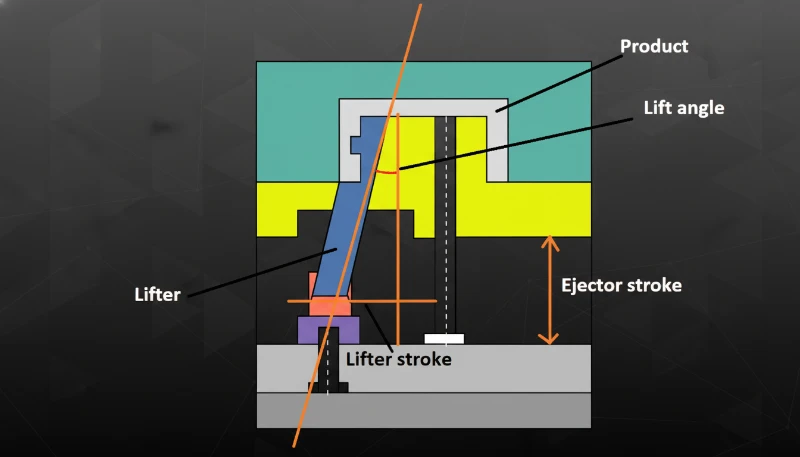
Injection mold lifter and ejector stroke diagram
몰드 리프터 및 이젝터 메커니즘

Mold temperature control is also more demanding. A standard mold might run at 40 to 60 degrees C with simple water channels. A micro mold running PEEK needs 160 to 200 degrees C with cartridge heaters and thermocouple feedback in each cavity insert. Temperature uniformity across the cavity affects fill, shrinkage, and warpage at least 10 times more at micro scale than at normal scale.

Ejection is the third major difference. Standard molds use ejector pins and plates. On a micro part with a 0.3 mm wall, a standard 2 mm ejector pin covers the entire wall surface — you’ll punch through the part. Micro molds use specialized micro-ejector pins (0.2 to 0.5 mm diameter), air ejection, or robot-assisted part removal. Some micro molds don’t eject at all — they use a robot to pull the part from the cavity with vacuum pickup.

Production micro molds typically last 200,000 to 500,000 cycles before cavity refurbishment, depending on material abrasiveness and feature complexity. Molds running glass-filled materials may need rework at 100,000 cycles. For ultra-tight tolerances, plan to re-measure critical dimensions every 20,000 cycles.

What Industries Depend on Micro Injection Molding?

이 섹션은 마이코 주입 몰딩에 의존하는 산업과 그 영향(비용, 품질, 시간, 소싱 리스크)에 관한 것입니다. 의료기기는 전 세계적으로 생산되는 모든 마이코 몰딩 부품의 약 40%를 차지합니다. 청각 기기 구성품, 수술 도구 끝부분, 약물 전달 메커니즘 및 진단 테스트 카트리지는 모두 눈으로 보이지 않는 특징을 갖춘 1g 미만 플라스틱 부품에 의존합니다. 규제 요구사항(ISO 13485, USP Class VI)은 프로세스 검증을 더 엄격하게 만들지만, 생산량은 투자를 정당화합니다 — 단일 약물 전달 펜 설계는 연간 5백만 단위를 생산할 수 있습니다.

Electronics is the second-largest sector. Every smartphone contains 10 to 20 micro molded connectors, switches, and lens elements. Wearable devices and IoT sensors are pushing connector pitches below 0.3 mm — requiring mold features that didn’t exist five years ago. The miniaturization trend shows no sign of slowing.

Automotive micro molding is growing fast, driven by sensor proliferation. A modern vehicle contains 50 to 100 micro molded sensor housings, connector seals, and valve components. These parts need to survive under-hood temperatures up to 150 degrees C while maintaining dimensional stability over a 15-year service life.

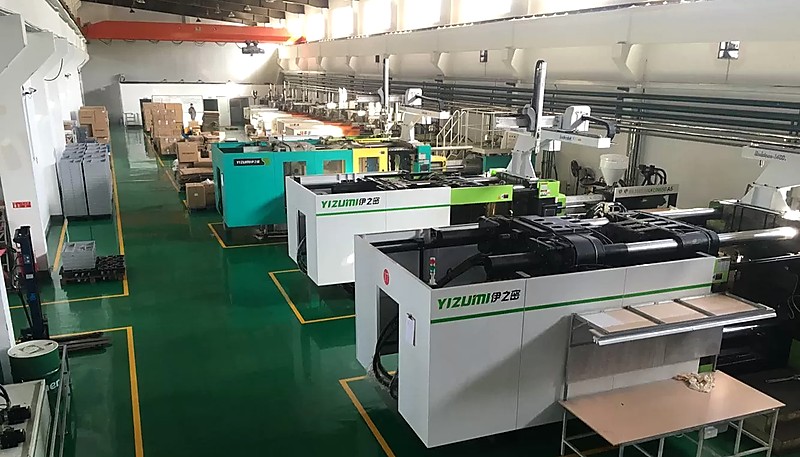
ZetarMold Injection Molding Factory
마이코 몰딩 생산 공장

What Does Micro Injection Molding Actually Cost?

이 섹션은 마이코 주입 몰딩의 실제 비용과 그 영향(비용, 품질, 시간, 소싱 리스크)에 관한 것입니다. 마이코 몰드 도구 비용은 부품 복잡성, 캐비티 수 및 필요한 표면 처리에 따라 $5,000에서 $25,000 사이입니다. 단순 형상의 단일 캐비티 프로토타입 몰드는 약 $5,000부터 시작합니다. 엄격한 허용오차와 폴리싱된 캐비티 표면을 갖춘 다중 캐비티 생산 몰드는 $15,000에서 $25,000입니다.

Per-part costs range from $0.02 to $0.50 at volumes above 10,000 units. At 100,000 units, most micro molded parts fall between $0.02 and $0.10 each. The economics improve dramatically with volume because the fixed tooling cost amortizes quickly on a small, fast-cycle part. A micro part with a 5-second cycle time in a 16-cavity mold produces nearly 100,000 parts per day on a single machine.

Don’t forget ancillary costs: part handling (micro parts often need robot pickup, not gravity drop), inspection equipment (optical measurement systems run $30,000 to $80,000), and packaging (static-free containers for parts that weigh less than a paperclip). These add 20 to 40 percent to the total project cost beyond tooling and molding.

How Do You Ensure Quality in Micro Injection Molding?

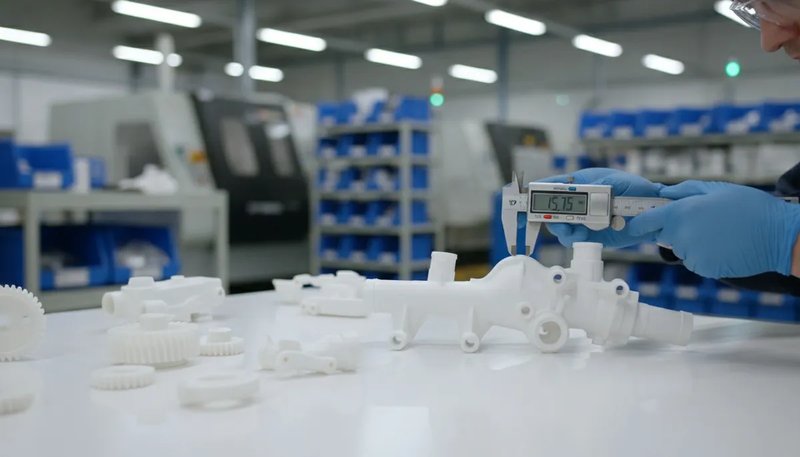
이 섹션은 마이크로 사출 성형에서 품질을 보장하는 방법과 비용, 품질, 시기 또는 조달 리스크에 미치는 영향에 관한 것입니다. 마이크로 규모의 품질 관리는 표준 성형과 완전히 다른 검사 방법이 필요합니다. 0.3mm 특징에 캘리퍼스를 사용할 수 없습니다. 10배에서 200배 확대 기능을 갖춘 광학 측정 시스템(비전 CMM)이 치수 검증의 표준입니다. 이 시스템은 최대 0.5 마이크로미터의 해상도로 확대된 이미지에서 특징 크기, 위치 및 형상을 측정합니다.

Process monitoring is more important than inspection at micro scale. Because you can’t economically measure every dimension on every part, you rely on statistical process control tied to machine parameters. Monitoring injection pressure, screw position, mold temperature, and cycle time gives you real-time indication of process stability.

Our tooling workshop includes EDM machines, wire cutters, precision engravers, and CMM inspection equipment — all necessary for creating and verifying the sub-millimeter features that define micro molded parts. With 8 senior engineers averaging over 10 years of experience, we’ve handled micro molding projects across medical, electronics, and automotive applications.

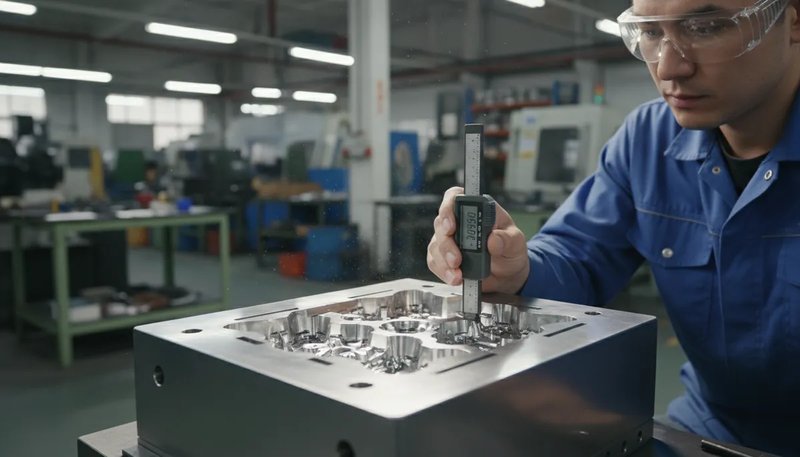
Clean room injection molding factory
청룸 마이코 몰딩 시설

Frequently Asked Questions About Micro Injection Molding

What is the minimum part size for micro injection molding?

The practical minimum is approximately 0.5 cubic mm in volume, or parts weighing as little as 0.001 g. Achieving this requires plunger-style injection systems with precision metering chambers accurate to 0.0001 cc and mold temperatures maintained above 100 degrees C throughout the entire injection cycle. At these extremely small dimensions, even a 0.0005 cc variation in shot volume produces a visible quality defect, so process control must be exceptionally tight and validated over thousands of consecutive cycles before full production release.

How much does a micro injection mold cost?

Micro mold tooling costs between $5,000 and $25,000 depending on part complexity, cavity count, and surface finish requirements. Single-cavity prototype molds for simple geometries start around $5,000, while multi-cavity production molds with tight tolerances and polished cavity surfaces run $15,000 to $25,000. The higher cost reflects the specialized EDM and wire cutting processes needed to create sub-millimeter cavity features that conventional CNC milling simply cannot achieve, regardless of the quality of the cutting tools or the skill of the machinist operating the equipment.

What tolerance can micro injection molding achieve?

Standard micro molding tolerances range from plus or minus 0.01 to 0.05 mm depending on the specific material being molded, the geometry of the part, and the aspect ratio of its critical features. Flat surfaces under 5 mm span in low-shrinkage materials like POM can consistently achieve plus or minus 0.008 mm in production. Deep holes with aspect ratios above 5:1 typically hold plus or minus 0.03 mm due to core pin deflection and uneven shrinkage around long steel features in the mold cavity.

What is the minimum wall thickness for micro injection molding?

Wall thicknesses down to 0.1 mm are achievable with low-viscosity materials like LCP, provided the mold is heated to 120 to 150 degrees C and injection speed exceeds 800 mm/s to prevent premature freeze-off during cavity filling. Below 0.1 mm, cavity fill becomes extremely difficult because material solidifies on contact with the cavity wall almost instantly. Consistent wall variation under plus or minus 0.02 mm requires optimized gate placement within 2 mm of thin sections and rigorous process monitoring throughout the production run.

How long does a micro injection mold last?

Production micro molds typically last 200,000 to 500,000 cycles before cavity refurbishment, depending on the abrasiveness of the molding material and the feature complexity of the part design being produced. Molds running glass-filled or carbon-fiber reinforced materials may need rework at 100,000 cycles due to accelerated wear on fine cavity features. For ultra-tight tolerances, we strongly recommend re-measuring critical dimensions every 20,000 cycles and budgeting for cavity re-polishing or core replacement as routine preventive maintenance to avoid unexpected dimensional quality drift in production.

Can you micro mold PEEK?

Yes, PEEK micro molding is widely used for medical implants and aerospace applications requiring biocompatibility and continuous temperature resistance up to 250 degrees C. Processing requires barrel temperatures of 370 to 400 degrees C, mold temperatures of 160 to 200 degrees C, and injection speeds above 500 mm/s. Barrel temperature control within plus or minus 2 degrees C is critical — a 5 degree C drift can cause 30 percent dimensional variation in a micro PEEK part, making precise thermal management essential for consistent production quality and dimensional repeatability.

What is the difference between micro molding and small part molding?

Micro molding specifically refers to parts under 1 gram with critical features below 1 mm, requiring dedicated plunger-injection machines with shot volumes of 0.001 to 5 cc and EDM-fabricated molds with sub-millimeter cavity details. Small part molding produces 1 to 10 gram parts on standard reciprocating-screw machines with conventional CNC-milled steel molds. These represent fundamentally different equipment categories, tooling approaches, and process control parameters, despite both processes ultimately producing relatively small plastic components for similar end-use applications across multiple industries.


  1. shot volumes: Shot volume is the amount of molten plastic injected into the mold cavity per cycle, measured in cubic centimeters. Micro molding shot volumes range from 0.001 to 5 cc.

  2. LCP: LCP refers to high-performance thermoplastic with exceptional flow characteristics for thin-wall micro parts, commonly used in electronic connector applications.

  3. EDM: EDM refers to precision manufacturing process that removes material using electrical sparks, capable of creating features under 0.1 mm in hardened tool steel.

최신 게시물
Facebook
트위터
LinkedIn
Pinterest
Mike Tang 사진
마이크 탕

Hi, I'm the author of this post, and I have been in this field for more than 20 years. and I have been responsible for handling on-site production issues, product design optimization, mold design and project preliminary price evaluation. If you want to custom plastic mold and plastic molding related products, feel free to ask me any questions.

나와 연결하기 →

빠른 견적 요청하기

다음을 통해 도면 및 세부 요구 사항을 보내세요. 

Emial:[email protected]

또는 아래 문의 양식을 작성하세요:

빠른 견적 요청하기

다음을 통해 도면 및 세부 요구 사항을 보내세요. 

Emial:[email protected]

또는 아래 문의 양식을 작성하세요:

빠른 견적 요청하기

다음을 통해 도면 및 세부 요구 사항을 보내세요. 

Emial:[email protected]

또는 아래 문의 양식을 작성하세요:

빠른 견적 요청하기

다음을 통해 도면 및 세부 요구 사항을 보내세요. 

Emial:[email protected]

또는 아래 문의 양식을 작성하세요:

빠른 견적 요청하기

다음을 통해 도면 및 세부 요구 사항을 보내세요. 

Emial:[email protected]

또는 아래 문의 양식을 작성하세요:

브랜드에 대한 빠른 견적 요청하기

다음을 통해 도면 및 세부 요구 사항을 보내세요. 

Emial:[email protected]

또는 아래 문의 양식을 작성하세요:

댓글 작성하기

이 도움말에 대한 자세한 내용을 보려면 "[email protected]"으로 이메일 주소를 입력하세요.

빠른 견적 요청하기

다음을 통해 도면 및 세부 요구 사항을 보내세요. 

Emial:[email protected]

또는 아래 문의 양식을 작성하세요:

빠른 견적 요청하기

다음을 통해 도면 및 세부 요구 사항을 보내세요. 

Emial:[email protected]

또는 아래 문의 양식을 작성하세요: