Перейти к содержанию
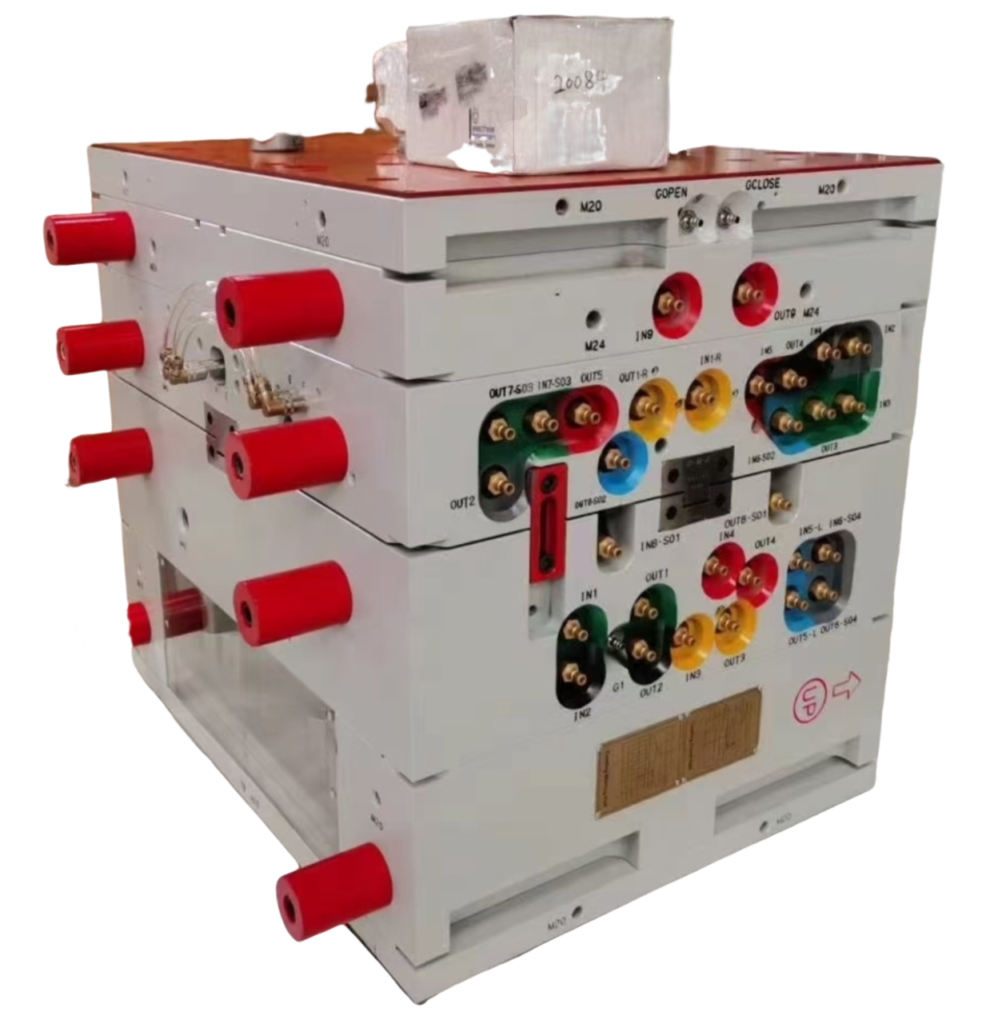
микролитьевое формование1 is used when a plastic part is too small, too thin, or too tolerance-sensitive for ordinary production assumptions. The process still follows the same basic injection molding principle, but the risk profile changes because a tiny gate, a few microns of steel variation, a 0.01g shot-size change, a ±0.001 inch tolerance target, or a short material residence-time error can decide whether the part fills correctly.
For engineers, the practical question is not only whether a supplier owns a small press. The better question is whether the supplier can connect micro mold design, material drying, gate size, venting, inspection method, and repeatable process control into one documented workflow. Without that workflow, a prototype may look acceptable while production yield remains unstable.
This guide explains where micro injection molding fits, which design and material choices matter most, and how injection molding sourcing teams should compare suppliers before requesting a quote. It is written for buyers who need small precision parts for medical, electronics, connector, sensor, consumer, or industrial assemblies.
- Micro injection molding is best for very small plastic parts, thin walls, micro features, and tight dimensional windows.
- The highest risks are gate design, venting, material residence time, thermal damage, and inspection capability.
- A supplier should prove mold-making precision, process control, and measurement method before promising volume production.
- Design teams should simplify undercuts, protect fragile pins, avoid unnecessary wall-thickness jumps, and define critical dimensions early.
- A good RFQ should include drawings, resin grade, tolerance targets, annual volume, cosmetic limits, inspection plan, and packaging requirements.
What is micro injection molding?
Micro injection molding is defined by the function, constraints, and tradeoffs explained in this section. Micro injection molding is a specialized precision molding process for parts that weigh less than 1 gram, have wall sections under 0.5 mm, or carry micro-scale features that standard molding cannot reliably produce. Every element — mold steel, screw design, gate size, venting, and inspection — must be built around small shot volumes and narrow process windows.
In ordinary injection molding, a small variation in temperature, pressure, or hold time may still produce usable parts. In micro molding, the same variation can cause short shots, flash, gate vestige2 problems, degraded resin, broken core pins, or parts that pass visual inspection but fail assembly. That is why the project should begin with a design-for-manufacturing review rather than a simple price request.
“Micro molded parts need earlier DFM review than many standard molded parts.”Правда
Small gates, thin walls, fragile pins, and limited inspection access reduce the margin for late changes. A supplier should review part geometry, resin behavior, gate options, ejection, venting, and measurement strategy before quoting production assumptions.
“Any supplier with a small injection molding machine can run micro injection molding.”Ложь
Machine size is only one requirement. Micro molding also needs high-precision mold manufacturing, stable shot control, suitable screw and nozzle design, careful material handling, controlled ejection, and a measurement plan that can verify micro-scale dimensions.
When should engineers use micro injection molding?
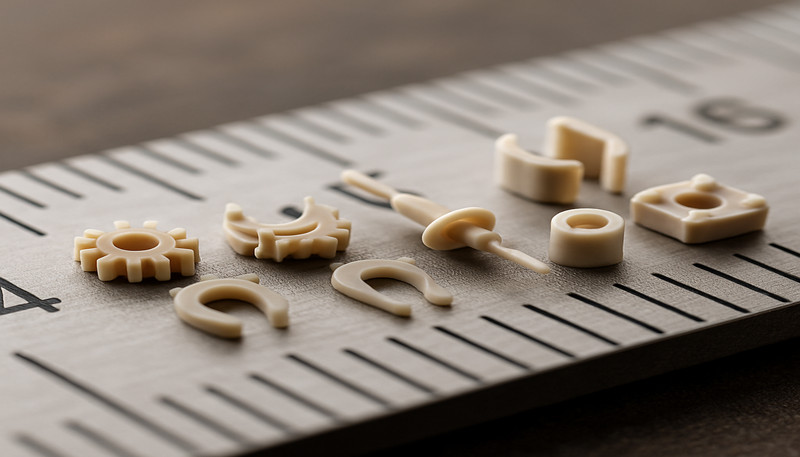
Micro injection molding is the right choice for tiny parts that need tighter process control than standard molding. Typical examples include miniature connectors, medical components, micro gears, sensor housings, small optical parts, precision clips, tiny fluid-control components, and thin-wall features that need repeatability across many cycles.
The strongest use cases have three conditions. First, the part geometry is stable enough to justify tooling. Second, the annual volume is high enough that molded repeatability matters more than one-off prototype flexibility. Third, the buyer can define which dimensions, surfaces, and functional features are truly critical. If these conditions are missing, CNC, 3D printing, or a simplified prototype mold may be a better first step.
Micro molding also becomes valuable when assembly cost is higher than molding cost. Combining features into one molded part can reduce manual assembly steps, but only if the mold can release the part safely and the process can keep dimensions stable across a full production run. Teams should compare the savings from part integration against the tooling risk created by tiny ribs, shutoffs, through-holes, and undercuts. In many cases, a well-designed micro mold reduces total part count and lowers per-unit assembly labor enough to justify the higher initial tooling investment.
Which design rules matter most for micro molded parts?
The most important design rule is to protect the process window. Keep wall thickness as consistent as the function allows — we typically recommend wall thickness variation under 15% for micro parts, compared to the 25% tolerance common in standard molding. Avoid sudden steel-safe changes near tiny features, and define where the gate can leave a visible or functional mark. Gate vestige that looks small on a normal part can become unacceptable on a micro part because the gate may sit near a sealing, sliding, or electrical-contact surface.
In practice, a gate mark larger than 0.1 mm on a 2 mm micro connector can interfere with mating, so gate type and location need explicit agreement between designer and mold maker before steel is cut.
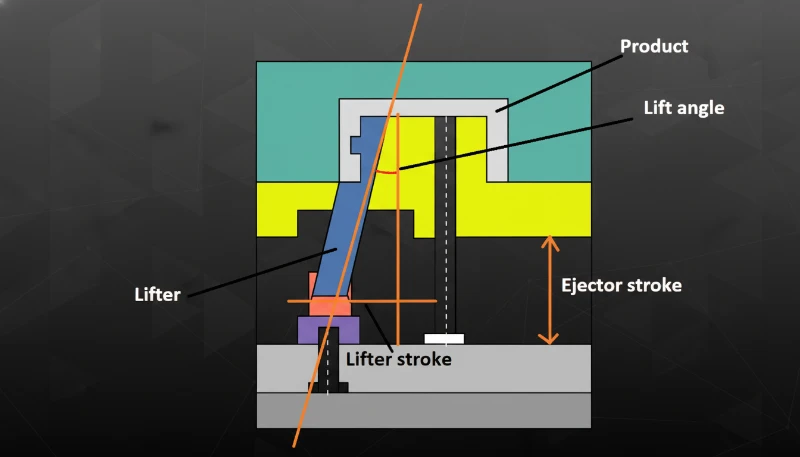
Draft angle, parting line, and ejection are equally important. Micro parts are often difficult to grip, orient, and remove, so a weak ejection concept can damage parts faster than the molding process itself. For parts under 5 mm in any dimension, we recommend at least 0.5° draft per side — more if the surface has texture or micro features. If the design needs thin pins (under 1 mm diameter), narrow slots, or sharp internal corners, the mold maker must confirm whether those features can be machined, polished, vented, inspected, and maintained over the expected mold life. Core pins smaller than 0.3 mm diameter typically last fewer than 50,000 cycles before requiring replacement.
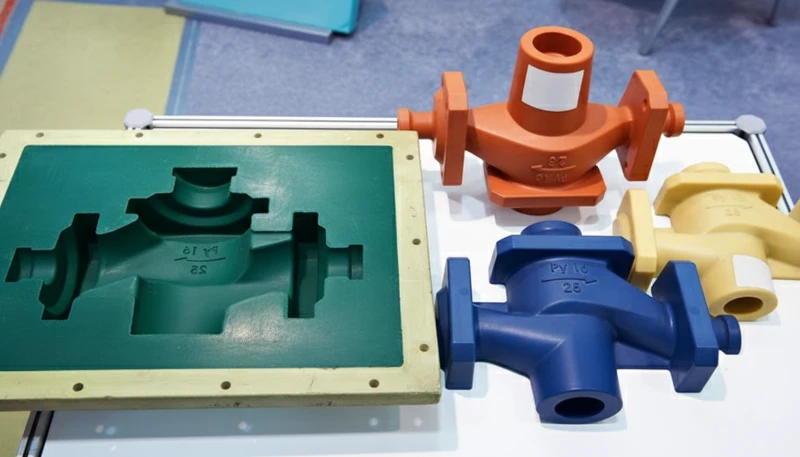
A practical engineering review should connect the part drawing to the mold concept. Use an проектирование пресс-форм для литья под давлением review to confirm gate location, runner balance, cooling path, steel access, venting, parting-line tolerance, and how the first samples will be measured. This review should happen before the buyer compares price because it changes both tooling cost and production risk.
“A micro molded part can fail because the inspection plan is weaker than the mold design.”Правда
If the supplier cannot measure the critical feature repeatably, the team cannot prove whether process changes improved the part. Micro projects need clear inspection fixtures, magnification method, dimensional report format, and sampling frequency.
“A smaller part always means a lower molding risk.”Ложь
Smaller parts may use less resin, but they often require tighter tooling precision, more careful material control, and more difficult inspection. A low material cost does not remove the risk created by micro gates, thin walls, and fragile steel features.
How do materials and process windows change at micro scale?
Materials behave differently when shot size is very small. Resin can stay in the barrel too long, shear heat can rise quickly through a small gate, and a tiny moisture or drying error may create defects that are difficult to see until assembly. For engineering plastics such as PEEK (drying at 150°C for 3–4 hours, melt temperature 370–400°C), LCP (280–330°C melt), PC (120°C drying, 280–320°C melt), PA (80°C drying, 240–280°C melt), POM, PPS, and bio-compatible grades, the supplier should explain drying conditions, residence time limits (typically under 5 minutes for micro shots to avoid thermal degradation), melt-temperature limits, and whether the selected resin can fill the thinnest section without damage.
In our Shanghai factory, our 20+ years of injection molding and tooling experience, 47 injection molding machines from 90T to 1850T, 400+ plastic materials, and ISO 90013, ISO 13485, ISO 14001, and ISO 45001 systems help our engineers compare micro-part resin behavior, tooling risk, and inspection requirements before quoting.
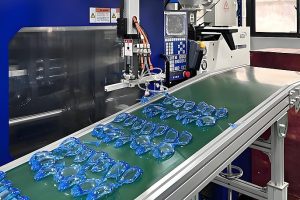
For micro molding, material review should focus on resin residence time, drying records, viscosity stability, gate shear, and how the supplier proves dimensional repeatability with first-article data. This is why precision component examples are more useful than generic pellet photos when judging whether a supplier understands micro-scale production risk.
Process window documentation is especially important for micro molding because the visible difference between a good part and a defective one can be hard to detect without magnification. We recommend that production teams record initial parameter windows during T1 sampling, then narrow those windows based on SPC data from the first 500 to 1000 production shots. Key variables to track include peak injection pressure, screw position at switchover, cushion length, cycle time, and part weight — which for micro parts often needs a precision balance reading to 0.0001g.

How should buyers compare micro injection molding suppliers?
Supplier Evidence Checklist
A strong micro molding supplier comparison is an evidence-based RFQ review. Use the same drawings, resin grade, critical dimensions, target annual volume, cosmetic standards, regulatory expectations, packaging method, and current prototype issues. A supplier who only quotes from a screenshot cannot reliably evaluate micro tooling risk. Before sharing the RFQ, confirm that the supplier has experience with the specific resin family and the tolerance range your project requires. Many suppliers claim micro capability, but fewer can show documented process data from similar part geometries and material classes.
Ask each supplier to explain the mold concept, gate strategy, venting plan, inspection method, and expected process-control data. If the program has medical, electronic, or safety-related use, ask how the supplier records material lot, parameter changes, dimensional reports, and nonconforming parts. This does not need to be complicated, but it must be documented. A written process-control plan is one of the clearest signals that a supplier takes micro molding seriously, because it shows the team has thought through what can go wrong and how to catch it.
Before sharing your RFQ, confirm the supplier can answer these practical questions: What is the smallest feature they have successfully molded in production? How do they verify dimensions on parts under 5 mm? What is their typical mold life for core pins under 0.5 mm diameter? Can they share a sample dimensional report from a similar micro project? How do they handle steel corrections after T1 sampling?
Measurement And Sampling Proof
What separates a strong micro molding quote from a weak one?
For micro parts, the quote review should also confirm measurement method, fixture concept, resin traceability, and packaging protection. Teams should review the supplier’s basic литьё под давлением возможности наряду с микроспецифическими навыками, потому что поставщик, который не может надежно контролировать стандартные переменные процесса, столкнется с еще большими трудностями в микро-масштабе.
Сравнение поставщиков также должно включать то, как команда обрабатывает обратную связь после первых образцов. Микро-детали часто требуют небольших изменений в стали пресс-формы, скорректированных пределов следов от литника, пересмотренных контрольных приспособлений или более узкого технологического окна после первого пробного образца (T1). Самые сильные поставщики объясняют этот путь корректировок до изготовления пресс-формы, потому что реальная стоимость микро-проекта часто скрыта в повторяющихся циклах отбора образцов, неясных стандартах измерений и поздних изменениях конструкции. Когда поставщик проактивно определяет эти риски на этапе коммерческого предложения, это показывает, что команда имеет практический опыт производства аналогичных микро-деталей и понимает разницу между предложением стандартной пресс-формы и управлением микро-проектом через этап отбора образцов до стабильного производства.
Лучшее предложение по микро-литью объясняет риски, а не только цену. Оно должно определять допущения по оснастке, пределы измерений, риски по смоле, план отбора образцов и производственный контроль, чтобы покупатели могли избежать выбора низкой цены, которая позже потребует повторных изменений оснастки. Для более широкого контекста процесса сравните эти допущения с нашим injection molding complete guide перед утверждением обязательств поставщика.
Нужно предложение для проекта микро-литья под давлением? Отправьте ZetarMold ваш чертеж, требования к смоле, целевой объем и критические размеры. Наша инженерная команда может провести анализ рисков DFM, допущений по оснастке, вариантов производственного литья и планирования инспекции до того, как вы примете решение о изготовлении пресс-формы. Мы ответим с инженерно-ориентированной оценкой, охватывающей концепцию пресс-формы, стратегию литниковой системы, план вентиляции, метод измерений и стабильность процесса для вашего продукта, а не только цену. Запросите бесплатное предложение через ZetarMold или сравните ваш текущий план поставщика с интегрированным процессом изготовления пресс-форм и производственного литья с задокументированным контролем качества продукции.
Frequently Asked Questions About Micro Injection Molding?
Часто задаваемые вопросы
В чем основное различие между микро-литьем под давлением и стандартным литьем под давлением?
Основное отличие заключается в технологическом окне. Стандартное литье под давлением часто может допускать небольшие вариации в материале, температуре, давлении и обращении. Микро-литье под давлением имеет гораздо меньше возможностей для вариаций, потому что деталь, литник, толщина стенки и критические элементы очень малы. Поставщик должен более строго контролировать точность пресс-формы, время пребывания материала в цилиндре, вентиляцию, качество литника, выталкивание и метод инспекции. Поэтому микро-проект должен начинаться с DFM (анализа технологичности конструкции) и планирования измерений, а не только с обсуждения размера машины. Покупатели должны запрашивать доказательства из области изготовления оснастки, литья и инспекции, а не только список прессов.
Какие материалы обычно используются в микро-литье под давлением?
Распространенные материалы включают инженерные термопласты, такие как PEEK, LCP, PC, PA, POM, PPS, PMMA, PP, а также специальные медицинские или биосовместимые марки. Правильный выбор зависит от прочности, термостойкости, размерной стабильности, химического воздействия, метода стерилизации и наличия у детали тонких стенок или микро-каналов. Сушка материала и время пребывания особенно важны, поскольку небольшая порция может быть повреждена влагой, перегревом или чрезмерным сдвигом до того, как дефект станет заметен глазу. Поставщик должен подтвердить пределы обработки перед окончательным утверждением материала.
Какие допуски могут быть достигнуты при микро-литье под давлением?
Допуск зависит от материала, геометрии детали, состояния стали пресс-формы, метода измерения и производственного объема. Некоторые микро-элементы могут иметь очень жесткие целевые размеры, но поставщик должен доказать, что допуск может быть обработан механически, отлит, измерен и повторен. Покупателям следует избегать запроса жестких допусков везде. Лучший подход — отметить действительно критические размеры, определить функциональные калибры или методы инспекции и позволить поставщику объяснить, какие допуски реалистичны для стабильного производства. Предложение должно разделять критические допуски и некритические справочные размеры.
Что должно быть включено в RFQ на микро-литье под давлением?
Сильная заявка на коммерческое предложение (RFQ) должна включать 3D CAD, 2D чертежи, марку смолы, ожидаемый годовой объем, целевой срок службы пресс-формы, критические размеры, косметические требования, требования к сборке, метод упаковки, а также любую информацию о текущих прототипах или отказах. Если деталь используется в медицинских, электронных или связанных с безопасностью приложениях, укажите ожидания по инспекции и требования к документации. Поставщик должен ответить с концепцией пресс-формы, стратегией литниковой системы, заметками о рисках, сроком изготовления, планом отбора образцов и допущениями, лежащими в основе предложения. Это делает ответы поставщиков сопоставимыми и предотвращает скрытые пробелы в объеме работ при поиске поставщика.
Как выбрать поставщика для микро-литья под давлением?
Выбирайте поставщика по доказательствам, а не только по цене. Спросите, может ли команда провести анализ DFM, изготовить прецизионные пресс-формы, контролировать малые объемы впрыска, работать с выбранным материалом, инспектировать микроскопические элементы и документировать изменения в производстве. Изучите отчеты по образцам, возможности измерений, скорость обратной связи по оснастке и то, как поставщик обрабатывает корректирующие действия после первых образцов. Если поставщик не может четко объяснить риски, связанные с литником, вентиляцией, выталкиванием и инспекцией, предложение может не отражать реальные производственные трудности. Лучший поставщик определит компромиссы до запроса заказа на покупку.
-
микролитьевое формование: Микро-литье под давлением — это прецизионный метод литья под давлением, используемый для изготовления очень маленьких пластиковых деталей или деталей с микроскопическими элементами. ↩
-
gate vestige: След от литника — это видимый след или остаток на литой пластиковой детали в месте, где литниковая система была удалена после цикла литья. ↩
-
ISO 9001: ISO 9001 — это международный стандарт системы менеджмента качества, описывающий, как организации контролируют документированные процессы и непрерывное улучшение. ↩





 EN
EN  ES
ES  FR
FR  DE
DE  PT
PT  AR
AR  RU
RU  JA
JA  KO
KO  IT
IT  NL
NL  TR
TR  PL
PL