 콘텐츠로 건너뛰기

마이크로 사출 성형1 is used when a plastic part is too small, too thin, or too tolerance-sensitive for ordinary production assumptions. The process still follows the same basic injection molding principle, but the risk profile changes because a tiny gate, a few microns of steel variation, a 0.01g shot-size change, a ±0.001 inch tolerance target, or a short material residence-time error can decide whether the part fills correctly.
For engineers, the practical question is not only whether a supplier owns a small press. The better question is whether the supplier can connect micro mold design, material drying, gate size, venting, inspection method, and repeatable process control into one documented workflow. Without that workflow, a prototype may look acceptable while production yield remains unstable.
This guide explains where micro injection molding fits, which design and material choices matter most, and how injection molding sourcing teams should compare suppliers before requesting a quote. It is written for buyers who need small precision parts for medical, electronics, connector, sensor, consumer, or industrial assemblies.
- Micro injection molding is best for very small plastic parts, thin walls, micro features, and tight dimensional windows.
- The highest risks are gate design, venting, material residence time, thermal damage, and inspection capability.
- A supplier should prove mold-making precision, process control, and measurement method before promising volume production.
- Design teams should simplify undercuts, protect fragile pins, avoid unnecessary wall-thickness jumps, and define critical dimensions early.
- A good RFQ should include drawings, resin grade, tolerance targets, annual volume, cosmetic limits, inspection plan, and packaging requirements.
What is micro injection molding?
Micro injection molding is defined by the function, constraints, and tradeoffs explained in this section. Micro injection molding is a specialized precision molding process for parts that weigh less than 1 gram, have wall sections under 0.5 mm, or carry micro-scale features that standard molding cannot reliably produce. Every element — mold steel, screw design, gate size, venting, and inspection — must be built around small shot volumes and narrow process windows.
In ordinary injection molding, a small variation in temperature, pressure, or hold time may still produce usable parts. In micro molding, the same variation can cause short shots, flash, gate vestige2 problems, degraded resin, broken core pins, or parts that pass visual inspection but fail assembly. That is why the project should begin with a design-for-manufacturing review rather than a simple price request.
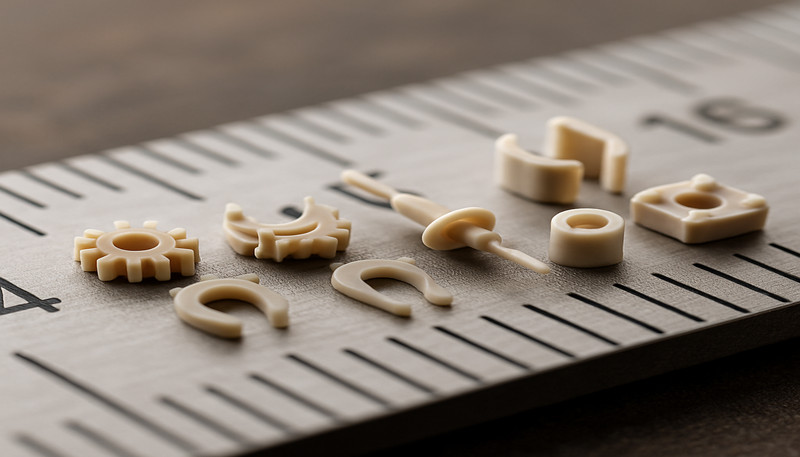
“Micro molded parts need earlier DFM review than many standard molded parts.”True
Small gates, thin walls, fragile pins, and limited inspection access reduce the margin for late changes. A supplier should review part geometry, resin behavior, gate options, ejection, venting, and measurement strategy before quoting production assumptions.
“Any supplier with a small injection molding machine can run micro injection molding.”False
Machine size is only one requirement. Micro molding also needs high-precision mold manufacturing, stable shot control, suitable screw and nozzle design, careful material handling, controlled ejection, and a measurement plan that can verify micro-scale dimensions.
When should engineers use micro injection molding?
Micro injection molding is the right choice for tiny parts that need tighter process control than standard molding. Typical examples include miniature connectors, medical components, micro gears, sensor housings, small optical parts, precision clips, tiny fluid-control components, and thin-wall features that need repeatability across many cycles.
The strongest use cases have three conditions. First, the part geometry is stable enough to justify tooling. Second, the annual volume is high enough that molded repeatability matters more than one-off prototype flexibility. Third, the buyer can define which dimensions, surfaces, and functional features are truly critical. If these conditions are missing, CNC, 3D printing, or a simplified prototype mold may be a better first step.
Micro molding also becomes valuable when assembly cost is higher than molding cost. Combining features into one molded part can reduce manual assembly steps, but only if the mold can release the part safely and the process can keep dimensions stable across a full production run. Teams should compare the savings from part integration against the tooling risk created by tiny ribs, shutoffs, through-holes, and undercuts. In many cases, a well-designed micro mold reduces total part count and lowers per-unit assembly labor enough to justify the higher initial tooling investment.
Which design rules matter most for micro molded parts?
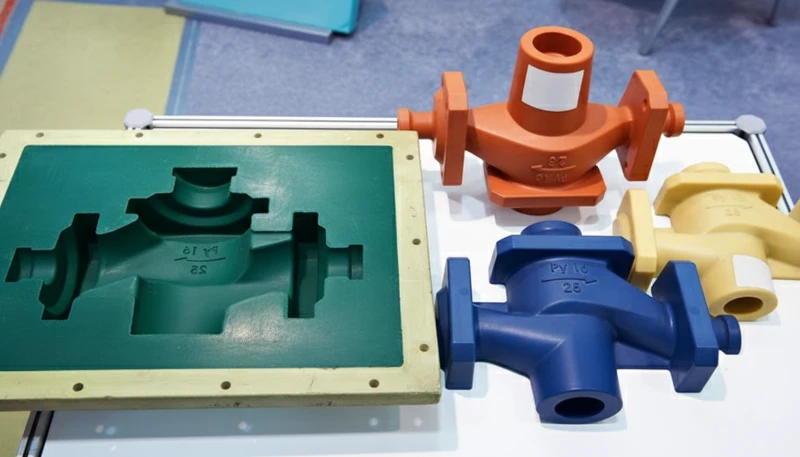
The most important design rule is to protect the process window. Keep wall thickness as consistent as the function allows — we typically recommend wall thickness variation under 15% for micro parts, compared to the 25% tolerance common in standard molding. Avoid sudden steel-safe changes near tiny features, and define where the gate can leave a visible or functional mark. Gate vestige that looks small on a normal part can become unacceptable on a micro part because the gate may sit near a sealing, sliding, or electrical-contact surface.
In practice, a gate mark larger than 0.1 mm on a 2 mm micro connector can interfere with mating, so gate type and location need explicit agreement between designer and mold maker before steel is cut.
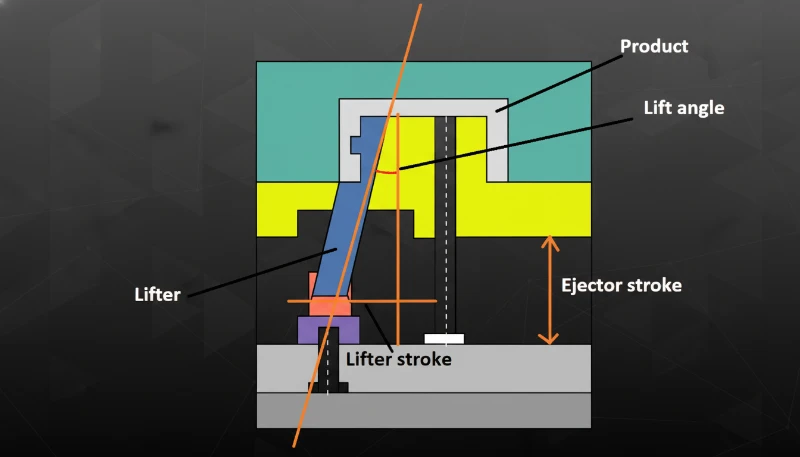
Draft angle, parting line, and ejection are equally important. Micro parts are often difficult to grip, orient, and remove, so a weak ejection concept can damage parts faster than the molding process itself. For parts under 5 mm in any dimension, we recommend at least 0.5° draft per side — more if the surface has texture or micro features. If the design needs thin pins (under 1 mm diameter), narrow slots, or sharp internal corners, the mold maker must confirm whether those features can be machined, polished, vented, inspected, and maintained over the expected mold life. Core pins smaller than 0.3 mm diameter typically last fewer than 50,000 cycles before requiring replacement.
A practical engineering review should connect the part drawing to the mold concept. Use an 사출 금형 설계 review to confirm gate location, runner balance, cooling path, steel access, venting, parting-line tolerance, and how the first samples will be measured. This review should happen before the buyer compares price because it changes both tooling cost and production risk.
“A micro molded part can fail because the inspection plan is weaker than the mold design.”True
If the supplier cannot measure the critical feature repeatably, the team cannot prove whether process changes improved the part. Micro projects need clear inspection fixtures, magnification method, dimensional report format, and sampling frequency.
“A smaller part always means a lower molding risk.”False
Smaller parts may use less resin, but they often require tighter tooling precision, more careful material control, and more difficult inspection. A low material cost does not remove the risk created by micro gates, thin walls, and fragile steel features.
How do materials and process windows change at micro scale?
Materials behave differently when shot size is very small. Resin can stay in the barrel too long, shear heat can rise quickly through a small gate, and a tiny moisture or drying error may create defects that are difficult to see until assembly. For engineering plastics such as PEEK (drying at 150°C for 3–4 hours, melt temperature 370–400°C), LCP (280–330°C melt), PC (120°C drying, 280–320°C melt), PA (80°C drying, 240–280°C melt), POM, PPS, and bio-compatible grades, the supplier should explain drying conditions, residence time limits (typically under 5 minutes for micro shots to avoid thermal degradation), melt-temperature limits, and whether the selected resin can fill the thinnest section without damage.
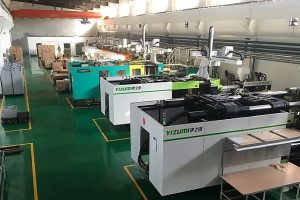
In our Shanghai factory, our 20+ years of injection molding and tooling experience, 47 injection molding machines from 90T to 1850T, 400+ plastic materials, and ISO 90013, ISO 13485, ISO 14001, and ISO 45001 systems help our engineers compare micro-part resin behavior, tooling risk, and inspection requirements before quoting.
For micro molding, material review should focus on resin residence time, drying records, viscosity stability, gate shear, and how the supplier proves dimensional repeatability with first-article data. This is why precision component examples are more useful than generic pellet photos when judging whether a supplier understands micro-scale production risk.
Process window documentation is especially important for micro molding because the visible difference between a good part and a defective one can be hard to detect without magnification. We recommend that production teams record initial parameter windows during T1 sampling, then narrow those windows based on SPC data from the first 500 to 1000 production shots. Key variables to track include peak injection pressure, screw position at switchover, cushion length, cycle time, and part weight — which for micro parts often needs a precision balance reading to 0.0001g.

How should buyers compare micro injection molding suppliers?
Supplier Evidence Checklist
A strong micro molding supplier comparison is an evidence-based RFQ review. Use the same drawings, resin grade, critical dimensions, target annual volume, cosmetic standards, regulatory expectations, packaging method, and current prototype issues. A supplier who only quotes from a screenshot cannot reliably evaluate micro tooling risk. Before sharing the RFQ, confirm that the supplier has experience with the specific resin family and the tolerance range your project requires. Many suppliers claim micro capability, but fewer can show documented process data from similar part geometries and material classes.
Ask each supplier to explain the mold concept, gate strategy, venting plan, inspection method, and expected process-control data. If the program has medical, electronic, or safety-related use, ask how the supplier records material lot, parameter changes, dimensional reports, and nonconforming parts. This does not need to be complicated, but it must be documented. A written process-control plan is one of the clearest signals that a supplier takes micro molding seriously, because it shows the team has thought through what can go wrong and how to catch it.
Before sharing your RFQ, confirm the supplier can answer these practical questions: What is the smallest feature they have successfully molded in production? How do they verify dimensions on parts under 5 mm? What is their typical mold life for core pins under 0.5 mm diameter? Can they share a sample dimensional report from a similar micro project? How do they handle steel corrections after T1 sampling?
Measurement And Sampling Proof
What separates a strong micro molding quote from a weak one?
For micro parts, the quote review should also confirm measurement method, fixture concept, resin traceability, and packaging protection. Teams should review the supplier’s basic 사출 성형 기능과 마이크로 특화 기술과 함께 비교하세요. 표준 공정 변수를 안정적으로 제어하지 못하는 공급업체는 마이크로 규모에서는 더욱 어려움을 겪을 것입니다.
공급업체 비교에는 첫 샘플 이후 피드백을 팀이 어떻게 처리하는지도 포함되어야 합니다. 마이크로 부품은 종종 T1 이후 소규모 금형 수정, 조정된 게이트 잔류물 한계, 수정된 검사 설비 또는 더 엄격한 공정 윈도우가 필요합니다. 가장 강력한 공급업체는 금형이 제작되기 전에 이 수정 경로를 설명합니다. 왜냐하면 마이크로 프로젝트의 실제 비용은 종종 반복된 샘플링 루프, 불명확한 측정 기준 및 늦은 설계 변경에 숨겨져 있기 때문입니다. 공급업체가 견적 단계에서 이러한 리스크를 사전에 파악할 때, 해당 팀이 유사한 마이크로 부품 생산에 대한 실무 경험을 가지고 있으며 표준 금형 견적과 샘플링을 통한 안정적인 생산까지의 마이크로 규모 프로젝트 관리의 차이를 이해하고 있음을 보여줍니다.
최고의 마이크로 성형 견적은 가격뿐만 아니라 리스크를 설명합니다. 이는 금형 가정, 측정 한계, 수지 리스크, 샘플링 계획 및 생산 관리를 명시하여 구매자가 나중에 반복적인 금형 변경을 필요로 하는 저가격을 선택하지 않도록 해야 합니다. 더 넓은 공정 맥락을 위해, 이러한 가정을 당사의 injection molding complete guide 공급업체 계약을 승인하기 전에.
마이크로 사출 성형 프로젝트 견적이 필요하신가요? 도면, 수지 요구사항, 목표 생산량 및 핵심 치수를 ZetarMold에 보내주세요. 금형 제작을 확정하기 전에 당사의 엔지니어링 팀이 DFM 리스크, 금형 가정, 생산 성형 옵션 및 검사 계획을 검토할 수 있습니다. 단순한 가격이 아닌, 금형 개념, 게이트 전략, 배기 계획, 측정 방법 및 제품의 공정 안정성을 다루는 엔지니어링 중심의 평가를 제공해 드립니다. ZetarMold를 통해 무료 견적을 요청하거나, 문서화된 제품 품질 관리가 포함된 통합 금형 제조 및 생산 성형 워크플로우를 기준으로 현재 공급업체 계획을 벤치마킹하세요.
Frequently Asked Questions About Micro Injection Molding?
자주 묻는 질문
마이크로 사출 성형과 표준 사출 성형의 주요 차이점은 무엇인가요?
주요 차이점은 공정 윈도우입니다. 표준 사출 성형은 재료, 온도, 압력 및 처리의 작은 변동을 허용할 수 있는 경우가 많습니다. 마이크로 사출 성형은 부품, 게이트, 벽 두께 및 중요한 특징이 매우 작기 때문에 변동에 대한 여유가 훨씬 적습니다. 공급업체는 금형 정밀도, 재료 체류 시간, 배기, 게이트 품질, 이젝션 및 검사 방법을 더 엄격하게 제어해야 합니다. 따라서 마이크로 프로젝트는 기계 크기 논의만이 아닌 DFM 및 측정 계획으로 시작해야 합니다. 구매자는 프레스 목록만이 아닌 금형, 성형 및 검사 증거를 요청해야 합니다.
마이크로 사출 성형에서 일반적으로 사용되는 재료는 무엇인가요?
일반적인 재료에는 PEEK, LCP, PC, PA, POM, PPS, PMMA, PP와 같은 엔지니어링 열가소성 수지 및 선택된 의료용 또는 생체 적합성 등급이 포함됩니다. 올바른 선택은 강도, 내열성, 치수 안정성, 화학 노출, 멸균 방법 및 부품에 얇은 벽이나 마이크로 채널이 있는지 여부에 따라 달라집니다. 재료 건조 및 체류 시간은 특히 중요한데, 소량 사출은 결함이 눈에 띄기 전에 수분, 과열 또는 과도한 전단으로 손상될 수 있기 때문입니다. 공급업체는 최종 수지 승인 전에 가공 한계를 확인해야 합니다.
마이크로 사출 성형의 공차는 얼마나 정밀할 수 있나요?
공차는 재료, 부품 형상, 금형 강철 상태, 측정 방법 및 생산량에 따라 달라집니다. 일부 마이크로 특징은 매우 정밀한 치수를 목표로 할 수 있지만, 공급업체는 해당 공차가 가공, 성형, 측정 및 반복 가능함을 입증해야 합니다. 구매자는 모든 곳에 엄격한 공차를 요구하는 것을 피해야 합니다. 더 나은 접근 방식은 실제로 중요한 치수를 표시하고 기능 게이지 또는 검사 방법을 정의한 후, 공급업체가 안정적인 생산에 현실적인 공차를 설명하도록 하는 것입니다. 견적은 중요한 공차와 중요하지 않은 참조 치수를 구분해야 합니다.
마이크로 사출 성형 RFQ에는 무엇이 포함되어야 하나요?
강력한 RFQ에는 3D CAD, 2D 도면, 수지 등급, 예상 연간 생산량, 목표 금형 수명, 치수 공차, 외관 요구사항, 조립 요구사항, 포장 방법, 현재 프로토타입 또는 실패 정보가 포함되어야 합니다. 부품이 의료, 전자 또는 안전 관련 응용 분야에 사용되는 경우 검사 기대치와 문서화 요구사항을 포함하세요. 공급업체는 금형 개념, 게이트 전략, 위험 사항, 리드 타임, 샘플링 계획 및 견적 배경 가정으로 응답해야 합니다. 이렇게 하면 공급업체 답변을 비교할 수 있고 조달 과정에서 숨겨진 범위 차이를 방지할 수 있습니다.
마이크로 사출 성형 공급업체는 어떻게 선택해야 하나요?
가격만으로가 아닌 증거를 바탕으로 공급업체를 선택하세요. 팀이 DFM 검토, 정밀 금형 제작, 소량 사출량 제어, 선택된 재료 처리, 마이크로 규모 특징 검사 및 생산 변경 사항 문서화를 수행할 수 있는지 물어보세요. 샘플 보고서, 측정 능력, 금형 피드백 속도, 첫 샘플 후 공급업체가 시정 조치를 어떻게 처리하는지 검토하세요. 공급업체가 게이트, 배기, 이젝션 및 검사 위험을 명확히 설명할 수 없다면 견적이 실제 생산 난이도를 반영하지 못할 수 있습니다. 더 나은 공급업체는 구매 주문을 요청하기 전에 트레이드오프를 식별할 것입니다.




 EN
EN  ES
ES  FR
FR  DE
DE  PT
PT  AR
AR  RU
RU  JA
JA  KO
KO  IT
IT  NL
NL  TR
TR  PL
PL 