 コンテンツへスキップ
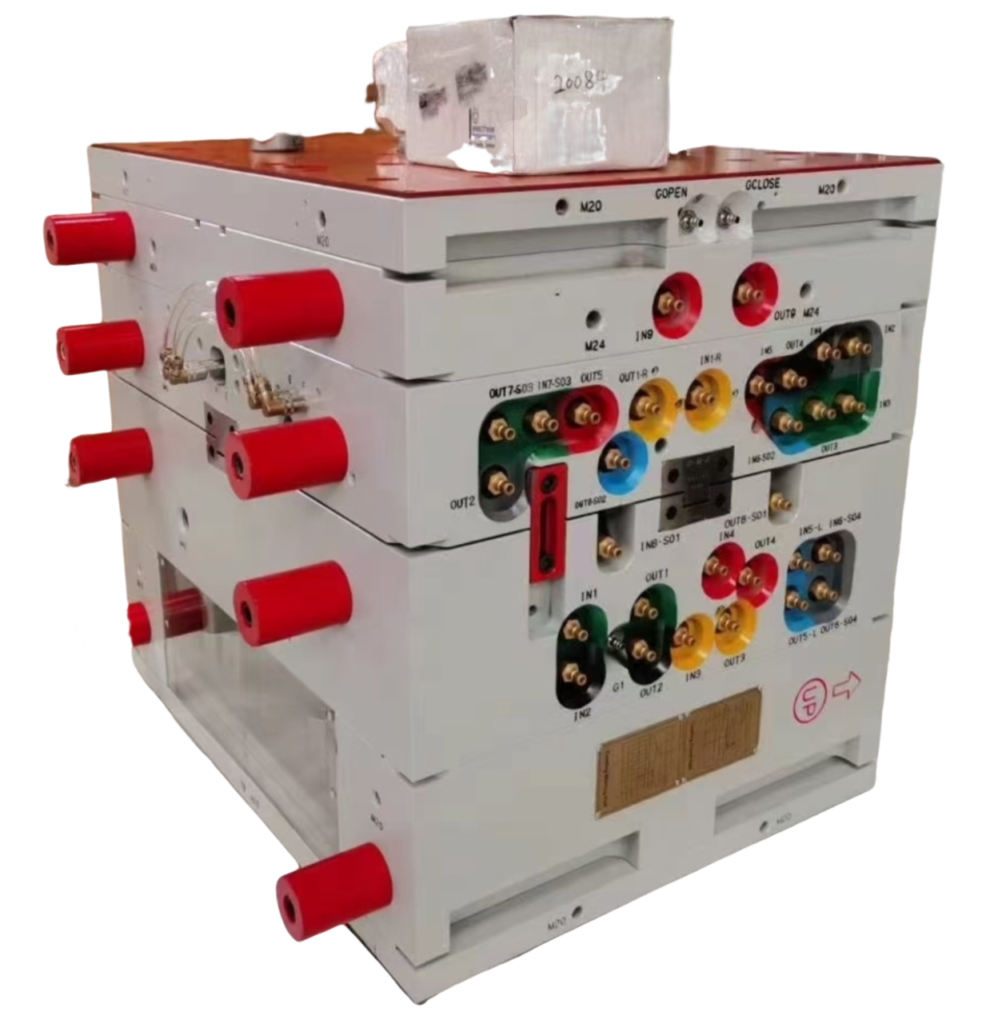
マイクロ射出成形1 is used when a plastic part is too small, too thin, or too tolerance-sensitive for ordinary production assumptions. The process still follows the same basic injection molding principle, but the risk profile changes because a tiny gate, a few microns of steel variation, a 0.01g shot-size change, a ±0.001 inch tolerance target, or a short material residence-time error can decide whether the part fills correctly.
For engineers, the practical question is not only whether a supplier owns a small press. The better question is whether the supplier can connect micro mold design, material drying, gate size, venting, inspection method, and repeatable process control into one documented workflow. Without that workflow, a prototype may look acceptable while production yield remains unstable.
This guide explains where micro injection molding fits, which design and material choices matter most, and how injection molding sourcing teams should compare suppliers before requesting a quote. It is written for buyers who need small precision parts for medical, electronics, connector, sensor, consumer, or industrial assemblies.
- Micro injection molding is best for very small plastic parts, thin walls, micro features, and tight dimensional windows.
- The highest risks are gate design, venting, material residence time, thermal damage, and inspection capability.
- A supplier should prove mold-making precision, process control, and measurement method before promising volume production.
- Design teams should simplify undercuts, protect fragile pins, avoid unnecessary wall-thickness jumps, and define critical dimensions early.
- A good RFQ should include drawings, resin grade, tolerance targets, annual volume, cosmetic limits, inspection plan, and packaging requirements.
What is micro injection molding?
Micro injection molding is defined by the function, constraints, and tradeoffs explained in this section. Micro injection molding is a specialized precision molding process for parts that weigh less than 1 gram, have wall sections under 0.5 mm, or carry micro-scale features that standard molding cannot reliably produce. Every element — mold steel, screw design, gate size, venting, and inspection — must be built around small shot volumes and narrow process windows.
In ordinary injection molding, a small variation in temperature, pressure, or hold time may still produce usable parts. In micro molding, the same variation can cause short shots, flash, gate vestige2 problems, degraded resin, broken core pins, or parts that pass visual inspection but fail assembly. That is why the project should begin with a design-for-manufacturing review rather than a simple price request.
“Micro molded parts need earlier DFM review than many standard molded parts.”真
Small gates, thin walls, fragile pins, and limited inspection access reduce the margin for late changes. A supplier should review part geometry, resin behavior, gate options, ejection, venting, and measurement strategy before quoting production assumptions.
“Any supplier with a small injection molding machine can run micro injection molding.”偽
Machine size is only one requirement. Micro molding also needs high-precision mold manufacturing, stable shot control, suitable screw and nozzle design, careful material handling, controlled ejection, and a measurement plan that can verify micro-scale dimensions.
When should engineers use micro injection molding?
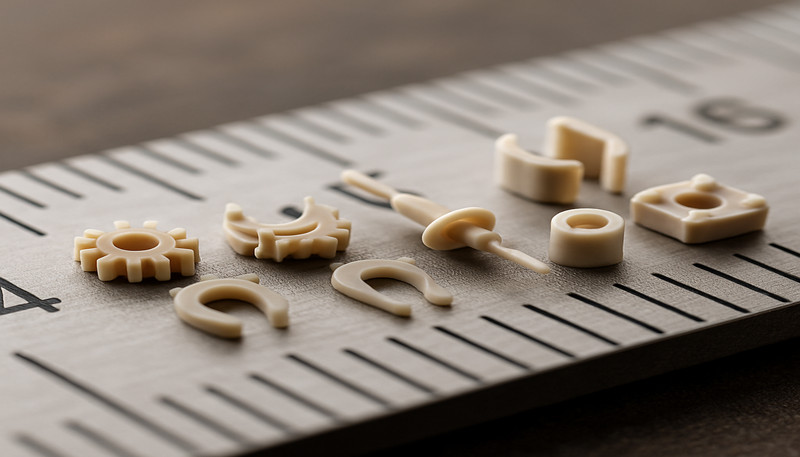
Micro injection molding is the right choice for tiny parts that need tighter process control than standard molding. Typical examples include miniature connectors, medical components, micro gears, sensor housings, small optical parts, precision clips, tiny fluid-control components, and thin-wall features that need repeatability across many cycles.
The strongest use cases have three conditions. First, the part geometry is stable enough to justify tooling. Second, the annual volume is high enough that molded repeatability matters more than one-off prototype flexibility. Third, the buyer can define which dimensions, surfaces, and functional features are truly critical. If these conditions are missing, CNC, 3D printing, or a simplified prototype mold may be a better first step.
Micro molding also becomes valuable when assembly cost is higher than molding cost. Combining features into one molded part can reduce manual assembly steps, but only if the mold can release the part safely and the process can keep dimensions stable across a full production run. Teams should compare the savings from part integration against the tooling risk created by tiny ribs, shutoffs, through-holes, and undercuts. In many cases, a well-designed micro mold reduces total part count and lowers per-unit assembly labor enough to justify the higher initial tooling investment.
Which design rules matter most for micro molded parts?
The most important design rule is to protect the process window. Keep wall thickness as consistent as the function allows — we typically recommend wall thickness variation under 15% for micro parts, compared to the 25% tolerance common in standard molding. Avoid sudden steel-safe changes near tiny features, and define where the gate can leave a visible or functional mark. Gate vestige that looks small on a normal part can become unacceptable on a micro part because the gate may sit near a sealing, sliding, or electrical-contact surface.
In practice, a gate mark larger than 0.1 mm on a 2 mm micro connector can interfere with mating, so gate type and location need explicit agreement between designer and mold maker before steel is cut.
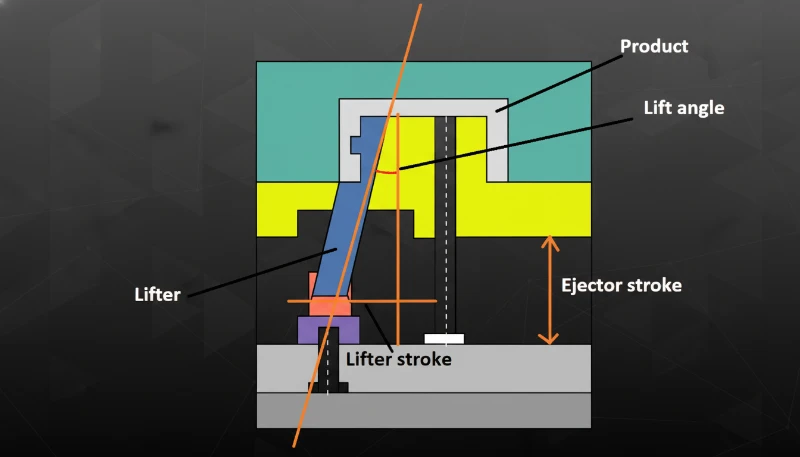
Draft angle, parting line, and ejection are equally important. Micro parts are often difficult to grip, orient, and remove, so a weak ejection concept can damage parts faster than the molding process itself. For parts under 5 mm in any dimension, we recommend at least 0.5° draft per side — more if the surface has texture or micro features. If the design needs thin pins (under 1 mm diameter), narrow slots, or sharp internal corners, the mold maker must confirm whether those features can be machined, polished, vented, inspected, and maintained over the expected mold life. Core pins smaller than 0.3 mm diameter typically last fewer than 50,000 cycles before requiring replacement.
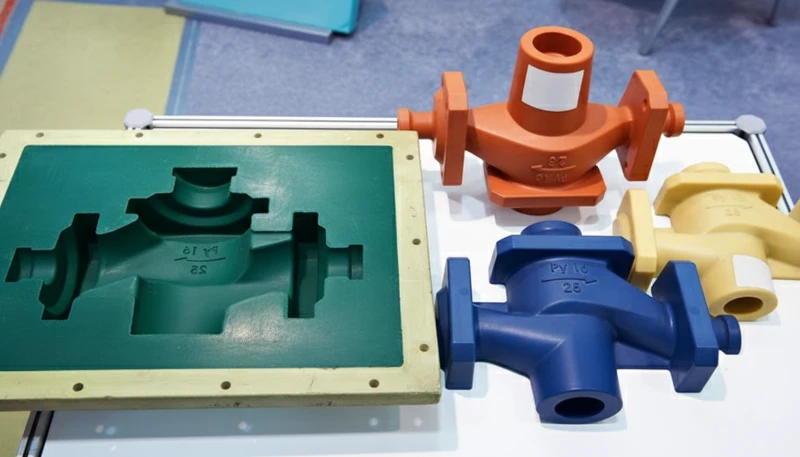
A practical engineering review should connect the part drawing to the mold concept. Use an 射出成形金型設計 review to confirm gate location, runner balance, cooling path, steel access, venting, parting-line tolerance, and how the first samples will be measured. This review should happen before the buyer compares price because it changes both tooling cost and production risk.
“A micro molded part can fail because the inspection plan is weaker than the mold design.”真
If the supplier cannot measure the critical feature repeatably, the team cannot prove whether process changes improved the part. Micro projects need clear inspection fixtures, magnification method, dimensional report format, and sampling frequency.
“A smaller part always means a lower molding risk.”偽
Smaller parts may use less resin, but they often require tighter tooling precision, more careful material control, and more difficult inspection. A low material cost does not remove the risk created by micro gates, thin walls, and fragile steel features.
How do materials and process windows change at micro scale?
Materials behave differently when shot size is very small. Resin can stay in the barrel too long, shear heat can rise quickly through a small gate, and a tiny moisture or drying error may create defects that are difficult to see until assembly. For engineering plastics such as PEEK (drying at 150°C for 3–4 hours, melt temperature 370–400°C), LCP (280–330°C melt), PC (120°C drying, 280–320°C melt), PA (80°C drying, 240–280°C melt), POM, PPS, and bio-compatible grades, the supplier should explain drying conditions, residence time limits (typically under 5 minutes for micro shots to avoid thermal degradation), melt-temperature limits, and whether the selected resin can fill the thinnest section without damage.
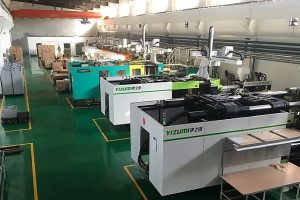
In our Shanghai factory, our 20+ years of injection molding and tooling experience, 47 injection molding machines from 90T to 1850T, 400+ plastic materials, and ISO 90013, ISO 13485, ISO 14001, and ISO 45001 systems help our engineers compare micro-part resin behavior, tooling risk, and inspection requirements before quoting.
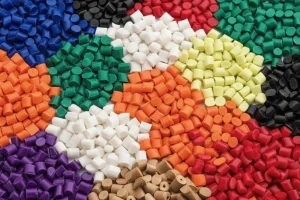
For micro molding, material review should focus on resin residence time, drying records, viscosity stability, gate shear, and how the supplier proves dimensional repeatability with first-article data. This is why precision component examples are more useful than generic pellet photos when judging whether a supplier understands micro-scale production risk.
Process window documentation is especially important for micro molding because the visible difference between a good part and a defective one can be hard to detect without magnification. We recommend that production teams record initial parameter windows during T1 sampling, then narrow those windows based on SPC data from the first 500 to 1000 production shots. Key variables to track include peak injection pressure, screw position at switchover, cushion length, cycle time, and part weight — which for micro parts often needs a precision balance reading to 0.0001g.

How should buyers compare micro injection molding suppliers?
Supplier Evidence Checklist
A strong micro molding supplier comparison is an evidence-based RFQ review. Use the same drawings, resin grade, critical dimensions, target annual volume, cosmetic standards, regulatory expectations, packaging method, and current prototype issues. A supplier who only quotes from a screenshot cannot reliably evaluate micro tooling risk. Before sharing the RFQ, confirm that the supplier has experience with the specific resin family and the tolerance range your project requires. Many suppliers claim micro capability, but fewer can show documented process data from similar part geometries and material classes.
Ask each supplier to explain the mold concept, gate strategy, venting plan, inspection method, and expected process-control data. If the program has medical, electronic, or safety-related use, ask how the supplier records material lot, parameter changes, dimensional reports, and nonconforming parts. This does not need to be complicated, but it must be documented. A written process-control plan is one of the clearest signals that a supplier takes micro molding seriously, because it shows the team has thought through what can go wrong and how to catch it.
Before sharing your RFQ, confirm the supplier can answer these practical questions: What is the smallest feature they have successfully molded in production? How do they verify dimensions on parts under 5 mm? What is their typical mold life for core pins under 0.5 mm diameter? Can they share a sample dimensional report from a similar micro project? How do they handle steel corrections after T1 sampling?
Measurement And Sampling Proof
What separates a strong micro molding quote from a weak one?
For micro parts, the quote review should also confirm measurement method, fixture concept, resin traceability, and packaging protection. Teams should review the supplier’s basic 射出成形 マイクロ特有のスキルと併せて能力を評価してください。なぜなら、標準的なプロセス変数を確実に制御できないサプライヤーは、マイクロスケールではさらに苦戦するからです。
サプライヤー比較には、最初のサンプル後のフィードバックをチームがどのように処理するかも含めるべきです。マイクロ部品は、小さな鋼材変更、調整されたゲートベスティジ制限、修正された検査治具、またはT1後のより厳しいプロセスウィンドウを必要とすることがよくあります。最も優れたサプライヤーは、金型が製作される前にこの修正パスを説明します。なぜなら、マイクロプロジェクトの真のコストは、繰り返されるサンプリングループ、不明確な測定基準、遅れた設計変更に隠れていることが多いからです。サプライヤーが見積もり中にこれらのリスクを事前に特定するとき、それはチームが類似のマイクロ部品を生産する実践的な経験を持ち、標準的な金型の見積もりと、サンプリングから安定生産までのマイクロスケールプロジェクトの管理の違いを理解していることを示しています。
優れたマイクロ成形の見積もりは価格だけでなくリスクを説明します。金型の前提条件、計測限界、樹脂リスク、サンプリング計画、生産管理を明示し、購入者が低価格を選んだ結果、金型の繰り返し変更を要する事態を防ぎます。より広範なプロセス理解のため、これらの前提条件を当社の injection molding complete guide サプライヤーのコミットメントを承認する前に。
マイクロ射出成形プロジェクトの見積もりが必要ですか? 図面、樹脂要件、目標生産量、重要寸法をZetarMoldにお送りください。当社のエンジニアリングチームは、金型製作をコミットする前に、DFMリスク、金型製作の前提条件、生産成形オプション、検査計画をレビューできます。当社は、単なる価格ではなく、金型コンセプト、ゲート戦略、ベンティング計画、測定方法、お客様の製品に対するプロセス安定性をカバーするエンジニアリング重視の評価で応答します。ZetarMoldを通じて無料見積もりをリクエストするか、文書化された製品品質管理を伴う統合金型製造および生産成形ワークフローに対して、現在のサプライヤー計画をベンチマークしてください。
Frequently Asked Questions About Micro Injection Molding?
よくある質問
マイクロ射出成形と標準的な射出成形の主な違いは何ですか?
主な違いはプロセスウィンドウです。標準的な射出成形では、材料、温度、圧力、取り扱いのわずかな変動を許容できることが多いです。マイクロ射出成形では、部品、ゲート、肉厚、重要な形状が非常に小さいため、変動の許容範囲がはるかに狭くなります。サプライヤーは、金型精度、材料の滞留時間、ベンティング、ゲート品質、取り出し、検査方法をより厳密に制御する必要があります。したがって、マイクロプロジェクトは、単なる成形機サイズの議論ではなく、DFMと測定計画から始めるべきです。購買担当者は、プレス機のリストだけでなく、金型、成形、検査の実証を求めるべきです。
マイクロ射出成形ではどのような材料が一般的ですか?
一般的な材料には、PEEK、LCP、PC、PA、POM、PPS、PMMA、PPなどのエンジニアリング熱可塑性樹脂、および選択された医療用または生体適合性グレードが含まれます。適切な選択は、強度、耐熱性、寸法安定性、化学暴露、滅菌方法、および部品が薄肉やマイクロチャネルを持つかどうかに依存します。材料の乾燥と滞留時間は特に重要です。なぜなら、小さなショットは、欠陥が目に見える前に、湿気、過熱、または過度のせん断によって損傷を受ける可能性があるからです。サプライヤーは、最終的な樹脂承認前に加工限界を確認する必要があります。
マイクロ射出成形の公差はどの程度厳密にできますか?
公差は、材料、部品形状、金型鋼材の状態、測定方法、生産量に依存します。一部のマイクロ形状は非常に厳しい寸法を目標とすることがありますが、サプライヤーはその公差が加工、成形、測定、再現可能であることを証明する必要があります。購買担当者は、至る所で厳しい公差を求めることは避けるべきです。より良いアプローチは、真に重要な寸法をマークし、機能ゲージや検査方法を定義し、安定した生産にとって現実的な公差をサプライヤーに説明させることです。見積もりでは、重要な公差と非重要な参考寸法を分けるべきです。
マイクロ射出成形のRFQには何を含めるべきですか?
強力なRFQには、3D CAD、2D図面、樹脂グレード、年間予想生産量、目標金型寿命、重要寸法、外観要件、組立要件、包装方法、および既存のプロトタイプや不良情報を含める必要があります。部品が医療、電子、または安全関連の用途に使用される場合は、検査の期待値と文書要件も含めてください。サプライヤーは、金型コンセプト、ゲート戦略、リスク注意事項、リードタイム、サンプリング計画、および見積もりの前提条件を提示すべきです。これにより、サプライヤーの回答を比較可能にし、調達時の隠れた範囲のギャップを防ぎます。
マイクロ射出成形のサプライヤーはどのように選定すればよいですか?
価格だけでなく実績に基づいてサプライヤーを選定してください。チームがDFMレビュー、高精度金型の製作、微小ショットサイズの制御、選択材料の取り扱い、マイクロスケール形状の検査、生産変更の文書化を行えるか確認します。サンプルレポート、計測能力、金型フィードバックの迅速性、初回サンプル後の是正措置の対応方法を確認してください。サプライヤーがゲート、ベンティング、エジェクション、検査リスクを明確に説明できない場合、見積もりは実際の生産課題を反映していない可能性があります。優れたサプライヤーは発注前にトレードオフを提示します。





 EN
EN  ES
ES  FR
FR  DE
DE  PT
PT  AR
AR  RU
RU  JA
JA  KO
KO  IT
IT  NL
NL  TR
TR  PL
PL 