Перейти к содержанию
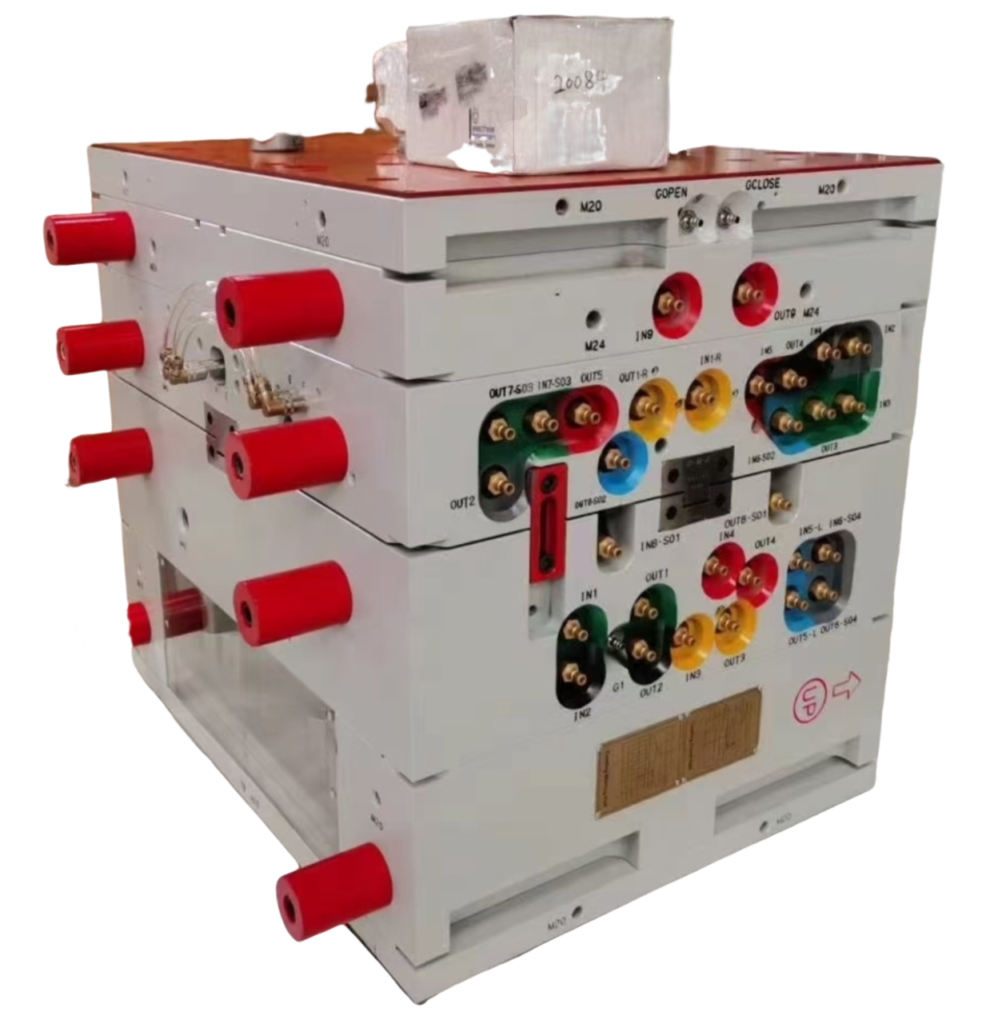
What Is POM Injection Molding and Why Is It So Widely Used?
- ПОМ (полиоксиметилен) — это инженерный термопласт с низким трением и высокой жесткостью, идеальный для прецизионных деталей.
- Гомополимер POM обладает более высокой прочностью; сополимер POM легче перерабатывается и имеет лучшую термическую стабильность.
- Поддерживайте температуру цилиндра ниже 220°C, чтобы предотвратить выделение формальдегида и дефекты деталей.
- Проектируйте с равномерной толщиной стенок 1,0–3,5 мм для управления усадкой POM в 1,8–2,5%.
- Естественная смазывающая способность ПОМ делает его лучшим выбором для самосмазывающихся шестерен и подшипников.
Литье под давлением из ПОМ — это процесс формования полиоксиметилена — engineering thermoplastic1— в прецизионные детали. Мы называем ПОМ «пластиком, заменяющим металл» за его металлоподобную жесткость при меньшем весе.
If you are comparing vendors or planning procurement, our injection molding supplier sourcing guide covers RFQ prep, qualification, and commercial risk checks.
POM comes in two main types: homopolymer (such as DuPont’s Delrin) and copolymer (such as Celanese’s Celcon or BASF’s Ultraform). Homopolymer POM offers slightly higher mechanical strength and stiffness, while copolymer POM provides better thermal stability and easier processing with less centerline porosity.
The global demand for POM injection molded parts continues to grow, driven by the automotive industry’s push for lighter components and the electronics sector’s need for dimensionally stable housings. POM’s self-lubricating properties make it ideal for moving parts that would otherwise require metal-to-metal contact with added lubricants.
What Are the Key Properties That Make POM Ideal for Injection Molding?
Ключевые свойства, делающие ПОМ идеальным для литья под давлением, — это основные категории или варианты, объясненные в этом разделе. ПОМ идеально подходит для литьё под давлением поскольку он предлагает редкое сочетание высокой прочности на растяжение (65–70 МПа), низкого трения (коэффициент 0,20–0,35), отличной creep resistance2и минимальное влагопоглощение — свойства, которые делают его одним из самых универсальных конструкционных пластиков, которые мы обрабатываем.
| Недвижимость | POM Homopolymer | POM Copolymer | Единица |
|---|---|---|---|
| Прочность на разрыв | 65–70 | 58–65 | МПа |
| Модуль упругости | 2,800–3,200 | 2,500–2,900 | МПа |
| Удлинение при разрыве | 25–45 | 40–75 | % |
| Impact Strength (Izod, notched) | 65–80 | 50–65 | J/m |
| Температура плавления | 175 | 165 | °C |
| HDT at 1.8 MPa | 110 | 100 | °C |
| Coefficient of Friction | 0.20–0.35 | 0.25–0.38 | - |
| Плесень усадка3 | 1.8–2.5 | 1.8–2.2 | % |
| Water Absorption (24h) | 0.20 | 0.22 | % |
Одно свойство, которое отличает ПОМ, — это его сопротивление ползучести. В отличие от многих пластиков, которые деформируются под постоянными нагрузками, ПОМ сохраняет свою форму даже при непрерывном напряжении при повышенных температурах. Мы тестировали шестерни из ПОМ, работающие более 10 000 часов под нагрузкой с изменением размеров менее 0,3 мм.
«Низкое влагопоглощение POM делает его одним из наиболее размерно стабильных пластиков для прецизионных деталей».Правда
With only 0.20% water absorption in 24 hours, POM maintains tight tolerances even in humid environments. This is why it’s the go-to material for precision gears, bearings, and instrument housings.
«ПОМ поглощает много влаги, как и нейлон, поэтому его всегда нужно предварительно сушить перед формованием.»Ложь
POM has very low water absorption (0.20–0.22% in 24 hours), far less than nylon’s 1.5–2.8%. While pre-drying at 80°C for 2–4 hours is recommended for optimal surface finish, POM is far less moisture-sensitive than polyamides.
What Are the Optimal Processing Parameters for POM Injection Molding?
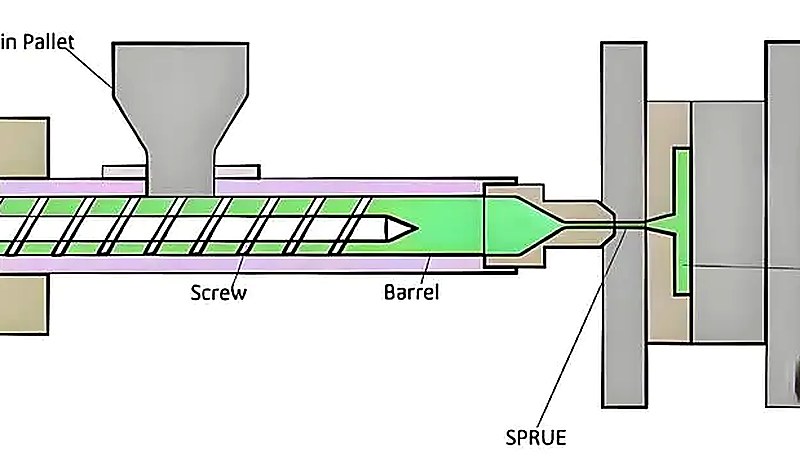
Оптимальное формование ПОМ требует температуры цилиндра 175–210 °C, температуры формы 80–120 °C и давления впрыска 70–120 МПа. Правильное соблюдение этих параметров — это разница между идеальными деталями и браком.
| Параметр | Homopolymer POM | Copolymer POM | Примечания |
|---|---|---|---|
| Barrel Temp (rear) | 180–190°C | 175–185°C | Avoid exceeding 220°C |
| Barrel Temp (middle) | 190–200°C | 185–195°C | Gradual increase |
| Barrel Temp (front) | 200–210°C | 190–205°C | Nozzle 5°C lower |
| Температура пресс-формы | 80–120°C | 80–110°C | Higher = better crystallinity |
| Давление впрыска | 80–120 MPa | 70–110 MPa | Adjust for wall thickness |
| Давление удержания | 50–80% of injection | 50–75% of injection | Critical for shrinkage |
| Скорость впрыска | Средний | Medium to medium-high | Too fast causes off-gassing |
| Противодавление | 5–15 MPa | 5–10 MPa | Minimize residence time |
| Время охлаждения | 15–40s | 15–35s | Depends on wall thickness |
| Drying | 80°C / 2–4h | 80°C / 2–4h | Recommended, not critical |
In our experience, the most common mistake with POM is overheating. When POM degrades thermally, it releases formaldehyde gas, which causes bubbles, splay marks, and a pungent smell. We keep barrel temperatures strictly below 220°C and minimize residence time in the barrel to under 5 minutes.
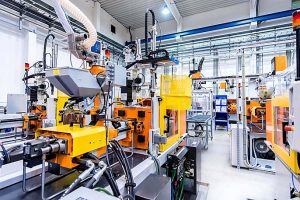
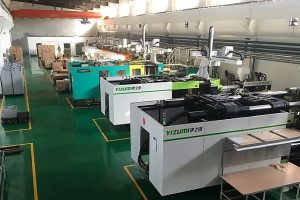
На нашем заводе в Шанхае работают 47 машин для литья под давлением от 90 до 1850 тонн, перерабатывающих более 400 материалов, включая несколько марок POM. Этот парк оборудования позволяет нам формовать детали из POM — от крошечных прецизионных шестерён до крупных автомобильных компонентов.
Mold temperature plays a crucial role in POM part quality. We typically run molds at 90–100°C for most parts. Higher mold temperatures (up to 120°C) improve crystallinity, surface finish, and dimensional stability, but extend cycle time. For gears and precision components, we always go higher.
What Are Common POM Injection Molding Defects and How to Solve Them?
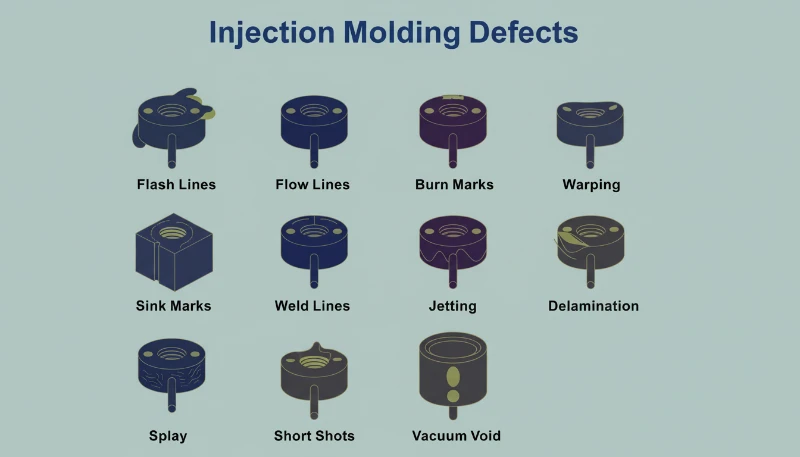
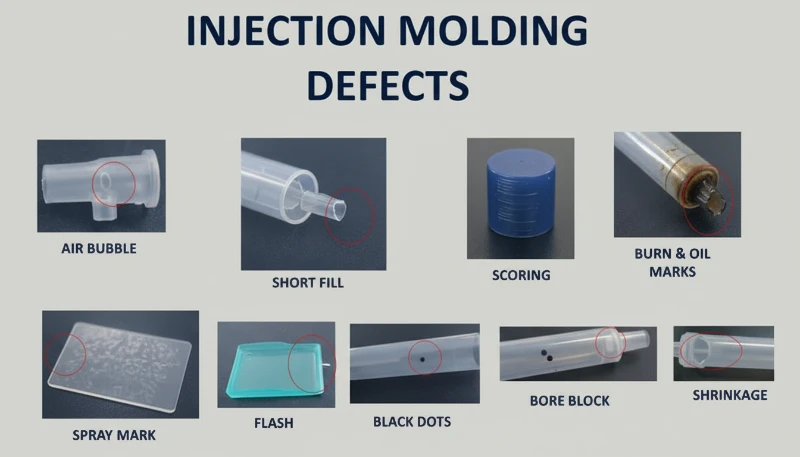
Наиболее распространённые дефекты POM — это утяжины, коробление, пористость по средней линии и серебристость — их можно предотвратить, контролируя температуру и давление. Ниже приведены целевые решения.
| Дефект | Предотвращает образование утяжин на противоположной поверхности | Решение |
|---|---|---|
| Маркировка раковины | Insufficient holding pressure; thick sections | Increase holding pressure/time; reduce wall thickness; add coring |
| Деформация | Uneven cooling; differential shrinkage | Uniform wall thickness; optimize cooling channels; adjust mold temp |
| Centerline Porosity | Thick walls; insufficient packing (homopolymer) | Use copolymer POM; increase holding pressure; reduce wall thickness |
| Splay/Silver Streaks | Moisture; thermal degradation | Pre-dry material; lower barrel temp; reduce residence time |
| Formaldehyde Off-gassing | Overheating above 220°C | Reduce barrel temperature; minimize residence time; purge regularly |
| Brittle Parts | Over-crystallization; contamination | Reduce mold temperature; check material purity |
| Вспышка | Excessive injection pressure; worn mold | Reduce pressure; repair mold parting surfaces |
Один специфический для ПОМ дефект, за которым мы внимательно следим, — это пористость по центральной линии. Это происходит в основном в гомополимерных деталях из ПОМ с толстыми сечениями. Внешняя оболочка затвердевает и кристаллизуется, в то время как сердцевина еще расплавлена, и по мере усадки сердцевины она отрывается от себя, создавая внутренние пустоты. Переход на сополимерный ПОМ или перепроектирование деталей с полыми секциями устраняет эту проблему в большинстве случаев.
What Applications Rely on POM Injection Molded Parts?
POM injection molded parts are found in virtually every industry that demands precision, durability, and low friction. The material’s unique combination of properties makes it irreplaceable in many applications.
Automotive (40% of POM consumption): Fuel system components (fuel sender units, fuel caps), seat belt mechanisms, door lock systems, window regulator gears, HVAC actuator gears, and interior trim clips. We’ve produced fuel rail clips for a major German OEM running 500,000+ cycles without a single failure.
Потребительская электроника: Keyboard mechanisms, printer gears, fan bearings, zipper sliders, and pen mechanisms. POM’s snap-fit capability and spring-back properties make it perfect for clips and latches in electronic devices.
Industrial: Conveyor chain links, pump impellers, valve bodies, bearing bushings, and spring elements. POM’s fatigue resistance handles millions of load cycles in industrial automation equipment.
«Естественная смазывающая способность ПОМ делает его одним из лучших пластиков для шестерен и подшипников, работающих без внешней смазки.»Правда
POM has a coefficient of friction of 0.20–0.35, one of the lowest among engineering plastics. POM-on-POM and POM-on-metal contact surfaces perform well without lubrication, making it the material of choice for self-lubricating gears, bearings, and sliding mechanisms.
«ПОМ — отличный выбор для наружного применения, поскольку он обладает отличной устойчивостью к ультрафиолету.»Ложь
POM has poor UV resistance and degrades when exposed to prolonged sunlight. Outdoor POM parts require UV stabilizer additives or protective coatings. For purely outdoor applications, materials like ASA or UV-stabilized ABS are better choices.
Медицинские приборы: Inhaler mechanisms, insulin pen components, and surgical instrument handles. Medical-grade POM (FDA-compliant copolymer) provides the precision and chemical resistance needed in healthcare.
Plumbing and Hardware: Faucet cartridges, valve stems, tap handles, and pipe fittings. POM’s resistance to hot water (up to 80°C continuous) and cleaning chemicals makes it ideal for plumbing applications.
How Should You Design Parts for POM Injection Molding?
Ключевые правила проектирования деталей из POM: равномерные стенки 1,0–3,5 мм, угол съёма 0,5°–1,5° на сторону и соотношение толщины ребра к стенке 50–60% для управления усадкой в 1,8–2,5% в литьевая форма.
| Design Parameter | Рекомендуемое значение | Why It Matters |
|---|---|---|
| Толщина стенок | 1.0–3.5 mm (uniform) | Prevents sink marks and centerline porosity |
| Угол наклона | 0.5°–1.5° per side | POM shrinks onto cores; needs more draft than ABS |
| Rib Thickness | 50–60% of wall | Prevents sink marks on opposite surface |
| Высота ребра | Сопротивление ползучести — это способность материала противостоять постепенной деформации под действием длительного механического напряжения во времени, что критически важно для несущих компонентов, таких как шестерни и подшипники, которые должны сохранять точность размеров в течение длительного срока службы. | Taller ribs are hard to fill and eject |
| Corner Radius | ≥ 0.5 mm (0.25× wall) | Sharp corners cause stress concentration |
| Boss OD | 2× screw diameter | Prevents cracking during screw insertion |
| Snap-Fit Strain | ≤ 4% (single use), ≤ 2% (repeated) | POM’s fatigue limit for living hinges |
| Shrinkage Allowance | 1.8–2.5% (flow), 1.6–2.0% (cross-flow) | Anisotropic shrinkage requires directional compensation |

В наших проверках конструкции проблема номер один с деталями из ПОМ — неравномерная толщина стенок. Когда толстые и тонкие сечения соединяются, толстое сечение охлаждается медленнее, что приводит к дифференциальной усадке, вызывающей коробление и утяжины. Мы всегда рекомендуем делать толстые сечения полыми и поддерживать толщину стенок в пределах вариации ±10% по всей детали.
POM is one of the best plastics for snap-fits and living hinges due to its excellent spring-back properties. However, we recommend limiting strain to 4% for single-use snaps and 2% for repeated assembly/disassembly. For gear teeth, we apply 0.02–0.04 mm per tooth profile compensation for shrinkage to hit AGMA quality grades.
How Does Mold Design Affect POM Part Quality?
Наиболее критичными факторами проектирования пресс-формы для POM являются расположение литника, равномерность охлаждения и вентиляция. Высокая усадка и выделение формальдегида POM делают точное проектирование пресс-формы обязательным.
Дизайн ворот: We prefer sub-gate or pin-gate designs for POM parts because they allow automatic degating and leave minimal witness marks. For gears, diaphragm gates provide the most uniform fill and minimize weld lines in the tooth area. Gate size should be 50–70% of wall thickness.
Система охлаждения: Uniform cooling is critical for POM. Temperature variation across the mold surface should stay within ±5°C. We use conformal cooling channels for complex geometries and beryllium copper inserts for areas that need faster heat extraction. For gears, we often use circular cooling channels that follow the gear profile.
Вентиляция: ПОМ выделяет газообразный формальдегид во время обработки, поэтому достаточная вентиляция необходима. Глубина вентиляционного канала должна составлять 0,01–0,02 мм (ПОМ имеет низкую вязкость и будет давать облой при более глубоких каналах). Мы размещаем вентиляционные каналы в каждом месте линии сварки и в последних заполняемых областях, определенных с помощью анализа потока расплава.
Выброс: POM’s high shrinkage means parts grip tightly onto cores. We design generous draft angles (0.5°–1.5°), use multiple ejector pins distributed evenly, and sometimes apply mold release coatings to core surfaces. For deep-draw parts, air-assisted ejection prevents vacuum lock.
Frequently Asked Questions About POM Injection Molding
Can POM be painted or plated?
POM has very low surface energy, making it difficult to paint or plate without surface treatment. Flame treatment, plasma treatment, or chemical etching can improve adhesion. However, for decorative parts, we usually recommend switching to ABS or PC/ABS, which accept paint and plating much more readily.
What is the difference between POM homopolymer and copolymer?
Homopolymer POM (like Delrin) offers 5–10% higher mechanical strength and stiffness but is more prone to centerline porosity in thick sections and has a narrower processing window. Copolymer POM (like Celcon or Ultraform) processes more easily, has better chemical resistance, and is less likely to degrade thermally. For most applications, we recommend copolymer.
Does POM need to be dried before molding?
POM’s low moisture absorption (0.20%) means drying is recommended but not strictly required for most applications. We pre-dry at 80°C for 2–4 hours as standard practice to ensure optimal surface quality. For critical cosmetic parts, drying is essential.
Is POM FDA-approved for food contact?
Yes, certain copolymer POM grades (such as Celcon M90 and Hostaform C9021) are FDA-compliant for food contact applications. Always verify the specific grade’s FDA status with the resin supplier before production.
What causes the white residue on POM mold surfaces?
The white deposit is formaldehyde and trioxane oligomers released during POM processing. Regular mold cleaning (every 4–8 hours of production), adequate venting, and keeping barrel temperatures below 215°C minimize this buildup. Some shops use mold-cleaning compounds designed specifically for POM residue.
How does POM compare to nylon for gear applications?
POM is generally preferred over nylon for gears because it has lower moisture absorption (0.2% vs. 2.5%), better dimensional stability, lower coefficient of friction, and more consistent mechanical properties across humidity ranges. Nylon offers higher impact strength and better high-temperature performance. For gears running in wet or humid environments, POM is the clear winner.
What Are the Key Takeaways for POM Injection Molding?
POM injection molding is a proven manufacturing process for producing high-precision, low-friction, and dimensionally stable plastic parts. Whether you’re designing gears for an automotive transmission or clips for consumer electronics, POM delivers the mechanical performance of metal at a fraction of the cost and weight. The keys to success are controlling processing temperatures below 220°C, designing for uniform wall thickness to manage 1.8–2.5% shrinkage, and ensuring adequate mold venting to handle formaldehyde off-gassing.
В ZetarMold мы обрабатываем POM более 20 лет в автомобильной, промышленной и потребительской сферах. Наша команда занимается всем: от анализа технологичности конструкции (DFM) и проектирования пресс-форм до серийного производства и контроля качества. Если вы работаете над проектом, требующим литьевых деталей из POM, обратитесь к нашей инженерной команде для бесплатного анализа DFM и расчёта стоимости. Полный обзор смотрите в нашем Полном руководстве по литью под давлением.
Получите расценку на ваш проект литья под давлением
Get competitive pricing, DFM feedback, and production timeline from ZetarMold’s engineering team.
Request a Free Quote →
-
engineering thermoplasticИнженерный термопласт относится к категории пластиковых материалов, которые предлагают превосходные механические и термические свойства по сравнению с товарными пластиками, подходящими для конструкционных и прецизионных применений. ↩
-
creep resistanceСопротивление ползучести — это способность материала сопротивляться постепенной деформации под действием постоянного механического напряжения с течением времени, что критически важно для несущих нагрузку компонентов. ↩
-
усадкаУсадка ПОМ относится к объемному сокращению на 1,8–2,5 процента, которое происходит при охлаждении и затвердевании расплавленного ПОМ в полости формы. ↩



 EN
EN  ES
ES  FR
FR  DE
DE  PT
PT  AR
AR  RU
RU  JA
JA  KO
KO  IT
IT  NL
NL  TR
TR  PL
PL