- O cálculo da tonelagem é crítico: o cálculo exato da tonelagem de fecho é essencial para evitar defeitos nas peças, como rebarbas ou injeções incompletas, e para proteger o molde de injeção e a máquina contra danos.
- A fórmula principal: o cálculo fundamental é: Força de Fecho (Toneladas) = Área Projetada (in²) × Fator do Material (tons/in²). Isto fornece um valor de referência antes de considerar outras variáveis.
- A área projetada é fundamental: o maior fator individual que influencia a tonelagem é a área projetada da peça e do respetivo sistema de canais de alimentação, ou seja, a sombra 2D que a peça projeta perpendicularmente à direção de fecho.
- É mais do que uma regra prática: embora uma regra prática geral (por exemplo, 2-5 tons/in²) seja um bom ponto de partida, fatores como a viscosidade do material, a espessura da parede, o comprimento do fluxo e a complexidade da peça exigem ajustes para um cálculo preciso.
O que é o cálculo da tonelagem do molde de injeção?
Calcular a tonelagem do molde de injeção é o processo de engenharia usado para determinar a força mínima de fechamento que uma máquina de moldagem deve exercer para manter o molde fechado durante a fase de injeção — normalmente de 2 a 10 toneladas por polegada quadrada da área projetada da peça.1 Essa força, medida em toneladas americanas, é essencial para contrapor a enorme pressão do plástico fundido injetado na cavidade. Em nossa fábrica na ZetarMold, constatamos que o cálculo preciso da tonelagem é a primeira linha de defesa contra diversos problemas de fabricação. Um valor subestimado gera “rebarba”, quando o plástico escapa pela linha de separação, causando defeitos e desperdício. Um valor superestimado pode danificar componentes delicados do molde, prejudicar a ventilação e consumir energia desnecessária, elevando os custos operacionais. Com mais de 20 anos de experiência, nossos engenheiros combinam fórmulas comprovadas, software avançado e dados empíricos de nossas 45 máquinas de moldagem por injeção para selecionar a tonelagem ideal para cada um dos mais de 400 materiais que processamos, garantindo qualidade ótima da peça e longa vida útil da ferramenta.
“Uma peça com uma área projetada de 50 sq. in., moldada por injeção em ABS, pode exigir 250 tons de força de fecho.”True
O acrilonitrilo-butadieno-estireno (ABS) normalmente apresenta um fator de força de fechamento de cerca de 5 tons/in². Multiplicar a área projetada (50 in²) por este fator (5 tons/in²) resulta numa força de fechamento necessária de 250 toneladas. Este é um cálculo de referência padrão utilizado no setor.
“a calculadora de pressão de injeção e a força de fecho são a mesma coisa.”False
A força de fechamento é a força que mantém o molde fechado (medida em toneladas), enquanto a pressão de injeção é a força que empurra o plástico fundido para dentro do molde (medida em PSI). A força de fechamento deve ser maior que a pressão exercida pelo plástico no interior da cavidade para impedir a abertura do molde.
Como funciona o cálculo da tonelagem do molde de injeção?
O cálculo da tonelagem do molde de injeção funciona através da quantificação sistemática das forças que atuam no interior do molde durante a injeção — um processo que envolve 3 etapas principais. Este cálculo garante que a máquina selecionada consiga fornecer força de fecho suficiente para resistir à força de separação gerada pela pressão de injeção que atua sobre a área superficial da peça. Na ZetarMold, o nosso processo combina meticulosamente o cálculo teórico com a experiência prática.
A primeira etapa é determinar a área projetada. Não se trata da área superficial total da peça, mas da sombra bidimensional da peça e de seus canais vista na direção do fechamento. Ela é calculada em polegadas quadradas (ou cm²) e é a variável mais importante da fórmula. Para uma peça retangular simples, basta multiplicar comprimento por largura. Para geometrias complexas, usamos software CAD para obter uma medição precisa.
A segunda etapa envolve selecionar um fator de força de fechamento. Esse valor, expresso em toneladas por polegada quadrada, é uma constante específica do material termoplástico utilizado. Ele representa a resistência do material ao fluxo (viscosidade2) e seu comportamento sob pressão. Por exemplo, um material de fácil escoamento como o poliestireno (PS) pode ter um fator de 2-3 tons/in², enquanto um material rígido e de alta viscosidade como o policarbonato (PC) pode exigir 5-7 tons/in².
A etapa final é o cálculo: área projetada (in²) × fator de força de fechamento (tons/in²) = tonelagem necessária. Porém, esse é apenas o ponto de partida. Nossos engenheiros aplicam fatores de ajuste conforme a complexidade da peça, a espessura da parede e a relação entre comprimento do fluxo e espessura (L/T). Uma parede muito fina ou um percurso de fluxo longo eleva a pressão de injeção necessária e, consequentemente, exige maior força de fechamento para manter o molde vedado. Essa abordagem abrangente evita defeitos e permite associar cada projeto à máquina mais eficiente de nossa fábrica.
Quais são os principais parâmetros de processamento?
Os principais parâmetros de processamento para calcular a tonelagem do molde de injeção são o fator de força de fechamento do material, que pode variar de 2 a 8 toneladas/pol², a área projetada da peça e a viscosidade do material fundido, que pode variar mais de 100% entre diferentes tipos de polímeros. Esses três fatores formam a base de qualquer cálculo preciso de tonelagem. Embora a fórmula básica forneça uma boa estimativa, um processo realmente otimizado exige uma análise mais profunda de diversas variáveis interligadas. Na ZetarMold, documentamos e analisamos esses parâmetros meticulosamente em cada ciclo de produção para criar um banco de dados robusto que oriente projetos futuros.
A tabela abaixo apresenta os parâmetros mais críticos que nossos engenheiros consideram ao configurar um novo projeto de moldagem. Entender como esses elementos interagem é fundamental para obter um processo estável, peças de alta qualidade e máxima eficiência. Por exemplo, uma temperatura de fusão maior pode reduzir a viscosidade do material e diminuir levemente a tonelagem necessária. Em contrapartida, um projeto com seções longas e finas (alta relação L/T) eleva drasticamente a pressão necessária para preencher a peça, exigindo um aumento significativo da força de fechamento para evitar rebarbas.3
| Parâmetro | Valor/faixa | Notas |
|---|---|---|
| Fator de força de fecho | 2 – 10 toneladas/pol² | Constante específica do material. Baixa para materiais de fácil fluxo (PS, PP), alta para materiais rígidos (PC, PEEK). |
| Área projetada | Variável (por exemplo, 10 – 500 in²) | A área da sombra 2D da peça e do sistema de canais. O principal fator determinante da tonelagem necessária. |
| Espessura da parede | 0.5mm – 5mm+ | Paredes mais finas exigem maior pressão de injeção e, portanto, mais força de fechamento. Uma parede de 1 mm pode precisar de 30% mais força do que uma parede de 3 mm. |
| Relação entre comprimento de fluxo e espessura (L/T) | 50:1 a 400:1 | Uma relação alta indica um percurso de preenchimento longo e difícil, exigindo maior pressão e tonelagem. |
| Pressão de injeção | 5,000 – 30,000 PSI | A pressão que empurra o plástico para dentro do molde. A força de fechamento deve se contrapor a essa pressão. |
| Temperatura de fusão | 180°C – 410°C (356°F – 770°F) | setor, por exemplo, peças como painéis de revestimento interior, componentes do tablier e caixas de iluminação têm grandes áreas projetadas e superfícies cosméticas. A tonelagem precisa é vital para evitar rebarbas, o que seria uma rejeição cosmética, e para garantir a estabilidade dimensional para um encaixe perfeito. No |
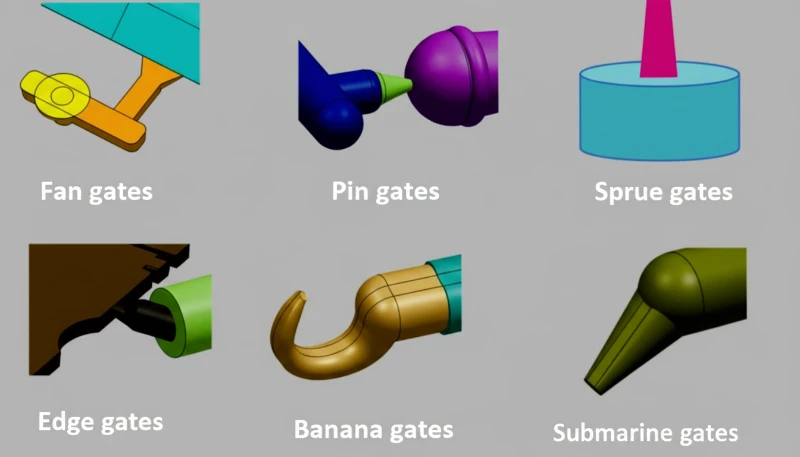
| Tipo e localização do ponto de injeção | N/A (dependente do projeto) | Afeta a distribuição da pressão dentro da cavidade, influenciando o potencial de rebarbas ou injeções incompletas. |
Nossos engenheiros de processo na ZetarMold não analisam esses números isoladamente. Eles usam o software de simulação Moldflow para visualizar o comportamento do plástico fundido nessas condições específicas. Isso permite prever a distribuição da pressão, identificar possíveis pontos quentes e refinar o cálculo da tonelagem antes do corte do aço. Essa abordagem proativa economiza tempo e dinheiro dos clientes ao eliminar ajustes caros por tentativa e erro no chão de fábrica. É essa atenção aos detalhes que nos permite moldar diariamente peças complexas com materiais desafiadores.
Quais são as vantagens e desvantagens?
A principal vantagem do cálculo preciso da tonelagem é obter uma produção consistente de peças de alta qualidade, enquanto a principal desvantagem é a complexidade e o potencial de sobredimensionamento, que podem aumentar o consumo de energia e o desgaste das máquinas. Um cálculo correto é um exercício de equilíbrio. Na ZetarMold, verificámos que o tempo inicial dedicado a um cálculo exato se paga muitas vezes ao evitar problemas que interrompem a produção. É um princípio central da nossa filosofia de fabricação orientada por processos.
Os benefícios são concretos e afetam diretamente o resultado financeiro. O primeiro é a prevenção de defeitos. A tonelagem correta mantém o molde perfeitamente vedado, elimina rebarbas e garante o preenchimento completo da cavidade para evitar injeções incompletas.4 O segundo é a proteção do molde e da máquina. Uma força excessiva pode esmagar componentes delicados, danificar as superfícies de separação e sobrecarregar as colunas e os sistemas hidráulicos da máquina. Usar a força *correta* prolonga a vida útil da ferramenta e da máquina. Por fim, há a otimização energética. Uma máquina maior consome muito mais eletricidade. Com o cálculo preciso da tonelagem, podemos atribuir o trabalho à menor máquina adequada de nossa frota de 45 equipamentos, reduzindo o custo de energia por peça.
| Vantagens de um cálculo preciso | Desvantagens do cálculo impreciso |
|---|---|
| Evita rebarbas, injeções incompletas e afundamentos. | Provoca elevadas taxas de refugo e desperdício de material. |
| Protege as linhas de partição e os componentes do molde. | Pode danificar ou desgastar prematuramente o molde. |
| Prolonga a vida operacional da máquina de moldagem. | Causa tensão excessiva nos componentes da máquina. |
| Otimiza o consumo de energia usando uma máquina do tamanho adequado. | Desperdiça energia e aumenta os custos operacionais. |
| Garante a ventilação adequada dos gases da cavidade do molde. | Pode reter gás, causando queimaduras e enchimento incompleto. |
As desvantagens decorrem principalmente de erros de cálculo. Um engenheiro conservador pode superestimar muito a tonelagem “por segurança”. Embora isso possa evitar rebarbas, cria outros problemas. Uma força de fechamento excessiva pode restringir os canais de ventilação projetados para deixar o ar escapar da cavidade. Quando esse ar aprisionado é comprimido pelo plástico que entra, pode superaquecer e causar marcas de queimadura na peça. Também pode gerar contrapressão que impede o preenchimento completo. Por isso, nossa equipe não depende apenas de uma fórmula simples; ela usa duas décadas de experiência para compreender as particularidades de cada projeto e combinação de materiais, encontrando o ponto ideal que produz peças perfeitas com a máxima eficiência.
Quais são os defeitos comuns e como evitá-los?
Os defeitos mais comuns relacionados à tonelagem incorreta são rebarbas, falta de preenchimento e marcas de queimadura — todos evitáveis com o cálculo preciso da força de fechamento e o controle do processo. Esses defeitos são evidências físicas diretas de um desequilíbrio entre a força de fechamento que mantém o molde fechado e a pressão de injeção que força o plástico para dentro dele. Nossa equipe de controle de qualidade na ZetarMold é treinada para identificar esses problemas imediatamente, e nossos engenheiros de processo sabem exatamente como rastreá-los até a causa raiz, que frequentemente começa na configuração inicial da tonelagem.
A rebarba é o sinal mais evidente de tonelagem de fechamento insuficiente. Ela aparece como uma camada fina e indesejada de plástico ao longo da linha de separação do molde ou ao redor dos pinos ejetores. Isso ocorre quando a pressão de injeção é alta o bastante para afastar fisicamente as duas metades do molde e criar uma folga por onde o plástico fundido escapa. A prevenção é direta: aumente a tonelagem de fechamento em pequenos incrementos até a rebarba desaparecer. Contudo, a solução real é fazer o cálculo correto desde o início.
Por outro lado, uma injeção incompleta pode, às vezes, indicar tonelagem de fechamento *excessiva*. Embora a causa principal costume ser material ou velocidade de injeção insuficiente, uma força de fechamento alta demais pode obstruir as saídas de ar do molde. Essas saídas são canais minúsculos que permitem a fuga do ar da cavidade à medida que o plástico entra. Se forem fechadas pela pressão, o ar aprisionado age como uma almofada e impede que o plástico alcance os pontos mais distantes. A solução é reduzir a tonelagem ao nível ideal calculado, permitindo que as saídas funcionem como previsto.
| Defeito | Principal causa relacionada à tonelagem | Método de prevenção |
|---|---|---|
| Rebarba | Força de fechamento insuficiente para a pressão de injeção aplicada. | Aumente a tonelagem de fecho. Recalcule a força necessária com base na pressão de injeção real e na área projetada. |
| Tiro curto / Preenchimento incompleto | Tonelagem de fechamento excessiva esmagando os respiros do molde e aprisionando ar. | Reduza a tonelagem de fechamento ao valor mínimo necessário calculado. Garanta que os respiros estejam limpos e dimensionados corretamente. |
| Marcas de queimadura (efeito diesel) | Superaquecimento do ar aprisionado devido à compressão, frequentemente causado por saídas de ar bloqueadas por tonelagem excessiva. | Otimizar a força de fecho para permitir a ventilação adequada. Melhorar o projeto e a localização das saídas de ar. |
| Página de guerra | Distribuição não uniforme da pressão, por vezes agravada por fecho excessivo e irregular. | Aplicar uma força de fecho correta e uniforme. Otimizar a posição da entrada e os parâmetros de processamento para um enchimento uniforme. |
| Componentes do molde esmagados | Tonelagem de fecho manifestamente excessiva aplicada ao molde. | Respeite rigorosamente os valores de tonelagem calculados. Nunca exceda a tonelagem nominal máxima do molde. |
“Aumentar a espessura da parede de uma peça de 1mm para 3mm pode reduzir a força de fechamento necessária.”True
Paredes mais espessas oferecem menor resistência ao fluxo, reduzindo a pressão e, consequentemente, a força de fecho necessária, muitas vezes em 30-50%.
“A ‘regra prática’ de 4 tons/in² é universalmente aplicável a todos os materiais.”False
Esta é uma simplificação excessiva perigosa. Um material de baixa viscosidade como poliestireno pode necessitar apenas de 2 tons/in², enquanto um PEEK de alta viscosidade com fibra de vidro pode exigir 8-10 tons/in². Usar uma regra prática universal sem considerar o material específico é uma causa comum de defeitos de moldagem.
Onde é usado o cálculo da tonelagem do molde de injeção?
O cálculo da tonelagem do molde de injeção é utilizado em todos os setores dependentes de peças de plástico, desde bens de consumo de grande volume até componentes automóveis e médicos críticos. A precisão do cálculo é diretamente proporcional à criticidade da aplicação da peça final. Na ZetarMold, a diversidade de clientes obriga-nos a aplicar constantemente estes princípios a um vasto conjunto de produtos, cada um com requisitos próprios de tolerância, desempenho do material e acabamento estético. A tonelagem necessária é uma especificação fundamental que determina qual das nossas 45 máquinas é adequada a cada projeto, desde uma pequena prensa de 50 toneladas para minúsculos conectores eletrónicos até uma máquina de 1 500 toneladas para para-choques automóveis.
No setor automotivo, por exemplo, peças como painéis internos, componentes do painel de instrumentos e carcaças de iluminação têm grandes áreas projetadas e superfícies estéticas. A tonelagem precisa é vital para evitar rebarbas, que causariam rejeição estética, e garantir estabilidade dimensional para um encaixe perfeito. Na área médica, peças como corpos de seringas ou carcaças de dispositivos de diagnóstico costumam ser feitas de polímeros de engenharia em ambientes de sala limpa. Nesses casos, a tonelagem precisa é indispensável para garantir a integridade da peça, evitar contaminação por rebarbas e manter a janela de processo validada exigida pela conformidade regulatória. A tabela abaixo destaca alguns exemplos de aplicação do cálculo de tonelagem em diferentes setores.
| Indústria | Exemplo de aplicação | Principais considerações de tonelagem |
|---|---|---|
| Automóvel | Painel do tablier | Grande área projetada; acabamento superficial Classe A exige rebarba zero; estabilidade dimensional para montagem. |
| Dispositivos médicos | Pontas de pipeta ou frascos de ensaio | Paredes finas, relação L/T elevada; consistência do processo para validação; utiliza frequentemente materiais de alto fluxo. |
| Eletrónica de consumo | Carcaças de computadores portáteis, comandos remotos | Geometria complexa com ressaltos e nervuras; paredes finas; altos requisitos estéticos. |
| Embalagem | Recipientes e tampas de parede fina | Paredes extremamente finas e tempos de ciclo rápidos; a força de fechamento deve ser alta o bastante para uma injeção rápida, mas sem esmagar as saídas de ar. |
| Setor industrial | Engrenagens, carcaças, corpos de ferramentas elétricas | Utiliza frequentemente materiais de alta viscosidade reforçados com vidro, que exigem fatores elevados de força de fecho (6–10 toneladas/pol²). |
Como o cálculo da tonelagem do molde de injeção se compara às alternativas?
Calcular a tonelagem do molde de injeção com fórmulas detalhadas e simulação por software é muito superior às alternativas simples, oferecendo uma melhoria de 15–25% na precisão face às estimativas básicas por regra prática. Embora as estimativas rápidas sejam úteis nas propostas iniciais, um processo de fabrico robusto depende de métodos mais sofisticados. As principais alternativas ao cálculo manual detalhado são a regra prática básica e a análise avançada por elementos finitos (FEA) através de software de simulação do fluxo no molde. Cada método representa um ponto diferente no equilíbrio entre precisão, custo e investimento de tempo.
O método da “regra prática” é o mais rápido e simples. Ele consiste em tomar a área projetada estimada da peça e multiplicá-la por um fator genérico, como 4 tons/in². Isso é útil para uma estimativa aproximada que determine se uma peça cabe em uma máquina de 100 ou 1000 toneladas, mas é impreciso demais para a produção. Ele ignora variáveis críticas, como espessura da parede, comprimento do fluxo e viscosidade do material.
Na ZetarMold, nosso processo padrão é um cálculo manual detalhado. Ele aperfeiçoa a regra prática usando fatores de fechamento específicos do material e ajustes para a relação L/T e a espessura média da parede. Esse método oferece alto grau de precisão para cerca de 80% dos projetos e pode ser executado com relativa rapidez por um engenheiro experiente.
Para as peças mais complexas — extremamente finas, com percursos de fluxo muito longos ou feitas de materiais exóticos — usamos software de simulação Moldflow. Ele cria um modelo virtual do molde e simula todo o processo de injeção. Ao analisar as pressões em toda a cavidade em tempo real, fornece uma previsão altamente precisa da força de fechamento necessária. Embora seja o método mais preciso, também é o mais demorado e exige software e conhecimentos especializados.
| Método | Exatidão | Velocidade | Custo | Melhor para |
|---|---|---|---|---|
| Regra prática | Baixa (±25–40%) | Muito rápido (segundos) | Gratuito | Cotação preliminar inicial, dimensionamento aproximado da máquina. |
| Cálculo manual detalhado | Alta (±10-15%) | Rápido (minutos) | Baixo (tempo do engenheiro) | A maioria dos projetos de produção convencionais. |
| Simulação Moldflow (FEA) | Muito alta (±5%) | Lento (horas a dias) | Alta (software/especialização) | Peças complexas, projetos de alto risco, otimização do processo. |
Perguntas mais frequentes
Como se calcula a tonelagem do molde de injeção?
Calcula-se a tonelagem do molde de injeção multiplicando a área projetada total da peça em polegadas quadradas (incluindo o sistema de canais) por um fator de força de fecho específico do material em toneladas por polegada quadrada. Por exemplo, uma peça com uma área projetada de 100 pol² que utiliza um material com um fator de 3 ton/pol² exigiria uma força de fecho de base de 300 toneladas (100 pol² * 3 ton/pol²).
Qual é a fórmula para a força de fecho do molde de injeção?
A fórmula básica é: Força de Fixação (Toneladas) = Área Projetada (in²) × Fator de Força de Fixação (ton/in²). Cálculos mais avançados também incorporam fatores de ajuste para a viscosidade do material (frequentemente representada pelo Índice de Fluidez), a espessura da parede da peça e a relação comprimento de fluxo/espessura (L/T).
Que tonelagem de máquina de moldagem por injeção preciso?
Para determinar a tonelagem da máquina que necessita, primeiro calcule a força de fecho necessária para a sua peça e material específicos. Depois, selecione uma máquina com uma classificação de tonelagem máxima que seja pelo menos 10-15% superior ao seu requisito calculado. Também é recomendado utilizar uma máquina em que a tonelagem necessária se situe entre 40% e 80% da capacidade máxima da máquina para um desempenho e eficiência ótimos.
Qual é a regra geral para a tonelagem de moldagem por injeção?
A regra geral para a tonelagem de moldagem por injeção é usar 2 a 5 toneladas de força de fecho para cada polegada quadrada da área projetada da peça. Por exemplo, uma estimativa rápida para uma peça de 60 polegadas quadradas seria de 240 toneladas (60 in² × 4 ton/in²). Este é apenas um ponto de partida e deve ser ajustado consoante o tipo de material, a complexidade da peça e a espessura da parede.
Como é que a área projetada afeta a tonelagem de fixação?
A área projetada tem uma relação direta e linear com a força de fecho; se duplicar a área projetada, duplica a força de fecho necessária, assumindo que todos os outros fatores permanecem constantes. É a variável mais importante no cálculo da força de fecho, porque define a área de superfície sobre a qual a pressão de injeção atua para tentar forçar a abertura do molde.
Qual é a diferença entre a força de fecho e a pressão de injeção?
A força de fecho é a força (medida em toneladas) que mantém as duas metades do molde fechadas. A pressão de injeção é a pressão (medida em PSI) exercida pelo parafuso para empurrar o plástico fundido para a cavidade do molde. A força total de separação (Pressão da Cavidade × Área Projetada) deve ser superada pela força de fecho para evitar que o molde apresente rebarbas.
Que fatores aumentam a tonelagem do molde de injeção?
Vários fatores-chave aumentam a tonelagem necessária do molde de injeção. Entre eles estão uma maior área projetada da peça, o uso de um material de maior viscosidade (como PC em vez de PP), o desenho de peças com paredes mais finas e um comprimento de fluxo longo em relação à espessura da parede (uma elevada relação L/T). Cada um destes fatores aumenta a resistência ao fluxo, exigindo maior pressão de injeção e, consequentemente, mais força de fecho para manter o molde selado.
Seu parceiro em moldagem por injeção de precisão
Calcular com precisão a tonelagem do molde de injeção não é apenas um exercício académico; é um pilar fundamental de um fabrico bem-sucedido, eficiente e de alta qualidade. É uma disciplina que combina princípios científicos com experiência prática. Há mais de 20 anos que a ZetarMold domina este equilíbrio. A nossa equipa utiliza conhecimentos profundos, adquiridos ao trabalhar com mais de 400 materiais e milhares de moldes distintos, para garantir que cada projeto é otimizado desde o início.
Ao combinar essa experiência com uma frota robusta de 45 máquinas modernas de moldagem por injeção, de 50 a 1500 toneladas, podemos adequar perfeitamente os requisitos técnicos do seu projeto ao ambiente de fabricação ideal. Não acreditamos em suposições. Acreditamos em dados, precisão e uma abordagem orientada por processos que elimina desperdícios e maximiza o valor para nossos clientes.
Quer tenha um componente médico complexo, uma peça automóvel de grandes dimensões ou um produto de consumo de grande volume, a nossa equipa está pronta para aplicar rigor técnico ao seu projeto. Contacte hoje a ZetarMold para discutir os seus requisitos e descobrir como a nossa abordagem à moldagem por injeção, centrada na precisão, pode dar vida ao seu projeto com qualidade e eficiência incomparáveis.
1 Área projetada: A sombra ou o perfil bidimensional de uma peça e de seu sistema de canais, vistos na direção da força de fechamento. É a área principal sobre a qual a pressão de injeção atua para separar as metades do molde. ↩
2 Viscosidade: A resistência de um fluido ao escoamento. Na moldagem por injeção, um material de alta viscosidade, como o policarbonato, é mais “espesso” e exige mais pressão para ser injetado do que um material de baixa viscosidade, como o poliestireno. ↩
3 Rebarba: Defeito comum de moldagem em que uma película fina de plástico excedente escapa da cavidade pela linha de separação, ao redor dos pinos ejetores ou pelas saídas de ar. Na maioria das vezes, é causada por força de fechamento insuficiente. ↩
4 Injeção incompleta: Defeito em que o plástico fundido não preenche totalmente a cavidade, resultando em uma peça incompleta. Pode ser causado por vários fatores, inclusive ar aprisionado quando uma força de fechamento excessiva esmaga as saídas de ar. ↩
O cálculo preciso da tonelagem reduz diretamente o custo da moldagem por injeção por peça: máquinas subdimensionadas causam rebarbas e rejeições; máquinas superdimensionadas desperdiçam energia.
Para conhecer toda a capacidade da ZetarMold na fabricação de moldes de injeção, visite nossa página do serviço de moldes de injeção para consultar especificações do ferramental, prazos e preços.
Precisa de uma cotação para seu projeto de moldagem por injeção?Obtenha preços competitivos, feedback de DFM e o cronograma de produção da equipe de engenharia da ZetarMold.
Solicite um orçamento gratuito → Consulte nosso Guia completo de moldagem por injeção para ter uma visão abrangente.