사출 금형 톤수는 어떻게 계산하나요?

• ZetarMold Engineering Guide
• Plastic Injection Mold Manufacturing Since 2005
• Built by ZetarMold engineers for buyers comparing mold and molding solutions.

주요 내용
  • Tonnage Calculation is Critical: Accurately calculating clamp tonnage is essential for preventing part defects like flash or short shots and for protecting the 사출 금형 and machine from damage.
  • The Core Formula: The fundamental calculation is: Clamping Force (Tons) = Projected Area (in²) × Material Factor (tons/in²). This provides a baseline before considering other variables.
  • Projected Area is Key: The single largest factor influencing tonnage is the projected area of the part and its runner system, which is the 2D shadow the part casts perpendicular to the clamping direction.
  • It’s More Than a Rule of Thumb: While a general rule of thumb (e.g., 2-5 tons/in²) is a good starting point, factors like material viscosity, wall thickness, flow length, and part complexity require adjustments for a precise calculation.

What Is Calculate Injection Mold Tonnage?

Calculate Injection Mold Tonnage is the engineering process used to determine the minimum required clamping force a molding machine must exert to hold a mold closed during the injection phase — a force typically ranging from 2 to 10 tons per square inch of a part’s projected area.1 This force, measured in US tons, is essential to counteract the immense pressure of the molten plastic being injected into the mold cavity. In our factory at ZetarMold, we’ve found that precise tonnage calculation is the first line of defense against a host of manufacturing problems. Under-calculating leads to “flash,” where plastic seeps out of the parting line, creating defects and waste. Over-calculating, on the other hand, can damage delicate mold components, cause issues with venting, and unnecessarily consumes more energy, increasing operational costs. With over 20 years of experience, our engineers use a combination of proven formulas, advanced software, and empirical data from our 45 injection molding machines to select the perfect tonnage for each of the 400+ materials we work with, ensuring optimal part quality and tool longevity.

“A part with a 50 sq. in. projected area using 사출 성형 부품에서 검은 반점, 번 마크, 검은 점이 발생하는 원인—열분해, 디젤 효과, 데드 존—을 이해하고 각 결함 유형을 체계적으로 제거하는 방법을 알아보세요. might require 250 tons of clamping force.”True

Acrylonitrile Butadiene Styrene (ABS) typically has a clamp force factor around 5 tons/in². Multiplying the projected area (50 in²) by this factor (5 tons/in²) results in a required clamping force of 250 tons. This is a standard baseline calculation used in the industry.

injection pressure calculator and clamping force are the same thing.”False

Clamping force is the force holding the mold shut (measured in tons), while injection pressure is the force pushing molten plastic into the mold (measured in PSI). The clamping force must be greater than the pressure exerted by the plastic inside the cavity to prevent the mold from opening.

How Does Calculate Injection Mold Tonnage Work?

Calculate Injection Mold Tonnage works by systematically quantifying the forces at play within the mold during injection — a process involving 3 key stages. This calculation ensures the selected machine can provide enough clamping force to resist the separation force generated by the injection pressure acting on the part’s surface area. At ZetarMold, our process is a meticulous blend of theoretical calculation and practical experience.

The first stage is to determine the Projected Area. This isn’t the total surface area of the part, but rather the two-dimensional shadow area of the part and its runners when viewed from the direction of the clamp. It’s calculated in square inches (or cm²) and is the single most significant variable in the formula. For a simple rectangular part, this is simply length times width. For complex geometries, we use CAD software to get a precise measurement.

The second stage involves selecting a Clamp Force Factor. This value, expressed in tons per square inch, is a constant specific to the thermoplastic material being used. It’s a proxy for the material’s resistance to flow (viscosity2) and its behavior under pressure. For example, a free-flowing material like Polystyrene (PS) might have a factor of 2-3 tons/in², while a stiff, high-viscosity material like Polycarbonate (PC) might require 5-7 tons/in².

The final stage is the calculation itself: Projected Area (in²) × Clamp Force Factor (tons/in²) = Required Tonnage. However, this is just the starting point. Our engineers then apply adjustment factors based on part complexity, wall thickness, and the flow length to thickness (L/T) ratio. A very thin wall or a long flow path increases the required injection pressure, which in turn necessitates a higher clamping force to keep the mold sealed. This comprehensive approach prevents defects and ensures we match every project to the most efficient machine in our facility.

What Are the Key Processing Parameters?

The key processing parameters for calculating injection mold tonnage are the material’s Clamp Force Factor, which can range from 2 to 8 tons/in², the part’s Projected Area, and the material’s melt viscosity, which can vary by over 100% between different polymer grades. These three factors form the foundation of any accurate tonnage calculation. While the basic formula provides a solid estimate, a truly optimized process requires a deeper look at several interconnected variables. At ZetarMold, we meticulously document and analyze these parameters for every run to build a robust database that informs future projects.

The table below outlines the most critical parameters our engineers consider when setting up a new molding project. Understanding how these elements interact is fundamental to achieving a stable process, high-quality parts, and maximum efficiency. For instance, a higher melt temperature can lower a material’s viscosity, which might slightly reduce the required tonnage. Conversely, a design with long, thin sections (a high L/T ratio) dramatically increases the pressure needed to fill the part, demanding a significant increase in clamp force to prevent flash.3

매개변수 Value/Range 참고
Clamp Force Factor 2 – 10 tons/in² Material-specific constant. Low for easy-flow materials (PS, PP), high for stiff materials (PC, PEEK).
Projected Area Variable (e.g., 10 – 500 in²) 올바르고 균일한 클램프 힘을 적용하십시오. 균일한 충전을 위해 게이트 위치와 가공 매개변수를 최적화하십시오.
벽 두께 0.5mm – 5mm+ Thinner walls require higher injection pressure and thus more clamp force. A 1mm wall may need 30% more force than a 3mm wall.
Flow Length to Thickness (L/T) Ratio 50:1 to 400:1 A high ratio indicates a long, difficult fill path, requiring higher pressure and tonnage.
사출 압력 5,000 – 30,000 PSI The pressure pushing plastic into the mold. Clamp force must counteract this pressure.
용융 온도 180°C – 410°C (356°F – 770°F) Affects material viscosity. Higher temps lower viscosity but can risk material degradation.
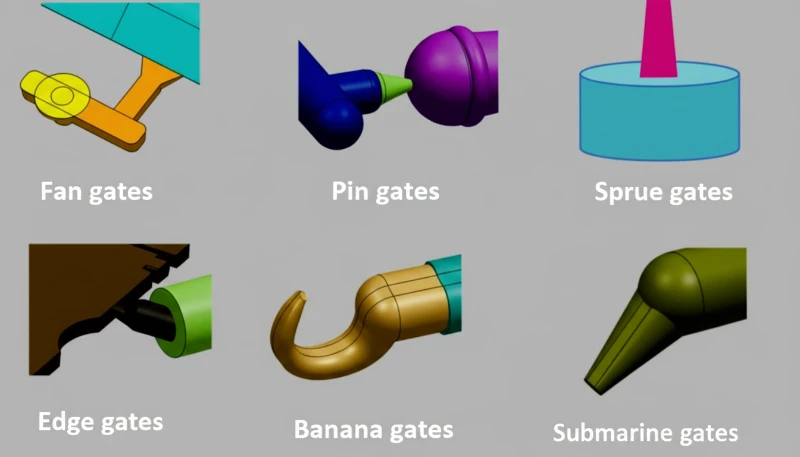
Gate Type & Location N/A (Design Dependent) Impacts how pressure is distributed within the cavity, influencing potential for flash or short shots.

Our process engineers at ZetarMold don’t just look at these numbers in isolation. They use Moldflow simulation software to visualize how molten plastic will behave under these specific conditions. This allows us to predict pressure distribution, identify potential hot spots, and fine-tune the tonnage calculation before any steel is cut for the mold. This proactive approach saves our clients time and money by eliminating costly trial-and-error adjustments on the production floor. It’s this attention to detail that allows us to successfully mold complex parts with challenging materials day in and day out.

What Are the Advantages and Disadvantages?

The primary advantage of precise tonnage calculation is achieving consistent, high-quality part production, while the main disadvantage is the complexity and potential for over-engineering, which can lead to increased energy consumption and wear on machinery. A proper calculation is a balancing act. At ZetarMold, we’ve found that the upfront time spent on accurate calculation pays for itself many times over by avoiding production-halting issues. It’s a core tenet of our process-driven manufacturing philosophy.

The benefits are tangible and directly impact the bottom line. First and foremost is Defect Prevention. Correct tonnage ensures the mold stays perfectly sealed, eliminating flash and ensuring the cavity is completely filled to prevent short shots.4 Second is Mold and Machine Protection. Applying excessive force can crush delicate mold components, damage parting line surfaces, and put undue stress on the machine’s tie bars and hydraulic systems. Using the *correct* force extends the life of both the tool and the machine. Finally, there is Energy Optimization. A larger machine consumes significantly more electricity. By accurately calculating tonnage, we can assign the job to the smallest appropriate machine in our 45-machine fleet, minimizing energy costs per part.

Advantages of Accurate Calculation Disadvantages of Inaccurate Calculation
Prevents flash, short shots, and sinks. Leads to high scrap rates and material waste.
Protects mold parting lines and components. Can damage or prematurely wear out the mold.
Extends the operational life of the molding machine. Causes excessive stress on machine components.
Optimizes energy consumption by using the right-sized machine. Wastes energy and increases operational costs.
Ensures proper venting of gases from the mold cavity. Can trap gas, leading to burns and incomplete fills.

The disadvantages primarily stem from miscalculation. A conservative engineer might grossly overestimate tonnage “just to be safe.” While this might prevent flash, it creates other problems. Excessive clamp force can restrict the venting channels designed to let air escape the cavity. When this trapped air is compressed by the incoming plastic, it can superheat and cause burn marks on the part. It can also create back-pressure that prevents a complete fill. This is why our team doesn’t rely solely on a simple formula; they leverage our two decades of experience to understand the nuances of each part design and material combination, finding the “sweet spot” that delivers perfect parts with maximum efficiency.

What Are the Common Defects and How to Prevent Them?

The most common defects related to incorrect tonnage are flash, short shots, and burn marks — all of which are preventable with accurate clamp force calculation and process control. These defects are direct physical evidence of an imbalance between the clamping force holding the mold shut and the injection pressure forcing plastic into it. Our quality control team at ZetarMold is trained to identify these issues immediately, and our process engineers know exactly how to trace them back to their root cause, which often begins with the initial tonnage setting.

플래시 is the most obvious sign of insufficient clamp tonnage. It appears as a thin, unwanted layer of plastic along the mold’s parting line or around ejector pins. It happens when the injection pressure is high enough to physically push the two halves of the mold apart, creating a gap for the molten plastic to escape. The prevention is straightforward: increase the clamp tonnage in small increments until the flash disappears. However, the true solution lies in performing the correct calculation from the start.

Conversely, a 쇼트 샷 or incomplete fill can sometimes be a symptom of *excessive* clamp tonnage. While its primary cause is often insufficient material or injection speed, overly high clamp force can choke off the mold’s vents. These vents are tiny channels that allow the air inside the cavity to escape as plastic flows in. If they are clamped shut, the trapped air acts as a cushion, preventing the plastic from reaching the furthest points of the cavity. The solution is to reduce clamp tonnage to the calculated optimal level, allowing the vents to function as designed.

결함 Primary Tonnage-Related Cause Prevention Method
플래시 Insufficient clamp tonnage for the given injection pressure. Increase clamp tonnage. Recalculate required force based on actual injection pressure and projected area.
쇼트 샷 / 불완전 채우기 Excessive clamp tonnage crushing mold vents, trapping air. Reduce clamp tonnage to the calculated minimum required value. Ensure vents are clean and properly sized.
Burn Marks (Dieseling) Trapped air superheating due to compression, often caused by blocked vents from excessive tonnage. Optimize clamp force to allow proper venting. Improve vent design and location.
뒤틀림 Non-uniform pressure distribution, sometimes exacerbated by excessive, uneven clamping. Apply correct, uniform clamp force. Optimize gate location and processing parameters for even filling.
: 일반적인 성형 결함으로, 과잉 플라스틱의 얇막한 막이 분할선, 이젝터 핀 주변 또는 배출구에서 몰드 캐비티를 빠져나가는 경우입니다. 이는 대부분 충분하지 않은 클램프 힘으로 발생합니다. Grossly excessive clamp tonnage applied to the mold. Strictly adhere to calculated tonnage values. Never exceed the mold’s maximum rated tonnage.

“Increasing a part’s wall thickness from 1mm to 3mm can decrease the required clamping force.”True

Thicker walls create less resistance to flow, lowering the required injection pressure to fill the part. Since clamp force is needed to counteract injection pressure, a lower injection pressure requirement directly translates to a lower clamp force requirement, often by as much as 30-50%.

“The ‘rule of thumb’ of 4 tons/in² is universally applicable to all materials.”False

This is a dangerous oversimplification. A low-viscosity material like Polystyrene might only need 2 tons/in², while a high-viscosity, glass-filled PEEK could require 8-10 tons/in². Using a universal rule of thumb without considering the specific material is a common cause of molding defects.

Where Is Calculate Injection Mold Tonnage Used?

Calculate Injection Mold Tonnage is used across every industry that relies on plastic parts — from high-volume consumer goods to mission-critical automotive and medical components. The precision of the calculation is directly proportional to the criticality of the final part’s application. At ZetarMold, our diverse client base means we are constantly applying these principles to a wide spectrum of products, each with its own unique requirements for tolerance, material performance, and cosmetic finish. The required tonnage is a fundamental specification that dictates which of our 45 machines is suitable for a given project, whether it’s a small, 50-ton press for tiny electronic connectors or a large, 1500-ton machine for automotive bumpers.

에서 자동차 sector, for example, parts like interior trim panels, dashboard components, and lighting housings have large projected areas and cosmetic surfaces. Accurate tonnage is vital to prevent flash, which would be a cosmetic reject, and to ensure dimensional stability for a perfect fit. In the 의료 field, parts such as syringe barrels or diagnostic device housings are often made from engineering-grade polymers in cleanroom environments. Here, precise tonnage is non-negotiable to guarantee part integrity, prevent contamination from flash, and maintain the validated process window required for regulatory compliance. The table below highlights just a few examples of how tonnage calculation is applied across different industries.

산업 Application Example Key Tonnage Considerations
자동차 Dashboard Fascia Large projected area; A-class surface finish requires zero flash; dimensional stability for assembly.
의료 기기 Pipette Tips or Test Vials Thin walls, high L/T ratio; process consistency for validation; often uses high-flow materials.
소비자 가전 Laptop Casings, Remote Controls Complex geometry with bosses and ribs; thin walls; high cosmetic requirements.
패키징 Thin-Walled Containers and Lids Extremely thin walls and fast cycle times; tonnage must be high enough for fast injection but not crush vents.
산업 Gears, Housings, Power Tool Bodies Often uses glass-filled, high-viscosity materials requiring high clamp force factors (6-10 tons/in²).

How Does Calculate Injection Mold Tonnage Compare to Alternatives?

Calculate Injection Mold Tonnage using detailed formulas and software simulation is vastly superior to simpler alternatives — offering a 15-25% improvement in accuracy over basic “rule of thumb” estimates. While quick estimates have their place for initial quotes, a robust manufacturing process relies on more sophisticated methods. The primary alternatives to a detailed manual calculation are the basic rule of thumb and advanced Finite Element Analysis (FEA) through mold flow simulation software. Each method represents a different point on the spectrum of accuracy, cost, and time investment.

The “Rule of Thumb” method is the fastest and simplest. It involves taking the part’s estimated projected area and multiplying it by a generic factor, like 4 tons/in². This is useful for a ballpark estimate to determine if a part will fit a 100-ton or 1000-ton machine, but it’s too imprecise for production. It ignores critical variables like wall thickness, flow length, and material viscosity.

At ZetarMold, our standard process is a Detailed Manual Calculation. This builds upon the rule of thumb by using material-specific clamp factors and applying adjustments for the L/T ratio and average wall thickness. This method provides a high degree of accuracy for about 80% of projects and can be done relatively quickly by an experienced engineer.

For the most complex parts—those with extreme thinness, very long flow paths, or made from exotic materials—we employ Moldflow Simulation Software. This software creates a virtual model of the mold and simulates the entire injection process. It provides a highly accurate prediction of the required clamp force by analyzing pressures throughout the cavity in real-time. While the most accurate, it is also the most time-consuming and requires specialized software and expertise.

Method 정확성 속도 비용 최상의 대상
Rule of Thumb Low (±25-40%) Very Fast (Seconds) Free Initial rough quoting, ballpark machine sizing.
Detailed Manual Calculation High (±10-15%) Fast (Minutes) Low (Engineer’s time) Most standard production projects.
Moldflow Simulation (FEA) Very High (±5%) Slow (Hours to Days) High (Software/Expertise) Complex parts, high-risk projects, process optimization.

자주 묻는 질문

사출 금형 톤수는 어떻게 계산하나요?

사출 금형의 톤수는 부품의 전체 투영 면적(제품 및 러너 시스템 포함)을 제곱인치 단위로 계산한 후, 재료별 클램핑력 계수(톤/제곱인치)를 곱하여 산출합니다. 예를 들어, 투영 면적이 100제곱인치인 부품에 3톤/인치² 계수의 재료를 사용할 경우, 기본 클램핑력은 300톤(100인치² * 3톤/인치²)이 필요합니다.

사출 성형의 클램핑력 공식은 무엇인가요?

기본 공식은 다음과 같습니다: 클램핑력(톤) = 투영 면적(in²) × 클램프력 계수(톤/in²). 더 고급 계산에는 재료의 점도(종종 용융 흐름 지수로 표시됨), 부품의 벽 두께, 흐름 길이 대 두께(L/T) 비율에 대한 조정 계수도 포함됩니다.

어느 정도 톤수의 사출 성형기가 필요합니까?

필요한 기계 토너지를 결정하려면 먼저 특정 부품과 재료에 필요한 클램핑력을 계산하세요. 그런 다음 계산된 요구 사항보다 최소 10-15% 높은 최대 토너지 등급의 기계를 선택하십시오. 또한 최적의 성능과 효율성을 위해 필요한 토너지가 기계 최대 용량의 40%에서 80% 사이에 있는 기계를 사용하는 것이 권장됩니다.

사출 성형 톤수의 경험 법칙은 무엇인가요?

사출 성형의 토너지에 관한 일반적인 경험 법칙은 투영 부품 면적 1제곱인치당 2~5톤의 클램핑력을 사용하는 것입니다. 예를 들어, 60제곱인치 부품의 빠른 추정치는 240톤(60 in² × 4톤/in²)이 됩니다. 이는 단지 출발점일 뿐이며, 재료 유형, 부품 복잡성, 벽 두께에 따라 조정되어야 합니다.

투영 면적이 클램핑 토너지에 어떤 영향을 미치나요?

사출 면적은 클램핑 톤수와 직접적이고 선형적인 관계를 가집니다; 다른 모든 요소가 동일하게 유지된다고 가정할 때, 사출 면적이 두 배가 되면 필요한 클램핑 힘도 두 배가 됩니다. 이는 사출 압력이 금형을 열려고 작용하는 표면적을 정의하기 때문에 톤수 계산에서 가장 중요한 단일 변수입니다.

클램핑력과 사출 압력의 차이는 무엇인가요?

클램핑력은 두 개의 금형 반쪽을 닫아두는 힘(톤 단위)입니다. 사출 압력은 나사가 녹은 플라스틱을 금형 캐비티로 밀어넣기 위해 가하는 압력(PSI 단위)입니다. 총 분리력(캐비티 압력 × 투영 면적)은 금형이 플래싱되는 것을 방지하기 위해 클램핑력으로 극복되어야 합니다.

무엇이 사출 금형 톤수를 증가시키는 요인인가요?

필요 사출 금형 톤수를 증가시키는 몇 가지 주요 요인이 있습니다. 여기에는 더 큰 부품 투영 면적, 더 높은 점도의 재료 사용(예: PP 대비 PC), 더 얇은 벽으로 부품 설계, 그리고 벽 두께에 비해 긴 유동 길이(높은 L/T 비율)가 포함됩니다. 이러한 각 요인은 유동 저항을 증가시켜 더 높은 사출 압력이 필요하게 되고, 결과적으로 금형을 밀봉 상태로 유지하기 위해 더 많은 클램프력이 필요합니다.

Your Partner for Precision Injection Molding

Accurately calculating injection mold tonnage is not just an academic exercise; it’s a fundamental pillar of successful, efficient, and high-quality manufacturing. It’s a discipline that blends scientific principles with hands-on experience. For over 20 years, ZetarMold has been mastering this balance. Our team of dedicated engineers leverages their deep knowledge, gained from working with over 400 different materials and running thousands of unique molds, to ensure every project is optimized from the very beginning.

By pairing this expertise with a robust fleet of 45 modern injection molding machines, ranging from 50 to 1500 tons, we can perfectly match your project’s technical requirements to the ideal manufacturing environment. We don’t believe in guesswork. We believe in data, precision, and a process-driven approach that eliminates waste and maximizes value for our clients.

Whether you have a complex medical component, a large automotive part, or a high-volume consumer product, our team is ready to apply our technical rigor to your project. Contact ZetarMold today to discuss your requirements and discover how our precision-focused approach to injection molding can bring your design to life with unparalleled quality and efficiency.


1 Projected Area: The two-dimensional shadow or profile of a part and its runner system as seen from the direction of the clamp force. It is the primary area on which injection pressure acts to separate the mold halves.

2 점성: A fluid’s resistance to flow. In injection molding, a high-viscosity material (like polycarbonate) is “thicker” and requires more pressure to inject than a low-viscosity material (like polystyrene).

3 플래시: A common molding defect where a thin film of excess plastic escapes the mold cavity at the parting line, around ejector pins, or at vents. It is most often caused by insufficient clamp force.

4 쇼트 샷사출 금형 톤수를 어떻게 계산하나요? | ZetarMold

Accurate tonnage calculation directly reduces injection molding cost per part — undersized machines cause flash and rejects; oversized machines waste energy.

To explore ZetarMold’s full range of injection mold manufacturing capabilities, visit our injection mold service page for tooling specifications, lead times, and pricing.

Need a Quote for Your Injection Molding Project?

Get competitive pricing, DFM feedback, and production timeline from ZetarMold’s engineering team.

Request a Free Quote → See our Injection Molding Complete Guide for a comprehensive overview.

최신 게시물
Facebook
트위터
LinkedIn
Pinterest
Mike Tang 사진
마이크 탕

Hi, I'm the author of this post, and I have been in this field for more than 20 years. and I have been responsible for handling on-site production issues, product design optimization, mold design and project preliminary price evaluation. If you want to custom plastic mold and plastic molding related products, feel free to ask me any questions.

나와 연결하기 →

빠른 견적 요청하기

다음을 통해 도면 및 세부 요구 사항을 보내세요. 

Emial:[email protected]

또는 아래 문의 양식을 작성하세요:

빠른 견적 요청하기

다음을 통해 도면 및 세부 요구 사항을 보내세요. 

Emial:[email protected]

또는 아래 문의 양식을 작성하세요:

빠른 견적 요청하기

다음을 통해 도면 및 세부 요구 사항을 보내세요. 

Emial:[email protected]

또는 아래 문의 양식을 작성하세요:

빠른 견적 요청하기

다음을 통해 도면 및 세부 요구 사항을 보내세요. 

Emial:[email protected]

또는 아래 문의 양식을 작성하세요:

빠른 견적 요청하기

다음을 통해 도면 및 세부 요구 사항을 보내세요. 

Emial:[email protected]

또는 아래 문의 양식을 작성하세요:

브랜드에 대한 빠른 견적 요청하기

다음을 통해 도면 및 세부 요구 사항을 보내세요. 

Emial:[email protected]

또는 아래 문의 양식을 작성하세요:

댓글 작성하기

이 도움말에 대한 자세한 내용을 보려면 "[email protected]"으로 이메일 주소를 입력하세요.

빠른 견적 요청하기

다음을 통해 도면 및 세부 요구 사항을 보내세요. 

Emial:[email protected]

또는 아래 문의 양식을 작성하세요:

빠른 견적 요청하기

다음을 통해 도면 및 세부 요구 사항을 보내세요. 

Emial:[email protected]

또는 아래 문의 양식을 작성하세요: