 Saltar para o conteúdo

Se precisar de produzir 100.000 peças de plástico idênticas, o molde por injeção é quase sempre a resposta certa. O processo oferece tempos de ciclo medidos em segundos, custos por peça que descem abaixo de dez cêntimos em grande escala e uma consistência dimensional que outros métodos de fabrico simplesmente não conseguem igualar. Quer esteja a produzir caixas para dispositivos médicos, conectores automóveis ou invólucros para eletrónica de consumo, a economia e a repetibilidade do molde por injeção fazem dele a espinha dorsal da produção em massa moderna para componentes de plástico. Em praticamente todas as indústrias de fabrico em todo o mundo, nenhum outro processo se aproxima da sua velocidade de produção e custo unitário em volume.
In our 20+ years running moldagem por injeção operações na instalação da ZetarMold em Xangai, vimos em primeira mão como esta tecnologia transforma pequenas séries de protótipos em programas de produção de milhões de unidades. Este guia explica exatamente porque é que o molde por injeção se destaca na produção em massa — com números reais, compromissos reais e zero exagero — para que possa tomar decisões de fornecimento confiantes para o seu próximo projeto de alto volume.
- Injection molding cycle times range from 2–30 seconds per shot
- Unit costs can drop below $0.10 at volumes above 100,000
- A single mold can produce 1 million+ parts with proper maintenance
- Multi-cavity molds multiply output without multiplying cycle time
- Automation enables 24/7 unattended production runs
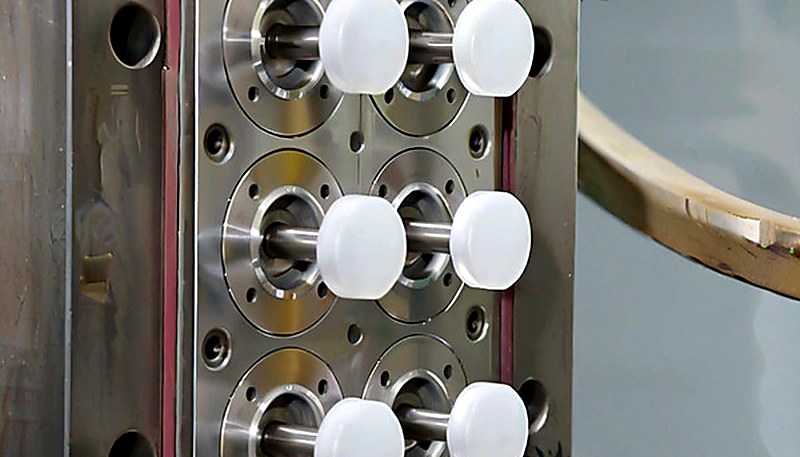
What Makes Injection Molding the Go-To Method for Mass Production?
O molde por injeção é o método de produção em massa dominante para peças de plástico porque oferece tempos de ciclo em segundos e custos por peça abaixo de dez cêntimos. Se está a comparar fornecedores ou a planear aprovisionamentos, o nosso injection molding supplier sourcing guide covers RFQ prep, qualification, and commercial risk checks.
Injection molding dominates high-volume plastic manufacturing because it solves three problems simultaneously: speed, cost, and consistency. Unlike CNC machining (which removes material one part at a time) or 3D printing (which builds layer by layer), injection molding fills an entire mold cavity — or multiple cavities — in a single shot that takes seconds.
Consider a simple connector housing that weighs 8 grams. On a CNC machine, you’d spend 3–5 minutes per part cutting it from a block. With a 3D printer, you’d wait 20–40 minutes per part. An injection molding machine with an 8-cavity mold can produce 8 of those housings every 10 seconds — that’s 2,880 parts per hour on a single machine.
“A single injection mold can produce over 1 million parts with proper maintenance.”Verdadeiro
Hardened H13 steel molds routinely exceed 2,000,000 shots in production environments with scheduled preventive maintenance and proper processing parameters.
“Injection molding is only cost-effective for orders above 100,000 units.”Falso
The breakeven point typically falls between 500 and 3,000 units depending on part complexity. Simple parts with aluminum molds can break even at just 200–500 units.
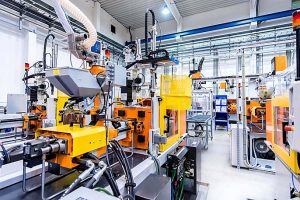
A nossa oficina em Xangai opera 47 máquinas de moldagem por injeção com forças de fecho que variam de 90T a 1850T. Quando um trabalho de alto volume chega à oficina, podemos dedicar várias máquinas simultaneamente. A ideia-chave é que o molde por injeção concentra o custo inicial no molde de injeção tooling.
A production-class steel mold might cost $15,000–$80,000 depending on complexity, but once it’s built, every additional part costs only the raw material and machine time. At 500,000 units, that mold cost amortizes to pennies per part — a cost structure no other process can match for thermoplastic components.
How Fast Can Injection Molding Actually Produce Parts?
Os tempos de ciclo do molde por injeção são tipicamente de 3–30 segundos para a maioria das peças de produção. tempo de ciclo1 no molde por injeção é determinado por quatro fases: injeção (preenchimento da cavidade), embalamento (manutenção da pressão enquanto a peça solidifica), arrefecimento (espera que a peça solidifique o suficiente para ejetar) e ejeção (remoção da peça). Destas, o arrefecimento consome tipicamente 50–70% do tempo total do ciclo.
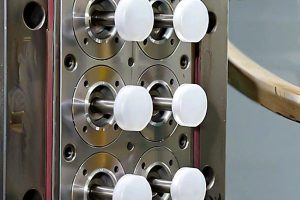
Um componente de embalagem de paredes finas pode ter um ciclo total de 3–5 segundos, enquanto uma peça estrutural de paredes grossas pode levar 30–60 segundos. Um molde multi-cavidades2 é o verdadeiro multiplicador — em vez de fazer uma peça por ciclo, um molde bem concebido pode produzir 4, 8, 16 ou mesmo 64 peças idênticas por disparo.
| Tipo de peça | Espessura da parede | Tempo de ciclo | Parts/Hr (1 cavity) | Parts/Hr (8 cav) |
|---|---|---|---|---|
| Thin-walled packaging | < 1 mm | 3–5 sec | 720–1,200 | 5,760–9,600 |
| Electronics housing | 1.5–2.5 mm | 8–15 sec | 240–450 | 1,920–3,600 |
| Automotive trim | 2.5–4 mm | 15–30 sec | 120–240 | 960–1,920 |
| Structural bracket | 4–8 mm | 25–60 sec | 60–144 | Os veículos modernos contêm aproximadamente mais de 10.000 componentes de plástico — desde painéis de revestimento interior e conjuntos do tablier até conectores sob o capô, grampos de feixes de cabos e reservatórios de fluidos — a grande maioria produzida por moldagem por injeção. |
At our facility, we regularly run 16-cavity molds for small consumer electronics components, yielding over 10,000 parts per hour on a single machine. Automation stacks another multiplier: servo-driven machines with robotic part removal and automatic material feeding can run unattended for hours.
Why Does Injection Molding Become Cheaper as Volume Increases?
The cost curve of injection molding is a textbook example of economies of scale3. Your first part is the most expensive — it includes the full mold design, CNC machining, EDM, polishing, and testing. But your second part costs almost nothing by comparison, and your 100,000th part is even cheaper because the mold is already paid for.
Here’s a practical example. A medium-complexity electronics housing requires a mold costing roughly $25,000. Raw material (ABS) runs about $2.50/kg, and each part weighs 35 grams — so material cost is roughly $0.09 per part. Machine time on a 200T press costs about $15/hour.
| Volume | Mold/Part | Material/Part | Machine/Part | Total |
|---|---|---|---|---|
| 1,000 units | $25.00 | $0.09 | $0.006 | $25.10 |
| 10,000 units | $2.50 | $0.09 | $0.006 | $2.60 |
| 100,000 units | $0.25 | $0.09 | $0.006 | $0.35 |
| 500,000 units | $0.05 | $0.09 | $0.006 | $0.15 |
| 1,000,000 units | $0.025 | $0.09 | $0.006 | $0.12 |
At volumes above 500,000, mold amortization becomes negligible and material cost dominates. Reducing wall thickness by 0.5mm on a 35-gram part can save 15–20% on material — real money at million-unit volumes. Material regrind adds another advantage: runners and rejected parts can be ground and reprocessed at 15–25% regrind ratio.
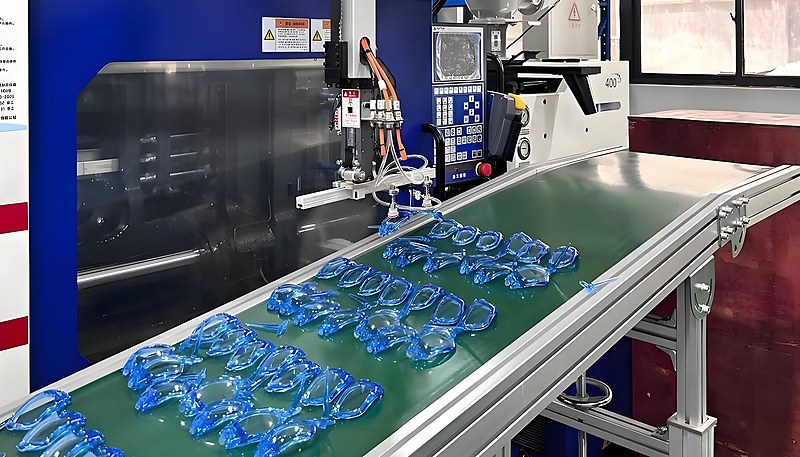
“Material regrind can reduce injection molding waste by 20–30% without compromising quality.”Verdadeiro
Most engineering thermoplastics tolerate 15–25% regrind content. Well-managed regrind programs at facilities like ZetarMold routinely achieve 20–30% waste reduction verified through in-process quality inspection.
“Injection molding material waste cannot be recycled in the production process.”Falso
Runners, sprues, and rejected parts are routinely ground and reprocessed. Most engineering thermoplastics accept 15–25% regrind content without compromising mechanical properties or dimensional accuracy.
What Design Flexibility Does Injection Molding Offer?
One of injection molding’s most overlooked advantages is the design freedom it offers. Molten polymer under high pressure fills cavities with complex geometries — undercuts, internal threads, living hinges, snap fits, and textured surfaces — all in a single cycle. Features requiring secondary operations in CNC machining can be molded directly.
This matters enormously at scale because every secondary operation adds cost, cycle time, and variability. If you can mold a snap-fit closure instead of assembling a screw-on lid, you’ve eliminated an entire assembly step. We’ve helped clients consolidate multi-piece assemblies into single molded components, reducing total part count by 40–60%.
Material versatility compounds this flexibility. With access to over 400 polymer formulations — from commodity polypropylenes to high-temperature PEEK — you can match material precisely to application requirements. Multi-shot and insert molding push this further: our three two-shot machines mold hard-soft combinations in a single cycle.
How Does Injection Molding Maintain Quality at High Volumes?
Consistency at scale is where injection molding truly separates from other processes. Once a mold is qualified and process parameters are locked, every shot fills the same cavity geometry with the same material at the same temperature and pressure. Dimensional variation between shot #1,000 and shot #1,000,000 is typically within ±0.005 inches.
Process monitoring has transformed quality control. Real-time sensors track cavity pressure, melt temperature, fill time, and holding pressure on every shot. Statistical process control algorithms flag drift before it produces out-of-spec parts. Our facility implements a six-step quality process backed by ISO 9001:2015 and ISO 13485 certifications.
“Modern injection molding defect rates can run below 0.1% for critical applications.”Verdadeiro
Medical device and automotive safety component production routinely achieves defect rates under 0.1% through scientific molding methodology, real-time cavity pressure monitoring, and rigorous statistical process control.
“Medical device manufacturers cannot use injection molding for mass production.”Falso
Injection molding is widely used for high-volume medical device production. ISO 13485-certified molding operations produce disposable syringes, diagnostic cartridge housings, and surgical instrument handles in the millions with full traceability.
Compare that to die casting (1–3% typical defect rates) or CNC machining (where tool wear creates progressive dimensional drift). When you’re producing a million parts, keeping your defect rate at 0.1% instead of 2% means 19,000 fewer rejects and the associated scrap and rework.
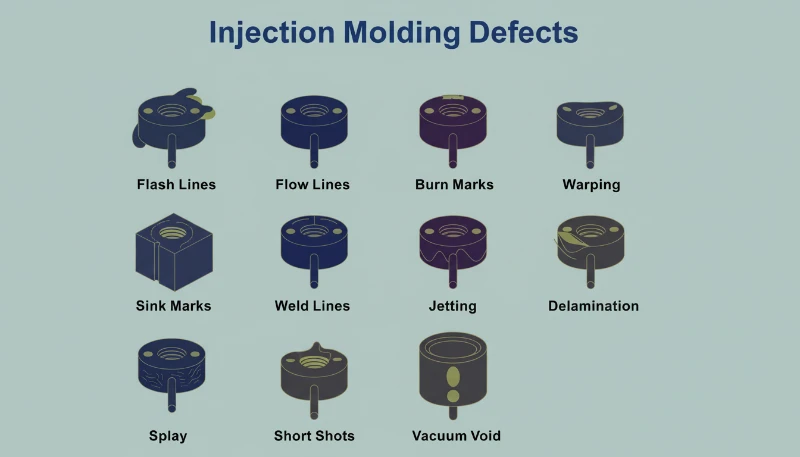
Which Industries Depend on Injection Molding for Mass Production?
Automóvel, médico, eletrónica e embalagem são as quatro principais indústrias que dependem do molde por injeção para a produção em massa. Só a indústria automóvel consome aproximadamente 30% de todas as peças moldadas por injeção a nível mundial — desde revestimentos interiores até caixas de iluminação e reservatórios de fluidos.
| Indústria | Typical Parts | Volume Range | Key Requirements |
|---|---|---|---|
| Automóvel | Bumpers, dashboards, connectors | 50K–5M+ | Durability, UV resistance |
| Médico | Syringes, housings, surgical tools | 100K–50M | Cleanroom, biocompatibility |
| Eletrónica | Housings, brackets, connectors | 100K–100M | EMI shielding, flame retardancy |
| Embalagem | Caps, closures, containers | 1M–1B+ | Food safety, fast cycle |
| Consumer goods | Toys, kitchenware, appliances | 50K–10M | Aesthetics, safety compliance |
Medical device manufacturing deserves special mention because it demonstrates injection molding’s capability in the most demanding regulatory environment. ISO 13485-certified production requires validated processes, documented material traceability, and statistically rigorous quality sampling plans.
“A mid-size sedan contains over 10,000 injection molded plastic parts.”Verdadeiro
Modern vehicles contain approximately 10,000+ plastic components — from interior trim panels and dashboard assemblies to under-hood connectors, wire harness clips, and fluid reservoirs — the vast majority produced by injection molding.
Por que a Moldagem por Injeção é Ideal para a Produção em Massa | ZetarMoldFalso
Conformal cooling inserts, manufactured via metal 3D printing, are increasingly adopted in production molds. They reduce cooling time by 20–40% compared to conventional drilled channels and are validated for millions of cycles in high-volume automotive and consumer electronics applications.
How Do Modern Technologies Improve Injection Molding Productivity?
A produtividade moderna do molde por injeção é impulsionada por máquinas totalmente elétricas, metodologia de moldagem científica, monitorização IoT e arrefecimento conforme. As máquinas totalmente elétricas substituíram amplamente as prensas hidráulicas em aplicações de precisão. As unidades de injeção acionadas por servo oferecem melhorias de consistência de disparo para disparo de 30–50% em relação aos sistemas hidráulicos, com reduções no consumo de energia de 50–70%. Também eliminam o óleo hidráulico — um risco de contaminação em ambientes de sala limpa.
Scientific molding methodology uses Design of Experiments to systematically map the relationship between process parameters and part quality. Once the optimal process window is identified, it’s locked into the machine controller and becomes the documented standard for that mold-part combination.
Industry 4.0 integration connects machines to centralized dashboards via IoT. Machine learning algorithms predict maintenance needs, optimize cycle times, and detect quality anomalies before defects occur. Conformal cooling channels — made possible by metal 3D printing of mold inserts — reduce cooling time by 20–40%.
When Should You Choose Injection Molding Over Alternatives?
O molde por injeção é a melhor escolha quando precisa de 3.000+ peças termoplásticas idênticas com tolerâncias apertadas e geometria complexa. O ponto de equilíbrio entre o molde por injeção e alternativas (tipicamente usinagem CNC ou fundição de uretano) situa-se geralmente entre 500 e 3.000 unidades, dependendo da complexidade da peça.
| Fator | Choose IM When | Considerar alternativas quando |
|---|---|---|
| Volume | 10,000+ identical parts | Fewer than 500 parts |
| Material | Thermoplastics suit needs | Need metals or ceramics |
| Geometry | Complex 3D shapes | Simple flat parts |
| Linha do tempo | 4–8 weeks for tooling OK | Need parts in days |
| Budget | Tooling pays back over volume | Limited upfront budget |
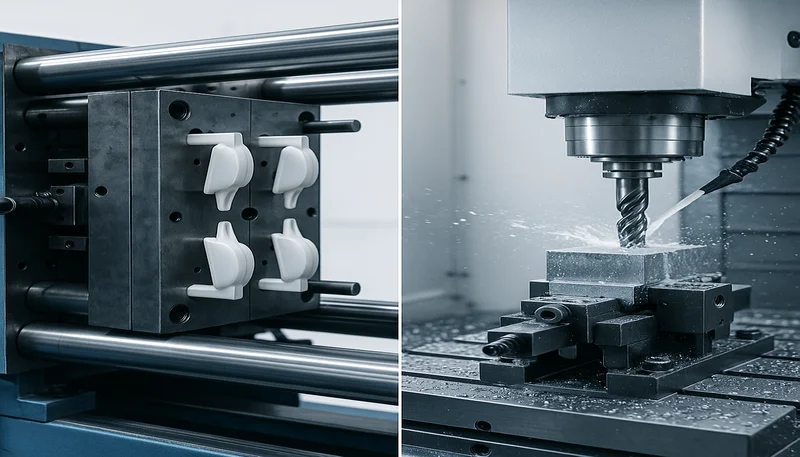
Na fábrica da ZetarMold em Xangai, mais de 120 funcionários de produção operam 47 máquinas de moldagem por injeção de 90T a 1850T, apoiados por 8 engenheiros seniores com mais de 10 anos de experiência cada. Fabricamos mais de 100 conjuntos de moldes por mês na nossa oficina de moldes interna, o que nos dá controlo total sobre a qualidade das ferramentas e os prazos de entrega. A nossa equipa de mais de 30 gestores de projeto anglófonos garante uma comunicação perfeita com OEMs internacionais, desde a revisão inicial de DFM até ao aumento da produção e à fabricação contínua em volume. Saiba mais sobre o fornecimento de peças moldadas por injeção de fornecedores qualificados.
Na fábrica da ZetarMold em Xangai, mais de 120 funcionários de produção operam 47 máquinas de moldagem por injeção de 90T a 1850T, apoiados por 8 engenheiros seniores com mais de 10 anos de experiência cada. Fabricamos mais de 100 conjuntos de moldes por mês na nossa oficina de moldes interna, o que nos dá controlo total sobre a qualidade das ferramentas e os prazos de entrega. A nossa equipa de mais de 30 gestores de projeto anglófonos garante uma comunicação perfeita com OEMs internacionais, desde a revisão inicial de DFM até ao aumento da produção e à fabricação contínua em volume. Saiba mais sobre o fornecimento de peças moldadas por injeção de fornecedores qualificados.
Perguntas mais frequentes
Perguntas mais frequentes
What is the minimum volume needed to make injection molding cost-effective?
For most parts, injection molding becomes cost-effective at 3,000–10,000 units. The exact breakeven depends on part complexity, material selection, and mold cost. Simple parts with aluminum molds can break even at 500 units, while complex multi-cavity steel molds might need 10,000+ units to fully amortize tooling costs. We recommend running a cost comparison analysis between CNC machining, urethane casting, and injection molding at your expected volume to identify the optimal crossover point for your specific project. This analysis should include tooling amortization calculations at multiple volume breakpoints to identify the precise crossover where injection molding becomes more economical than alternative methods for your specific geometry and material requirements.
How long does an injection mold last in mass production?
A properly maintained P20 steel mold typically lasts 500,000–1,000,000 shots before requiring significant refurbishment. Hardened H13 or S136 steel molds can exceed 2,000,000 shots under optimal conditions. Aluminum prototype molds last 1,000–10,000 shots and are best suited for bridging to production tooling. Actual mold lifespan depends on material abrasiveness, part geometry complexity, processing temperatures, and preventive maintenance discipline. At our facility, we track shot counts and schedule maintenance proactively to prevent quality drift. Regular cleaning, polishing, and component replacement programs extend mold life significantly. Thermal fatigue and abrasive wear are the primary factors limiting mold longevity, particularly when processing glass-filled or mineral-filled engineering resins.
Can injection molding produce parts with tight tolerances consistently?
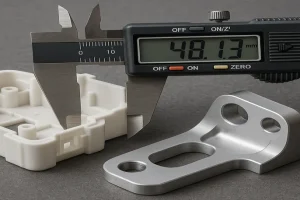
Yes, modern injection molding routinely holds tolerances of ±0.005 inches (±0.13mm) for standard parts and ±0.001 inches (±0.025mm) for precision applications. Achieving these tolerances requires proper mold design with adequate cooling, scientific molding methodology for process optimization, and consistent material supply. Real-time cavity pressure monitoring and statistical process control ensure this consistency is maintained across millions of production cycles, making injection molding one of the most repeatable manufacturing processes available. Medical and automotive applications often require even tighter tolerances, achieved through optimized gate design, uniform cooling channel layout, and post-mold dimensional measurement using coordinate measuring machines (CMMs) for statistical verification.
How does multi-cavity molding increase production output?
Multi-cavity molds produce multiple identical parts in each machine cycle. An 8-cavity mold makes 8 parts per shot with minimal cycle time increase compared to a single-cavity mold. This means production output scales nearly linearly with cavity count — an 8-cavity mold produces roughly 7–8 times more parts per hour than a single-cavity version. Family molds can also produce different parts from the same product assembly in one shot, further improving production efficiency and reducing per-part manufacturing costs. The trade-off is higher initial mold cost, since multi-cavity molds require more machining time and larger mold bases. However, the per-part savings at volumes above 50,000 units typically justify the additional tooling investment within the first production run.
What is the typical lead time for injection molding mass production?
Production tooling fabrication typically takes 4–8 weeks depending on mold complexity, number of cavities, and surface finish requirements. First article inspection and process validation adds 1–2 weeks. Once the mold is qualified, production of 100,000+ parts generally ships within 2–4 weeks. Expedited tooling using aluminum molds can reduce initial lead time to 2–3 weeks for prototyping and bridge production. For urgent programs, we can run multiple machines in parallel to compress production timelines significantly. Rush tooling programs with dedicated mold shop resources can further compress timelines, though this typically adds 20–40% to tooling costs. Planning tooling concurrently with final design optimization saves the most overall schedule time.
Can injection molding handle different materials in one part?
Yes, through two-shot (multi-component) molding and overmolding processes. Two-shot machines mold two different materials in a single cycle — ideal for hard-soft combinations like a rigid ABS body with a TPE grip surface. Insert molding also enables embedding metal components, threaded inserts, or electronic subassemblies during the molding cycle. These integrated processes eliminate secondary assembly steps, reduce labor costs, and improve bond strength between dissimilar materials compared to adhesive-based assembly methods. The key limitation is material compatibility — the two materials must adhere properly during molding. Material suppliers provide compatibility data, and prototype testing validates bond strength before committing to production tooling investment.
How does injection molding compare to 3D printing for mass production?
Injection molding is dramatically faster and cheaper at production volumes. A part that costs $0.15 to injection mold might cost $3–$8 to 3D print in equivalent materials, with cycle times of seconds versus hours per part. 3D printing excels at prototyping, design iteration, and low-volume production under 100 units. Injection molding dominates above 1,000 units. However, 3D printing technology increasingly supports injection molding through rapid tooling — 3D-printed mold inserts can produce short runs of 100–1,000 parts in production materials.
What quality certifications should an injection molding manufacturer have?
At minimum, ISO 9001:2015 certification for quality management systems. Medical device production requires ISO 13485 certification with cleanroom capabilities. Automotive applications typically require IATF 16949 certification. Environmental management (ISO 14001) and occupational health and safety (ISO 45001) certifications indicate a well-managed operation with proper governance. Always verify that the certification scope specifically covers the injection molding processes you need — not just the company’s administrative functions. Request certification originals and audit reports during your supplier qualification process. Third-party certification body audits (TUV, SGS, BSI) provide additional confidence beyond self-declarations. For regulated industries, verify that specific product categories are covered under the certification scope, not just general manufacturing processes.
-
tempo de ciclo: Tempo de ciclo refere-se ao tempo total necessário para completar um disparo de moldagem por injeção, desde o fecho do molde até à ejeção da peça. ↩
-
molde multi-cavidades: Um molde multicavidade é uma ferramenta de molde que contém duas ou mais cavidades idênticas, permitindo a produção de várias peças simultaneamente em cada ciclo de moldagem. ↩
-
economies of scale: Economias de escala referem-se à vantagem de custo alcançada quando o volume de produção aumenta, distribuindo os custos fixos, como o investimento em ferramentas, por mais unidades. ↩




 EN
EN  ES
ES  FR
FR  DE
DE  PT
PT  AR
AR  RU
RU  JA
JA  KO
KO  IT
IT  NL
NL  TR
TR  PL
PL 