Si necesita hacer 100,000 partes plásticas idénticas, la moldura por inyección casi siempre es la respuesta correcta. El proceso ofrece tiempos de ciclo medidos en segundos, costos por parte que caen bajo un dime a escala, y consistencia dimensional que otros métodos de manufactura simplemente no pueden igualar. Ya sea que produzca cubiertas de dispositivos médicos, conectores automotrices, o envolventes de electrónica de consumo, la economía y repetibilidad de la moldura por inyección la hacen el backbone de la producción masiva moderna para componentes plásticos. En prácticamente todas las industrias de manufactura mundialmente, ningún otro proceso se acerca a igualar su velocidad de output y costo unitario a volumen.
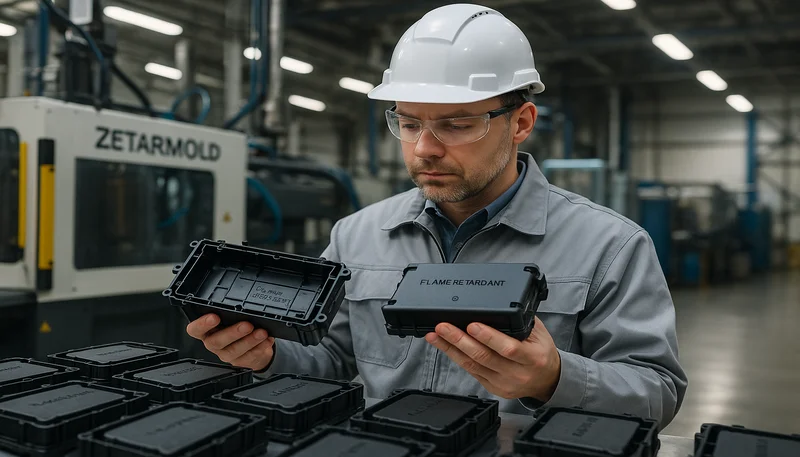
En más de 20 años gestionando operaciones de moldeo por inyección en la planta de ZetarMold en Shanghái, hemos comprobado de primera mano cómo esta tecnología convierte pequeñas series de prototipos en programas de producción de millones de unidades. Esta guía explica exactamente por qué el moldeo por inyección destaca en la producción en masa, con cifras reales, compromisos reales y sin exageraciones, para que pueda tomar decisiones de aprovisionamiento fundamentadas en su próximo proyecto de gran volumen.
- Los tiempos de ciclo del moldeo por inyección oscilan entre 2–30 segundos por inyección
- Los costes unitarios pueden caer por debajo de $0,10 con volúmenes superiores a 100.000
- Un solo molde puede producir más de 1 millón de piezas con el mantenimiento adecuado
- Los moldes multicavidad multiplican la producción sin multiplicar el tiempo de ciclo
- La automatización permite series de producción desatendidas 24/7
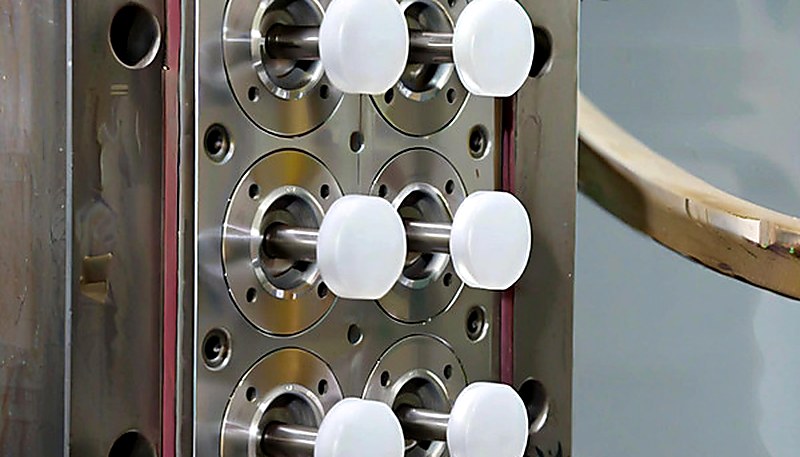
¿Por qué el moldeo por inyección es el método preferido para la producción en masa?
El moldeo por inyección es el método dominante para producir piezas de plástico en masa porque ofrece ciclos de pocos segundos y costes por pieza inferiores a diez centavos. Si está comparando proveedores o planificando compras, nuestra guía para buscar proveedores de moldeo por inyección aborda la preparación de solicitudes de cotización, la homologación y la comprobación de riesgos comerciales.
El moldeo por inyección domina la fabricación de plástico de gran volumen porque resuelve simultáneamente tres problemas: velocidad, coste y uniformidad. A diferencia del mecanizado CNC —que retira material pieza a pieza— o la impresión 3D —que construye capa a capa—, llena una cavidad completa, o varias, en una sola inyección que tarda segundos.
Considere una carcasa de conector sencilla que pesa 8 gramos. En una máquina CNC, se tardarían 3–5 minutos por pieza en mecanizarla a partir de un bloque. Con una impresora 3D, habría que esperar 20–40 minutos por pieza. Una máquina de moldeo por inyección con un molde de 8 cavidades puede producir 8 de esas carcasas cada 10 segundos, es decir, 2,880 piezas por hora en una sola máquina.
"Un solo molde de inyección puede producir más de 1 millón de piezas con un mantenimiento adecuado."True
Los moldes de acero H13 endurecido superan habitualmente los 2,000,000 de ciclos en entornos de producción cuando se aplican un mantenimiento preventivo programado y unos parámetros de procesamiento adecuados.
"El moldeo por inyección solo es rentable para pedidos superiores a 100,000 unidades."False
El punto de equilibrio suele situarse entre 500 y 3,000 unidades, según la complejidad de la pieza. Las piezas sencillas con moldes de aluminio pueden alcanzar el equilibrio con solo 200–500 unidades.
Nuestra planta de Shanghái opera 47 máquinas de moldeo por inyección con fuerzas de cierre de entre 90T y 1850T. Cuando llega un trabajo de gran volumen, podemos dedicar varias máquinas al mismo tiempo. La idea clave es que el moldeo por inyección concentra el coste inicial en el utillaje del molde de inyección.
Un molde de acero para producción puede costar $15,000–$80,000 según su complejidad, pero, una vez fabricado, cada pieza adicional solo cuesta la materia prima y el tiempo de máquina. Con 500,000 unidades, el coste del molde se amortiza a unos pocos centavos por pieza, una estructura de costes que ningún otro proceso puede igualar para componentes termoplásticos.
¿Con qué rapidez puede producir piezas realmente el moldeo por inyección?
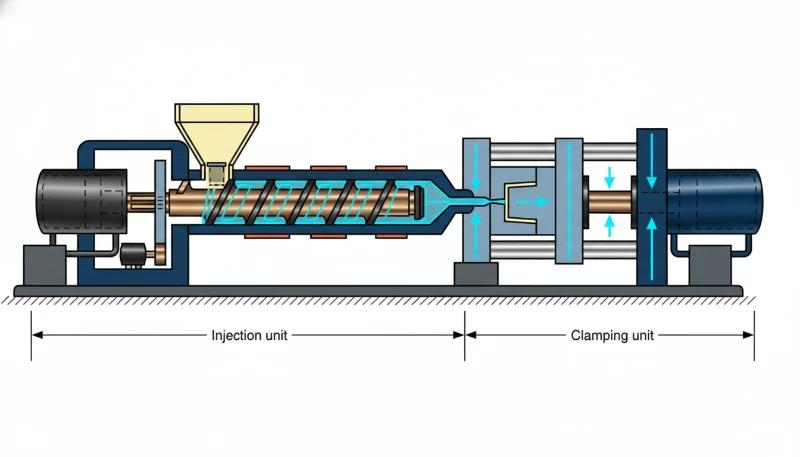
Los tiempos de ciclo del moldeo por inyección suelen ser de 3–30 segundos para la mayoría de las piezas de producción. El tiempo de ciclo1 en este proceso viene determinado por cuatro fases: inyección (llenado de la cavidad), compactación (mantenimiento de la presión mientras solidifica la pieza), enfriamiento (espera hasta que la pieza se solidifica lo suficiente para expulsarla) y expulsión (retirada de la pieza). De ellas, el enfriamiento suele consumir entre el 50 y el 70 % del tiempo total del ciclo.
Un componente de embalaje de pared delgada puede tener un ciclo total de 3–5 segundos, mientras que una pieza estructural de pared gruesa puede tardar 30–60 segundos. Un molde multicavidad2 es el verdadero multiplicador: en lugar de fabricar una pieza por ciclo, un molde bien diseñado puede producir 4, 8, 16 o incluso 64 piezas idénticas por inyección.
| Tipo de pieza | Espesor de pared | Duración del ciclo | Piezas/h (1 cavidad) | Piezas/h (8 cav.) |
|---|---|---|---|---|
| Envases de pared delgada | < 1 mm | 3–5 s | 720–1,200 | 5,760–9,600 |
| Carcasa electrónica | 1.5–2.5 mm | 8–15 s | 240–450 | 1,920–3,600 |
| Revestimientos interiores de automoción | 2.5–4 mm | 15–30 s | 120–240 | 960–1,920 |
| Soporte estructural | 4–8 mm | 25–60 s | 60–144 | 480–1,152 |
Los vehículos modernos contienen aproximadamente 10,000+ componentes plásticos — desde paneles de revestimiento interior y ensamblajes del tablero hasta conectores bajo el capó, sujetadores de arneses de cables y depósitos de fluidos — la gran mayoría producidos por moldeo por inyección.
¿Por qué el moldeo por inyección se abarata a medida que aumenta el volumen?
La curva de costes del moldeo por inyección es un ejemplo clásico de economías de escala3. La primera pieza es la más cara, pues incluye todo el diseño del molde, el mecanizado CNC, la electroerosión, el pulido y las pruebas. En comparación, la segunda pieza cuesta casi nada, y la número 100.000 es aún más barata porque el molde ya está amortizado.
Este es un ejemplo práctico. Una carcasa electrónica de complejidad media requiere un molde que cuesta aproximadamente $25,000. La materia prima (ABS) cuesta alrededor de $2.50/kg y cada pieza pesa 35 gramos, por lo que el coste del material es de unos $0.09 por pieza. El tiempo de máquina en una prensa de 200T cuesta unos $15/hour.
| Volumen | Molde/pieza | Material/pieza | Máquina/Pieza | Total general |
|---|---|---|---|---|
| 1,000 unidades | $25.00 | $0.09 | $0.006 | $25.10 |
| 10,000 unidades | $2.50 | $0.09 | $0.006 | $2.60 |
| 100,000 unidades | $0.25 | $0.09 | $0.006 | $0.35 |
| 500,000 unidades | $0.05 | $0.09 | $0.006 | $0.15 |
| 1,000,000 de unidades | $0.025 | $0.09 | $0.006 | $0.12 |
Con volúmenes superiores a 500.000 unidades, la amortización del molde pasa a ser insignificante y predomina el coste del material. Reducir el espesor de pared en 0.5mm en una pieza de 35 gramos puede ahorrar entre un 15 % y un 20 % de material, un ahorro real con volúmenes de millones de unidades. El material triturado aporta otra ventaja: los canales y las piezas rechazadas pueden triturarse y reprocesarse con una proporción de material triturado del 15–25 %.
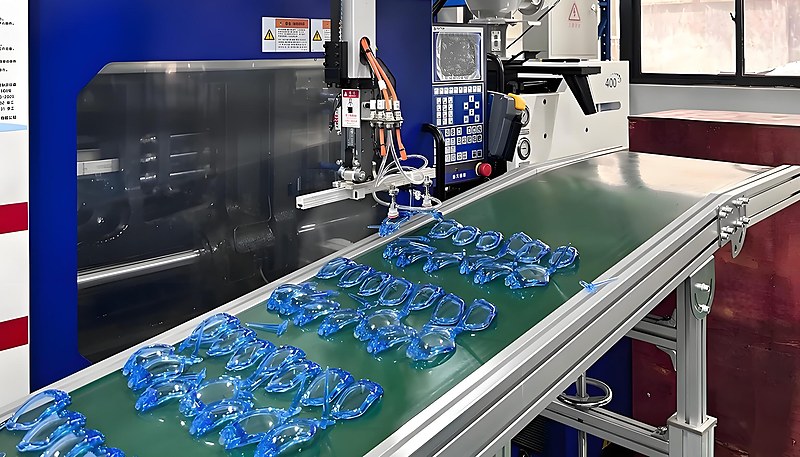
"El triturado reutilizado de material puede reducir los residuos del moldeo por inyección un 20–30% sin comprometer la calidad."True
La mayoría de los termoplásticos de ingeniería toleran un contenido de material triturado del 15–25%. Los programas de reutilización de material triturado bien gestionados en instalaciones como ZetarMold logran habitualmente una reducción de residuos del 20–30%, verificada mediante inspecciones de calidad durante el proceso.
"Los residuos de material del moldeo por inyección no pueden reciclarse en el proceso de producción."False
Los canales, bebederos y piezas rechazadas se trituran y reprocesan de forma habitual. La mayoría de los termoplásticos de ingeniería admiten un contenido de material triturado del 15–25% sin comprometer las propiedades mecánicas ni la precisión dimensional.
¿Qué flexibilidad de diseño ofrece el moldeo por inyección?
Una de las ventajas más ignoradas del moldeo por inyección es la libertad de diseño que ofrece. El polímero fundido a alta presión llena cavidades con geometrías complejas —contrasalidas, roscas internas, bisagras integrales, encajes a presión y superficies texturizadas— en un solo ciclo. Las características que requieren operaciones secundarias en el mecanizado CNC pueden moldearse directamente.
Esto es sumamente importante a escala, porque cada operación secundaria añade coste, tiempo de ciclo y variabilidad. Si se puede moldear un cierre a presión en lugar de ensamblar una tapa roscada, se elimina por completo una etapa de montaje. Hemos ayudado a clientes a consolidar conjuntos de varias piezas en componentes moldeados únicos, reduciendo el número total de piezas en un 40–60%.
La versatilidad de los materiales amplía esta flexibilidad. Con acceso a más de 400 formulaciones de polímeros, desde polipropilenos básicos hasta PEEK de alta temperatura, puede ajustarse el material con precisión a los requisitos de la aplicación. El moldeo de múltiples componentes y por inserción lleva esto más lejos: nuestras tres máquinas de dos componentes moldean combinaciones rígidas y blandas en un solo ciclo.
¿Cómo mantiene la calidad el moldeo por inyección en grandes volúmenes?
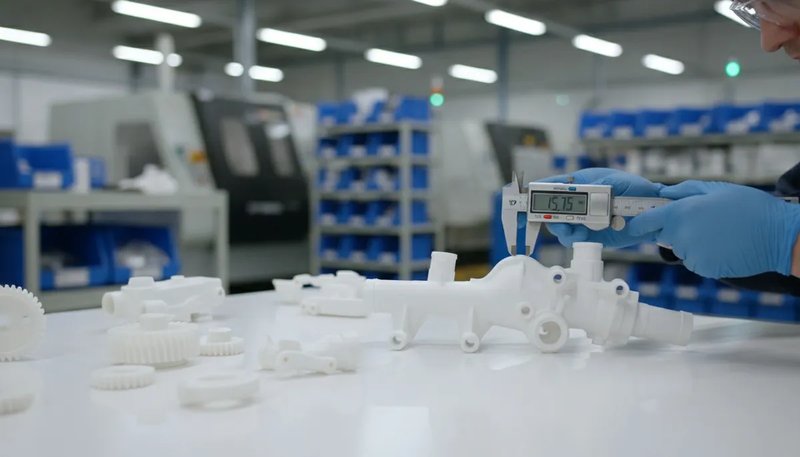
La consistencia a escala es donde el moldeo por inyección se distingue realmente de otros procesos. Una vez cualificado el molde y fijados los parámetros del proceso, cada inyección llena la misma geometría de cavidad con el mismo material a idénticas temperatura y presión. La variación dimensional entre la inyección #1,000 y la #1,000,000 suele mantenerse dentro de ±0.005 pulgadas.
La supervisión de procesos ha transformado el control de calidad. Los sensores en tiempo real registran la presión de cavidad, la temperatura de la masa fundida, el tiempo de llenado y la presión de mantenimiento en cada inyección. Los algoritmos de control estadístico de procesos detectan desviaciones antes de que produzcan piezas fuera de especificación. Nuestras instalaciones aplican un proceso de calidad de seis pasos respaldado por las certificaciones ISO 9001:2015 e ISO 13485.
"Las tasas de defectos del moldeo por inyección moderno pueden ser inferiores al 0.1% en aplicaciones críticas."True
La producción de dispositivos médicos y componentes de seguridad para automoción alcanza habitualmente tasas de defectos inferiores al 0.1% mediante metodología de moldeo científico, supervisión en tiempo real de la presión de cavidad y un control estadístico riguroso del proceso.
"Los fabricantes de dispositivos médicos no pueden utilizar el moldeo por inyección para la producción en masa."False
El moldeo por inyección se utiliza ampliamente para dispositivos médicos de gran volumen. Las operaciones certificadas ISO 13485 producen millones de jeringas desechables, carcasas de cartuchos diagnósticos y mangos de instrumental con trazabilidad completa.
Compárelo con la fundición a presión (tasas de defectos habituales del 1–3%) o el mecanizado CNC, donde el desgaste de la herramienta provoca una deriva dimensional progresiva. Al producir un millón de piezas, mantener la tasa de defectos en el 0.1% en lugar del 2% supone 19,000 rechazos menos, además de los correspondientes desechos y retrabajos.
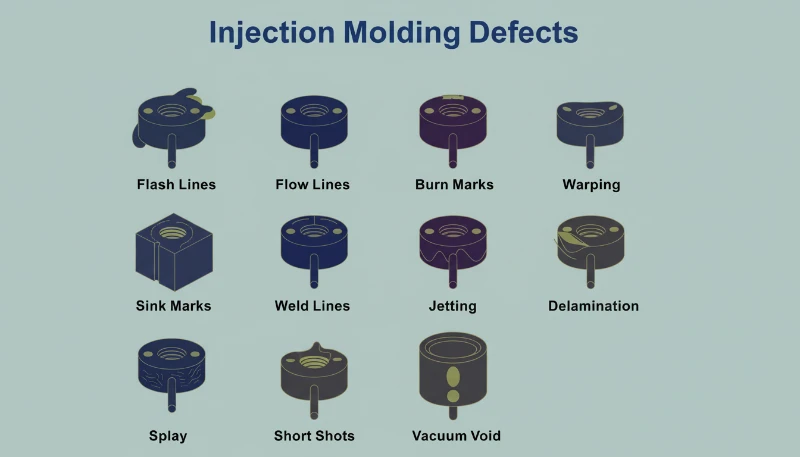
¿Qué sectores dependen del moldeo por inyección para la producción en masa?
Automotriz, médica, electrónica, y embalaje son las cuatro industrias principales que dependen de la moldura por inyección para producción masiva. La industria automotriz sola consume aproximadamente 30% de todas las partes moldeadas por inyección globalmente — desde trim interior hasta cubiertas de iluminación y reservas de fluidos.
| Industria | Piezas típicas | Rango de volumen | Requisitos clave |
|---|---|---|---|
| Automoción | Parachoques, salpicaderos, conectores | 50K–5M+ | Durabilidad, resistencia a los rayos UV |
| Médico | Jeringas, carcasas, instrumentos quirúrgicos | 100K–50M | Sala limpia, biocompatibilidad |
| Electrónica | Carcasas, soportes, conectores | 100K–100M | Blindaje EMI, retardancia de llama |
| Embalaje | Tapones, cierres, envases | 1M–1B+ | Seguridad alimentaria, ciclo rápido |
| Bienes de consumo | Juguetes, utensilios de cocina, electrodomésticos | 50K–10M | Estética, cumplimiento de seguridad |
La fabricación de dispositivos médicos merece una mención especial porque demuestra la capacidad del moldeo por inyección en el entorno normativo más exigente. La producción certificada según ISO 13485 requiere procesos validados, trazabilidad documentada de los materiales y planes de muestreo de calidad con rigor estadístico.
"Un sedán mediano contiene más de 10,000 piezas de plástico moldeadas por inyección."True
Los vehículos modernos contienen aproximadamente 10,000+ componentes de plástico —desde paneles de revestimiento interior y conjuntos del salpicadero hasta conectores del compartimento del motor, clips de mazos de cables y depósitos de fluidos—, la gran mayoría producidos mediante moldeo por inyección.
"Los canales de refrigeración conformados no pueden utilizarse en moldes de inyección para producción."False
Los insertos de refrigeración conformal fabricados mediante impresión 3D de metal se adoptan cada vez más en moldes de producción. Reducen el tiempo de enfriamiento un 20–40% frente a los canales perforados convencionales y están validados para millones de ciclos en aplicaciones de automoción y electrónica de consumo de gran volumen.
¿Cómo mejoran las tecnologías modernas la productividad del moldeo por inyección?
La productividad moderna de moldura por inyección es impulsada por máquinas totalmente eléctricas, metodología de moldura científica, monitoreo IoT, y cooling conformal. Las máquinas totalmente eléctricas han mayormente reemplazado presses hidráulicos en aplicaciones de precisión. Las unidades de inyección servo-driven ofrecen mejoras de consistencia shot-to-shot de 30–50% sobre sistemas hidráulicos, con reducciones de consumo de energía de 50–70%. También eliminan aceite hidráulico — un riesgo de contaminación en ambientes cleanroom.
La metodología de moldeo científico utiliza el diseño de experimentos para cartografiar sistemáticamente la relación entre los parámetros del proceso y la calidad de la pieza. Una vez identificada la ventana de proceso óptima, se bloquea en el controlador de la máquina y se convierte en el estándar documentado para esa combinación de molde y pieza.
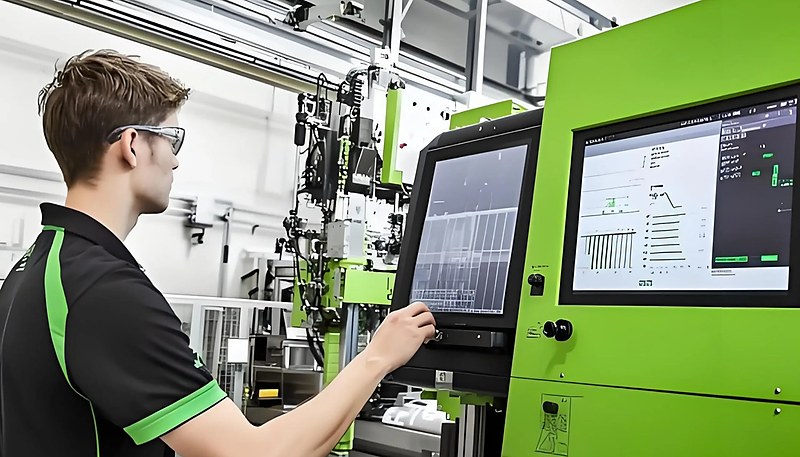
La integración de la Industria 4.0 conecta las máquinas con paneles centralizados mediante IoT. Los algoritmos de aprendizaje automático predicen las necesidades de mantenimiento, optimizan los tiempos de ciclo y detectan anomalías de calidad antes de que aparezcan defectos. Los canales de refrigeración conformales —posibles gracias a la impresión 3D en metal de insertos de molde— reducen el tiempo de enfriamiento entre un 20 y un 40 %.
¿Cuándo debe elegir el moldeo por inyección frente a otras alternativas?
La moldura por inyección es la mejor opción cuando necesita 3,000+ partes termoplásticas idénticas con tolerancias estrechas y geometría compleja. El punto de equilibrio entre la moldura por inyección y alternativas (normalmente CNC machining o urethane casting) usualmente cae entre 500 y 3,000 unidades dependiendo de la complejidad de la parte.
| Factor | Elija IM cuando | Considere alternativas cuando |
|---|---|---|
| Volumen | Más de 10.000 piezas idénticas | Menos de 500 piezas |
| Tipo de material | Los termoplásticos se adaptan a las necesidades | Requiere metales o cerámicas |
| Geometría | Formas 3D complejas | Piezas planas sencillas |
| Cronología | 4–8 semanas hasta aprobar el utillaje | Necesita piezas en cuestión de días |
| Presupuesto | El utillaje se amortiza con el volumen | Presupuesto inicial limitado |
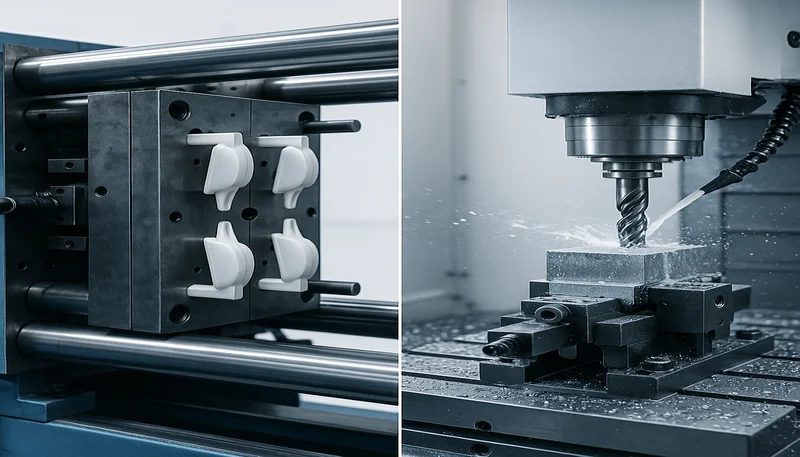
En la fábrica de ZetarMold en Shanghái, 120+ empleados de producción operan 47 máquinas de moldeo por inyección de 90T a 1850T, con el apoyo de 8 ingenieros sénior, cada uno con 10+ años de experiencia. Fabricamos 100+ juegos de moldes al mes en nuestro taller interno de moldes, lo que nos permite controlar por completo la calidad del utillaje y los plazos de entrega. Nuestro equipo de 30+ jefes de proyecto angloparlantes garantiza una comunicación fluida con OEMs internacionales desde la revisión DFM inicial hasta el aumento gradual de la producción y la fabricación continua en grandes volúmenes. Obtenga más información sobre el abastecimiento de piezas moldeadas por inyección de proveedores cualificados.
En la fábrica de ZetarMold en Shanghái, 120+ empleados de producción operan 47 máquinas de moldeo por inyección de 90T a 1850T, con el apoyo de 8 ingenieros sénior, cada uno con 10+ años de experiencia. Fabricamos 100+ juegos de moldes al mes en nuestro taller interno de moldes, lo que nos permite controlar por completo la calidad del utillaje y los plazos de entrega. Nuestro equipo de 30+ jefes de proyecto angloparlantes garantiza una comunicación fluida con OEMs internacionales desde la revisión DFM inicial hasta el aumento gradual de la producción y la fabricación continua en grandes volúmenes. Obtenga más información sobre el abastecimiento de piezas moldeadas por inyección de proveedores cualificados.
Preguntas frecuentes
Preguntas frecuentes
¿Cuál es el volumen mínimo necesario para que el moldeo por inyección resulte rentable?
Para la mayoría de las piezas, el moldeo por inyección resulta rentable a partir de 3,000–10,000 unidades. El punto de equilibrio exacto depende de la complejidad de la pieza, la selección del material y el coste del molde. Las piezas sencillas con moldes de aluminio pueden alcanzar el punto de equilibrio con 500 unidades, mientras que los moldes complejos de acero multicavidad pueden necesitar 10,000+ unidades para amortizar por completo el utillaje. Recomendamos comparar los costes del mecanizado CNC, la colada de uretano y el moldeo por inyección al volumen previsto para determinar el punto de cruce óptimo del proyecto. Este análisis debe incluir cálculos de amortización del utillaje en varios niveles de volumen para identificar el punto exacto en el que el moldeo por inyección resulta más económico que los métodos alternativos para sus requisitos concretos de geometría y material.
¿Cuánto dura un molde de inyección en la producción en masa?
Un molde de acero P20 con un mantenimiento adecuado suele durar entre 500,000 y 1,000,000 de ciclos antes de requerir una renovación importante. Los moldes de acero endurecido H13 o S136 pueden superar los 2,000,000 de ciclos en condiciones óptimas. Los moldes prototipo de aluminio duran entre 1,000 y 10,000 ciclos y son idóneos como solución puente hasta el utillaje de producción. La vida útil real del molde depende de la abrasividad del material, la complejidad geométrica de la pieza, las temperaturas de procesamiento y la disciplina de mantenimiento preventivo. En nuestras instalaciones registramos el número de ciclos y programamos el mantenimiento de forma proactiva para evitar desviaciones de calidad. Los programas periódicos de limpieza, pulido y sustitución de componentes prolongan considerablemente la vida del molde. La fatiga térmica y el desgaste abrasivo son los principales factores que limitan la longevidad del molde, sobre todo al procesar resinas de ingeniería reforzadas con fibra de vidrio o cargas minerales.
¿Puede el moldeo por inyección producir sistemáticamente piezas con tolerancias estrechas?
Sí, el moldeo por inyección moderno mantiene habitualmente tolerancias de ±0,005 pulgadas (±0,13 mm) para piezas estándar y de ±0,001 pulgadas (±0,025 mm) para aplicaciones de precisión. Lograr estas tolerancias exige un diseño adecuado del molde con refrigeración suficiente, una metodología de moldeo científico para optimizar el proceso y un suministro uniforme de material. La supervisión en tiempo real de la presión de la cavidad y el control estadístico del proceso garantizan que esta uniformidad se mantenga durante millones de ciclos de producción, lo que convierte al moldeo por inyección en uno de los procesos de fabricación más repetibles disponibles. Las aplicaciones médicas y de automoción suelen exigir tolerancias aún más estrictas, que se consiguen mediante un diseño optimizado de la compuerta, una disposición uniforme de los canales de refrigeración y la medición dimensional posterior al moldeo con máquinas de medición por coordenadas (CMM) para su verificación estadística.
¿Cómo aumenta el moldeo multicavidad el volumen de producción?
Los moldes multicavidad producen varias piezas idénticas en cada ciclo de máquina. Un molde de 8 cavidades fabrica 8 piezas por inyección con un aumento mínimo del tiempo de ciclo frente a un molde de una sola cavidad. Esto significa que la producción aumenta de forma casi lineal con el número de cavidades: un molde de 8 cavidades produce aproximadamente entre 7 y 8 veces más piezas por hora que una versión de una sola cavidad. Los moldes familiares también pueden producir en una sola inyección distintas piezas del mismo conjunto de producto, lo que mejora aún más la eficiencia de producción y reduce los costes de fabricación por pieza. La contrapartida es un mayor coste inicial del molde, ya que los moldes multicavidad requieren más tiempo de mecanizado y bases de mayor tamaño. Sin embargo, con volúmenes superiores a 50.000 unidades, el ahorro por pieza suele justificar la inversión adicional en utillaje durante la primera serie de producción.
¿Cuál es el plazo habitual para la producción en masa mediante moldeo por inyección?
La fabricación de utillaje de producción suele tardar entre 4 y 8 semanas, según la complejidad del molde, el número de cavidades y los requisitos de acabado superficial. La inspección del primer artículo y la validación del proceso añaden entre 1 y 2 semanas. Una vez homologado el molde, la producción de más de 100.000 piezas suele enviarse en un plazo de 2 a 4 semanas. El utillaje acelerado con moldes de aluminio puede reducir el plazo inicial a 2–3 semanas para prototipos y producción puente. En programas urgentes podemos operar varias máquinas en paralelo para acortar considerablemente los plazos de producción. Los programas urgentes de utillaje con recursos exclusivos del taller pueden reducir aún más los plazos, aunque suelen añadir entre un 20 y un 40 % al coste del utillaje. Planificar el utillaje en paralelo con la optimización final del diseño es lo que más tiempo ahorra en el calendario general.
¿Puede el moldeo por inyección incorporar distintos materiales en una sola pieza?
Sí, mediante procesos de moldeo de dos componentes (multicomponente) y sobremoldeo. Las máquinas de dos componentes moldean dos materiales distintos en un solo ciclo, lo que resulta ideal para combinaciones rígido-blando, como un cuerpo rígido de ABS con una superficie de agarre de TPE. El moldeo por inserción también permite integrar componentes metálicos, insertos roscados o subconjuntos electrónicos durante el ciclo de moldeo. Estos procesos integrados eliminan pasos de montaje secundarios, reducen los costes de mano de obra y mejoran la resistencia de unión entre materiales distintos frente a los métodos de ensamblaje con adhesivos. La principal limitación es la compatibilidad de los materiales: ambos deben adherirse correctamente durante el moldeo. Los proveedores de materiales facilitan datos de compatibilidad, y las pruebas de prototipos validan la resistencia de la unión antes de comprometer la inversión en herramientas de producción.
¿Cómo se compara el moldeo por inyección con la impresión 3D para la producción en masa?
El moldeo por inyección es mucho más rápido y barato con volúmenes de producción. Una pieza cuyo moldeo por inyección cuesta $0.15 puede costar entre $3 y $8 mediante impresión 3D con materiales equivalentes, con tiempos de ciclo de segundos frente a horas por pieza. La impresión 3D destaca en el prototipado, la iteración de diseños y la producción de bajo volumen inferior a 100 unidades. El moldeo por inyección domina por encima de 1,000 unidades. Sin embargo, la tecnología de impresión 3D respalda cada vez más el moldeo por inyección mediante utillaje rápido: los insertos de molde impresos en 3D pueden producir series cortas de 100–1,000 piezas en materiales de producción.
¿Qué certificaciones de calidad debe tener un fabricante de moldeo por inyección?
Como mínimo, se requiere la certificación ISO 9001:2015 para los sistemas de gestión de la calidad. La producción de dispositivos médicos exige la certificación ISO 13485 y capacidades de sala limpia. Las aplicaciones de automoción suelen requerir la certificación IATF 16949. Las certificaciones de gestión medioambiental (ISO 14001) y de seguridad y salud laboral (ISO 45001) indican una operación bien gestionada y con una gobernanza adecuada. Verifique siempre que el alcance de la certificación cubra específicamente los procesos de moldeo por inyección que necesita, no solo las funciones administrativas de la empresa. Solicite los certificados originales y los informes de auditoría durante el proceso de homologación del proveedor. Las auditorías de organismos de certificación externos (TUV, SGS, BSI) ofrecen una confianza adicional respecto a las autodeclaraciones. Para sectores regulados, compruebe que el alcance de la certificación cubra las categorías de producto concretas, no solo los procesos generales de fabricación.
tiempo de ciclo: El tiempo de ciclo es el tiempo total necesario para completar una inyección, desde el cierre del molde hasta la expulsión de la pieza. ↩
molde multicavidad: Un molde multicavidad es una herramienta que contiene dos o más cavidades idénticas y permite producir varias piezas simultáneamente en cada ciclo de moldeo. ↩
economías de escala: Las economías de escala son la ventaja de costes lograda al aumentar el volumen de producción y repartir costes fijos, como la inversión en utillaje, entre más unidades. ↩